How much it will elevate ?
During pregnancy, there is upto 50% rise in blood volume, 70% cardiac output and 20% elevation in heart rate. All of which , will surely hike the transmitral flow and gradient . The transmitral gradient in patients with moderate mitral stenosis ( mitral valve area of 1.0–1.5 cm² ) has a baseline gradient of 5–10 mmHg at rest .It can increase by 2–3 times compared to pre-pregnancy levels. Though exact amounts vary by individual factors such as baseline severity, heart rate control, and overall cardiac reserve.According to the Gorlin formula, the transmitral pressure gradient rises approximately with the square of the increase in flow rate, leading to elevated left atrial pressure.
Mild MS can elevate from 4 to 12 mmHg. In moderate cases, it can hike from 10 to up to 30 mmHg. Clinically, symptoms often worsen by one New York Heart Association (NYHA) functional class. Echocardiography may overestimate severity due to the hyperdynamic state. Some times ,it is very possible , a modertate MS is pushed into severe .Here ,we need to focus on valve area rather than gradient alone for assessment. Labor further exacerbates this, and post-delivery, one can expect acute pulmonary congestion with a fair degree of certainty. Prophylactic diuretics have mitigated this. Paradoxically, excessive blood loss might comfort these heart, due to less preload provided they are not otherwise hypoxic or anemic.
Can we predict who will tolerate Labor
Yes, predciting the course during labor (e.g., decompensation leading to pulmonary edema, arrhythmias, or need for urgent intervention) is difficult but we have some validated risk stratification tools studies like the CARPREG (Cardiac Disease in Pregnancy) risk index. In reality,these scores are practically useless in bed side. All we require is an answer to this question. Will she or (won’t she) need a urgent PTMC or not ? Again a caveat . If significant MR or claciifcation is associated , this question becomes null and void.
Management
It is done in specialized centers or dedicated cardio obstetric units. Involve beta-blockers , many of them are in AF , rate must be controlled, diuretics for volume overload, some of them need antocoagualnts and should follow the standard protocol . Planned PTMC is considered for symptomatic moderate cases during pregnancy if medical therapy fails. ( Ideal to do PTMC in preconception stage ) Doing a elective PTMC in stable patients is a tricky decision especially if they have crossed the first hemodynamic stress zone of 20-24 weeks. There after nothing much to gain in terms of hemodynamics. Of course, the second danger zone of peri labor period is the issue be tackled .
The unexpected good news
Though all the risk predicting tools portray a dismal outcome in moderate and severe mitral stenosis, real world scenario appears better. In this analysis from Rhode Island, USA, which analyzed the data from two other studies from Silversides and Hammed, showed zero maternal mortality and stroke. The only thing observed in severe MS was that all required admission.
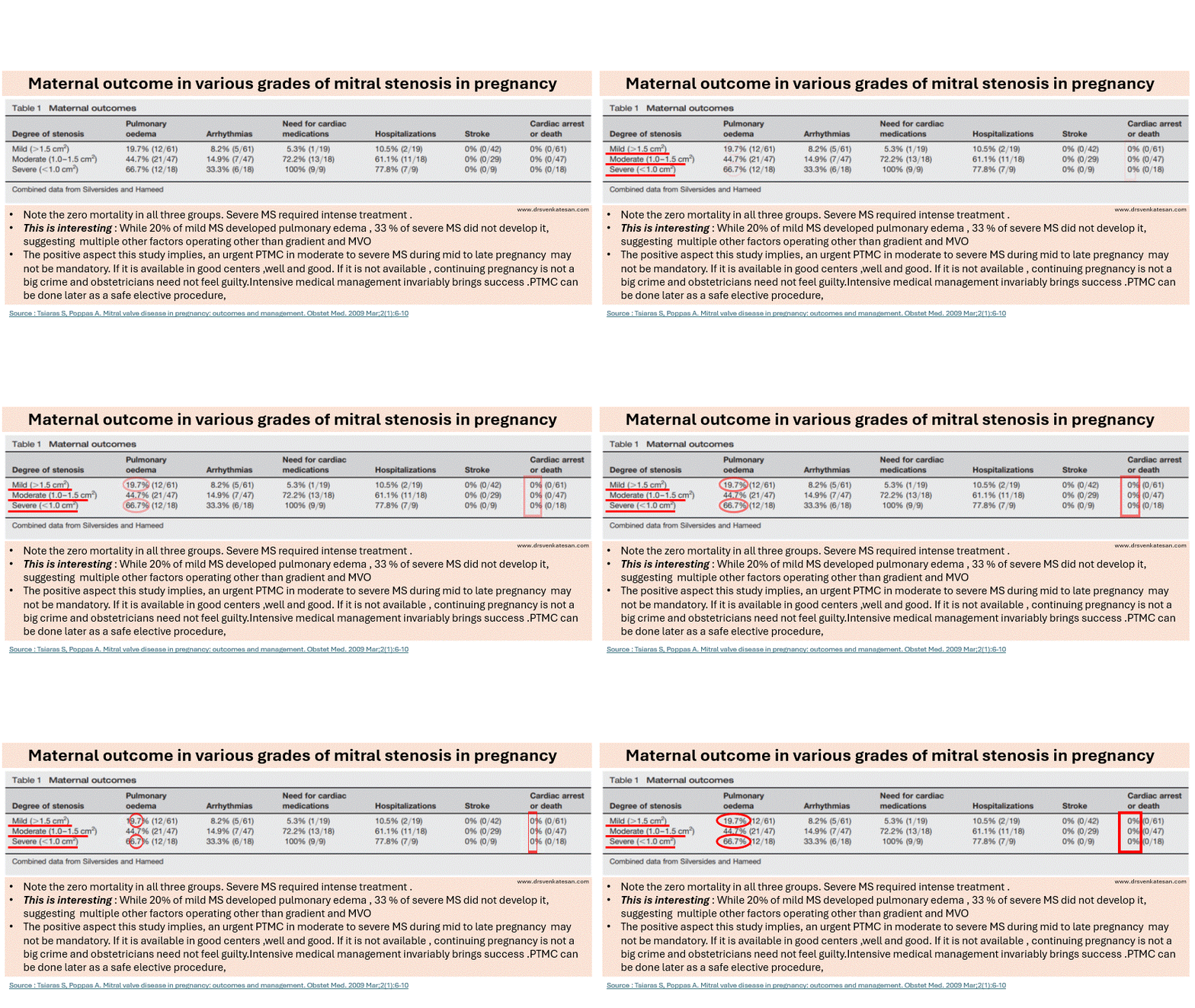
Pulmonary edema was seen in 20% of mild stenosis , while it was around 40% in moderate and 60% in severe. The positive aspect about this complication is , all these apparently serious episodes were managed by drugs with thumping success. This implies, the mandatory or enforced PTMC in moderate to severe MS during late pregnancy is largely not necessary. The risk of the procedure to be weighed against the competence of medical management during labor.
Predicting the likelihood of acute elevation of trans-mitral gradient and pulmonary edema is a huge medical guess game . A multitude of factors play a role. Ofcoourse , It elevates in all. But, the consequence vary between innocuous to near fatal.The message from the above study is, since the complications are anticipated, a pulmonary edema is often well managed medically or can be prevented with vigilant monitoring.
Final mesage
Many cardiologist might feel it is scientific to watch a young women with significant MS lying quietly looking ahead a uncertain labor. This is more of our respect to science than the true hemodynamic reserves these women have*. If the facility and expertise to do PTMC is readily available, well and good. If it is not, need not feel guilty and panicky . Track record reveals even severe MS rarely leads to a catastrophe. Thanks to the dramatic resilience of our young pregnant women with an agile cardiac and vascular reserve and also the advanced cardio vascular support drugs and gadgets.
*Legal postures and academic guidelines are rarely in sync with reality of experience
Reference
2.Hameed A, Karaalp IS, Tummala PP, et al. The effect of valvular heart disease on maternal and fetal outcome of pregnancy. J Am Coll Cardiol 2001;37:893–9 [DOI] [PubMed] [Google Scholar]



 Dr.S.Venkatesan MD