The heart is a mechanical pump, still electrically wired delicately and extensively, right from the SA node to the vast Purkinje network, which is activated by sequential propagation. Myocardial contraction occurs with amazing electro-mechanical coordination with millisecond precision. If the wiring line is interrupted, it is natural to expect some bumpy rides. This local delay often manifests as, wall motion abnormality.
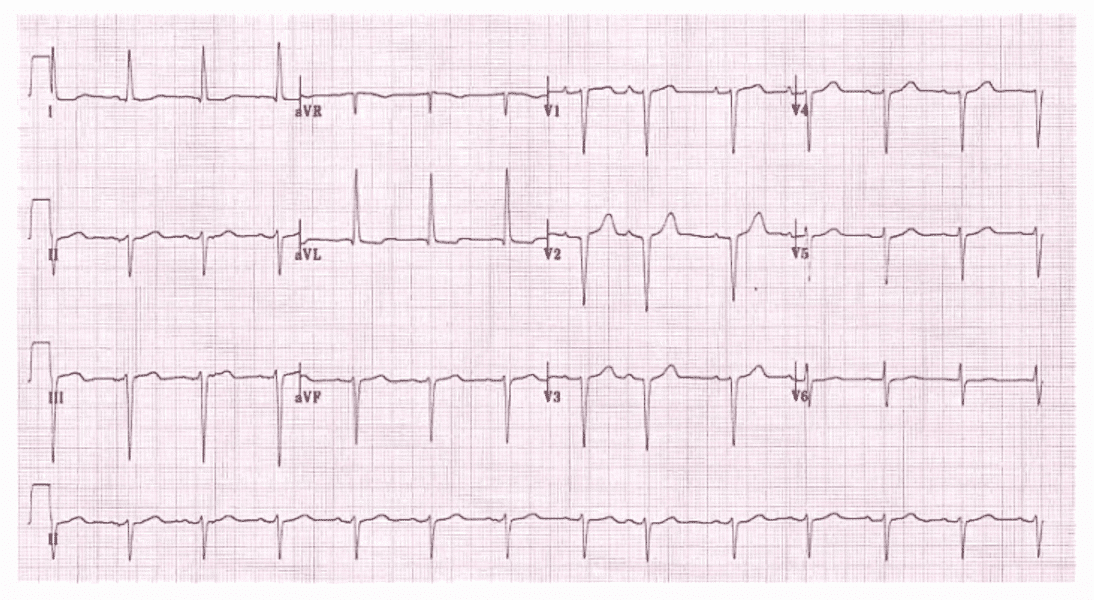
WMA is commonly occurs in LBBB .What about LAFB ? LAFB is a term used if one of the fascicles of the left bundle is delayed or completely cut off. Wall motion defects are also expected in LAFB, but most of us do not give importance to it. If new-generation echo machines with speckle tracking imaging are used, these desynchronies can be identified.(Ref 1)
One of the reasons for LAFB-induced WMA is missed often, is that the plane of desynchrony is in an odd omni plane. The anterior fascicular delay is an electrical imbalance between the notoriously placed posterior fascicle, tending to deflect the electricity a few milliseconds early towards the crux. This results in desynchrony between the remote base ie the crux of the heart to the summit of the heart, which is difficult to pick up in conventional TTE views. Of course, if LAFB is proximal and complete, one may still get a clear-cut WMA. If RBBB is associated, WMA is definite and mimics an MI.
Clinical implications
Our experience suggests WMA in LAFB is not clinically significant, except when it is mistaken for an ACS event. Poor R wave in V1 to V3 is a feature of LAFB cann add more uncertainity.
It can also interfere with accruing or assessing the true benefits of CRT with biventricular or His bundle pacing.
Final message
It is true ,wall motion defect in echocardiography will raise an immediate alarm for every cardiologist.But, we must also realise there are atleast a dozen causes for it, other than ACS. It is prudent to know ,nonischemic electrical wall motion defects can occur in LAFB too, and cause diagnostic doubts. (Many fold rare though, when compared to LBBB)
Reference



 Dr.S.Venkatesan MD