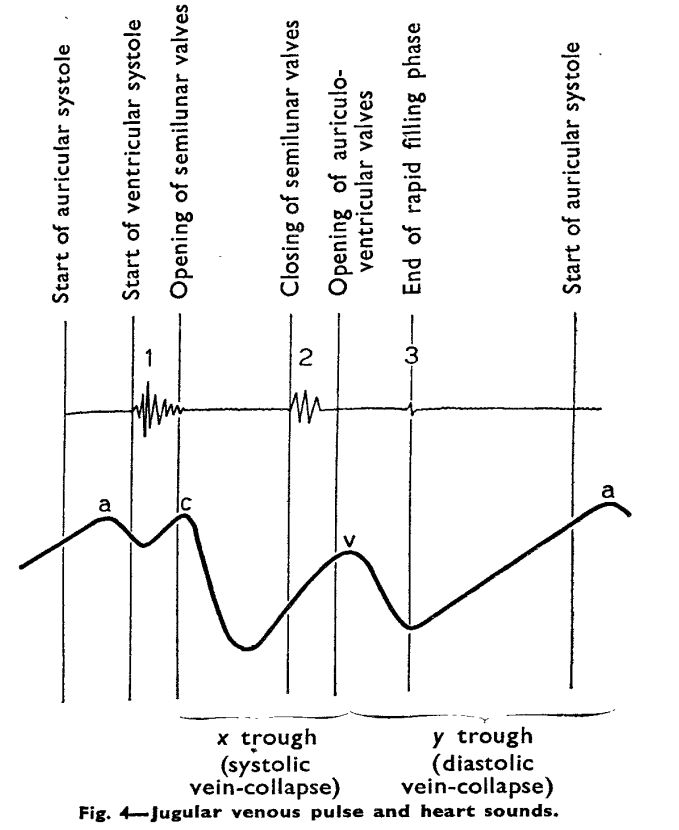
This is the Image of JVP wave forms from the famous original paper by BORST JG, MOLHUYSEN JA. in 1954 paper in Lancet.(Ref 1)
JVP typically has three positive waves and two negative waves. The “A” waves are due to atrial contraction while V waves are due to passive atrial filling. A waves are timed prior to S1 and V waves peak around S2. A tiny c wave interrupts the “x” descent . The word “c” could refer either to the RV contractile force or carotid contamination in the neck or simply a controversial wave.
The downward waves are X and Y descent. The major X descent is due to systolic atrial filling*, when the tricuspid valve is closed. Y descent is diastolic atrioventricular filling.
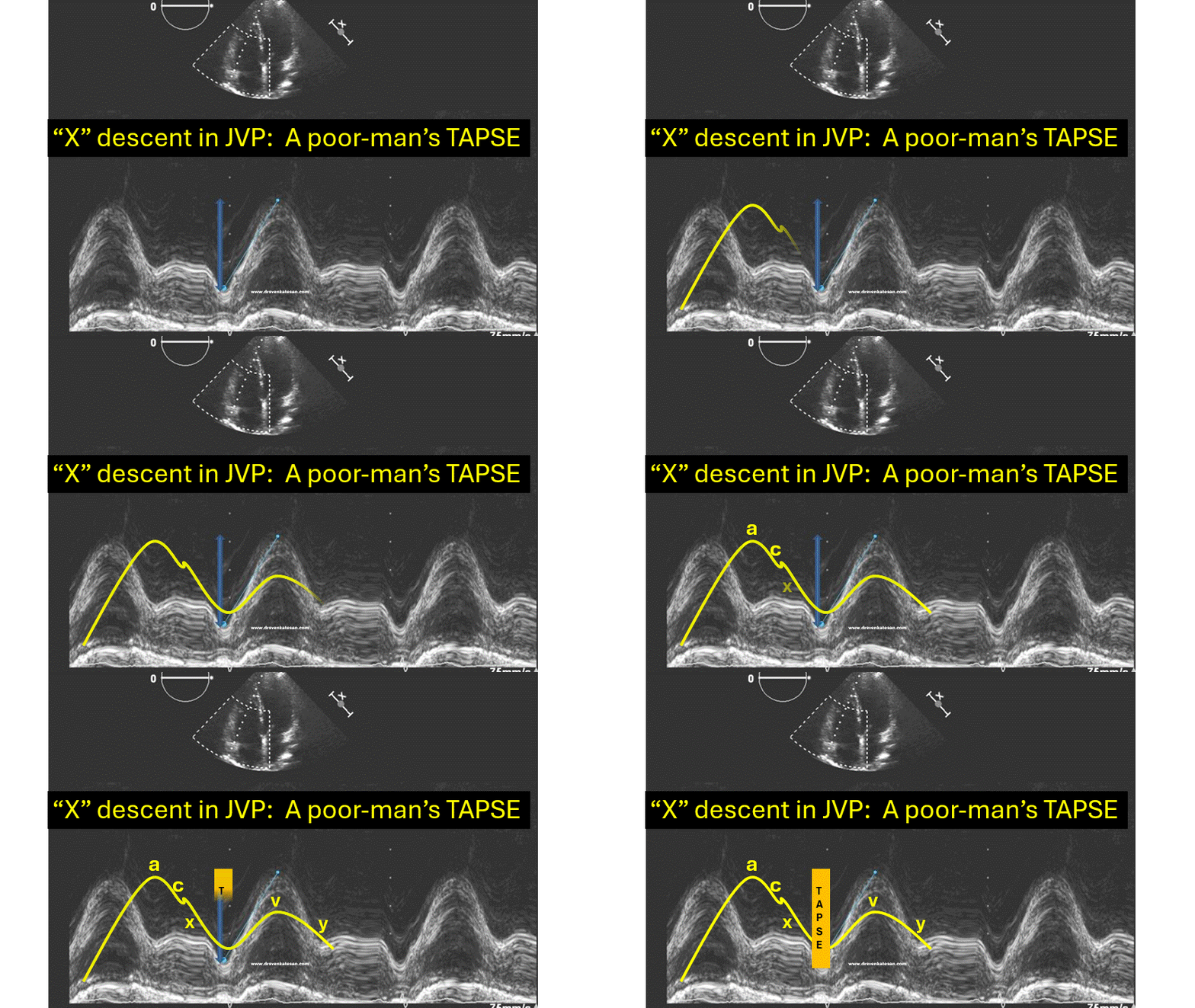
One interesting echocardiographic correlation has been observed. The force, power, and amplitude of X descent indirectly reflect RV contractility, and it can be referred to as poor man’s TAPSE.
One clinical question often asked in cardiology boards for fellows.
What are the difference between V waves that occur in ASD and Tricuspid regurgitation ?
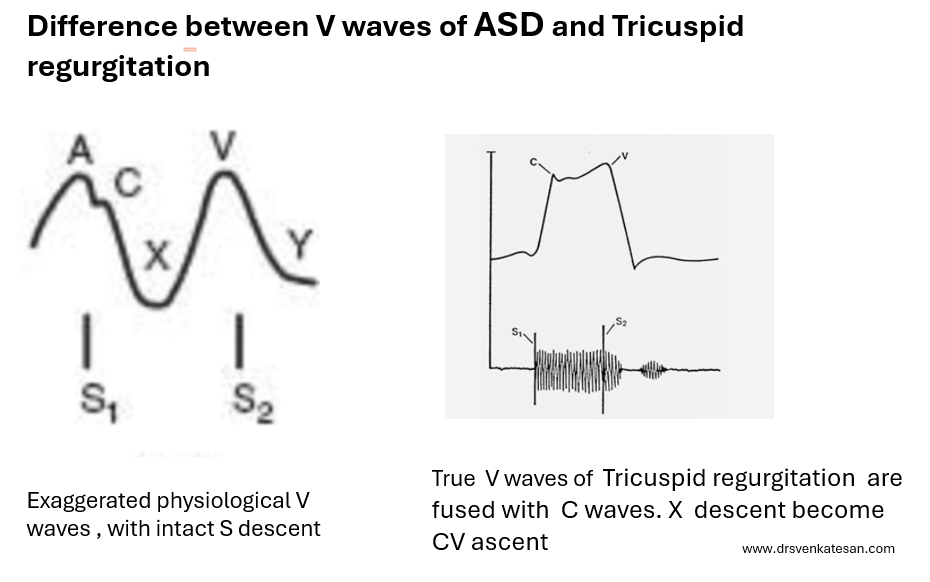
V waves in ASD vs Tricuspid regurgitation
V wave is due to passive filling wave of atria when the ventricle is contracting and Tricuspid valve is closed.This physiological v wave . In ASD*, this wave just gets exaggerated as the right atrium receives the shunted blood from left atrium when the trisupid valve is closed. Since it almost resembles normal atrial flow pattern , both X descent and Y descent are retained ,and y may be slighly prominent in ASD.
In Tricuspid regurgitation , the V waves are truly pathological in terms of opened tricuspid valve and timing of TR jet which fills the atria in systole rather thanin diastole. (Note this is different from the excessive diastolic filling of atria as in ASD )
While Y descent is prominent in both ASD and TR ,the X descent in TR is lost for simple reason. tricuspid valve is leaking and TR jet abolish the systolic X descend, rather it becomes a X-ascent (Conventionaly called CV waves)
*Please note, the v waves of ostium primum ASD, may not follow this rule as MR from cleft mitral valve further modifies the v wave.
Final message
When we analyse the V waves in JVP , it is important to assess its timing, relative to 2nd sound and also the both the descents to derive maximum hemodynamic information.
I saw two patients recently, with a similar degree of hypertension and LVH. One with a normal-sized LA and the other with a mild LA enlargement.
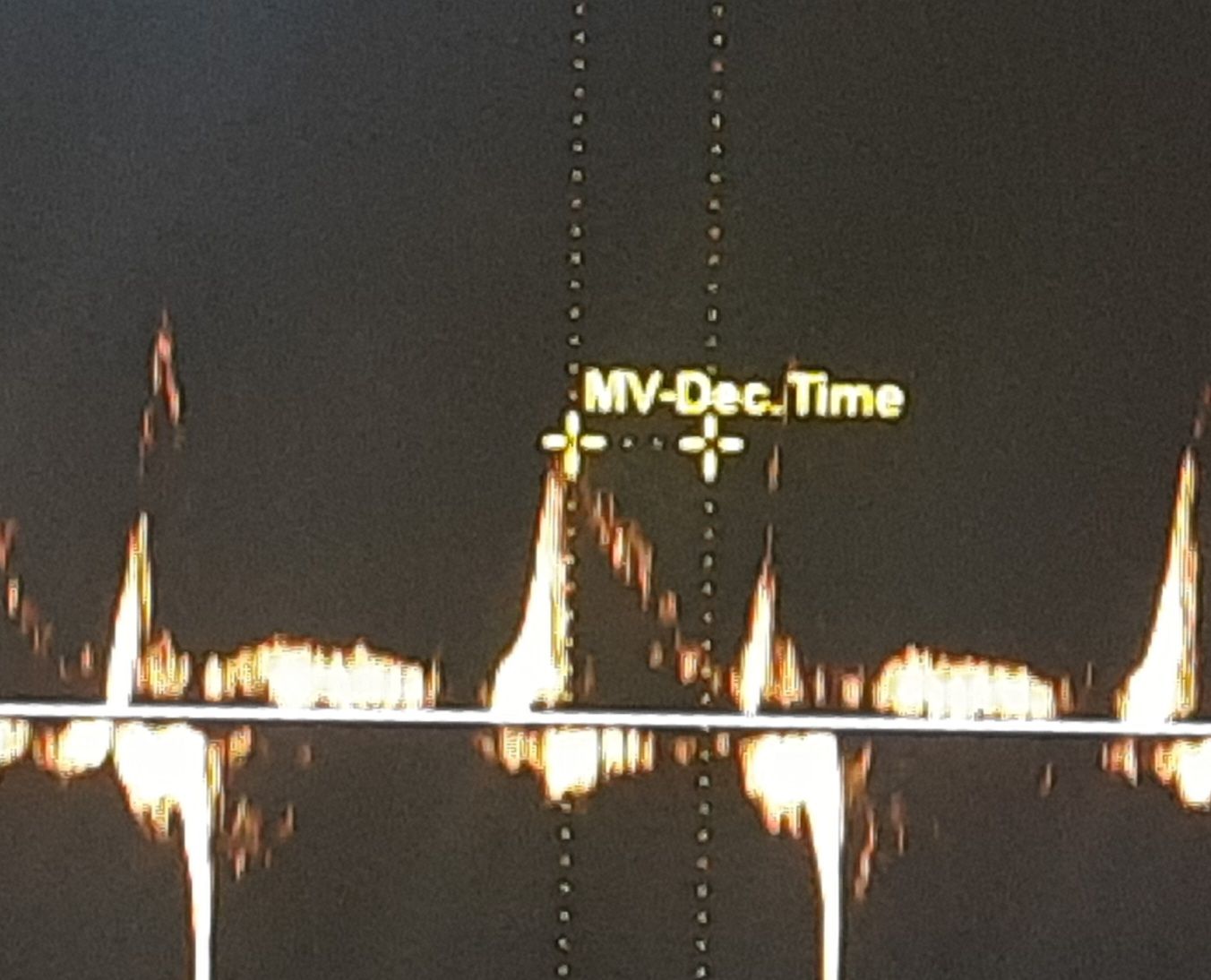
When checked for the “E” declaration time, it was found to be absolutely normal in the patient who had LAE. The one with normal LA size had a relatively short DT and his functional capacity was less.
52-year-old man with HT, and LVH with mild LAE. His E DT was very much normal a1 178 ms. He has a good functional capacity. I expected a grade 2 diastolic dysfunction. But, none of the other parameters were convincing. Used to think, if LA is enlarged, it must be a little advanced form of diastolic dysfunction. Though It is still true in many, but, this case, demand us to dwell into these two important parameters of LV diastolic function.
What is the relationship between Left atrial size and Mitral “E” decceleration time ?
The conventional and straightforward answer is they are inversely related.
We know Left atrial size typically reflects the chronicity of elevated left atrial pressure or volume overload, which can result from conditions such as mitral valve disease, left ventricular dysfunction, or atrial fibrillation. An enlarged LA is often a marker of prolonged stress on the atrium due to increased filling pressures or impaired left ventricular relaxation.
Mitral E velocity deceleration time (DT) is a measure derived from Doppler echocardiography, representing the time it takes for the early diastolic filling velocity (E wave) to decline from its peak to baseline.
In healthy individuals with normal LA size and normal diastolic function, DT is typically within a normal range (e.g., 160–240 ms), and LA size does not significantly influence DT. In pathological states, an enlarged LA (e.g., LA volume index >34 mL/m²) combined with a shortened DT (<160 ms) indicate restrictive physiology or advanced diastolic dysfunction.
Question 2
Is this Inverse relation always right ?
There is generally an inverse relationship between LA size and mitral E velocity DT in the context of diastolic dysfunction with elevated LA pressure. LA size increases due to pressure overload, DT tends to decrease. However, the exact relationship is much more complex. If LA enlargement is due to volume overload (e.g., chronic mitral regurgitation) without significantly elevated pressure, DT may not shorten dramatically.
If the LA is stiff and non-compliant, the E deceleration time is likely to be short, and an inverse relation is acceptable logic. But, if the LA is more accommodative and relaxed, mild enlargement actually reduces the LA mean pressure, and E deceleration gets normalized even if it was prolonged earlier due to diastolic dysfunction.
LA behaviour is still a mystery X factor in diastolic dysfunction.
This throws up a fundamental question in our understanding of diastolic dysfunction. Some degree of LA flexibility and compliance reduces the LA mean pressure, and could relieve the symptoms. In this process, the mitral DT also is kept within the normal limits. In fact, now I have asked my fellows to analyze a concept of normalization of DT with progressive LA dilatation in hypertensive patients. This is contrary to the belief that LA dilatation is an ominous sign.
I think it is worth propsoing and pursuing a new concept.” LA dimension has a U curve phenomenon at least within the certain Iniital increments either in size or volume” . LA cannot be too stiff, at the same time it can’t yield out like a balloon.When does an LA decide to dilate and when does it resist is the question ? An agile atria without fibrosis, degeneration, and optimal fluidity extracellular matrix could be the defining factor.
Final message
Understanding the duality in the realtionship between LA size and E deccleration time seems to be crtical. A stiff, non-compliant LA aligns with a short DT and an inverse relationship with LA size in high-pressure states.A relaxed, accommodative LA with mild enlargement may not affect DT significantly and could even normalize it by reducing LA pressure, especially if DT was prolonged due to early LV diastolic dysfunction.
This behavior underscores why LA size and DT must be interpreted along side other factors like LA pressure estimates (e.g., E/e’ ratio), LV compliance, and the underlying pathology.
Detailed answer is also yes : Read further please.
The MitraClip procedure, is designed to reduce mitral regurgitation (MR) by approximating the mitral valve leaflets, can alter the direction or nature of residual MR, including potentially converting a central MR jet into an eccentric one . This possiblity depends on the pre-procedural anatomy, the placement of the clips, and the resulting changes in mitral valve dynamics.
Central MR in ischemic dilated cardiomyopathy (DCM) typically arises from functional MR, where symmetric annular dilation and leaflet tethering (due to LV remodeling) create a central regurgitant jet through a malcoapted valve. The MitraClip works by grasping the anterior and posterior leaflets, usually at the A2-P2 segments, to create a double-orifice valve, reducing the regurgitant orifice area. When successful, this diminishes the overall MR volume, often preserving the jet’s central nature if residual MR remains.
However, if the clip placement is asymmetri or if multiple clips are positioned unevenly, the geometry of the mitral valve can shift. This could redirect the residual regurgitant flow. For example, if the clip is placed more toward the medial or lateral commissure, or if it disproportionately restricts one leaflet’s motion (e.g., excessive tethering of the posterior leaflet), the remaining gap might produce an eccentric jet directed toward the opposite side of the left atrium.
Echocardiographic studies post-MitraClip occasionally report changes in jet direction. While the primary goal is MR reduction, not all procedures eliminate regurgitation entirely, and residual MR jets can appear eccentric depending on how the leaflets coapt after clipping. For instance, if the clip reduces central coaptation but leaves a smaller, off-center orifice, the jet might angle toward the atrial wall, resembling eccentric MR seen in organic valve disease (e.g., prolapse). This isn’t necessarily a conversion from central to eccentric in the classical sense but rather a modification of the residual flow pattern.
Clinical data doesn’t frequently highlight this as a major issue. In trials like COAPT and MITRA-FR, the focus is on MR severity reduction rather than jet direction, and eccentric jets aren’t systematically reported as a post-procedural phenomenon. However, case studies and operator experiences suggest that jet redirection can occur, particularly with suboptimal clip positioning or in complex anatomies.
Implication of new onset eccentric jet
1.Eccentric jet directed towards one of the pulmonary veins can cause unpredictable postural dyspnea.
2.Eccentric jets are difficult to quantify the exact post clip ERV.
3.Can Interfere with favorable remodelling of LA
4.Might Increase IE risk
Final message
Mitra-clip is an innovative catheter-based MR jet interrupter. However, it is not surprising this device could convert a central MR into an eccentric MR, considering the fact that it tampers with mitral valve orifice morphology almost blindly. Adding more complexity is that, the clip brings one more “Neo-regurgitation orifice”. Mitra-clip still can be useful in very selected patients, where it regresses the MR significantly. But, experience tells us the importance of precise clip deployment guided by meticulous imaging and expertise.
Postamble and a follow up question
Can mitraclip convert an eccentric jet into a central one ?
It would be great if this is possible .The problem here is , it need too much precision and overcoming the uncertainity of the iatogenic second jet morphology.
Yes, It’s not a humiliation, to get branded as a new generation cardiologist. In fact, the opposite is true. Sorry, no-blaming any one. We can’t avoid it as well. It is the wages, we are foreced to pay for sensationalised technological sins , that is Imploding in the world of medical science.
Coronary bloodflow is primarily known, to occcur as a diastolic circulation. Does that in any way mean coronary artery diastolic pressure, can exceed the systolic pressure ?
A. No. diastolic BP can never exceed systolic BP in side the coronary artery.
B. Yes. Coronary diastolic BP is higher than systolic, since there is little blood flow during systole due to myocardial compression.
C. There is not much difference between systolic and diastolic pressures, within the coronary artery . We need to bother only about mean perfusion pressure.
D.It is true, the coronary blood flow is compromised in systole and primarily occur in diastole .Still, the epicardial coronary arterial compresssion is not that significant. Hence systolic pressure blunting is negligible. This is called the pressure -flow paradox.
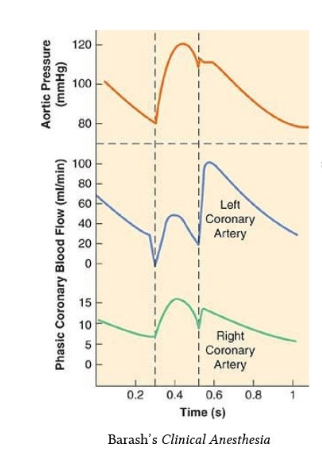
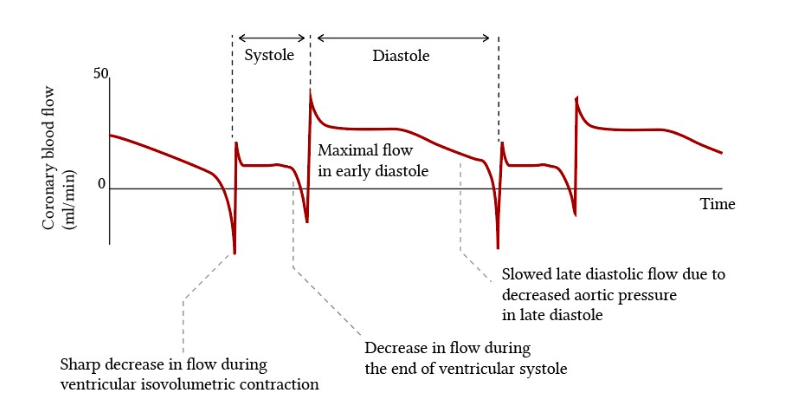
Answer : D (Ref Image 2)
What is the normal intra-coronary arterial pressure in systole and diastole? I could not get a clear answer to this question. Logically it should be sane as in radialartery 120/80mmhg. Surprisingly, most literature discusses only coronary blood flow, which primarily takes place in diastole. (Does that mean the pressure would be less in diastole, so that blood flows easily?) The complexity in understanding intra-coronary pressure , is because, we don’t know the exact blood volume, flow vs pressure relation in this dynamic organ.Further, mechanical force/pressure exerted by the muscle ,can it be recorded , within the lumen , and quntify it sepearately ?
The classical illustrations that are found in cardiac physiology literature about the dominance of coronary blood flow during diastole (Image source Ref 2)
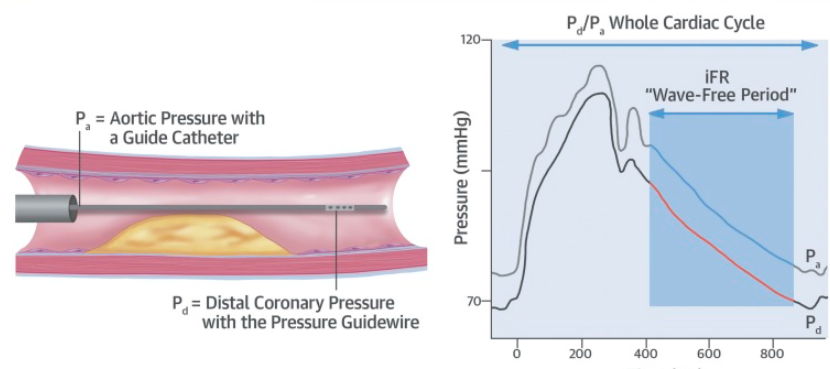
During FFR studies the Intracoronary presssure curves almost mimic radial pulse. No where we could see the effect of mechanical compression . It is likely , the epicardial coronary artery do not get compressed that much , only the micro circulation gets squeezed.
We realise ,coronary perfusion pressure, mean coronary arterial pressure, and coronary arterial wedge pressure are more important than systolic and diastolic pressures . The mean coronary artery pressure is around 45 to 60 mmHg backed up with good autoregulatory mechanism. We are not clear how this autoregulation is modified by lesion tightness. Documentation of true coronary arterial systolic BP in physiology and various pathologies is an important academic vacuum that youngsters can explore.
1.Clinical Implication : Does LV dysfunction has a favorable efffect on coronary perfusion ?
If LV contraction interferes with coronary blood flow, patients with severe LV dysfunction, may gain some advantage as systolic blood flow can happen more easily, and myocardium is perfused better, provided the aortic systolic pressure not too low enough.
2.How common is angina in DCM ? and Why ?
Angina in DCM is an exception despite elevated LVEDP. Is the above logic explain why very few dilated cardiomyopathy patients experience angina? Even in ischemic cardiomyopathy, once it sets in, Intensity of angina is mitigated or completley eliminated.(of course at the cost of failure). Is it nature’s response to prevent angina?
3.Why systemic hypertension is a weak coronary risk factor ?
Unlike the brain, where stroke risk is directly related to systolic BP, fortunately sudden systolic spikes rarely get a chance to attack the coronary endothelium as much of the coronary lumen is relatively closed (? to be confirmed , atleast during rapid ejection phase of systole) In this context, we can also be happy there is no risk of myocardial hemorrhage due to HT. However, there is evidence that diastolic BP carries much risk for CAD, as do Isometric exercises when DBP exceeds out of proportion to systolic BP.
4.Differential intra coronary pressure , RCA VS LCA is well knwon asthe RV contraction is not good enough to compress the RCA.This adds a new hemodynamic concepts in RCA CAD.(We have done a study where we found thrombolysis was more effective in RCA apparently due to bi-modal continuous delivery of the lytic drugs, unlike the left system)
5.During CPR , what would be coronary hemodynamics of chest compression ?
When we compress, it is systemic systole, and when we release it becomes coronary diastole. In fact there is now evidence to suggest , too rapid and hurried contractions reduce the success rate of CPR. The inter compression time is to be atleast 4 or even 5 full seconds, to enable coronary perfusion.The mean pressure during CPR is to be atleast 40mmhg. (Yannopoulos D et al , Resuscitation. 2005)
Final message
It is surprising why we are not recording intra-coronary pressure directly and trying to understand this. We need to go 100 years back for that Wiggers article in search of truth. (Ref 1). This is an area of good research for cardiology fellows. Also, next time,when you do FFR or IFR, ask this question : Why proximal reference pressure is taken at the aortic root instead of just before the lesion ?
OCT, the magical intraluminal coronary vision, has been a great innovation that helps us to decode many uncertainties in the morphology, behavior and vulnerability of coronary plaques. It is used widely in pre- or post-PCI or even asssit during the implantation of stents. The role of OCT/IVUS is sometimes deemed critical in dealing with left main and bifurcation lesions.
Of course, there were some overuse of OCT as well, as many centers did it for some academic fun, even in some innocuous lesions. Meanwhile, there is a striking miss. We probably failed to accrue the benefits of this revolutionary imaging in the graft evaluation. Its real role could be in LIMA grafts including anastomotic site or SVG lesions in the immediate postoperative or at long-term follow-up lesions. As far as I understand, it is very rare for cardiologists to attempt imaging these sophisticated tools in LIMA or SVG.
Published data on OCT IN LIMA
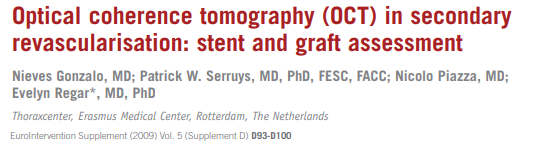
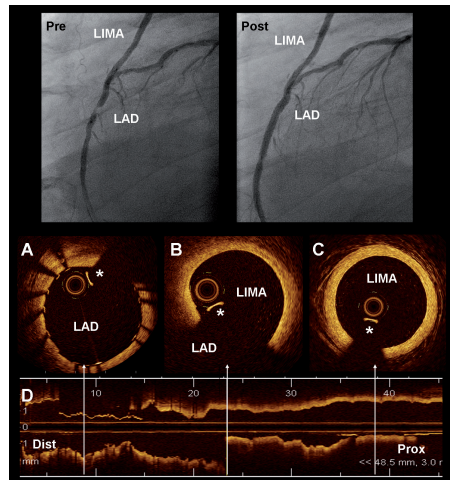
Here is a paper from a stalwart in coronary interventions, Dr. Patrick Serruys and his team from the Netherlands (Published in 2009 ,but surprised to find not many takers)
Image source & Courtesey : Ref 1 Optical coherence tomography (OCT) visualisation of left internal mammary artery (LIMA). The superior panel shows the angiogram of a patient with a graft of LIMA to the LAD.
Why OCT/IVUS is less popular in graft assessment ?
*Graft follow-up often falls under surgeon’s domain. They don’t call for check angio often, unless the patient is really, really symptomatic. (CT angiogram is more popular in post CABG)
*From cardiologist’s point of view, they rarely deem it to be necessary. Reason being, it could be technical (Will the venous graft tolerate the OCT wires?)
*Lack of experience and apprehension
*Lack of publsihed data.
Final messge
It is true, doing regular graft angiogram, by itself is less than 5-10 % of all angiograms . Asking for OCT in that population is big deal .Still, OCT can be a valuable in providing crucial information in the assessment of both LIMA and SVG, at least in the former. One more purpose of OCT is, its offline use to assess the integrity of LIMA graft on table prior to CABG. It can confirm patency and possibly rule out any significant takedown injury, that is missed otherwise.
Though the left atrium is the superior most chamber of the heart , it loses its gravity-assisted LV filling advantage in a lying posture. In patients with compromised heart function, this becomes a symptom defining factor. No surprise, patients during episodes of LVF or paroxysmal nocturnal dyspnea, natural forces make them sit up by default, and bring the LA superior & over the top of LV hence its filling is augmented. One more factor that operates is that, IVC orientation, which assumes slope and reduce venous return velocity. In the process, they decongest the lungs and patient gets Immediate relief. In fact, pillows work faster than diuretics and we can technically call it low-cost LV assit devices.
Note, how the LA takes control by its superior position, when the patient assumes erect posture from supine. In fact ,the number of pillows used, by the pateint has some direct correlation with LA mean and Echo cardiographic E/e ‘ . ESCAPE study suggest a possiblity of correlation of this LVEDP with right sided JVP as well.( Drazner et al Circ Heart Fail. 2008 )
Final message
This post may not be relevant to cardiology fellows. Whenever we receive a dyspneic patient in heart failure, prop them up with few pillows. This lesson is taught right in the first-year clinical rounds. I wanted to highlight the anatomical and hemodynamic basis of the sitting-up posture and its impact on LA mean and LVEDP. By some crazy stretch of imagination, pillows can be referred to as a temporary LV assist device.
Research suggestion for fellows
Some of you can do you a study in cath lab, how much the LA mean pressure is altered with reference to posture. It could appear a flimsy study in this era of TAVR/Mitra clips. Sill, we have an good opprtunity to analyse these things as we enter all chambers of heart in routine fashion for some indication or other. This will make us understand LV filling physiology in a better way. (Recalling the days of Guyton & Rushmer when they strugggled to know computational models to measure the pressure gradients)
A question for our hemodynamic acumen?
How does the LA empty in to LV , when LV inflow conduit need to operate against gravity during head down feet up postion as in many sports like bungee jumping or in some asanas (Shirshasana) . Has any one attempted, to know , how would be the E and A velocity across the mitral valve in this posture .Wish some one take on this and report ,if no one has done it before please add some credit . (Just kidding)
Caution
Patients (even some healthy) with diastolic dysfunction especially in elderly, should never attempt to do such sports or indulge in any compromised posture that brings LA below the LV.
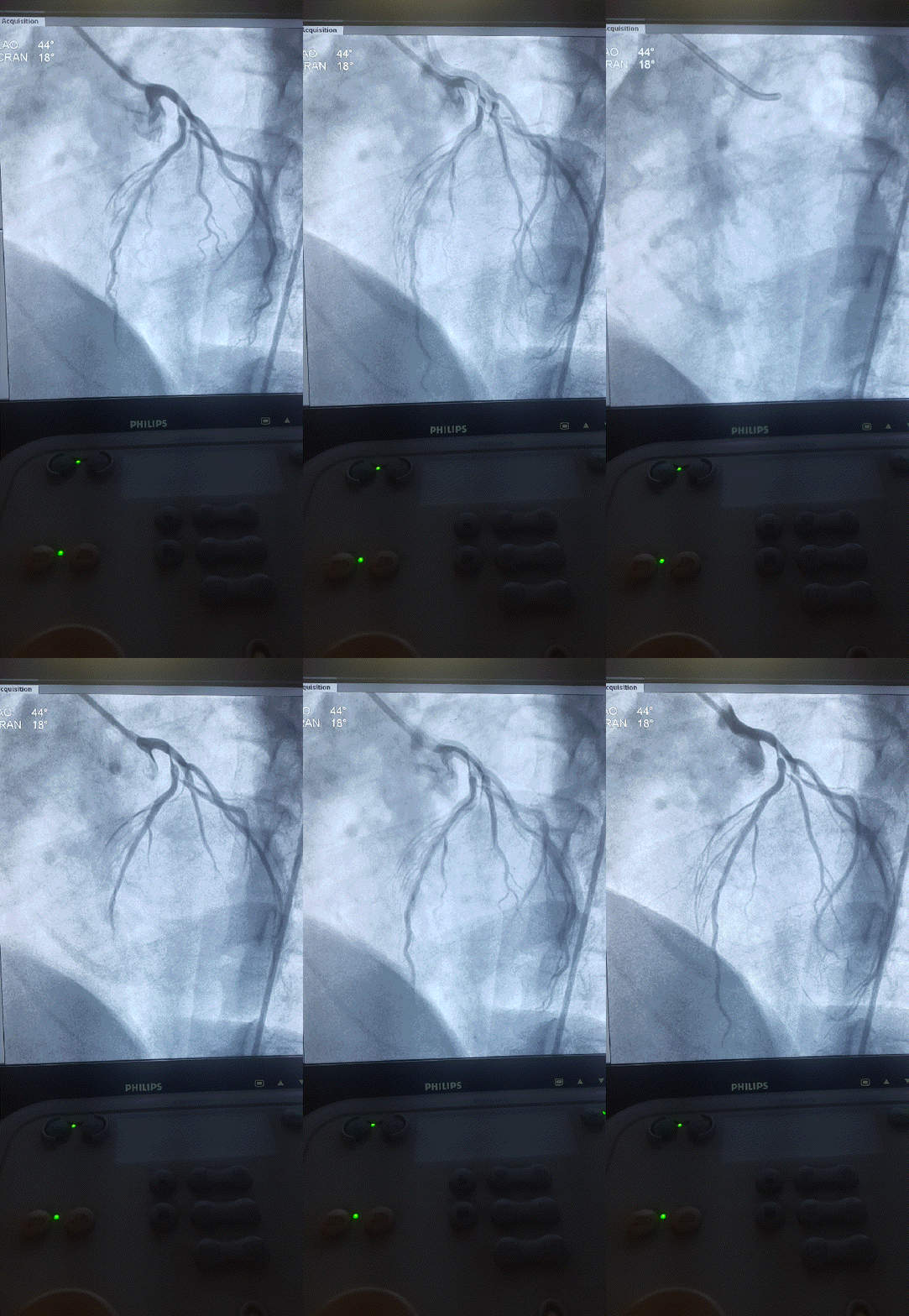
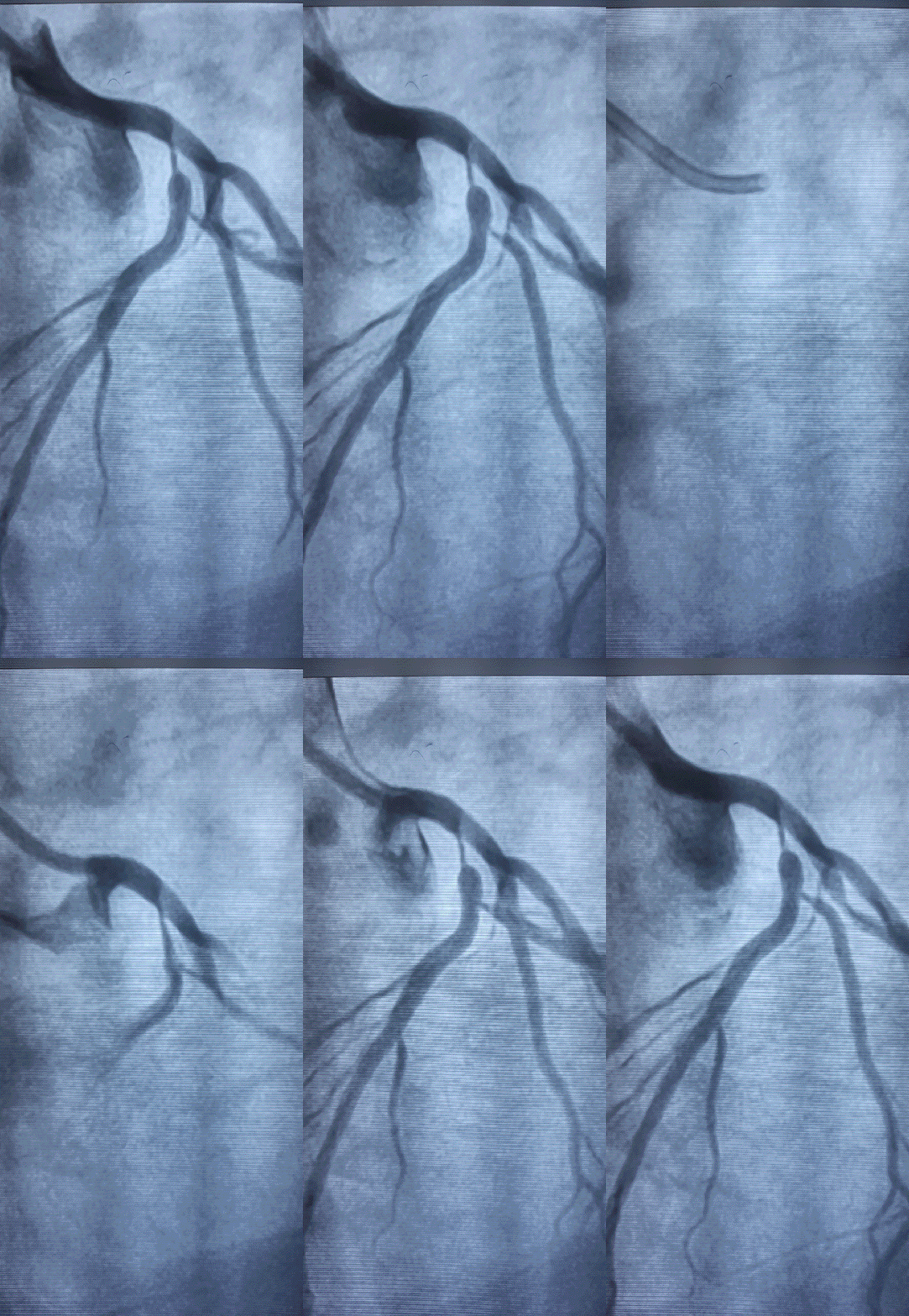
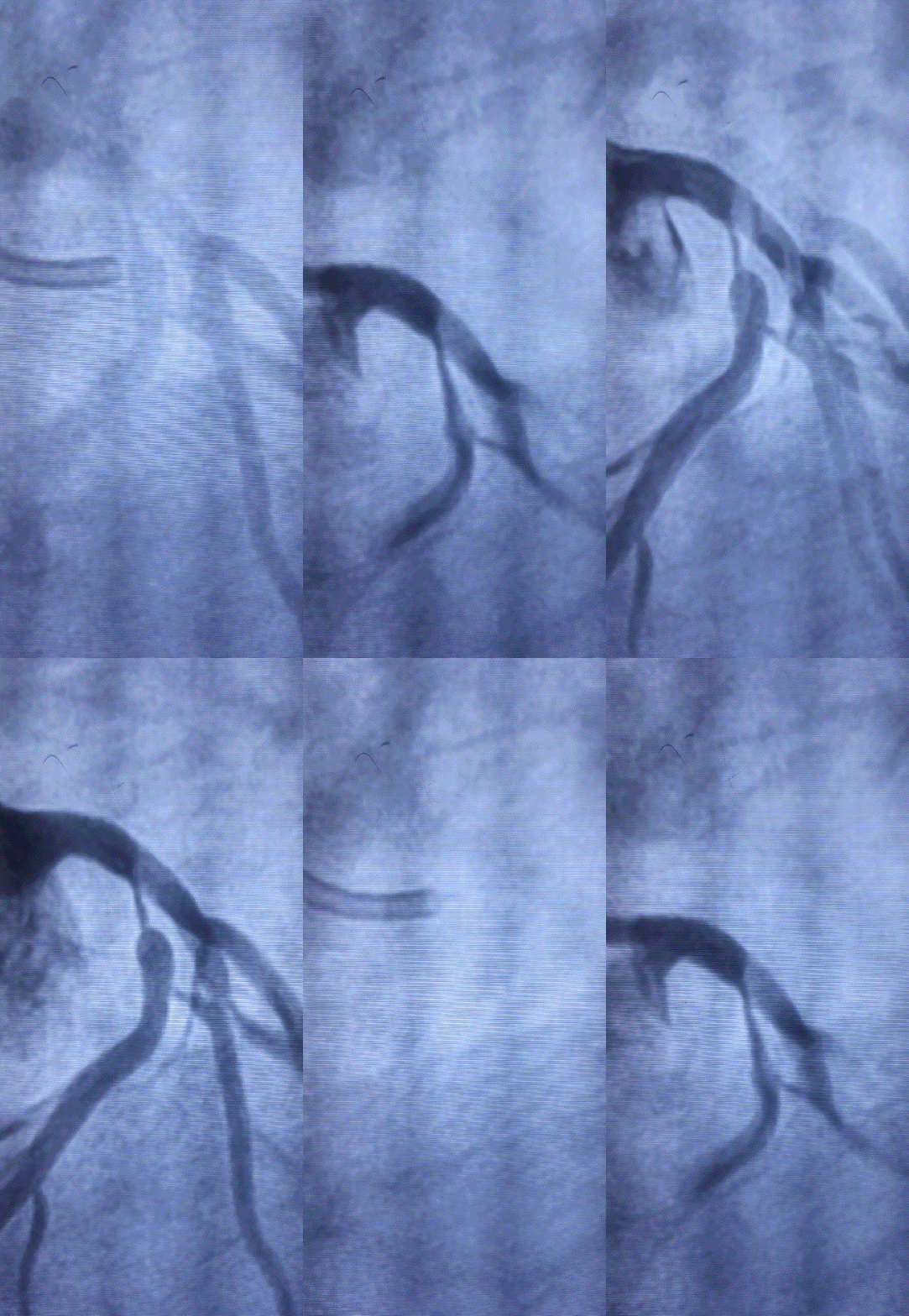
How do you explain this ? 99% occlusion still TIMI 3 flow ?
Answer
A. It could be a parallax error. Lesion may not be tight. Should be seen in other views.
B . Forcible Injection by the operator, make it an artificial TIMI -3 flow.
C .Such flows are very much possible .It Indicates a healthy distal micro-circulation a vascular bed in a fully dilated mode.
D. TIMI flow is not reliable here . We need TIMI frame count to confirm.
Follow up questions
1.How much will be the FFR ?
Likely to be less than . 8 definitely , but surprises can happpen
2.Can he be asymptomatic ?
Unlikely.
Final message
Coronary occlusions are ominpresent . While we have mastered the art of successfully taming these anatomical enemies , we are still very much ignorant what these lesions actually do, to the physiology, inspite of half a dozen flow reserve Indices we have.(FFR,iFR, rFR,qFR, dP/dT ,etc)
The question is, at what level of obstruction, it really limits the coronary bllod flow significantly ( both at rest and exertion) . One thing is clear , it is higly variable & Individualistic, the secrets of which lies deep, in the domain of invisible micro-vascular network integrity.
Counterpoint
TIMI flows may no longer be valid in non-ACS situations. The name TIMI , by itself carries flow after thrombolysis. For some unexplained (& debatable ) reasons, we are used to apply this flow grade , in every angiographic flow scenerios irrespective of underlying clinical entity.
Is primary PCI superior to thrombolysis in the first hour of STEMI ?
No, it is not. I know, most interventional cardiologists cannot accept this fact and would strongly disagree. Still, they know very well there is no clear data to back up their belief. Even the ACC and ESC sort of failed to acknowledge the low quality of available evidence in this specific issue of reperfusion in the first hour.
The fact of the matter is, at best, pPCI fights for equipoise in the first hour, but thrombolysis is a clear winner in moral, scientifc & holistic perspective, as it can be administered very early, at a fraction of cost ,independent of expertise and infrastructure. (CAPTIM). Read ref 1, 2.
Final message
However , there is a thin streak of hope, untill, the unstoppable new generation Interventional cardiologists make “pre-hospital PCI“ a reality .Till then, pPCI will trail behind pre-hospital thrombolysis in the golden hour reperfusion race both in time and probably in efficacy as well.
Peripartum cardiomyopathy (PPCM) , first reported almost a century ago (Ref 1) is getting lot of attention in recent years.Most works are trying to find out the true cause for this ubiquitous entity.The fact that it occurs in the peripartum period, we are forced to link it to hemodynamic and hormonal stress.
Advanced molecular genetic studies reveal PPCM unmasks abnormal sarcolemmal protein mutations in a random population, that express as pregnancy-related DCM. The genes most commonly associated with peripartum cardiomyopathy (PPCM) are Titin, Filamin C, Desmosome, and BAG3-Athanogene (B-Cell related). These genes are involved in the sarcomere, desmosome, intercalated discs, and autophagy.
Link between PPCM & PIH : Is real, not a speculation
Genetically vulnerable women who happen to develop PIH are obviously are at high risk for PPCM. No surprise 30 % of PPCM patients have a history of PIH. If we allow Occam’s razor to teach a few lessons in the Obstetrical suite, then simplistically, a large chunk of PPCM is just a prolonged myocardial distress to abnormal loading conditions of the heart. Afterload mismatch in PIH and preload mismatch in women without PIH. The latter term simply represents volume enhanced myocardial stretch in the postpartum period. Acute LV dilatation adds on to wall stress , thereby hiking the afterload as per Laplace law.
(*There are the molecular triggers that switch on the dormant , yet dysfunctional gap junctional proteins and stretch them beyond physiological limits, resulting in temporary loss of elastic function and precipitating PPCM, which recovers in many women , if God willing)
Hickam’s also welcome : PPCM is a likely Pituitury cardiomyopathy. Though it is a suspicious circumstantial culprit, it has become a popular hormonal model for PPCM .It is yet to accrue authentic evidence. Meanwhile, bromocrtiptine,the prolactin antagonist is being used with wide ranging efficacy. (Koenig T, Card Fail Rev. 2018 )
Final message
PPCM is essentially a form of cardiac inefficiency in handling either the afterload or preload (or both) in the peripartum period, probably influenced by the pituitary gland in those with genetically vulnerable sarcomere .The fact that it is recurring in substanial number of women in subsequent pregancy , would point out to the same hemodynamic distress story.
Counterpoint
*Some would argue , PPCM should not be diagnosed if the mother has PIH .The rule is PPCM is diagnosed only after excluding all reversible diagnosis. Many guidelines endorse that. I couldn’t understand the logic, unless we know the true reasons why some hearts struggle to handle the BP effectively. Incidence of RV dysfunction in PPCM would argue for diffuse global myocardial pathology, still it might also be poor tolerance to raised pulmonary pressure .
The contents of the this blog is being published as Kindle E book , as per the request of many of the readers. Every article will continue to be open source in this site. Again I shall reiterate the book format is not aimed at any commercial intent. It is only to facilitate learning in a single book format Here is the link to book https://amzn.in/d/euhL5vu
Click below to see who is watching this website live !
This site will never aim for profit. Still ,this donation link is added at the request of few visitors who wanted to contribute and of-course that will help make it sustainable .
Please Note
The author acknowledges all the queries posted by the readers and wishes to answer them .Due to logistic reasons only few could be responded. Inconvenience caused is regretted.








 Dr.S.Venkatesan MD