Feeds:
Posts
Comments

Archive for December, 2025

This is an editorial submitted by this author to a leading cardiology journal, which was returned within 24 hours , with a comment that article is unsuitable for publication .Want to know, whether the readers agree with the journal editorial team


The Unfinished Story of “Successful” Primary PCI

Primary percutaneous coronary intervention (pPCI) has revolutionized the management of ST-elevation myocardial infarction (STEMI) and remains the gold standard for restoring coronary perfusion. Angiographic success defined as achieving Thrombolysis in Myocardial Infarction (TIMI) grade 3 flow in the infarct-related artery occurs in more than 90–95% of cases. (1,3)However, this measure reflects epicardial recanalization alone and falls short as an indicator of effective myocardial reperfusion.​.(5)

Cardiac magnetic resonance (MRI/CMR) imaging, myocardial contrast echocardiography, and nuclear perfusion techniques consistently reveal that adequate tissue-level reperfusion occurs in only 60–70% of patients with angiographically successful PPCI. This disparity highlights a critical gap between procedural endpoints and true myocardial salvage.​(6)

The Persistent Challenge of Microvascular Obstruction

Despite apparent angiographic success, up to 20–30% of patients exhibit microvascular obstruction (MVO) or “no-reflow.” The pathophysiology of MVO involves distal microembolization, capillary edema, and endothelial dysfunction. (2)These processes disrupt microcirculatory flow and limit oxygen delivery to viable myocardium despite patent epicardial arteries.​

MRI studies have demonstrated MVO in 10–15% of PPCI-treated patients with TIMI 3 flow, often associated with larger infarct size, lower left ventricular (LV) ejection fraction, and worse long-term outcomes. (4,6) In high-risk subsets, the presence of MVO increases the 3-year incidence of major adverse cardiovascular events five- to sixfold.​.(7,9)

Redefining the Endpoints: From Epicardial Patency to Microvascular Integrity

Left ventricular function remains the most clinically relevant indicator of therapeutic success in STEMI. Persistent LV dysfunction in up to 40% of successfully revascularized patients underscores the inadequacy of angiography based metrics. (3)A more comprehensive approach is required one that integrates epicardial and microvascular reperfusion as co-determinants of outcome​

TIMI grading system is the universally adopted most popular angiographic flow grading. It is used for more than 4 decades. The concept of TIMI 4 flow was originally suggested by Dr Gibson in 1999 , calling hyperemic flow with a low TIMI fame count,  as TIMI 4 flow. For some reason this concept was never adopted, though this term extends the traditional TIMI grading system to include  microcirculatory perfusion. This proposed category reflects optimal tissue level reperfusion, measurable through myocardial blush grade, the index of microcirculatory resistance (IMR), or perfusion-based MRI parameters. (8,10)TIMI 4, therefore, would define the ultimate therapeutic endpoint in the physiological perfusion at the myocyte level.

Emerging Tools and Strategies for Microvascular Optimization

Several procedural and pharmacologic approaches can favorably influence microvascular flow. Intracoronary vasodilators such as adenosine, verapamil, and sodium nitroprusside mitigate microvascular constriction and distal embolization. Deferred stenting techniques may reduce reperfusion injury in selected cases. Quantification tools like IMR can allow real-time assessment of microcirculatory status and can be integrated into the PPCI workflow.

Recalibrating the Definition of Successful pPCI

Given the growing evidence base, it is time to reconsider what constitutes “success” in pPCI. A restored epicardial lumen without adequate tissue perfusion represents an incomplete therapeutic achievement. Clinical practice, therefore, must evolve toward measuring and targeting microvascular recovery. This evolution demands both technological refinement and conceptual redefinition moving from patency-driven benchmarks to myocardial preservation based outcomes.​

A Call to Global Cardiovascular Leadership

It is good, if the major professional societies like the American College of Cardiology (ACC), European Society of Cardiology (ESC), and Society for Cardiovascular Angiography and Interventions (SCAI) reassess the criteria used to define procedural success in STEMI interventions. Integrating TIMI 4 flow as a recognized endpoint, along with preservation of maximal left ventricular function, will more accurately reflect true myocardial recovery.​

References

  1. Sarkar A, Shravage P. TIMI Grade Flow. https://www.ncbi.nlm.nih.gov/books/NBK482412/ncbi.nlm.nih
  2. Wu KC. CMR of microvascular obstruction and hemorrhage in myocardial infarction. J Cardiovasc Magn Reson. 2012 Nov 22;14:68. ttps://pmc.ncbi.nlm.nih.gov/articles/PMC3514126/pmc.ncbi.nlm.nih
  3. Henriques JP, et al. Predictors of suboptimal TIMI flow after primary angioplasty for acute myocardial infarction: insights from the ATLANTIC trial. EuroIntervention. 2024 Jun 17. https://eurointervention.pcronline.com/article/predictors-of-suboptimal-timi-flow-after-primary-angioplasty-for-acute-myocardialeurointervention.pcronline
  4. Jeyaprakash P, et al. Index of Microcirculatory Resistance to predict microvascular obstruction in STEMI: a meta-analysis. Catheter Cardiovasc Interv. 2024 Feb. https://pubmed.ncbi.nlm.nih.gov/38179600/pubmed.ncbi.nlm.nih
  5. Zeymer U, et al. Impact of TIMI 3 patency before primary percutaneous intervention on outcome in patients with STEMI. EuroIntervention. 2012 Aug;8(8):900-7. https://pmc.ncbi.nlm.nih.gov/articles/PMC3760529/pmc.ncbi.nlm.nih
  6. Eitel I, et al. Clinical Impact of Persistent Microvascular Obstruction in CMR After Reperfused STEMI. JACC Cardiovasc Imaging. 2025. https://pubmed.ncbi.nlm.nih.gov/40357554/pubmed.ncbi.nlm.nih
  7. Pantea-Roșan LR, et al. No-Reflow after PPCI—A Predictor of Short-Term Mortality in STEMI. J Clin Med. 2020 Oct 8;9(10):3145. https://pmc.ncbi.nlm.nih.gov/articles/PMC7563881/pmc.ncbi.nlm.nih
  8. Fearon WF, et al. One-year results from the Assessing MICRO-vascular resistances via IMR to predict outcome in ST-elevation myocardial infarction patients with multivessel disease undergoing primary PCI (AMICRO) trial. Front Cardiovasc Med. 2022 Dec 1;9:1051174. https://www.frontiersin.org/journals/cardiovascular-medicine/articles/10.3389/fcvm.2022.1051174/fullfrontiersin
  9. de Waha S, et al. Prognostic Value of Myocardial Blush Grade in ST-elevation MI. J Am Coll Cardiol. 2022. Available from: https://pmc.ncbi.nlm.nih.gov/articles/PMC9340576/pmc.ncbi.nlm.nih
  10. van ‘t Hof AW, et al. Angiographic assessment of myocardial reperfusion in patients treated with primary angioplasty for acute myocardial infarction: myocardial blush grade. Circulation. 2001 Aug 28;104(9):1130-4. https://pmc.ncbi.nlm.nih.gov/articles/PMC2810032/pmc.ncbi.nlm.nih

Read Full Post »

Revascularization in chronic CAD is be primarily based on

A. Angina & its severity

B. Inducible Ischemia by stress test

C. Coronary anatomy & FFR/IFR based.

D.Total Plaque burden , plaque morphology & Vulnerability

E.As per the cardiologist’s wish

F As per patient’s wish or their Insurance limits

Trying to Answer

*Revascularization means, first we should document, there is significantly reduced baseline myocardial blood flow to the distal myocardium (which would mean near total block).

*Then, we must realize ischemia and angina are two different things. Ischemia can exist without angina; similarly, angina can occur without an obstructive epicardial lesion, that is due to demand or microvascular disease.

*It is also vital to understand that PCI or CABG is meant mainly for symptom relief. PCI is just a lesion-specific temporary fix. Note that symptom means angina; dyspnea relief after revascularization, either by PCI or CABG, is an exception, not a rule.

*Plaque burden and its vulnerability are major determinants of long-term survival. In multivessel CAD, we can’t attend to all by PCI.

*It is also a fact that , while PCI can successfully fix an eccentric vulnerable plaque, it can very easily destabilize a non-vulnerable plaque if the metals are not maintained properly.

*It is wise to understand medical management , which by stabilizing and regressing a plaque, is technically a medical revascularization process . I am sure no cardiologist would be ready to accept this (Request them to go through AVERT study : Atorvastatin beats PTCA) So, the correct decision to revascularize is based on the presence of significant symptoms of angina that are refractory to a trial of anti-anginal drugs.

Reference

Few are worth mentioning* (As RCTs seem to fight with each other)

*There are dozens of guidelines and hundreds of RCTs, and meta-analyses that have addressed this question. I am afraid none have answered it clearly or we are not able to follow it, as the conclusions colludes with our wish. Not being able to find an answer to research question despite large systematic studies, implies, RCTs may not be the real solution in many clinical queries.

Read Full Post »

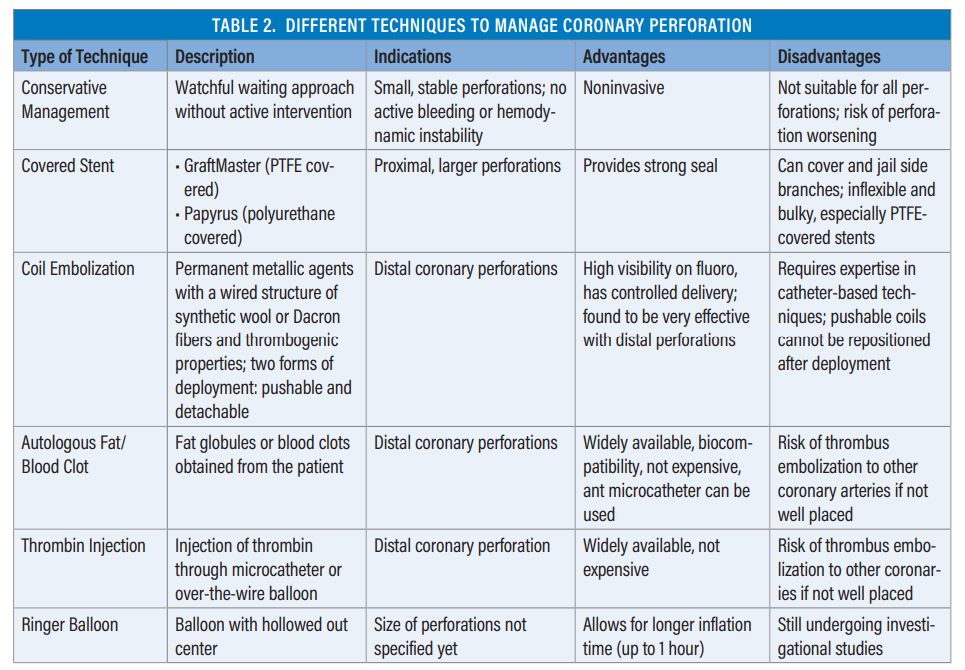
Coronary arterial perforation continues to be challenging task . There are multiple options to arrest the perforation as listed below.

Image source Ref : 1

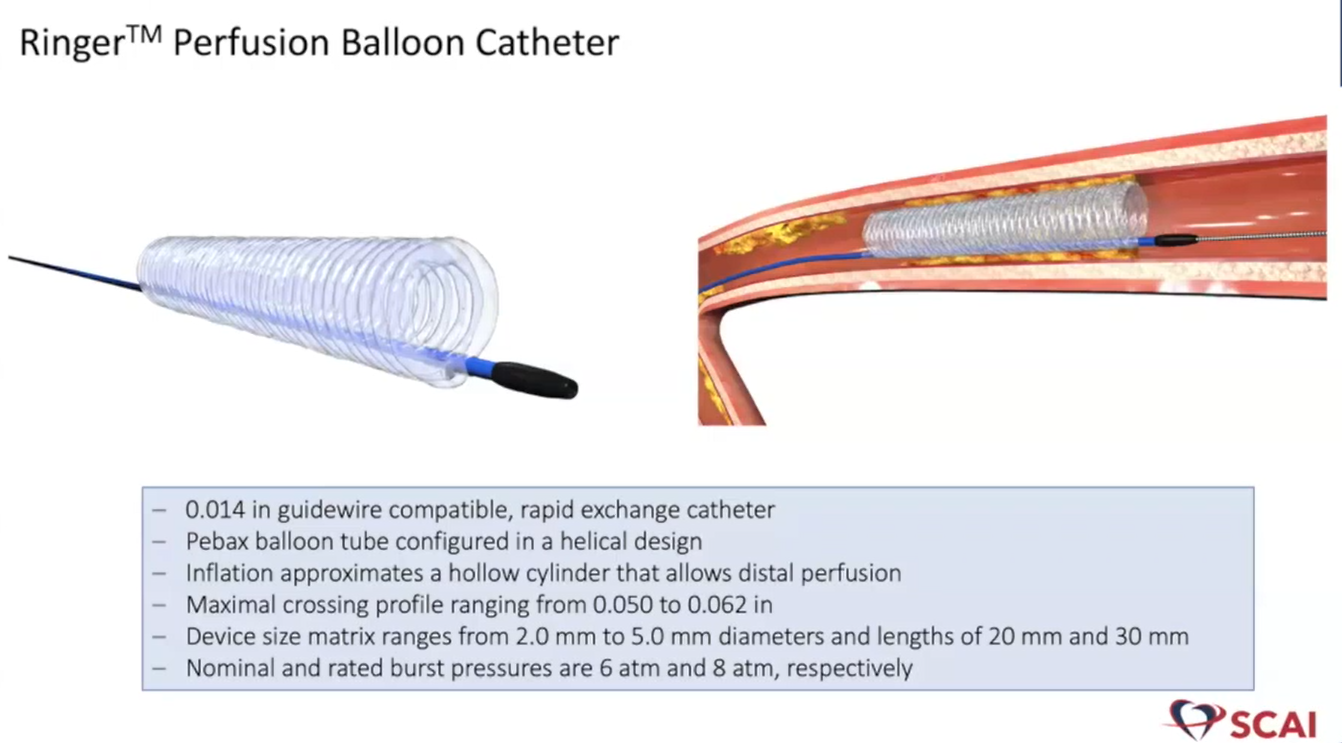
Still, we don’t have a quick balloon occlusion strategy that maintains antegrade flow. Here is a new innovation, a circumferentially inflating balloon (like an airbag or a parachute from the catheter) that can maintain the antegrade flow. This may be vital in salvaging or preventing a myocardial infarction. This balloon catheter is named the Ringer balloon, manufactured by Teleflex. ( _K_andzari DE, Alqarqaz M, Nicholson. et al J Soc Cardiovasc Angiogr Interv.2025 Jul 22;4(7):103575. doi: 10.1016/j.jscai.2025. )

Source : Teleflex website

Reference

1.Perforation-management ,A review article Molly Silkowski, Anbukarasi Maran, -An assessment of balloon tamponade, Ringer balloon, covered stents, coils, and thrombin.

2.Link to the Teleflex website

3.Link to a video lecture on Ringer balloon

Read Full Post »

It is predicted, (or already happening ) atleast 30 % of clinical consults happen with AI assistsnce or with completely with machines.

The Initial work up is suggested by the AI bots, even in ER rooms. They may be right in 80% of times. But, who is it to filter and grab those remaining 20%. No one , except a astutely learnt clinician. Unfortunately, there is no super AI to do this job.

Final message

This is the beginning of, a new exciting & dangerous era, for the medical profession. If we are not vigilant or loose our common sense, these bots will soon reach their next destination, ie patient’s bed side.

Reference

BMJ in its current Issue address these  aspects of increasing AI usage in the clinical consults

1. Clinical competencies for using generative AI in patient care BMJ 2025; 391 doi: https://doi.org/10.1136/bmj-2025-085324 

https://doi.org/10.1136/bmj-2025-085324

Read Full Post »

Interventional cardiology’s flag-bearing procedure primary PCI stands tall and is being projected to be the greatest thing to happen for the human heart during the critical times of STEMI. The aim is to do a fast PCI to salvage the myocardium. Unfortunately ,It has become a strange habit, (endorsed by even learned cardiology forums) to define the success of primary PCI based on the restoration of TIMI 3 flow in the IRA, and not on the amount of myocardium salvaged .

What is more worrisome is, the fact, that almost every experienced cardiologist knows, crystal clear, that there is a pitiful relationship between TIMI flows at the epicardial artery and subsequent LV function. Of course, it might improve as time goes on. Still, it is unacceptable to define success of pPCI prematurely. some times, as early as the patient is wheeled out of cath lab.

What does the evidence say ?

The incidence of moderate or severe LV dysfunction even after a timely pPCI is still significant. The average incidence hovers around 36% .It would mean , atleast one third of patients who undergo pPCI leave the hospital with significant myocardial damage, but the cath lab report would say proudly , it is a successful pPCI without any untoward events. (Mind you, in the strict sense, even treated no-reflow should come under partial failure of pPCI, which again constitutes another 20%) Ref : Papapostolou S, et al, A Long-term clinical outcomes of transient and persistent no-reflow following percutaneous coronary intervention (PCI): a multicentre Australian registry. EuroIntervention. 2018 Jun 20;14(2):185-193.

Comparative studies that looked into LV function following pPCI

Study (Year, Location)Sample SizeLV Dysfunction DefinitionIncidence (%)Key Predictors
Khaled et al. (2022, Saudi Arabia)2863LVEF ≤30% (early, <24h echo)36%Anterior STEMI, high troponin, renal impairment, multi-vessel disease
Liu et al. (2023, China)186LVEF decline (long-term, 4y)54 %High peak troponin I, anterior STEMI, prior MI, low baseline LVEF
Kim et al. (2018, Korea)1736LVEF ≤40% (3-12m echo)14%Baseline LVEF ≤40%, renal insufficiency, high peak CK/CKMB
Parodi et al. (2007, Italy)500<40% (Variable)27-60% range citedAnterior MI, large infarct size
HORIZONS-AMI (2011)Large RCTHeart failure post-PCI5-9%Thrombus burden, delayed reperfusion

​Note a curious point : The HORIZONS-AMI had a very low incidence of LV dysfunction totally a disconnected with the reality

Final message

It is a height of deceit, when some of us are still canvasing patients, emphasizing , that  it has 95% success, hiding behind the TIMI 3 flow at IRA. Still waiting for the day of reckoning (Read my 2016 presentation in CSI Kochi conference) when the ACC/ESC/SCAI , will ultimately redefine the definition of successful pPCI to include a cut off of post-procedure EF of at least 50%.

Let us not stop with that, we have to mitigate the LV dysfunction with all our might. This implies early preventive and protective measures to maintsin  the microvascular integrity , which is responsible for this epicardial-myocardial dissociation.

Reference

  1. Khaled S, Shalaby G. Severe left ventricular dysfunction earlier after acute myocardial infarction treated with primary percutaneous coronary intervention: predictors and in-hospital outcome. A Middle Eastern tertiary center experience. J Saudi Heart Assoc. 2022;34(4):257-63. https://doi.org/10.37616/2212-5043.1325sha257-263.pdf​j-saudi-heart
  2. Liu C, Guo M, Cui Y, Wu M, Chen H. Incidence and predictors of left ventricular function change following ST-segment elevation myocardial infarction. Front Cardiovasc Med. 2023;10:1079647. https://doi.org/10.3389/fcvm.2023.1079647pmc.ncbi.nlm.nih+1
  3. Kim DH, Park CB, Jin ES, Hwang HJ, Sohn IS, Cho JM, Kim CJ. Predictors of decreased left ventricular function subsequent to follow-up echocardiography after percutaneous coronary intervention following acute ST-elevation myocardial infarction. Exp Ther Med. 2018;15(5):4089-96. https://doi.org/10.3892/etm.2018.5962spandidos-publications+1
  4. Parodi G, Memisha G, Carrabba N, Signorini U, Migliorini A, Cerisano G, Bolognese L. Prevalence, predictors, time course, and long-term clinical implications of left ventricular functional recovery after mechanical reperfusion for acute myocardial infarction. Am J Cardiol. 2007;100(12):1718-22. https://doi.org/10.1016/j.amjcard.2007.07.022pubmed.ncbi.nlm.nih
  5. Kelly DJ, Gershlick T, Witzenbichler B, Guagliumi G, Fahy M, Dangas G, Lansky AJ, Mehran R, Stone GW; HORIZONS-AMI Trial Investigators. Incidence and predictors of heart failure following percutaneous coronary intervention in ST-segment elevation myocardial infarction: the HORIZONS-AMI trial. Am Heart J. 2011;162(4):663-70. https://doi.org/10.1016/j.ahj.2011.07.032pubmed.ncbi.nlm.nih+1

Read Full Post »

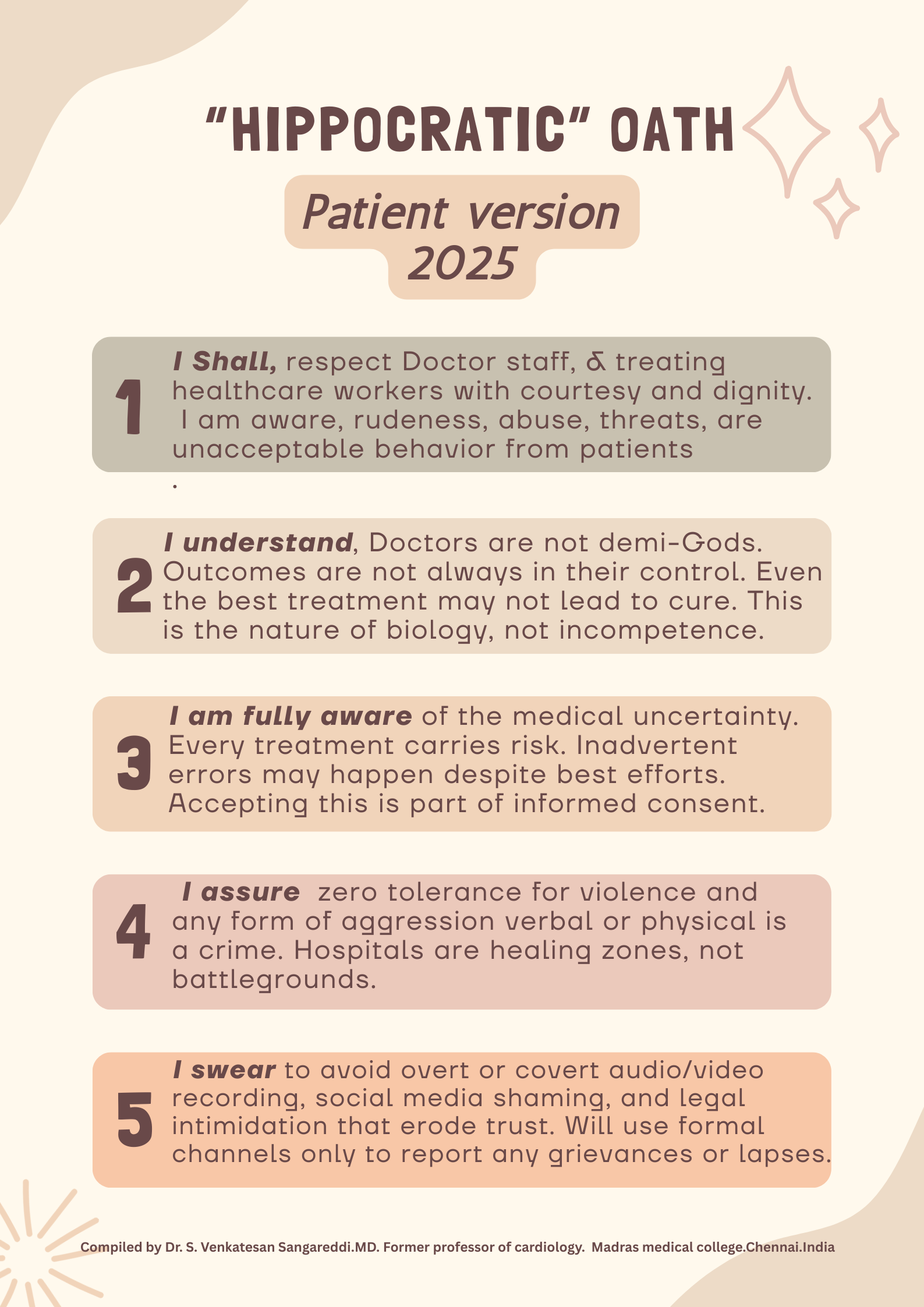
While patient rights has been extensively discussed and debated , there is some concern especially in country like India, where violence against medical professionals has increased to prohibitive levels. This is mainly attributed to low levels of tolerance and high expectations from the doctors and hospitals.

There has been multiple Incidents where doctors are attacked, even when a life is lost due an incurable disease in spite of well administered treatment . Many patients are unable to differentiate the natural history of illness , any death is looked upon as medical negligence. In this context, there is a call for patient education and teaching them responsibilities and make them understand the complexity and uncertainty in the science of biology, and also accept the reality of inadvertent errors in judgment and execution in medical practice. 

A curious solution is suggested .Yes , its called Hippocratic Oath : Patient version .The father of medicine would have never thought , a day would come , when patients might, try to prevail over the Doctors .Readers may decide about the political correctness , utility and practicality of such an oath.

Read Full Post »

SCAD : No dissection is spontaneous

“Nothing moves without an external physical force”

SCAD is a popular entity among cardiologists in angiographically sub-categorizing of ACS, especially in women. The entity is indeed important to recognize, as the otherwise omnipresent PCI, is contraindicated in SCAD.

Meanwhile, we can’t take every suspicious-looking dissecting flap as SCAD in women. The word spontaneous in SCAD, could often convey a potentially erroneous meaning, for the simple reason, plaque ruptures and fissures that triggers dissections of varying lengths can be spontaneous as well.

By the way, any tips to differentiate SCAD from spontaneous plaque ruptures and fissures ?

OCT in SCAD : A SCAD caused by an intimal tear (arrow) resulting in expansion of a false lumen and an intramural hematoma (plus sign). B SCAD caused by de novo injury and bleed inside vessel wall resulting in the false lumen with intramural hematoma (plus sign) Source Shah, T et al  Curr Cardiol Rep 24, 529–540 (2022). https://doi.org/10.1007/s11886-022-01676-7

Final message

Nothing moves with out a force either from witjin or external . In both SCAD or plaque rupture , an emotional or hemodynamic stress is responsible.

The above list to differentiate SCAD from plaque fissure is big, but few are actually useful. Sometimes, the confirmation comes from the direct feel and the haptics of the lesion and the level of difficulty in crossing the lesion.

Caution : However, in explict clinical situations, as in a young pregnant women with ACS,  who has a long spiral dissection , never diagnose anything other than SCAD.

Post-amble: * I wonder, how did the cardiology literature accumulated so much OCT data in SCAD, it should have been very risky procedure  in those friable vessels. If PCI is contraindicated , OCT comes very close to it.

Read Full Post »