Today , September 29th is the World heart federation, backed official World Heart day.
Reclaiming the Soul of World Heart Day
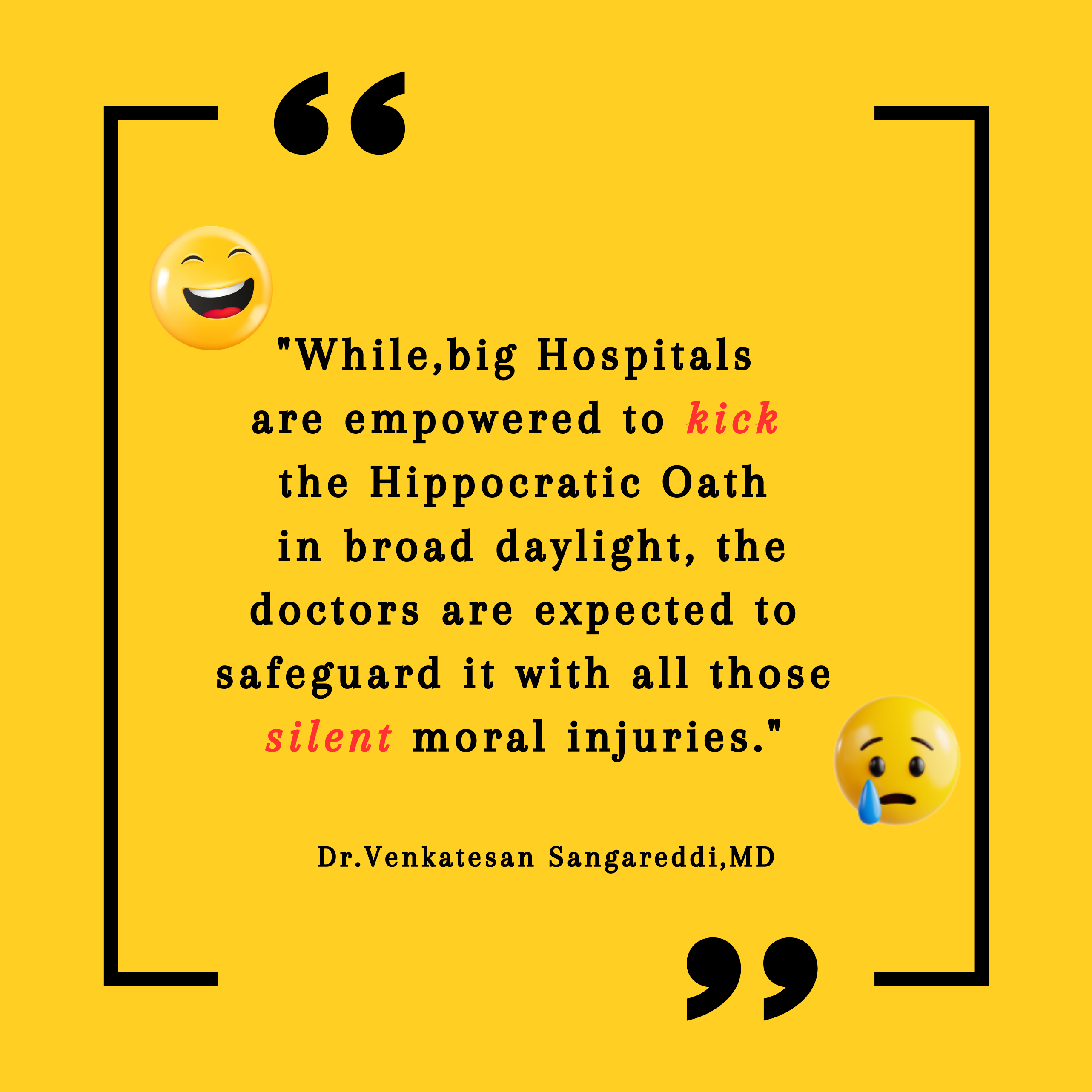
Have you ever wondered why cardiologists, physicians, and big hospitals celebrate World Heart Day in a most sacred way as if it is festival of Diwali, Dussehra, or Onam? The scale of these celebrations and the accompanying mainstream media blitz have become truly overwhelming.
Originally, this day was meant to create genuine awareness about the rising global epidemic of heart disease. It was designed to propagate healthy lifestyle choices among the public and protect vulnerable hearts.
But it does not stop there. There is a concealed interest public rarely sees. Although we often emphasize that prevention is preferable to a cure , the explosive growth of high-tech diagnostics and aggressive therapeutic modalities has ironically become theenemy of true preventive care. World Heart Day has increasingly been hijacked as a marketing to drive hospital footfalls rather than to create true wellness.
The much glamourised , gadget based diagnostics , advanced screening packages, & biochemistry based “preventive heart checkups” have not yielded the desired results. In fact, by creating unnecessary anxiety and over diagnosing minor anomalies, they can have the exact opposite effect. As custodians of health, we must shift the focus away from lucrative diagnostic packages and return to the simple, low-cost fundamentals of diet, exercise and lifestyle modification.
I think, on this world heart day , We should make the public realise, it is absolutely possible they can prevent a heart attack in their life time, without fearing about their calcium scores, exotic lipid sub fractions or CT angiograms. Let us reclaim World Heart Day as a forum for genuine public health, not a corporate festival.
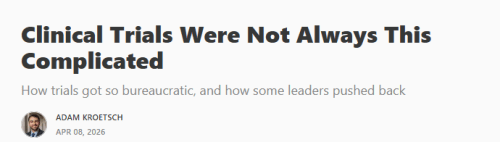
Very soon, blogs and independent writing will be the only source of unadulterated truths. One such article is shared here written by Adam Kroetsch , formerly in the FDA
A review and comments
The above article compellingly recounts how clinical trials evolved from ad-hoc, investigator-led efforts in the mid-20th century to the bureaucratic behemoths of today. It highlights the “golden age” of the 1980s-1990s, when academic “trialists” pioneered large simple trials like ISIS and GISSI. These mega-trials enrolled tens of thousands with minimal protocols ,one-page forms, no routine monitoring or source data verification (SDV), proper randomization, and focus on clinical hard endpoints and mortality delivering transformative, low-cost evidence on treatments like streptokinase and Aspirin.
The decline followed the rise of Contract Research Organizations (CROs) in the 1990s, global Good clinical practice -GCP guidelines (1996), and FDA missteps. Trials are now industrialized and bureaucratized: extensive on-site monitoring, exhaustive adverse event reporting, data audits, and risk-averse compliance layers inflated the costs (rising 10% annually). Academic and NIH-funded large trials plummeted .Pharma shifted to smaller, often useless biomarker-driven studies instead of clinical outcome. (Eg Drug X reduce NT-pro BNP by this,and it is crowned in glory ). The irony is ,the trialists are crying “foul” at GCP, and call it unscientific as they interupt the industry.
Who is responsible for this chaos?
Primarily commerce and greed in a profit-driven ecosystem .Alos pharma’s risk aversion and demand for speed and volume. Other factors were, heavily empowered CROs, Perverse incentives and Industry balance sheets, dictated the how science should behave. No surprise , true academics and genuine funders retreated amid prohibitive costs.
Final message
GCP is not a taboo subject, as some non- academic forces would like to envisage. Let us bring back the golden age of simple trials—even observational ones will bring the truth when done appropriately .Let us stop this big commercialised RCT nonsense with ultier motives.
Statistics is the most advanced form of mathematics by which predictions about the future can be made with some degree of surety. It is a vital cog linking biology with maths. However, since the last few decades, an abnormal man made bio-mathematical mutation is being spotted in the field of medical statistics.
Why superior scientists avoid Non Inferiority (NI)trials?
They avoid relying NI -trials due to fundamental statistical, interpretive, and ethical weaknesses that undermine rigorous evidence and patient benefit.
Superiority trial models , reduce bias towards the null hypothesis and proactively protect against false claims. NI trials just do the opposite. The same issues dilute differences, biasing toward falsely concluding the new treatment is “not unacceptably worse” than the active control by a pre-specified margin . Without a placebo arm, sensitivity cannot be confirmed, and the assumption remains tentative.
Key vulnerabilities In NI trials include arbitrary, manipulable margins that may permit clinically meaningful inferiority. High success rates (>85–95%, especially industry-sponsored) suggesting bias, and risks ( Biocreep) where successive approvals erode standards. “Non-inferior” does not mean equivalent .It can mask statistically significant inferiority. Reporting often deviates from guidelines, with inconsistent margin justification and analyses (ITT vs. per-protocol).
Ethically, NI designs accept potential efficacy loss for unproven gains (convenience, cost, safety) without direct proof, exposing patients unjustifiably in high-stakes areas. They place disproportionate proof burdens on de-escalation or alternatives while entrenching suboptimal standards.
A Lancet Oncology piece highlights this as “the tyranny of non-inferiority trials”:. The authors propose abandoning superiority/NI distinctions for simple “comparative” trials.
Final message
Superior scientists prefer superiority or hybrid designs, or direct comparisons of net patient-centered outcomes .They never go for the NI shortcuts driven by regulatory or commercial pragmatism.
Getting a second opinion from another expert is a valuable option for our patients when they face a complex decision-making process, especially when a cardiac intervention is advised. No doubt, it is their fundamental rights too.But this could be hard, if the second opinion is sought regarding indication for coronary or interventional procedure.
It is much, much comfortable to concur with the original decision if it is pro -Intervention. (even if it is against your conscience). Vetoing a procedure which was advised by some big hospitals is almost impossible for cardiologists sitting at their office, however experienced they may be. This is because it is sort of going against, the mainstream and defying science as well. Both doctors and physicians are stuck.
I confront such situations often from patients following elite cardiology consults. I had been forthright and genuine and said a firm no or yes to many such procedures . I understood much later, that only a minority of the patients followed my No advice , while invariably they accepted my yes.
After much confabulations , recently, I have made some recalibarations on my values, (decent term for compromise ) despite all the ethical stuff I write in these columns. But, three things I ensure , before giving my opinion which goes against my assessment.
“This procedure is not indicated in the true scientific and moral sense, but 1.If you lack full trust, or 2. If you are not ready to accept the risks of not doing it, or 3. If the fear (of not doing it ), would nag you constantly, then get it done as per the advice of the big guys”.
Final message
Until we acquire the courage to express our true opinion , we certainly fall under the tag of medically incompetent.
Very soon, getting a second* or even third opinion may not really matter. Doctors are silently persuaded to follow the guidelines thursted by big scientific syndicates along with compulsion to go with patient wish & preference.
*Caution and clarification
Second clinical opinion for helping to arrive at a medical diagnosis is of immense value and a great thing to do. In fact, doctors themselves ask for it when they are in doubt. This article is about second opinion regarding the appropriateness of various interventional procedures that is defining modern medicine.
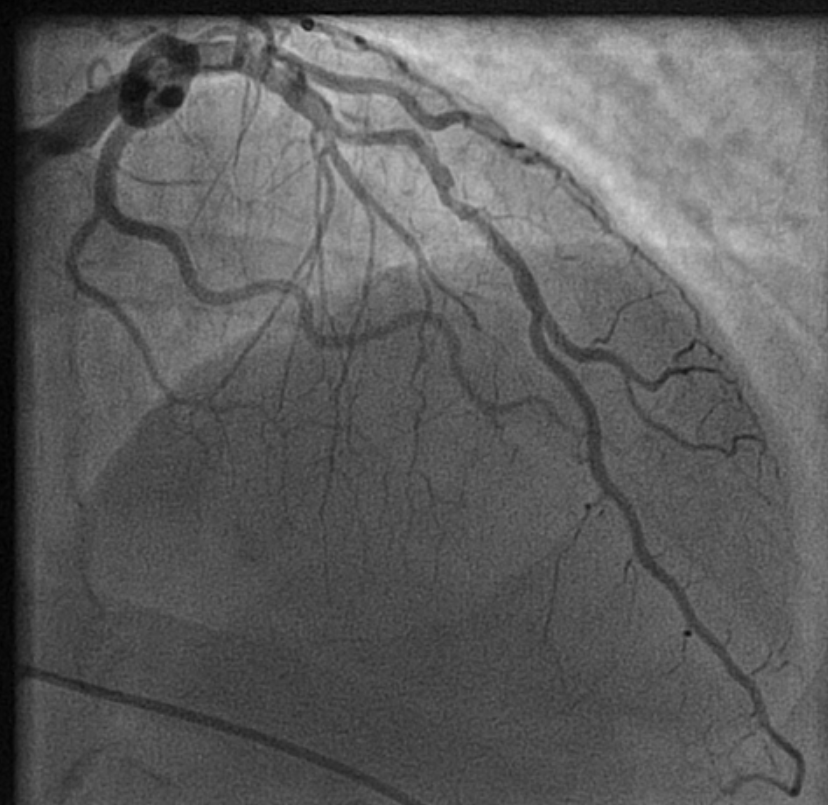
Decision making for PCI in chronic CAD continues to be delicate. This is especially true, if the lesion is Intermediate and the plaque vulnerablity is susepcted.
How to tackle this stress positive Intermediate LAD lesion. Functional capacity good. Non-diabetic, mildly elevated lipids. Now, continuing medical management with intensive lipid control is the best possible management. (We have evidence for medical management being good even in significant 90% lesion) Above is a case report from https://www.acc.org/education-and-meetings/patient-case-quizzes/medical-therapy-for-cad
Reassurance is a revascularization equivalent
Sharing a similar experience with one of my patients in his early fifties. After getting a fairly convincing consultation, he accepted medical management. However, guided by both NI & AI, he sought a second opinion to confirm whether my assurance was indeed correct. He underwent FFR and OCT, and both he and his plaque became vulnerable. The FFR was normal. He was too intelligent to ask about the FFR – Stress test discordance, for which his cardiologist had no answer. Still, they did not advise a PCI and the decision was left to him, respecting the current patient-oriented guidelines.
The patient went home empowered but spent sleepless nights, fearing about potential fissures, in the life sustaining fibrous cap.He believed that he was at the mercy of a 75-micron thin cap covering his plaque. In one of the anxious days,in the following week , he got admitted himself in a posh downtown cardiac center. A as per the guidelines, the patient chose his own pathway for a PCI. Cardiologists obliged piously to his wishes. Now, he feels better. He says he is happy to undergo a self prescribed stent.
I was glad, he had the courtesy to come back and showed the results. I learnt. it costed him 6 Lakhs and his insurance covered it fully. I realised , my 30 minutes reassurance was busted by the insurance card in few minutes. I wasn’t surprised.It’s okay, it’s all in the game. I learned it long ago. Fear* (either spontaneous or induced), the power to decide & affordability are the most powerful determinants of any inappropriate medical procedure.
Learning cardiology from UN & WHO
We have United Nations and WHO, the two global guardians. Any one with average intelligence will agree, these instituions can never bring either peace or health to this world.Let us ensure, the practice guidelines of cardiology doesn’t go that way. We boast ourselves, that we have a strongly evidence based vigorously scrutinized cardiology practice framework. How true it is ? Are we hiding behind pateint preference, and pushing science to the background ? Let us be transparent. I think it’s time, the powerful bodies like ACC/ESC should connect all the missing dots. .One important issue is, fear or anxiety-driven PCI, which usually overtakes other true indications.
Final message
In an ideal world , reassurance and GDMT , if properly done, should be a revascularization equivalent in most CAD patients .The reality is, fear* prevails over reassurance, for a variety of reasons.
Postamble
*Anxiety thrives well, in an environment of uncertainty. It is mutually inclusive among both patients and physicians.However most Professional physicians are expected to tackle it. Still many struggle. Patient : What if the block worsens? Physician: What if the patient comes back with an event and oh .. my pride and practice? May be, physicians are not to be blamed much. I think. it is all about a unexplained, biased human mind set. Even a death during an inapproproate Intervention is pardoned off, but an error, raising out of an appropriate medical mangment is rarely forgiven.
It is predicted, (or already happening ) atleast 30 % of clinical consults happen with AI assistsnce or with completely with machines.
The Initial work up is suggested by the AI bots, even in ER rooms. They may be right in 80% of times. But, who is it to filter and grab those remaining 20%. No one , except a astutely learnt clinician. Unfortunately, there is no super AI to do this job.
Final message
This is the beginning of, a new exciting & dangerous era, for the medical profession. If we are not vigilant or loose our common sense, these bots will soon reach their next destination, ie patient’s bed side.
Reference
BMJ in its current Issue address these aspects of increasing AI usage in the clinical consults
The contents of the this blog is being published as Kindle E book , as per the request of many of the readers. Every article will continue to be open source in this site. Again I shall reiterate the book format is not aimed at any commercial intent. It is only to facilitate learning in a single book format Here is the link to book https://amzn.in/d/euhL5vu
Click below to see who is watching this website live !
This site will never aim for profit. Still ,this donation link is added at the request of few visitors who wanted to contribute and of-course that will help make it sustainable .
Please Note
The author acknowledges all the queries posted by the readers and wishes to answer them .Due to logistic reasons only few could be responded. Inconvenience caused is regretted.