Feeds:
Posts
Comments

Archive for April, 2026

STEMI and STEMI Equivalents, i.e. Who Needs the Cath Lab Now! — Taming the  SRU

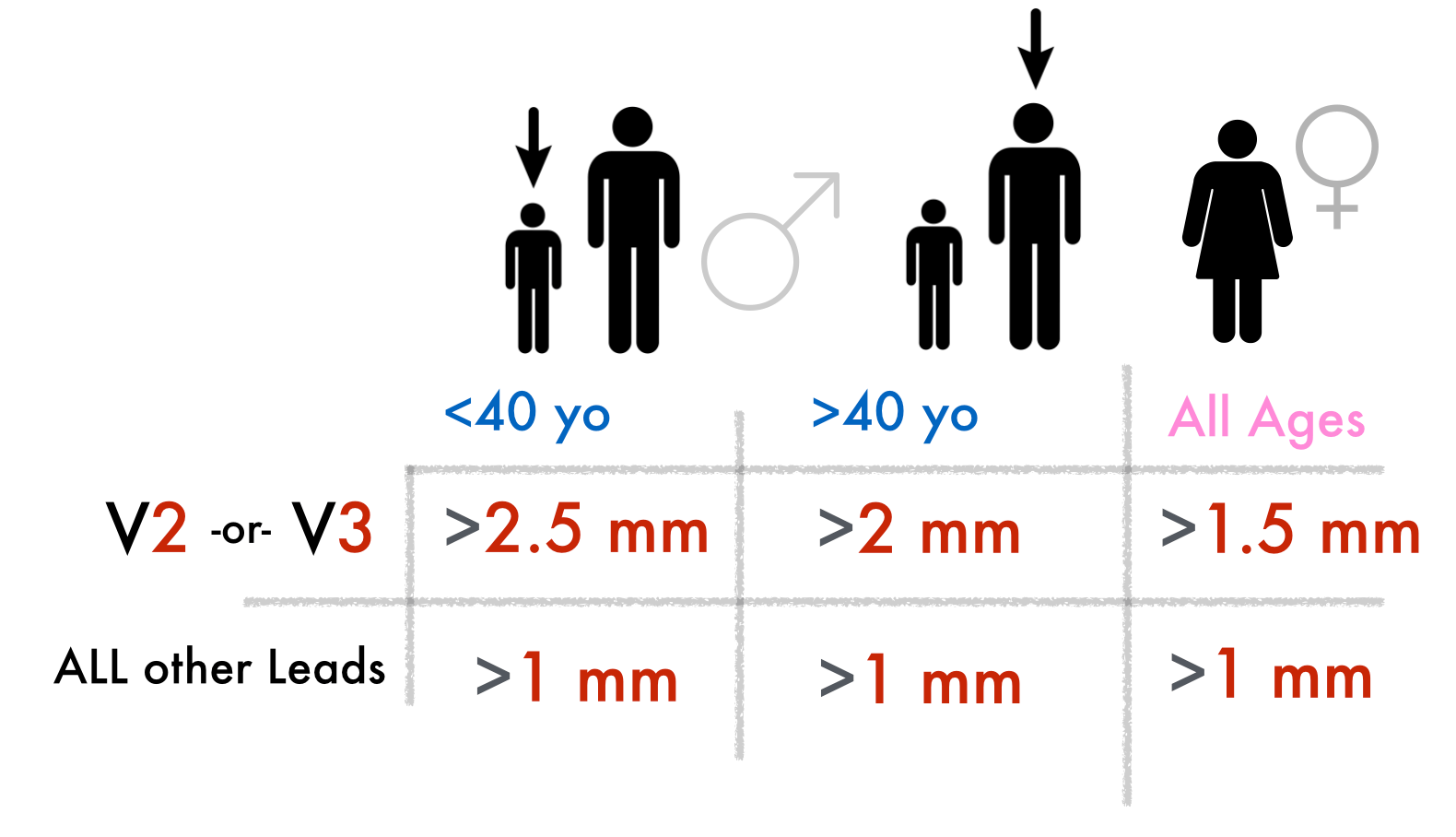
In healthy people, some J-point/ST elevation in V2–V3 is normal. This physiologic elevation is greater in men than in women Using the same cutoff for everyone would cause many false-positive STEMI calls in men (over-diagnosis) while missing true ischemia in women (under-diagnosis).

Molecular and Ionic basis

The difference is not because gender based difference in ischemia response . It is because ventricular repolarization differs between men and women due to sex hormones acting on cardiac ion channels. These differences appear at puberty and are belived to be driven by androgenic hormones.

Mechanism

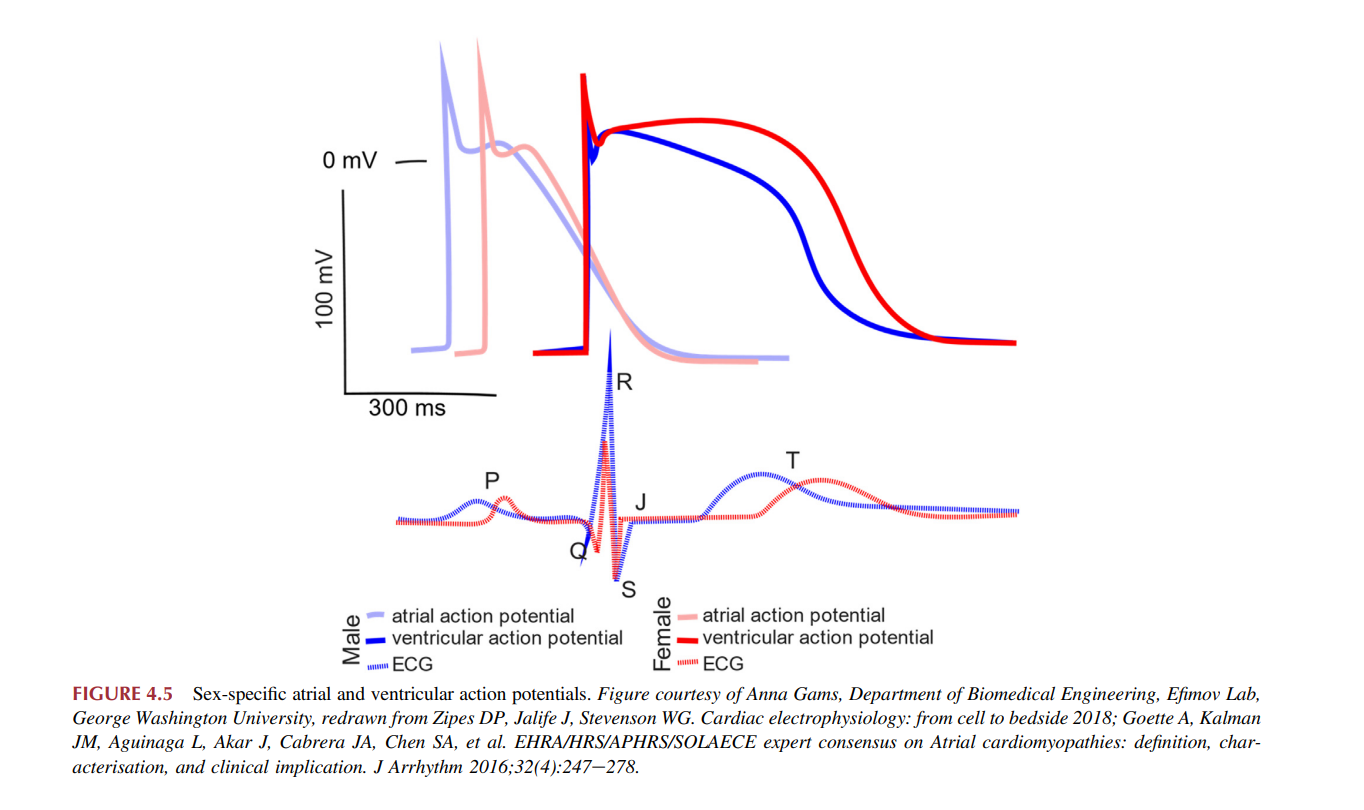
Transient outward potassium current (Ito, carried by K+channels) is higher in male ventricular epicardium than in females. Testosterone up-regulates Ito density and function. In the action potential (AP) of epicardial myocytes higher Ito produces a deeper phase-1 notch This creates a larger transmural voltage gradient (epicardium vs. endocardium during phases 1–2 of the AP. This transaltes in the surface ECG as J-point elevation reflecting early-repolarization voltage gradients. Greater gradient steepr the J-point and higher ST takeoff .This is called the the classic “male-pattern early reppolarization.”Women have a shallow j point.

Image source : Blinova, Ksenia (2020). Sex and Cardiac Electrophysiology Atrial and ventricular tissue electrophysiology.

Why this difference is not seen in limb leads ?

Note : This J point difference is more prounuced in chest leads only because they are unipolar , and very close to epicardium and picks up the difference

Final message

Whenever we have trouble identifying the true mechanism in any gender-related difference, it is easy to blame it on either testosterone or estrogen. As in the atheletic filed , men are naturally a little faster to fly off from the start-boots in the early phase of repolarization. This also has some connection with why women have longer basal QT intervals than men. The whole repolarization process is slow but steady. We can alos realise, in spite of longer QT, women have less incidence of primary ventricular arrhythmias even during ACS, implying better reslience and stress handling. (Ref 2)

Reference

1.Blinova, Ksenia (2020). Sex and Cardiac Electrophysiology || Atrial and ventricular tissue electrophysiology. , (), 39–48. doi:10.1016/B978-0-12-817728-0.00004

2.Weizman O, Marijon E, Narayanan K, et al. Incidence, Characteristics, and Outcomes of Ventricular Fibrillation Complicating Acute Myocardial Infarction in Women Admitted Alive in the Hospital. Journal of the American Heart Association. 2022;11(17):e025959. doi:10.1161/JAHA.122.025959.

Read Full Post »

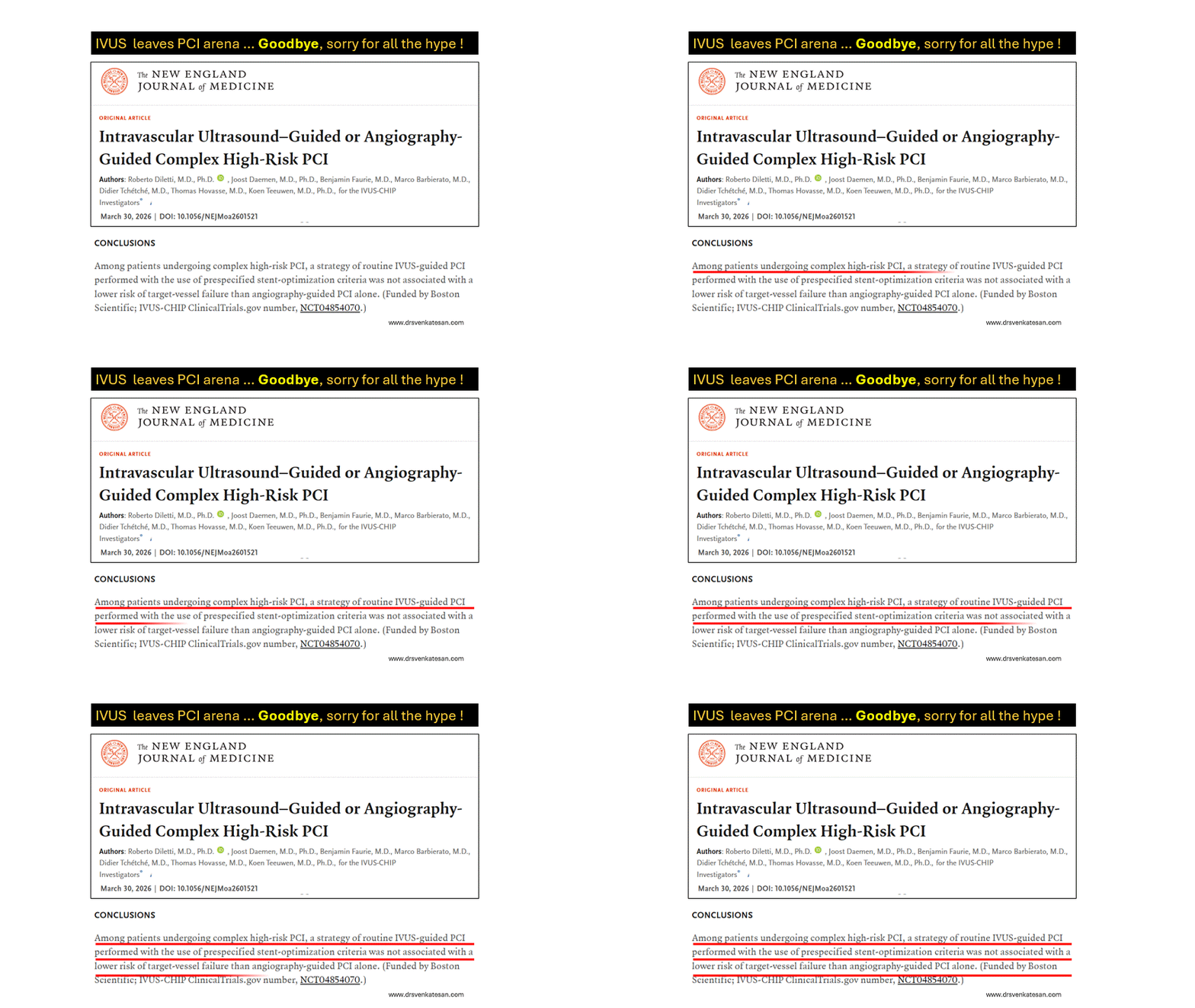
How many conferences, live workshops, where elite cardiologists, thought leaders (rather, academic influncers) , were projecting glittering power points about IVUS guided stent optimization, the sacred MLA’s , high precision POTS.They , sort of seduced us to believe , that these are going to rule the next generation PCIs .

In fact, some them warned us (with the company brand on the background) it’s a Interventioanl cardiac crime to do any left main interventions without imaging.

Now, two back to back papers has come in NEJM* , ridiculing routine IVUS (after exhausting the market, and seeing no further scope or takers for this deciet market ) . It simply accepted the fact , that routine angiogram is good enough for both left main and all complex interventions. *

In fact we should thank the respected compnies, for deciding to stop this futlity.

Final message

The message from this study is , we should concentrate on the treatment of the whole burden of atherosclerosis. Let us not waste our resources to optimize the stent with exotic imaging , which can be done by conventional means.

Further, Cardiologists are obliged to apologize to their fellow physicians as well as the patient community for hyping up these unnecessary tools causing financial excess and promoting pseudo-science. They should also take an oath , they will not embrace the future technologies, prematurely and blindly.

Postamble

Waiting for OCT to go the same way as IVUS very soon. *By the way, I want to ask NEJM one question: Do you have any mechanism to identify these futilities earlier? Because you guys only publish and lift up the Iniital hypes.

Read Full Post »

Statistics is the most advanced form of mathematics by which predictions about the future can be made with some degree of surety.  It is a vital cog linking biology with  maths. However, since the last few decades, an abnormal man made bio-mathematical mutation is being spotted in the field of medical statistics.

Why superior scientists avoid Non Inferiority (NI)trials?

They avoid relying NI -trials due to fundamental statistical, interpretive, and ethical weaknesses that undermine rigorous evidence and patient benefit.

Superiority trial models , reduce bias  towards the null hypothesis and proactively protect against false claims. NI trials just do the opposite. The same issues dilute differences, biasing toward falsely concluding the new treatment is “not unacceptably worse” than the active control by a pre-specified margin . Without a placebo arm, sensitivity cannot be confirmed, and the assumption remains tentative.

Key vulnerabilities In NI trials include arbitrary, manipulable margins that may permit clinically meaningful inferiority. High success rates (>85–95%, especially industry-sponsored) suggesting bias, and risks ( Biocreep) where successive approvals erode standards. “Non-inferior” does not mean equivalent .It can mask statistically significant inferiority. Reporting often deviates from guidelines, with inconsistent margin justification and analyses (ITT vs. per-protocol).

Ethically, NI designs accept potential efficacy loss for unproven gains (convenience, cost, safety) without direct proof, exposing patients unjustifiably in high-stakes areas. They place disproportionate proof burdens on de-escalation or alternatives while entrenching suboptimal standards.

A Lancet Oncology piece highlights this as “the tyranny of non-inferiority trials”:. The authors propose abandoning superiority/NI distinctions for simple “comparative” trials.

Final message

Superior scientists prefer superiority or hybrid designs, or direct comparisons of net patient-centered outcomes .They never go for the NI shortcuts driven by regulatory or commercial pragmatism.

Reference

1.Tannock IF, Buyse M, De Backer M, et al. The tyranny of non-inferiority trials. Lancet Oncol. 2024;25(10):e520-e525. doi:10.1016/S1470-2045(24)00218-3.

2.Beryl P, Vach W. Is there a danger of “biocreep” with non-inferiority trials? Trials. 2011 Dec 13;12(Suppl 1):A29. doi: 10.1186/1745-6215-12-S1-A29. PMCID: PMC3287743.

Read Full Post »

Caution: Harsh language & Unscientific truths

It is a pattern out there, rolled out periodically in cardiac- pharma literature . It happened for Digoxin. They have been trying to do this to beta blockers for quite some time. They successfully ditched beta blockers in systemic hypertension with synthesized evidence. Mind you, BBs are the only drug that received a Nobel Prize for its invention, and its role in post-MI protection is well established.

The script is well written. Trying to ring a death knell for cheap and established medical therapeutic norms, citing lack of evidence. It is done based on some non-sensical study designs called Non-Inferiority Trials. (Tannock I, Buyse M, De Backer M et al.The tyranny of non-inferiority trials The Lancet Oncology, 25, e520-e525 Now, powerful cartels want to get rid of BBs in  post-MI ecosystem. REBOOT, REDUCE-AMI, ABYSS all were done with fixed ideas. Of course, ABYSS didn’t follow their agenda. Now, a  the latest trial has come out with a magical name SMART – DECISION.

Read this paper https://www.nejm.org/doi/full/10.1056/NEJMoa2601005

One famous statistician said, non-inferiority study concept is foundationally flawed. Hence, it is generally not worth reviewing them, as most conclusions are deemed to be wrong and not scientifically consumable. Still, looking beyond the trial design, three important flaws are obvious in SMART-DECISION’ trial , which argues for beta-blocker discontinuation after MI.

The study population is highly selected (median 4.7 years 98% revascularized; median LVEF 59%). The study advocated discontinuation among long-term accrued beneficiaries of BBs rather than typical 6–36-month post-ACS patients. Physician-driven HF hospitalization amplifies open-label bias. A wide non-inferiority margin (HR upper CI <1.4) plus low events (132 total) leave it underpowered, unable to exclude modest 15–25% harm (7.2% vs 9.0%).

Final message

In science, we need to be right first … being polite is optional.

When big science tries to corrupt our minds, what should we do? Let us continue with our conscience and follow the instinct and work for the welfare of our patients. We know the healing power of BBs. Let us be cautious and alert. Never allow wayward science to intrude upon our minds to take STUPID DECISIONS and defame the OMT in CAD.

Postamble

A newchallenge to take on

Fact : There is no published RCT that proves diuretics improve mortality and survival in heart failure.

Action requested : Let all evidence-based cardiologists withhold injections of Furosemide or Torsemide when they encounter their next patient with acute heart failure and pulmonary edema.

Read Full Post »