.
Post-amble
Are you a professional physician doctor ?
Honestly I am struggling to become one , it is still a long way to go.
Posted in Uncategorized, tagged bmj, ethics in cardiology, ethics in medicine, Hippocratic oath, jama network, lancet, medical ethics quotes, nejm, who is a professional cardiologist on August 10, 2025|
.
Post-amble
Are you a professional physician doctor ?
Honestly I am struggling to become one , it is still a long way to go.
Posted in Uncategorized, tagged bmj, conflict of interest, jacc, jama network, lancet, medical ethics, nejm on July 25, 2025|
Dr. Venkatesan Sangareddi MD, Former professor of cardiology, Madras medical college,Chennai .India
Medical science remains a cornerstone of human progress, and what we have achieved in the last 100 years is unprecedented. Every one of us is aware that the trust placed in medical research is sacred. Also, the medical profession is expected to remain noble as long as human beings exist. However, as in all walks of life, there must be trade-offs to any positives. Yes, this trust has increasingly become vulnerable, threatened by the pervasive and often subtle influence of conflicts of interest (COI). This is especially explicit in the current medical research landscape.

While the scientific community has made strides in acknowledging and requiring disclosure of COIs, particularly from authors , the measures are proving insufficient. There is a big irony sitting right across us. It is made to look, as if conflicts of Interest (COI) exist only with the authors.
The following article written by the author (Ref 1) calls for an awakening to every medical journal publishers, regardless of their prestige or impact factor, to recognize their vulnerability . We are expected to adopt a new paradigm of transparency in declaring COI, that extends to every participant in the publication process, including the scientific or ethical committies that approve the study ,the peer reviewers, the publishers and finally to the industries that fund the research.
Reference
1,Click here to download the full paper: A caution: It is a fairly lengthy article. (15 minutes read) Hope the suggestions made in the article are not labeled as unrealistic and possibly crazy as well.
Posted in Uncategorized, tagged bmj, common sense in medicine, ebm, ethics in medicine, evidence based medicine, experince based medicine, false evidence, jacc, jama network, lancet, medical education, nejm, pitflls of ebm on July 10, 2025|
Posted in Uncategorized, tagged acc, accurate neo tavi, aortic valve repalcement, bmj, early tavr nejm, esc, ethics, how end points of a study defined?, lancet, medical statistics, primary endpoints, sapiens core valve, stsscore, tavi, tavr for asymptomatic, tavr vs surgery on January 18, 2025|
We know TAVI is in the striking distance , to literally take over most aortic valve interventions. From a humble beginning from very high surgical risk with prohibitive comorbidity, now it has almost touched the totally asymptomatic, relatively morbid-free patients. Thanks to the hardware, expertise, and motivation from multiple forces.
While the numbers increase, still the debate between SAVR and TAVR is riddled with speculation, skepticism, and absolute confidence. (Reason: TAVI is a passively fixed valve in a blind procedure at a self-selected annular plane, with no option to remove the crushed native leaflet debris and the resultant complications. Lastly, TAVI’s lifespan* is currently less than half of a mechanical valve. *Expected to improve with polymer valves)
The latest trial to join the litereture is EARLY TAVR in October 2024
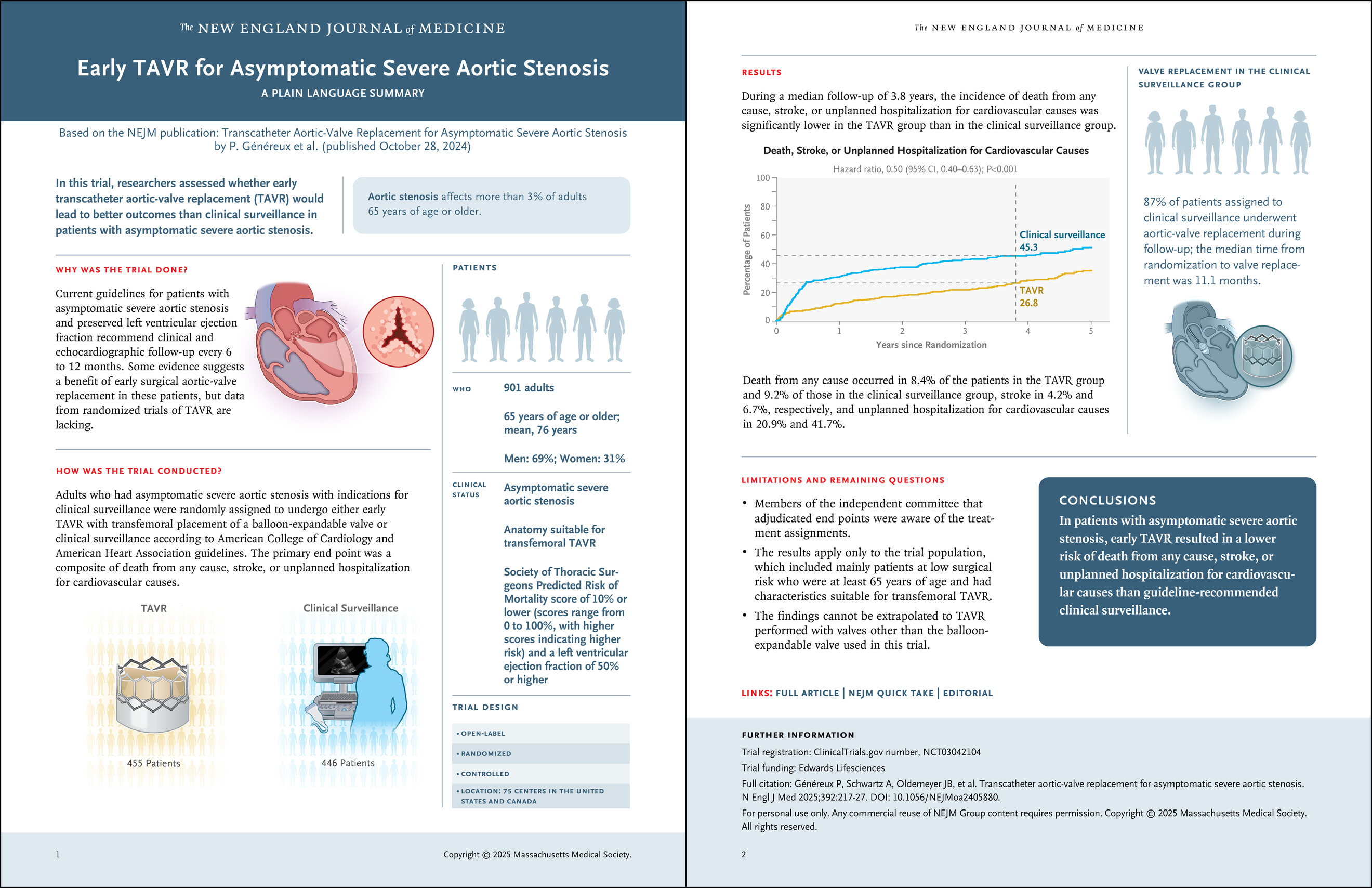
Here is a brief, personal comment about the paper for non-academic consumption. Look carefully at the 15th second of the video. Pause it, look at the number over there on the bar of unplanned hospitalisation.
It is a staggering 41.7% in clinical surveillance group, twice more than TAVI group, pathologically tilting the conclusion of the study.
Video source and courtesy https://youtu.be/3wwQEEG4aWg
By the way, what is that unplanned hospital admission? Who is planning that admission in the asymptomatic control group? If 41% of people in the clinical surveillance group needed hospital admission, what does it mean? Does that mean clinical surveillance was so poor that they were rushed to the hospital despite being asymptomatic and stable in the surveillance period?
Why should totally asymptomatic patients get admitted in the control arm, in such huge numbers? You can presume what could be the reason. My guess is too sinister.
Another issue plaguing the RCTs for decades, is continuing even in 2025. That is putting together death, stroke, and unplanned hospital admission as a combined endpoint in the same basket. This is the familiar old cheat story i.e., used to intentionally torture the truth.
Final message
Any student with basic sense of statisitcs can interpret the result of this landmark trial from NEJM correctly. The question we need to ask is, what are the triggers for those unplanned hospital admissions?
Further, it is good for NEJM (and the medical community) not to accept any papers, if the studys’ endpoints are not appropriate or defined with the intention to manipulate, which happens in many sponsored trials.
Posted in Uncategorized, tagged aim of the study, bmj, cite score, H index, i 10 index, Impact factor, junk articles and papers, lancet, medical education, medical ethics, nejm on December 18, 2024|
Absolutely yes. The number of studies with such wrong aims is staggeringly higher than we could imagine. “Wrong aim” is probably not the right word to describe them. Rather, we can call them obsolete, duplicate, illogical, unproductive, intentionally fraudulent studies, or studies with a prefixed conclusion.
There is an estimate, that says 95% of papers in nearly 5,000 medical journals, is either junk or written for the sake of publication related to mandatory academic positions or promotions as a budding scholar or faculty. Science has to survive on the shoulders of those rare & genuine 5% souls.
Final message
What is the true “Aim for your study” , I want a very honest answer ?
Yes sir, I agree ,the primary aim is to publish my damn paper and get that promotion !
A related post
There was a brief post about this in the year 2008, 15 years ago. Is it still relevant? Find out for yourself.
Posted in Uncategorized, tagged bmj, cvd prevention, jama network, journal of medical ethics, lancet, medical education, medicalethics, nejm, prevention quotes, sdg, sustainable development goals, who on August 5, 2024|

A set of attitudes, habits, or possessions associated with a particular person or group. and such attitudes, etc, are regarded as fashionable or desirable.

Final message
Communicable disease need not be an Infectious disease like covid. The word “Communicable” shall soon convey a new meaning, to the enlightened. Adverse life styles ,disseminated into the community that vigorously propagate CVD, has every reason to be referred to as a ‘Neo non-infectious pandemic”
Postamble
In the strict sense, CVD is not a communicable disease ,rather the risk factors are …but technically it is.
Reference
3.A comprehensive narrative review

Posted in Uncategorized, tagged 2023 review articles, acc aha esc guidlines, an Aldosterone synthase antagonist for Treatment-Resistant Hypertension, Baxdrostat, bmj, E MOTIVE STUDY PPH, lancet, nejm, Of-course, semaglutide, TRUNCATE TB on January 25, 2024|
Here is a pleasant surprise, a collectors issue of NEJM year book 2023, is made available free (even for non subscribers, in its website) .It is fascinating to know how fast the Internal medicine has grown. For the busy cardiologists, this will a be refreshing reminder, that there are other important organs and specialties do exist in medicine , with equal breakthroughs and Innovations.
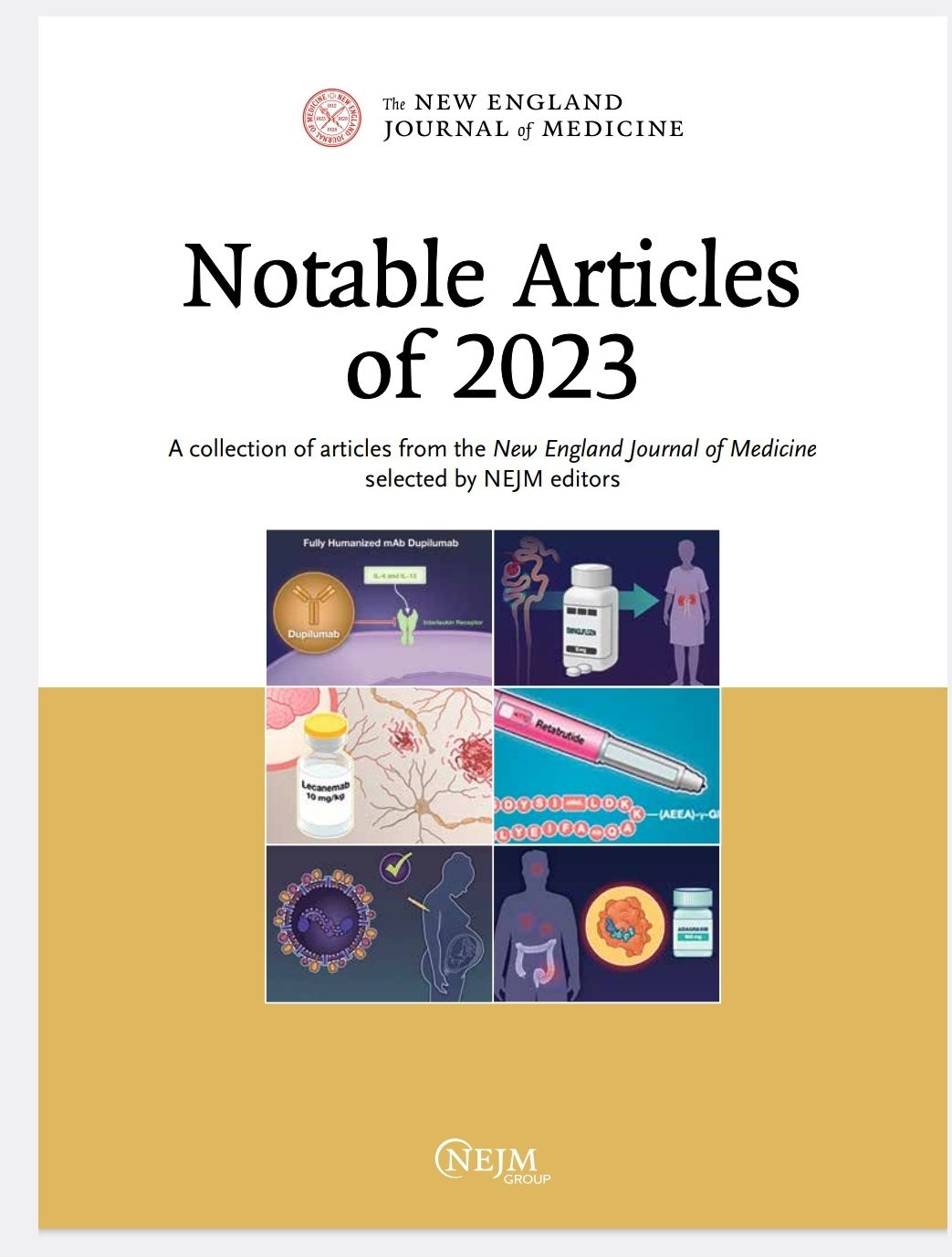
It is indeed an amazing , whirlwind tour of medicine for all those who see medical science as single holistic specialty. It has articles, ranging from from simple clinical studies on postpartum hemorrhage (E-MOTIVE study) from deep inside Africa by Melinda Gate foundation, to Dupilumab for COPD, a stunning monoclonal antibody inhibitor of IL-4 for COPD exacerbations. Shortening tuberculosis treatment with a strategy involving initial treatment with an 8-week Bedaquiline-linezolid regimen (TRUNCATE-TB study) is also a revelation.
Of-course, the mandatory cardiac topics do find a prominent place including the currently omnipresent drug GLP agonist Semaglutide for HFpEF (STEP-HFpEF study). Baxdrostat, an Aldosterone synthase antagonist for treatment-resistant Hypertension, appears promising (BrigHTN).
Final message
However, the crowning glory among all articles appear towards the end of the document, titled Combating misinformation as a core Function of Public Health.
Let me share the link to this PDF document here. Hope it allows open access and there are no copyright issues. Notable articles of 2023 from NEJM .
Posted in Uncategorized, tagged acc, aha, atorvastatin vs rosuvastatin, avert study, bmj, esc, jamanetwork, lancet, lipid association, lodestar study, lodestar trial bmj, nejm, saturn trial, simvastatin, statins, which statin superior on November 10, 2023|
Statins belong to a group of drugs, stolen and reengineered from the blueprint of natural Chinese red yeast rice (Monocoline K) in the late 1980s. The rest is the remarkable history in the pharma industry.
Statins directly interrupt the cholesterol synthesis by blocking HMG-CoA within the hepatocytes. It significantly lowers the LDL, fights human vascular atherosclerosis. It makes the plaque either regress, prevent progress, make it harder and in the process make them less vulnerable . There are innumerable studies that document the evidence. Statin has become a must-prescribe drug in any one with clinically established CAD or even in concealed CAD. Guidelines are available to prescribe statins various intensity, depending on the risk profile.
Which statin ?
There has been a long list of statins. Many of them have retired from the ring .Currently, the fight is between Atorvastatin, a Rosuvastatin. Like Pepsi vs. Coke.
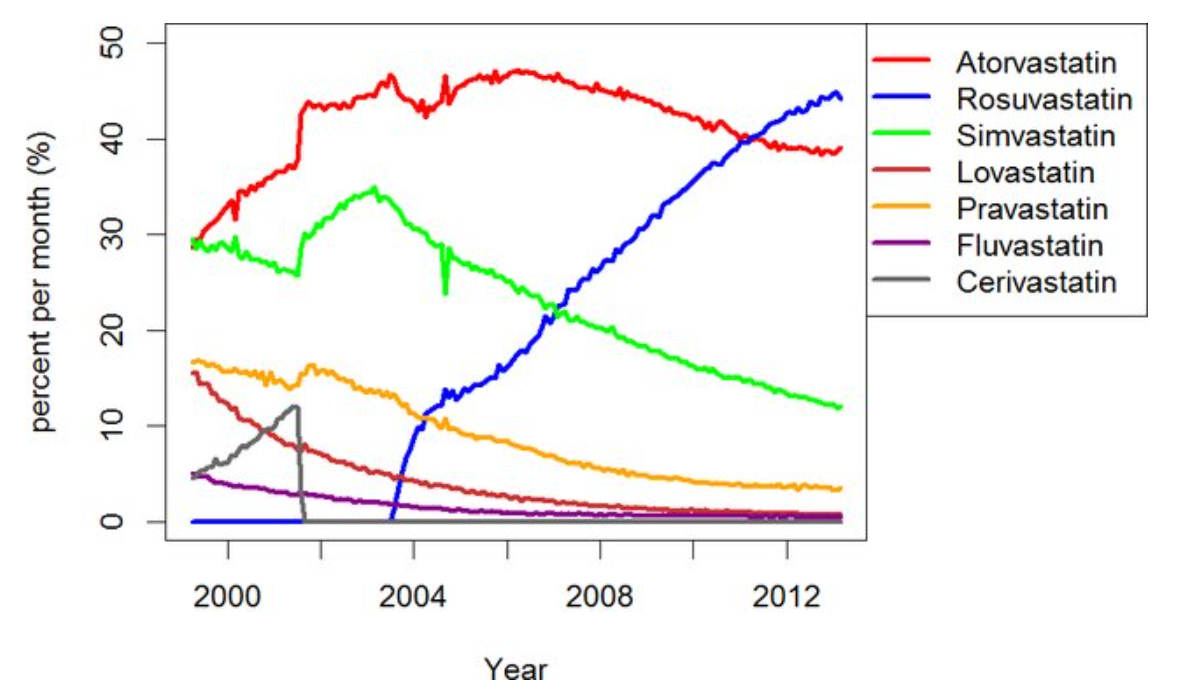
Note the graphic ,A meteoric rise of one drug since 2005 . (Can you guess the reason ?)
ATRORVA or ROSUVA Which one should I choose ?
There is very little “one to one” comparison study between Rosuvastatin and Atorvastatin .The gap in the pros and cons are narrow. Following points are observed, without much dispute.
1.Rosuvaststin is more powerful.
2.Plaque stabilisation effect is not different((Satrun, study NEJM 2011 based on IVUS)
3.New onset diabetic risk is more likely with Rosuvastatin
4.Worsening of cataract is also more with Rosuvastatin
5.Atrovastatin has some additional benefits in lowering triglycerides. (Bakker-Arkema RG, JAMA. 1996)
No one is dare enough to give strong verdict . Surprised to find one this month. BMJ has come out with a possible answer. It is called LODESTAR trial (Ref 1)
Mechanism of new onset diabetes with statins (REF 3)
It can be 7% with Rosuvastatin (less with Atorvastatin). We think, statins act primarily within the hepatocytes where cholesterol synthesis takes place, but they also have an eye on the pancreatic β-cells as well. It down-regulates GLUT-4 in adipocytes, and results in compromised insulin signalling. Furthermore, statins’ impact on epigenetics may also contribute to statin-induced T2DM via differential expression of microRNAs.
Mechanism of cataract with statins (Ref 2)
The cells lining that line the lens are dynamic and require cholesterol on a day-to-day basis. Statins inhibit proper epithelial cell development within the crystalline lens, where cholesterol biosynthesis is critical to maintain transparency and structure of the lens.
Final message
So, is it Atorvastatin or Rosuvastatin? It is left to you.
Mind you, “no statin at all” is the best option if circumstances and risk profile allows. Statins are never considered life-saving staple drugs in our fight with CAD and atherosclerosis. We, along with our scientists might may make you feel like that. Lipids can be controlled within desirable means exclusively with diet and exercise in most of the population* .
(*Forget about statins in the last 5000 years of known human existence, so many great people have lived a long and successful life in this world, without even knowing there is an organ called the heart that is responsible for the circulatory system)
Reference
Posted in bio ethics, Medical education, Medical ethics, medical satistics, tagged best medical quotes, bmj, dr venkatesan sangareddi, first do no harm primum nocere, hippocrates, Hippocratic oath, inappropriate medcial care, jamanetwrok, lancet, madras medical college, medcial ethics, medical science future, nejm, nobel prize in medicine, over treatment, principles of practice of medicine, william osler on September 8, 2023|

Postamble
This quote is being sent for the annual meet of “Right care movement” I know ,this can sound outrageous, permissble limits of abuse ? Up to 2% or 5% ? Let it be anything . Meanwhile try to enlighten yourself , the key differences between misuse & abuse.
Posted in Cardiology quotes, cardiology-ethics, Uncategorized, tagged bmj, future of medicine, google scholor, H index, hippocrates ethics, Hippocratic oath, i Index, Impact factor, jama network, kos island, lance, medical ethics, medical research issues, nejm, peer reviewed medical journal, principles of medical education, pubmed, SCIMAGO score, scopus, source normalised Impact factor on March 5, 2022|
“Publish or perish “
This sound bite is regularly uttered by all academic leads in any university or medical school. I don’t know, why this bothers me. Looking back, many of our mentors & professors never had any great publications. Still, they were extraordinary teachers and wonderful clinicians with great wisdom. They created generations of high-quality doctors who are present all over the globe now. Is scientific publication that important in a doctor’s life? After pondering for quite some time, got a hazy answer to that query in one of my sleepless early morning academic dreams.
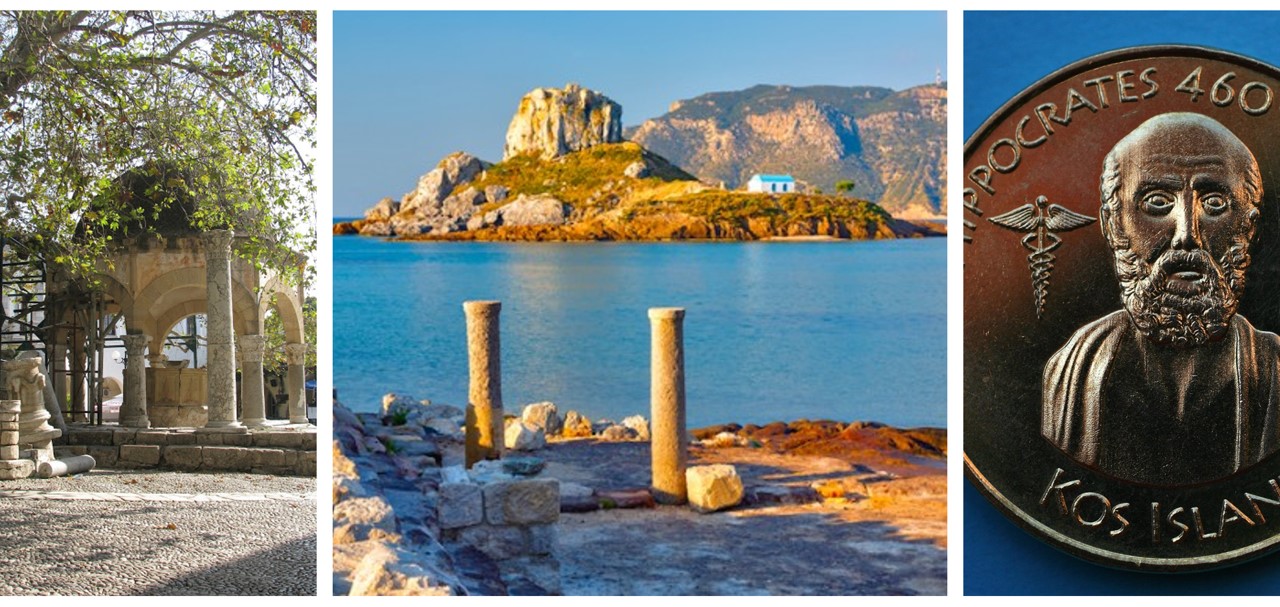
Hippocrates was one of the applicants for the post of professor of medicine at Harvard medical school.His application was rejected for a dismally low H index. The reluctant father of medicine tried to impress the authorities, by telling them that his experience was vast and used to teach medicine 2000 years ago, well before their country USA was discovered. The father of medicine almost begged to reconsider their decision.The miffed Harvard academic office ridiculed the old man and insisted nothing will work, except a minimum H index of 50 or atleast 10 papers as first author in a peer reviewed high Impact factor journal. A dejected Hippocrates returned to Kos islands and asked his new generation fellows, what is this H index and Impact factor stuff ? His students were worried about their guru’s ignorance. They some how convinced the greatest ever medical teacher to urgently subscribe for a platinum membership of a premium medical authourship services located in the Boston suburb and fixed a 30 day deadline for his first manuscript.
(What is this H index ?) Why is it so popular?) Ref :
Off to Kos Islands
Now, let us travel back in time,2000 years ago to this picturesque nation, Kos islands in the Aegean sea,. This is where Hippocrates taught lessons under his favorite tree. No teaching apps, No 4k audiovisuals, The humble noise from within his lips became great wisdom thoughts. All that students had were set of ears to hear him. Hippocrates became the celebrated father of medicine for two reasons. He was the first to dispute the then-prevailing thoughts about human health and disease. He first proposed for every illness there is a hidden reason ie the beginning scientific basis. He insisted and negated the idea that diseases are bestowed upon by evil forces and spirits. The second one is more important. He realized knowledge, skill, and power are a deadly mix for the healing industry if they lack responsibility. He foresaw non-academic factors that will try to challenge the integrity of medical professionals and the health care delivery systems. It is astonishing to note how he could predict this 2000 years ago and wrote the behavior code for medical professionals which has become immortal.
How to grade the quality of medical professionals?
Scientific publication is just one of the indices of quality assessment for medical professionals. Grading them based on a few manufactured rating systems is beginning to look like an academic comical. There are many more visible and invisible, quantifiable and non-quantifiable quality assessment parameters that deserve attention.
Research & Innovations are indeed the pivotal pillars that take us to newer frontiers of medicine. But, It is explicitly clear now, the prime purpose of research is definitely not aimed at the growth of science. It is more of a survival tool, intertwined with commerce, status symbol, pride, peer pressure, self-esteem, rivalry, or just a filler for CV.
Final message
Blanket statements like Publish or perish at any cost could be a dangerous doctrine to adopt in medical education which is essentially about healing and caring (& whenever possible, curing). In one sense, medical teaching is little to do with research. Many of the great professors in our country never published a single paper. Unfortunately, research and teaching have been made to look inseparable. Beware, history has repeatedly taught us medical professionals need not be hyper-intelligent. They need to be just wise, men /women of integrity, enriched with sincerity, righteousness. Proper consumption of knowledge is much more important than the creation of it. Let us hope the future will be at least as perfect as the past.
Postamble
My H index stands at 15, I must confess I am confused a lot. Should I bother for more, or be just be happy to reach the H index of our mentor and father of medicine, which is numero Zero, and propagate his work.
Reference
2.Academic excellence does not always require publication Ernest L Boyer argued in his 1990 book, Scholarship Reconsidered: Priorities for the professoriate,(BoyerScholarshipReconsidered)
3.Too much academic research is being published https://www.universityworldnews.com/post.php?story=20180905095203579





