In pregnant women with significant heart disease : A quick LSCS or a potentially prolonged natural delivery,which is more safe ?
In pregnant women with significant heart disease, the choice between natural vaginal birth and a cesarean section (LSCS) depends on several factors, including the specific type and severity of the heart condition, the overall health of the mother and fetus, and the recommendations of a multidisciplinary medical team (typically involving obstetricians, cardiologists, and anesthesiologists). There’s no one-size-fits-all answer.
Hemodynamics of normal delivery
Natural delivery involves the physiological stress of labor, which includes increased cardiac output, blood pressure fluctuations, and oxygen demand, peaking at 50-80% above baseline during contractions and pushing. For women with significant heart disease (e.g., severe mitral stenosis, pulmonary hypertension, or cardiomyopathy), prolonged labor could strain the heart excessively, potentially leading to decompensation, heart failure, or arrhythmias. The unpredictability of labor duration is a key concern, as it might delay intervention if complications arise.
A planned C-section, on the other hand, offers a controlled environment with predictable timing and monitored anesthesia (often regional, like spinal ,graded spinal or epidural, which can minimize hemodynamic shifts compared to general anesthesia). It avoids the prolonged cardiac stress of labor and allows immediate access to surgical intervention if needed. However, it’s not risk-free: C-sections increase the risk of bleeding, infection, and fluid shifts post-delivery, which can also challenge a compromised heart. Recovery might also be tougher on someone with limited cardiac reserve.
Evidence leans toward individualized decisions rather than a universal preference. For example, women with conditions like Marfan syndrome and aortic dilatation (>4 cm) or Eisenmenger syndrome often have C-sections recommended due to the risk of aortic rupture or acute heart failure during labor. In contrast, women with well-managed, less severe conditions (e.g., repaired congenital defects) might safely attempt vaginal delivery with careful monitoring and a low threshold for intervention.
The American Heart Association and European Society of Cardiology guidelines suggest that for high-risk cardiac patients (e.g., WHO Class III or IV), a planned C-section under controlled conditions is often safer, especially if labor could become prolonged or unpredictable. Epidural anesthesia and assisted vaginal delivery (e.g., forceps) can sometimes bridge the gap, reducing labor strain while avoiding surgery, but this requires a stable patient and skilled team.
Is LSCS really more safe ?
Ultimately, “more safe” hinges on the specific case. A quick C-section in a monitored setting often edges out natural delivery for significant heart disease because it minimizes uncertainty and prolonged stress—but it’s not without trade-offs. The medical team would weigh the patient’s cardiac function (e.g., ejection fraction, symptoms), fetal status, and delivery logistics. If you’re asking about a specific scenario, feel free to give me more details, and I can refine the answer further
Dictums can’t dictate
Is the generally accepted dictum, that ceserain section is meant only for obsterical Indication, still valid in most cardiac patients?
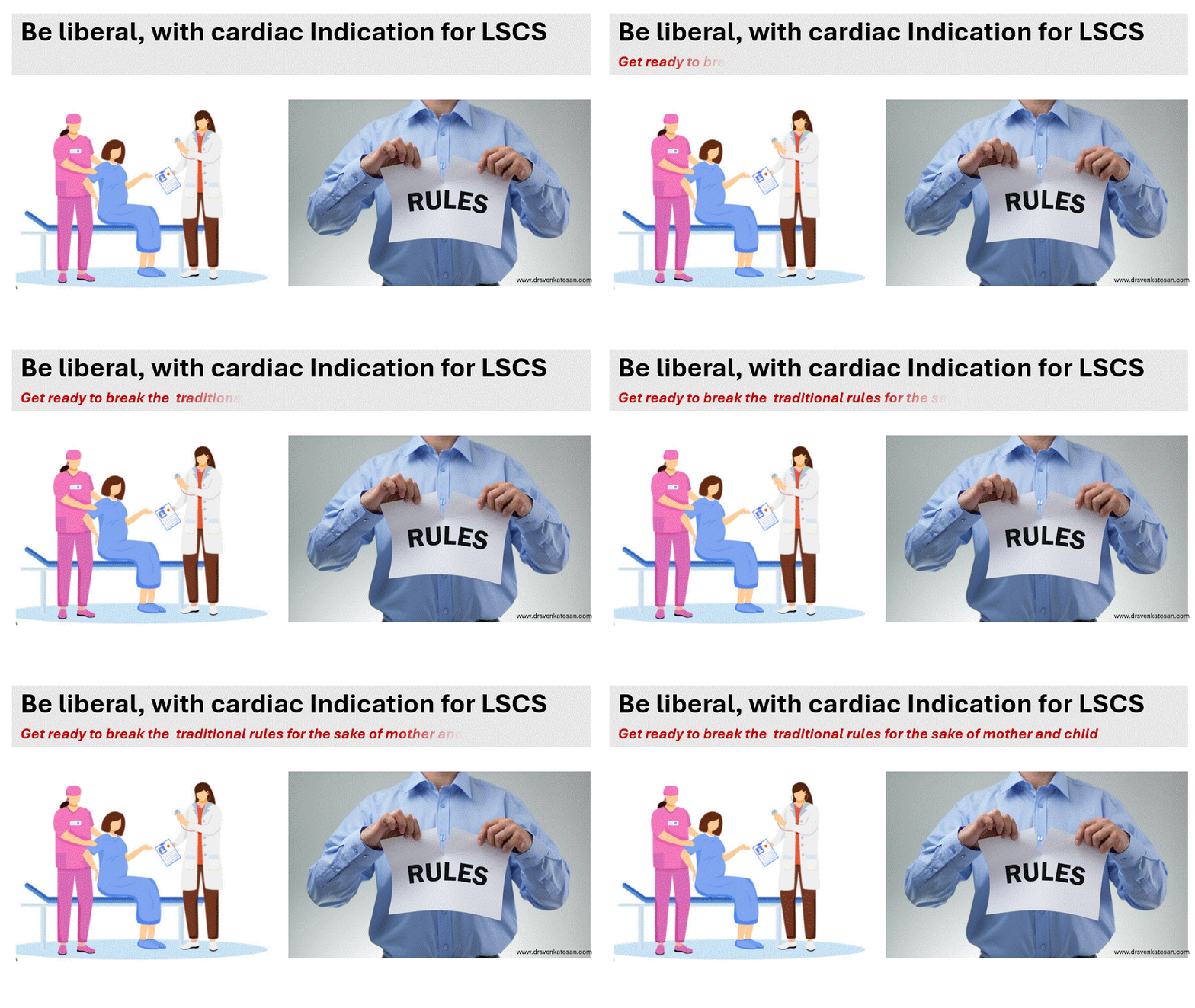
It is true , cesarean section is reserved for obstetric indications—like fetal distress, breech presentation, or failure to progress in labor, has historically been rooted in minimizing surgical risks and prioritizing natural delivery when possible. However, in the context of pregnant women with cardiac disease, this principle isn’t universally upheld as a strict rule. For cardiac patients, the decision often shifts from purely obstetric factors to a broader risk-benefit analysis that includes maternal cardiac safety, sometimes overriding the “obstetric indication only” guideline.
In women with significant heart disease, the physiological demands of labor (e.g., increased cardiac output, blood pressure spikes, and oxygen consumption) can pose a direct threat to maternal survival, even if the pregnancy itself is obstetrically uncomplicated. Conditions like severe pulmonary hypertension, advanced heart failure, or critical aortic stenosis carry high maternal mortality risks during labor—sometimes 30-50% in extreme cases like Eisenmenger syndrome. Here, a planned C-section isn’t just about the baby; it’s about keeping the mother alive. This makes maternal cardiac status a valid indication for C-section, challenging the traditional obstetric-only framework.
However, the dictum still holds some relevance for cardiac patients with milder or well-controlled conditions (e.g., WHO Class I or II, like a repaired atrial septal defect with normal function). In these cases, vaginal delivery is often preferred if obstetric factors don’t demand otherwise, as it avoids surgical risks like bleeding, infection, or anesthesia-related complications that could still tax a less-severe cardiac condition. Assisted vaginal delivery (e.g., with forceps or vacuum) and epidural anesthesia can further reduce labor strain, making natural birth feasible and safe.
Current guidelines, from the American College of Cardiology and European Society of Cardiology, reflect this changing perception . They recommend individualized plans rather than blanket rules. For high-risk cardiac patients (WHO Class III or IV), a C-section is frequently favored—often scheduled around 34-36 weeks if preterm delivery is tolerated—regardless of obstetric status, because the controlled setting trumps the unpredictability of labor. For lower-risk patients, the obstetric indication rule still guide us, unless cardiac monitoring suggests otherwise.
It must me emphasised , the discipline of the multidisciplinary team , especially the egoless ineractions of all members is the key. Type of anesthesia and their cooperation and expertise will be a defining factor many times.
Final message
So, the dictum is no longer valid in all cardiac patients” anymore—it’s just sort of entered our minds and refuse to go away. (There are set of contions and absolute indication for LSCS in heart disese. Every one agrees on that) The purpose of this write up is to look beneath those established Indications.
There is an urgent need for some “academic tinkering” to this decades old, much revered dictum, for the beenfit of mother and baby May be , It applies where cardiac risk is low and obstetric needs dominate, but for severe heart disease, maternal cardiac indication alone can justify a C-section. The shift reflects better understanding of cardio-obstetric interplay and prioritizes outcomes over tradition.
Counterpoint
Guidelines are still dilly-dallying between choices of delivery , based on tradition, technology, expertise & experince (Ref 2 : vouch against LSCS), I think, the obstetrician who is the captain of the multidisciplinary team along with her anesthetist and intensivist are the best persons to take the call. Cardiologist’s role is generally minimal in most situations except for that critical moral support , few management advices and ofcourse for legal protection.
Reference
1 https://doi.org/10.1093/eurheartj/ehy340




 Dr.S.Venkatesan MD