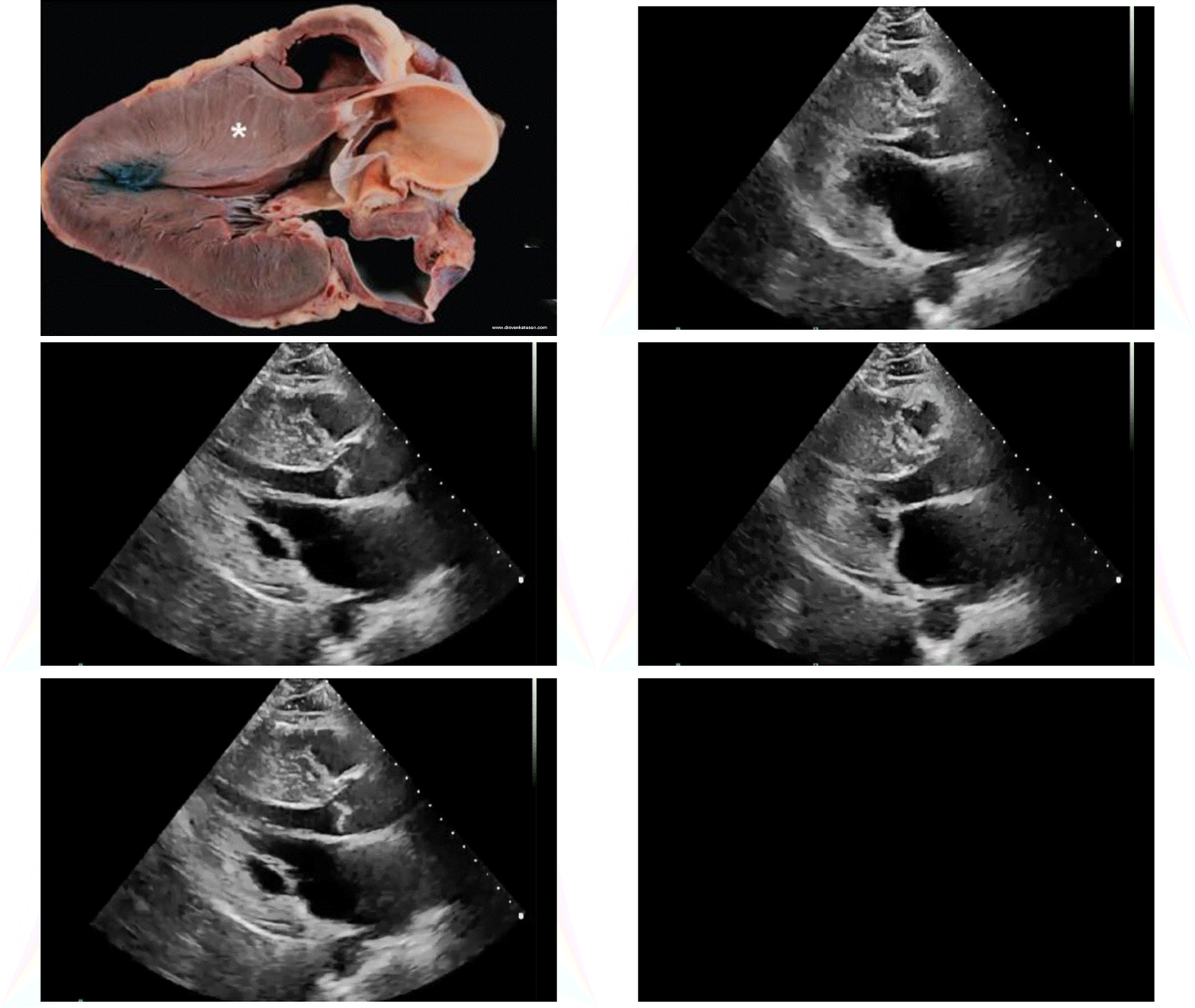
1. How is that ? Cardiac contractile function is normal or even supernormal, in spite of total myocardial disarray and haphazard architecture of sarcomeres?
The simple answer is we don’t know. But the same contractile units, while hyperfunctioning during contraction are not in the same mood of normality and struggle to relax . LV relaxation defects are always subnormal. Let us hope Mavacamten and its siblings could do something about it, converting HCM into from a super-inotropic state and into super- lusio-toropic state.
2. When does genotypic risk profiling more important before phenotypic risk in HCM ?
After decades of molecular research, 1500 mutations in over a dozen contractile filaments, we are in a total molecular mess, regarding which mutation is more arrhythmogenic and which can result in rapid progression of LV mass and fibrotic processes. As of now, phenotypic expression is considered more predictive, except in families with strong family history of multiple sudden deaths in young age. Though the guidelines are too tentative , for sacred scientists, HCM specific genetic profile testing are widely available for both use and misuse.
3. Does relieving LV outflow obstruction improve diastolic function with myectomy /septal reduction surgery?
Yes, it does in many cases, not in all obviously. Can we predict it before the procedure who are likely to improve their diastolic function ? . We can’t, we can only hope. The relationship between LVOT obstruction and diastolic filling is minimally related and curiously unpredictable. HOCM is a universal myocardial disorder .Logically, it is too ambitious to expect, getting rid of few grams (typically 5-15grams) in LVOT area to improve the LV inflow stiffness.
However ,many times , the improvement in diastolic function depends upon the surgical technique .Simple removal few grams of septal myocardium doesn’t guarantee a reduction in overall improvement of diastolic dysfunction. The chordal alignment, mitral cup reconstruction, and restoration of geometry of the LV are all important.
4. Is it true that the risk of SCD is almost the same for Obstructive and Non-obstructive HCM?
It appears to be true. Available evidence are as usually conflicting. Currently, the risk seems to be same or slightly higher with HOCM. Some studies telling us, overall SCD risk in all HCMs are equal .(this may be skewed, because HCM outnumber HOCM )
Further, the dynamism of obstruction prevents us from understanding the contribution of other obstructive elements. Also acute hemodynamic triggers can instantly convert a simple HCM to severally obstructive HCM, hiking the intracavitary pressure and eliciting an arrhythmia and possible SCD. If we realize. the primary underlying mechanism of SCD is fibrotic arrhythmogenic focus , we can guess , how narrow the true risks between these HCM & HOCM .
This chart is gathered with pooled data . The learning point is 10 year survival is dramatically lower in HCM the annual mortality and SCD risk in HCM is not that much comforting when compared to HOCM. I think, the data is still less enough to conclude on the risk of SCD.
| Type of HCM | Annual Mortality (%) | 10-Year Survival (%) | SCD Annual rate (%) |
|---|---|---|---|
| Overall HCM | 1.1–1.3% | 65–80% | 0.3–0.7% |
| Non-obstructive HCM | 1.1–1.5% | 97% | Slightly Lower* or Equal ** or even higher***(Ref 2) |
| Obstructive HCM | 1.7% | 83% | Higher |
Reference



 Dr.S.Venkatesan MD