The study in recent issue of JAMA Cardiology examines clinical factors and biomarkers (likely NT-proBNP, troponins, SfLT, lipids) measured during pregnancy to predict long-term maternal cardiovascular disease (CVD) risk, positioning pregnancy as a “stress test” window. Its strengths include a large cohort, long-term follow-up, and subgroup consistency, offering actionable early risk stratification to guide preventive interventions and improve outcomes in women
Design Flaws
This cohort analysis reports CVD prediction over a median follow-up ( 10+ years). The major problem with this study is , it has omitted several key confounders that could bias long-term CVD predictions from pregnancy biomarkers, including pre-pregnancy BMI/obesity, smoking status, family history of CVD, socioeconomic status, psychosocial stress/depression, air pollution exposure (e.g., PM2.5), genetic/epigenetic factors (e.g., polygenic risk scores), These time-varying elements, unadjusted in Cox models, likely inflate biomarker associations over the long follow-up period .
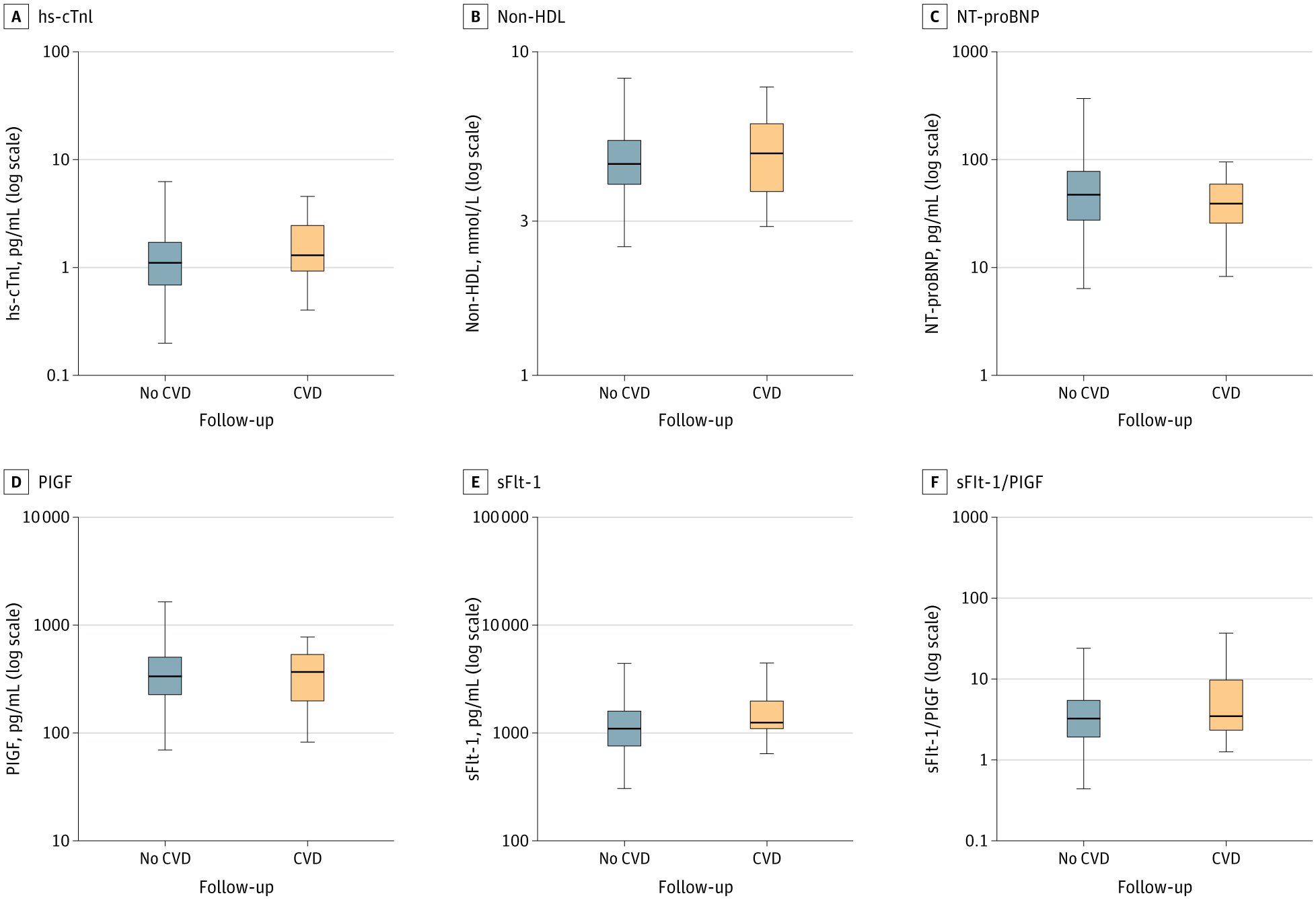
Boxplots show the distribution of biomarker concentrations, stratified by the occurrence of CVD during follow-up at gestational up to 29 weeks. hs-cTnI indicates high-sensitivity cardiac troponin I; NT-proBNP, N-terminal pro-B-type natriuretic peptide; PlGF, placental growth factor; sFlt-1, soluble fms-like tyrosine kinase-1; HDL, high-density lipoprotein cholesterol.
Final message
It is well known that pregnancies complicated by HT and GDM may add future risk for CVD. Using pregnancy as a universal cardiovascular stress test may appear good on paper …but it can’t be purely biochemical prediction. It should be primarily clinical follow-up and accounting for other influential risk factors. This study is too much extrapolated and biochemistry focused. Suggesting a costly biochemical panel to predict CVD risk in a huge population of pregnant women appears a futile extravaganza.
Reference



 Dr.S.Venkatesan MD