Feeds:
Posts
Comments

Archive for the ‘history of cardiology’ Category

God has created  and arranged every organ in an order  with a purpose .  The unique  relationship  of the food tube and  the heart which run silently , posterior  to the heart has evoked much interest for the cardiologists.

Whenever LA is enlarged it pushes the Esophagus back .We also know  the vintage clinical entities   of cardiac  dysphagia that occurred with rheumatic mitral stenosis.

Since the  lower end of  esophagus just hugs  the left atrium , this anatomical concept was successfully exploited   for imaging heart in TEE.Now cardiac  anesthetists routinely use the esophagus as an imaging port during complex mitral valve surgeries.

How  esophagus can be utilized to resuscitate the heart at times of emergency ?

Note , the esophagus does a friendly hug as it crosses the heart posteriorly .It is a perfect anatomical sense , to Image and pace the heart from within the esophagus !


In a  cardiac  arrest  situation , when we need to   rapidly   access to heart  , we have  multiple  options  .Each has some  advantage and few draw backs.

  • Trans-venous pacing   is the standard method,   but even for experts  it needs   few minutes to reach the heart for pacing
  • Trans cutaneous pacing (Zoll)  is  a viable option , but  not widely  popular for some  unknown  reason (Patient discomfort ? High threshold ?)
  • Emergency trans-thoracic  needle pacing option is  a primitive method still can save a life or two on it’s day !

It was in 1980 ,  a dramatic  concept was conceived  . Why not    use the  esophagus as an access   for pacing  the  heart

after all ,  it  reaches as close as possible to the heart !

How to convert  a  Ryles tube into a  a  trans – esophageal  pacing lead ?

There was a certain article on this topic , which I read , when I was cardiology resident. It answers the following. Distance form mouth ,  Discomfort of  the lead ,   Pacing threshold ,  Esophageal burns .

I am unable locate that article. Will  post  it  once I get it.

Limitations of trans-esophageal pacing*

  • The most important limitation is it can pace only the atria with high degree of success.
  • Ventricular pacing is not that successful for the simple reason esophagus is anatomically insulated by the atrial chambers.
  • Tran gastric positioning  may reach  the basal aspects of Left ventricle , but the threshold needed  is too high that will invariably cause  discomfort.This can be used in a dying patient  when there is no  other option .

* Primarily  useful in acute SA nodal defects, sinus arrest or any other atrial electrical failure. Infra- nodal complete heart block trans esophageal pacing may not be effective .

Other potential uses  of trans-esophageal  leads

Over drive pacing

Overdrive entrainment of tachycardias ,  including resistant ventricular tachycardia is possible.

Trans esophageal ECG recording .

This can magnify p waves during supra ventricular tachycardias and aid in decoding narrow qrs tachycardias

Safety  Issues and Caution

Good earthing is necessary .Burns can occur.

Final message

Every cardiac physician is  expected to possess  the expertise to rapidly pace a heart  by trans jugular /subclavian access at times of  emergency .

Further , any modern CCU will have a defibrillator equipped with trans-cutaneous pacer as well. (The  disposable pads are too costly and is a deterrent in many hospitals  !).

This article  explores other possible way to pace the heart in dire emergency situations.

It has one more purpose !  It rekindles   the acumen , motivation  and hard work   of  our  cardiac  ancestors  (Which many of us are pathetically lacking !)

http://circ.ahajournals.org/cgi/reprint/65/2/336

Role of trans-esophageal lead during EP study  atrial fibrillation

http://cardiovascres.oxfordjournals.org/content/38/1/69.full
Read Full Post »

In any field  , errors and mistakes  transform into   experience in retrospect. (Of course only  if we  realize  our mistakes !) . Many would argue prevention of such errors is the  only way to move  forward in science  , but ,the opposite could also be true.

In Medicine ,

  • Most errors are mild ,
  • Some errors  can   be fatal but it helps us prevent further fatalities.
  • Some errors create history  and  re-define the science.

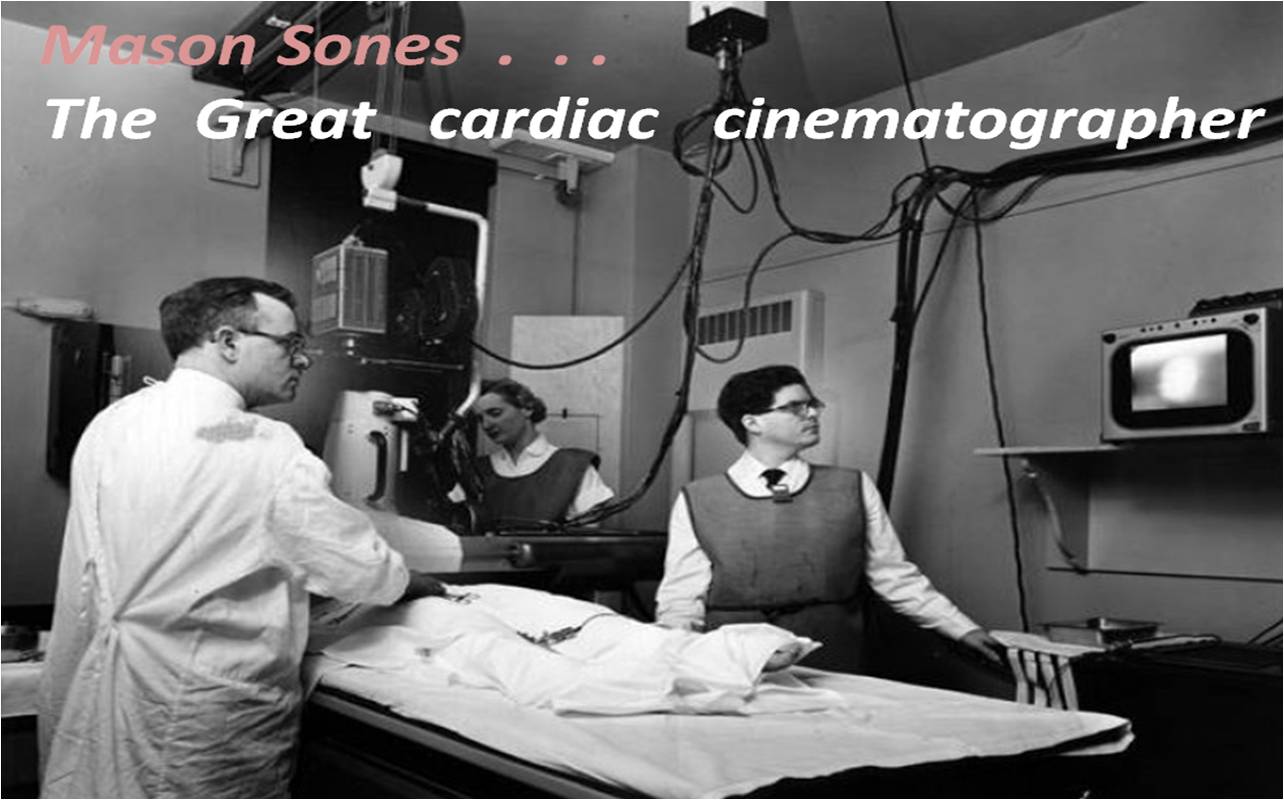
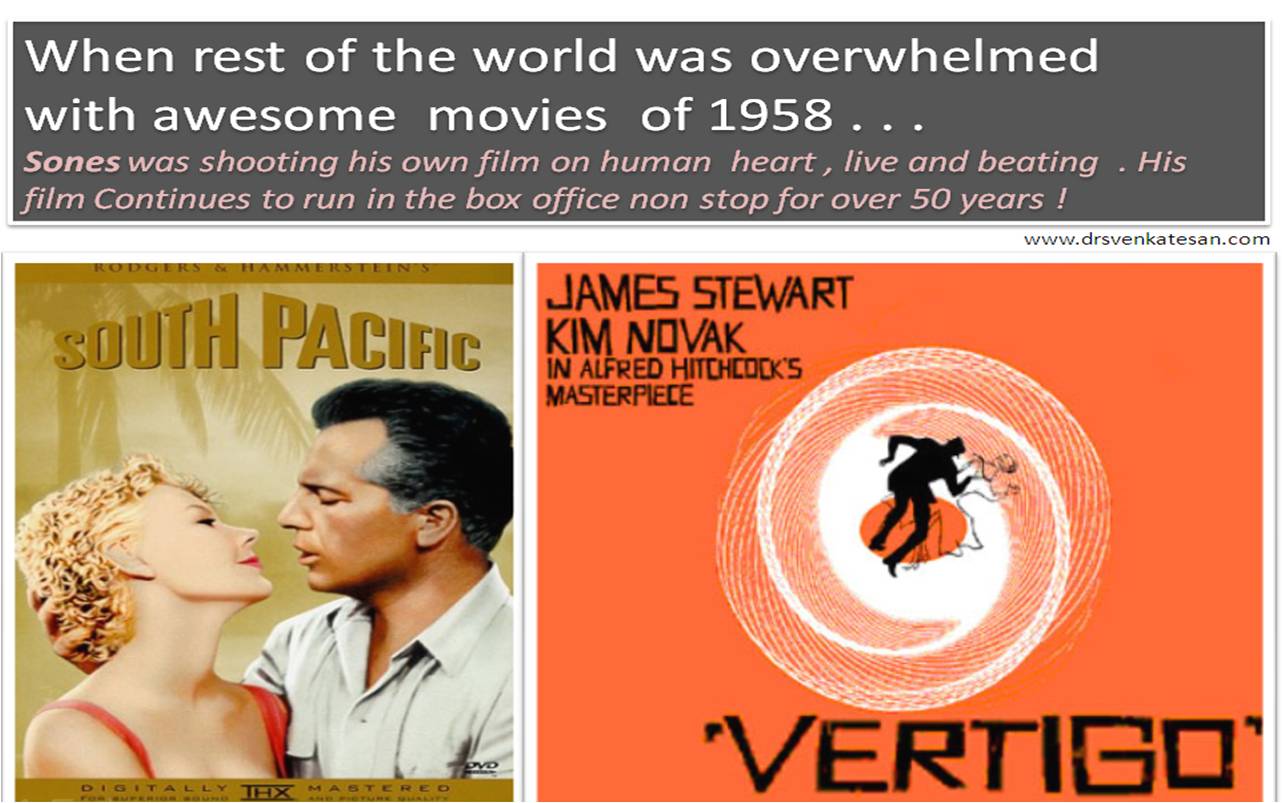
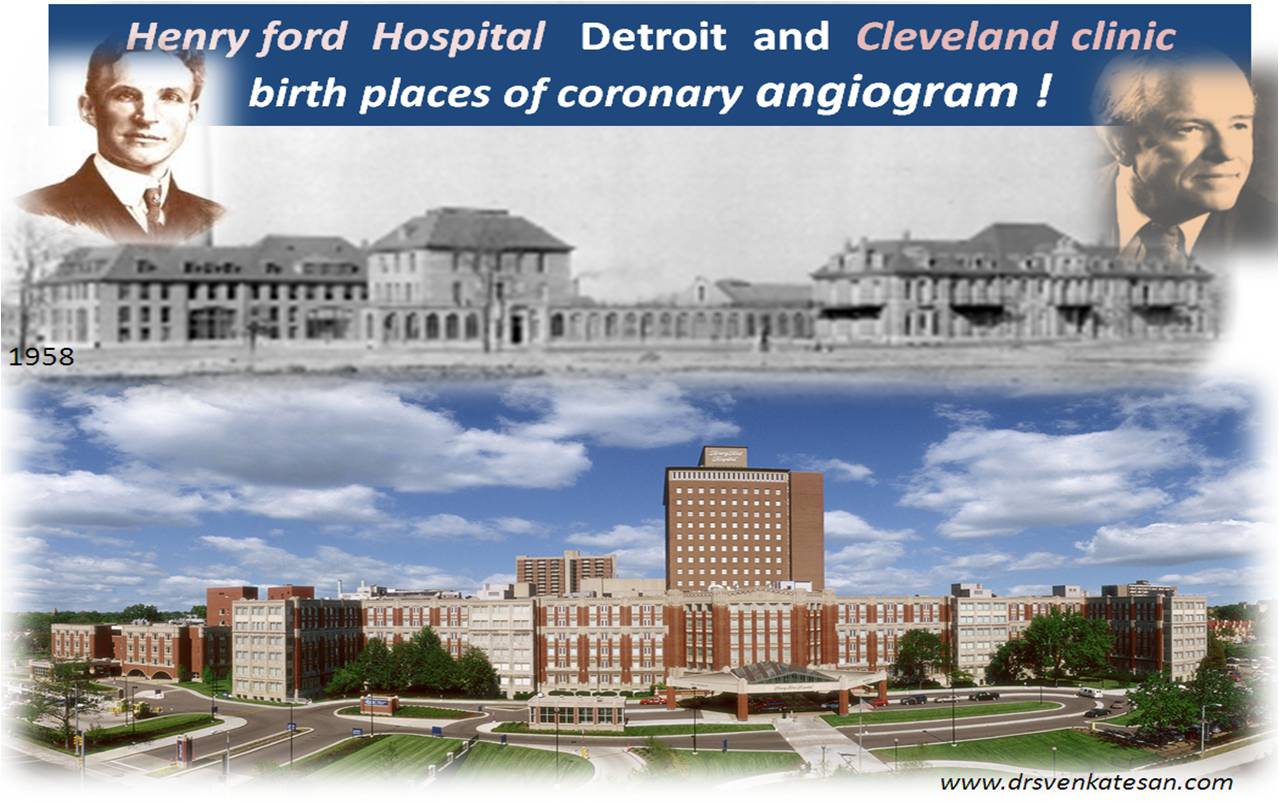
That’s   what  happened on 1958 , to be precise on  October  3oth , 1958  in a lonely laboratory of Henry  Ford hospital/Cleveland clinic *

*A correction -This  invention actually happened in Cleveland.  ( Sones learnt  all his techniques in Henry ford)

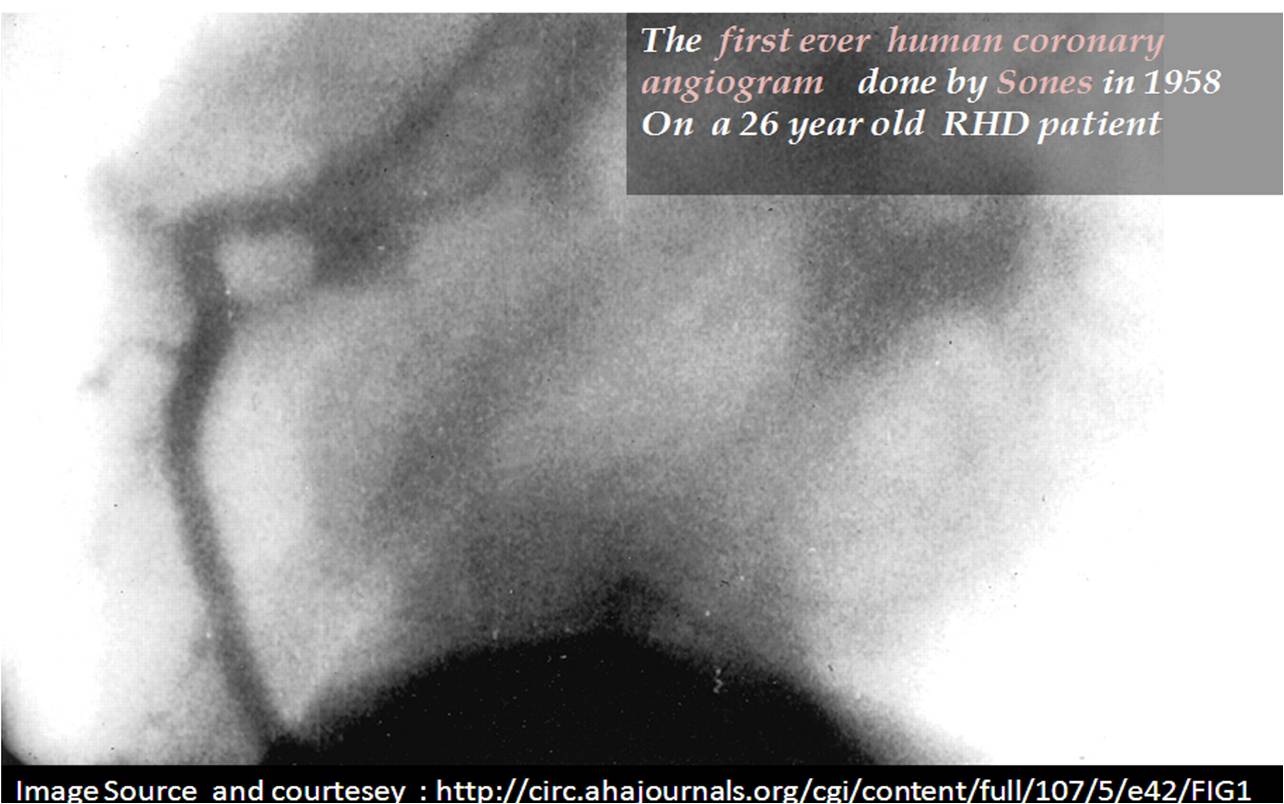
When  Sones along  with his assistant were trying  to do an  Aortogram in a patient with RHD,  the entire dye meant for aorta went straight  into  the right coronary artery.When every one was stunned ,the  patient happily  survived the injection  with a few skipped beats.

The man behind  this horrendous medical mistake was   Mr . Sones . He   was guilty for many days ,  spent many sleepless nights  ( In spite of  the patient surviving  the episode ). In fact , he was much amused  about the patient’s  survival . At that point of time,  even a spill over of dye into coronary artery was considered forbidden.  He pondered over the incident for months  .

Had  two queries  lingering in his mind .

  1. How the  right coronary artery  was able to withstand the 40cc dye  injected with  force .
  2. If 40 m l was tolerated ,  well what about routinely injecting  3-5 ml for visualizing the coronary  tree   by intentionally  seeking the coronary ostium .

That was the moment , the concept of diagnostic coronary  angiogram  was born . He published his observation as an  abstract in Circulation journal. Later he did many experiments  with video  engineering at Kodak labs , X  ray  technology to improve the cine imaging .By 1964 , he devised a perfect protocol  for doing  selective coronary angiogram. Then along with Rene Favaloro he pioneered CABG surgery in USA.

Final message

Cardiac  catheterisation was invented by  Forssman , Cournand , and Richards ,(Nobel prize 1956 ). It was  Sones who took it into the coronary arteries  and thus it was  made possible  for a whole new specialty  of coronary  diagnostics  and therapeutic PCI  which was  conceptualized by another extraordinary human life called   Gruentzig. Sones along with Gruentzig definitely deserve a Nobel in medicine which i think will happen soon ! They lived a great life constantly thinking, innovating  putting  patients interest in the fore front .

Mean while , I argue our youngsters  to  portray  the images of  these giants in  every   cath lab they  work   .You may get their blessings from heaven  , provided you do your interventions with integrity and honesty without any conflict of interest in the patient care.

Do not cry foul when some genuine errors happen in cath lab.Few among us (like Sones ) may innovate those mistakes into glory !

Reference

http://en.wikipedia.org/wiki/F._Mason_Sones#cite_note-3

http://www.wired.com/thisdayintech/2009/10/1030first-coronary-angiogram/

Read Full Post »

For todays cardiologists traveling in time machine  may be made as   an  essential assignment . It seems  there is more to learn from history than the core medical science.

How  the knowledge evolved  ? . How  our ancestors toiled  ?  Where  are  the good old  medical   inspirations  ?

How  can we enjoy the fruits of success without knowing the  tree of it’s  origin ?

What you are going to leave for  the future man kind  ?

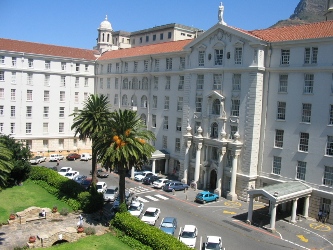
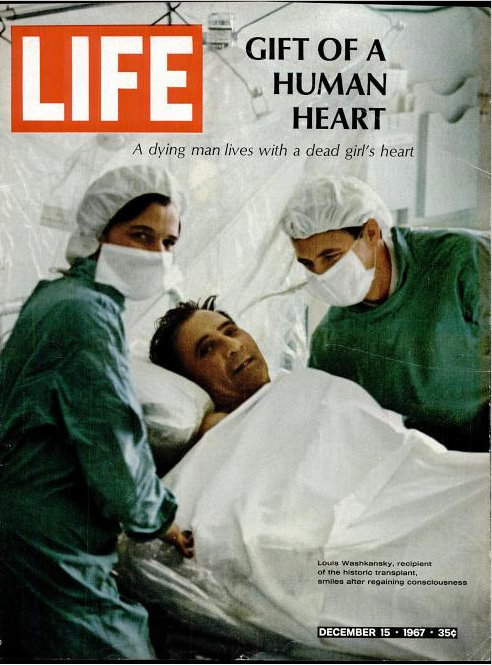
Learn how a  dream heart team led by Christian Barnard  created history in the year  1967 in a remote southern hemisphere  town ( To be precise Cape town ) , South africa .Click the link or over the image .Courtesey of Life magazine

Groote schuur hospital where Christian Barnard made history

Thanks  to the Life magazine  for providing these stunning pictures to the present generation


Christian Barnard and team after the historic  surgery .Groote schuur hospital .Cape town


Let us  salute  the men of  past  .We shall  take an oath   to  strive harder and  harder   and the least  , trivial achievements are not  glorified . .


Read Full Post »

« Newer Posts