Feeds:
Posts
Comments

If you understand the pericardial anatomy fully, you can call yourself real master of clinical anatomy. (Ref 3,4) We know, it is a complex protective cover over the heart , that has three layers with a unique relation with one another. The outer one is tough conical bag .It has an embryologically distinct origin .It develops from septum transversum and sits over the diaphragm tightly, to which it shares the same embryological origin. While the inner serosal layer (rather cavity) splits into two layers and encloses the heart .Though this serosal layers develop from a different mesenchymal tissue , it is biological wonder both fuse in perfect harmony. , The developing heart bends, folds and loops within the serosal cavity.

The inner one embraces the heart fully forming epicardium (otherwise called visceral pericardium) and reflects back after covering great vessels .While reflecting back it is firmly attached to inner surface of fibrous pericardium forming the pericardial cavity . Never confuse parietal layer of serous pericardium with the thick outer fibrous pericardium, though both are gelled together. Since heart is not a strict globular organ, the hug of visceral pericardium over the heart is not uniform and complete , especially over the great vessels enter or leave the heart (Hilum of the heart). Hence it folds , and forms two sinuses and recesses.

What happens with pericardial Inflammation ?

Inflammatory pericarditis can occur in differential fashion. For example, the most common chronic pericarditis tuberculosis affects the fibrinous layer. Post MI pericarditis involves the epicardium. It is vital to understand epicardium is thin and transparent sheet of tissue , one may not split it from the heart. It is also important to know coronary arteries run under this thin visceral pericardium( ie sub epicardial) So anatomically , In constrictive pericarditis , the immediate target would appear to be the coronary artery , than the myocardium . But, what really happens ? Let us Introspect on this.

In CP which layer exerts the force of constriction ?

Macroscopically ,It would be a dramatic sight to see the heart caged within hard shell of pericardial mass. To be frank, we can never make a distinction between the three layers once its thickened. Which layer is the triggering force, that promotes adhesion and compression is also not clear. We presume, the thick fibrous layer is villain de chief. (This we learnt , by observing rheumatic heart disease pathology ,wherein pericarditis , never evolve into constriction as it doesn’t affect the thick fibrous layer) .The inflamed exudative pericardial fluid doubling up as a glue to stick all three layers is a true possibility.

Whatever happens, once the inflammation become chronic, it goes on steadily and begin to compress (rather restrict in diastole). At this stage, anti- inflammatory drugs like NSAIDS, colchicine or specific anti-tuberculous drugs along with a bit of steroids can arrest or slow down the pathological process and prevent this deadly disease. The phenomenon of transient constriction with normal thickness pericardium is also reported.

The normal and the pathologically thickened constrictive pericardium

The quantum of constrictive force widely varies in different areas of the heart. Obviously, the thickened pericardium hurts the heart in diastole . Right side of the heart is more vulnerable because of its thin wall and the low pressure beneath . However the constriction process continues over, anterior, lateral , posterior and even the AV groves The sinus the recesses can also become obliterated .

Does the coronary artery gets compressed ?

When the whole heart become as hard as a cricket ball , what do you expect the fate of coronary artery would be ? Fortunately, it escapes in many . But, the threat of compression or calcific (ice-berg) injury is always there. There has been many reports of patients with angina in CP (Ref 1). Here is case report from India , where a calcific pericardium exerts a vice like tightening over LCX. (Ref 2)

This is not surprising, when we know, at late stages the pericardium can even infiltrate the myocardium.

Video showing diastolic compression in constriction source : Christopoulos G, Stulak JM, Oh JK, Prasad A. Diastolic Coronary Artery Compression in Constrictive Pericarditis. JACC Case Rep. 2020 May 6;2(5):825-827. doi: 10.1016/j.jaccas.2020.01.009. PMID: 34317356; PMCID: PMC8301696.

How do the coronary artery often escapes in CP ?

One important reason is , unlike myocardial bridge here the artery gets compressed in diastole , with a passive distending pressure from LV cavity rather than active constrictive force.(See the above video) The diastolic coronary arterial pressure rarely goes below intrapericardial space pressure , which in fact is obliterated. Still, the point to be noted is, mass effect can still result in non hemodynamic compression.

Final message

Fortunately, coronary arteries often escape from serious pressure effects of constriction but the threat is real especially in late stages .It can happen either by the calcific spurs in the pericardium or diffuse pressure effect or tight ring like localized constriction. While de-nova coronary Involvement is far less common, the operating surgeon needs to take extreme care to avoid it during surgery . Surgical pericardiectomy is either partial or total caries considerable mortality even today. Total pericardiectomy is myth at best. Few pieces of adherent pericardium are left over especially in the posterior aspect.

There is a landmark study from Mayo clinic, with data from over 1000 pericardiectmy surgeries ,over eight decades . Every cardiologist and cardiac surgeon must read this to understand the nuances of pericardial surgery (Murashita Ann Thorac Surg. 2017) Now Robots are being tried to assist in this delicate surgery (CTS-NET 2023 Total Robotic Pericardiectomy for Constrictive Pericarditis)

Reference

1.Mahé I, Braunberger E, Bergmann JF. Angina caused by calcific constrictive pericarditis. Ann Intern Med. 2002 Dec 17;137(12):1012-3. doi: 10.7326/0003-4819-137-12-200212170-00036. PMID: 12484734.

2.Rajagopal, MD, DM • Sreenivasa Narayana Raju, MDConstrictive Calcific Pericarditis Causing Coronary Artery Compression Radiology 2021; 299:539 • https://doi.org/10.1148/radiol.2021203726

Two Excellent reference for comprehensive knowledge in pericardial anatomy

3.Rodriguez ER, Tan CD. Structure and Anatomy of the Human Pericardium. Prog Cardiovasc Dis. 2017 Jan-Feb;59(4):327-340. doi: 10.1016/j.pcad.2016.12.010. Epub 2017 Jan 4. PMID: 28062264.

4. E.Rene Rodriguez ,Carmela D.Tan Structure of the human pericardium and responses to pathological processes JACC 2016

*Lifestyle definition

 A set of attitudes, habits, or possessions associated with a particular person or group. and such attitudes, etc, are regarded as fashionable or desirable.

Final message

Communicable disease need not be an Infectious disease like covid. The word “Communicable” shall soon convey a new meaning, to the enlightened. Adverse life styles ,disseminated into the community that vigorously propagate CVD, has every reason to be referred to as a ‘Neo non-infectious pandemic”

Postamble

In the strict sense, CVD is not a communicable disease ,rather the risk factors are …but technically it is.

Reference

1.Rippe JM. Lifestyle Strategies for Risk Factor Reduction, Prevention, and Treatment of Cardiovascular Disease. Am J Lifestyle Med. 2018 Dec 2;13(2):204-212. doi: 10.1177/1559827618812395. PMID: 30800027; PMCID: PMC6378495.

3.A comprehensive narrative review

1.What is the response of RV to pressure overload ?

A. Dilatation

B. Hypertrophy

C Both occur together

D. Hypertrophy is the Initial response, followed by dilatation

Answer :

Since we believe RV’s behavior is generally opposite to that of LV , many would tick, dilatation as the first response. This may be correct when there is acute raise in RV after load, as in PE. However, It is surprising even in chronic pulmonary hypertension , the degree of RVH is not constant and homogenous .This is because , different parts of RV chamber has different wall thickness .Further, the pressure distribution from PA to RV is uneven. The co-existing TR confounds the loading conditions. It is not yet clear, how the RV would respond to raised PA pressure. In the bed side, we are seeing both flight(dilate) ot fight (RVH) reactions from RV (more often the former than the later) It is possible RV behavior is be pre-programed and built into the genes of the contractile proteins.

It is worthwhile to note, RVH is constant feature in non pulmonary hypertension related “after-load” conditions as in valvular or sub valvular PS. This is more to do failure of regression of RV mass early after birth, rather than the actual effect of high after load. Another point is purely technical. RVH is measured in RV free wall, in subcostal view in diastole and inspiratory phase.(upper limit is 4mm) Many of us could miss RVH in routine echocardiography unless specifically looked for.

2.Which is the first echocardiographic parameter to get impaired when RV fails ?

A. RV FAC (Fractional area change)

B.TAPSE

C. RV Ejection fraction

D.RV longitudinal strain

E. RV S

Answer : I am not very sure about the right answer , but TAPSE is last to get Impaired .(Still, we celebrate it like anything is a different story) Many believe transverse functional Indices like FAC is impaired early. and is less influenzed by the spurious spill over of Left ventricular contractile force in transannular plane (Which augments longitudinal functional Index like TAPSE),

The following illustration (From Ref 2 ) summarizes all RV functional parameter in a succinct fashion. Fellows must be familiar with at-least half of them.( RIMP is less practical and error prone can be ignored)

Reference

1.Gorter TM, van Veldhuisen DJ, Bauersachs et al Right heart dysfunction and failure in heart failure with preserved ejection fraction: mechanisms and management. Position statement on behalf of the Heart Failure Association of the European Society of Cardiology. Eur J Heart Fail. 2018 Jan;20(1):16-37. doi: 10.1002/ejhf.1029. Epub 2017 Oct 16. PMID: 29044932.

2.Harjola VP, Mebazaa A, Celutkiene J, Bettex D, ET AL  Contemporary management of acute right ventricular failure: a statement from the Heart Failure Association and the Working Group on Pulmonary Circulation and Right Ventricular Function of the European Society of Cardiology. Eur J Heart Fail 2016; 18: 226

Though foundational and prodigious, moving beyond De-bakey ,Stanford is a necessity in the management of Aortic dissections in current times. The first step is to understand the perfect 3 dimensional anatomy of entire Aorta from its origin to bifurcation and even beyond. (The 11 or12 segment demarcation of aorta is well established and gained acceptance.)

The society of vascular surgery and society for thoracic surgery has come out with land mark nomenclature in 2020.

This labeling tells us instantly about whether the dissection is A, B, or Indeterminate .It also reveal the origin of dissection, extent of dissection and the exit point, if available.

Naming & coding of Aortic dissection

Aortic dissection : Management cues

The above scheme is just a part of Initial work up with the help of MR angiogram or spiral CT. There are more critical factors like, clinical stability, time since dissection, false vs true lumen identification, its volume ,rate of propagation, branch involvement, mal-perfusion , etc need to be counted.

The curious Irony about this dreaded entity lies in the fact that in type A dissection, the surgical team need to be alerted well before they embark on this most complex cardiovascular emergency, usually in a state of the art CTVS unit. Meanwhile, most uncomplicated type B dissection demands total inactivity on the part of surgeon(as well as some cardiologists !) while the patients can be casually shifted to the intensive care ward, essentially for monitoring , bed rest and few drugs to reduce BP and shearing stress on aortic wall. The dissection can heal themselves.

The role of Interventional cardiology in Aortic dissection is evolving rapidly , still at best supportive or can buy time to bridge to surgery in some late presenting type A dissection. There has been lot of experience in some centers, where type B dissections are exclusively managed by scaffolding. But, the concern is, catheter based Interventions in low risk subsets of dissection is always a tricky decision.

Medical strategies should never be looked down upon as enemy of endovascular Interventions. So, one of the live and debatable issue is, how & where can we fit-in the hyper-talented endovascular Interventionists in the complex vascular arena of aortic dissection.

Reference

Lombardi J.V., Hughes G.C., Appoo J.J., et al. “Society for Vascular Surgery (SVS) and Society of Thoracic Surgeons (STS) reporting standards for type B aortic dissections”. Ann Thorac Surg. 2020;109:959-981

One

Two

A 40 year old women with palpitation found to have complex multiple VPDs and elevated thyroid hormones.

The GP has refered for further management to a cardiologist, frightened by the morphology and frequency of VPDs.

The cardiologist has sent him to a EP guy .I guess he was not briefed well about the patient, and he decided to do , what he is best at .He tried to fix and shoot down the VPDs. The apparemt inappropriate procedure went on, as per the demand of patients and science . Now, let us question the basics .

The question is,

Where will be the focus of VPD in hyperthyroidism?

A. LV apex or septum

B. RVOT

C.Papillary muslce of LV or Intra -cavity

D. It is an invisble microrentry , or automaticity. Focus can be anywhere and can not be loclaised.

E. Technically there can not be a focus, it is simply enhanced adrenergic drive by free T 3 & T 4

Answer

There has to be a focus for every arrhythmia.It is my thinking. Some of my EP colleagues, say once circuit is established the focus looses it value . In systemic causes of cardiac arrhythmia , there need not have a visible focus. Make a Pardon , as of now , I can only frame a question, not the answer.

Final message.

Leave alone the answer to this question, I am sure every physician knows the correct treatment. Treat the cause, forget the manifestation. If some one is adamant he can do a RF ablation …not in the heart , but in thyroid gland.

Postamble

Even though , it is hyperthyroidism, we have a responsibility to rule out any tissue level substrate because, not every hyperthyroid patient throws this much of VPDs. It is highly possible, thyroid hormomes can un-mask a hitherto non -arryhthmogenic myocardial focus.

One of the foundational lessons in echocardiography is, How to measure the cardiac output ?

Echo formula for estimating cardiac output is

(HR X LVOT area X LVOT-VTI*)

* VTI (Velocity time Integral -a Link ) is complex sounding, but a simple parameter. It is expressed in CMs .In simple terms, it tells how many cm, the blood will move per second ? with a single ventricular contraction.

Image courtesy : http://www.pocus101.com

Sample calculation

If the normal LVOT diameter is about 2cm. Area will be πr2 . Since the radius is 1cm, area will be same as value of π ie 3.14

Normal LVOT VTI is about 20 cm & HR is 70

Stroke volume = 3.14 X 20 =63 ml . Cardiac out put = 63 X 70 = 4410 ml

It can be converted to cardiac Index with body surface area.

Stroke volume measurement is not a big deal .

All currently available echo machine has automated soft ware .It beams the cardiac index live. How reliable it is ? It is as bad or as good as our trust levels. We can Imagine, how the machine vision traces the borders of LVOT. But, carefully done manually measurement is always reliable . Even then, many of us are reluctant to use echo for stroke volume . Here is an Important paper that compared cardiac output calculated by Echo with that of the the gold standard of thermo-dilution technique. Zhang Y, Wang Y, Shi J, Hua Z, Xu J. Cardiac output measurements via echocardiography versus thermodilution: A systematic review and meta-analysis. PLoS One. 2019 Oct 3;14(10)

Such a simple calculation, why is it not popular among cardiologists. ? (Many ER physicians still use it effectively )

I guess being a humble and simple, works against it. It is surprising, the awareness about EF% is all to pervasive (which is a crude and load dependent parameter) while the info about stroke volume per beat finds difficult to enter bed side cardiology. Generally, we tend to trust complex things and ready to spend ( waste) lots of time with equations, such as in PISA, EROs , DVIs , PAPIs, , stroke work etc . Mind you the probability of error increase directly with number of factors you take in a calculation

The potential bed side usage of stroke volume data

1.Cardiac Index is one of defining criteria for cardiogenic shock. I rarely see my fellows documenting LV stroke volume in any major STEMI, that can detect an impending cardiogenic shock.

2. It will help assess the efficacy of inotropes .Find, objectively how much the Dobutamine really worked in LVF ? and correlate it with clinical assessment of S3, rales and BP. (Mind you BP is very poor surrogate marker. for stroke volume. )

3. More Importantly, Similar to LV stroke volume, we can measure RV stroke volume by RVOT area x VTI x HR. This can be of critical value in the management of RV infarct, where two ventricular stroke volumes often mis-match often. Once RV stroke volume equals the LV , we can presume recovery.

4.The enigma of high output cardiac failure can be studied with this simple formula.

5.In any mechanical assisted circulation LV, stroke volume is going to give important prognostic info.

6.Finally, assessing stroke volume will aid in fluid therapy in ER with any cause of systemic hypotension.

.Final message

Its time, we concentrate & fine tune the echo derived stroke volume as a definitive circulatory volume data in day to day practice.

A request to all ER physicians and cardiology fellows, try measuring the cardiac output whenever you see patient in shock and hypotension .Make it a habit to measure the stroke volume. You need just two minutes. It is cheap, you can repeat as many times as you want in follow up. It can totally change the way you understand hemodynamics of cardiac failure and shock.

Reference

Zhang Y, Wang Y, Shi J, Hua Z, Xu J. Cardiac output measurements via echocardiography versus thermodilution: A systematic review and meta-analysis. PLoS One. 2019 Oct 3;14(10):e0222105. doi: 10.1371/journal.pone.0222105. PMID: 31581196; PMCID: PMC6776392.

Further reading

There is one more methodology, called EIT electrical Impedance tomography, that can provide live online stroke volume , comes inbuilt in ECMO and other MCS systems

da Silva Ramos FJ, et al Estimation of Stroke Volume and Stroke Volume Changes by Electrical Impedance Tomography. Anesth Analg. 2018 Jan;126(1):102


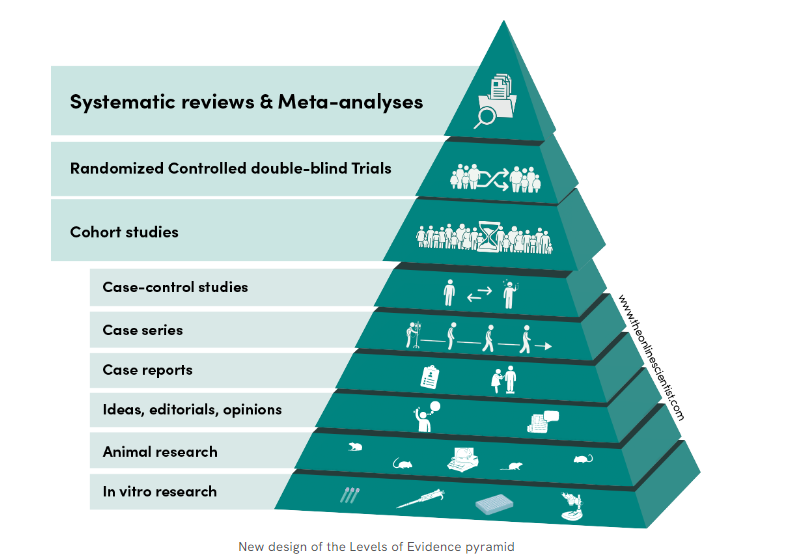
I don’t want to do this …but EBM compels me to do it

The word “Evidence” is the most powerful in the world of science and enjoys disproportionate bias towards positivity (of course in any walk of life). But, the fact of the matter is, it can result in either monumental breakthroughs or mindless havoc to mankind in equal quantities.

EBM is not a sacred movement. It came into the medical domain in the early 1970s and grew at an unprecedented pace, invading the medical practice and literally robbing the charm & goodness in clinical medicine.In fact, many point out ,EBM is in direct conflict with Individual-based holistic medicine. If you rely only on EBM without Individual patient data, it might take you to the doorsteps of department of clinical negligence.

But, unfortunately, EBM in an unpure form has grown to gargantuan proportions and penetrated deep into medical academics. Armed with a possible legal authenticity, ignoring it, could easily push us into clutches of criminal negligence. (In fact, the opposite may be true)

Final message

Does trusting EBM too much imply a reduced wisdom?

If you offer a free pass to EBM*, to enter into all your decision-making process, then wisdom will quietly leave through the back door. Taking evidence, at its face value is going to be the biggest intellectual insufficiency or inefficiency for the future world, especially in medical science.

Further reading

Wyer PC, Silva SA. Where is the wisdom? I–a conceptual history of evidence-based medicine. J Eval Clin Pract. 2009 Dec;15(6):891-8. doi: 10.1111/j.1365-2753.2009.01323.x. PMID: 20367679.

Postamble

*I know, It is unwise to blame EBM in such a disparaging manner, rather we need to cleanse and eliminate the limitations of the EBM .That would be a more correct approach, but is it possible ? , since both appear to be built into it.

*This post may not be meant for cardiology fellows but for young students of medicine

Have you ever thought about how a Giraffe’s heart can pump blood to the summit of a lengthy neck and perfuse the brain?

Unlike a blue whale which has a huge heart, a Giraffe’s heart is not as big as one would Imagine, A Giraffe’s heart weighs .5 to . 6 % of total body mass. If the average weight of a Giraffe is 650kg, the heart would be around 3 kg.It is almost in similar proportion to the human heart.( In a 70 kg man heart weighs about 350 grams). However, it generates more power and pressure, up to 300mmhg BP. 

Lessons from Giraffe heart

1. Although the heart is not big, the walls are thicker many times times. In simple terms it mimics a heart of Hypertrophic cardiomyopathy, which we know has brisk ejection. The combination of thick wall and a small cavity attenuates the wall stress significantly .This enables the heart to pump a good stroke volume, high into the brain located more than 5 to 8 feet above the heart. What a remarkable phenomenon.(Laplace law executed in the best manner in biology) *Laplace law states , the wall stress is directly proportional to the cavity diameter, indirectly related to the thickness of the wall

2.We can also understand the principles of the management of cardiomyopathy from a Giraffe’s heart. If the ventricles assume a tubular morphology, optimal energy and cardiac power can be accrued. This forms the basis behind the ventricular reduction and reconstruction surgery for Ischemic dilated cardiomyopathy.(Batisda procedure etc)

3.The innovators and engineers of new-age mechanical assist systems could learn a few crucial insights from these unique and humble animal beings. (Shall we think about,axial pumps in ascending Aorta in series with LV. An Aortic Impella device, that is distal to the aortic valve and devoid of LV-related issues. )

With each systole, blood has to travel a maximum of up to 8 feet up, with enough power at the same time not to injure the vessel wall

When bending the opposite happens, and the valves in both arterial and venous systems come to protect by dampening the flow and avoiding congestion.

 An alternate hypothesis: Siphon effect in cranial circulation 

Some believe the heart is assisted by an alternate mechanism in the Giraffes. The carotid artery could act like a siphon from the heart. Siphons can defy gravity. Is it a reality in living beings? How is this possible? I am not clear. If so, that can be tried in human experiments on cerebral insufficiency.

 Final message 

Every living and (even non-living things) surrounding us, keep sending some silent scientific messages. The hemodynamic of the Giraffe’s vascular system is a good physiologic model of circulation, that defy gravity. It reinforces a basic, but important learning point* that a tubular & cylindrical heart can generate more power than a large globular one.

Reference

1.Graham Mitchell Shane K. Maloney, Duncan Mitchell  The origin of mean arterial and jugular venous blood pressures in giraffes The Journal of Experimental Biology 209, 2515-2524

 2.Aalkjær C, Wang T. The cardiovascular challenges in giraffes. J Muscle Res Cell Motil. 2023 Jun;44(2):53-60. doi: 10.1007/s10974-022-09626-0. Epub 2022 Jul 25. PMID: 35879488.

3.Aalkjær C, Wang T. The Remarkable Cardiovascular System of Giraffes. Annu Rev Physiol. 2021 Feb 10;83:1-15. doi: 10.1146/annurev-physiol-031620-094629. Epub 2020 Nov 9. PMID: 33167747.