Feeds:
Posts
Comments

Posts Tagged ‘ffr vs oct’

A simple question with mammoth repercussions in the revascularization world.

How was the question ? Was it difficult ?

Don’t worry, it wouldn’t be the same even for elite cardiology experts worldwide. It is not a Himalayan task, though, to find an answer. All it requires is a simple FFR run through pre and post PCI (Now RFR, iFR, QFR). Surprisingly, very few inquisitive minds wanted to do this. I can find 5 related papers. The fifth one is very specific: REPEAT-FFR study. Go through at least that one paper and find the answer yourself.

Cardiology fellows it is worth reading about this important study , might be asked in exams.

Final message

The conclusions from these studies are not really baffling, but demand a lot of academic cleansing of our understanding about the relationship between epicardial patency and microvascular flow.”It is obvious from these studies that epicardial PCI never guarantees good revascularization with a FFR backing “

Every cardiologist should ask this question before they scrub, whether the PCI, they are going to do today, would improve the net-myocardial flow, LV function or symptoms . Are we doing justice to our patient (or blindly practicing science) who is quietly lying on the table, with a mix of anxiety and trust, with a complete belief that what they are undergoing is a life-changing or life-saving procedure.

Further, it is our duty to restore the lost glory to the defamed , stigmatised medical management of CAD & Impress our patients that “All that, doesn’t glitter could be pure gold as well

Reference

1 Pijls NH, Klauss V, Siebert U, Powers E, Takazawa K, Fearon WF, Escaned J, Tsurumi Y, Akasaka T, Samady H, De Bruyne B; Fractional Flow Reserve (FFR) Post-Stent Registry Investigators. Coronary pressure measurement after stenting predicts adverse events at follow-up: a multicenter registry. Circulation 2002;105:2950-4

2. Agarwal SK, Kasula S, Hacioglu Y, Ahmed Z, Uretsky BF, Hakeem A. Utilizing Post-Intervention Fractional Flow Reserve to Optimize Acute Results and the Relationship to Long-Term Outcomes. JACC Cardiovasc Interv 2016;9:1022-31

3. Rimac G, Fearon WF, De Bruyne B, Ikeno F, Matsuo H, Piroth Z, Costerousse O, Bertrand OF. Clinical value of post-percutaneous coronary intervention fractional flow reserve value: A systematic review and meta-analysis. Am Heart J 2017;183:1-9

4. Wolfrum M, De Maria GL, Benenati S, Langrish J, Lucking AJ, Channon KM, Kharbanda RK, Banning AP. What are the causes of a suboptimal FFR after coronary stent deployment? Insights from a consecutive series using OCT imaging. EuroIntervention 2018;14:e1324-31

5.. Azzalini L, Poletti E, Demir OM, Ancona MB, Mangieri A, Giannini F, Carlino M, Chieffo A, Montorfano M, Colombo A, Latib A. Impact of Post-Percutaneous Coronary Intervention Fractional Flow Reserve Measurement on Procedural Management and Clinical Outcomes: The REPEAT-FFR Study. J Invasive Cardiol 2019;31:229-34

For those people who are too busy to click on the link .Summary of REPEAT-FFR study .

Read Full Post »

Rules of the PCI game 

  • Mind the physiology. It is the new norm in selecting the lesions for stenting.
  • Now, If physiology is ok, you have to mind the Anatomy and vice versa.
  • If Anatomical (severity of block )is ok, then, you have to mind the morphology and vulnerability.
  • Finally. and most importantly mind the patient’s symptoms and clinical scenario.

So what should we do in a case of 70 % LAD with  .9 FFR ? (Still shabby looking, eccentric plaque, looks vulnerable  with a thin cap on OCT)

  1. I will stent, no doubt.
  2. I shall wait, and treat with Intensive optimal medical management (OMT).High dose statins will surely seal the cap.
  3. I will defer and watch.
  4. I will teach the patient and their family the basics of coronary hemodynamics and accept their decision.
  5. I simply leave the LAD for God to heal.

Which is correct?

All can be fair depending upon the clinical scenario.

In the ACS setting, one can’t afford to ignore these lessons.

Many would argue even in CCS setting it need to be tackled with PCI.

But isn’t also a fact, (maybe, we have been taught wrong as well ) non-flow-limiting lesions are more at risk in terms of ACS risk.

Hmm . . . then why we Insist to celebrate the concept of FFR  and its magic cut off of .75?

Do we practice coronary care at its height of confusing times ? or Am I make it appear so? 

Watch this, (https://rutherfordmedicine.com/videos )It might help you to get a better answer. Its called FORZA study. freshly delivered at TCT 2019, San Francisco.It compares FFR vs OCT guided PCI


Read Full Post »

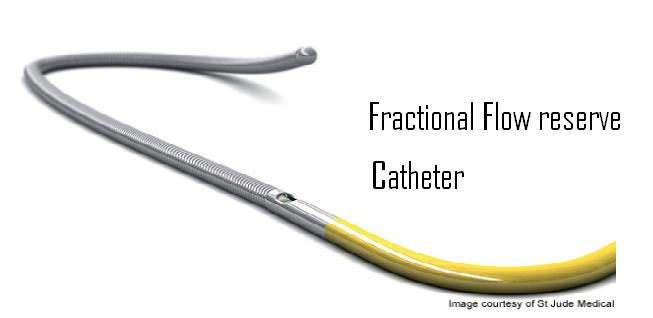
Fractional flow reserve is  a new coronary hemo-dynamic para meter used to assess physiological impact of border line lesions in coronary artery disease. The calculation is simple

FFR is  a terrible concept * for two reasons .

One ,  it never bothers about flow * across   a lesion. It simply  relies upon  pressure drop. We  know  there  is an intricate relationship   between pressure and flow . Simple pressure drop can never be  expected to translate into incremental flow in biological systems .

(FFR anology  in co-arctation of aorta . Can you take difference between upper limb  BP and lower  limb BP as a most accurate   Index of severity of co-arctation of aorta ?  )

How crude it would be   . . .  to  believe so ?

Two   it  ignores the  morphology of the lesion . We know an eccentric soft  lesion with a  good distal   FFR  is  live  coronary explosive .

The  FAME 1 and FAME 2 studies  glorified  FFR  !  I differ in many ways .

Some of  the  observations made about FFR.

  • FFR is to be  done only in discrete ,  safe looking  , intermediate lesions .(Do not ever attempt it in a eccentric lesion )
  • FFR wire is a  stiff ( stainless steel ) wire .  Careful maneuvering is necessary . Lesion crossing  and pull back  FFR wire require some expertise.
  • FFR / OCT  combo,   increase  not only the  fluroscopy time  ,  this procedure can be  more complex than  the intended   PCI .
  • My colleagues tell me FFR measurements are not often  reproducible .(I have little experience in this )
  • Adenosine induced vasodilatation  is not natural physiological model . Further it has  a potential for  a coronary steal if there is near critical lesion in contra lateral artery.
  • There are many occasions   FFR wire has caused  dissection  and  subsequent stenting was necessary  .(The very thing  the cardiologist wanted to avoid !)
  • Bifurcation lesion FFR measurement is prone for errors
  • FFR in two tandem lesions cannot be assessed   accurately
  • Post PCI FFR is not practiced routinely in may centers  the fear of  status quo of FFR.

Final message

This post is not to defame the FFR as a concept . Just to make you think  . . .  how often ,  we  are entrapped  in a  pseudo -intellectual  game in  the cath lab ! FFR  as a tool , can still  be valuable to assess coronary hemo-dynamics in a selected lesion population especially,  discrete,  single vessel ,  or left main disease  with around 70 % narrowing . But never go with FFR alone .Consider the morphology , location   of the lesion .

Finally do not forget  ,  the   good old  EST  can  give a stiff  fight  for supremacy over FFR  in terms of assessing physiological impact of a coronary stenosis (Especially in single vessel disease ) 

Reference

Fractional Flow Reserve versus Angiography for Guiding Percutaneous Coronary Intervention . http://www.nejm.org/doi/full/10.1056/NEJMoa0807611

Read Full Post »