Link to a related post , that might add some sense to the above quote
Posted in Uncategorized, tagged acc aha, best medcial quotes on ethcis, esc, medical ethics, medical guidelines, patient empowerment on March 9, 2026|
Posted in Uncategorized, tagged doctor patient relationship, medical ethics, patient demands, patient democracy, patient empowerment, patient rights and duties on July 28, 2024|
Posted in patient education, tagged ai in medicine, faith trust in doctors, patient behaviour, patient empowerment, technology in mediine on August 20, 2023|
Preamble
A patient who had a PCI some time back , asked me in one of his recent visit.
Doctor what is microvascular endothelial dysfunction and erosison ? Am I at risk of developing it ?
What am I supposed to answer ? Yes, I some how managed .” Don’t worry , it is a complex biological phenomenon. you need not go deeper into that. Take medicines regularly” He wasn’t happy with my answer is a different story.
A simple tip for peace of mind … for the modern patient
If the current generations of patients , equipped with hyper-knowledge engines, insist to understand 100% about their illness, imagine the consequences to the global healing system ,that has so many ground level issues to bother about.
One unofficial estimate from an elite , professional academic chatterbox of medicine suggests that the knowledge base with which doctors diagnose, treat, and understand the diseases they tackle, is at best 15%. Pateints need not be thankful , but atleast understand we are for working around with 85% ignorance, and still tries to bring out the best. I am sure this is a fact, no one can disagree ,regardless of the presence or absence of evidence to support it.
Final message
It might appear fair if someone argues blind faith in a trusted physician or hospital could end up as unscientific or unethical. But,what they fail to realize is, sciences’ blindness can be much darker, especially when it comes to the outcome of treatment and prognosis.
Posted in cardiology-ethics, Medical education, tagged ethics in medicine, patient empowerment on November 11, 2022|
The definition & intended purpose of patient empowerment
WHO defines empowerment as “a process through which people gain greater control over decisions and actions affecting their health” and should be seen as both an individual and a community process.1
Four components have been reported as being fundamental to the process of patient empowerment: 1) understanding by the patient of his/her role; 2) acquisition by patients of sufficient knowledge to be able to engage with their healthcare provider; 3) patient skills; and 4) the presence of a facilitating environment.2
Based on these four components, empowerment can be defined as A process in which patients understand their role* and are given the knowledge and skills by their healthcare provider to perform a task in an environment that recognizes community and cultural differences and encourages patient participation.
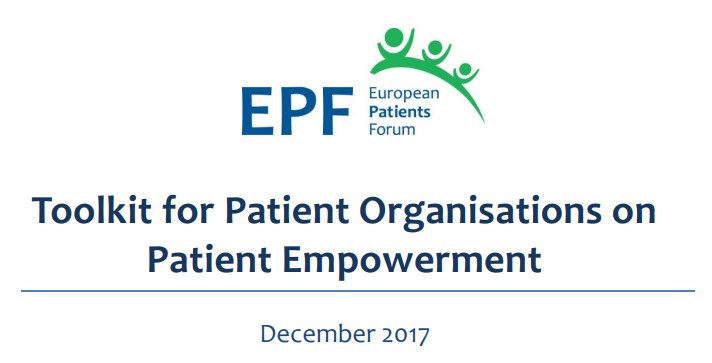
Reference
Posted in bio ethics, medical quotes, Two line sermons in cardiology, tagged doctor patient relationship, medical ethics, patient empowerment, patient responsiblity, patient rights and wrongs on July 11, 2022|
This write up was triggered after encountering a patient who instructed his cardiologist to remove an incidentaly found block in Right coronary artery.
Oftentimes, It is a funny & futile world out there in modern medicine. Revealing the complete truths or accepting ignorance in critical decisions to their patients, make the Doctors feel that, their academic modesty and reputation are at stake.
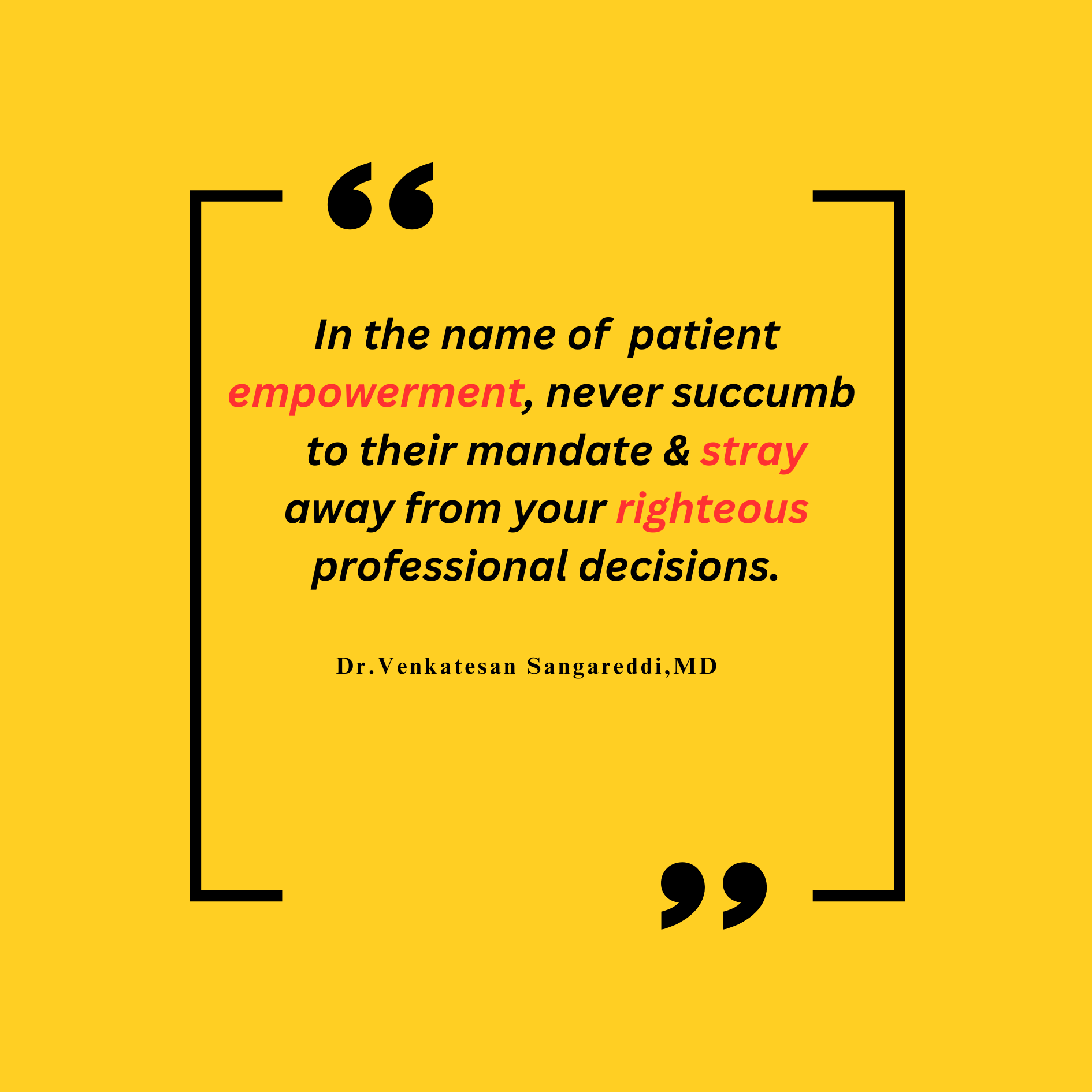
Still, many patients expect (and think) the doctors to be 100 % transparent and want to understand the nuances of disease better than the doctors themselves. The current fad of online & offline health education for patients is not an accident of technology. Though some benefits exist, I feel, It is an intentionally promoted, maliciously motivated patient empowering movement, trying to disarm the true professionals.
Dear colleagues, always realize, never allow the default ignorance to become patients’ knowledge and ask them to take decisions on behalf of you. (I know, this is diagonally opposite to current principles of the practice of medicine) Fortunately, this issue doesn’t arise in most public hospitals in our country.
This paper was written 30 years ago with great foresight.
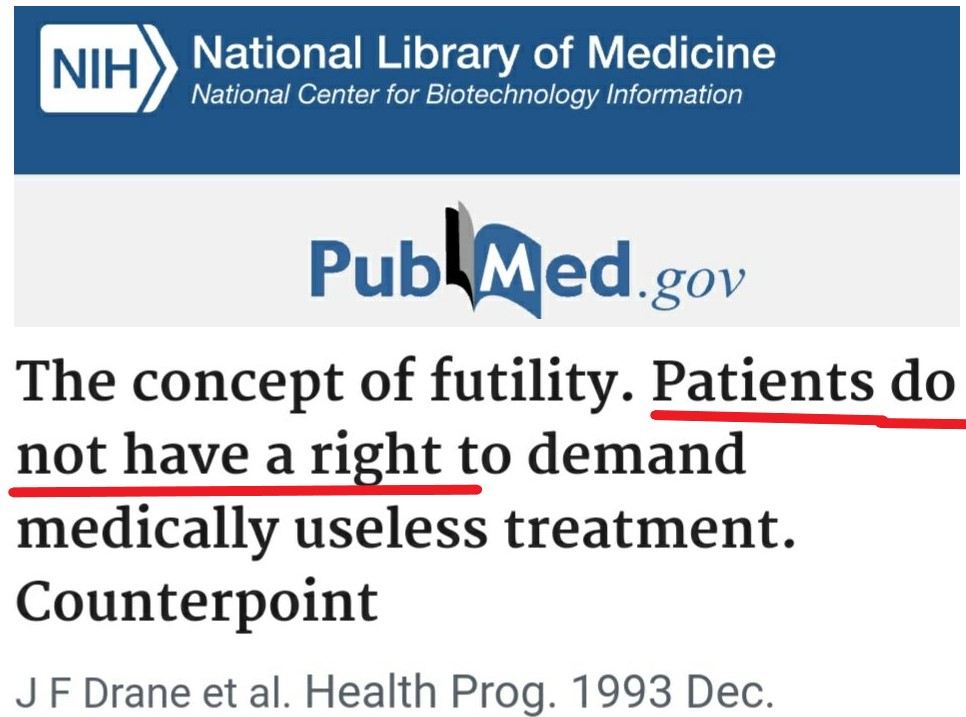
So, act with tact. You can’t hide behind the patient’s preferences in deciding the treatment choice. It can be “as unethical as” any activity that goes against the interest of the patients under which we are taking our oath. I don’t, recall anywhere in the Hippocratic oath, that we pledge to listen to the patient’s choice of treatment. (Rather, we assure to work in their interest always)
Final message
Let us sharpen our own skills first. We shall think about how to distill and consume the muddy knowledge emanating from the current mess of premature research spilling all over academia. Don’t try to educate too much to your patients. There is nothing called academic empathy because leaving it to our patients will ultimately end up equivalent to medical negligence.
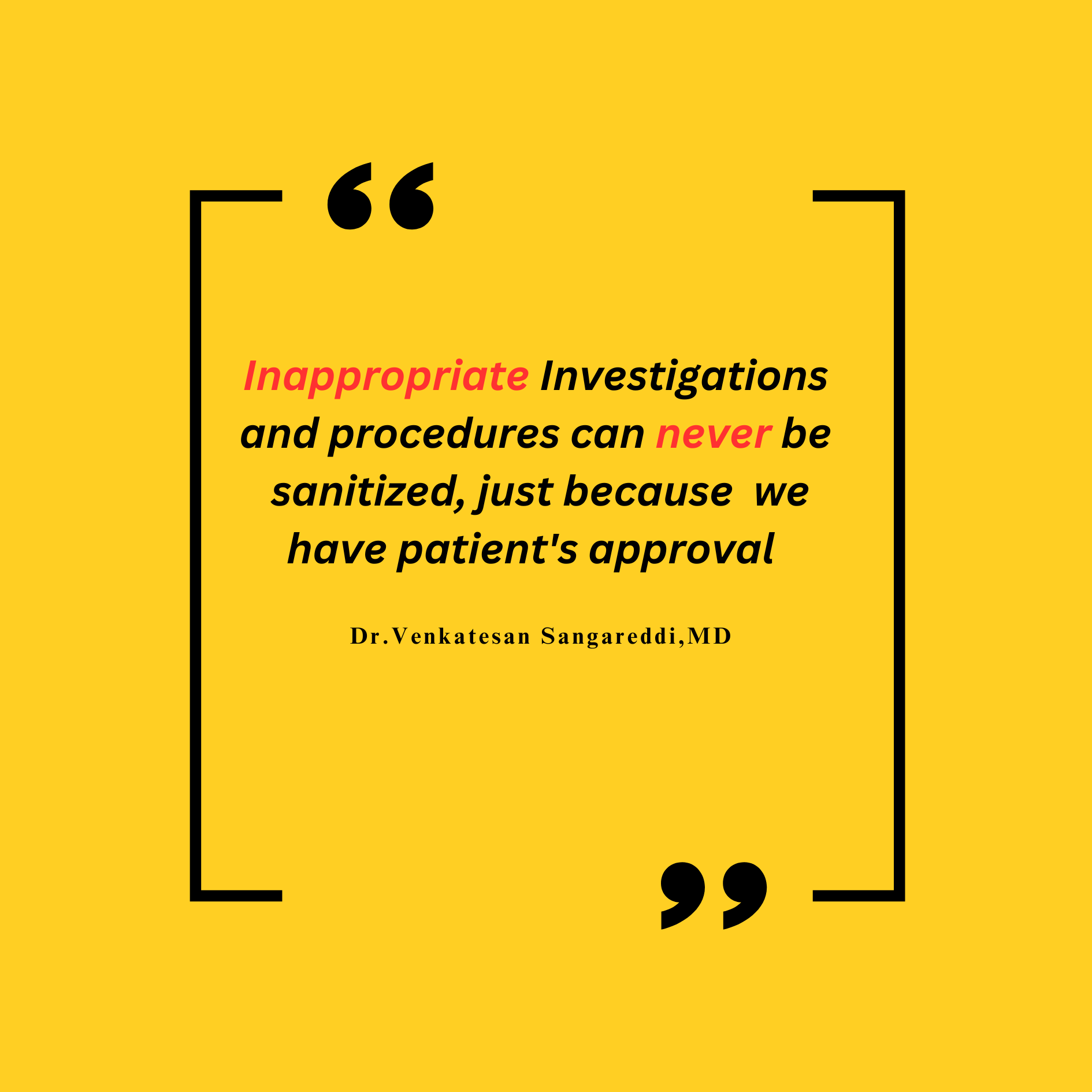
Forget about the patient-guided treatment menu card. Think about this, if ordering a trendy new medical investigation purely on a patient’s demand is declared as medical negligence, How many doctors on this planet will be left non-negligent.(Stop. then what is a master health check-up? Who is the master ?)
(Hope this write-up is taken from a proper perspective. No intent to create a chasm between patients and doctors relationship )
Reference
Postamble & Counterpoint
It all sounds good on paper. The consequence of not listening to our patients, especially if they land up with complications, will look awkward, is it not? So, I always go by patients’ desires.
Patients tend to believe in fancy investigations and machines and not me, what to do?
No, it is wrong. You can’t justify it. Regarding your concern and impact on our reputation, nothing can be done. The medical judiciary desperately needs some reforms, understand the reality to protect us I always tell my patients they have to accept me as a whole. (Do you enter the Aeroplane’s cabin and check the pilot’s mental and physical acumen every time you board a flight. It is trust,.. complete trust, that drives our life right !)
It is true, that medical professionals must be always under a continuous quality* control regimen. The consequences of consulting less shrewd medical personnel, their errors in judgment, the stress of work, patients need to accept* just like a side effect of a drug or a natural history of a disease.
*, Unlike the engineering field, defining & controlling quality in medical therapeutics is a mystery exercise with multiple agendas!



 Dr.S.Venkatesan MD