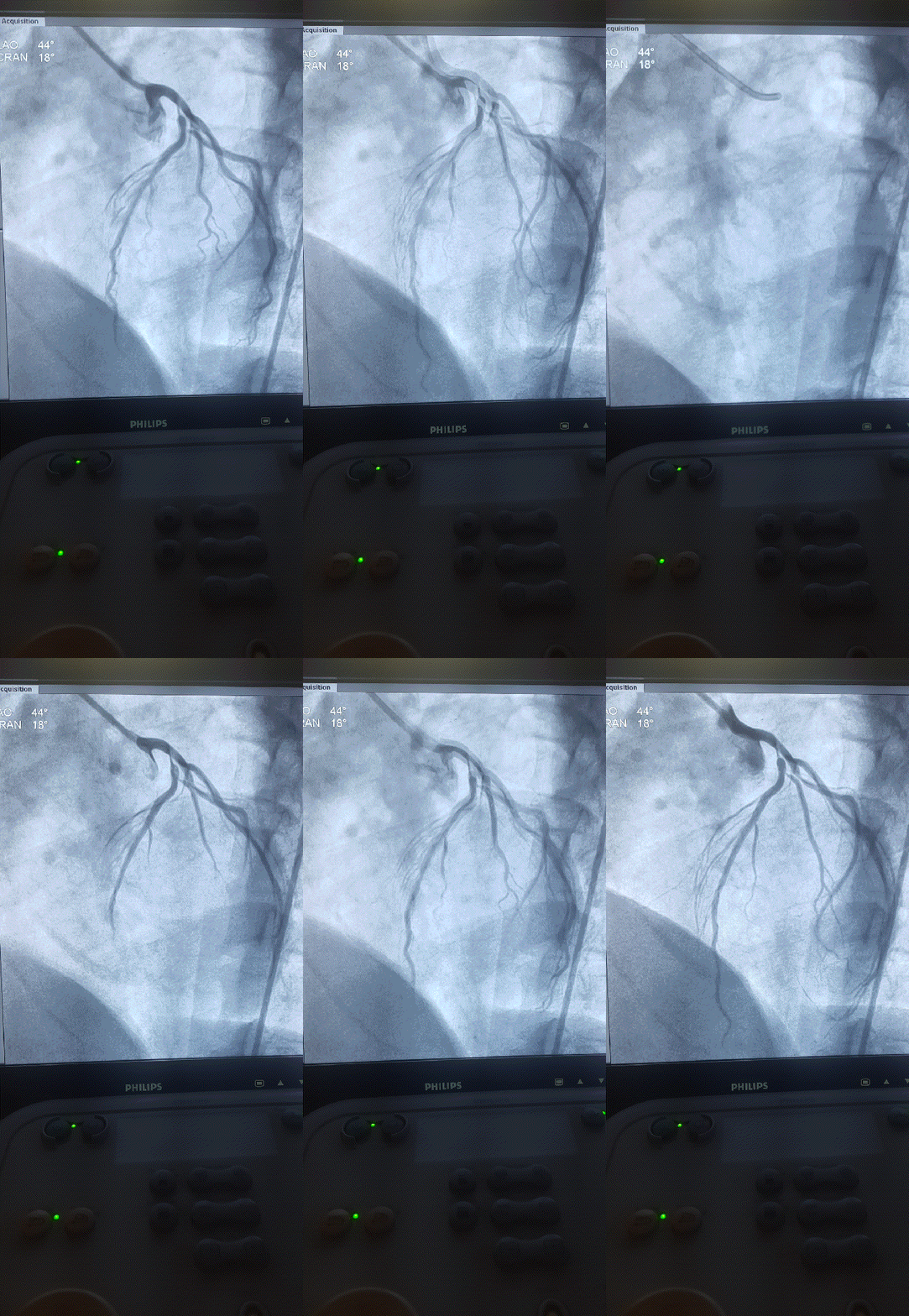
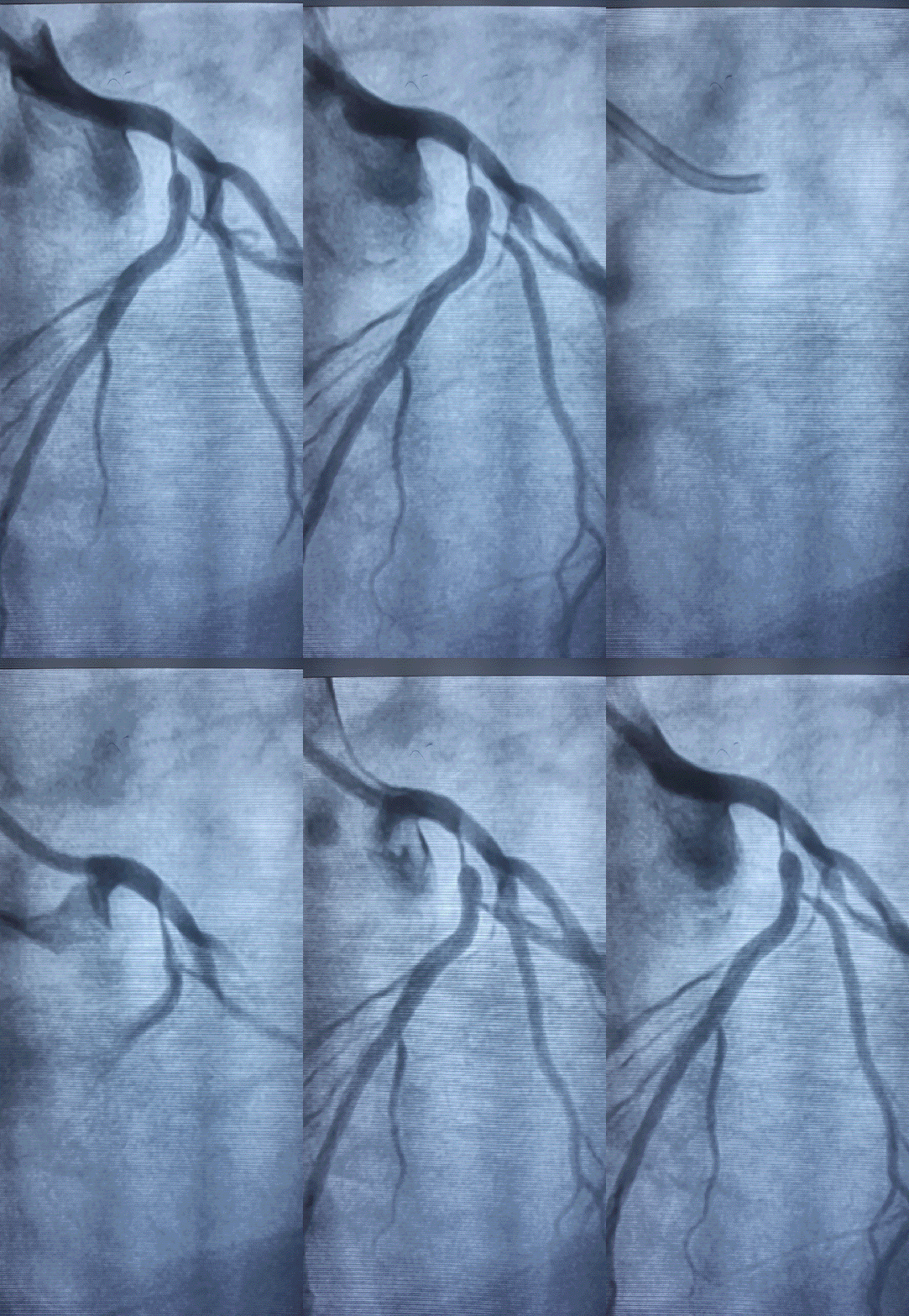
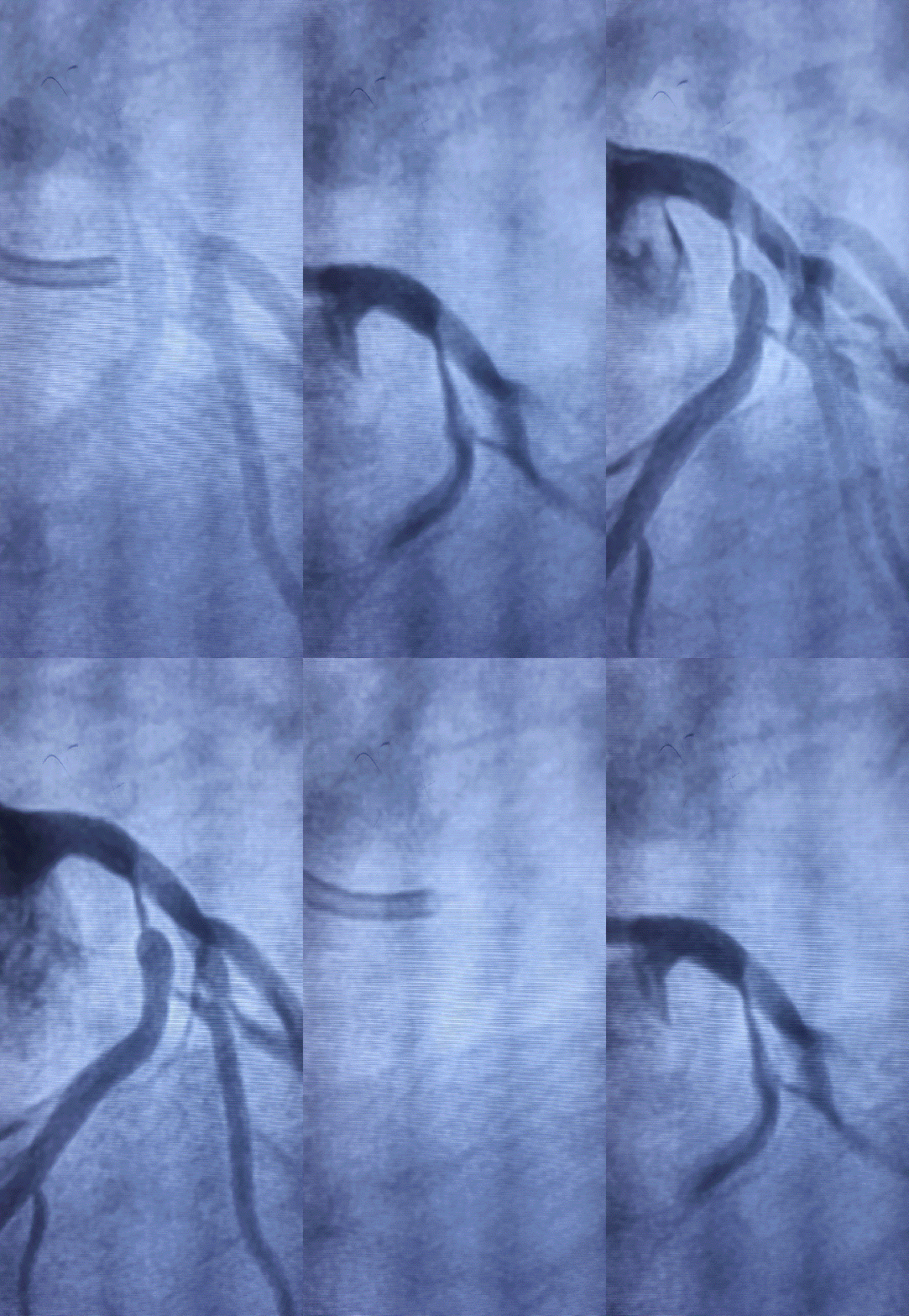
How do you explain this ? 99% occlusion still TIMI 3 flow ?
Answer
A. It could be a parallax error. Lesion may not be tight. Should be seen in other views.
B . Forcible Injection by the operator, make it an artificial TIMI -3 flow.
C .Such flows are very much possible .It Indicates a healthy distal micro-circulation a vascular bed in a fully dilated mode.
D. TIMI flow is not reliable here . We need TIMI frame count to confirm.
Follow up questions
1.How much will be the FFR ?
Likely to be less than . 8 definitely , but surprises can happpen
2.Can he be asymptomatic ?
Unlikely.
Final message
Coronary occlusions are ominpresent . While we have mastered the art of successfully taming these anatomical enemies , we are still very much ignorant what these lesions actually do, to the physiology, inspite of half a dozen flow reserve Indices we have.(FFR,iFR, rFR,qFR, dP/dT ,etc)
The question is, at what level of obstruction, it really limits the coronary bllod flow significantly ( both at rest and exertion) . One thing is clear , it is higly variable & Individualistic, the secrets of which lies deep, in the domain of invisible micro-vascular network integrity.
Counterpoint
TIMI flows may no longer be valid in non-ACS situations. The name TIMI , by itself carries flow after thrombolysis. For some unexplained (& debatable ) reasons, we are used to apply this flow grade , in every angiographic flow scenerios irrespective of underlying clinical entity.



 Dr.S.Venkatesan MD