Feeds:
Posts
Comments

Archive for June, 2025

Right now, I am sitting at a yet another national conference on Interventional Cardiology. Two very popular cardiologists, from elite institutes of India are debating on a 60-feet long digital dais, with a flashy background comparable to the Macau skyline. Watching it, are about 600 prosperous delegates , brought from various parts of India. The debate is about, whether to use a single stent or upfront two stent strategy for left main bifurcation disease. The arguments were all too familiar, I just couldn’t concentrate.

I am sure every one will agree ,this topic is being debated for nearly two decades. The answer, we got is crystal clear. 90 % of BFL need just provisional single stent. Rest may require two stents upfront. The quality of the procedure matters more than the technique. Not even Imaging matters much. Of course, we are free to choose DK or various other forms of crush as we like. That’s it. May be, It’s time to we close the shutters on the exclusive and glamorous bifurcation clubs and move on. (until a real Innovation in dedicated bi-furcation stent happens)

The following add on was not part of the debate

*Before any BFL PCI, spend a few silent moments, while the patient is being laid on the cath table . Whether the patient is truly symptomatic, whether he could be a candidate for simple medical management or his lesions are complex enough to deserve a CABG.

Final message

Beginning to wonder, is there a fundamental problem with the current mode of knowledge flow and consumption in the field of cardiology. Why do we keep plagiarizing the same old content in the conferences year after year in spite of being fully aware of the futility? This raises a fundamental issue. As we learn more & more, is there a risk of our wisdom curve getting blunted?
Read Full Post »

LIMA to LAD anastomotic site lesion ,is an important subset of CAD that can occur either as acute post operative event or an ACS , CCS. Interventional cardiologists have, thus far, been reluctant to intervene in this type of lesion, often refer to a surgeon instead.

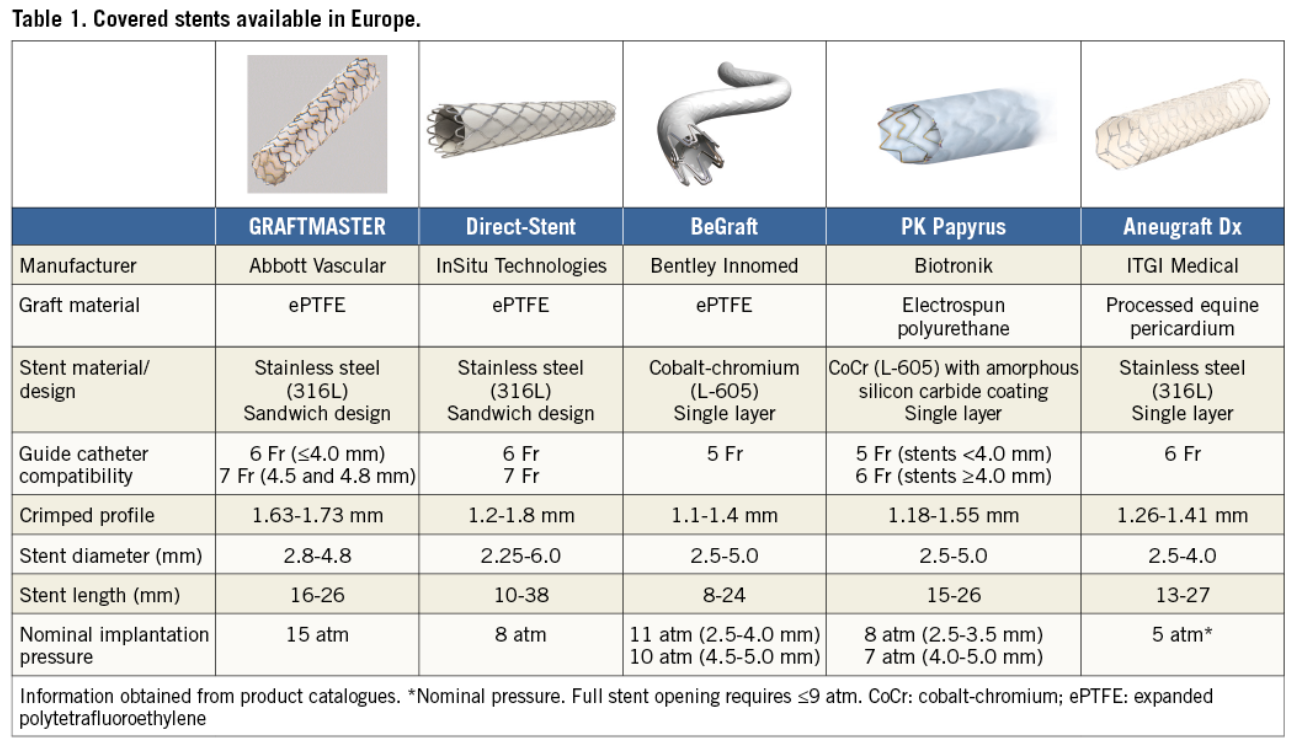
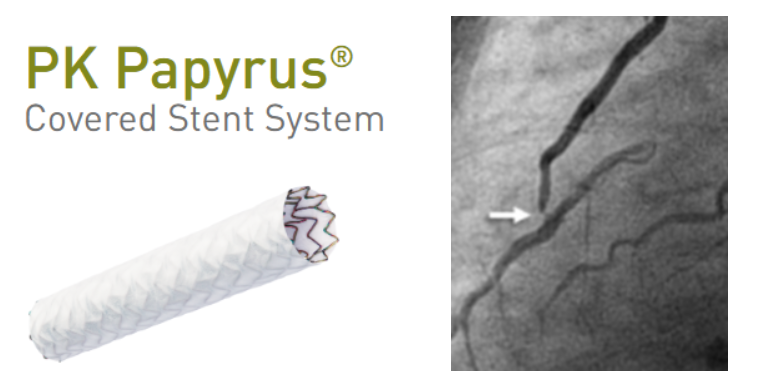
Here is case report by by Tahir et al. wherein a 75‑year‑old post‑CABG patient who developed acute LIMA→LAD anastomotic failure under cardiogenic shock within 24 hours of surgery. Considering the risk of of perforation or avulsion with standard PCI, the team deployed a PK Papyrus covered stent directly across the anastomosis—restoring TIMI‑III flow and myocardial blush successfully.

This highlights the covered‑stent’s potential as a first‑line semi‑emergency intervention, offering controlled sealing and avoiding repeat surgery in hemodynamically unstable patients.

What about chronic anastomotic site Lesions ?

Beyond acute rescue, the covered‑stent may play a valuable role in chronic anastomotic stenoses at the LIMA–LAD junction—lesions notorious for tortuosity and perforation risk. The PK Papyrus platform, with improved deliverability compared to older models like Graftmaster, offers a safer option for such high‑risk anatomical sites . Surprisingly, this indication is absent from covered‑stent guidelines, despite its clear utility in both acute and chronic settings.

Implications of blocking Native LAD Flow

There can be downsides in blocking the native LAD flow by the covered stent. ,However, in reality the proximal flow and to potential branches till the covered stent block is found to be flowing well. In contrary, a key advantage of covering the LIMA–LAD anastomosis is the elimination of competitive flow. In many bypass scenarios, flows between the graft and native vessel compete, potentially compromising graft patency. With the covered‑stent sealing the anastomosis, distal LAD circulation becomes exclusively graft‑dependent, which may actually

  • Stabilize hemodynamics by directing full perfusion through the graft.
  • Reduce competitive flow dynamics, promoting long‑term graft patency.
  • Lower ischemic risk if native LAD disease progresses proximally.
  • Finally, the cover acts as a distal protection device against thromboembolic material from proximal friable lesions.

Role of DEB /DES in LIMA to LAD anastomotic lesion

This can be an alternate option. If native LAD flow is considered important and lesion is less complex and risk of perforation is low.

Ref : Marcos Garcia-Guimarães, Ramón Maruri-Sanchez, International Journal of Cardiovascular Sciences. 01/Jul/2018;31(4):454-6.

Final message

A simple DOBA (Drug eluting POBA) , or a covered‑stent at LIMA–LAD anastomoses can be a game‑changer, saving lives in emergencies, possibly improving chronic graft outcomes as well. It’s time for interventional cardiology experts to recognize and acknowledge this application, supported by further registry data or trial.

Reference

1.Tahir H, Livesay J, Baljepally R, Hirst CS. Successful Rescue Intervention of Internal Mammary Artery Anastomotic Site Acute Graft Failure With Direct New Generation Covered Stenting. J Med Cases. 2021 Jul;12(7):271-274. doi: 10.14740/jmc3695. Epub 2021 May 13. PMID: 34434470; PMCID: PMC8383698.

2 .Marcos Garcia-Guimarães, Ramón Maruri-Sanchez, International Journal of Cardiovascular Sciences. 01/Jul/2018;31(4):454-6.

Case Reports

Read Full Post »

Covered stents are exclusively reserved for coronary artery perforations. Yes, that’s what we think. There has been limited exploration regarding the value of covering the complex lesions, which could prevent future coronary events .

It is possible, covered stents might play a extended role , other than perforations as in complex .friable thin capped lesions . As of June 2025 , haven’t found any such study in cardiology literature.

Ref : Kilic ID, Fabris E, Serdoz R, Caiazzo G, Foin N, Abou-Sherif S, Di Mario C. Coronary covered stents. EuroIntervention. 2016 Nov 20;12(10):1288-1295. .

The recently released PREVENT study argued for PCI for patients with vulnerable high risk plaque. Ironically , it is found plaques with very thin cap ie <50microns are at risk of rupture by the radial stress of struts in the immediate or late follow up.

The thought of this study came when we witnessed high recurrent events, due to plaque prolapse, TCFA injury, new plaque ruptures, micro emboli. no reflow etc in patients with complex lesions.

Any past studies done on this aspect ?

There have been some attempts to use covered stents in degenerated venous grafts. Also, the M-Guard stent system was used in the past to seal thrombus during primary PCI. Both showed mixed results. (Gracida 2015)

Are we ready for a trial with a far fetched Imagination ?

What about jacketing and sandwiching the coronary lumen internally with a synthetic layer of tissue? That can potentially prevent recurring events indefinitely. (It is like making a native coronary artery into a Teflon-coated tube.) The proposal may look crazy until we find a inert layer of synthetic tissue to false roof the coronary lumen. But someone can make a start.

Final message

Covered stents are not just meant to arrest blood leaking outwards, in case of perforation , it can also be used seal high risk plaques, that ruptures and leaks its content into the lumen.

*In the following document, a brief outline and proposal is written about such a study. Whoever wants to do such a study, may use it. I wish I could be an external adviser, as I am no longer attached to a teaching hospital or research center.

Postamble

Before , we begin such a study, one may look at the long term outcome of patients who had already received covered stents for perforations. This is important because, PTFE’s pro-thrombotic potential and need for additional vigilance is yet to be defined.

Read Full Post »

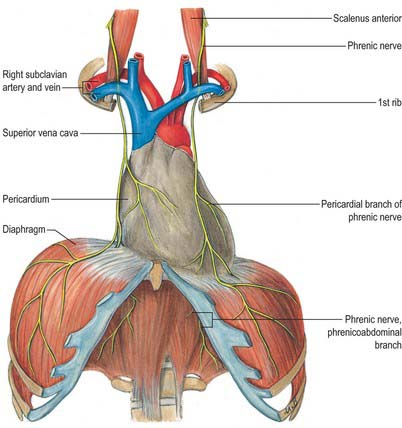
Phrenic nerve arises from C3, C4, C5 cervical spinal nerves ,but essentially from C4 . In the neck, it runs along the anterior scalene muscle, deep to the pre-vertebral fascia. It Enters the thoracic inlet posterior to the subclavian vein and anterior to the subclavian artery.

Does It traverse the Pericardial Space?

Contrary to my longstanding belief, realized just now, the phrenic nerve does not enter the pericardial cavity. Rather, It courses within the fibrous pericardium, between the fibrous pericardium (outer layer) and mediastinal pleura. Hence, it is extrapericardial but intimately related to the fibrous pericardium. (Yes, I was indeed a prof of cardiology, teaching students. Wish, I could learn cardiac anatomy from the scratch again)

Anyway, the fact that it runs outside the pericardium, doesn’t give any comfort to the electrophysiologists, both during epicardial and sub-endicardial ablations. It is worth noting the important differences in the course of right and left phrenic nerves.

Difference between right and left phrenic nerves anatomy

Understanding the anatomy of the phrenic nerve is crucial for both cardiac surgeons (of course they see with their eyes) and electrophysiologists. Phreni nerve injury or ablatio can lead to serious consequences.

Right phrenic nerve

Familiarity with phrenic nerve anatomy is key during an ablation. Specifically, the right phrenic nerve should be carefully delineated during endocardial ablation at key sites, such as SVC, the postero-lateral aspects RA. right superior pulmonary vein, and the junction of the IVC and RA. Fortunately right phrenic nerve never cross over the free wall of RV, unlike the LV,

Left phreic nerve

The left phrenic nerve, on the otherhand, should be localized when performing endocardial ablation near the LAA, ablation of left sided accessory pathways,and epicardial ablation of left ventricular tachycardias

How to avoid phrenic nerve injury during RF ablation ?

There are a variety of ways to displace the phrenic nerve from the ablation site, like fluid, air, or balloon inflation. Here is a step-by-step review article in the Journal of Cardiac Electrophysiology in the current issue, June 2025. It is free access too.

Reference

1.Sánchez-Quintana D, Cabrera JA, Climent V, Farré J, Weiglein A, Ho SY. How close are the phrenic nerves to cardiac structures? Implications for cardiac interventionalists. J Cardiovasc Electrophysiol. 2005 Mar;16(3):309-13. doi: 10.1046/j.1540-8167.2005.40759.x. PMID: 15817092.

2.Peters CJ, Supple GE. Step-by-Step Approach to Phrenic Nerve Displacement. J Cardiovasc Electrophysiol. 2025 Jun;36(6):1201-1212. doi: 10.1111/jce.16617. Epub 2025 Mar 12. PMID: 40077935; PMCID: PMC12160695.

Read Full Post »

Paroxysmal nocturnal dyspnea and orthopnea are cardinal symptoms of heart failure. The difference between the two has been extensively discussed and debated in medical literature. The key difference is in the time lag that occurs in PND , while orthopnea occur immediately. However, we never looked into PND & Orthopnea with reference LV, RV or biventricular failure.

The fact that Orthopnea occur immediately, raises many critical queries.

It is presumed that the increase in venous return in a recumbent posture immediately causes lung congestion and stimulates pulmonary receptors (J or non-J?) which results in dyspnea. The fact that orthopnea is relieved by sitting posture demands still more explanation. Is it volume-dependent lung congestion, or volume and stretch-dependent RV mechanic receptor stimulation? (or both) I think it is difficult to answer that question.

We get some indirect clues in bed side, by experience. In many patients with Chronic RV dysfunction , orthopnea seems to be less, making it likely pulmonary origin. At the same time, if RV dysfunction is new or acute, it is the raised RVEDP, that is responsible.

Now , we have a problem . Is orthopnea related (more )to RV or LV dysfunction ?

It can have complex inter dependent relationship. In fact, the degree of pulmonary hypertension, the septal push (Reverse Bernheimer effect ) can further confound. Severe RV dysfunction alters the V:Q ratio of lungs, and a also a mismatch between RV vs LV stroke volume.

Final message

The origin of Orthopnea is determined by the status of both RV and LV function. They can either congest or decongest the lung. Realize, in a severely dysfunctional biventricular failure, it is the fine balance between them that keeps the lung dry or wet.

The importance of RV mechanoreceptors and their pathways to dyspnea centers are less understood. While the mechanism of orthopnea is intertwined between the functions of the two ventricles, PND is fairly specific for acute elevation of LVEDP and resultant alveolar interstitial edema. Mind you , orthopnea can occur with totally dry lungs, if its origin is from RV, while it is a rarity in patients with PND.

Post-amble

Time lagged Orthopnea : A proposal for new clinical entity.

We have also seen patients with RV dysfunction mimic PND when they develop dyspnea say 15 to 30 minutes after lying down. Fellows should go back in time and try to re-look and analyze gaps in our understanding of cardinal symptoms.

A small study is easily possible about the incidence of PND and orthopnea in patients with cardiac failure with reference to right and left ventricular function.

Read Full Post »

How can we use AI as a tool of knowledge distillation ?

Here is a deep discussion with Grok 3, on the merits, limitations & validity of DANAMI 2 and PRAGUE 2 , the two old studies on pPCI. Curiously , we don’t have any other studies to quote. As on 2025 , superiority of pPCI hangs precariously on these two decade old studies, which has some serious omissions in the primary end point and its Interpretation. To get into the facts , please go through the following link.

https://grok.com/Is primary PCI really superior to lysis in a global perspective /

It is a long chat, I am sure most of you can’t spare your vital time. But, the truth comes out only at the fag end of the conversation.

Read Full Post »

Final message

Since, we can’t sue science for its impurity , or a misbehaving bacteria , an inadequate imaging machine or manipulated health care system,poor doctors have become, the only visible targets.

Related topic

Martin A Makary BMJ 2016;353:i2139 doi: 10.1136/bmj.i2139

Next query in medical ethics

What is the permissible level of error rate, for a medical professional?

Governments can err, Courts can err, pilots can err, meteorologists can err, sportsmen can err, but …

Wish , the prestigious British journal of medical ethics write a position paper on this.

Read Full Post »

Every day, 100s of physicians and cardiologists are asked to report ECG either physically or on-line .In India, they do it for some paltry benefits from stand alone labs , hospitals , institutional protocol or by sheer compulsion.

When only ECG is reported ,the physicians are often blind to the indications for which it is taken . The symptoms of the patient or the past history is rarely available. It is a sorry state of affairs and many of us do this, fully aware of the consequences – a normal ECG can’t rule out an ACS in at least 10 % of times.


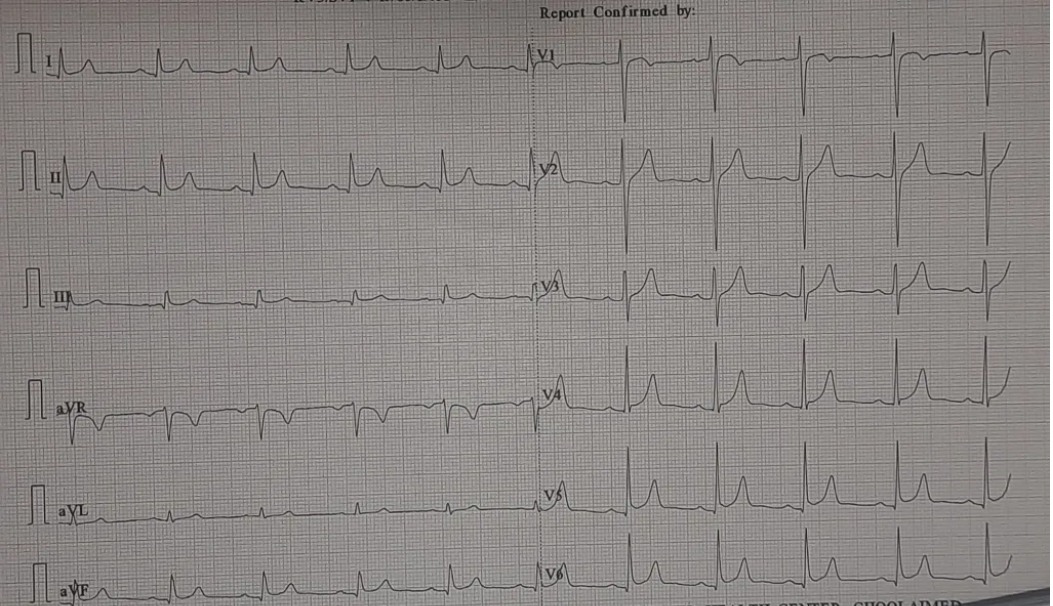
Now, here is an ECG of a 40 year old male, on my table for reporting. No other info is available.

How should I report it ? Can I refuse to report ?

There were five options

A.ECG Normal

B.ECG within normal limits, with non specific ST/T changes

C.ECG shows ST elevation Infero- lateral leads. To rule out ACS

D. Early repolarization pattern

E. I refuse to report, until clinical data is made available.

My report: ECG within normal limits. (Shows ERS pattern with non specific ST elevation in Infero-lateral leads.To correlate clinically, and adviced a physician consult. )

One of my colleagues commented, that I lacked the guts to comment the above ECG as normal. The contention is, ERS pattern occurs in up to 20% of the young population, and it evokes unnecessary anxiety. How do I know he is pain free ?However, I agreed with my colleague. It is indeed ERS by all means. But,how long ?, we can be carriers of proxy anxiety, for the sake of our patients. Further, by no means ERS gives immunity to ACS. (What happens to the ST segment of ERS during ACS is a different query to be answered.)

(*Later on I came to know this guy had epigastric pain, and was simultaneously evaluated for CAD which was excluded . Mind you, mistaking ERS pattern for ACS is an age old problem. About 5% of thrombolysis in ISIS -2 study(1988) turned out to be in patients with possible ERS)

Final message

Can we report an ECG without knowing the patient and his symptoms ?

It is a foundational question in clinical medicine. The answer to which can shake the way, we practice cardiology. It is indeed unprofessional* of a physician to report an ECG without knowing the patient status. But we do it every day , can’t avoid it. But ,let us at-least insist the ECG lab guys to note down the symptoms or /the purpose for which it is taken (like a regular health check or pre-op evaluation, etc).

*Of course , to escape from a potential miss, we should atleast write, ECG to be correlated clinically and with past records.

Post-amble

We are in the AI era. ECGs are read by data-hungry machines. If you think there are AI models that can match a million ECG patterns and detect an ACS in milliseconds, sorry, you are sadly mistaken. Unless and until patients’ entire history is fed into humanized machines, (that had undergone 8 years of rigorous cardiology training) the risk of missing a diagnosis is significant.

Read Full Post »