Feeds:
Posts
Comments

Archive for August, 2025

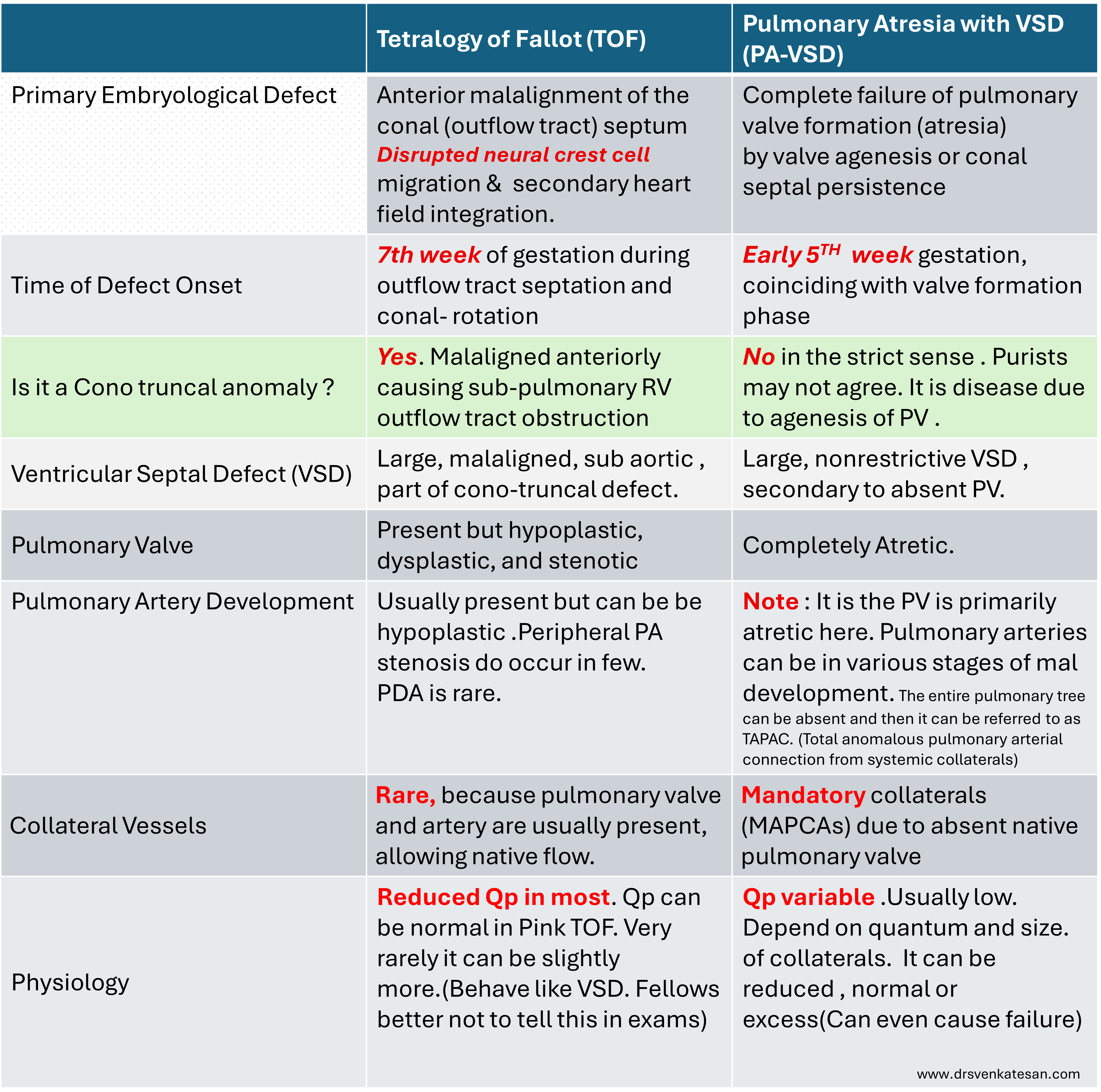
There is a list of conditions that come under cono-truncal anomaly(CTA) in CHD. TOF is the classical example. CTA are group of genetically determined fusion defects between developing right ventricle , septum and the outflows .Many components of outflow are outsourced from cranially located neural crest . In fact, improper migration and fusion of this secondary heart field to the primary is most common cause of many complex heart disease. Microdeletion on chromosome 22, specifically in the 22q11.2 is a major documented gene defect. Traditionally CTA list often includes PA with VSD. This table compares the anatomical and embryological basis of TOF & PA with VSD. You can decide whether to call both as part of cono-truncal anomaly or not.

Add on content.

One important difference is missing in the above table. It is about presence and absence of PDA. In TOF true PDA may be present in early days or months . In PA with VSD , PDA or (MAPCAS mimicking a PDA ) can be part of collateral .A persistent controversy is, how to differentiate a PDA from MAPCAS .That can be challenging. Further, to label a vessel as PDA it should drain into normally formed left pulmonary artery, which is rarely likely.

Read Full Post »

This a transcript of a mini-cardiology consult happened in a routine office practice of a physician.


I am Mr. S. I just went for a preventive health check, specifically to rule out hypertension . I got my BP checked by a physician who is also an experienced cardiologist.

“How is my BP doctor ?

“Its fine , It is 120/76

I asked him, “Is my blood pressure normal doctor?

I thought, the doctor sort of frowned at me for a moment and said , “Oh sure, technically yes , it is normal BP , but academically it is not.” 

Doctor, make a pardon , I didn’t get it . You mean to say my BP is abnormal ?

No, not really, it is not abnormal either.”

Then, why you said it is academically not-normal doctor ?

I would love to call it normal, in fact it is normal .

I am confused doctor. What prevents you to call it as normal BP doctor ?

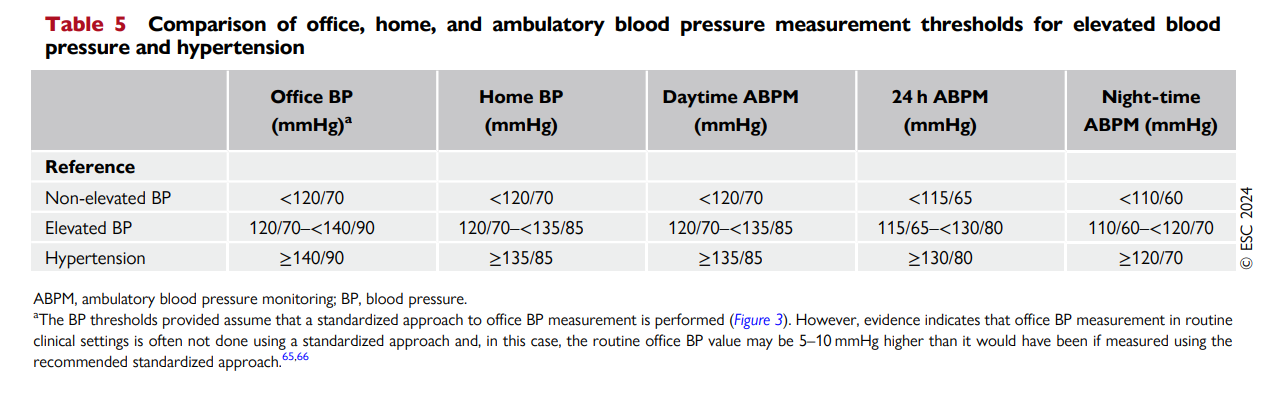
Let me tell the truth .The current scientific guidelines (ESC) which we revere , doesn’t allow me to call it as normal BP . It wants to get rid of the term normal BP from the cardiology literature. It asks us to call you guys with perfectly normal BP as having non elevated BP. I want to be loyal to the science and also should not feel out-dated with my peers.

I understand doctor, the compulsion to respect science more than your conscience in your day to day practice and admit it too .You are a very rare & frank Doctor I have, ever come across

Thank you, Mr S. for your complements very kind of you .But, let me go little personal. My colleagues consider me otherwise . They don’t consider me as a normal doctor , because I am frank.

Doctor, please don’t bring that normal curve stuff again. If you are called abnormal, then who is normal , doctor?

Sorry, I don’t have an answer .We shall meet on our next visit. Bye & thanks


Those who want to dwell deep please go through this 107 page document.

Trying to find out the word normal BP in the latest ESC 2024  Hypertension  guidelines .

What is the logic for removing the term Normal BP in the new ESC guidelines ?

BP is a continuous variable . People with any level of BP can develop cardiovascular events. So there can’t be strict normal.

Why such a classification could be dangerous ?

By avoiding the word normal, are we trying to suggest non-elevated BP is also a potential risk factor? These guidelines misleadingly and unintentionally took a cue from the LDL analogy: i.e., lower is better. They conveniently forgot the J-curves and U-curve of BP. This classification is meant to keep every adult human being as a potential candidate to get ready for elevated BP or HT. Can’t suspect the true intentions, though, as these guidelines stress the importance of good lifestyle choices to keep the BP in control without drugs.

The fact that the new guidelines is avoiding the word normal , implies it hesitates to reassure our public .This, by itself, will make our public anxious, push up the BP, and end up as drug-consuming hypertensives later. Principles of the practice of medicine hinge on trust and reassurance. In the name of scientific preventive medicine, we are unable to call a normal person normal. That is the wages for the sins we pay for the explosive growth of knowledge (Pseudo) and technology.


Post-amble

Who am I ? to question the credibility of a 107-page document prepared by the best of all experts in the field of cardiology? Just a reminder to mind , what happened to the term pre-hypertension and the fate of JNC across the Atlantic a decade ago.


Read Full Post »

Good bye to Gruentzig … the mercurial genius and the father of Interventional cardiology. The swag attached to PCI has become a bygone era. Percutaneous structural heart disease interventions, though in Infancy, is ruling the world today. Tans catheter heart valves is the new mantra. (THV).We can say Aortic stenosis has been conquered without surgery.(*Note : we means cardiologists, not patients) . Pediatric cardiologists have done the same in percutaneous pulmonary valve delivery in children. However, our quest for percutaneous AV valve implantation is facing tough challenges that sans meaningful outcomes.

It is heartening to witness huge technological innovations in arena of native TMVR*. Still, Mitra clip (TEER ) is the only non surgical solution for MR as of now. We know, It is a terrible alternative for an surgical MVR. The key issue with TMVR is the absence of good native foundation and tackling the extremely dynamic AV ring , which are in continuity with LV/RV muscle (unlike Aortic valve ) Mind you ,the AV valves should withstand the force of TAPSE/MAPSE for tricuspid and mitral valves respectively. May be a dysfunctional left ventricle might co-live with a TMVR with more peace. (Fortunately ,LV dysfunction is common in patients who are considered for TMVR)

*Valve in valve in TMVR is being widely used .The issue discussed here will be for TMVR . native mitral valve diseae.

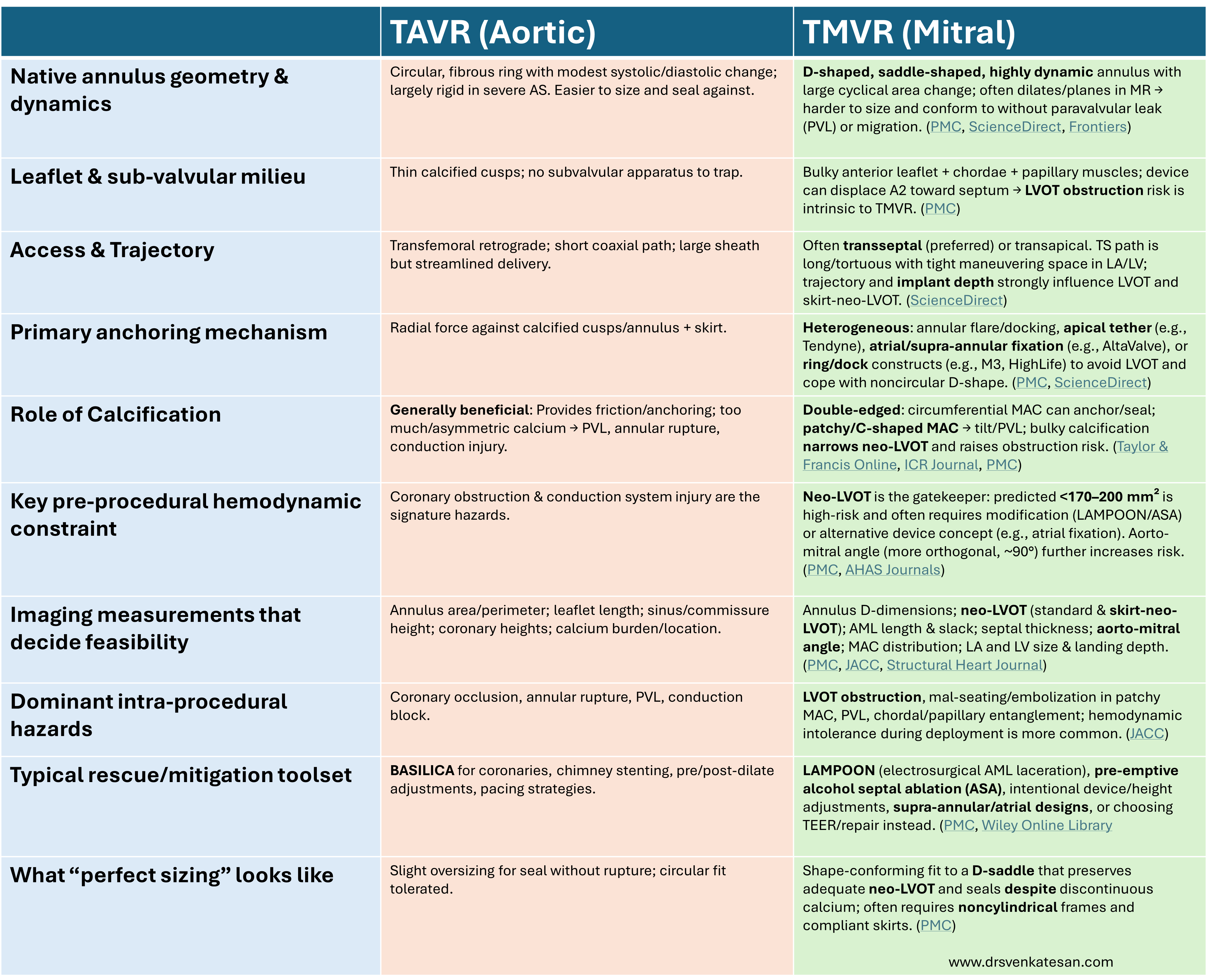
Here , an attempt is made to differentiate the basic differences in the science of between TAVR vs TMVR . (Not comprehensive, but has compared three promising TMVRs , Intrepid, Tendyne, M-3 and Alta-valve.

Final message

Though TAVR and TMVR share a word ‘transcatheter’ they live in different anatomical and physiological worlds. TAVR is often successful because calcium is mostly friendly , the annulus is near circular, and landing zone is fairly predictable. Implantation of TMVR demands extreme diligence because the annulus is dynamic, calcium is an unstable ally, and of course there is always the fearsome LVOT nearby.

Post-amble

Meanwhile, the inability to dispose of the native disease leaflets is a the common issue in both TAVR and TMVR .( which our surgical colleagues will laugh at) May be we need to wait until an new avatar of BASILICA or LAMPOON, which might have a valve bioptome , to cut and extract native leaflet ,safely through a dedicated port without the risk of embolization.

Read Full Post »

TAVI is becoming like PCI equivalent of aortic valve. The procedure is nothing but stenting and plastering the aortic prothesis ,with all the native diseased aortic leaflet in-situ. Pre procedure CT aortic valve mapping (rather the entire Aorta) is the key to successful outcome.

While the calcium is the essential bonding force of the valve to the aortic annulus, it can also play some serious spoilsport, along with native leaflet debri . Many times, the hardened calcium are like like sharp 3 dimensional knife hanging over there in root of aorta.

Every TAVI operator has this ligering fear . Will that speck of calcium “ice berg”, hiding 2 mm above the NCC, hit the AV node, when I deploy the valve ? Will the distorted leaflet jump few mm above and hit the coronary ostia , however high it may be. (After all , the exact final landing zone is not determined by the operator , but by the ROC curve)

Every severely calcified valve experiences a Titanic effect , fortunately most valves escape.

Realise how important the accuracy these softwares are .It is just a matter of few mm error . . Apart form calcium distribution pattern , more fundamental parameters like the annular size, shape, and optimal imaging angle are critically important. Here is brief report on various software packages available for pre procedure planning of TAVR.

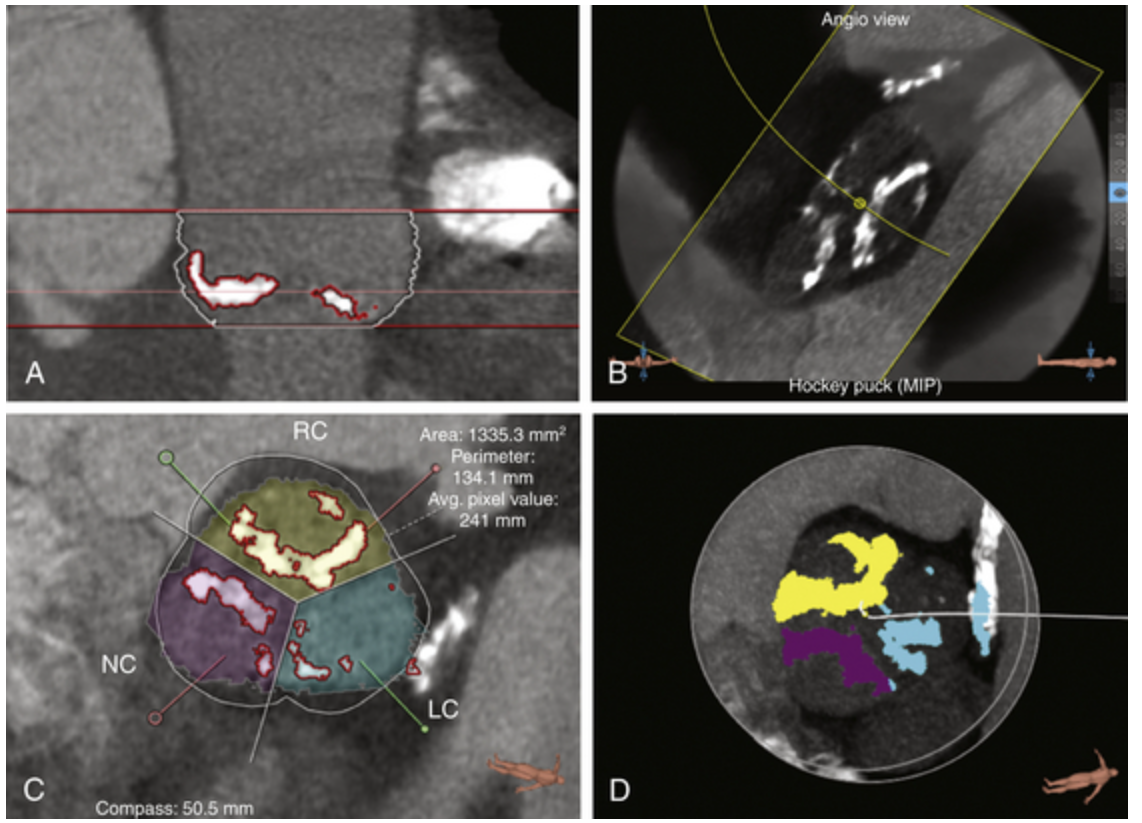
Image courtesy : Thoracic Key  Assessment of aortic valve calcification.The stretch view shows dense calcification of the right coronary cusp, noncoronary cusp, and left coronary cusp. The stretch view (A), angiographic overlay (B), cross-sectional view (C), and “hockey puck” view (D) allow quantification of the calcium in the aortic valve.

The following table was curated from the respective company websites. Any further details can visit them.

SoftwareVendor/DeveloperKey Features for TAVR Pre-Planning
3mensio Structural HeartPie Medical ImagingDedicated TAVR module for automated aortic root analysis, valve sizing, and access route planning. Provides 3D visualization, calcium scoring, and virtual valve implantation. Widely used for precise measurements and procedural simulation.
OsiriX MD / HorosPixmeo (OsiriX) / Open-source (Horos)DICOM viewer with 3D multiplanar reconstruction (MPR) tools for manual valve sizing, annulus measurement, and aortic root analysis. Horos is a free alternative. Supports plugins like ProSizeAV for semi-automated sizing.
syngo.via CT Cardiac Function – Valve PilotSiemens HealthineersSemi-automated workflow for aortic valve assessment, angulation prediction, and device sizing. Includes valve pilot tools for efficient CT analysis.
HeartNavigatorPhilips HealthcareAutomated or semi-automated CT processing for TAVR, including aortic root segmentation, access route simulation, and procedural guidance. Often compared for reliability in measurements.
Valve Assist 2GE HealthcareAI-assisted tool for valve sizing, CT analysis, and planning efficiency. Focuses on automating measurements to reduce manual effort.
Mimics Enlight / Mimics PlannerMaterialiseCloud-based 3D modeling software with automated workflows for structural heart interventions, including TAVR-specific measurements, virtual valve implantation, and 3D printing support. Includes AI for segmentation.
cvi42Circle Cardiovascular ImagingAdvanced CT tools for interventional planning, including TAVR, with automation for aortic valve assessment, flow quantification, and structural heart disease management.
Intuition TAVR PlanningTeraReconComprehensive package for aortic root segmentation, centerline extraction, and pre-operative measurements. Supports advanced 3D/4D visualization for TAVR workflows.
Vitrea CT TAVR PlanningCanon Medical (Vital Images)AI-leveraged application for automated TAVR assessment, including valve sizing, access planning, and post-operative evaluation. Integrates deep learning for efficiency.

Some questions

1.Which one is most popular ?

With out doubt 3mensio is top software because of its neutrality between various TAVR valve and wide spread usage and comparisons.

2.What is the cost of these software ?

They are substantial has a monthly subscription model. 3Mensio pricing starts at approximately $500/month for 1 user, $4,000/month for 10 users.

3.Is there any Freeware for assessing Aortic root ?

Yes . OsiriX MD / Horos is a free ware, but not getting sufficient attention.

4.What is the error rate of these software ? since they are offline and often images are machine extrapolated ?

Error rate in software are well not reported. (Can’t expect the vendors to do it !) However, It must be acknowledged they are real because of the offline nature of image processing .These tools process DICOM data, in pre-trained algorithms. Errors can arise from poor CT input (e.g., motion artifacts) or extrapolation in 3D reconstruction (e.g., interpolating between slices), but studies show minimal impact with high-quality scans.

Common Error Sources: User variability, calcium blooming artifacts, or phase-specific differences in dynamic CT.

Clinical Implications: Errors in sizing can lead to complications like paravalvular leak (if undersized) or embolism (if oversized), but validation shows risks are low (e.g., <2 mm differences rarely affect outcomes). Multi-reader or expert double check is encouraged to improve accuracy.

Read Full Post »

.


Post-amble

Are you a professional physician doctor ?

Honestly I am struggling to become one , it is still a long way to go.


Read Full Post »

Open artery hypothesis

The open artery hypothesis was first postulated by Eugene Braunwald in 1993 (Ref 1). He suggested that restoring blood flow in an occluded coronary artery, has time independent benefits. beyond the acute phase of myocardial infarction. The proposal was, it could improve left ventricular function, reduce remodeling, and potentially decrease mortality by mechanisms beyond myocardial salvage, such as reduced ventricular arrhythmias and improved healing and also potential channels of future collaterals.It was a great concept and sounded very logical and got world wide attention.

Is it really valid now as a therapeutic concept in CCS ? If so, why we struggle to show benefits in asymptomatic CTOs ?

The fact that, opening a CTO is not bringing the expected benefits is one of the most intellectual questions in coronary physiology. Most of us are not keen to go deep into this question.

Could Opening a CTO Confer More Risk Than Leaving It Closed?

Now get ready for some nasty truths. There are plausible mechanisms by which opening a CTO might increase the risk of recurrent events compared to a stable, closed artery.

1.Procedural Risks:

CTO-PCI is technically complex, with risks including periprocedural myocardial infarction ,coronary perforation, stent thrombosis, restenosis, and contrast-induced nephropathy. In this context , it is worth noting the DECISION-CTO trial reported a 2-3% rate of major procedural complications, which could of offset benefits of PCI in asymptomatic patients.

2.Restored Flow and Plaque Instability:

Opening a CTO restores blood flow to a previously ischemic territory, but the downstream vessel may have unstable or vulnerable plaques that were previously “protected” by the occlusion. Sudden reperfusion could trigger microembolization, increasing the risk of acute coronary syndromes (ACS).

3 .Stent-Related Issues:

CTO-PCI often requires not only long procedure times, it often requires long stents , or multiple stents, increasing the risk of stent thrombosis compared to a naturally occluded artery that has adapted with collaterals. Dual antiplatelet therapy (DAPT) post-PCI introduces bleeding risks, which may outweigh benefits in asymptomatic patients.

4.Collateral Regression:

CTOs often develop robust collateral circulation, which may provide adequate perfusion to the myocardium. After successful PCI, collaterals may regress, leaving the myocardium dependent on the newly opened vessel. If restenosis or reocclusion occurs, this could lead to ischemia or infarction, potentially worse than the pre-PCI state fed by the caring collaterals.

5. Inflammatory Response:

PCI also induces an inflammatory response in the vessel wall, which may promote neointimal hyperplasia or accelerate atherosclerosis in the treated segment, increasing the risk of future events. All these, bring a curious and serious assumption close to reality. (That is, opening a CTO could, in some cases, disrupt a stable, quiescent milieu into, potentially un-predictable terrain and lead to more events than leaving the artery closed.)

Why CTO-PCI May Not Outperform Medical Therapy in Asymptomatic Patients

The lack of clear benefit from CTO-PCI in asymptomatic patients, as seen in trials like the Occluded Artery Trial (OAT) and DECISION-CTO, may partly stem from these risks. Key reasons include:

  • Stable Collaterals: In asymptomatic CTOs, well-developed collaterals may provide sufficient perfusion, reducing ischemia-driven events. Opening the artery may not add significant benefit but introduces procedural and stent-related risks.
  • Optimal Medical Therapy (OMT): Advances in OMT (e.g., statins, beta-blockers, SGLT2 inhibitors) have significantly reduced event rates in stable coronary artery disease (CAD), making it harder for PCI to show incremental benefit.
  • Lack of Ischemia or Viability: Most importantly ,In asymptomatic patients, the absence of significant ischemia or already viable myocardium. reduces the potential for PCI to improve outcomes.

Squeezing the landmark studies on CTOs for some data

While no study has explicitly tested whether closed arteries are better than open ones , several trials and analyses have explored whether CTO-PCI increases event rates compared to leaving the artery closed.

Occluded Artery Trial (OAT)

  • Design: Note : It randomized 2,166 patients with an occluded infarct-related artery (post-MI, >24 hours) to PCI or OMT. OAT is not a strict CTO study.
  • Findings: At 4 years, there was no significant difference in major adverse cardiac events (MACE: death, MI, or heart failure) between PCI (17.2%) and OMT (15.6%) However, there was a trend toward more nonfatal MIs in the PCI group (7.0% vs. 5.3%, ) suggesting a potential for increased events post-PCI, possibly due to procedural complications or restenosis.
  • Implication: This supports the idea that opening an occluded artery may not always be beneficial and could introduce risks.

DECISION-CTO Trial

  • Design: Randomized 834 patients with CTOs to PCI + OMT vs. OMT alone.
  • Findings: At 3 years, there was no difference in MACE (death, MI, stroke, or revascularization) between groups. However, periprocedural complications (e.g., perforation, tamponade) occurred in the PCI arm, and there was a non-significant trend toward higher restenosis-related events.
  • Implication: The trial suggests that PCI does not consistently outperform OMT and may introduce risks that offset benefits in asymptomatic patients.

EXPLORE Trial

  • Design: Randomized 304 patients with STEMI and a CTO in a non-infarct-related artery to CTO-PCI or no PCI.
  • Findings: No significant difference in left ventricular ejection fraction (LVEF) or MACE at 4 months. A subset analysis showed a trend toward more revascularization events in the PCI group, possibly due to restenosis or reocclusion.
  • Implication: Opening a CTO did not improve outcomes and may have increased event rates in some cases.

A provocative proposal

Thanks to the absolute democracy in science , I can propose a concept, however crazy it may appear. Yes, it is the Closed artery hypothesis . It can be defined as follows: In asymptomatic patients with chronic total occlusions and well-developed collaterals, leaving the occluded artery closed may result in fewer recurrent cardiovascular events than opening it via PCI, due to the stability of the collateralized system and the risks associated with intervention.

The closed artery hypothesis could turn out to be a compelling concept that merits further investigation

Reference

1.Kim CB, Braunwald E. Potential benefits of late reperfusion of infarcted myocardium. The open artery hypothesis. Circulation. 1993 Nov;88(5 Pt 1):2426-36. doi: 10.1161/01.cir.88.5.2426. PMID: 8222135.

2.Kimmelstiel CD, Salem DN. The Open-Artery Hypothesis: An Overview. J Thromb Thrombolysis. 1997;4(2):227-237. doi: 10.1023/a:1008842917403. PMID: 10639257.


Postamble

What makes coronary blood flow dynamics so fascinating ?

A cardiologist’s primary job is to open the artery when it is closed in an emergency . This rule goes topsy-turvy when it happens in a chronic fashion**. Think about the two contrasting behavior of the same myocardium. In Stemi, it bounces back to life with emergent opening of the artery, while in the other, myocardium simply doesn’t bother about total shut down and possibly enjoys* the protection conferred by a closed artery.

*Objection my Lord. The word enjoys is brutal .Are you aware CTOs can be responsible for Stemi too ? ** But, Is it not Intriguing to note, OAT study included primarily ACS population and it looks so true , even acutely occluded coronary artery need some rest from reperfusion Injury.

Read Full Post »
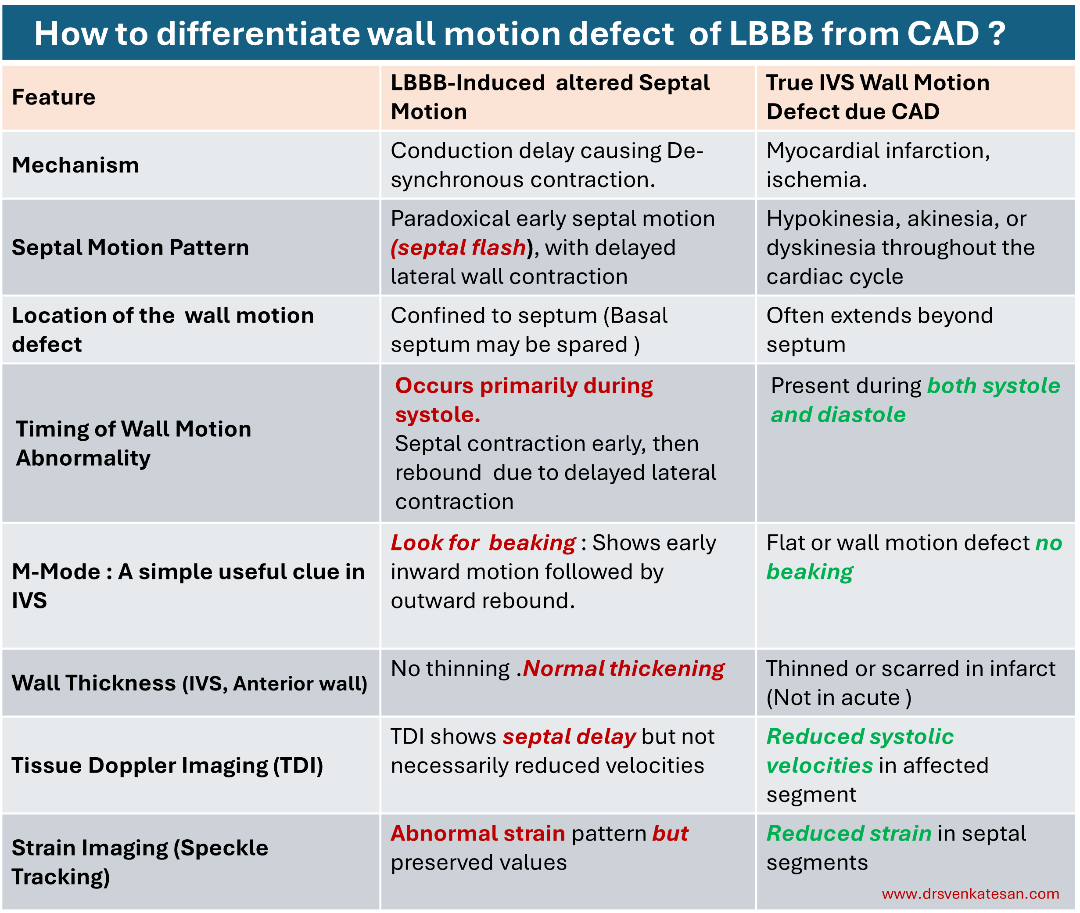
It is often said, If you are not able to answer a question, in a single line, or if the explanation is too long, then the answer is likely to be vague and difficult. So does this question.

It is a very practical probelm in day to day cardiology practice faced by every one of us. Still, it is often taken for granted during echo lessons in cardiology schools.

Here is a big table of differences listed. Read it if you have time.

There are only three words important. Find it out.

Final message

Look beyond septum, concentrate both systole and diastole. Normal systolic thickening and beaking in M-mode, clinch the diagnosis as LBBB

A query for advanced readers.

If LBBB and CAD /DCM co-exists, (a common scenario ) Which component of wall motion defect dominates ?

The answer to this question becomes important, as only the electrical component is correctable by CRT (or CSP now). No surprise, there is huge chunk of non responders, where myocardial component of de-synchrony prevails over the electrical LBBB,

Read Full Post »

History beckons… once upon a time, assessing severity in valvular heart disease was gloriously simple. We used to just a pullback pressure gradient across the aortic valve . Now, history repeats itself, as the same philosophy returns to coronary arteries, offering a surprisingly elegant solution amid a chaos of physiological indices. That is PPG .

What Is PPG*?

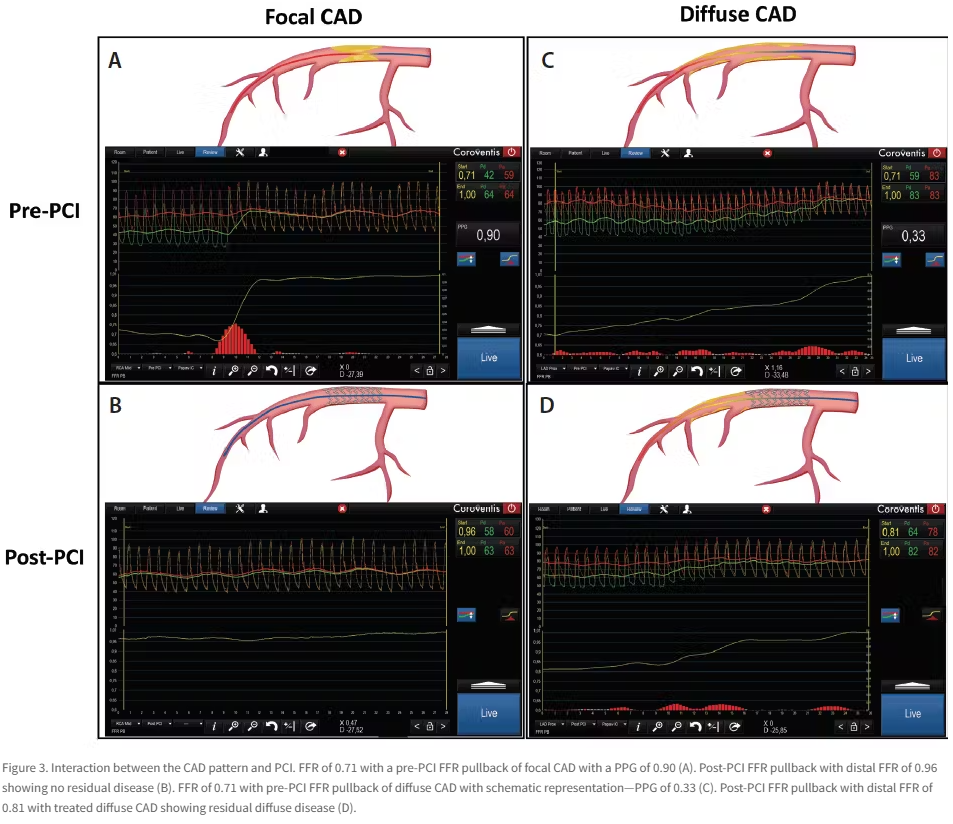
Pullback Pressure Gradient (PPG) is a physiological mapping method that evaluates the pressure gradient across a coronary artery using a gradual pullback of a pressure wire . It helps to:

  • Localize ischemia
  • Differentiate focal from diffuse disease
  • Guide a more logical PCI strategy

Rather than a strict binary verdict (ischemic or not), PPG gives us a gradient map — revealing how pressure falls, where it falls, and whether intervention makes sense.

*I would love to call it as plain old PPG. POPP-G . (Sort of POBA equivalent in PCI)

How to Measure It ?

  1. Essentially it is a less glorified iFR or FFR .Same hard ware is used.
  2. Pull back happens in both .But ,here thats is only that happens, that’s devoid of the clumsy Adenosine protocols, Incomplete hyperemia, patient anxiety, or microvascular dysfunction etc.
  3. Apart from measurinng pressure drop the rate of fall the gradient slope is also analysed. PPG = ΔP / pullback distance (mm) .If the slope is steep the lesion is probably stentable . If the rate of fall is slow or flat we may avoid stenting.

PPG is a dynamic, localized, gradient-based insight into coronary disease. A focal ΔP over small length ΔL would be a perfect PCI candidate. A flat gradient over long ΔL , would suggest medical therapy .(May be CABG in few)

PPG in bifurcation Lesions

How do you FFR in bifurcation or trifurcation lesions . If you ask this question to any cardiologist, will try to get away from the scene. Such is the complexity involved. Here comes the savior. PPG helps you out in a smart fashion.

  • PPG allows branch-specific physiological localization, Can be used selectively in each branch to map the true pressure loss. This is contrast to the crude FFR that may falsely elevate due to competitive flow or tandem disease.
  • PPG can avoid the unnecessary double stenting and of course make the make the bifurcation club members unhappy in the process. PPG also can help detect ostial branch disease (by inching technique we do in cardiac auscultation,) by very slow pull back.

Image courtesy : Daniel Munhoz CARDIAC INTERVENTIONS TODAY MAY/JUNE 2021 VOL. 15, NO. 3

Is FFR really problematic ? Be aware of conflicting studies

FFR was a great concept when it came in. FAME I study adored It. FAME II questioned PCI’s benefit despite FFR-positive lesions. Then came DEFINE-FLAIR and iFR-SWEDEHEART, questioning the need for hyperemia at all. Still, residual ischemia post-PCI in up to 20% of cases (DEFINE-PCI) even when FFR said “normal.” Confused? So are most cardiologists.

Modern cardiologist’s dilemma: How to cross coronary jungle infested multiple flow Indices ?

The list is long . FFR , iFR, FFR-CT, QFR, RFR, dPR, NHPR, µQFR (there are few more I might have left ) . None are perfect. Some contradict. Some cost too much. Many need drugs. All add layers of complexity to what should be a simple clinical question: Should I stent this lesion? Now, we have the simple plain PPG.

Why should, we fall for PPG ?

Let’s be honest. PPG is not flawless. After all, we take pressure drop as a surrogate marker for restricted flow . Every Indices does that. But unlike other indices It’s intuitive. It’s visual. It tells you where to treat. It gets the pressure data on the spot from ground zero . It can bring reliable info without the need for intracoronary medication , or costly software. Finally, it restores some simple sense in us ,without great knowledge in coronary hemodynamics.

Reference

  1. Kobayashi Y, Johnson NP, et al. “Physiological Assessment of Residual Ischemia After Coronary Stent Implantation Using Instantaneous Wave-Free Ratio.” JACC Cardiovasc Interv. 2019;12(19):1996–2007. https://doi.org/10.1016/j.jcin.2019.04.040
    PPG-based residual gradients predicted poor outcomes post-PCI even when angiographic results looked fine.
  2. Collet C, et al. “Stress myocardial perfusion imaging vs coronary functional assessment with PPG and FFR: A physiologic map approach.” Eur Heart J. 2021;42(10):926–938.
    PPG superior in identifying focal lesions amenable to PCI compared to binary FFR thresholds.
  3. van Belle E, et al. “DEFINE-PCI: Residual Ischemia Post-PCI Detected by PPG and iFR Pullback.” JACC Cardiovasc Interv. 2019;12(20):1991–2001.
    Post-PCI ischemia often missed by angiography alone — PPG reveals it.
  4. Davies JE, et al. “Use of the Instantaneous Wave-Free Ratio or Fractional Flow Reserve in PCI.” N Engl J Med. 2017;376:1824–34.
    iFR non-inferior to FFR .Suggests resting physiology-based PPG.

5.Munhoz D, Collet C, Mizukami T, Yong A, Leone AM, Eftekhari A, Ko B, da Costa BR, Berry C, Collison D, Perera D, Christiansen EH, Rivero F, Zimmermann FM, Ando H, Matsuo H, Nakayama M, Escaned J, Sonck J, Sakai K, Adjedj J, Desta L, van Nunen LX, West NEJ, Fournier S, Storozhenko T, Amano T, Engstrøm T, Johnson T, Shinke T, Biscaglia S, Fearon WF, Ali Z, De Bruyne B, Johnson NP. Rationale and design of the pullback pressure gradient (PPG) global registry. Am Heart J. 2023 Nov;265:170-179. doi: 10.1016/j.ahj.2023.07.016. Epub 2023 Aug 21. PMID: 37611857.

Read Full Post »

Recently , a young celebrity lost his life during gym session suddenly . The media erupted as expected .Every TV channel became a temporary schools of advanced cardiology . It seemed anchors knew more cardiology than us.

Among the peers, so many hypothesis were going around. The loudest one was prolonged QT. We are discussing a relatively new, (rather les popular ) entity for the potential cause of SCD. What is it ? DID is the new buzzword in electrophysiology . Next to Long QT, Brugada, DID is looked upon as a new marker for SCD in young as well as elderly .

What is DID ?

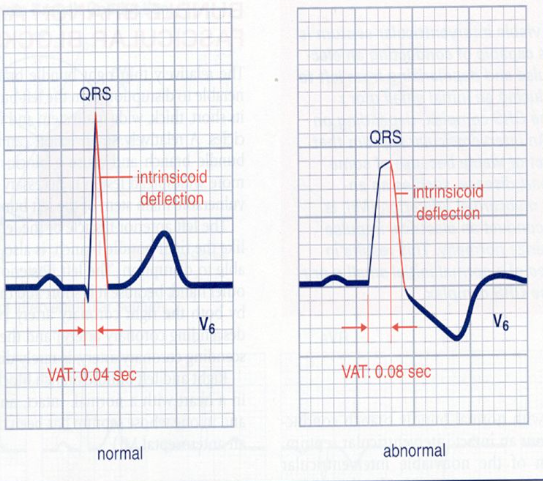
Delayed Intrinsicoid deflection. (DID) Mind you, Intrinsicoid deflection ( ID ) is nearly 100 year old concept, being rediscovered. ID is the time it takes for the electrical impulse to travel from the endocardium to the epicardium directly beneath the recording electrode.

Macleod, A. G., Wilson, F. N., & Barker, P. S. (1930). The form of the electrocardiogram; intrinsicoid electrocardiographic deflections in animals and man. Proceedings of the Society for Experimental Biology
and Medicine. 27(6), 586–587


1.How to measure, what is the normal ?

Variable in each lead.

2. Which lead it is measure ? Is ID relevant in Limb leads ?

V5, V6. Normal less than 50 ms

3.When do you call Intrinsicoid deflection as prolonged ?

>50ms

4.What is the Ionic basis of ID ?

Sodium

5.Is there both congenital and acquired forms?

Yes

7.Is it different over RV vs LV ?

Yes

6.How does a DID trigger an arrhythmia ?

Not clear

Two more questions

7.Why it is called Intrinsicoid deflection rather than Intrinsic ?

Intrinsic was the original term coined by Sir Thomas Lewis in 1914, To get this “intrinsic” measurement, an electrode had to be placed in direct contact with the epicardium . Measuring it from surface ECG leds make it Intrinsicoid.

8. Is Intrinsicoid deflection and ventricular activation time (VAT) both are same ?

Yes. Both are used inter changeably , though one denotes time other the wave as such. While VAT is the same time , specifically look at time to R wave peak. However , ID can be applied to the leads where there is no R wave. Then it becomes time to peak of Q

9.Is it true, in every LBBB, ID is prolonged by default ? Then what is the risk of SCD in LBBB ?

For the first part of the question, the answer is Yes. The second part , we don’t know the true risk yet.

10. …………………………………………………………………..(Question left for the readers to ask)

Final message

As cardiologists, we have given disproportionate importance to the QT interval and gets the blame for many SCD. It is time, the 100 year old ECG parameter Intrinsicoid deflection (ID,) seems to be equally important. Much of the secret ionic codes, for many SCDs are believed to hide behind this eerie deflection.

Reference

Here is an important review

1.Aiken AV, Goldhaber JI, Chugh SS. Delayed intrinsicoid deflection: Electrocardiographic harbinger of heart disease. Ann Noninvasive Electrocardiol. 2022 May;27(3):e12940. doi: 10.1111/anec.12940. Epub 2022 Feb 17. PMID: 35176188; PMCID: PMC9107081.

Read Full Post »