Feeds:
Posts
Comments

Archive for the ‘Uncategorized’ Category

A  classification of  Polymorphic VT .

It can be classified according the etiology,  morphology  or hemodynamic stability . However , for some reason classifying  PVT with reference to the preceding QT interval and  the manner in which  tachycardia twists its axis along the qrs axis has been the most popular theme . ( Obviously ,the classification  process should  evolve further , and management strategies should be linked with it )

classification of polymorphic vt, torsades de pointes , long qt syndrome

Read a related article :Different Avatars of polymorphic VT

Read Full Post »

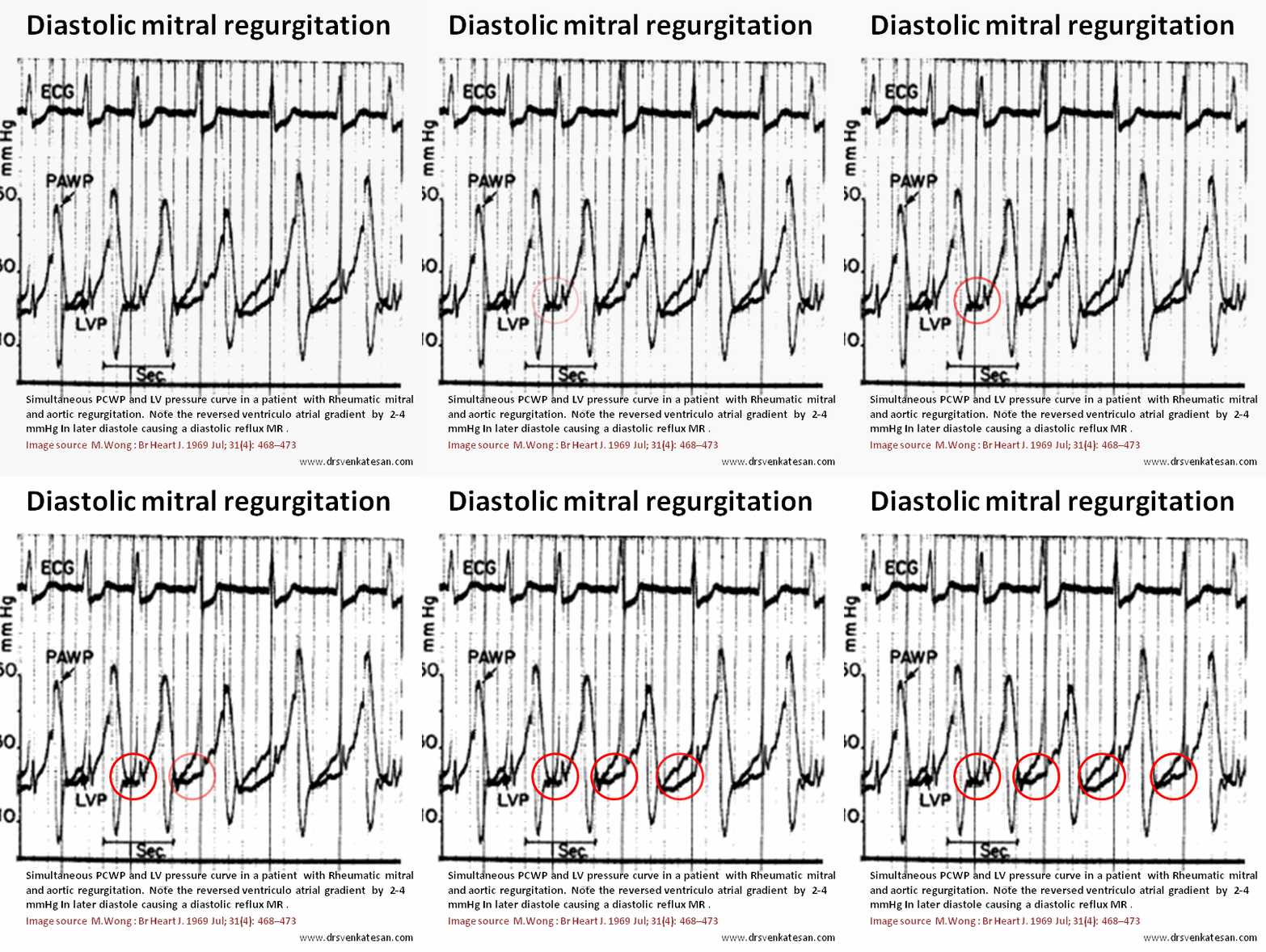
Mitral regurgitation is expected to occur only in systole during  left ventricular contraction. In rare pathological states , if   LV pressure exceeds the mean LA pressure at any point in diastole , small  puffs of regurgitation into LA can occur.The genesis of this MR and its  hemodynamic  significance has generated much interest .

Causes

  1. Aortic regurgitation -Severe . (Occurs mainly in acute AR or chronic AR with decompensated LV )
  2. AV blocks (especially complete AV block )
  3. Any cardiomyopathy with severely elevated LV diastolic pressures

Mechanism

No single mechanism is  responsible.

  • Common hemodynamic denominator  is transient cross over of LV pressure over and above LA pressure curve .
  • This tends to happen often soon after the atria contracts  specifically so , if the atrial contraction is not followed by a QRS complex as in heart block .
  • The fact that its reported even in the presence of atrial fibrillation (As in some cardiomyopathy ) atrial mechanism is not exclusive.
  • In Aortic regurgitation the mechanism is  different (More of  volume dependent ,  Read below )

diastolic mitral regurgitation animationTiming of  diastolic MR

It occurs in later part of diastole as it takes a time lapse for raising LV diastolic pressure  to cross the LAP and generate a reversed ventricular gradient.

Will there be a clinical evidence for this MR ?

Its silent in most cases .Some patients with complete heart block may  generate  mid diastolic murmur . (Rytand AHJ 1946) .Retrospectively this could be due to diastolic MR

Is there a link between Austin flint murmur and diastolic MR ?

Many researchers believe the generation of diastolic murmur in severe AR is attributable to premature closure of mitral valve and the poorly compliant LV  is not able to accommodate the leaking blood and it tends to regurgitate into  LA  through partially closed mitral valve in diastole (Ochaya  S,  Am Heart J. 74 1967:161-169)

Echo features

  • Doppler flow signal in mitral inflow is diagnostic
  • Color M-mode is ideal to map  diastolic MR.

Cath correlation

Wong has demonstrated this phenomenon by direct hemodynamic  recording in 4 patients

Further research

While the field of diastology is growing , still we are not clear how significant this MR in clinical diastolic dysfunction and acute LV failure that results in flash  edema.

Reference

5.Diastolic atrioventricular valve closure and regurgitation following atrial contraction: their relation to timing of atrial contraction.Okamoto M1, Tsubokura T, Kajiyama GClin Cardiol. 1989 Mar;12(3):149-53.
7. An auricular diastolic murmur with heart block in elderly patients.Rytand  DA; Am Heart J. 32 1946:578-598.
8. Late diastolic mitral regurgitation secondary to aortic regurgitation its relationship to the Austin-Flint murmur.ochaya  S, Igarashi  M, Schaffer  AB; Am Heart J. 74 1967:161-169

Read Full Post »

Oh , it’s a well recannalised IRA  and its flowing TIMI 3  as well.  Now, what shall we do sir” ?, An apparently worried senior resident queried after a second look at the images from a 8 hour old STMEI .Why you sound unhappy  man ?  As if recanalisation is an untoward event” ! I teased my resident !
and went on to ask . . .

What we mean by recannalised  IRA ? (Recan-IRA)

  • It is akin to natural or pharmacological angioplasty (or combination of the two )
  • It can be complete or incomplete from the IRA perspective.
  • It can either result in partial or fully salvaged myocardium.
  • It should be understood even a 30% recanlisation can result in TIMI 3 flow and result in near complete salvage
  • Even a 90% recannalisation may not accrue the same benefit if it has happened late. So its all in timing
  • Spontaneous recannalisation can some times even be  superior  to thrombus aspiration . However , some degree of residual thrombus would be present in most
  • Residual plaque burden is also an important factor that will decide the extent of angiographic recannalisation.
  • Some times the recannalisation  will make the vessel near normal with only luminal  irregularity
  • IVUS/OCT may provide accurate assessment of Recan-IRA , it’s is not logistically acceptable in STEMI setting.
  • After listening to my briefing on recannalised IRA , the fellow looked more confused than before. He bothered to ask again , what am I supposed to do once a well recannlised IRA is detected ?  Should I intervene or not ?

The term recanlised IRA generally convey a hemodynamic  meaning for a successful  early (natural plus or minus pharmacological ) reperfusion .If every parameter is fine , and the lesion is not significantly obstructing better to pause any further procedure ,  as consequences of deploying  stent in a well recannalised segment is not yet clear with a stro ng trend towards harm .The decision is to be taken on individual basis with reference to  symptoms, stability ,  residual ischemia and quantum of incomplete salvage and lesion morphology .

If you believe ,a spontaneously recannalised  IRA has provided a TIMI 3 flow , it is equivalent to well done job of natural thrombus aspiration by  a hidden hand and catheter . Consciously respect that .Most cardiologists would have  realised atleaset once ,  that any aggression on a God handled IRA can be counterproductive !

Is there a non academic angle to this issue ?

Undoubtedly yes , strangely  inspite of a positive phenomenon for the patient , recannalised IRA leads to a difficult debate  in cath lab .Suddenly , the  entire collective scientific wisdom of the cardiologist is put into a stress test. There is direct fight between reality , expectations .True patient benefits , obligations to hospitals , the parasitic  relations with device industry , do have a big say !

Final message

Practicing cardiology is simple , but when scientific and non scientific realities of life are in direct confrontation with patient welfare it becomes a huge struggle and only a determined few can win over this infinite fight against conscience !

Read Full Post »

Pulmonary valve should open shortly after the onset of RV systole , when RV pressure exceeds the PA end diastolic pressure which  will  be around 10-15 mmHg.

We know  cardiac valves open and close with reference to the pressure difference across the valve .So, in any part of cardiac cycle , if RV pressure exceeds  the pulmonary  arterial pressure , pulmonary valve is bound to open. (The pulmonary  leaflets simply doesn’t bother whether  RV is in systole or diastole )

What are the situations RV pressure may exceed PA pressure during diastole ?

Yes, if  RVEDP raises for any reasons beyond 15 mmhg it can prematurely open the pulmonary valve in late diastole. This often coincides with right atrial  contraction  that make the   RVEDP to spike  just before systole.  In chronic right heart dysfunction  the premature opening can occur  much earlier in diastole and not dependent on RA contraction. It can even be noted with AF if the mean RVEDP exceeds PA pressures.

This typically happen in constrictive pericardits and any  isolated RV failure  without pulmonary hypertension.(Please note , for premature  pulmonary valve opening to occur  one important prerequisite is,  PA pressure should be normal or low and hence its precluded in significant pulmonary hypertension )

Conditions associated with premature PV opening

1. Constrictive pericarditis.

2. Isolated RV restrictive cardiomyopathy (Lofflers etc .Note :Biventricular restriction would prevent premature opening  as PA pressure is raised. )

3. Ebstein anomaly

4.Some  patients with with RSOV .(Acute raise in RVEDP)

5.Post tricsupid valvotomy


Reference


Read Full Post »

Coronary care units are the place, where acute myocardial infarction patients are housed. Thrombolysis is still the primary modality of treatment world over .Large infarcts, ,  impending or established cardiogenic shock are major source for mortality .

Acute  left ventricular failure (LVF ) in CCU has to be swiftly managed in whatever phase of MI .Standard regimen of sedation, diuretics, Nitro glycerine, and Dobutamine are administered are often not good enough  .( Its true  many of these patients are to be taken for emergency PCI ) Still, medical management of LVF has a huge impact on the outcome.

While cath lab  procedures are given top priority , I have seen many times, simple concepts in CCU not getting proper attention.Continuous positive airway pressure(CPAPA/Bilevel-NPPV) aided  oxygen administration has a critical role to play in this setting.

  • It reduces the work of breathing
  • Opens up wasted Vp/Vq zones in lungs
  • Interstitial gas diffusion is facilitated by keeping the respiratory units
  • Keeps a check on the LVEDP from going to very high levels in an indirect fashion (Lung helping heart !)

Why not Intubate these patients ?

It’s true Intubation and ventilation may be required ultimately in many of these patients. .It has its own issues of prolonging the stay and infection .

Final message

Even though the clinical trials do not show consistent  impact on long term survival , we have time and again found this modality useful .Timely administration of of CPAP definitely halts the progression of mild forms of LVF to full fledged cardiogenic shock and leads to recovery in many .

CPAP/Bilevel-NPPV is  important hemodynamic stabilising tool , that should be used liberally whenever possible .

Reference

There has been number of studies exploring the role of CPAP in acute LVF during STEMI.

Read Full Post »

Stenting, an attractive nmedical term, that involves deploying a coil or tube (metal or non-metal)  inside the human biological system that supports and scaffolds vessel wall, tracts, cavities and prevents it from closing again. Conceptually it could be termed as the simplest innovation in an otherwise complex industrial world. Originally used in various biological tracts like ureter, bile duct, esophagus, and others. In fact, the concept is so simple it can be effectively used wherever there is a tissue level occlusion which interrupts a biological function.

No wonder It has become revolutionary modality especially in cardiovascular disease and it is the most common intervention done where stents are used to keep vital coronary arteries open. While 9 out of 10 stents in cardiology would be in adults  within the coronary arteries there are some unique indications for stenting in infants and children in various congenital heart disease.

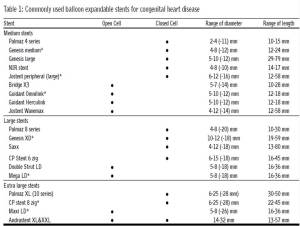
In congenital heart disease stents are used within chambers, outflow tracts, or septal orifices or even across valves to maintain or divert or maintain blood flow.

1. Coarctation of aorta

2. Right ventricular outflow tract (RVOT) conduits.

3. Maintenance of patency of the Arterial duct in  duct-dependent circulation,

4. Maintaining patency of stenosed aortopulmonary collateral vessels or obstructed shunts.

5. Stenting a PFO / ASD is also possible to maintain patency of intracardiac communications in TGV and related entities

6. Recently Interatrial flow regulators are used in in HFpEF. (EuroIntervention 2019;15:403-410. DOI: 10.4244/EIJ-D-19-00342)

The list is incomplete and can be used anywhere when you feel the flow is obstructed and that needs to be opened up.

Reference


stenting in congenital heart disease stents used in congenital heart disease maxi ld cp stent omnilink mega ld genesis herculink

http://www.annalspc.com/temp/AnnPediatrCard213-7979559_220955.pdf

Click to access AnnPediatrCard213-4776139_131601.pdf


Read Full Post »

Femoral artery puncture is still the default technique for cardiac catheterization even as the radial access has gained huge popularity in recent years.Though patient  comfort and access site complications are clearly low in radial approach, complex procedures still demand femoral access. The true draw-back of  the obsessive  adaptation of radial access could be the  gradual loss of expertise in the fine art of femoral artery puncture.

It’s true femoral artery puncture can be troublesome at times by palpatory method .How to get into a difficult femoral artery with a poor pulse either due to anatomical reasons, extreme obesity or a compromised hemodynamic status ?

There are times, blind puncture based on anatomical guess could work. Alternate ways do exist. One can access the femoral artery by ultrasound guiding  with or without  smart needle system . More practical is the empirical  puncture based on surface anatomy  over the head of femur in fluoroscopic screen.The later method is not really crude as some would  think !. It was suggested by Grossman and popularized by none other than father of Interventional radiology Dr Dotter in 1970s .(Radiology Apr;127(1):266-7.Fluoroscopic guidance in femoral artery puncture.)
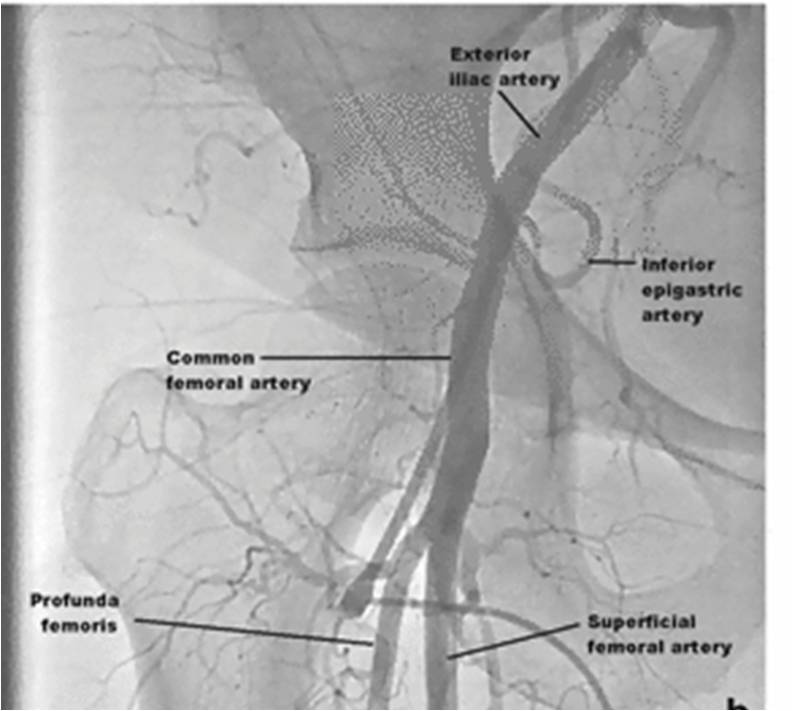
By fluroscopy , in AP view the head of femur can be divided into 5 zones.(Huggins) Zone 1 and 5 or superior and inferior to head of femur.The zones 2,3,4 are divided into upper, mid and lower third.
Where does common femoral artery bifurcate ?
The bifurcation of the CFA occurred in zones 2, 3, 4 and 5, which was 1%, 9%, 43% and 47% of the time, respectively, and thus occurred within the lower third of the femoral head or below the lower border of the femoral head in 90% of patients.

femoral artery puncture by fluroscopy

Image source Cardiovascular Intervention and Therapeutics January 2014, Volume 29, 18-23 Madjid Chinikar

femoral artery puncture by fluroscopy 2

Image source Cardiovascular Intervention and Therapeutics January 2014, Volume 29, 18-23 Madjid Chinikar

How to approach ?
A 18 G needle could be ideal
Puncture the skin at zone 5 inferior border of head of femur. Enter the artery at mid point in the Zone 3.
The chances of hitting the femoral artery is near 95 %

Reference

1.Fluoroscopic localization of the femoral head as a landmark for common femoral artery cannulation. Garrett PD1, Eckart RE, Bauch TD, Catheter Cardiovasc Interv. 2005
Jun;65(2):205-7

2.Fluoroscopy vs. traditional guided femoral arterial access and the use of closure devices: a randomized controlled trial. Abu-Fadel MS1, Sparling JM, Zacharias SJ, Catheter Cardiovasc Interv. 2009 Oct 1;74(4):533-9
3. Fluoroscopy guided vascular access: asking the right question, but getting the wrong answer? Turi ZG. Catheter Cardiovasc Interv. 2009 Oct 1;74(4):540-2

4.Imaging or trusting on surface anatomy? A comparison between fluoroscopic guidance and anatomic landmarks for femoral artery access in diagnostic cardiac catheterization. A randomized control trial. Madjid Chinikar, Azam Ahmadi, Abtin Heidarzadeh, Cardiovascular Intervention and Therapeutics January 2014, Volume 29, 18-23

5.A Prospective Randomized Clinical Trial of the Use of Fluoroscopy in Obtaining Femoral Arterial Access Chadwick E. Huggins, MD, Michael J. Gillespie, MD, *Walter A. Tan, J INVASIVE CARDIOL 2009;21:105–109

6..Puncture of the popliteal artery using a Doppler-equipped (SMART) needle in transpopliteal interventions.Kluge A1, Rauber K, Breithecker A, Rau WS, Bachmann G.Eur Radiol. 2003 Aug;13(8):1972-8. Epub 2002 Nov 22

Read Full Post »

Prosthetic valve obstruction is becoming a common clinical issue .It can be either acute, sub-acute or chronic . The pathology is usually thrombus formation , scar tissue growth (Pannus) or rarely a mechanical defect. Echocardiographic differentiation of thrombus from  pannus can be difficult .Generally , pannus is smaller , linear (less round) ,encroach from the periphery to central , mean gradients are consistently lower  than thrombus mediated obstruction. Clinically  pannus related obstruction present less acutely and occur in-spite of good compliance of anticoagulant medication and a well maintained  INR .

Trans thoracic (TTE)  , Trans-esophagel (TEE ) echocardiography , and real time 3D TEE are useful imaging modalities .The value of cine fluroscopy should be never underestimated and it is probably still the the best way assess the struck metallic leaflet.

Though the pathogenesis of pannus and thrombus are considered different there  is no reason they can’t  occur in a given patient at the same time.We know at least  one patient who had been referred to surgeon for mitral valve obstruction due to failed thrombolysis  had showed heavy load of thrombus  attached over a well formed pannus originating in medial sewing ring.

FInal message

However intelligent one may be , human brain often  tends to get skewed when confronted with a sudden query like  “What is your diagnosis , This or that  ?  Pannus or thrombus ? .Most will  go with  any one of it ! However, cardiac physicians must be aware  both pannus and thrombus can occur overlaid simultaneously in a given patient .The exact incidence  of such “combined thrombo-pannus”  is not known  but bound to be higher as we look for it. In fact , many of the residual gradients after lysis is attributable to undiagnosed pannus.  There is also a  suggestion scarred  , injured  ,  rough surface of the pannus could be the initial trigger for thrombus formation .

Reference

1.Differentiating thrombus from pannus formation in obstructed mechanical prosthetic valves: an evaluation of clinical, transthoracic and transesophageal echocardiographic parameters  John Barbetseas,  Sherif F Nagueh,  Christos Pitsavos, ;J Am Coll Cardiol. 1998;32(5):1410-1417. 

Read Full Post »

We know right from our pathology days in medical school , Atherosclerosis , the killer human vascular disease has a predilection for branch points. It’s no surprise around 30-40% of coronary stenosis has some degree of involvement of branch points .

PCI essentially involves palliative metal bracketing of this inflammatory cum degenerative process of the vessel wall.Tackling bifurcation lesions (BFL) requires special expertise , hardware and technique as carina and two ostia (In fact three !) are exposed to complex hemo-rheological stress de-nova and more so after the metal invasion.

The complication rate as well as long- term patency are considerably more  in BFL than regular lesions. This is why a “4S strategy “ (simple single stent strategy ) is the preferred default strategy in most BFL.

There are about dozen strategies  to tame  the BFL with  stents.One such modality is dedicated BFL stent.Various designs have been proposed in both balloon and self expansion platform.

The ACCSEES is a prototype dedicated BFL stent with DES and  a self expanding system

Reference

Read Full Post »

STEMI occurs due to acute occlusion of a coronary artery  (ATO) which needs emergency opening at the earliest, ideally within  3 hours , or up to 12h . The opening shall be either by pharmacological / catheter means  or both. After 24 hours opening  a ATO has questionable benefit unless the patient is hemodynamically unstable or symptomatic.

What is a CTO ?

Traditionally we believe 3 months is the period to call a coronary occlusion as chronic.(Previously it was 6 months) This time frame was considered appropriate based on our understanding of the infarct process , that may take up to 3 -6months for complete healing of infarct  .This 3 month period is arbitrary as the chronology of intra-coronary lesion organisation  is different from myocardial infarct healing. Its worthwhile to note the chronicity of  a coronary lesion and its morphology is nothing to do with the quantum of myocardial damage it inflicts .This is because in many patients with STEMI who present late , the ATO progresses to CTO silently without any clinical demarcation or progressive myocardial damage.

chronic total occlusion acute total coronary bridging collateral

If 24 h is the cut off point for opening the ATOs to accrue any meaningful benefit , can we call  all ATO’s beyond 24 h as  physiological  CTO equivalents ?It doesn’t make sense  isn’t ? But , consider this , how do you call an occluded coronary artery between 24 h t0 say  2 weeks or 2 weeks to  to 3 months ? Sub acute total occlusion (STO) ? .Some  experts have argued to remove CTO as an entity from acute coronary setting .This can’t be done as chronicity has to set in  for ACS lesion as well. Obviously , we have a nomenclature issue here. We require a  new terminology to differentiate CTO related to ACS and CTO related to chronic coronary syndromes.

Therapeutic implication

The moment we  diagnose  a true chronic total occlusion , not only the urgency of intervention but also the indication to open becomes  questionable in an otherwise asymptomatic population.

An ironical situation often arises , when we can’t technically open a ATO in a one week old STEMI .However , the same lesion one may  open after 3 months as it has acquired a new name by now as CTO , which is perceived  a lesser guilty act of violating the sacred PCI guidelines !

Read Full Post »

« Newer Posts - Older Posts »