Feeds:
Posts
Comments

Brugada syndrome is  probably the most fascinating discovery  in  Inherited cardiac  Ion channel dysfunction that linked the basic sciences to bedside . Its due to genetic defect in SCN gene that results in sodium channel blockade of phase  of action potential  to cause troublesome ventricular tachycardia (Phase 2 reentry ) . Now we realise, there are some phenotypic expressions to this gene defect . RV epicardial anatomical substrates are found to responsible for these Arrhythmias.

So ,does Brugada turn out to be a structural heart disease (At least histological ) ? Where is the evidence coming from ?

Now, we realise  RF ablation of epicardial aspect  of  RVOT / Adjacent anterior RV wall can eliminate Brugada pattern confirming anatomical defect  at cellular level. Our changing perception of Brugada from pure functional to anatomical cause is exciting and  intriguing as well !  ICDs were  the specific therapy so far.This discovery make it RF ablation an option.

The recent data from Brugada himself  was presented in World congress of electrophysiology / European Heart Rhythm Association (EHRA) EUROPACE-CARDIOSTIM 2016 confirming the therapeutic benefit of targeting  the epicardial structural phenotypic substrares (Ref 3 )

Final message

We have been taught  Brugada syndrome is  a primary electrical disease .It was  never considered as structural heart disease. Knowledge evolves slowly, so we shouldn’t conclude prematurely .Shall we conclude , Brugada syndrome is truly a  structural heart disease at least in some ?*. This  makes RF ablation  a new  cure for Brugada ,  making it a useful alternate modality to ICD , Of course there can be an overlap between ARVD and Brugada  syndrome. Mind you RF ablation scores over ICD on any  given day as its potential  cure , while ICD is  just a back up device and it simply wait & watch for the VT to occur.We also know  ICDs are still learning human EP data, and are  not intelligent enough to differentiate true VT from false ones with acceptable error** margin.

* Let the experts decide

**Acceptable ? What  do you mean by that ?

Reference

Questions queued

1.Is Brugada VT monomorphic , polymorphic or both ?

2.Is Amiodarone Indicated in Brugada syndrome ?

.

lv apex radiological clinical anatomicallv apex radiological clinical anatomical 002


Read a related article

How do you define apical impulse ?

How do you define apical impulse ?

Its a funny world out there in medical science, more so in the field of cardiology ! A new treatment comes as a revolutionary breakthrough , lives merrily for a while . . . only to blink , few years down the lane . . . and  make a sheepish exit !

Here comes some important knowledge from Rome , European society of cardiology conference 2016 .Its the much expected NORSTENT study from Norway,with a largest number (9013 patients comparing one to one BMS vs DES ) with up to  6 year follow up data ,exposing the limitations and the possible false superiority of DES over bare metal stents .It almost concludes there is no meaningful preference for DES over BMS in obstructive CAD in terms of survival .(ACS included)

medical-ehics-research-inappropriate-interventions-logics-in-medicine-dr-s-venkatesan-einstein-quotes

For over a decade  billions of dollars were drained with a hyped scientific concept of coating the stent with drugs to prevent restenosis . DES , was able to  effectively pull the BMS down and out by statistics. This, in spite of the strong concern of DES, interfering with normal healthy endothelisation of the stented segment which resulted in unexpected sudden DES related thrombosis. The power of commerce is huge , it can  finish of a useful modality,if available cheap.This happens even in a lesser developed country like India.

I guess,the obituary for BMS is already written in most part of the world. (I can vouch for it my city Chennai !) Now that NORSTENT  has come out, though belatedly, I  wonder any company  wants to manufacture BMS in a big way ! Can it infuse a fresh life into BMS which I believe is  surprisingly  sitting alive in it’s  graveyard .

     Baremetal stents where are you ? My patients need you !

Counter  thought and a rebuttal !

Many will say my interpretation of the NORSTENT study is wrong and its a indecent attack on a proven scientific concept of DES which is the only way to reduce restenosis rate.

But , what is the big deal in preventing restenosis,if DES  doesn’t save significant lives ?

The argument that DES reduces repeat revascularisation is largely irrelevant as it amount to only  angiographic gratification and  reduced threshold  for intervention  and ultimately imply inappropriate re-intervention in the BMS group.(Only Clinical restenosis ie symptomatic, flow limiting stenosis   require attention .We need that specific data from  NORSTENT . )

Don’t believe blindly in  whatever is written here .Read for yourself and decide ! The NORSTENT from Norway published in NEJM August 2016 http://www.nejm.org/doi/full/10.1056/NEJMoa1607991

Interventional Cardiologist’s favourite play time is to get rid of of obstructions across any  blood vessel , valve or a conduit . This has been well practiced  for over 2 decades in both coronary and valvular obstruction.Now they wanted more and have since started implanting valves percutaneously. (Aortic valve -TAVR in particular )

Why do balloons work in Mitral stenosis but not in Aortic stenosis ?

It remains a mystery at-least to me ,how  PTMC (Percutaneous mitral commissurotomy ) became a default strategy  for relieving  mitral valve stenosis,  while  BAV (Balloon Aortic valvotomy)  was  never considered good enough for opening  Aortic stenosis.

The reason is,  mitral stenosis(Rheumatic)  primarily involve the commissures, while degenerative aortic stenosis involve leaflets more and calcification is much extensive and hence balloons are less effective .Since the initial reports of BAV had more complication like stroke , AR, the interest has waned (except in children with BCAV ).

The arrival of TAVR in big way has made  things difficult for BAV to prove its real worth   and at best it was considered a bridge therapy.Curiously , BAV is often used as an  integral  part of TAVR as  pre-dilatation with various wires across the valve.Hence , every procedure of TAVR,whether you like it or not carries the  huge risk of BAV (please note,these are the same risk which made it unpopular earlier !)

Now , with accumulating data(Funny we got trained in BAV during TAVR   we have double confirmed BAV is not that risky after all,  even in calcific aortic valve. We also learnt BAV does open up the valve significantly (exact gain contributed by BAV during the TAVR is not quantified as yet).Hence  many believe BAV is grossly underutilized modality .

Final message (As usual , without evidence )

BAV, considered just a  bridge therapy  to TAVR/SVR , (mind you,it may not be flimsy bridge , but a  near permanent  steel bridge that can outsmart the much hyped TAVR!) Let us recall again the mitral valve logic where  you just require dilatation for stenosis .Some  degree of AR during BAV  is acceptable as do we accept MR in PTMC.As I said earlier the perceived complications of BAV has rapidly declined. For those who are interested in health economics , a single patient’s cost of  TAVR  can be shared and  could  confer a fresh bout of life to 20 patients with severe aortic stenosis who can be  tackled well with BAV.

I agree , BAV can not reach the glory of PTMC, but definitely  its going to come back and  expected to give a tough fight to TAVR in atleast high risk patients.BAV has a potential to become a therapy of choice in patients  with critical aortic stenosis with severe LV dysfunction as even a small gain in orifice with a balloon can provide a big  booster effect on LV function.

 A thought and a counter

 BAV is retro technique with  low efficiency and with high complication rate .

However,  isn’t  ironical ,  complications with TAVR  ,which includes 25 % of permanent pacemaker assistance  is accepted .(with a pride ?)  while that of  BAV is magnified and made to look unacceptable.Of course , many have mastered BAV and complications has come down recently .I have heard few anecdotal examples where  TAVR was abandonded for some reason after  pre-dilating the aortic valve and patient doing fine with BAV in the long term.Its  being predicted BAV is going to reemerge (already is !) as a useful strategy in critical calcific Aortic stenosis

The  emprical  utterrings in this discussion  are  dangerous and  unethical  and not evidence based !

It would appear  “not doing” a large  randomised trial comparing one to one  (BAV vs TAVR) in  a real “high risk” setting of AS amounts to ” unethical”  act  as complication with BAV has grossly reduced in recent times ! Its our duty to provide  best or near best to our patients.Let us  ensure reasonable inferiority/Non inferiority  is accepted that  can  prevail over a perceived superior modality , if it comes at low cost !

Further reading

1.

balloon aortic valvuloplasty bav

Cardiac failure is defined as a clinical syndrome where the cardiac output is inadequate and fails to fulfill the metabolic demands of body  or its able to do so, only  at a raised filling pressure, causing the classical symptoms of exertional dyspnea.

Consider this simple equation,

A 70 kg normal human requires an EF of 60 %  to supply blood  to his total body mass. If his EF falls to 30 % , certainly he is going to  struggle with reduced cardiac  output by 50 %. Now , theoretically if he loses his weight by 50 % (70 to 35 kg ) in-proportion to the loss in EF, . . . isn’t likely , he goes back to the original ” comfort zone” again as his metabolic demands are  declined by 50 %  and hence easily managed with the severely compromised  EF of 30 % .

Is this a scientific or quixotic logic ?

By all means , it appears the later is right ! but wait . .  nothing is Idiotic in a true scientific democracy ! Human beings can live a near normal life with one kidney, one lung, half the liver function and brain function ! Nothing wrong in wondering  why not , one can live comfortably  with “half heart” function?(ie EF of 30 %)

Having said that ,cardiac failure is not a simple mathematics of EF % .It’s extremely important to understand cardiac failure is systemic disease (often an inflammatory reaction  as well) which progress to a  net catabolic sate  .Numerous named and unnamed counter hormone response(ACE,NEP, BNP etc)  retains salt and water.At some stage the body either adopts or  mal-adopts to it.Countering or mimicking these hormones has been a major therapeutic strategy.(ACEI, ARBs )

The final end point of cardiac cachexia is nothing but extreme response of the body to reduce its weight  (with Tumor necrosis factor /IL6) .Survival occurs with whatever available cardiac output that matches metabolic supply to tissue.

Now ,coming to the title discussion,  If weight-loss is the ultimate compensatory mechanism in chronic HF , what about conditioned and monitored weight reduction  regimen ?

The management of cardiac failure after addressing all specific problems like structural ,functional abnormalities plus or minus  revascularization should include a mandatory  exercise training program that help optimize the weight.Reducing total body mass is directly going to improve the cardiac function, or  at-least make it static and might dramatically  relive symptoms and increase survival.However , the beneficial effect of exercise is  mainly attributed to improving muscle mitochondrial function and augmenting exercise capacity.

Where is the evidence coming  from ?


excercise training in heart failure

wieght reduction in cardaca failure

A point of controversy !

There are few reports  that suggest good-weight is essential as a body reserve during the catabolic state of HF.In fact, low fat and cholesterol was unwelcome in some statin and  HF  studies. Some provocative papers even  suggested a paradox  where weight loss could be counterproductive in HF (I strongly dispute this as do many others.)

(T.B Horwich,The relationship between obesity and mortality in patients with heart failure J Am Coll Cardiol, 38 (2001), pp. 789–795)

Final message

Unfortunately , truths without  evidence is worse than plain falsehood !

When heart as a pump is failing , we go for  sophisticated drugs, ICDs CRT devices, variety of surgeries etc . Shall I say , none of them has conquered the inevitable. We know ,HF’s mortality and morbidity is next only to burden of cancer.Applying  all our wisdom , intentional and monitored weight reduction  may be  best bet to unload the heart in many of the HF patients .Mind you, this comes  free of cost ! and that is not the only reason it  should be tested in every such patients .My own experience and interpretation of available data would suggest its going to work in all  and the benefits are going to be  overwhelminng in overweight patients .

Dear heart failure patients . . .Wishing you all a  controlled weight loss  and a happy life !


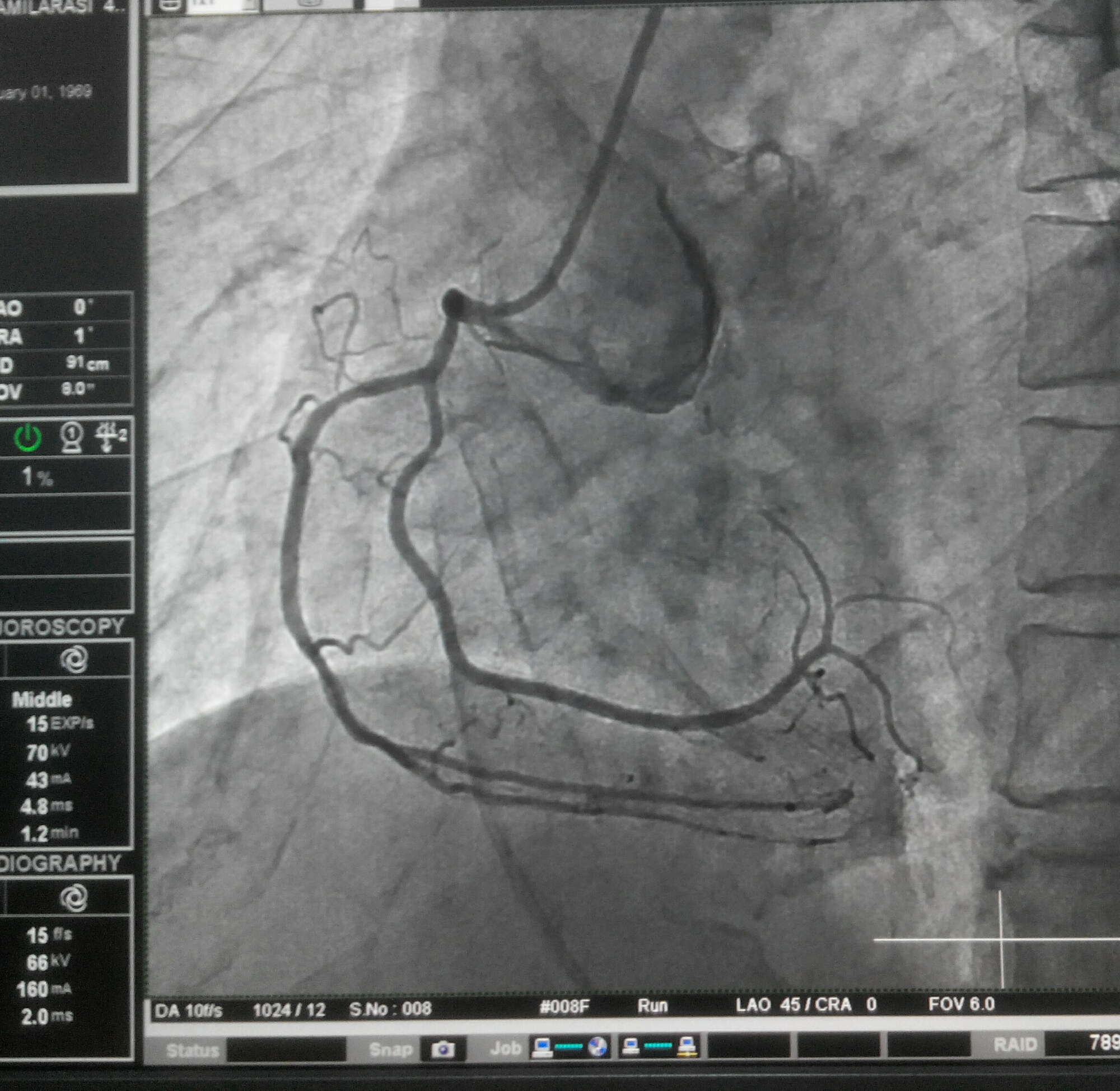
RCA is known for unusual variants.Here is a right main trunk which divides into two major branches, both taking a surprisingly similar course.Shall we refer it to as Dual RCA  or is it an early RV branch ? But how can both run posterior and parallel ?

PS: His LAD and LCX  were  normal.

Aspirin for primary prevention of CVD is an ongoing controversy for more than 2 decades. Please note, the controversy is not in the competence of Aspirin to prevent cardiovascular  event, but in the potential risk of GI bleed and whether that risk is worth taking. Secondary prevention has no such issues as the benefits easily outweigh the potential bleeding risk .

Male vs female

There is a “gender” and “age” difference  in the ability of Aspirin to prevent vascular events.Aspirin primarily prevents MI in men(>45)  and stroke in women(>55)  (Funny it may look,  that’s what data says!)

Age

Hence, the target age group  for aspirin is between 45/55  to 80 years. (Up to 45 and beyond 80 it has no role .Beyond 80 ,  risk of hemorrhagic stroke is significant )

Diabetic vs non diabetic

Many believe  all diabetics should straightway  get Aspirin as it was considered  CAD equivalent.Its not acceptable to all. . American diabetic association  has risk stratified DM and advice Aspirin only in high / Intermediate risk.Look for Key word ie “Net benefit (Ref 2)

Why so much confusion  ?  and What can be  the conclusion ?

The confusion is because each scientific body like AHA, ESC, ACCP, ADA ,USPSTF have  their own inference and the presence of too many risk assessment tools adds further dizziness .(SCORE /FRAMINGHAM, etc). It tempts me to say ignore all these and use  cortical sense !

Fortunately ,we do have some clarity as there is a common theme in all these advisories .Aspirin is indeed a wonder drug and able to block the platelets to prevent acute thrombus formation in the critical circulations.(FDA doesn’t seem to agree with this , How can a cheap generic do that job so effectively  ? Let the Bayer fight ! ) 

It seems reasonable to conclude

All men and women  between 45/55  to 80 years should get Aspirin (81mg /day or 325mg alternate days ) if there is at least one or two CVD risk factors provided there is no major bleeding risk .

Ongoing  studies on primary prevention with Aspirin 

ASCEND: A Study of Cardiovascular Events in Diabetes; or with diabetes taking a statin 

ENVIS-ion (Aspirin for the Prevention of Cognitive Decline in the Elderly )

ASPREE (Aspirin in Reducing Events in the Elderly) 

These  studies are  expected to  bring more data (and be ready for more confusion!)

Can we use Clopidogrel  for primary prevention if a person is intolerant to Aspirin ?

Logic may say yes.As of now it can not be advised for primary prevention.

Reference

1.A elegant advisory is hosted in Healthcare Research and Quality (AHRQ) website with supportive data from U.S. Preventive Services Task Force.

primary prevention of cad by aspirin

2.Pignone  M., Alberts  M.J., Colwell  J.A., et al; Aspirin for primary prevention of cardiovascular events in people with diabetes: a position statement of the American Diabetes Association, a scientific statement of the American Heart Association, and an expert consensus document of the American College of Cardiology Foundation. Circulation. 2010;121:2694-2701

3.Sigrun Halvorsen,Felicita Andreotti,  Jurriën M., Aspirin Therapy in Primary Cardiovascular Disease PreventionA Position Paper of the European Society of Cardiology Working Group on Thrombosis  J Am Coll Cardiol. 2014;64(3):319-327.


2016 Update by USPSTF in Annals of Internal medicine has a Major revision.

It raises concern over bleeding risk, and ask for restricted use of Aspirin

within the age group of 50 -69 for both male and female.(Who are at risk of CAD)

Link to the Annals of Internal Medicine Article  Aspirin primary prevention 2016


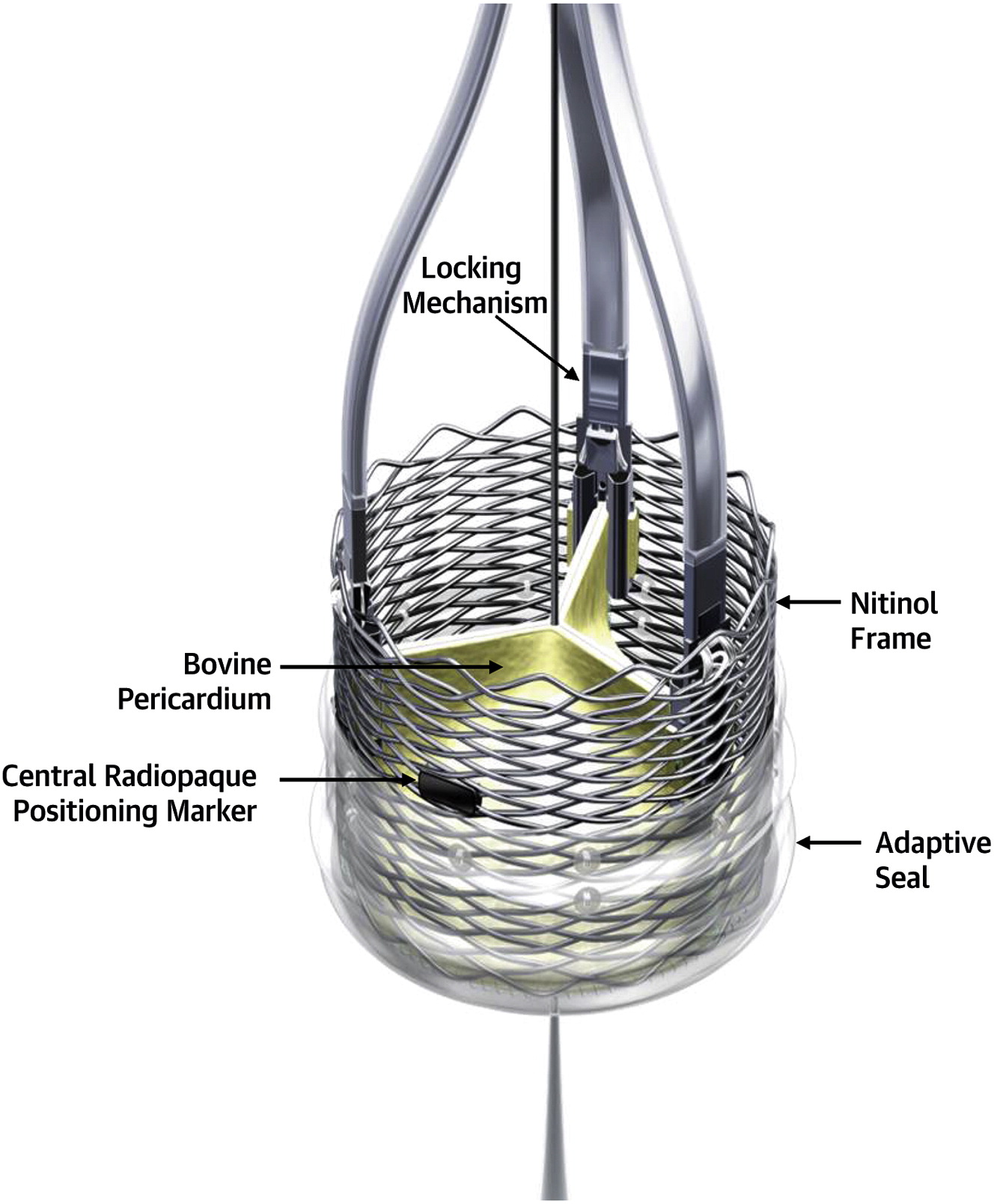
The concept of TAVR(Trancutaneous aortic valve replacement ) is trying hard  to prevail over surgical aortic valve replacement .Two companies Medtronic and Edwards life have their products (Core and Sapiens)  tested and used with varying success.Meanwhile, Boston scientific has come out with a new one , Lotus valve made with stainless steel and bovine pericardium.


lotus valve tavr

Lotus valve  seems to have a distinct  advantage* (over the Core and Sapiens ) in terms of easy delivery and adjustment (or retrieval ) of valve till  final position and efficient adoptive steel technology in preventing para-valvular leak.

* Outcome awaited.

Human  trials has started with lotus valve in USA 2014.The REPRISE III trial would compare  one to one Lotus vs core valve . Results will be out by 2017.Unlike many interventions the utility value and long-term outcome of  TAVR  seem to be genuine and patients  waiting for aortic valve surgery can look forward to this as a genuine non surgical alternative.

Responding to this , Medtronic and Edwards are  improving upon core valve with Evolute R /Engager and SAPIEN3 , expected  to give a tough time for LOTUS.

Reference

1.RESPOND registry , REPRISE 1, 2 and 3 trials

2.A review article on TAVR 

Less than a century ago an easy chair  was enough to manage this most important medical emergency of mankind. Of course, at that time mortality of STEMI was estimated to be around 30%.We have since pushed the in-hospital death rate down to less than 10 %  and its around 5-8% currently.(*The lifeless chairs were able to save 70 lives is a different story!)

Heparin , thrombolytic agents, critical coronary care has helped us to achieve this , of course It must be admitted primary PCI also played a small role (at best 1 % ) in our fight against this number one killer.

Now, why not combine  both lysis and PCI ?

The concept of PIA (Pharmaco Invasive approach) came into vogue  primarily for two reasons.

1.If thrombolysis and  pPCI are powerful strategies by individual merits why not combine both and achieve double the benefit ?

2. Since pPCI is going to be a logistical nightmare in most points of care and we can’t afford to lose time . So, let us lyse first and consider PCI later !

Unfortunately medical science is not math .One plus one in medicine is rarely two !

Though , it looks attractive , Pharmaco invasive approach  has its own troubles.Fortunately , most of them are man-made, few are beyond our knowledge though.

Following general rules  may help us

  • STEMI  should ideally managed by early thrombolysis (or PCI) in all deserving patients.
  • Don’t wait for PCI if you think , there will be delay or reduced expertise and poor track record of the center in this modality.
  • Pharmaco invasive  therapy is not a default in all STEMI .Do good quality , monitored  lysis , (Not necessarily new generation thrombolytic .(I prefer one hour sustained thrombolytic regimen , not the hit or miss bolus) .As a learned cardiologist we need to assess individual patients according to the type and risk of MI.Its not wise to blindly follow the guidelines ,because these guidelines , though based on evidence never answers a query in a single patient perspective !

The key “branch points”  in decision making  after lysis

  • Invasive strategy  should begin within one hour if the patient has failed  thrombolysis and has developed any mechanical issues.( Mind you, LVF requires good medical stabilization .Rushing  such patients to cath lab without application of mind can be disastrous )
  • If the Initial  lysis is excellent and the patient is asymptomatic  one need not proceed with invasive limb at all.(A significant chunk of apparently failed lysis by ECG are asymptomatic and comfortable , these are patients require delicate assessment regarding further intervention. )
  • If the MI is large and the clinical  stability is “not confirmed” one may  proceed urgently within 24 h.
  • In any case there is no role for invasive approach after 24 hours* Unless fresh ischemia  suspected to come from IRA or  non IRA.
  • Having  said that, there are many centers that do a diagnostic  angiogram alone just prior to discharge  (48-72h) for risk stratification and then take a genuine call for a possible PCI or  CABG. In my opinion it appears a sensible strategy , though a non invasive stress  test pre/post discharge can even avoid that  coronary angiogram !

One issue with Rescue PIA

Though by current definition  PIA is to be done  3-24 hours , don’t wait for the 4th hour if you have recognized a failed thrombolysis earlier than three hours.( Ofcourse , as the gap between P and I gets too narrowed it may  carry some adverse  effects witnessed in routine facilitated PCI -Refer FINESSE study ) Similarly,there need not be a blanket ban on PCI beyond 24 hours if residual ischemia is active.

Final message

PIA is a dynamic  coronary  re -perfusion strategy . Nothing is fixed in science. . The optimal gap between Pharmaco and invasive strategy  can be anywhere between  1 hour to “Infinitely deferred” depending upon individual risk perception and wisdom of the treating cardiologist.


I


It was delicate few minutes  in one of  my recent  visits to a corporate hospital , when I noticed an emergency physician  hesitated to follow my advice to  prescribe IV Digoxin for a patient with  Atrial fibrillation and fast ventricular rate.His fear was, his consultant, a modern day cardiologist wouldn’t like it as Amiodarone has become a default drug for atrial fibrillation in that Institution. I could sense. . .he felt so out of place to take on my suggestion.

I reminded the young physician , the uniqueness  of  Digoxin and its  un-diminished value for this particular indication ,still he was reluctant and didn’t oblige.

I realised , it was my mistake to expect  a place for the humble fox glove in corporate crash-carts of centrally climate controlled  cardiology suits !

“Medicine need to be practiced   not only with best science(Truth) but also in a holistic and  cost efficient manner . There is no place for glamor, glitter  and commerce in your prescriptions !  In near future , teaching Medicine to students would  essentially  become  “more of moral” than “science” .

Reference

Link -Which is the best combination for rate control in Atrial fibrillation