Feeds:
Posts
Comments

Posts Tagged ‘cardiology fellows research topic’

PPCM is a rare but an Important cardiac condition, that contribute to significant maternal and fetal morbidity and mortality.So many variables , triggers, back ground risks have been studied for decoding the pathogenesis of PPCM.

Does the sex of baby inside the mothers womb, in any way influence the incidence of PPCM ?

When searched in the literarure, I found almost no data on this simple parameter. While there is a lot of reference for PPCM relationships in twins and multigravida, none looked at gender specifically. From personal discussions with my Obstetrician colleagues, few suggested female babies are often seen to precipitate PPCM . I think it is an academic oversight, that we haven’t looked at the gender angle as yet, for this important entity.
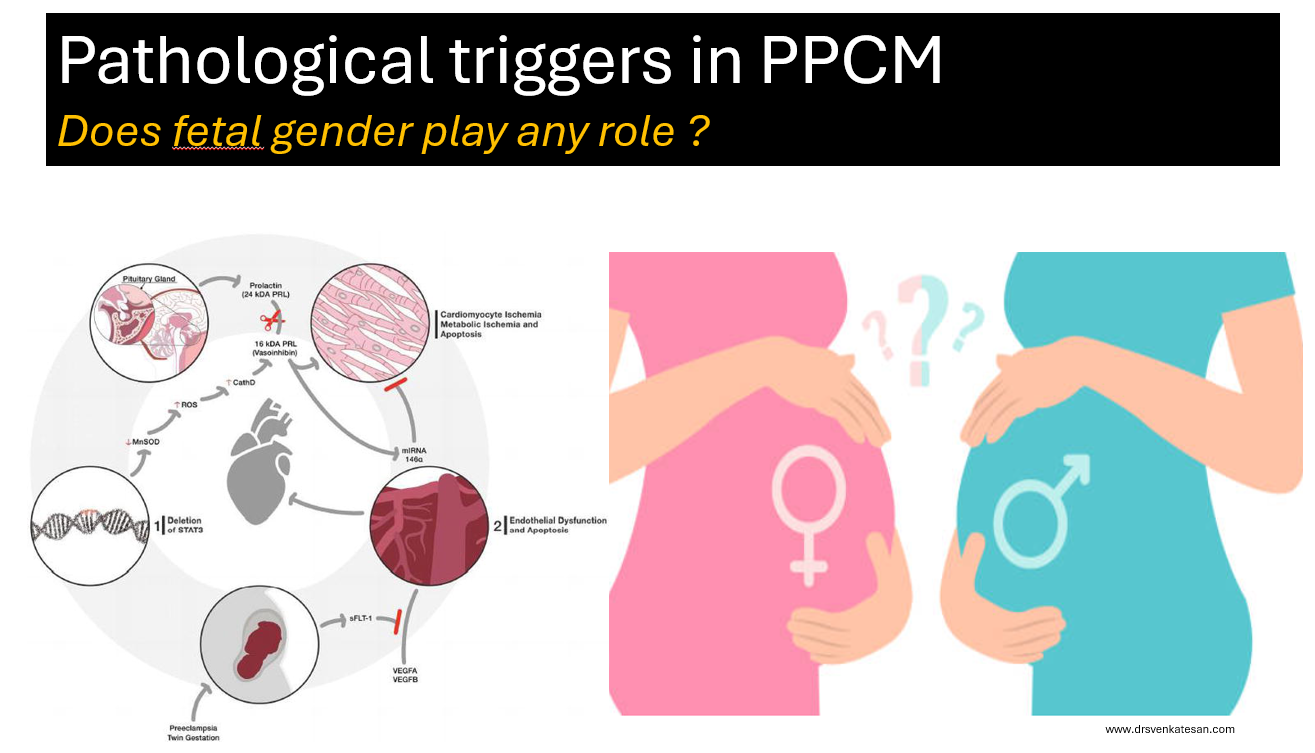
Is there really no evidence ?

Yes, it is sursprisngly true . Gender as a variable may have been overlooked because it hasn’t shown up as a signal in preliminary data . Researchers often rely on patterns in existing data to guide hypotheses, and if no pattern suggests fetal gender matters, it may not be pursued. In some studies, gender data might be collected but not analyzed or reported.

It is a fertile research field. It may look like a simple study, but it can throw more light on this mystery myocardial disease that is directly related to pregnancy.

Could Fetal Gender Be Relevant in PPCM ?

While no evidence currently supports a link, there are theoretical reasons why fetal gender could be important.

Placental Differences: We know male and female fetuses have slightly different placental gene expression and responses to maternal stress, which could theoretically influence maternal cardiovascular load or immune responses.

Microchimerism: If fetal cells contribute to PPCM via immune mechanisms, sex-specific differences in cell behavior (e.g., Y-chromosome-related antigens) could be explored.( though this is speculative)

Hormonal Influence: Fetal sex might influence maternal hormonal profiles (e.g., via placental hormones), Female fetus are known to have more intense estrogenic effect in maternal circualtion.

Pregnancies with female fetuses may be associated with slightly higher levels of hCG or placental aromatase activity, which could theoretically enhance estrogen production or mimic an estrogenic effect in some contexts.(Ref 3)

What are the maternal diseases that are shown to be correlated with fetal sex ? (Ref 1, & 2)

Some maternal diseases, such as preeclampsia, gestational diabetes, preterm birth, hyperemesis gravidarum, autoimmune diseases, and asthma, have been associated with fetal gender in limited studies, with male fetuses often linked to slightly higher risks for preeclampsia and GDM, and female fetuses to hyperemesis and asthma exacerbations. However, these correlations are generally weak, and mechanisms are not fully understood. For PPCM, no evidence exists

Final message

Fetal gender is a simple, routinely collected variable, making it feasible to include in future studies without significant cost. If even a small association exists, it could refine risk stratification or guide mechanistic research (e.g., exploring sex-specific placental factors). The lack of data on this parameter represents a knowledge deficit in cardio obsterics that could be addressed in large registries or meta-analyses, especially as PPCM research has grown significantly in recent times.

*Request the fellows in O&G and cardiology to conduct a specific study on this topic and enrich the literature on PPCM. I think the data is already there in every PPCM paper. We just need to collate. (There is no copyright for this topic, but please acknowledge, if no one has done this aspect of a study in PPCM before)

Reference

1.Liu S, Joseph KS, Liston RM, Bartholomew S, Walker M, León JA, Kirby RS, Sauve R, Kramer MS; Maternal Health Study Group of the Canadian Perinatal Surveillance System (Public Health Agency of Canada). Incidence, risk factors, and associated complications of eclampsia. Obstet Gynecol. 2011 Nov;118(5):987-994. doi: 10.1097/AOG.0b013e31823311c1. PMID: 22015865.

2.Schiff MA, Reed SD, Daling JR. The sex ratio of pregnancies complicated by hospitalisation for hyperemesis gravidarum. BJOG. 2004 Jan;111(1):27-30. doi: 10.1046/j.1471-0528.2003.00005.x. PMID: 14687048.

3.Steier JA, Myking OL, Bergsjø PB. Correlation between fetal sex and human chorionic gonadotropin in peripheral maternal blood and amniotic fluid in second and third trimester normal pregnancies. Acta Obstet Gynecol Scand. 1999 May;78(5):367-71. PMID: 10326878.

Read Full Post »

Restrictive LV filling is an advanced form of diastolic dysfunction. The mean LA pressure is high, and LVEDP is also correspondingly elevated (need not be linear though, as LA reservoir/conduit dysfunction can independently hike the LA pressure). This clinical scenario of restrictive LV filling usually occurs as part of HFpEF, though it can occur in HFrEF as well. (25% of DCM have restrictive filling)

Image source and courtesey : Sean Haney, Denise Sur and Zijian Xu The Journal of the American Board of Family Practice May 2005, 18 (3) 189-198; DOI: https://doi.org/10.3122/jabfm.18.3.189

Pre-load reduction is the mainstay in relieving pulmonary congestion, but it has a trade-off at a particular point, as it impacts the stroke volume and forward cardiac output. Diuretic excess, ultimately worsens the symptoms, especially fatigue, though they keep the lungs dry.

So, dear fellows , remember prescription of diuretics in restrictive LV filling is a tight pharmacological rope walk.It requires continuous monitoring of symptoms and E/E” in echocardiography.

Whether to push the LA blood with more preload or bring it down to redcue pulmonary congestion is the question

Some physicians use the E-DT as a visual guide (Deceleration time of E velocity, which is inversely related to the degree of restriction). Normal is more than 150 ms. In most restrictive filling, it is 100 ms or less. Diuretic dose can be adjusted based on E-DT.

The usual daily dose of frusemide is 80 mg. There is a huge upper limit.It will be useful if the dose of frusemide is somehow indexed to the LV filling parameter.

I have tried a personal working formula for optimal diuretic dose. It can be titrated upwards ,twice the value of E-DT when it is less than 100 ms.(Eg if E-DT is 80ms Frusemide can be 160mg, but, note there is an U curve in this .If DT is too short, diuretics will worsen the hemodynamics .At 60 ms E-DT diuretics need to be reduced to 120 mg )

I keep tellling my fellows to do an authenticated study on this. Hope some one pursues(Mayo clinic guys are well equipped to do this , may be with the help Dr Jae.K OH or Sherif F Nagueh from Methodist, Houstan, the pioneers in the field )

Final message

We realise, treating restrictive LV filling is a delicate and often difficult task.There are no specific drugs to improve the lusiotropic property of LV. Further, since LV contractility is normal in HFpEF, there is no point in using LV inotropic agents. The only available parameter to manipulate is LV preload. However, It would be a stunning discovery , if some one discover a atria specific LA inotropic agent to overcome the LV restriction .

Meanwhile, it is critical to treat associated HT, CAD, or infiltrative disease like Amyloid*. We may soon have LA sensors , that can throw LAP to your iPhone . Till then, treating restrictive LV filling is essentially a hemodynamic/clinical pharmacological guess game. Ofcourse ,*We do have protein unfolders and declutters like Tafamidis & Patiseran to clear interstitial amyloidosis. Also, IAS flow regulators are new devices being tested to decompress the LA in HFpEF. (Paitazoglou et al Ther Adv Cardiovasc Dis. 2020 )

Read Full Post »

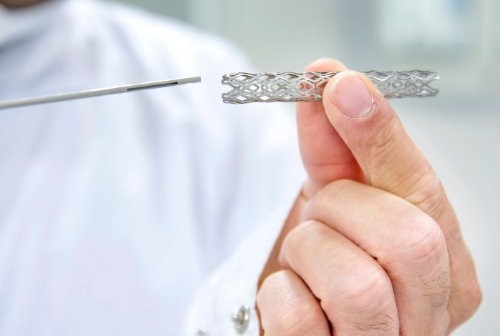
The therapeutics of coronary stenosis has become a technogical wonder, interwoven with statistical wordplay in the last few decades. PCI is sitting pretty at its peak glory.The term OMT or GDMT is a popular terminology, but realistically exist only in guidelines.

It is a strange academic habit among cardiologists, that they have subdivided medical management into optimal and suboptimal. Meanwhile, we haven’t seen any papers from cardiology forums that classify PCI according to its quality. How many of use a term like optimal PCI or guideline-directed PCI (O-PCI, GDPCI). Every PCI, by default, is perceived as good by our flawed coronary intellect.

A single patient experience

Let me share a patient consult from a remote town of north India. He is a STEMI patient (1 year old) with mild LV dysfunction and thinning of IVS and anterior wall. His CAG showed a significant looking, yet non-flow limiting LAD lesion without any troubling symptoms. I came to know he had consulted two institutions and was apparently not happy with their approach (In his own words, “They seem to be primarily interested in caging my LAD than listening to me”).

Somebody has suggested my name. He called me over the phone for a consult. I asked him remain there to follow his doctor’s advice. But, he flew some 2000 km to meet me. He was so knowledgeable and was aware of everything I wanted to tell. Like, viability, scars, futility, and benefits of revascularization, imaging-assisted PCI, impact of PCI on exercise capacity, importance of risk factor management, etc.

I told him, “In my opinion, you have technically a single vessel disease that can be managed well with drugs. But if PCI is to be done, it should be done in a proficient manner, as the lesion looked hard and was close to the LAD ostium, trespassing LCX as well.” I stressed the importance of a professionally done procedure with enough expertise and follow-up maintenance care.

He was not entirely satisfied with my response. He wanted a clear yes or no! . I told him, “If you have full trust, continue with the drugs at full intensity and do a stress test after 3 months. otherwise, if you keep getting even the slightest doubt and anxiety over the hidden blocks, go for a stent immediately at a good Institution. (My conscience said the latter half of my advice was unwarranted, but I had to; after all, me too need a protective mechanism)

He left my clinic profusley thanking me. I am not sure , how my consult was useful for him and what he is going to decide.

Academic lessons from this patient.

1.Patient fear factor over coronary blocks may be the ultimate game changer. Cardiologists should try to mitigate this fear and at the least should not be an amplifier to this emotion.

2.Leaving tricky profesionaly complex decisions to the patient, is an easy escape route for us, however it comes very close to professional incompetence. (Of course, we do this on a routine basis, approved by the modern medical guidelines, ethics, and legal system, in the name of patient empowerment)

3.Finally, we can grow a potential research hypothesis. A sub-optimal PCI is non-superior to OMT.It is curious there is no study available to compare sub-optimal PCI to OMT. We must also realize there is nothing called standalone PCI. Without concomitant OMT, PCI is a dud. Every young cardiology fellow need to etch this fact in their cortical cardiac memory. OMT often turns out to be the savior of stents, but the latter ruthlessly steals the credit.

Postamble

I could find one study analyzing suboptimal stenting (Ref 1), but it didn’t compare it with OMT. Suddenly, as I finish writing this, a big fact struck me hard, i.e., even a well-done PCI in sophisticated core labs with meticulous care struggled to beat OMT in a barrage of landmark trials (like COURAGE, ISCHEMIA, ORBITA). What is the big deal to analyze suboptimal PCI vs OMT?

Prati F, Romagnoli E, Gatto L, La Manna A, . Clinical Impact of Suboptimal Stenting and Residual Intrastent Plaque/Thrombus Protrusion in Patients With Acute Coronary Syndrome: The CLI-OPCI ACS Substudy Circ Cardiovasc Interv. 2016 Dec;9(12):e003726. .

Read Full Post »