Ventricular septal rupture is a major mechanical complication of STEMI . Excruciating chest pain , is the sine qua non of any myocardial tear , dissection and rupture . It is surprising , VSR following STEMI is rarely a painful event . I can recall number of such events , when a stable patient with persistent ST elevation in the coronary care unit , wakes up next morning with a systolic murmur.And echo reveals a septal defect promptly.
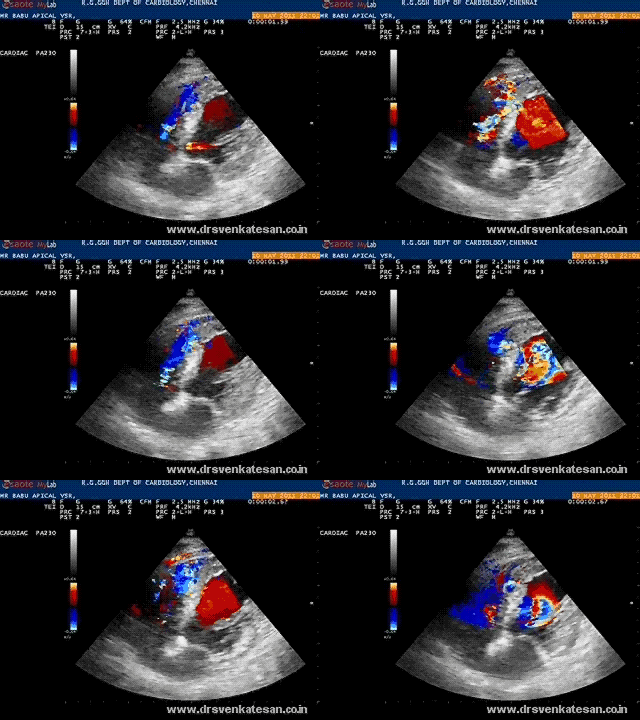
Three reasons can be proposed for relatively pain free rupture of IVS in STEMI.
- Typically VSR occurs in 3rd or 4 th day of infarct . By this time myocardium can be as soft as an ice cream ! . There is not much stress and strain at the site. The necrotic debri just gives way to spikes of LV systolic pressure .
- For rupture to occur there must be transmural infarct .The pain nerve terminals also die in the process .
- Further , it is a cavity to cavity rupture (LV to RV ) . Direct pericardial stretch does not occur .
* Ventricular free wall tear is a near fatal event is extremely painful .This often occurs in the first 24 hours when the nerve terminals are alive . The free wall rupture is more of a tear in the plane of myocardium . The pericardial (epicardium) layer has rich somatic nerve supply .
In summary
Early myocardial tear involving the epicardial surface can be severely painful . Late giving way of softened , necrotic often hemorrhagic muscle ( especially in the IVS ) is less painful or totally painless.
Coming soon . . .
By the . . . what happens to pieces of septal myocardium as it gives way and enter the right ventricle ?



 Dr.S.Venkatesan MD