Feeds:
Posts
Comments

Cardiac failure is defined as a clinical syndrome where the cardiac output is inadequate and fails to fulfill the metabolic demands of body  or its able to do so, only  at a raised filling pressure, causing the classical symptoms of exertional dyspnea.

Consider this simple equation,

A 70 kg normal human requires an EF of 60 %  to supply blood  to his total body mass. If his EF falls to 30 % , certainly he is going to  struggle with reduced cardiac  output by 50 %. Now , theoretically if he loses his weight by 50 % (70 to 35 kg ) in-proportion to the loss in EF, . . . isn’t likely , he goes back to the original ” comfort zone” again as his metabolic demands are  declined by 50 %  and hence easily managed with the severely compromised  EF of 30 % .

Is this a scientific or quixotic logic ?

By all means , it appears the later is right ! but wait . .  nothing is Idiotic in a true scientific democracy ! Human beings can live a near normal life with one kidney, one lung, half the liver function and brain function ! Nothing wrong in wondering  why not , one can live comfortably  with “half heart” function?(ie EF of 30 %)

Having said that ,cardiac failure is not a simple mathematics of EF % .It’s extremely important to understand cardiac failure is systemic disease (often an inflammatory reaction  as well) which progress to a  net catabolic sate  .Numerous named and unnamed counter hormone response(ACE,NEP, BNP etc)  retains salt and water.At some stage the body either adopts or  mal-adopts to it.Countering or mimicking these hormones has been a major therapeutic strategy.(ACEI, ARBs )

The final end point of cardiac cachexia is nothing but extreme response of the body to reduce its weight  (with Tumor necrosis factor /IL6) .Survival occurs with whatever available cardiac output that matches metabolic supply to tissue.

Now ,coming to the title discussion,  If weight-loss is the ultimate compensatory mechanism in chronic HF , what about conditioned and monitored weight reduction  regimen ?

The management of cardiac failure after addressing all specific problems like structural ,functional abnormalities plus or minus  revascularization should include a mandatory  exercise training program that help optimize the weight.Reducing total body mass is directly going to improve the cardiac function, or  at-least make it static and might dramatically  relive symptoms and increase survival.However , the beneficial effect of exercise is  mainly attributed to improving muscle mitochondrial function and augmenting exercise capacity.

Where is the evidence coming  from ?


excercise training in heart failure

wieght reduction in cardaca failure

A point of controversy !

There are few reports  that suggest good-weight is essential as a body reserve during the catabolic state of HF.In fact, low fat and cholesterol was unwelcome in some statin and  HF  studies. Some provocative papers even  suggested a paradox  where weight loss could be counterproductive in HF (I strongly dispute this as do many others.)

(T.B Horwich,The relationship between obesity and mortality in patients with heart failure J Am Coll Cardiol, 38 (2001), pp. 789–795)

Final message

Unfortunately , truths without  evidence is worse than plain falsehood !

When heart as a pump is failing , we go for  sophisticated drugs, ICDs CRT devices, variety of surgeries etc . Shall I say , none of them has conquered the inevitable. We know ,HF’s mortality and morbidity is next only to burden of cancer.Applying  all our wisdom , intentional and monitored weight reduction  may be  best bet to unload the heart in many of the HF patients .Mind you, this comes  free of cost ! and that is not the only reason it  should be tested in every such patients .My own experience and interpretation of available data would suggest its going to work in all  and the benefits are going to be  overwhelminng in overweight patients .

Dear heart failure patients . . .Wishing you all a  controlled weight loss  and a happy life !


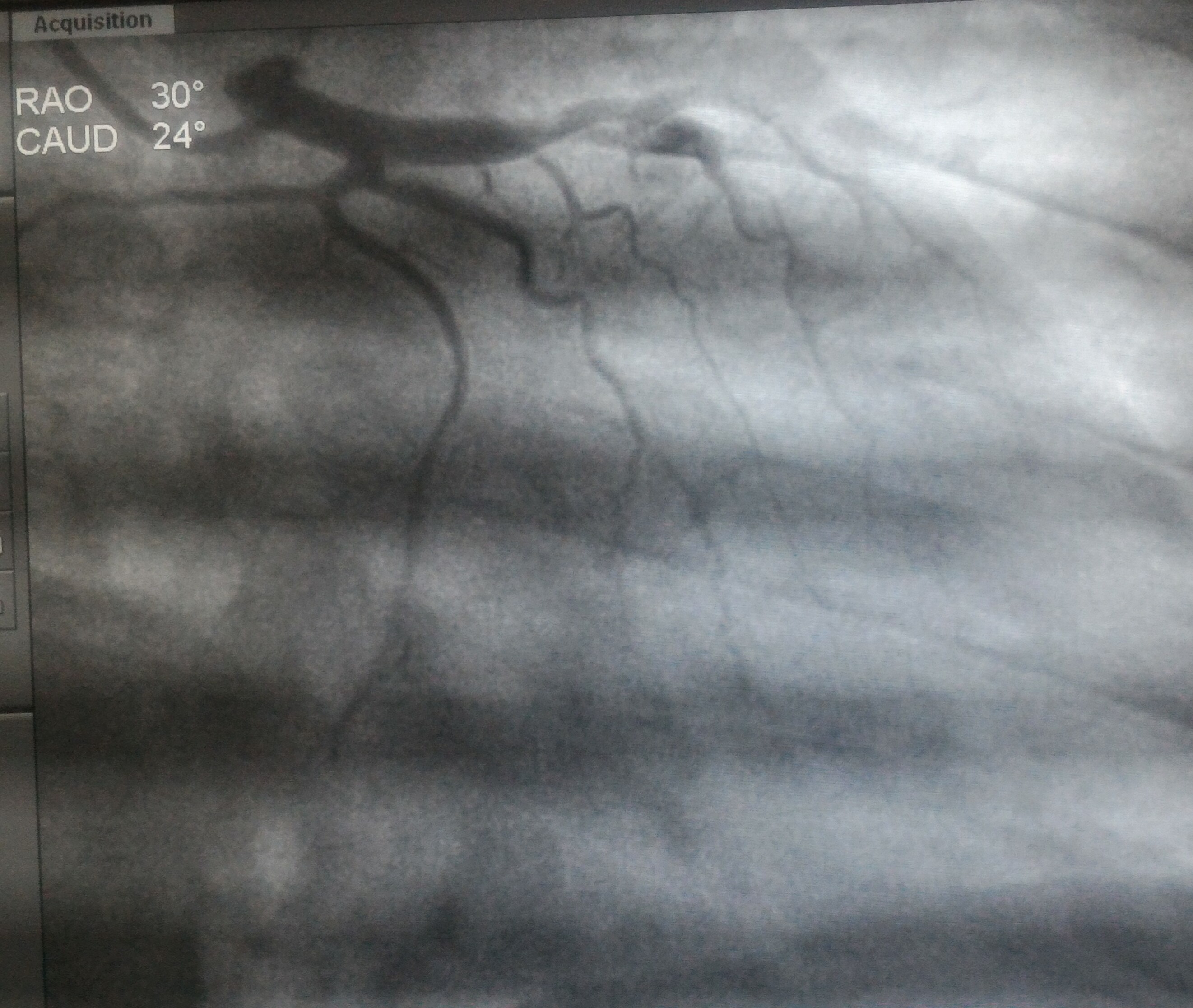
RCA is known for unusual variants.Here is a right main trunk which divides into two major branches, both taking a surprisingly similar course.Shall we refer it to as Dual RCA  or is it an early RV branch ? But how can both run posterior and parallel ?

PS: His LAD and LCX  were  normal.

Aspirin for primary prevention of CVD is an ongoing controversy for more than 2 decades. Please note, the controversy is not in the competence of Aspirin to prevent cardiovascular  event, but in the potential risk of GI bleed and whether that risk is worth taking. Secondary prevention has no such issues as the benefits easily outweigh the potential bleeding risk .

Male vs female

There is a “gender” and “age” difference  in the ability of Aspirin to prevent vascular events.Aspirin primarily prevents MI in men(>45)  and stroke in women(>55)  (Funny it may look,  that’s what data says!)

Age

Hence, the target age group  for aspirin is between 45/55  to 80 years. (Up to 45 and beyond 80 it has no role .Beyond 80 ,  risk of hemorrhagic stroke is significant )

Diabetic vs non diabetic

Many believe  all diabetics should straightway  get Aspirin as it was considered  CAD equivalent.Its not acceptable to all. . American diabetic association  has risk stratified DM and advice Aspirin only in high / Intermediate risk.Look for Key word ie “Net benefit (Ref 2)

Why so much confusion  ?  and What can be  the conclusion ?

The confusion is because each scientific body like AHA, ESC, ACCP, ADA ,USPSTF have  their own inference and the presence of too many risk assessment tools adds further dizziness .(SCORE /FRAMINGHAM, etc). It tempts me to say ignore all these and use  cortical sense !

Fortunately ,we do have some clarity as there is a common theme in all these advisories .Aspirin is indeed a wonder drug and able to block the platelets to prevent acute thrombus formation in the critical circulations.(FDA doesn’t seem to agree with this , How can a cheap generic do that job so effectively  ? Let the Bayer fight ! ) 

It seems reasonable to conclude

All men and women  between 45/55  to 80 years should get Aspirin (81mg /day or 325mg alternate days ) if there is at least one or two CVD risk factors provided there is no major bleeding risk .

Ongoing  studies on primary prevention with Aspirin 

ASCEND: A Study of Cardiovascular Events in Diabetes; or with diabetes taking a statin 

ENVIS-ion (Aspirin for the Prevention of Cognitive Decline in the Elderly )

ASPREE (Aspirin in Reducing Events in the Elderly) 

These  studies are  expected to  bring more data (and be ready for more confusion!)

Can we use Clopidogrel  for primary prevention if a person is intolerant to Aspirin ?

Logic may say yes.As of now it can not be advised for primary prevention.

Reference

1.A elegant advisory is hosted in Healthcare Research and Quality (AHRQ) website with supportive data from U.S. Preventive Services Task Force.

primary prevention of cad by aspirin

2.Pignone  M., Alberts  M.J., Colwell  J.A., et al; Aspirin for primary prevention of cardiovascular events in people with diabetes: a position statement of the American Diabetes Association, a scientific statement of the American Heart Association, and an expert consensus document of the American College of Cardiology Foundation. Circulation. 2010;121:2694-2701

3.Sigrun Halvorsen,Felicita Andreotti,  Jurriën M., Aspirin Therapy in Primary Cardiovascular Disease PreventionA Position Paper of the European Society of Cardiology Working Group on Thrombosis  J Am Coll Cardiol. 2014;64(3):319-327.


2016 Update by USPSTF in Annals of Internal medicine has a Major revision.

It raises concern over bleeding risk, and ask for restricted use of Aspirin

within the age group of 50 -69 for both male and female.(Who are at risk of CAD)

Link to the Annals of Internal Medicine Article  Aspirin primary prevention 2016


The concept of TAVR(Trancutaneous aortic valve replacement ) is trying hard  to prevail over surgical aortic valve replacement .Two companies Medtronic and Edwards life have their products (Core and Sapiens)  tested and used with varying success.Meanwhile, Boston scientific has come out with a new one , Lotus valve made with stainless steel and bovine pericardium.


lotus valve tavr

Lotus valve  seems to have a distinct  advantage* (over the Core and Sapiens ) in terms of easy delivery and adjustment (or retrieval ) of valve till  final position and efficient adoptive steel technology in preventing para-valvular leak.

* Outcome awaited.

Human  trials has started with lotus valve in USA 2014.The REPRISE III trial would compare  one to one Lotus vs core valve . Results will be out by 2017.Unlike many interventions the utility value and long-term outcome of  TAVR  seem to be genuine and patients  waiting for aortic valve surgery can look forward to this as a genuine non surgical alternative.

Responding to this , Medtronic and Edwards are  improving upon core valve with Evolute R /Engager and SAPIEN3 , expected  to give a tough time for LOTUS.

Reference

1.RESPOND registry , REPRISE 1, 2 and 3 trials

2.A review article on TAVR 

Less than a century ago an easy chair  was enough to manage this most important medical emergency of mankind. Of course, at that time mortality of STEMI was estimated to be around 30%.We have since pushed the in-hospital death rate down to less than 10 %  and its around 5-8% currently.(*The lifeless chairs were able to save 70 lives is a different story!)

Heparin , thrombolytic agents, critical coronary care has helped us to achieve this , of course It must be admitted primary PCI also played a small role (at best 1 % ) in our fight against this number one killer.

Now, why not combine  both lysis and PCI ?

The concept of PIA (Pharmaco Invasive approach) came into vogue  primarily for two reasons.

1.If thrombolysis and  pPCI are powerful strategies by individual merits why not combine both and achieve double the benefit ?

2. Since pPCI is going to be a logistical nightmare in most points of care and we can’t afford to lose time . So, let us lyse first and consider PCI later !

Unfortunately medical science is not math .One plus one in medicine is rarely two !

Though , it looks attractive , Pharmaco invasive approach  has its own troubles.Fortunately , most of them are man-made, few are beyond our knowledge though.

Following general rules  may help us

  • STEMI  should ideally managed by early thrombolysis (or PCI) in all deserving patients.
  • Don’t wait for PCI if you think , there will be delay or reduced expertise and poor track record of the center in this modality.
  • Pharmaco invasive  therapy is not a default in all STEMI .Do good quality , monitored  lysis , (Not necessarily new generation thrombolytic .(I prefer one hour sustained thrombolytic regimen , not the hit or miss bolus) .As a learned cardiologist we need to assess individual patients according to the type and risk of MI.Its not wise to blindly follow the guidelines ,because these guidelines , though based on evidence never answers a query in a single patient perspective !

The key “branch points”  in decision making  after lysis

  • Invasive strategy  should begin within one hour if the patient has failed  thrombolysis and has developed any mechanical issues.( Mind you, LVF requires good medical stabilization .Rushing  such patients to cath lab without application of mind can be disastrous )
  • If the Initial  lysis is excellent and the patient is asymptomatic  one need not proceed with invasive limb at all.(A significant chunk of apparently failed lysis by ECG are asymptomatic and comfortable , these are patients require delicate assessment regarding further intervention. )
  • If the MI is large and the clinical  stability is “not confirmed” one may  proceed urgently within 24 h.
  • In any case there is no role for invasive approach after 24 hours* Unless fresh ischemia  suspected to come from IRA or  non IRA.
  • Having  said that, there are many centers that do a diagnostic  angiogram alone just prior to discharge  (48-72h) for risk stratification and then take a genuine call for a possible PCI or  CABG. In my opinion it appears a sensible strategy , though a non invasive stress  test pre/post discharge can even avoid that  coronary angiogram !

One issue with Rescue PIA

Though by current definition  PIA is to be done  3-24 hours , don’t wait for the 4th hour if you have recognized a failed thrombolysis earlier than three hours.( Ofcourse , as the gap between P and I gets too narrowed it may  carry some adverse  effects witnessed in routine facilitated PCI -Refer FINESSE study ) Similarly,there need not be a blanket ban on PCI beyond 24 hours if residual ischemia is active.

Final message

PIA is a dynamic  coronary  re -perfusion strategy . Nothing is fixed in science. . The optimal gap between Pharmaco and invasive strategy  can be anywhere between  1 hour to “Infinitely deferred” depending upon individual risk perception and wisdom of the treating cardiologist.


I


It was delicate few minutes  in one of  my recent  visits to a corporate hospital , when I noticed an emergency physician  hesitated to follow my advice to  prescribe IV Digoxin for a patient with  Atrial fibrillation and fast ventricular rate.His fear was, his consultant, a modern day cardiologist wouldn’t like it as Amiodarone has become a default drug for atrial fibrillation in that Institution. I could sense. . .he felt so out of place to take on my suggestion.

I reminded the young physician , the uniqueness  of  Digoxin and its  un-diminished value for this particular indication ,still he was reluctant and didn’t oblige.

I realised , it was my mistake to expect  a place for the humble fox glove in corporate crash-carts of centrally climate controlled  cardiology suits !

“Medicine need to be practiced   not only with best science(Truth) but also in a holistic and  cost efficient manner . There is no place for glamor, glitter  and commerce in your prescriptions !  In near future , teaching Medicine to students would  essentially  become  “more of moral” than “science” .

Reference

Link -Which is the best combination for rate control in Atrial fibrillation

medical ethics stastistics www.drsvenkatesan.com

One casual question in my class led to this search for an anatomical mystery. When we were discussing why left atrial oxygen saturation never reaches 100 % ? , it was attributed to desaturated bronchial venous blood draining into pulmonary vein.

How does this bronchial vein enter pulmonary venous circulation ? How many bronchial veins are there ? What anatomical plane it runs ?

Surprisingly, even in this hi-tech era of academic excess, literature is sparse for this basic anatomical question. It is reported (In Greys anatomy ? ) Bronchial veins are two in number and both drain to Azygos and Hemiazygos veins (systemic) rather than pulmonary veins.

So is our assumption wrong ?

May not be.We realise these are only two visible and named bronchial veins .It is learnt they probably carry only about 13 % of bronchial venous blood to systemic venous circuit.

bronchial venous drainage bronchial circulation

Image showing right and left bronchial veins draining to Azygos and hemiazygos veins.

It is assumed , remaining 87 % of bronchial venous blood drains to pulmonary venous circuit in an invisible fashion (By unnamed twigs ?) desaturating the LA blood by about one percent from 100 to 99 %. This is our current understanding. I haven’t come across any specific human research that quantifies the bronchial venous channels and it saturation . It’s gratifying to find one study specifically looked answer this question in sheep study .(Charan H.B et all Reference 1 )

where does bronchial vein drain drainage circulation pulmonary vein saturation

True physiological bronchial venous drainage seems to be different from anatomical bronchial venous circuits .

Clinical implication of bronchial venous circulation.

In physiology it may not be important . However bronchial circulation (both arterial and venous) can take many anatomical tracts when pulmonary micro vascular bed is structurally and functionally altered as in COPD, , pulmonary atresia with aorto-pulmonary collaterals , congenital left to right shunts,post Fontan circulation pulmonary AV malformations,lung tumors etc .

Hemoptysis in acute pulmonary venous hypertension is thought to be due to rupture of these bronchial veins as elevated pulmonary venous pressure reflect into bronchial veins (As in mitral stenois and other conditions. ) This again would vouch for bronchial veins draining to pulmonary veins.

Final message

As on today , it can be concluded bronchial vein drainage goes both systemic and pulmonary venous circuit.Bulk of them appear to end in pulmonary veins though clear anatomical evidence is lacking.

Postamble

Exploring human anatomy appear a grossly unfinished agenda even today, especially the micro and histo-anatomy. Teachers of basic sciences should impress upon youngsters entering the medical school to pursue translational research relevant to specific clinical problems.

Students may contact <drsvenkatesans@yahoo.co.in> for specific areas of clinical cardiac anatomy topics that still requires answers.

Reference

We know, atrial fibrillation is the commonest clinical cardiac arrhythmia , that is extensively studied , subjected to exotic investigations and state of the art treatment strategies.Interestingly , this arrhythmia also drags the economics of cardiology practice of a community in a big way with heavy influence on drug , device and usage.We know, RF ablation of pulmonary vein is one of the modern ways to manage this arrhythmia.

Iam sharing this article from medscape by an EP specialist Dr. Jhon Mandrola , surprisingly exposes our fundemental ignorance about this arrhythmia and the near futility of certain procedures.

http://www.medscape.com/viewarticle/865209?src=WNL_infoc_160625_MSCPEDIT_v2&uac=44538BX&impID=1137861&faf=1

Scientific cardiology has forced us to believe ACS management must be catheter based and all others are inferior  and  those who pursue the later , carry a risk of  being labelled as unethical in near future. However ,experienced cardiologists will know  where the truth lies.

Now,in the interventional cardiology board rooms  there is a big  debate going on regarding the value of early total revascualrisation in STEMI with multivessel CAD.Suddenly , every lesion looks suspect ( Ex,current or future culprit ! ) and all stentable lesion are stented  either in an emergency or semi emergency fashion (The new age post PCI dialogue goes something like this “I have tackled one culprit , other one seems to hide in LAD ,  we will arrest it  next 48 hours or so* ? ( This is the concept of  deferred or staged  non-IRA stenting )

*Ironically it brings   one more dubious therapeutic time window in ACS !

ptca ira non ira multivesssel pci

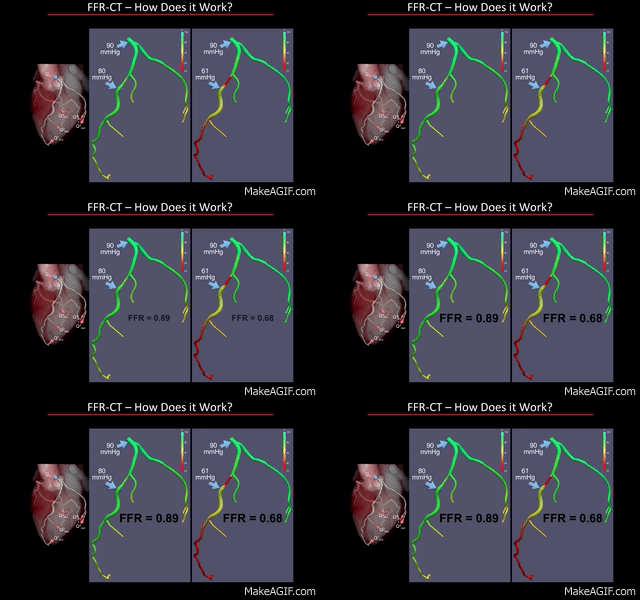
The recent  studies like  PRAMI, PRIMULTY ,CvLPRIT are trying to find out an answer to this issue  and suggest acute multivessel PCI may be  good strategy. Some of them advocate a FFR guided non IRA intervention , knowing fully well micro-circulatory bed is completely altered by the index acute thrombotic event.( Mind you , for FFR,  we need to induce maximum hyperemia with Adenosine in a highly varying local autonomic milleu within the thrombus clogged capillary network)

Final message ( Intentionally biased !)

Till we learn or unlearn  it is vital to go with conventional wisdom.Don’t pursue a random hunt for coronary culprits in acute phase of  STEMI.Many of them are innocents and likely to suffer in cross fire.Tender coronary arteries need some rest,peace and time to heal thyself  . Just keep away , they will definitely say big  thanks with folded hands !

Reference

1.Gershlick AH, Khan J, Kelly DJ, et al. Randomized Trial of Complete Versus Lesion-Only Revascularization in Patients Undergoing Primary Percutaneous Coronary Intervention for STEMI and Multivessel Disease: The CvLPRIT Trial. J Am Coll Cardiol. 2015;65(10):963-972.