
The debate of rate control verses rhythm control in atrial fibrillation goes on and on. The AFFIRM, RACE,PIAF, STAF the HOT CAFE all went against sinus rhythm in the last 10 years . This was one of the settled contoversies in cardiology . The conclusion was ventricular rate control was no way inferior to rhythm control in patients with SHT, CAD population .This made the electrophyiologists wonder how can a natural rhythm fare bad ! . But the findings were consistent .Rhythm control neither improved the quality of life nor it reduced the incidence of stroke. The later finding was very surprising but the explanation was convincing as stroke in elderly was more related to SHT, CAD, DM etc than AF itself. The source of emboli in ischemic stroke could come any where distal to LA .The big assumtion that all strokes in elderly should come from LA appendage or the body of LA was premature and wrong. What prevented stroke in AF was not restoration of SR but administration of oral anticoagulants with adequate INR.(2-3)
Having failed to document superiority in elderly population , the logic machine strongly suggested restoring SR in patients with CHF, will atleast provide hemodynamic and also survival benefit .
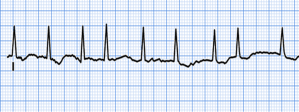
And thus came the AF-CHF trial published in NEJM 2008
Alas ! AF-CHF also found there is no useful purpose of restoring sinus rhythm in patients with atrial fibrillation and cardiac failure. In fact patients in SR fared little worse !
Why . . . why . . . why ?
Should we ask the seemingly absurd question !
Is sinus rhythm poorly tolerated by cardiac failure patients ?
It is some times possible atrial fibrillation by itself could be a mechanism to amplify the cardiac reserve by which it provides a relatively high ventricular rate to improve the cardiac index . Even though the optimal ventricular rate in AF is around 80-90 at times of need it has to increase to 120-130. Patients in class 3 CHF and AF often achieve this in times of demand .This is not possible in patients who are getting rhythm control drugs and further patients in SR can not increase the HR suddenly from 80 -130 .
So is this a wild imagination ! AF could be a safety valve mechanism in CHF to increase the HR . Where the atria come to the rescue of ventricle like a rate adaptive pacemaker .
The other logical* ! argument is that there is nothing wrong with restoring SR , but the methods to achieve and maintain SR is too cumbersome and results in adverse outcome .The currently available drugs are too toxic for the purpose .
If we have a simple and safe way to restore SR in these patients it should always be superior to AF .
But it is a well known fact that , whatever be the rhythm or rate the ultimate outcome will be dictated by the LV function, mitral valve function etc.
Read abstract of AF-CHF
Rhythm Control versus Rate Control for Atrial Fibrillation and Heart Failure
Denis Roy, M.D., Mario Talajic, M.D., Stanley Nattel, M.D., ., for the Atrial Fibrillation and Congestive Heart Failure Investigators
<!–
Rhythm Control versus Rate Control for Atrial Fibrillation and Heart Failure
— Denis Roy, M.D., Mario Talajic, M.D., Stanley Nattel, M.D., the Atrial Fibrillation and Congestive Heart Failure Investigators* –>ABSTRACT
Background It is common practice to restore and maintain sinus rhythm in patients with atrial fibrillation and heart failure. This approach is based in part on data indicating that atrial fibrillation is a predictor of death in patients with heart failure and suggesting that the suppression of atrial fibrillation may favorably affect the outcome. However, the benefits and risks of this approach have not been adequately studied. Methods We conducted a multicenter, randomized trial comparing the maintenance of sinus rhythm (rhythm control) with control of the ventricular rate (rate control) in patients with a left ventricular ejection fraction of 35% or less, symptoms of congestive heart failure, and a history of atrial fibrillation. The primary outcome was the time to death from cardiovascular causes.
Results A total of 1376 patients were enrolled (682 in the rhythm-control group and 694 in the rate-control group) and were followed for a mean of 37 months. Of these patients, 182 (27%) in the rhythm-control group died from cardiovascular causes, as compared with 175 (25%) in the rate-control group (hazard ratio in the rhythm-control group, 1.06; 95% confidence interval, 0.86 to 1.30; P=0.59 by the log-rank test). Secondary outcomes were similar in the two groups, including death from any cause (32% in the rhythm-control group and 33% in the rate-control group), stroke (3% and 4%, respectively), worsening heart failure (28% and 31%), and the composite of death from cardiovascular causes, stroke, or worsening heart failure (43% and 46%). There were also no significant differences favoring either strategy in any predefined subgroup.
Conclusions In patients with atrial fibrillation and congestive heart failure, a routine strategy of rhythm control does not reduce the rate of death from cardiovascular causes, as compared with a rate-control strategy.
Read Full Post »
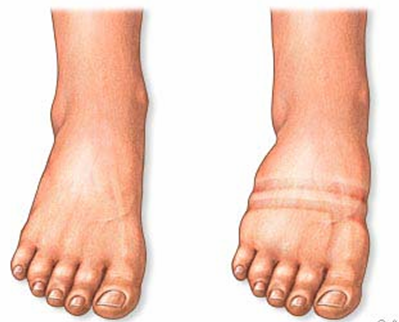 Edema is considered the cardinal feature of cardiac failure for decades. It is one of the minor criteria of the Framingham protocol to diagnose cardiac failure.



 Dr.S.Venkatesan MD