Feeds:
Posts
Comments

Posts Tagged ‘non flow limiting lesion’

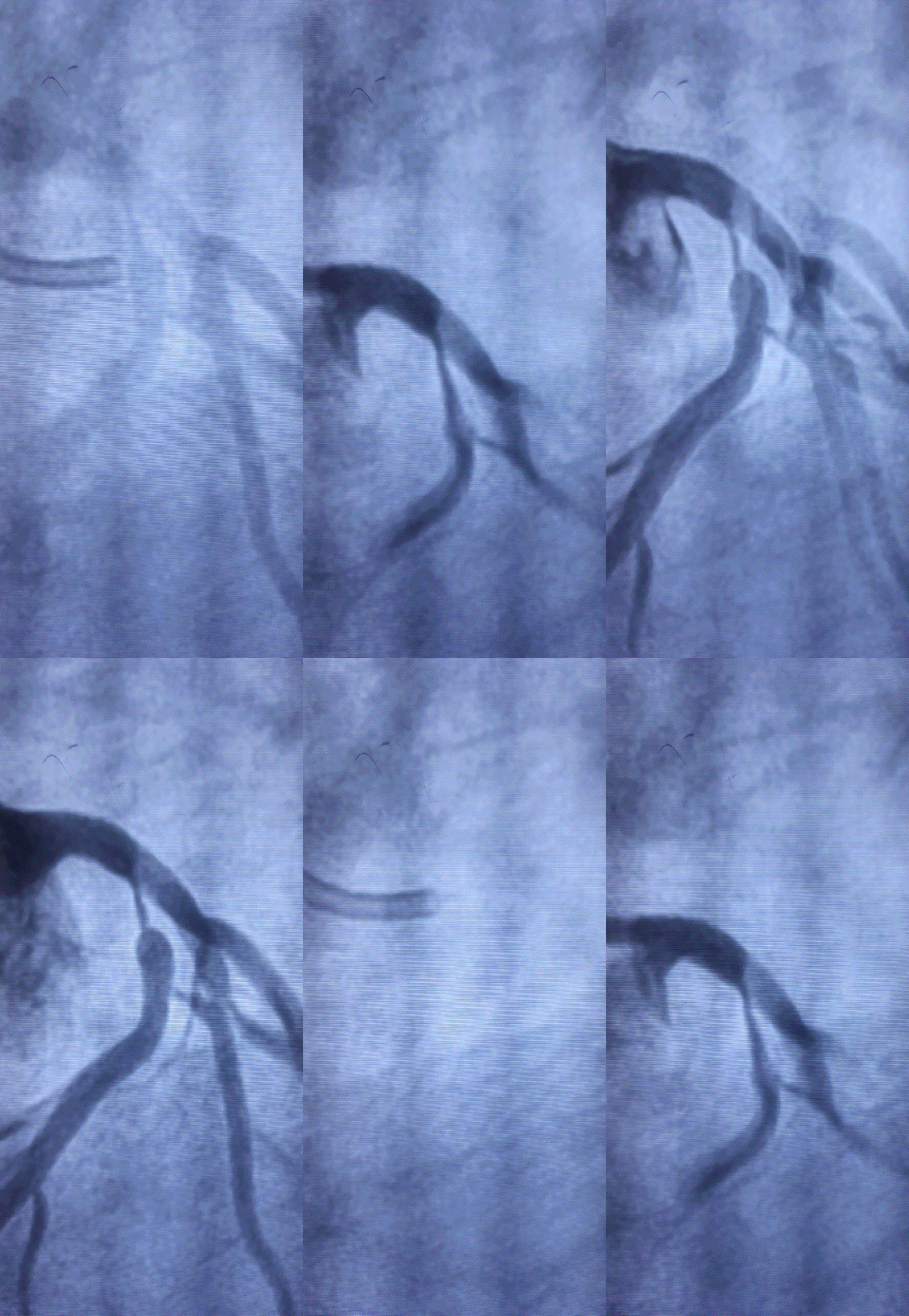
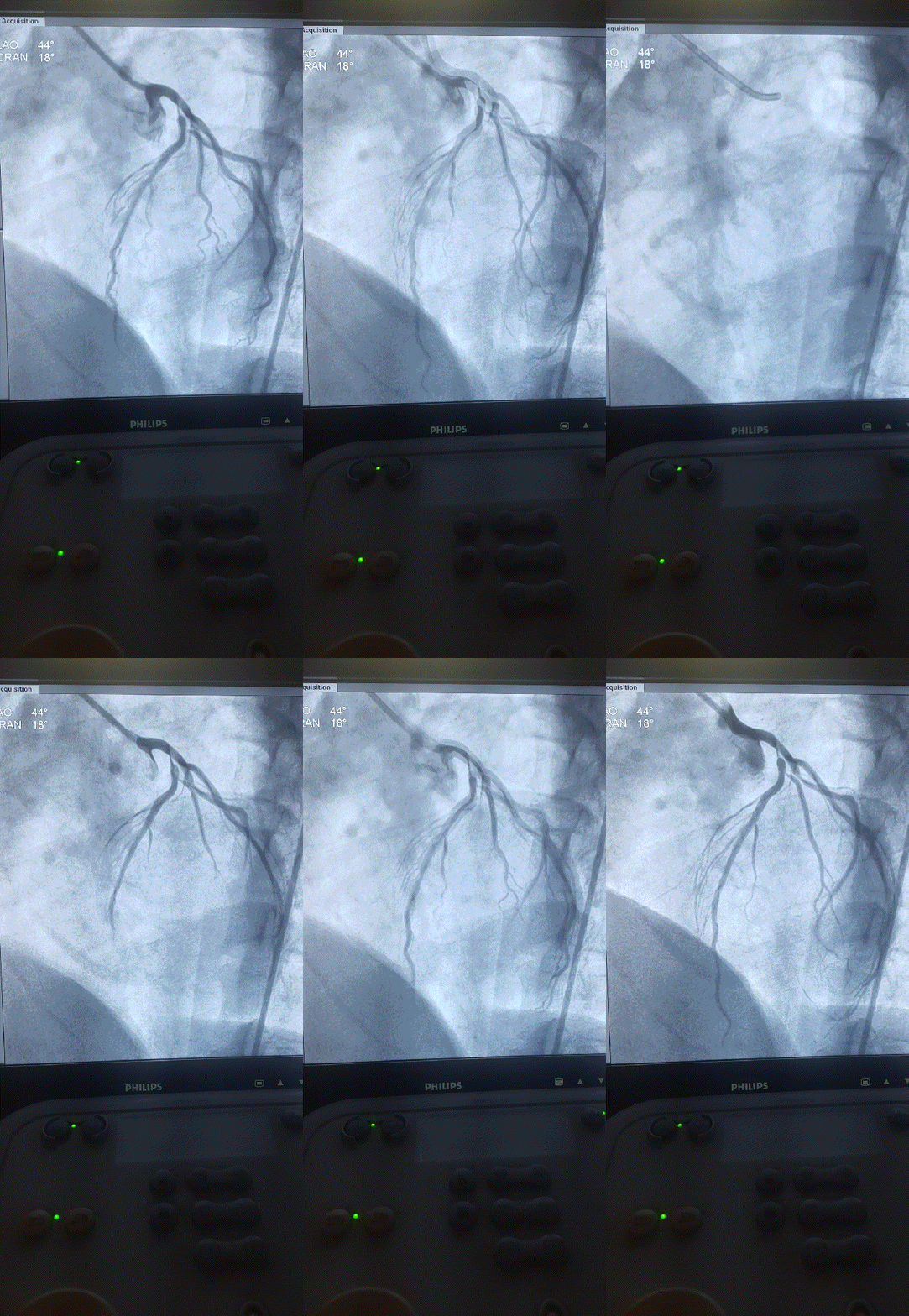
How do you explain this ? 99% occlusion still TIMI 3 flow ?
Answer

A. It could be a parallax error. Lesion may not be tight. Should be seen in other views.

B . Forcible Injection by the operator, make it an artificial TIMI -3 flow.

C .Such flows are very much possible .It Indicates a healthy distal micro-circulation a vascular bed in a fully dilated mode.

D. TIMI flow is not reliable here . We need TIMI frame count to confirm.

Follow up questions

1.How much will be the FFR ?

Likely to be less than . 8 definitely , but surprises can happpen

2.Can he be asymptomatic ?

Unlikely.

Final message

Coronary occlusions are ominpresent . While we have mastered the art of successfully taming these anatomical enemies , we are still very much ignorant what these lesions actually do, to the physiology, inspite of half a dozen flow reserve Indices we have.(FFR,iFR, rFR,qFR, dP/dT ,etc)

The question is, at what level of obstruction, it really limits the coronary bllod flow significantly ( both at rest and exertion) . One thing is clear , it is higly variable & Individualistic, the secrets of which lies deep, in the domain of invisible micro-vascular network integrity.

Counterpoint

TIMI flows may no longer be valid in non-ACS situations. The name TIMI , by itself carries flow after thrombolysis. For some unexplained (& debatable ) reasons, we are used to apply this flow grade , in every angiographic flow scenerios irrespective of underlying clinical entity.
Read Full Post »

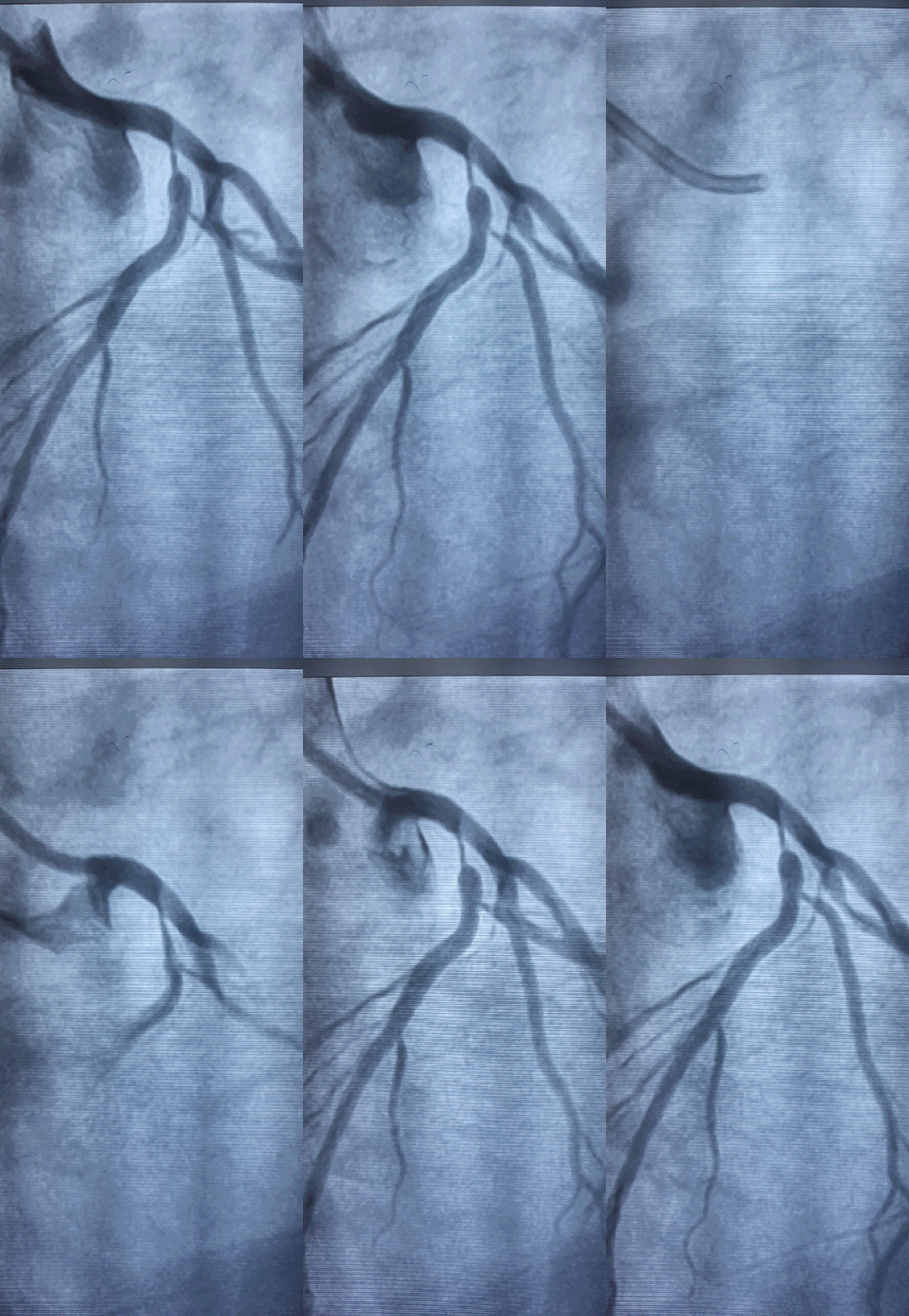
Left main coronary artery disease (LMCAD) often evokes  a panic reaction  among cardiologists .Not every LMD deserve that re. To  label  it as  significant, we have a criteria ,  that is 50% diameter stenosis.  So what you do , for a tapering  or narrowed left main with 40% stenosis. Isolated insignificant left main is rare *, but real incidence is not known.  LMCAD  is  most often due to  , atherosclerosis of left main coronary artery without limiting the flow.

What are the options ?

  • Leave it alone, with intensive medical management assisted by high dose statin(80mg)
  • Elective PCI with stenting , even though the lesion is not significant.

*If associated LAD  or LCX is there decision making is easier .

How  significant is a coronary stenosis ?

The significance of a coronary lesion with reference to “lumen diameter obstruction” is basically flawed. The significance of a coronary stenosis, by tradition is  based on it’s hemodynamic impact ,right from the  CASS days in early seventies.Unfortunately our mind set has not changed even after realising    non obstructive – sub critical lesion is more prone for acute coronary syndrome.  Is it not ironical to call a  40% lesion a non significant one !

So, the  significance of coronary stenosis is two fold.

  1. Hemodynamic  significance
  2. Clinical and  pathologic significance

The former predisposes to often chronic stable angina, later likely to result in ACS.

How will you approach a apparently insignificant left main disease ?

A 40 % lesion in left main is hemodynamically not significant , but pathologically very significant.It needs intensive treatment. Plaque passification with medical approach is first choice.If the lesion morphology is eccentric,  has irregular margins or involves  LAD  or LCX ostium doing a PCI or even a CABG is to be considered in spite of the lesion is  hemodynamically insignificant .

Why , PCI is   considered  “not appropriate”  for   less tighter lesions , even though these lesions  have great clinical significance ?

The answer is simple, The risks  and the  potential cost are more than the benefit !

And further ,  stents are  not innocuous devices  either  , they  always carry a risk of sudden occlusion as like  a sub critical lesion  !

Answer to the title question

True incidence is not known . Our experince (Class 1 c evidence) would suggest Left main disease constitutes up to 10 % of CAD.Among this one third would be hemodynamically insignificant

Suggested reading

Handbook of Left Main Stem Disease


edited by Seung-Jung Park

hbleftmn

//

Read Full Post »