“When we change the way we look at things, the things we look at change.”
Wayne Dyer
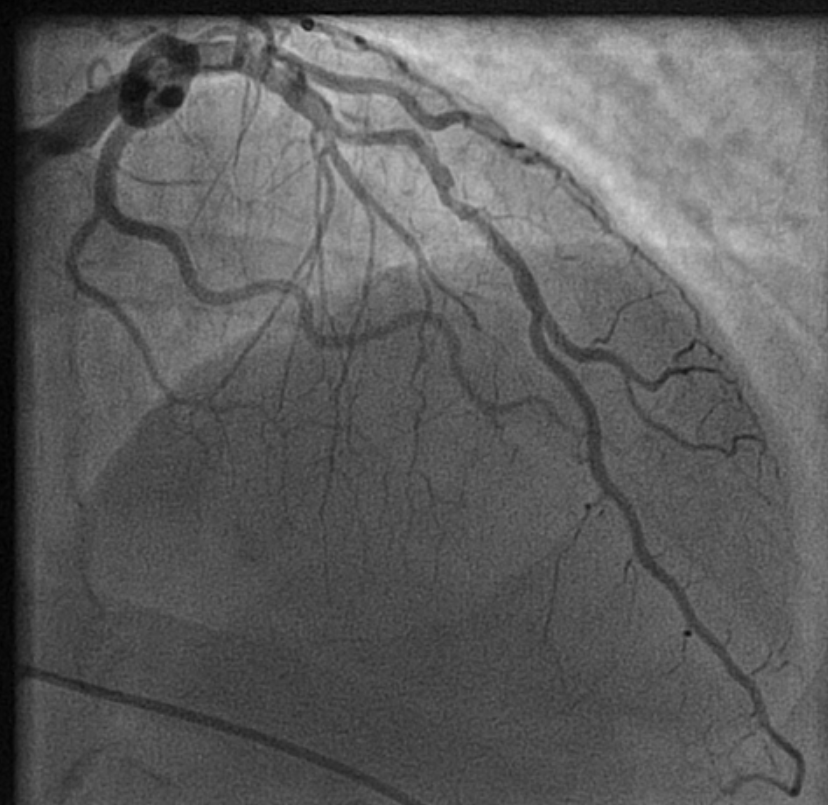
Standalone thrombolysis remains a potent, evidence-based, time tested lifeline for STEMI patients worldwide.It delivers rapid myocardial salvage. This is a rule,not an exception ,where primary PCI delays or pharmaco-invasive infrastructure falter, with absolute mortality reductions of 2-3% when administered early . The benefits holds on or often beats pPCI despite it’s relative edge in ideal settings.
STEMI : Time trumps technology
Fibrinolysis, as a modality has pioneered the science of myocardial reperfusion. It reduced the early mortality by >50% in landmark trials enrolling tens of thousands, and still stands tall. it carries (Class I-A Indication ) Pharmaco-invasive strategies reduce reinfarction by 2% absolute (NNT 50) over lysis-alone but show only uncertain 0.5% mortality gains (NNT -200, low-certainty), as per the 2025 PLOS ONE meta-analysis of 7 RCTs .
This is major evidence stress an important hidden truth , that standalone lysis is not “obsolete” in low-risk, well-reperfused cases where PCI risks (bleeding, microvascular injury) may offset slim benefits.(Soriano-Moreno DR 2025 PLOS ONE meta analysis)
Real-world registries confirm this. In >70% of global STEMI (LMICs, rural/high-transfer areas), lysis achieves TIMI 3 flow in 50-60% and can beat the delayed PCI prognostically., if door-to-needle <30 minutes . More importantly (& not so-scientifically too) TIMI 2 flows are not considered as success in most of these studies. In reality, an early TIMI 2 flow, which can be achieved with lytics easily, is more than good enough to prevent myocardial necrosis. This is in contrast to the fact, that even a glorious TIMI 3 flow, after PCI does not guarantee complete myocardial reperfusion.

Systems reality: Equity vs PCI hegemony
Population-based registries indicate primary PCI utilization rates below 20% for STEMI cases in India, or other developing countires.
Compulsive mandates, that prioritise PCI, increase total ischemic time, elevate no-reflow incidence, and raise mortality compared to systems enabling universal early fibrinolysis. The most troubling truth is, non-PCI centers hesitate to deliver timely fibrinolysis , due to perceived Inferiority, peer pressure , potentially forgoing established mortality benefits.
Commercial undercurrents: Incentives could Injure the myocardium
PCI ecosystem prioritizes procedural volume metrics, cardiologist’s Incentives, reimbursements (10-20 times higher than fibrinolysis costs), and institutional performance indicators, resulting in under-investment in fibrinolysis infrastructure. This systemic bias potentially compromising overall STEMI outcomes by deprioritizing rapid reperfusion strategies.
Final message
Cardiology Literature Needs a Scientific Distillation & a Philosophical Kick
Modern cardiology’s PCI dogma is trying to blind thrombolysis’s enduring truth. A village PHC’s or ER crew’s humble hand injections at 30 minutes could salvage more myocardium than a helicopter transferred PCI, in a star rated cathlab.
Standalone lysis fights STEMI fiercely, early, equitably, economically, unless commercial narratives, transfer dogma, and selective trials confer them a cult status, exposing millions of ACS patients to prolonged ischemia.
Are we reqdy to revive and embrace the truth? Population-based pPCI can wait. It is a futile to set wrong goals like “stent for every STEMI”; not only in a country like India, it applies to even the developed nations. Let us, prioritize lysis-first systems, especially the pre-hospital or ultra-fast in-hospital lysis. Reserve pharmaco-invasive PCI for failures or high-risk, especially with built in harm seen with routine early PCI post-lysis.
References
- Bouyaddid S, Bouchlarhem A, Bazid Z, Ismaili N, El Ouafi N. Pharmaco-invasive Therapy: A Continued Role for Fibrinolysis in the Primary PCI era. Clin Appl Thromb Hemost. 2023;29:10760296231221549. doi:10.1177/10760296231221549. https://pubmed.ncbi.nlm.nih.gov/38145624/pmc.ncbi.nlm.nih
- Armstrong PW, Gershlick AH, Goldstein P, et al. Fibrinolysis or primary PCI in ST-segment elevation myocardial infarction. N Engl J Med. 2013;368(15):1379-1387. doi:10.1056/NEJMoa1304062. https://www.nejm.org/doi/full/10.1056/NEJMoa1304062ncbi.nlm.nih
- Assessment of the Safety and Efficacy of a New Thrombolytic Regimen (ASSENT)-4 PCI investigators. Primary versus tenecteplase-facilitated percutaneous coronary intervention in patients with ST-segment elevation acute myocardial infarction (ASSENT-4 PCI): randomised trial. Lancet. 2006;367(9510):569-578. doi:10.1016/S0140-6736(06)68148-0. https://pubmed.ncbi.nlm.nih.gov/16488800/pubmed.ncbi.nlm.nih
- McDonald MA, Fu Y, Zeymer U, et al. Adverse outcomes in fibrinolytic-based facilitated percutaneous coronary intervention: insights from the ASSENT-4 PCI electrocardiographic substudy. Eur Heart J. 2008;29(7):871-879. doi:10.1093/eurheartj/ehm599. https://academic.oup.com/eurheartj/article/29/7/871/483738academic.oup
- Pinto DS, Kirtane AJ, Ruocco TA Jr, et al. Facilitated percutaneous coronary intervention following fibrinolysis: the path to redemption? Insights from BRAVE, GRACIA, and beyond. Rev Cardiovasc Med. 2007;8(4):187-194. https://pubmed.ncbi.nlm.nih.gov/18192961/pmc.ncbi.nlm.nih
- Steg PG, James SK, Atar D, et al. ESC Guidelines for the management of acute myocardial infarction in patients presenting with ST-segment elevation. Eur Heart J. 2012;33(20):2569-2619. doi:10.1093/eurheartj/ehs215. https://academic.oup.com/eurheartj/article/33/20/2569/4095042academic.oup
- Soriano-Moreno DR, Tuco KG, Delgado Flores CJ, Flores-Lovon K, Ccami-Bernal F, Quijano-Escate R, López-Rojas LM, Goicochea-Lugo S. Pharmacoinvasive strategy versus fibrinolytic therapy alone in adults with ST-elevation myocardial infarction: A systematic review and meta-analysis. PLoS One. 2025 Oct 9;20(10):e0334309. doi: 10.1371/journal.pone.0334309. PMID: 41066493; PMCID: PMC12510495.