What happens to diastolic blood pressure in severe Aortic stenosis ?
Traditional answer: The diastolic BP remain unchanged. Only systolic BP falls as it is related to LV stroke volume .(What we refer to as systolic decapitation of BP )
Reasoning :Diastolic BP is related to peripheral vascular resistance , hence aortic stenosis has little impact on diastolic BP .
Further analysis
If we assume only the systolic blood pressure is bound to decrease in AS , at one critical point of time* systolic BP should approach the diastolic pressure and pulse pressure should approach zero .This can not happen , hence at that point diastolic pressure will also fall.
*What is that point ?
No one really knows !
Correct answer
In severe aortic stenosis both systolic and diastolic pressure falls , but the fall in systolic BP is more striking .
* Though it is customary for clinicians to discuss them in isolation both systolic and diastolic blood pressure are closely coupled parameters..In the absence of peripheral run off one of the strong determinant of diastolic BP is . . . systolic BP !
Complex concepts
1. What happens in combined aortic stenosis and regurgitation ?
In combined AS and AR we get pulsus bisferiens. implying AR will elevate the systolic blood pressure in spite of obstruction.
2.What happens in associated systemic Hypertension and aortic stenosis . (Which is very common combo in elderly )
Since HT will increase the aortic pressure , the LV-Aorta gradient tend to fall.
However ,this does not happen always as if the original cause for HT was dependent more on the stroke volume rather than peripheral mechanisms .
3. Aortic stenosis with aortic atherosclerosis .
A stiff aorta augments the percussion wave amplifying the symbolic BP and blunting the classical anacrotic pulse of AS.
4.What happens to BP during exercise in severe AS ?
Exercise demands raise in systolic BP and temporary reduction in diastolic BP due to peripheral vaso dilatation in exercising muscles.
If a fixed crtical AS does not allow the systolic BP to raise as required , diastolic continue to fall pulse pressure should still become wide .
Excercise testing is a tricky business in AS. Some have attempted it to assess the functional capacity.(Read below)
Reference
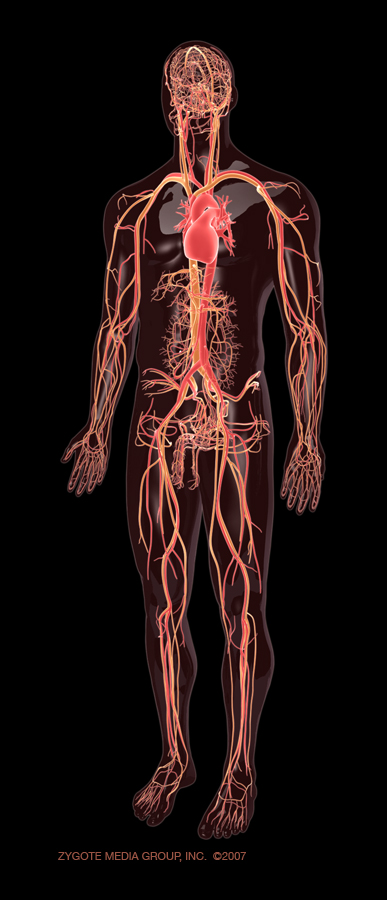 A normally functioning circulatory system is vital for our survival . We have about 6000 ml of blood, circulating all over the body in an approximate time of 15-20 seconds.The pressure at which this blood moves across the body is called the blood pressure . Hypertension or simply , high blood pressure is an undesirable hemodynamic disturbance in human circulatory system.Systemic hypertension is the most common type of hypertension. The blood pressure is primarily dependent on the status of the blood vessel(vascular resistance) and cardiac contractility. This regulation is under many neural and hormonal factors.Further the blood pressure varies depending upon the blood vessel calibre, and the local milieu.There is a progressive drop in blood pressure from major arteries to the small arteries .The pressure drop is maximum across the arterioles to reach the venules .The venous circulation has the lowest pressure, it ends up at right atrium with a mean pressure of 0- 5mmhg.



 Dr.S.Venkatesan MD
