Feeds:
Posts
Comments

Posts Tagged ‘TAPSE’

TAPSE the most celebrated RV function index misses significant Right Ventricular (RV) dysfunction in an estimated 30 to 50% of patients. ( when relying solely on it).It fails to detect underlying impairment because it only measures the longitudinal shortening of the RV base, largely ignoring global chamber contraction.

Mechanism attributed to the unreliability of TAPSE

  • Ventricular Interdependence: The RV motion is influenced by left ventricular function by the shared IVS contraction.
  • Chronic Volume or Pressure Overload: Conditions like severe tricuspid regurgitation or pulmonary hypertension cause the RV to alter its contraction geometry. This leads to “pseudo-normalization, of TAPSE” it remains >1.7 cm despite dysfunction.
  • Post-Cardiac Surgery: In patients who have undergone procedures involving pericardiotomy, TAPSE often drops drastically as post pericardiotomy the RV radial function exccedds longitudinal
  • Loading Dependency : TAPSE is highly influenced by preload and afterload conditions.

The following table summarises the various components and it’s contribution to RV contractility.
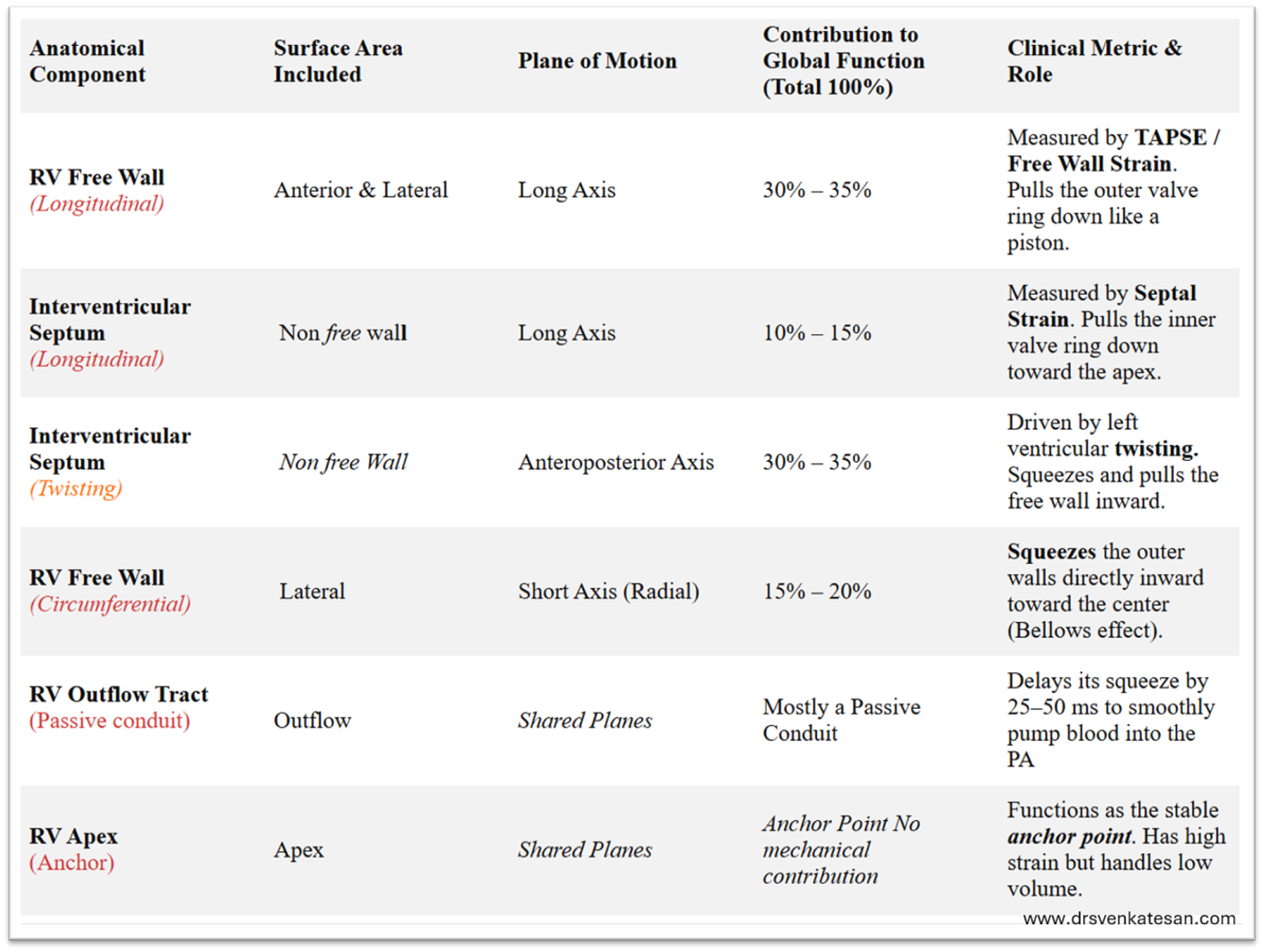
*Contrary to the popular belief, there is overlap between free wall contraction and longitudinal contraction. In fact, there is no clear definition for RV free wall. Logic tells us, any part of RV which is not formed by IVS can be considered free.

*Importantly, Longitudinal contraction has a two components free wall as well as a septal axis. TAPSE measures only lateral or free wall component of longitudinal function. It is less influenced by septal long axis function.

*The long axis function of RV is influenced indirectly by the LV function also as both AV valves are attached to same ring.

*If we want to assess pure RV function the best index is RV free wall circumferential or radial contraction or strain.

*In various clinical situations like PH or acute pulmonary embolism the pressure distribution is non-uniform making the assessment of RV function difficult. Fractional shortening of area is a fair index.RV wall motion abnormality can be subtle yet a serious marker of RV dysfunction.

Final message

RV function assessment is complex and often incomplete. The habit of relying only on TAPSE, is not a high quality scientific practice.

Postamble : Apart from the contractile function, we don’t know at what RV pressure RV begins to dilate. This is different in acute vs chronic elevation. We also don’t know which patient will show RV hypertrophy, and which group prefers dilation. May be, all these are academic and has little significance at the bedside. However understanding this is essential to assess the response to RV inotropes and newer RV assist devices.

Reference
1.Nonaka H, Rätsep I, Obonyo NG, Suen JY, Fraser JF, Chan J. Current trends and latest developments in echocardiographic assessment of right ventricular function: load dependency perspective. Front Cardiovasc Med. 2024 Jul 1;11:1365798. doi: 10.3389/fcvm.2024.1365798. PMID: 39011493; PMCID: PMC11249019.

Read Full Post »

Technically and also realistically, Jugular veins can be referred to as live, non-invasive biological catheters, that transmit the hemodynamic data of the right heart, 24/7 free of cost. JVP reflects RA pressure in systole and the combined RA, & RV chamber in diastole. It is left to our clinical acumen, to use it in whatever manner, that is beneficial.

One such thought is described in this animation.

Please go to the full-screen view and freeze the video to read the text.

The usefulness of JVP in a cardiac emergency like acute pulmonary embolism may appear superfluous. But, the fact of the matter is, a persistently raised JVP with good waveform, without systemic hypotension, may not portend a bad outcome. Sometimes, the Echo parameters are alarming, but a patient may be just fine. Here, is a real challenge. In these situations, the humble neck veins can assist us in the decision to thrombolysis or the need for any newer intrapulmonary Interventions under RV assist system.

Limitation is endless

Whenever we talk about RV dysfunction, by default we mean RV systolic dysfunction. It is critically important to understand the RV diastolic function is silently and strongly coupled with its systolic function. Impaired RV diastolic function impacts JVP in a significant fashion. We are not going into those complexities. However, tricuspid annular motion is independent of the diastolic relaxation properties of RV. If you want to go one step further in this topic, try to find out the true mean pressure of JVP, and its relationship with RVEDP.

Reference

To be created.

Read Full Post »

Here is a patient with class 3  dyspnea  who was referred  for echocardiography

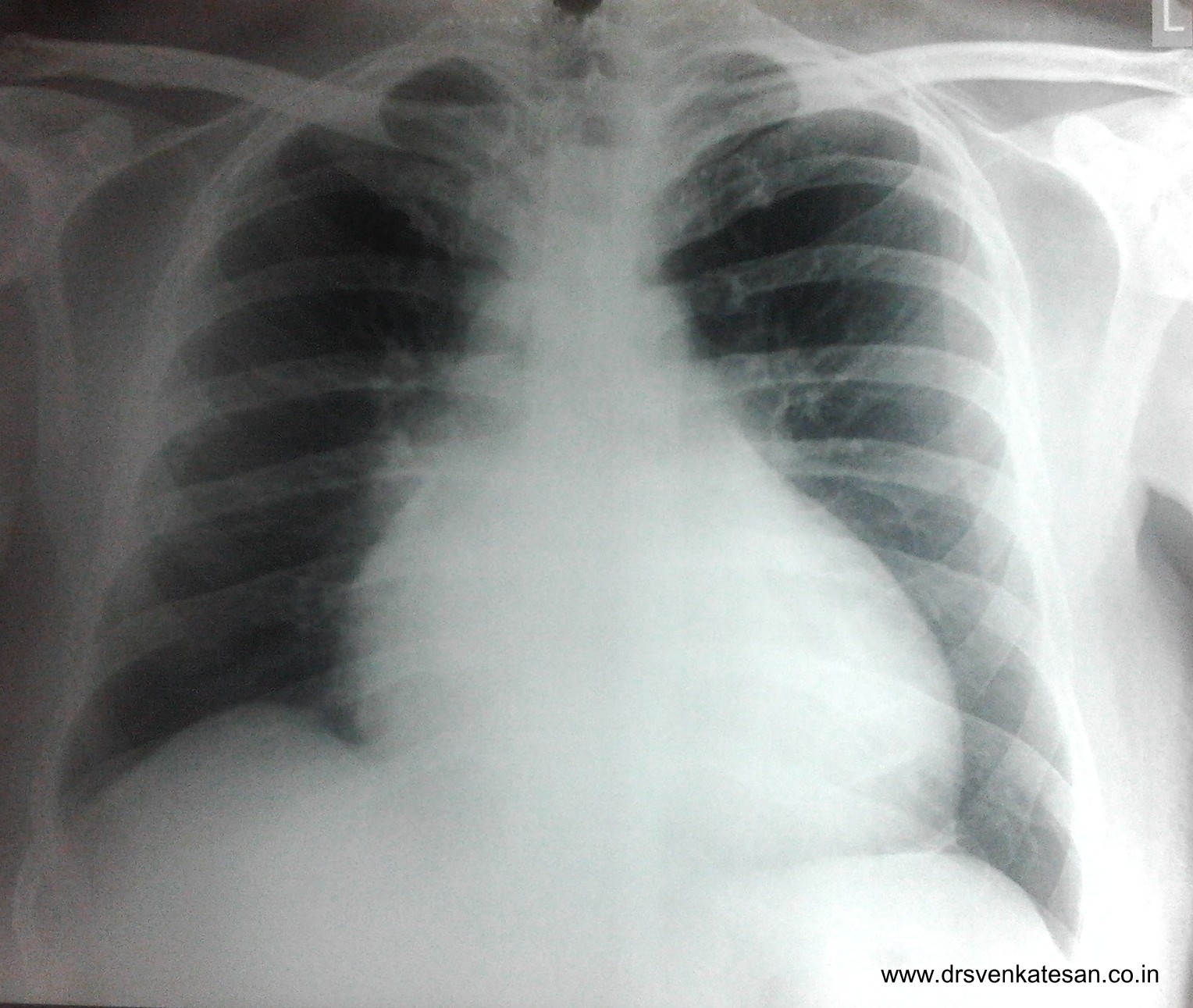
X ray chest showing cardiomegaly

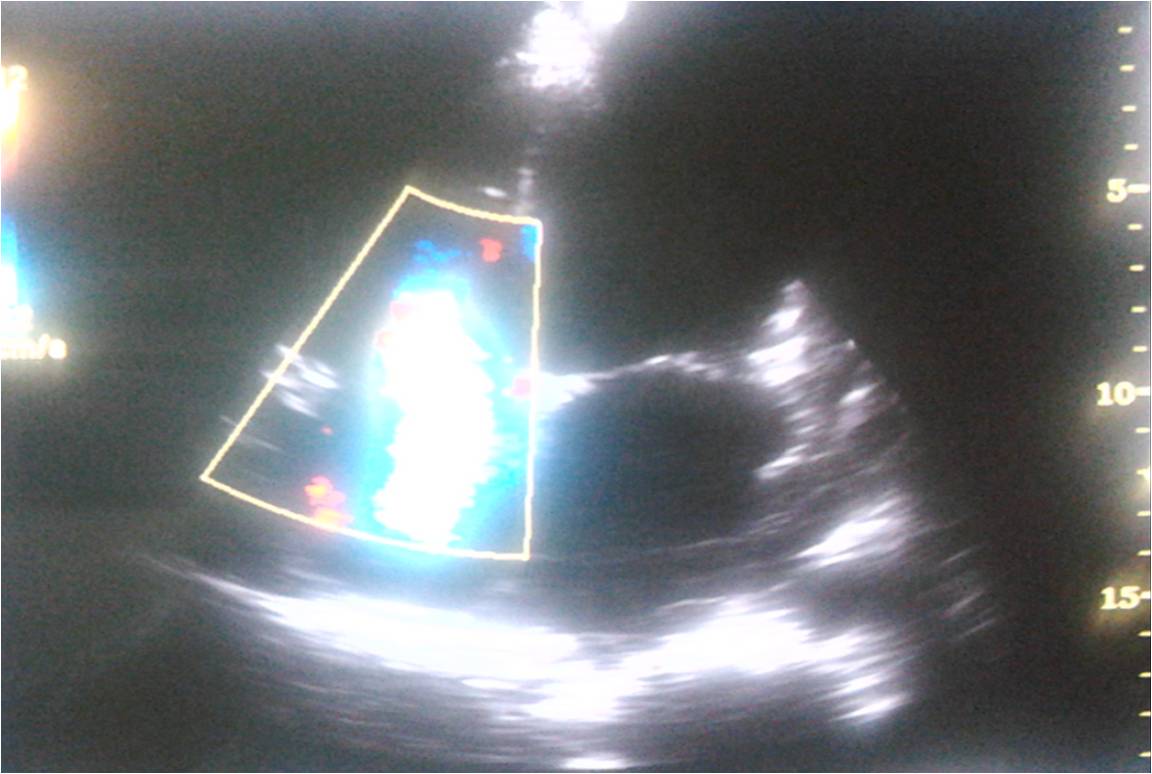
         Moderate TR due to dilatation of tricuspid annulus.This patient had dilatation of all 4 chambers of the heart.LV EF was 24 %

Right ventricular dysfunction is major determinant of  clinical outcome in patients with dilated cardiomyopathy. The  myocardium of the  entire heart is now known to be a single sheet of muscle rolled into different chambers . So any primary disease of myocardium will involve the entire musculature . This is the reason  , all the  4 chambers of heart goes for dilatation in  primary cardiomyopathy . Of course there can be minor variations  due to differential hemodynamic impact.

But it is certain ,  RV  function will definitely be compromised  In  most patients  with  Idiopathic DCM (Less common in Ischemic DCM ) Rapid assessment of RV function is difficult  . Of course We have some clues .

2 d Features

  • Simple dilatation  of RV is suffice to say it is struggling with the  loading conditions
  • Septal bowing
  • Tricuspid annular dilatation
  • RV ejection fraction (Continues to be complex for routine usage )

TR jet

  • Dp/Dt
  • Morphology may be useful (Mainly for TR severity )

Tissue doppler

  • TAPSE
  • RV strain rate Imaging etc.

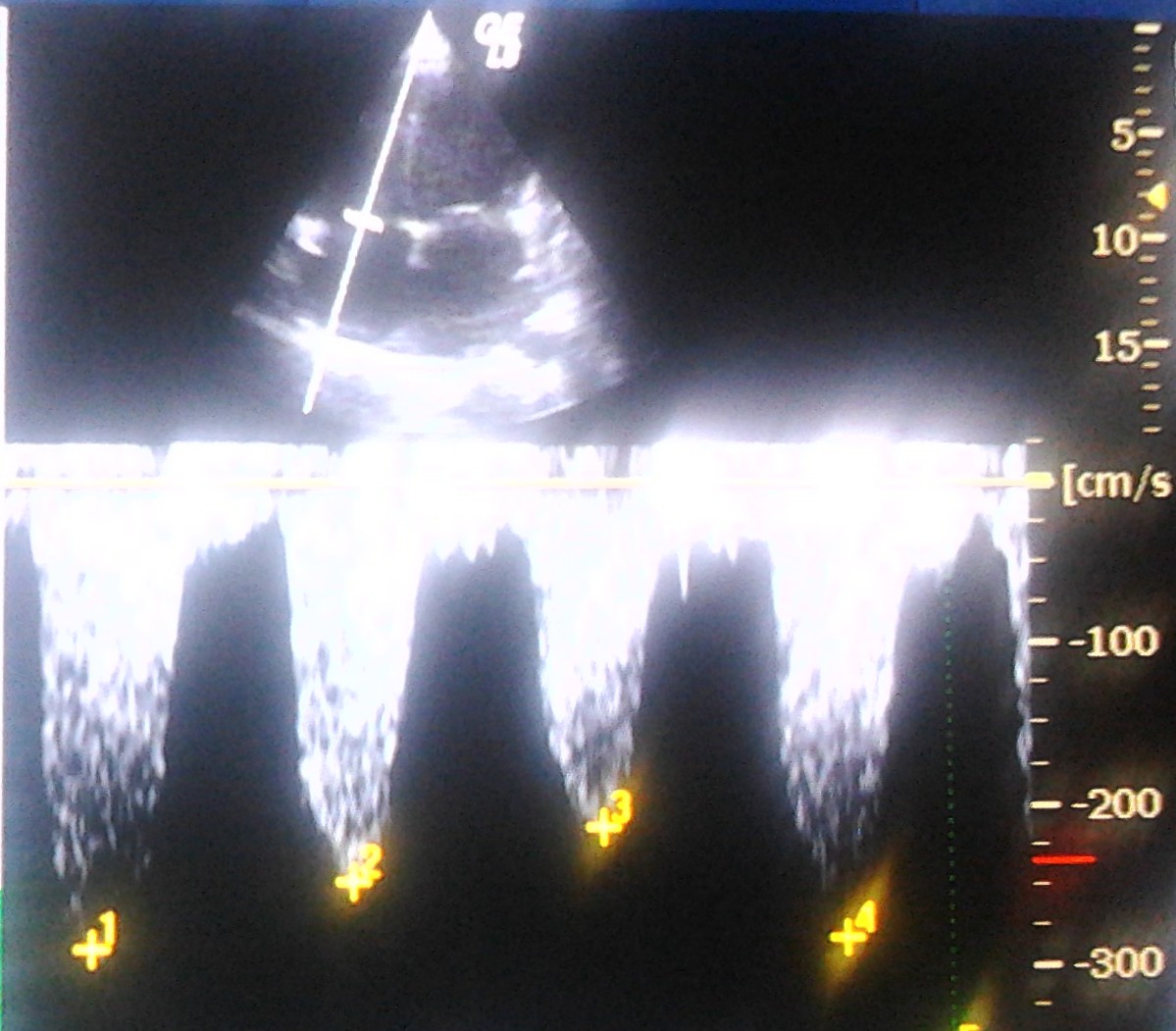
And  now  , we have observed a new echocardiographic  sign   ie  TR jet alternans  in patient with  DCM .

Note the changing TR velocity implying severe RV contractile dysfunction.

Read Full Post »