Feeds:
Posts
Comments

Archive for 2010

MASS 2  study , the 10 year follow-up results are just out in circulation   september 2010 .

It is a rare study , where “one  to one vs  one” was compared  ie  the effect of  medical,  CABG , and  PCI    in chronic CAD .This was done in a single centre in Brazil,  between 1995 -2000 . It was  followed  up till 2010. Interestingly ,  such a study  may not be possible in the future ,   as  many of us  have  prematurely  glorified  the PCI and CABG over medical therapy . Recruiting  patients   for medical therapy alone is becoming a  difficult  job even in  developing countries.  Even if we recruit , huge cross over is likely  to PCI, CABG for all fancy reasons.

So , in MASS 2 we have a rare treasure on hand . . . Let us give three cheers to those  Brazilians  who did this study ,  and  shall carefully analyse and  interpret the results.
Highlights ( According to my  interpretation)

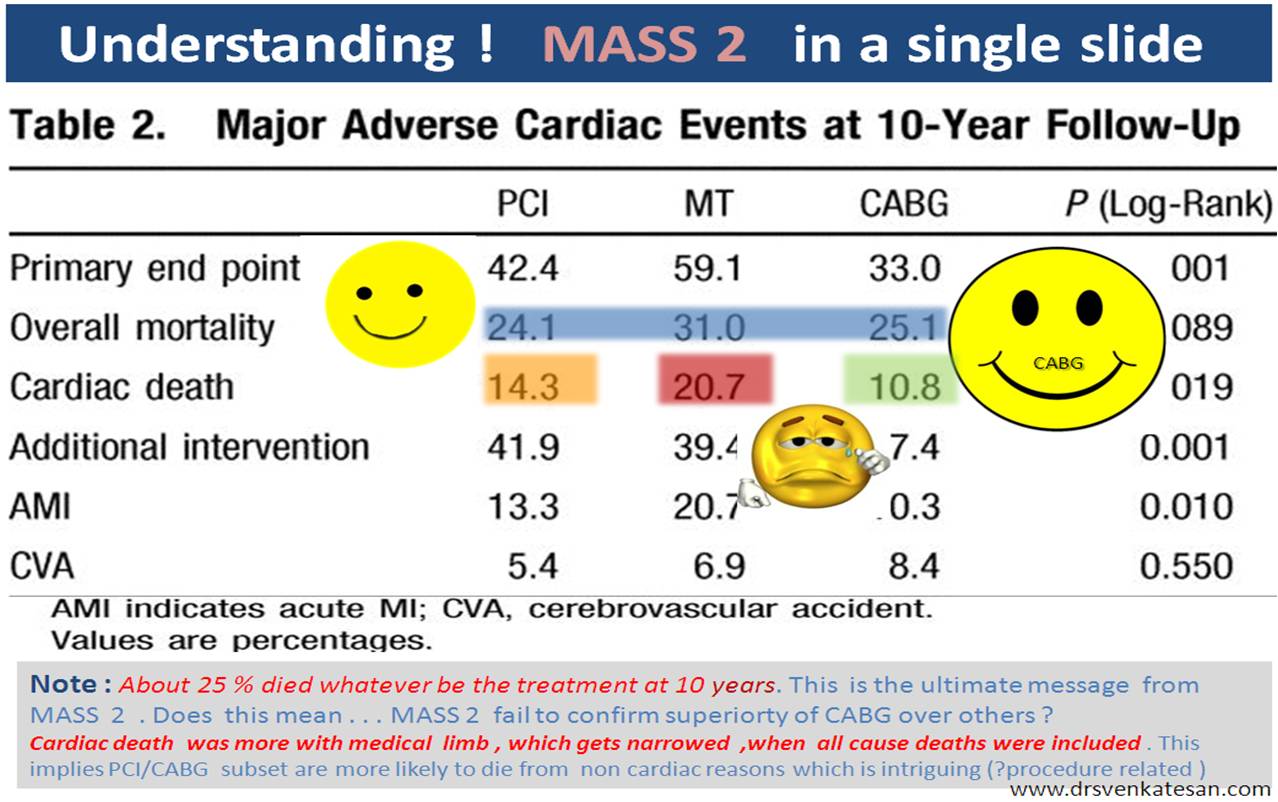
  • A total of about  600 patients with 200 in each group.
  • The overall death at 10 years  is not greatly different . (Around 25 % )
  • But ,cardiac deaths were distinctly higher by few percentages in pure medical  arm
  • Need for crossover  from medical to surgery and PCI to surgery was significant.

CABG tended  to prevent future MI in this study . This  could be  most significant observation from  this study ,( A revelation in fact ! ).It is against the popular  belief  created by CASS  legacy.

What are  the observed difference  between MASS 2 –  5 year results , which was published in 2004 ,  and  the 10 year follow-up , as  on  2010 ?

At the end of 5 years in 2004 , the differences  among the three groups were not obvious.The benefits of CABG mainly appeared after the 5th year and at 10 years it was significant.

Shortcoming of MASS 2

  • It is a single centre study .Numbers were less (600) .
  • It need to be emphasised    CABG was done  with  pump in all patients  . So the currently prevalent off  pump CABG  may not be really  comparable with reference to outcome.
  • Only   bare metal stents were used in PCI .(If only DES was used  . . . Considering the host of issues for and against DES , it will  be a  wild guess to judge it’s implication .  It could  have  tilted , either in favor or against  the  PCI  limb .)
  • In medical  limb ,  statins were not used in all.  Further , the dose of statins were not aggressive.This makes medical therapy appear less effective.

Intriguing  thoughts

When we say medical   therapy is  being  compared with PCI and surgery , we are actually comparing ,

Medical therapy  alone

Medical  therapy+ PCI

Medical  therapy + CABG .

Every patient  in all three  groups  receive  statin , antiplatelet and beta blocking drugs and so on.  Even though  statistics  would  vouch for  additional  benefit ,  over and above medical therapy  , in a given CABG  individual ,  how much  of the  the  accrued benefit  is contributed by co- administering   medical therapy  .It  is beyond   reasoning even  with all  gimmicks of statistics.

To exactly quantify  the individual benefits and efficiency  of  PCI ,  CABG  and medical therapy  two more  study limbs are necessary .

  • PCI without drugs.
  • CABG without drugs.

Such a study is possible only in a virtual world ! .  Decision  making  in favor of CABG ,  especially   in chronic stable angina ,  will continue , to be  difficult in the absence of refractory angina .This is due to  the modest benefit of CABG ,   that is  expected,  at an additional risk , cost and  expertise.

Please remember, a person can survive  , only  with medical  therapy for > 10 years  but no one can ever live with PCI or CABG  for that period of time without  adjunct drugs  . Guess  which modality   is  going to win the race  against CAD  in the long run  ?

Final message

If  any one  asks  for  conclusion of MASS 2  study ,  don’t ever say  “CABG is superior to  medical therapy” . Please emphasize , “CABG + medical therapy could   be , marginally superior to medical  therapy alone in some of the patients with chronic stable angina. (Each word  in the above statement is  important !) .

So . . . MASS 2 : Is it a  shot in the arm or shot  in the head for CABG ,  we do not know !

http://circ.ahajournals.org/cgi/content/abstract/122/10/949

http://circ.ahajournals.org/cgi/content/full/122/10/949 .This study was done by Zerbini foundation Brazil
Read Full Post »

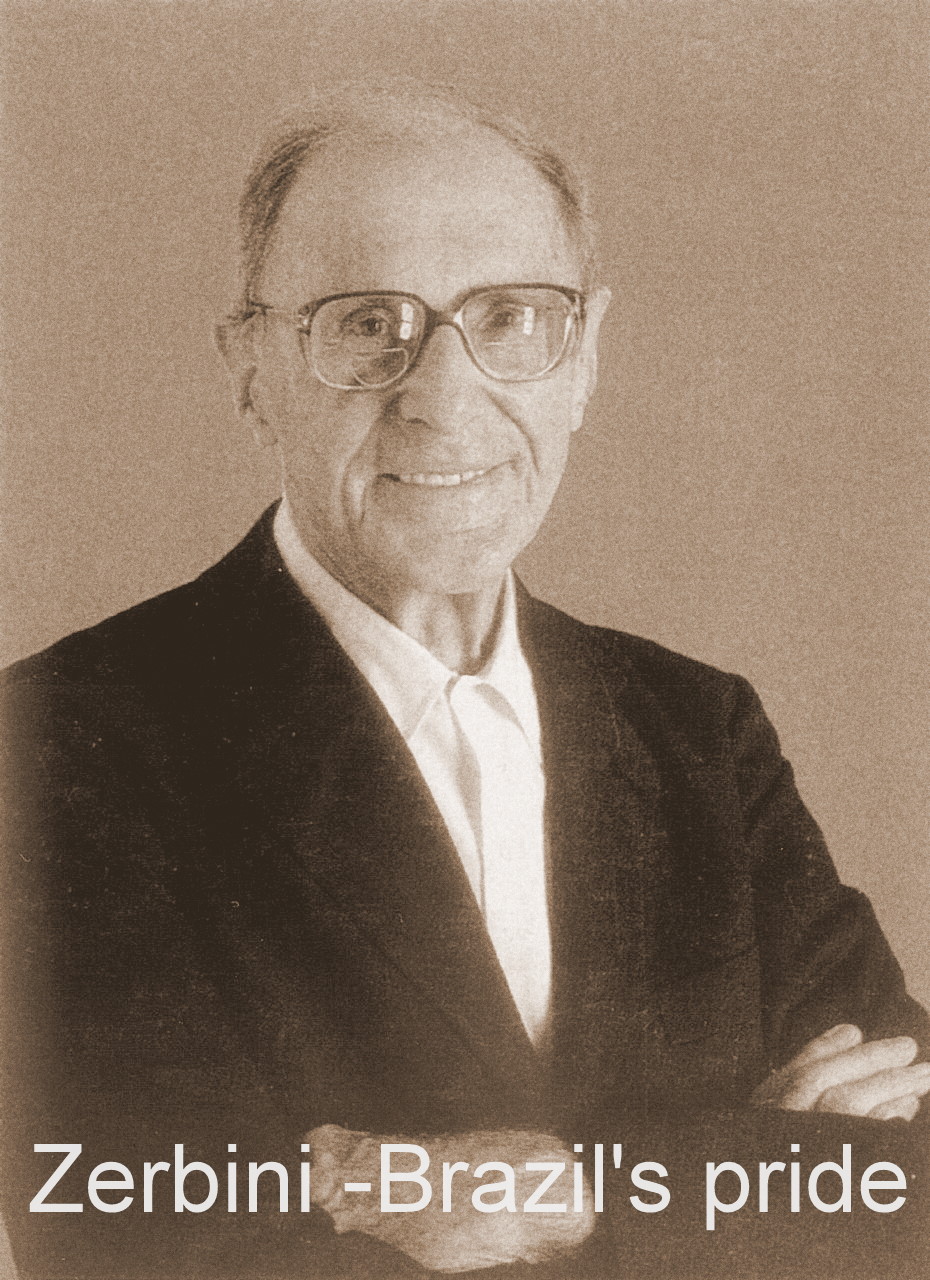
Brazil is not only known  for the glorious sport of football . In the medical field  they are among the leaders in cardiac surgery .When cardiac surgery was at it’s infancy even in USA and Europe , one man showed the ultimate determination to take cardiac  surgery to the virtually unexplored region of south America in the 1940s and 1950. He is the pioneer of cardiac surgery for the entire continent.

Picture courtesy  . Annals of thoracic surgery  .

He is the founder of INCOR .  Now , Zerbini foundation is   carrying the legacy of this  man. He has  trained  so many cardiac surgeons that makes Brazil one of  the hot  destination for hi tech cardiac surgery .Recently the foundation sponsored the landmark study called  MASS 2 which compared medical, survival and interventional  forms of treatment.

Read Full Post »

This journal ,  dedicated to  cardiovascular  surgery from Brazil is doing a great job. Most of the articles are free.The Brazilian  progress   in cardiology and cardiac surgery  is  a   “No  mean” achievement.

Learn for yourself how the country ,  which many  think  is not yet  developed is doing pioneering  research and  perform  state of the art cardiac surgeries. Often their  concepts and techniques are so unique  and innovative , evoke criticism in other quarters.

It is ironical , some of  the mediocre journals  from affluent countries are making  waves , this one  deserves much better recognition !

Read Full Post »

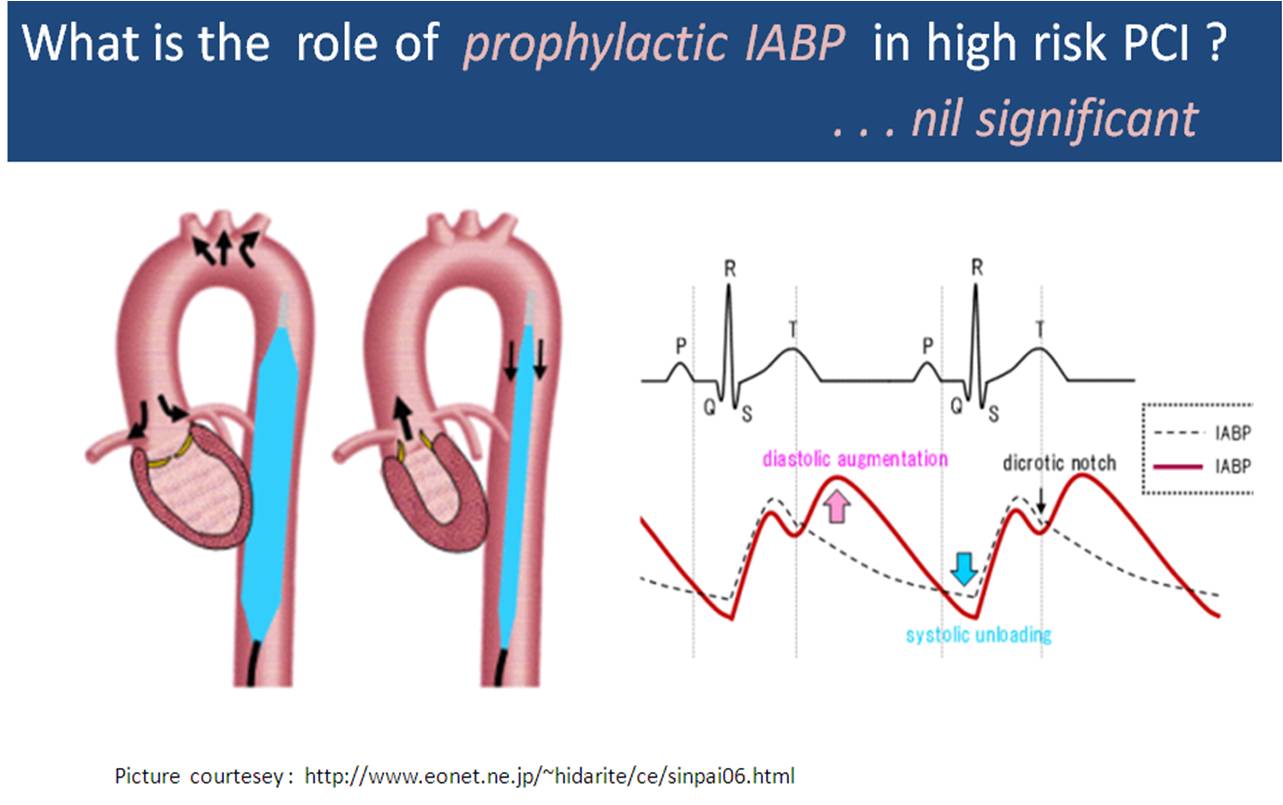
IABP is thought to be the  savior   when  PCI is done in severely compromised left ventricle and  in other  high risk angioplasties. Without verifying the facts,   routine use of this device became rampant  in cath labs around  the world in the last decade .

Everyone strongly believed , IABP  plays a major role in sustaining coronary  perfusion  during complex PCIs.  Then  the  favorable experience  started  pouring in,  from many cath labs  without IABP  support .   Common  sense struck us ,  and some one asked this question .


Should we routinely insert IABP in all  cases of high risk PCI. ?

The  study , published in  JAMA 2010  convincingly  answers  this  question


Can you do a high risk PCI without IABP back up facility ?

In academic sense “No” .

IABP service is not available in many cath labs in India for various reasons .But it does  not  become a contraindication to attempt PCI on  them .At least , we should have  facility to shift the patient  to a nearby advanced cardiac care centre  in case the need arises.

Final message

In plain language (Politeness removed !)  routine  prophylactic  IABP is not only useless ,  it could also  carry a  danger of access site ,  procedure  , expertise (Lack of  it ! ) related  hazards. Remember the Swan Ganz story !

http://jama.ama-assn.org/cgi/content/abstract/304/8/867

Read Full Post »

It is a great journey , the  heart begins  on the 22nd day of fetal life from  a pair of  tubes. It joins , folds, bends and grows into a 4 chamber power house  and works  like a bull for the next  70-80 years , before retiring.

It is an irony in certain population with chronic obstructive pulmonary disease (COPD)  heart is stretched , elongated and assumes a tubular shape (Memories of  the primitive fetal  heart tube !) .The LV cavity becomes small , RV and LV gets aligned one behind the other  bringing  the CTR further narrow.

Tubular heart

CT ratio will be less than 1/3rd of thorax. (Just more than aorta ! )

Conditions

  • COPD with emphysema
  • Somes cases of hypoadrenalism(Addison) due to chronic volume hypovolemia and underfilling of the  entire vascular  system that includes the heart .

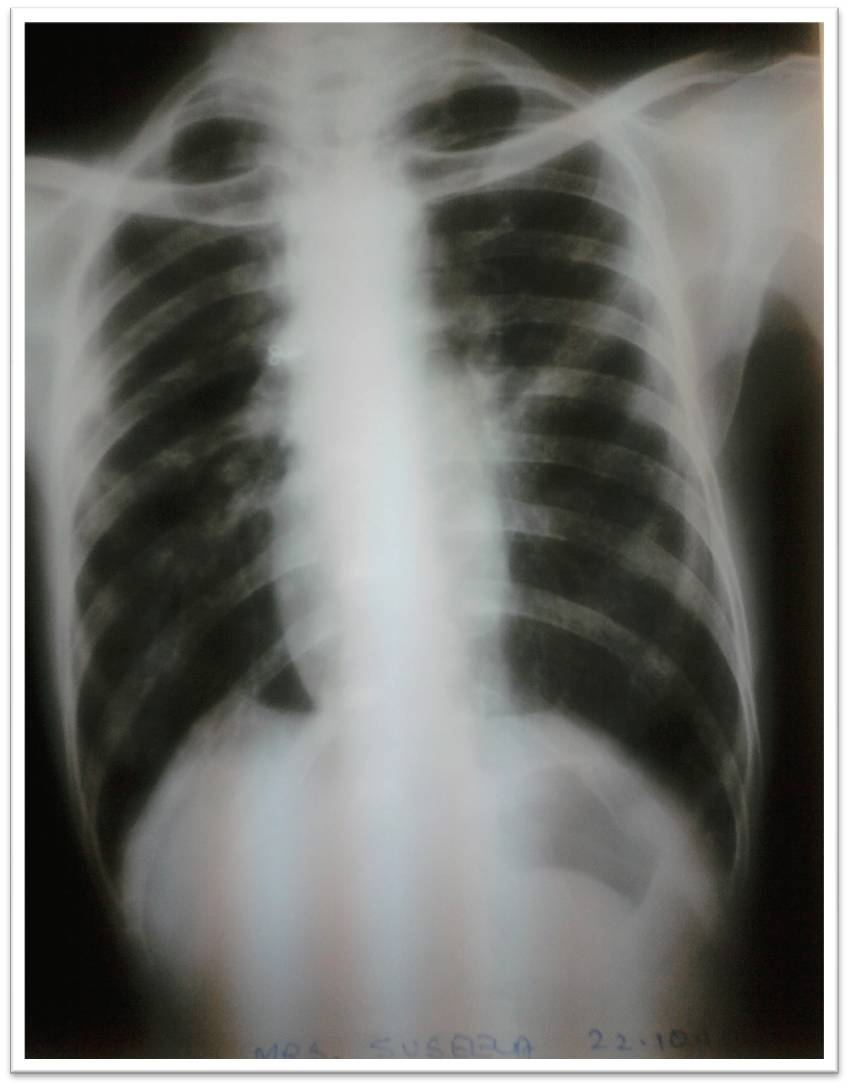
Here is a patient , 50 year old female with severe emphysema and  contracted and elongated heart.

  • Her CT ratio was 30% .Note wide rib spaces and pulling up of both diaphragm by fibrotic lung
  • Note the LV apex conspicuously absent
  • LV diastolic dimension was 30mm and  systolic was 19mm
  • End diastolic volume  was critically low at 40ml .
  • She was complaining of class 3 dyspnea.It was primary attributed to COPD but the contribution of under filled LV and resultant diastolic dysfunction is often overlooked.


Read Full Post »

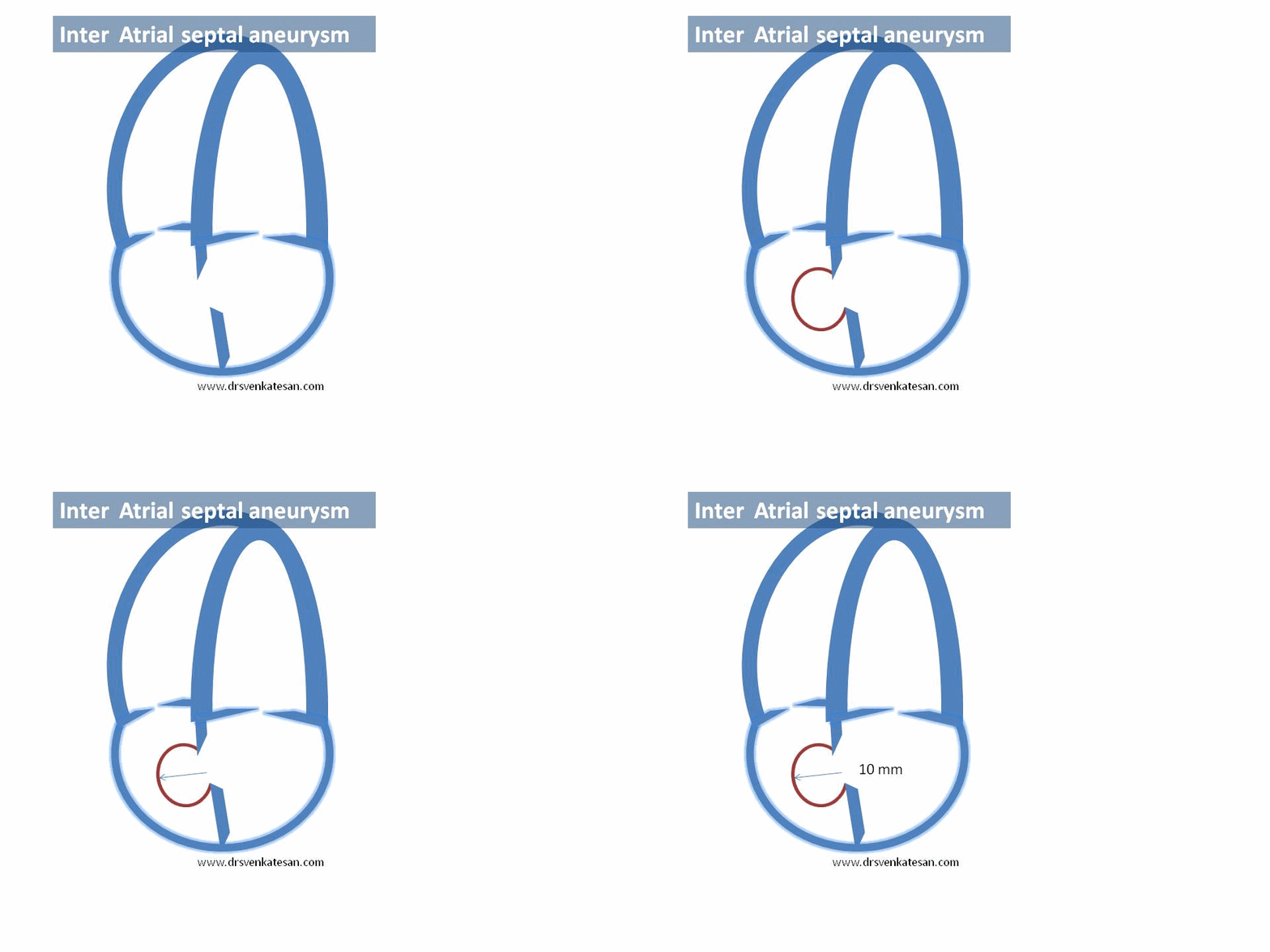
This is a relatively common abnormality of IAS. It is  often observed  as  IAS bulging  into left  or right atrium  in routine echocardiogram.If this happens without  atrial hypertension it is termed as IAS aneurysm .

This is due to valve of foramen ovale bending into the RA/LA*  cavity for various distance. By definition , the radius of curvature of  the bulge should be more than 10 mm to label it as IAS aneurysm.

*Bulging into RA more common

Click on the Image to see the animation

General features

  • Mostly a benign entity.
  • More often observed  in  association with PFOs or ostium secundum ASD.
  • When occurs in isolation does not result in any shunting across it
  • The septal bulge can be static or  dynamic . It could swing  into LA, RA, and back to LA or vice versa.
  • Anatomically 5 types are proposed.
  • Multiple fenestration in the aneurysms have been noted.
  • Aneurysm  formation may aid in spontaneous closure of ASD.

Clinical  implications

  • IAS aneurysm tend to aggravate  stasis of LA  blood flow and predispose to minute LA clots and systemic thrombo embolism .
  • IAS aneurysm can act as an arrhythmic focus , generating focal atrial tachycardias.
  • A non ejection click  may be occasionally heard as  the IAS aneurysm  bulges and tenses within LA/RA cavity .

Reference


1 . Olivares -Reyes A, et al. Atrial Septal Aneurysm: A new classification in 205 adults. J Am Soc Echocardiogr
1997;10:644-56.

2. Longhini C, et al. Atrial septal aneurysm: echocardiographic study. Am J Cardiol 1985;56:653-67.

3. Gondi B, Nanda NC. Two-dimensional echocardiographic features of atrial septal aneurysm. Circulation 1981;63:452-57

4. http://www.fac.org.ar/revista/00v29n4/congreso/premio3.PDF

Read Full Post »

Answer : Peripheral cyanosis  reduces or disappears  , while central cyanosis persist.

This is how , 99% of cardiology fellows answered in one of my  classes ! And they were quoting few  references for it .

Is that correct ? If so , what is the mechanism  of  oxygen response ?

Comments welcome . Discussion will start soon .

Read Full Post »

During  clinical examination of cyanotic congenital heart disease(CHD) ,  the major  task is to differentiate conditions with reduced  or increased pulmonary blood flow .

When a child with  CHD  is presented in clinical examinations , students are often asked to arrive at  the diagnosis  from history , physical examination before going in for ECG, X ray  or  echocardiography.

History,  surprisingly can  suggest  the  correct diagnosis in many (Most ?)

Reduced pulmonary blood flow is often associated with

  • Cyanosis   appearing with  /or worsening with   exertion*
  • Hypoxic spells.(Almost always occur in reduced pulmonary  blood flow )
  • History of squatting( Majority in reduced pulmonary flow)

Relief  of dyspnea   by assuming squatting position  convey   important hemodynamic information. It implies  there is significant reduction in pulmonary blood flow in standing posture , that  gets corrected  in the squat position.For squatting to improve pulmonary blood flow there must be a communication between right and left heart .This is most often due to a large VSD, rarely an  ASD .

Related article : How squatting relieves hypoxia in TOF ?

*Note :  Cyanosis  is  not  specific for reduced pulmonary  blood flow. In fact , simple reduction in pulmonary blood flow per se , cannot result in significant cyanosis .There need to be admixture /or right to left to shunt to produce cyanosis .Cyanosis in  pure admixutre states like TGV, Single ventricle , Common AV canal , Common atrium TAPVC,  are less Dependant on the reduction of  pulmonary  flow. In these situations RVOT obstruction if  present  will aggravate the baseline cyanosis.

Examination

Apart  from direct evidence for reduced pulmonary blood flow , lack of evidence for increased pulmonary  flow could  often mean ,  we are  actually  dealing  with  reduced pulmonary blood flow.

The following are the clinical clues to suspect  reduced pulmonary blood flow.

  • A quiet precardium*
  • A inconspicuous pulmonary component of S 2
  • Generally if  S 2 is well split  and both components are well heard it is highly likely the  pulmonary  blood flow is not reduced.
  • Lack of  pulmonary  arterial pulsations
  • Absence of mid diastolic  flow murmurs  in AV valves
  • Presence  of continuous murmur in a patient with cyanotic CHD almost always mean   reduced pulmonary flow and the lungs are perfused by alternate arterial collaterals (MAPCA)

* A silent  heart is the hall mark of Tetrology of Fallot which constitutes 80% of all CHD with reduced pulmonary blood flow.

Read Full Post »

What we know about CRP . . .

  • It is an acute phase reactant.
  • Secreted mainly in liver.
  • It is a marker for systemic inflammation.
  • Hs CRP more than 1 -3 mg is significant

What we think ,  we know . . .

It is a direct marker for increased risk of CAD.

Reducing CRP levels reduce CAD risk  and vice versa .

What we definitely do not know . . .

Does CRP damage the coronary  endothelium ?  Or  Is it secreted  from the inflamed plaque ?

How statins reduce CRP ?

How can you differentiate cardiac origin of CRP from peripheral origin ?

Fibrinogen levels  tend to raise in non cardiac CRP elevation .

What are  the commercial interest in this molecular test   ?

Hs CRP is  being proposed  as a screening test  for  detecting high risk CAD ,   to enable it  for  mass marketing . For drug companies  developing a  drug is huge task as  tight regulations  are vigorously pursued. While getting  clearance for  a   biochemical   investigation   is  a much easier task,  as it does not involve  patient safety or  ethical issues .

So, one of  the major studies  on statins  ,  suggested   a major role ,  for  estimation  of  Hs CRP  to identify high risk subsets among  those with normal LDL levels.  This study  many academicians felt,  was  aimed to promote  this investigation .  Care takers  should be aware  of the motives behind  the so called  global war against CAD . Many such  interventions could be  entirely commercial . This is a dangerous trend  ,  the medical profession  is facing .  It could  be more damaging than the ubiquitous atherosclerosis !

What we should know ?

Final message

  • C reactive protein is  nothing more than a  new generation ESR !
  • It  may  not have any specific value in a given individual to predict / not predict  a cardiac  event  .
  • The only role could be to identify  subset of  population who may be at higher risk of developing inflammatory  CAD.
  • But it  is largely a hype ,  to call it as a landmark  triaging  molecule  for  preventing  CAD is not acceptable to many.
  • The meta analysis  on CRP in Lancet  2010  was published  . I am afraid ,  it has not answered the elusive question  : What is the utility value of Hs CRP in the  clinical cardiology and preventive cardiology  ?

What we need to know is ,

  • Avoiding  junk  food,
  • Good physical activity,
  • Quitting smoke ,
  • And  a relaxed mind  (All of them come free of cost ! The first one , in fact  pays you !)

Is the best way to prevent CAD epidemic !

One need not go behind this fancy molecule  . . .

Read Full Post »

The following  questions  are asked frequently  in clinical cardiology classes on congenital heart disease.

What are the chambers that dilate in ASD ?

Right atrium and  right ventricle .

What are the chambers that dilate in VSD ?

LA, LV , ± RV,

* Image courtesy Wikipedia

While there is no controversy about ASD, The chambers that enlarge in VSD ,   is  by and large  poorly (or rather wrongly ) understood .  Whenever we  diagnose  VSD , our brain is tuned  to think  this way : Blood  will be  shunted form LV to RV.  RV  would  handle more blood and it  should   enlarge . In reality it does not happen.

The VSD  shunts  the  blood from  LV to RV outflow*   or even directly into  pulmonary artery  .  Hence , VSD even if it is large  , does not dilate  the RV until the onset of  pulmonary hypertension and RV dysfunction sets in . It is surprising to note , even the RVOT ( The entry point of most VSD jets) does not significantly  enlarge

Importance of diastolic shunting in determining RV size in VSD

It is also important to recognise, the VSD shunt predominately occur in systole .(90% ?) In systole , the RV is also contracting along with LV  , so it’s size is diminutive  and hence RV can not be volume overloaded in  most of the VSDs however large it may be. Instead in ASD , there is diastolic overloading   involving  all regions(Inflow, Body, Outflow) of  RV   .This enlarges the RV   in a classical  fashion.

Significance of  anatomical location of VSD and RV enlargement

When VSD shunts blo0d into RA as in Gerbode defect it is bound to enlarge RV (like ASD) as there is diastolic volume over load of RV.

In some large muscular VSD , RV body can be  volume  overloaded. This is because the VSD and RVOT are well separated geographically .The  blood that is coming in from LV can enter the pulmonary artery , only in the next cardiac cycle  . So , RV needs to accommodate the shunted  blood till the next beat. Hence RV enlarges.

What are the situations RV can enlarge significantly in VSD ?

  • Rare VSDs of inflow or large muscular VSDs.
  • Eisenmenger syndrome.
  • Tricuspid regurgitation
  • Pulmonary regurgitation
  • Associated RSOV.

Final message

Right ventricle   does not enlarge  significantly in uncomplicated  VSD .This is in contrary to the  traditional teaching and understanding  for  many years. It enlarges only in specific sub types of VSD  or  after the onset of PAH and cardiac failure .

Coming soon

Katz-Wachtel phenomenon is not  due to  bi -ventricular hypertrophy !

Read Full Post »

« Newer Posts - Older Posts »