Feeds:
Posts
Comments

Archive for September, 2025

ASD and PDA are almost taken over by cardiologists with device closure. (Including SVC-ASDs) Now VSD is the next target, The pediatric cardiologists are closing in, to conquer it also, except a few large ones and doubly committed VSDs or the ones with poor aortic rims.

Antegrade or Retrograde

The choice of approach between antegrade vs retrograde is gradually getting blurred. The term retro and antegrade often confuses. (At least for me) It may be preferable to use Venous and arterial approach for Retrograde vs Antegrade.
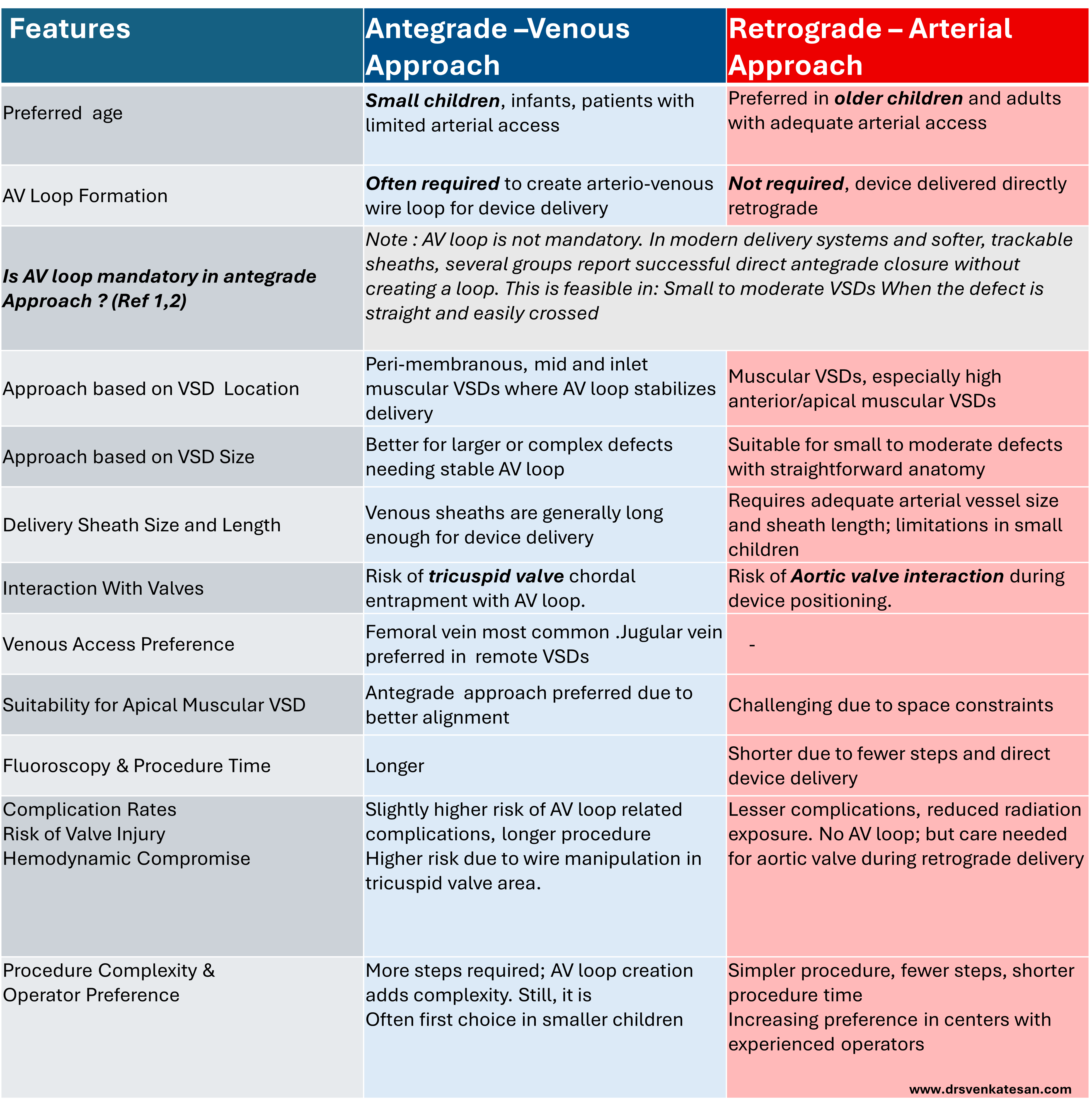
Is AV loop mandatory in antegrade venous approach ?

AV loop is not mandatory. In modern delivery systems and softer, trackable sheaths, several groups report successful direct antegrade closure without creating a loop. This is feasible in: Small to moderate VSDs When the defect is straight and easily crossed .The popular series from Dr .K.Sivakumar & team from Madras medical mission Chennai, India (Ref 1)
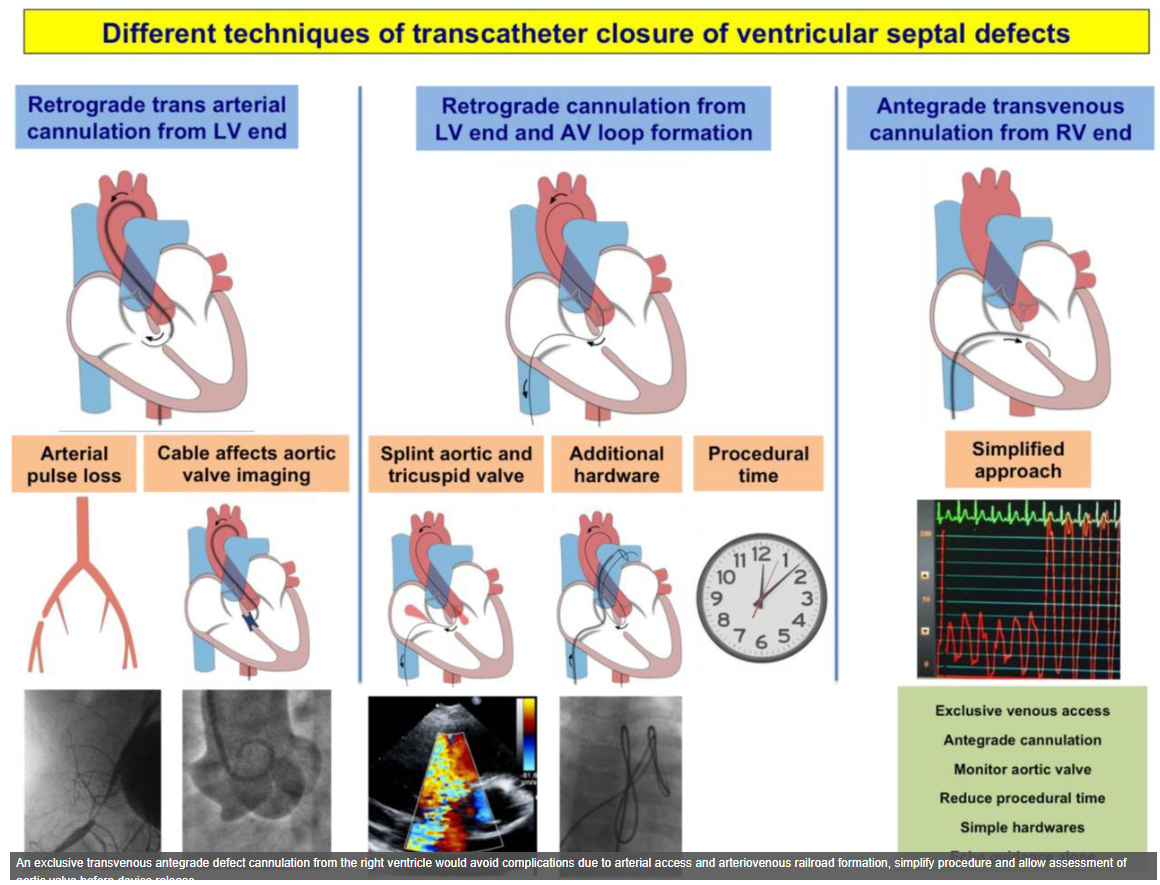
Image source :Ref 1

Reference

  1. Sagar P, Thejaswi P, Garg I, Singh D, Pradeep A, Dutt N, K.Sivakumar et al. Transcatheter closure of ventricular septal defects by exclusive transvenous antegrade cannulation from the right ventricle: a 5-year retrospective cohort study. https://doi.org/10.1101/2024.05.28.24308078.
  2. Mehmood DA, Akhtar DK, Kazmi DSSH, Sultan DM, Sadiq DN, Ahmed DA, et al. Transcatheter device closure of perimembranous ventricular septal defect from right ventricular approach without arteriovenous loop. Pak Armed Forces Med J. 2019 May 9 [cited 2025-Sep-19];69(Suppl 1):S5-10. Available from: https://pafmj.org/PAFMJ/article/view/2806pafmj.org

Annexure

Dedicated VSD devices

DeviceCompany / Website
Amplatzer Muscular VSD OccluderAbbott – Amplatzer Muscular VSD Occluders product page (cardiovascular.abbott)
Amplatzer VSD Occluders (Muscular, Post-MI)Abbott – Amplatzer VSD Occluders (Structural Heart) (Abbott Structural Heart)
Konar-MF VSD OccluderLifeTech – KONAR-MF VSD Occluder product page (lifetechmed.com)
Cera VSD OccluderLifeTech – Cera VSD Occluder product page (lifetechmed.com)
MemoPart VSD OccluderLepu Medical – MemoPart VSD Occluder product page (Lepu Medical Technology(Beijing)Co.,Ltd.)

Non-VSD Devices used off-Label for VSD Closure

These are not designed for VSDs, but can be adapted for VSD. Amplatzer Duct Occluder I (ADO I) Useful for closing large muscular/apical VSDs, especially in infants. ADO II Softer device, low-profile, often used for small peri-membranous VSDs Amplatzer Septal Occluder (ASO) Designed for ASD, but occasionally used in selected muscular VSDs. Coils (Gianturco, Cook, Nit-Occlud PDA coil) can be effective in small muscular or residual postoperative VSDs
Read Full Post »

Some times I wished, I could have become a Nephrologist. This thought comes whenever we face a patient with unexplained dyspnea, normal EF, and heart size. Am I missing a HFpEF? The heart is not like the kidney, which injects the all too familiar BUN & creatinine into blood promptly (with a high degree of reliability). Even a medical neophyte can diagnose renal failure just like that.

Cardiologists don’t have that luxury. Of course, we do have NT-Pro BNP recently , which nowhere comes near to renal failure markers . Still, many of the youngsters are tuned to believe NT-Pro BNP is equivalent to creatinine for the heart. Remember, biochemical diagnosis is always an adjunct and never confirmatory This is because NT-Pro BNP is universal cardiac stretch molecule , that can elevate in big list of conditions. Similarly , to appear in the blood, there can be a time lag unlike creatinine. (Read the universal definition of heart failure below).

“The universal definition of HF , defines HF is a clinical syndrome with symptoms and/or signs caused by a structural and/or functional cardiac abnormality and corroborated by elevated natriuretic peptide levels and/or objective evidence of pulmonary or systemic congestion”

* Though , a key link word and /or is used widely, unfortunately , the definition fails to reiterate clinical signs will prevail over biochemistry at any given point of time. It has inadvertantly ? given some over wiegtage to biochemistry.

Also, the new definition has gotten rid of hemodynamic, metabolic, and chamber-wise RV, LV classification systems. I think the committee wanted to remove the clutter of terms. In a broad sense, it’s good. By using the word structural, it includes valve defects or pericardial pathology into the basket of HF.


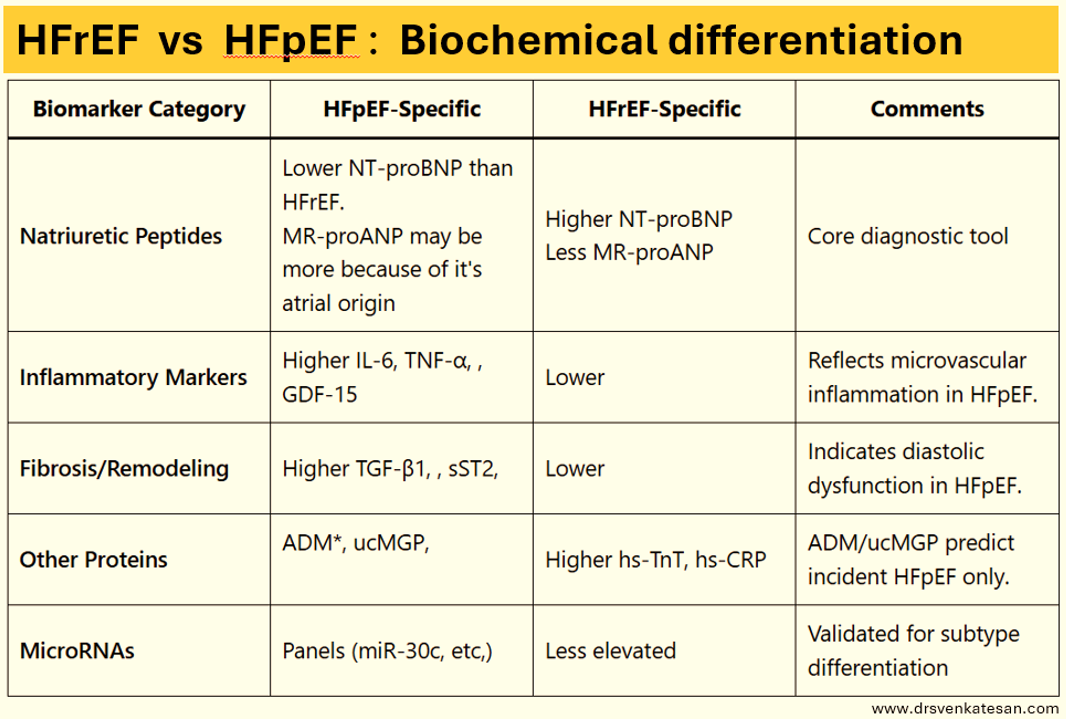
Now getting deeper, can we differentiate differentiate HFpEF from HFrEF, based on biochemical markers ?

Differentiating HFpEF and HFrEF is vital but looks complex. One may say it is not really complex. Funnily , the purpose of the above chart becomes redundant if the EF of 50% has already differentiated the two conditions . what is the big deal about this table ? It is purely for prognostic and etiological purposes.

Summary

NT-proBNP is typically lower in HFpEF due to reduced ventricular wall stress, while MR-proANP which originates in the atria are expected to be more in HFpEF . Inflammatory and fibrotic markers and MicroRNA panels are high and more specific to HFpEF.

*Growth differentiation factor-15 . **ADM -Adrenomedulin a biomarker for arterial stiffness and arterial calcification . ***ucMGP refers Uncarboxylated Matrix Gla Protein. MGP to function as a calcification inhibitor,

Final message

Recognizing and confirming HFpEF, itself can be considered a partial clinical success. (Since more often it is missed) As mentioned earlier, biochemical differentiation is largely an academic exercise but gives us an idea of systemic pro-inflammatory and local fibrotic status.

There is a rough pathological rule of thumb (Note the word rough again). HFpEF is more often a systemic condition where the heart is affected. (In contrast to HFrEF where the pathology of the heart is central, and all systemic features are secondary to it.) Treatment options for heart failure have improved overall .However it is more limited in HFpEF as Inotropic agents are redundant here. Prognosis is highly variable and not necessarily better.

Reference

1.Ho JE, Lyass A, Lee DS, et al. Circulating biomarkers of incident heart failure with preserved ejection fraction: the ARIC study. JAMA Cardiol. 2018;3(5):415-423.

2.Zile MR, Desantis SM, Baldauff N, et al. Biomarker-guided risk assessment for the diagnosis and treatment of heart failure with reduced ejection fraction and preserved ejection fraction. JACC Heart Fail. 2021;9(12):893-903.

For Fellows . How do you diagnose HFpEF ?

  1. Clinical features of heart failure (Apply some criteria , ex-Framingham )
  2. Some evidence of elevated LV filling pressure at rest or exercise (Diastolic stress test)
  3. Normal LVEF > 50% (Must ensure this should not be a recovered and improved EF from HFrEF condition)
  4. NT-ProBNP -Supportive

Read Full Post »

A. The Aortic Radiologist

B. The Principal operator of TAVI

C. The co-operator or the proctor

D. The device type, behavior & destiny

Answer : A. The radiologist, (rather the soft-warist ) tell us best landing zone in the pre procedure work up taking into the account of shape, size, leaflet morphology ,3D analysis of aortic root, and calcium distribution. He plays a vital role. Though B, is the logically correct answer, ie the expertise of the primary Operator it is not to be. Considering the complexity of the anatomy, device, and momentary longitudinal and circumferential alterations in radial forces, In reality, the answer is D.

Evidence? No one has tested so far the true intended landing zone and the final one.


One may argue , the question need to be reframed as, What are the factors that decide the landing zone in TAVI ?

Though deployment is under the control of primary operator , the valve often defies operators’ hand commands and decides to home in its own place of comfort and peace adjusting to the complex anatomy around. It never bothers about the consequences .The unpredictability of calcium crystals, the annular tensile strength, the distorted native leaflet and the blind plastering against the aortic wall all are responsible for the complications. One less talked dynamism of aortic root which finetunes micro adjustments of the valve. Para valvular leak is primarily determined by either excess (or lack )of this modulatory forces.

Following are some of the crucial factors that determine landing zone.

Anatomy of the Aortic root

 The ascending aortic curvature and angulation is a major factor of the TAVI landing site. , stretching from the aortic annulus to the proximal ascending aorta. This anatomy may vary depending on the patient and affects different types of valves (such as balloon-expandable or self-expanding). For instance, higher aortic angulation (Ex – a horizontal aorta) can influence the final depth of valve implantation, especially for self-expanding valves with longer stent frames.

The invisible radial & longitudinal forces

The resistance offered by the distorted native valve and its delicate balance with the instant radial force of in case of balloon expandable or the gradual built in force of self expandible balloon system. Apart from the radial forces. the longitudinal deformation forces in long axis as the stent expands , in the last few seconds determine the final residence of the valve.

Valve Type and Device Design

The intended implantation depth is usually planned based on the valve type—balloon-expandable valves have a short stent frame and are deployed differently than self-expanding valves with a taller frame. More precision is required in balloon expandable valves. This is because the anchoring mechanisms and the metallurgy is entirely different between the two.(SE-TAVI uses Nitinol frame, and it has wide contact area so more stable ,)

Intra-Procedural Adjustments: 

The final landing zone is also influenced by the need to avoid complications such as valve migration, aortic regurgitation, and coronary obstruction.

Final mesage

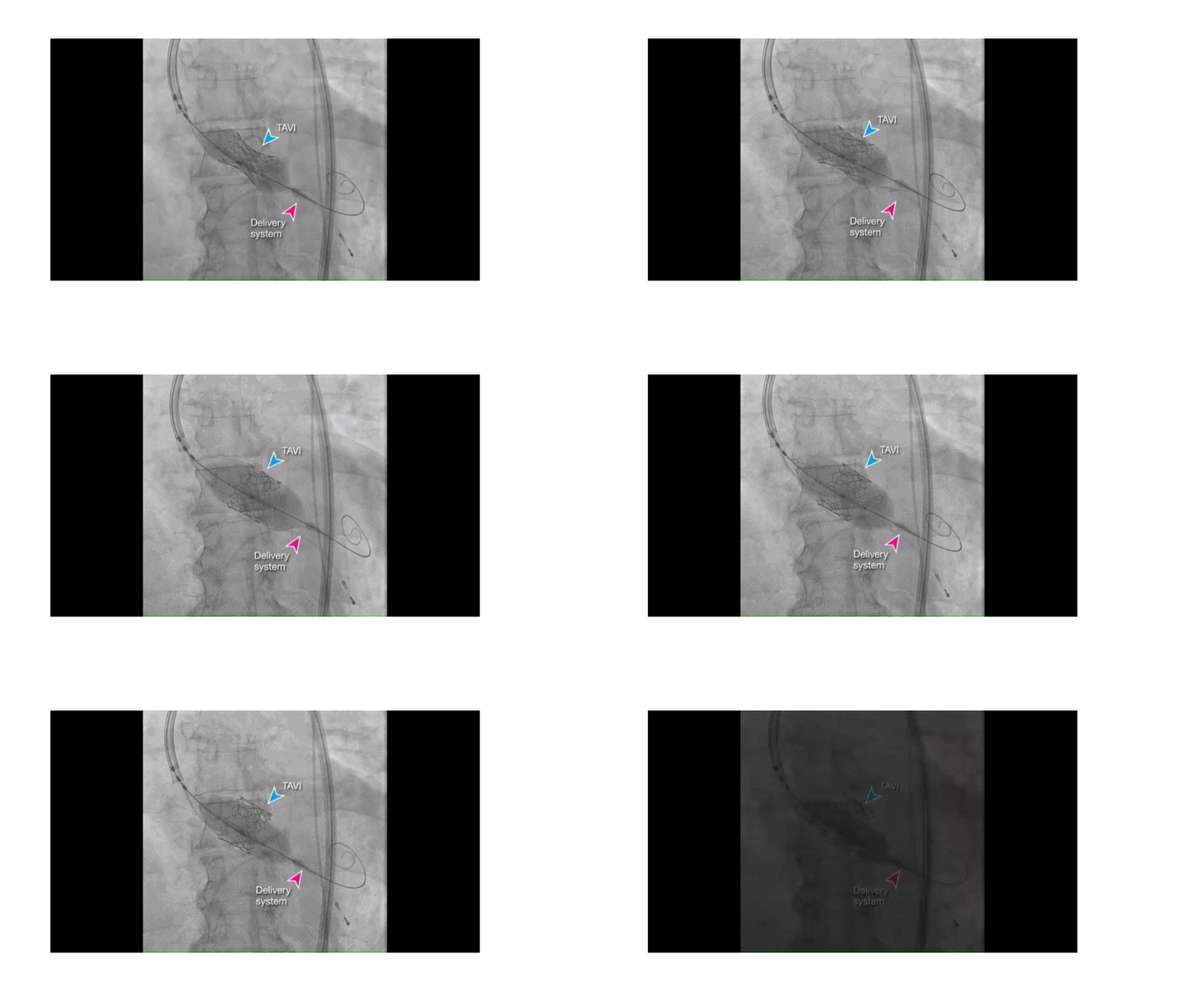
Some times, TAVI landing looks like SpaceX Dragon docking with a space station. Extreme precision is required to avoid complications. The bulk of the complications are due to inappropriate landing (too high or too low). Fortunately, aortic annulus exists in multiple transverse planes; patients can often tolerate some geographical miss. Still even a few mm error can crash the patient as well as our reputation.

Postamble

What are the chances of immediate post -procedural movement and late migration of the valve from the landing site in TAVI ?

The chances of immediate post-procedural movement and late migration of the valve from the landing site in Transcatheter Aortic Valve Implantation (TAVI) are generally low but represent serious complications when they occur. Incidence is up to 7.5%

Reference

https://www.frontiersin.org/journals/cardiovascular-medicine/articles/10.3389/fcvm.2022.928740/full

* Video source and courtesy

Read Full Post »

There is no simple answer. We hide behind two terms, adaptive and maladaptive RVH. While the former is beneficial for an unknown period of time, the latter rapidly goes into a downward spiral.

  • Adaptive RVH (A-RVH) occurs when the RV responds to chronic pressure overload by increasing muscle mass concentrically. This adaptation maintains RV contractility and cardiac output despite increased pulmonary vascular resistance. RVH is typically concentric with less chamber dilation, preserved coronary perfusion,
  • Mal-adoptive RVH (M-RVH)occurs If afterload is excessive, prolonged and the RV cannot maintain sufficient contractile function . For some unknown reason, in M-RVH, the impact of PA pressure is not uniform the chamber dilates asymmetrically this leads to wall stress increase, fibrosis, ischemia, and contractile failure.

I am unable to find the exact incidence of the above two entities. In COPD, it is more adaptive; in cardiac conditions, it is more maladaptive. A new thinking is that the LV plays a significant role in determining RV function, as both are interdependent. (Both arms of Bernheim effect)

The third entity is acute RV dilatation to sudden elevation of PA pressure as in PE. (Recall the 60/60 sign) Though we think it is purely a hemodynamic response, there are reasons to believe an ultra-rapid predetermined genetic response is also possible by recruiting messenger RNA and growth factors.

*It is worthwhile to note the complexity of RV dynamics. Chronic RV dilatation, (without pressure load)need not be a major pathology, as they are meant to dilate with excess venous return (We also see ASD patients live their entire lives with baggy right ventricles.)

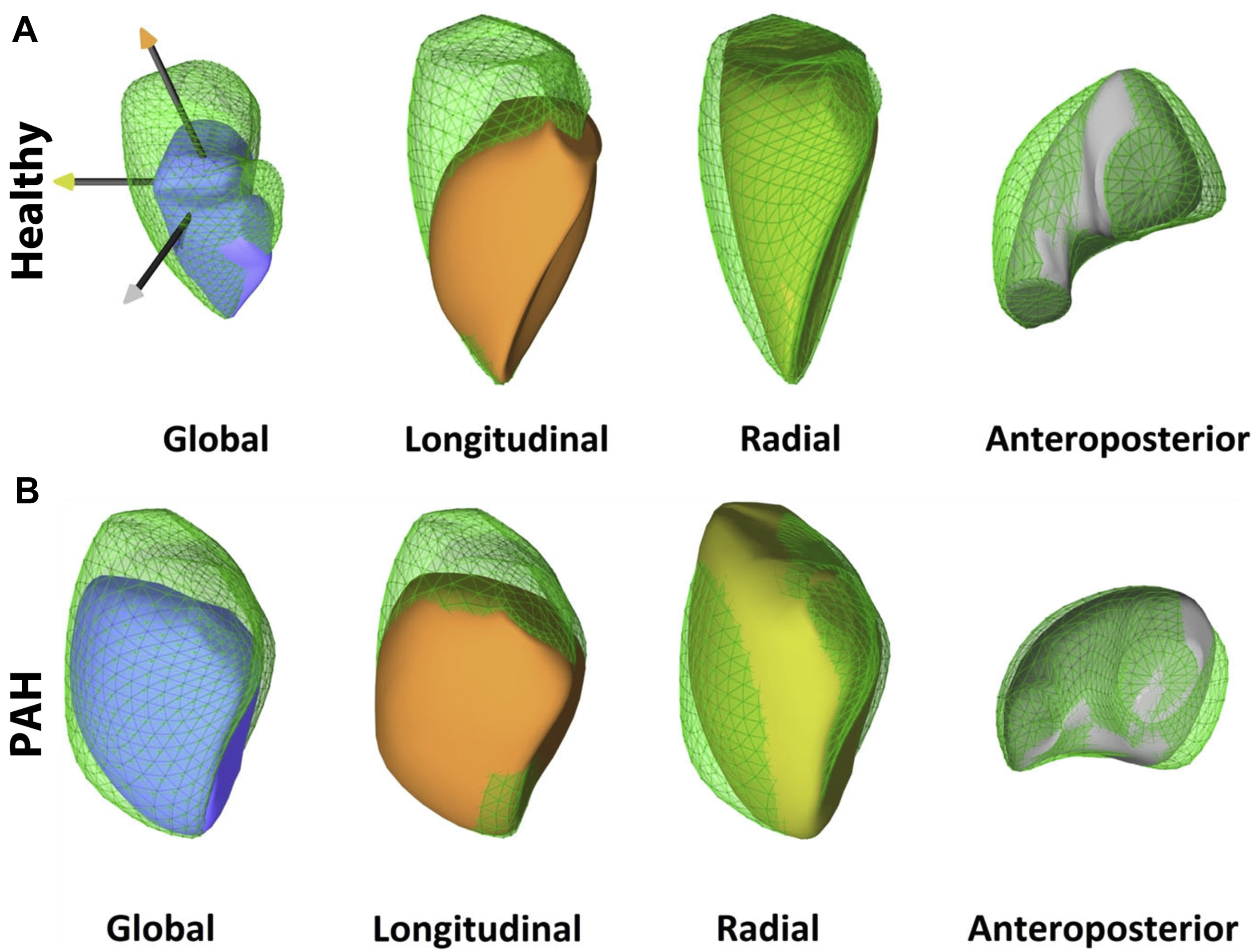
Various shapes of RV in PH .Image source : Llucià-Valldeperas A, de Man FS, Bogaard HJ. Adaptation and Maladaptation of the Right Ventricle in Pulmonary Vascular Diseases. Clin Chest Med. 2021 Mar;42(1):179-194.

Mechansims of adoptive RVH

The following mechanisms are believed to be responsible.

  • Concentric hypertrophy with preserved contractile function involving mainly fast myosin heavy chain (MHC) α isoform expression.
  • Metabolic remodeling with a switch to glycolytic metabolism but preserved energy supply through compensatory mechanisms like increased GLUT-1 expression.
  • Maintenance of angiogenesis and oxygen supply through vascular endothelial growth factor (VEGF) signaling.
  • Self restricting fibrosis and balanced extracellular matrix remodeling.

Is there any Clinical and echocardiographic clues to adoptive RVH ?

Of course yes. But all are common sense related.

  • Patients with adaptive RVH often maintain higher exercise tolerance.
  • Elevated levels of BNP or NT-proBNP correlate with maladaptive RVH.
  • In echocardiography , Adoptive RVH is characterized by increased RV wall thickness (>5 mm) with relatively preserved RV chamber size and function. TR is less common as shape is preserved and annular distortion is minimal.

How long the Adoptive RVH phase can lasts ?

Law of Laplace states, wall thickness will reduce the after-load, balance out the RV-PA coupling mis match. How long this can last? A wild guess is that it can last even up to a decade. Studies in conditions like surgically repaired congenital heart disease and Eisenmenger syndrome have shown adaptive RVH with preserved contractility and normal chamber size for many years. However, this phase eventually transits to maladaptive state.

Can we Induce adaptive RVH as a therapeutic measure ?
As of now , this possible only on paper .Research should target therapeutically, controlled pressure overload and neurohormonal modulation can promote beneficial RV hypertrophy. Strategies to support favorable metabolic pathways, enhance angiogenesis, and reduce oxidative stress are under investigation

Final message

Whether the RV is going to fight or flight the raising afterload of pulmonary HT is not in our hands. It is pre-programmed and switches are controlled by destiny. We can only do whatever, to lower the PA pressure and PVR by treating the primary cause if any. Though, the pharmacological strategies in PH has shown tremendous progress in recent times , the behavior of RV will define the outcome.

Reference

1.Khassafi, F., Chelladurai, P., Valasarajan, C. et al. Transcriptional profiling unveils molecular subgroups of adaptive and maladaptive right ventricular remodeling in pulmonary hypertension. Nat Cardiovasc Res 2, 917–936 (2023). https://doi.org/10.1038/s44161-023

2.Ren X, Johns RA, Gao WD. EXPRESS: Right Heart in Pulmonary Hypertension: From Adaptation to Failure. Pulm Circ. 2019 Apr 3;9(3):2045894019845611. doi: 10.1177/2045894019845611. Epub ahead of print. PMID: 30942134; PMCID: PMC6681271.

3.Llucià-Valldeperas A, de Man FS, Bogaard HJ. Adaptation and Maladaptation of the Right Ventricle in Pulmonary Vascular Diseases. Clin Chest Med. 2021 Mar;42(1):179-194. doi: 10.1016/j.ccm.2020.11.010. Epub 2021 Jan 12. PMID: 33541611.

4.Magoon, Rohan; Dey, Souvik; ItiShri, ; Kashav, Ramesh. Evolution of Ventricular Interdependence Concept: Bernheim, Reverse-Bernheim Effect and Beyond!. Journal of the Practice of Cardiovascular Sciences 6(1):p 90-91, Jan–Apr 2020. | DOI: 10.4103/jpcs.jpcs_55_19

Post-amble : How the new age interventions help tackle the RV failure

TR clips, and tricuspid valve reconstruction, either surgical or percutaneous, RV assist devices are THE interventions done in a failing RV before the last resort of heart/Lung transplantation.

Read Full Post »

Who are we ?

Where are we from ?

What is the purpose for us , being the part of this world ?

Why time , space, mind are almost one and the same ?


Spend few minutes here in this video. Not every one is blessed to reach the space station .But thanks for this effort by Sen , we can see the astronauts eye view of our lovely planet . Do you see any unrest ? How many of you are seeing 5 million life forms here, other than human beings ?

As cardiologists , we are struggling round the clock ,to salvage even few milligrams of myocardial damage. Meanwhile, how could the world be a mute spectator, to all those fights for silly things in life , and allow, war, violence, poverty, greed & commerce, take more lives than diseases ? It is very very clear , doctor’s role in alleviating human suffering is far less than, what we Imagine.

To know more about Sen click here

Read Full Post »

There has been recent increase in number of women undergoing echocardiography, apparently for ruling out any hidden heart disease. In some parts of India it reached epidemic proportions that raised some concern. The folllowing post was written about this recently in this site , which evoked mixed reactions.


Now, in 2025 the new ESC guidelines for pregnancy and heart disease is released. Let us see what it says about this . Being pregnant never makes a women eligible for an echocardiogram. (No guidelines ever supported it ) It is true, cardio vascular morbidity is increasing in pregnancy as we have moved on from traditional maternal risks. May be, the new guidelines suggest we can do Echocardiography more liberally , but definitely not as routine .Please note ,it is still backed up by that mystery 1-C evidence base.

The three key words used in the guideline are

In any pregnant women

1.Unexplained cardiac symptoms

2 New cardio vascular sign

3. New cardio vascular symptom

What about women with pre-existing heart disease ?

I think, they could have included these indication in the same table. Any pregnant women with a known history of past heart disease, with or without symptoms, must undergo a detailed Echo evaluation to know the current hemodynamic status. Also, Echo should be used liberally in all in all women at high risk for cardiac morbidity (Like PIH, GDM, Obesity elderly primi, etc)

Final message

Echocardiography is simple and accurate methodology to rule out structural heart disease in pregnancy. It has great potential to detect hidden heart disease. But, it should be judiciously. Routine echocardiography to rule out a cardiac condition is becoming a non professional fad in many parts of our country What is more ironic is this practice is rampant in low and middle income countries where financial resources are scarce. It is a clearly a pathway to avoid .Let us follow the guidelines as for as possible.

Postamble

What could be the new symptom or sign in pregnancy ?

1. Mild exertional dyspnea , which was not there before . 2.A grade 1 systolic murmur across the RVOT or rumble in AV valve ? This will make every other patient (Then may be 50% of 25 million pregnancy that occur in India every year) .Still there is room to misuse the guidelines .I would argue the committee to , address the critical importance of clinical assessment and these guidelines should instill confidence to ignore physiological symptoms.

Counterpoint( Expert comment in real time from an Obstetrician)

A leading obstetrician, practicing In Chennai says she is sorry to say this. It seems many of us have lost confidence in clinical skills. In this technological era, we are unable to rely only on clinical opinion. So, echo is an easy way out. Also we are worried about legal aspects of potential miss.

I don’t know where the problem lies. In fact, one of my colleague cardiologist said , though they are  confident enough to diagnose a normal heart in pregnancy by clinical means ,the referring doctor (obstetrician) often Insists an Echo.

We also know how a routine Echo might detect some innocuous entities like MVPS, a trivial TR, a dilated ventricle, a mild pericardial effusion, a small PFO, a bicuspid aortic valve, and create huge anxieties in our patients. Still… we do it to relieve ours at the cost of patients.

Reference

https://academic.oup.com/eurheartj/article-lookup/doi/10.1093/eurheartj/ehaf193

Read Full Post »

Breaking the science of Heart failure :

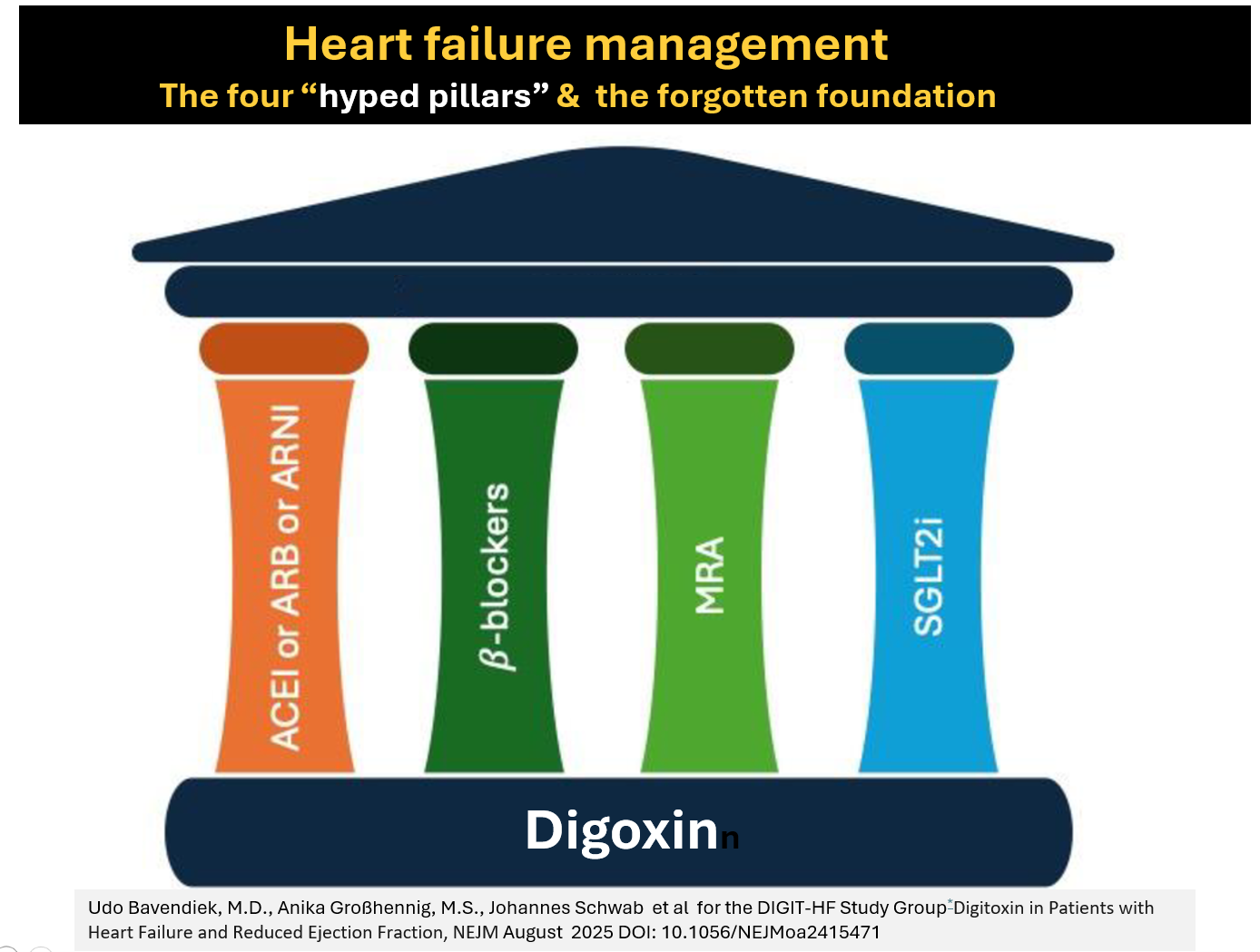
Heart failure (HFrEF) remains a gigantic clinico-pharmacological entity. In the last decade, pharmacological strategies to tame HF turned out to be a multi-billion global block buster. Industry constructed multiple evidence-based pillars to lift the drowning patients from HF. To be precise, there were four (Some wanted to insert a fifth pillar : Riociguat a sensitizer of soluble guanylate cyclase (sGC) which play mimicry with Nitic oxide ). All sounds good and right on paper .

But, what was hidden from the public was, that they were built displacing the foundation on which heart failure was managed for centuries if not decades. Yes, it’s about the foxglove-derived grand old drug Digoxin, a Na+ /K+ATPase blocker in the myocyte cell membrane, that exchanges calcium for stable Inotropy. Digoxin is only positive Inotropic with vago -mimitic action that calms the heart. Though the efficacy to safety margin is low in terms of pro arrhythmia , if used properly Digoxin had been a key drug in HF especially if AF is associated. Over time, we have developed RASS sympathetic blockade system in various forms. One poorly done study in 1990s, DIG-Trail, was enough to paint black on the wonder drug.

Now, In 2025, it seems apparent, lack of that vital foundation might shake the pillars, built with ornamental ARNI’s and the flimsy Flozins (Which are essentially renal glycosuric agents also playing a diuretic role , in the process partly stealing the benefits from time-tested diuretics)

This post was written in this site about long back, questioning the DIG trial conclusion (Click here)

Delighted to note , the observations were ratified today.

Now in 2025, the ESC congress in Madrid, some sensible study group from Germany and France found Digoxin indeed saves lives, confirming the suspicius results of DIG trial results done in 1997.(Which claimed no mortality benafit )

The NEJM article ACC website

Back to Catch 22 situation

This time, in DIGIT -HF they used Digitoxin instead of Digoxin. Why ? again, something sounds fishy. Digoxin is the true universal generic available for a peanut price. I am not sure about the availability and price of Digitoxin. This trial is is really kick all those modern cardiologists who get humiliated to write this old drug.

Meanwhile, a near foolish argument is already on , questioning Digitoxin cannot be compared with Digoxin as the former is more stable, has a hepatic route to eliminate if HF patients are renally compromised, etc. I checked with the pharma guys. Digitoxin is difficult to get. My fear is someone may patent this new improved German Digitoxin that was used in this study. (Digitoxin -Trade Name Crystodigin)

Final message

It is glad to see Digoxin continue to defy the death sentence passed by modern day scientists. Though DIGIT-HF is a good come back, we need to allow more truths to come out from the secret scientific cupboards.

Read Full Post »