Feeds:
Posts
Comments

Archive for the ‘Cardiology – Clinical’ Category

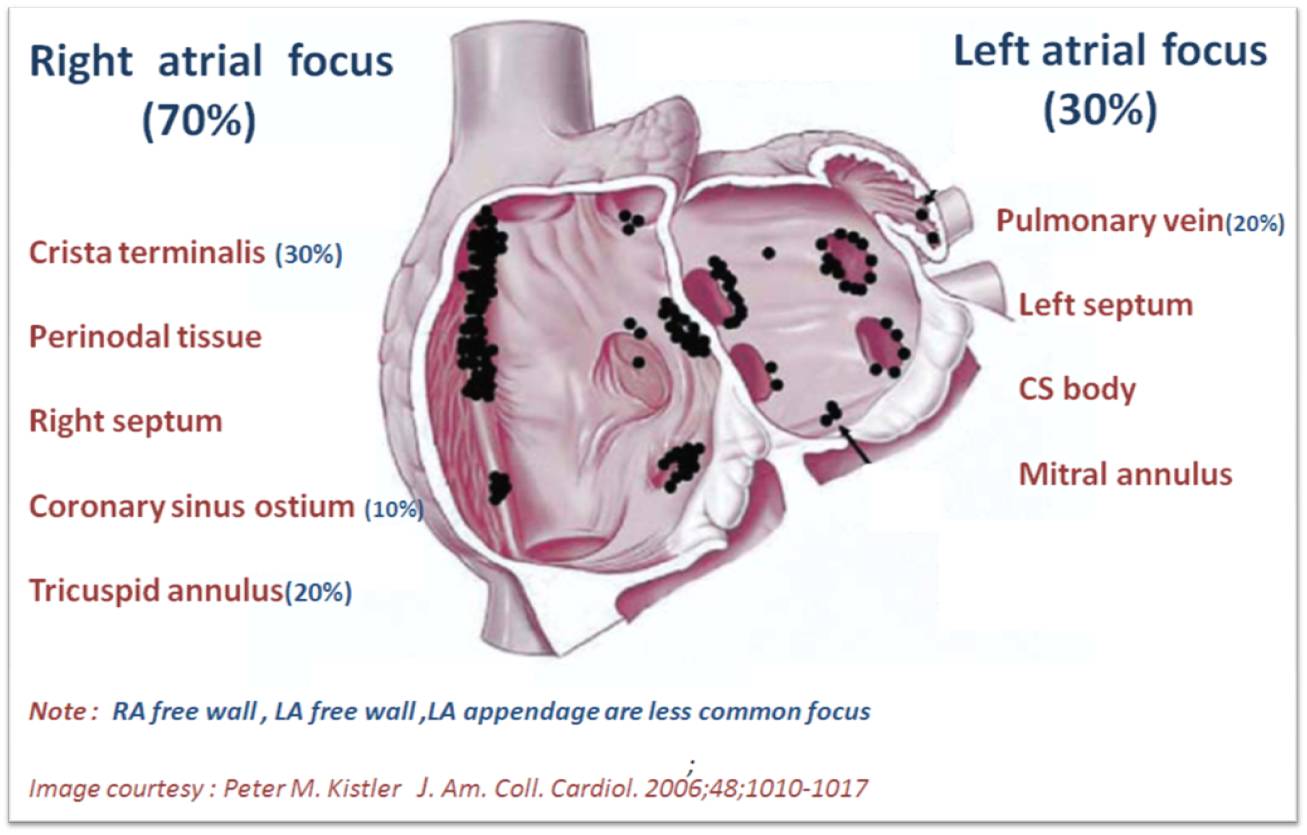
Human atria is a rough terrain infested with peaks and  troughs like the  Himalayan range . The two atria together has a minimum of ten entry or exit points . Cardiac arrhythmias are   something similar to the  uneven  earth plates  triggering an  earth quake.  Like the earth surface there are  areas in the atria  with high seismic activity !

It is now discovered there are nine vulnerable points in human atria that can initiate focal electrical activity at times of hemodynamic/ischemic/metabolic stress .

The common causes for Focal /Ectopic atrial tachycardia are

  • Hypoxic AT -COPD ( Probably the most common cause .If persistent it will degenerate to MAT- AF )
  • Structural atrial disease
  • Hypertensive heart
  • CAD
  • Valvular heart disease
  • Drug induced

Note ,  all these  vulnerable points are located either in the  junction of  an anastomosis  with a venous structure or valve or septum.

Further, these sites are often the  embryological fusion points making it still more vulnerable due to tissue defects.

Why free wall of atrium  is  a less common  focus ?

They are relatively smooth, lack ridges and joints. Unless the walls of atria are diseased  focal tachycardias are less common from these sites .

Other forms of Focal atrial tachycardias

Indian perspective  and Rheumatic atrial tachycardia.

In developing  countries  focal atrial tachycardia in rheumatic heart  differ very much from the tachycardia described above. In fact many of the rheumatic atria present straight away  to atrial flutter or fibrillation.

Pulmonary vein focus should rarely be considered in atrial tachycardia that occur in RHD.

Post operative tachycardias

Surgical scars can result in what  is called  Incisional tachycardia.(Especially after complex atrial  surgeries like Sennings, Glean/TCPC  etc )

Multi focal atrial tachycardia .

This is nothing but a focal tachycardia which tend to fire from different angles towards different targets  often lead to a chaotic atrial rhythm .  Digoxin and DC shock paradoxically aggravate this arrhytmia.

Atrial epicardium/pericardium interface as a focus

When pericarditis is the predisposing  event  then it can emanate from anywhere from  epicardial surface .

Since left atrium is only  partially covered by pericardium it is not logical to assume pericarditis related AT arise from RA epicardium.

Atrial tachycardias in congenital heart disease.

Complex atrial anomalies, SVC type ASDs, PAPVCs can  give raise to abnormal  electrical focus

Reference

An excellent original work from  Royal Melbourne Hospital, Melbourne  Australia.

A must read  . . . http://content.onlinejacc.org/cgi/reprint/48/5/1010.pdf

//
Read Full Post »

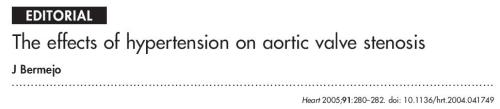
Aortic stenosis is the commonest valvular heart disease  in elderly. Severe aortic stenosis  requires early  aortic valve replacement . Severity of aortic stenosis is  best assessed by   echocardiogram. ( Cath studies are rarely indicated  now) Mean Doppler gradient across  the aortic valve (dPm) is the widely used  parameter to assess severity.Americans believe  in  a cut off value of  40mmhg  while  Europeans  want it  to be at  50 mmhg . Obviously, these  numbers 40/50   become  vital  as it determines the  critical decision of replacing the  aortic valve which carries up to 4-10 % mortality.

Even as we realize ,   Doppler gradients are so important , we also need to  know ,  how fragile  ( and  vulnerable  ! )  are the Doppler equations ,  especially when it is critically dependent on the angle , flow,  heart rate  , the LV  contractile  force  and associated MR etc. These errors are over and above the  the  technical simplification of Bernoulli equation  which ignores many accessories like viscous  friction ,  proximal velocity etc  .Mind you  . . .with this battered Doppler modality we make a critical operative decision !

Here comes  the ace . . . Shall we  term it as  as negligence  in clinical echocardiography ?

Apart from  the above factors  ,  a single  important  critical determinant of  pressure gradient across AV is the mean pressure in the Aorta itself .  The mean  LVOT gradient = LV cavity pressure -Systemic blood pressure.Echo derived gradient tells us only the pressure difference across the valve.It does not reveal how much is contributed by raise in LV cavity pressure and how much is contributed by the change in systemic pressure.

How many  cardiologists would  measure the simultaneous  blood pressure while recording LVOT  gradient in AS ?  ( To be precise it should be measured in the same cycle  )

If  Aortic mean pressure is high  as in systemic hypertension  LV pressure must raise considerably higher . The contractile capacity of LV is tested here. A hypertrophied LV  easily achieves this.  If the LV fails to elevate it’s intra -cavitory   pressure sufficiently high the LVOT gradient may never reach  the 40 /50 mmhg range  that is required to label  aortic stenosis as  severe.

Many hypertensive patients exactly experience  this situation . The left ventricle of  many  of the hypertensive patients  fail this stress test  and result in low gradient AS.  Note , this happens in spite of   having  normal EF.

The link between systemic hypertension and aortic stenosis is a complex one. The after load becomes double here.There is a strong vascular valvular interaction. The following effects  are seen.

The effect of SHT on AS

It is well known HT  initiates the Aortic stenotic  process by damaging the valve and  also  result in progression.

Transient elevation of systolic pressure  can result in increase aortic orifice , and a fall in gradient.

The effect of  AS on SHT

Once the AS becomes severe , the systolic blood pressure may be reduced. (This not a rule ) If the mechanism of HT is increased  vascular  tone (Which often is the case ) systolic BP will remain high .

Effect of AVR

Surprisingly ,  many times the blood pressure normalises after AVR.The mechanism is not known.

Role of Anti HT drugs.

Fixed vasodilators are thought to be contraindicated as sudden fall in systolic blood pressure against a fixed obstruction is detrimental.  ACEI may be tried cautiously.(SCOPE AS study )

Reference

The following are the excellent article on the topics .All provided free by the  “Heart” Journal

t


Final message

In the evaluation of  Aortic stenosis   ignorance continue to prevail over our  knowledge. The Gorlin’s  the  Hakki’s, and the Hatle’s formulas  have made the  calculation of aortic valve area  look like a   child’s  game  (Which is not !)

Referring  all patients  with a  mean gradient > 50mmhg to the surgeon for AVR (or now a  TAVI)   may be the  easiest option  for the cardiologists  (but definitely not an intelligent one ). Even  as we struggle to decode the intricacies of isolated  AS  ,  one can guess  the complexity  when SHT adds on to AS .

Understanding the hemo-dynamics in  AS in association with prevailing blood pressure is vital.  It is a more scientific way of doing  echocardiography . Every cardiologist should give their input as they encounter hypertensive patients with AS.

It  would appear  ,  an AS patient developing HT at a  later  age  and a HT patient developing AS later are two different poles in the hemodynamic spectrum.

Read Full Post »

Time is muscle .This  may sound as  an old fashioned statement now ,  for many of us. But the fact remains. Every minute following  STEMI ,  myocytes  keep  losing it’s life one by one unless , the  intervened.

The prevention of myocyte death can be accomplished by three ways

  1. By early thrombolysis
  2. By Primary angioplasty
  3. The  one  that happens naturally by a process called spontaneous thrombolysis *

* Most have a  strong belief  that the  natural forces are incompetent to lyse a  small thrombus within our coronary  arteries  ( While  , we  fully  realise   natural  forces  like  the Tsunami can wash out  the entire ocean floors  ) . Never under- estimate the force of  nature !

Balloons are not privileged !


It is widely accepted , a time window of up to 12 hours is optimal for reperfusion. Beyond that time , there is no point in reperfusing  the muscle  as   it  might have died. While ,  the majority of cardiologists agree  to this and they  promptly  refuse  to thrombolyse ,   if the patient comes  12 hours after an onset of STEMI  .They are labeled  ” late on  arrival”  and  coded  as ineligible for thrombolysis.

The moment they are labeled as ineligible for lysis , a dangerous thought process runs across  the minds of  many cardiologists. It is  possibly  the most important paradox (Shall  we call it as sense failure ? )

Such lysis ineligible  patients    become  automatically eligible for primary PCI . . . It is curious  to note , the  time window for primary PCI is also less than 12 hours is strangely forgotten.

It has become a prevalent  practice  by all unscientific means  , most  cardiologists extend  the time window for primary PCI well beyond 12 hours  , some even up to 36-48 hours.  No wonder . . . then why open artery trial (OAT) miserably failed . Even a  novice  can predict the out come when  one tries  to resuscitate the  dead muscle .

Final message

Myocardium  does not behave in a privileged  manner  during a STEMI.  It  simply does  not bother  about the way  by which  it is going to be rescued and reperfused  .All it needs   is a timely help. It can not extend its   life just because it is being rescued by a  sophisticated modalities like pPCI.

If the patient is late for thrombolysis ,  he is late for  primary PCI as well .

Please do not change the time window in STEMI  according to  our  whims and fancies . It is  an  unscientific and unprofessional  way to practice cardiology .

Read Full Post »

The review published in the prestigious NEJM seems to suggest

PCI  , the most  commonly  performed  therapeutic cardiac intervention  may  result in  more  myocardial  infarction in the community  than  the deadly atherosclerosis itself.


Can it be true in any  stretch of imagination ?

Yes , it seems so . But the only issue  is the  criteria   used to define MI  .

Comments are welcome on this article .

You won’t get the full text article free  .Try to get it from your library .It is worth the time spent  !

http://www.nejm.org/doi/full/10.1056/NEJMra0912134

Read Full Post »

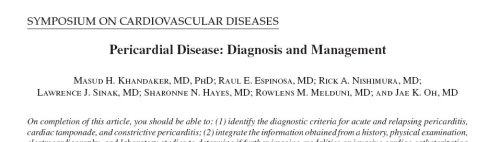
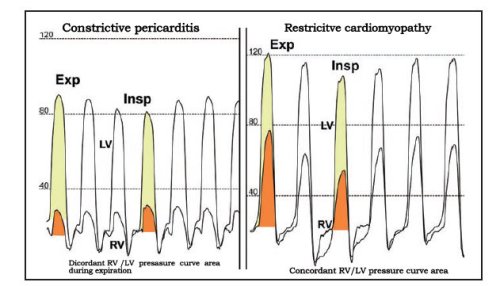
A must read for all clinical cardiologists  and fellows  .   A comprehensive review on pericardial diseases.

It also  highlights a new diagnostic parameter in cath lab to differentiate constrictive pericarditis  from  restrictive cardiomyopathy .The area subtended by RV pressure curve and LV pressure curve moves discordantly in constrictive  pericarditis   while it moves concordantly     in restrictive  cardiomyopathy

Source : Mayo Clin Proc. 2010;85(6):572-593


Read Full Post »

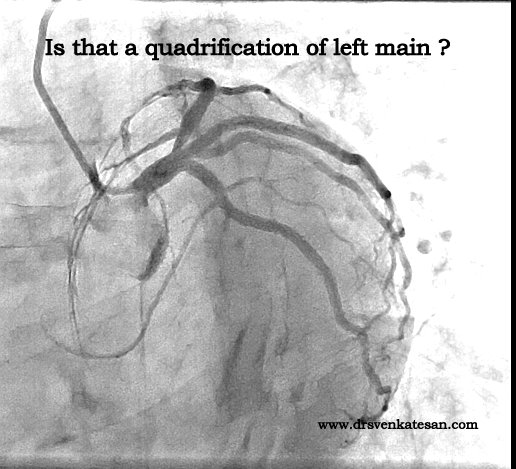
Left main divides into two. Some times into three . Very rarely into 4

Look  at this angiogram ,  This looks  like  a quadrification, if not quadrification equivalent

Clinical implication

A 4 way division invariably means the OM and diagonal or going to be diminutive.These people are expected to have favorable coronary hemodynamics during ACS , and  left main lesions are  less likely  to  occur

Reference

This article is from Singapore medical Journal

Read Full Post »

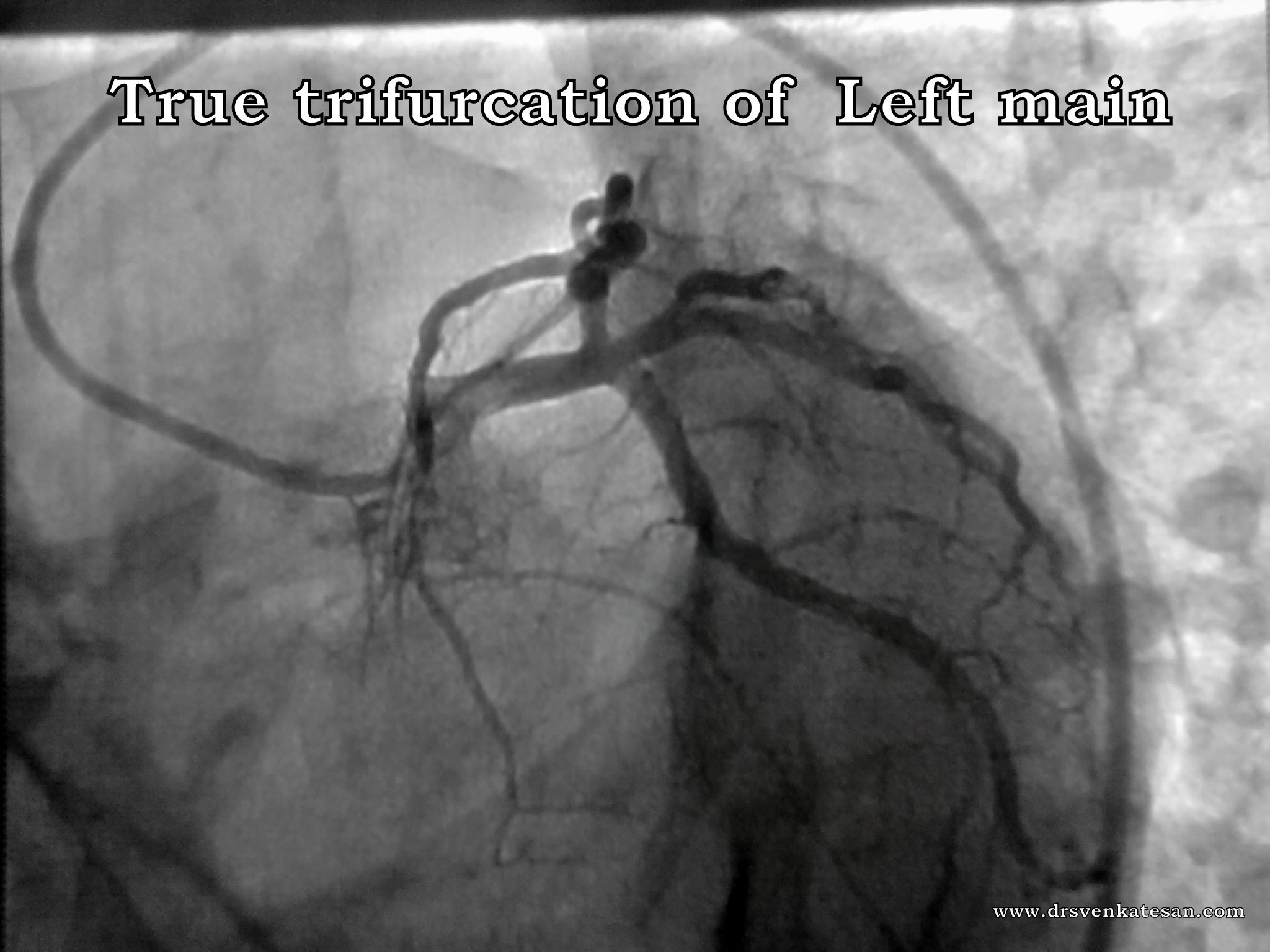
God creates life  with  infinite variation .  The  heart gets  bulk of its blood supply from the left coronary  artery , which divides into two  after a short course.  Bifurcation is the rule . Left main becomes  left circumflex and LAD  in about in 85-90 %.

Note the left main divides into 3 equal caliber vessels.very lucky to have such a branching pattern !Distal left main is unloaded by three large ostia . This makes stasis of blood in left main very unlikely . LAO caudal view


Note : The OMs are small in these people. RAO caudal view

Few men and women are blessed with three branches from LCA . The anatomical and physiological importance of this  branching pattern  is not well analysed in the literature .There  could be  few advantages  of having a trifurcation instead of  bifurcation .

  • Left main  impedence is less in trifurcation . This is due to the fact ,  left main empties into three distinct ostia rather than two.The combined  cross sectional area of these three ostia  confers a hydrodyamic advantage.
  • The importance of  any proximal LAD lesion in these patients , is negated  by  33 % as two other vessels are there to take care the  rest of the heart.
  • A large Ramus usually  supplies a vast area in the angle between LAD and LCX.  This   has a potential  to protect against ventricular  fibrillation during acute occlusion of LAD  by providing  electrical stability .

Disadvantage of trifurcation !

  • It is also a fact , people with a large Ramus may have a trade off by having a diminutive diagonal or OM .
  • A trifurcation with a small calibered  ramus  can often  be a disadvantage , as it is prone for atherosclerosis  since it  restricts  left main flow  by  venturi effect . (The first rule of atherosclerosis states its  prone at branching points)

* A related blog  elsewhere in my site . The explanations  offered above are based on personal observation .

https://drsvenkatesan.wordpress.com/2008/12/16/what-is-clinical-significance-of-ramus-intermedius-coronary-artery/

Read Full Post »

Nothing in this world is black and white. In fact,  most events are in between . The irony is , our brain  always wants to view  things in two distinct entities !

  • Success or failure
  • Beautiful or ugly
  • Good or bad
  • Win or lose,
  • Rich and poor etc . . . etc

So it is no  surprise !  cardiologists  also travel in the same boat !

They classified  the events after thrombolysis   into two dogmatic categories . Successful  thrombolysis or failed thrombolysis   . . .  as if no other event  can occur in between .

Traditionally 50% regression of ST segment is called successful .   What  about 30%  and 40 % ST regression ?

Further , there is an important caveat  in the timing,  as we  traditionally assess ,  90 minutes of thrombolysis .

Consider the following  situation  :

  1. Thrombolysis  is failed at 90 minutes, but  succeeds  at 120/180  minutes ?
  2. Is 50 % ST regression at 180 minutes is as bad  or as good as 25 % regression at 90 minutes ?
  3. How to label a patient who  is extremely comfortable in spite of ECG criteria of failed thrombolysis ?(Surprisingly this situation is fairly common !)

So, without finding answers to some critical questions , we have defined the success  of thrombolysis with  half baked data .

This is exactly , is the reason we  are unable to do a  valid  study on failed thrombolysis, rescue PCI etc .  We know the results of rescue PCI  ,  always  been  contradictory to the general logic !

It is estimated a substantial number of  STEMI patients following   thrombolysis   fall into a category of partially successful thrombolysis implying partial restoration of blood flow and salvage. The correct definition for  successful thrombolysis and reperfusion should be at the myocardial mass level , and  not at the level of coronary artery.The ECG  is the best available indicator.

Implication for having a  poor definition  of  failed thrombolysis

It is not a rare sight to wheel  in , a patient to a cath lab  with label of failed thrombolysis dangling in his neck  who is clinically  stable  (Has a less than required 50%  ST regression , but a definite, favorable trend with a 30 % ST regression  at 90 minutes  )

How many cardiologists will be willing to abort a CAG/PCI  , as a repeat ECG just  before puncturing  in the  cath lab reveals    successful  thrombolysis ? (little  delayed though !)

If only we have better methods to risk stratify patients following thrombolysis , we can avoid

  • Huge costs incurred
  • Expected and unexpected hazards of doing an emergency  intervention in an adequately salvaged STEMI
  • Hundreds of cardiology man hours can be saved  for better purposes .

Final message

Classifying thrombolyis into  success  or  failure  is a  skewed  way of looking  at this important  issue .

It is an irony ,  cardiologists often  triage LV dysfunction , valve disease , cardiac failure  etc  into 4  grades (  minimal  , mild , moderate or severe  ) . It is  still a mystery ,  why thrombolysis  is never graded  like that ,  and it is always considered as  all or none phenomenon !

There is a substantial number of patients  with partially successful ( or shall we call partially failed !) thrombolyis  .This group must be given adequate attention or inattention  . There  is a urgent need for a through review of how we look at  the post thrombolysis status  . It is better to use the newer imaging modalities like PET/MRI more  liberally to identify  exact sub group  of failed thrombolysis who will benefit form revascularisation .

Read Full Post »

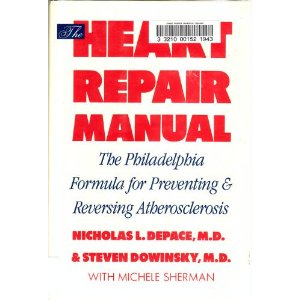
Manuals are not only for doctors . There are few heart  maintenance manuals for patients as well.

This one from Philadelphia ,  is worth reading and of-course  following  thereafter  !


Some books can be as effective as CABG or PCI .

This  one is definitely in that league  . . .

Read Full Post »

In pacemaker science ,  any pacemaker that maintains AV synchrony is often referred to as physiological pacemaker. This is  of course , a  wrong reasoning .None of the pacemakers available today can be claimed to  be completely physiological .All  pacemakers  which paces the right ventricle  induces IVS dysynchrony (Including  the modern DDD)

Single chamber physiological pacing

AAI

Paradoxically ,  the most primitive of pacemakers AAI can be the near perfect physiological  pacemaker . The simple explanation  is ,  In AAI mode , expect for the origin of pacemaker impulse the entire depolarisation and repolarisation  is through the normally existing physiological conducting system .(AV node, HIS, Purkinje etc)

(It not only has atrio ventricular synchrony but also  has ventriculo ventricular and intra ventricular synchrony )

So, technically AAIR  is most physiological pacemaker possible .But  the practical utility of such a pacemaker is limited.It can be used  only in  isolated sinus node dysfunction with intact AV conduction . (The problem is the AV nodal conduction can develop later )  To over come this DDDR pacemaker can be programmed to AAIR as a default mode.

VVIR

This rate adaptive pacemaker  ,  to a  certain extent  can be termed physiological as the heart rate can improve with exercise . (Still it is unphysiological as it  paces the RV )

VVD

This is based on the concept ,  for pacing to be physiological , it  requires  atria  to be  at least sensed not necessarily paced.This mode which has a floating sensor attached to the lead as it crosses the atria.This facilitates atrial sensed ventricular pacing .But many believe  the atrial sensing is not consistent in VDD mode.Currently this mode is not popular.There is scope for improving the atrial sensor technology .

Dual chamber physiological pacing

DDD, DDRR

Both  these are the prototype dual chamber physiological pacing modes.

Bi-Ventricular or triple chamber pacing  ( one atria two ventricle)   are our  elusive answers for attaining perfect physiological pacing . it need to be realized, we simply ,  can not mimic the natural cardiac  conduction system.It is  estimated to be more than 10 miles long specialized fibers .

Final message

In our quest for physiological pacemaker we often forget the fact  , AAI is the most physiological pacemaker mode  available .(It even has  VV synchrony !  )

We should use it liberally whenever possible .Of course ,we cannot use it in complete heart block .Still 50 % the  permanent pacemaker  we implant is for sinus node dysfunction. Many of them could be candidates for AAI mode .If current generation cardiac physicians feel out dated to insert a AAI pacemaker, at the least they should program the DDDR into AAI mode with a mode switching to ventricular pacing modes whenever required.

In spite of all  advantages ,  why atrial based pacemakers are not gaining popularity ?

  • Ignorance
  • Lack of expertise
  • Technical difficulty of fixing atrial  lead
  • Perceived fear of lead dis-lodgement.
  • The fact remains  the  ventricular based pacing  is always safe  in case of sudden AV block due to any reason .

Read Full Post »

« Newer Posts - Older Posts »