Feeds:
Posts
Comments

Archive for the ‘Cardiology -Interventional -PCI’ Category

Belgium SOAP  wants a  knock out punch to  Dopamine in shock !

Vaso constrictors are  the mainstay  drugs  in the management of shock  syndrome. While ,the ultimate outcome depends on the primary  cause for shock, these vaso- constrictors  have  a critical role in sustaining life , till the organ function is recovered.

The physicians world  over,  differ  in their choice of  vasoconstrictor support .They  are almost divided   equally in their usage between  dopamine and norepinephrine  .

Surprisingly,  there  has been no one to one comparison trial till  this study   in 2010 .This trial  is called SOAP 2 published from  Brussels , BELGIUM .It  compared the usage of these two drugs in variety of shock  syndromes. It favors norepinephrine use ,  that includes  cardiogenic shock as well.

The disadvantages of dopamine noted in this trial was

  • Increased  risk of arrhythmias
  • Increased rate of death  in cardiogenic shock

The implication of this trial may force the ACC/AHA guidelines , which  advices  dopamine as the first choice in shock syndromes especially in cardiogenic cause.

Read Full Post »

For medical science  to  defy   logic , is a not a great  new discovery . “Diabetes is a major  risk factor for heart disease   but controlling diabetes may not  remove this risk factor” Similarly  severe mulitvessel CAD  occurs without  any symptoms and compromise on LV function . It is a natural human  instinct  to open of  any thing  that is obstructing   on  their  path . The same logic applies in   physicians when we encounter blocks in the vascular highways  .

For a moment compare  it with an express way .

We realise many  roads have a  reserve capacity . Even if the road is  half  blocked , traffic  congestion  rarely happens  as the  original road’s width is  sufficiently  large for the projected traffic . Some other roads have emergency  service lanes (Collaterals) that can take care the flow of traffic.

Another  question to ask is , Where does the road  lead to ? and why  we are  traveling ?

If it leads to a “dead  sea”  or a “bottom less cliff’  there is no purpose  to travel further . Similarly , when you find a destructed kidney with little nephron mass( or dead myocardium  ) there is absolutely no purpose  in opening the block . (Some  may  believe  the act  of  opening  block , by itself   is a success /  sorry- story !)

This is what happened in the lase decade . Interventional    radiologists , vascularologists , cardiologists started  opening  renal artery obstructions , at their whims and fancies, in  many elderly and middle-aged population .To their surprise (This surprise is due to ignorance )  they found no worthwhile benefit  either in the BP reduction or worsening renal function .

Now comes the evidence  in  2009  as   ASTRAL  trial from UK . ( As usual   the evidence came   late after ,  few lakhs  of kidneys   been injured !*

* Renal interventions are notorious for many complications , which is often not reported . Read this article to know  it better.

http://www.nejm.org/doi/pdf/10.1056/NEJMoa0905368

Final message

Common sense can  work great wonders than the much hyped RCTs . (Except ASTRAL  of course !) In this era of scarcity of  such  sense we can expect another study soon , to nullify ASTRAL  and give us further license  to pursuit the  good old  human instinct  ! Already silent noises  are made in interventional  corridors questioning the  outcome of ASTRAL.

Read Full Post »

Coronary stent implantation , which   was once  considered  , a state of the art procedure is now   practiced even  in,  remote towns and small nursing homes all over the world.

While , it is a blessing to  have such a technology disseminate all over , we have also  witnessed problems due to indiscriminate work ethics inside human coronary arteries. One of the deadly complication  is coronary artery perforation.( It is not a surprise to experience this complication , especially  when inexperienced, cardiologists  try to manoeuvre fancy hardwares  into the coronary artery for the first time !)

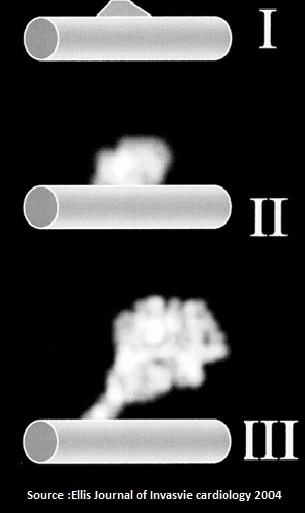
Ellis , fore- saw this yeas ago !

He classified coronary artery perforation into three types.

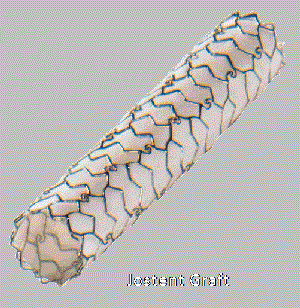
For type 3 perforation , the   only emergency intervention is deploying a stent graft .

A  covered stent with    Polytetra fluro ethylene   (PTFE)( Jostent ) is often used .

Final message

  • Anticipate this complication  , especially when negotiating CTOs and fragile venous grafts , or  while dealing  any complex lesion.
  • Every cathlab should have a crash cart ready with anti perforation kit .( A large bore needle to tap tamponade is much more important than a PTFE stent graft !)
  • Referring for an emergency surgery is one option , but it is often too late !


Link to jomed

Read Full Post »

Bifurcation lesions and ostial lesions  continue to  challenge the expertise of   interventional cardiologists.

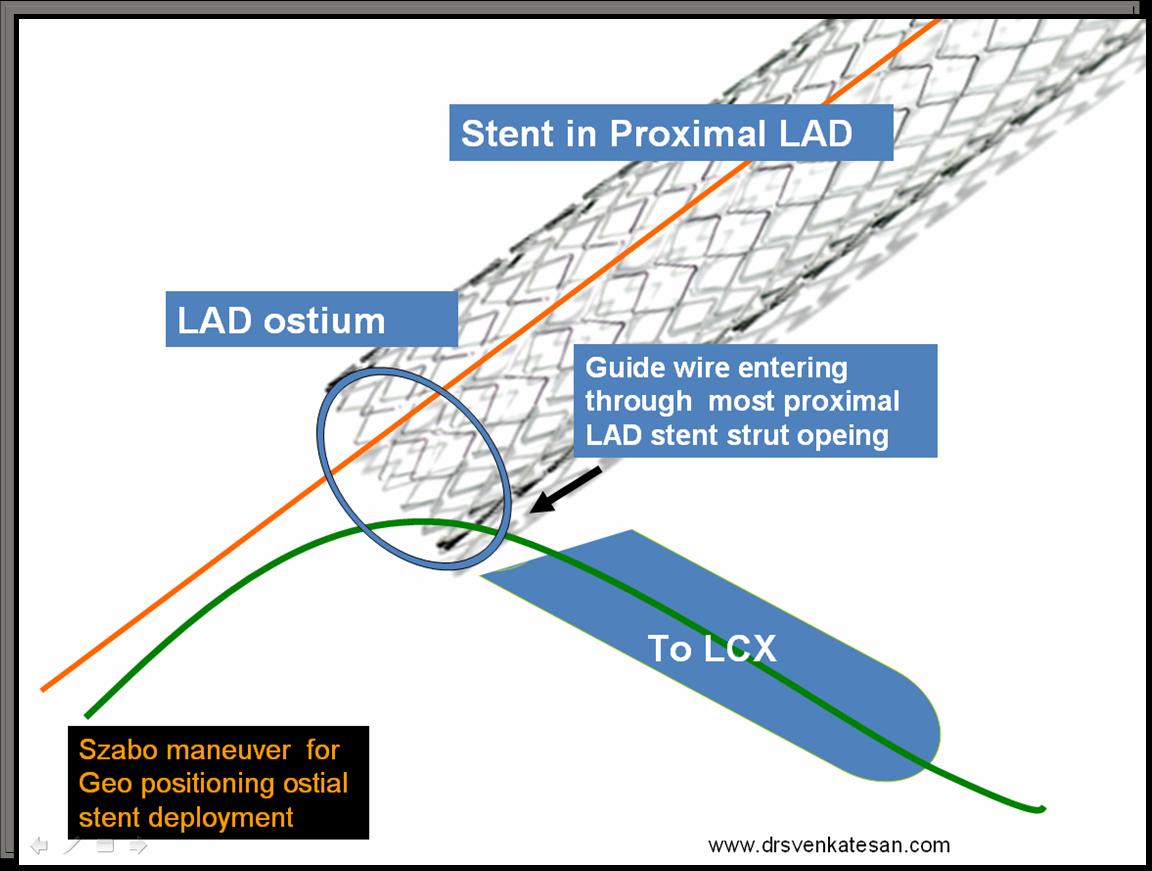
Variety of techniques have been described. Geo positioning of a ostial lesions ,  exactly on the rim of ostium  is required  . This is very difficult in  many patients  , as stent migration either into side branch or protrusion into the main branch is common. Both reduce  optimal  PCI outcome  .

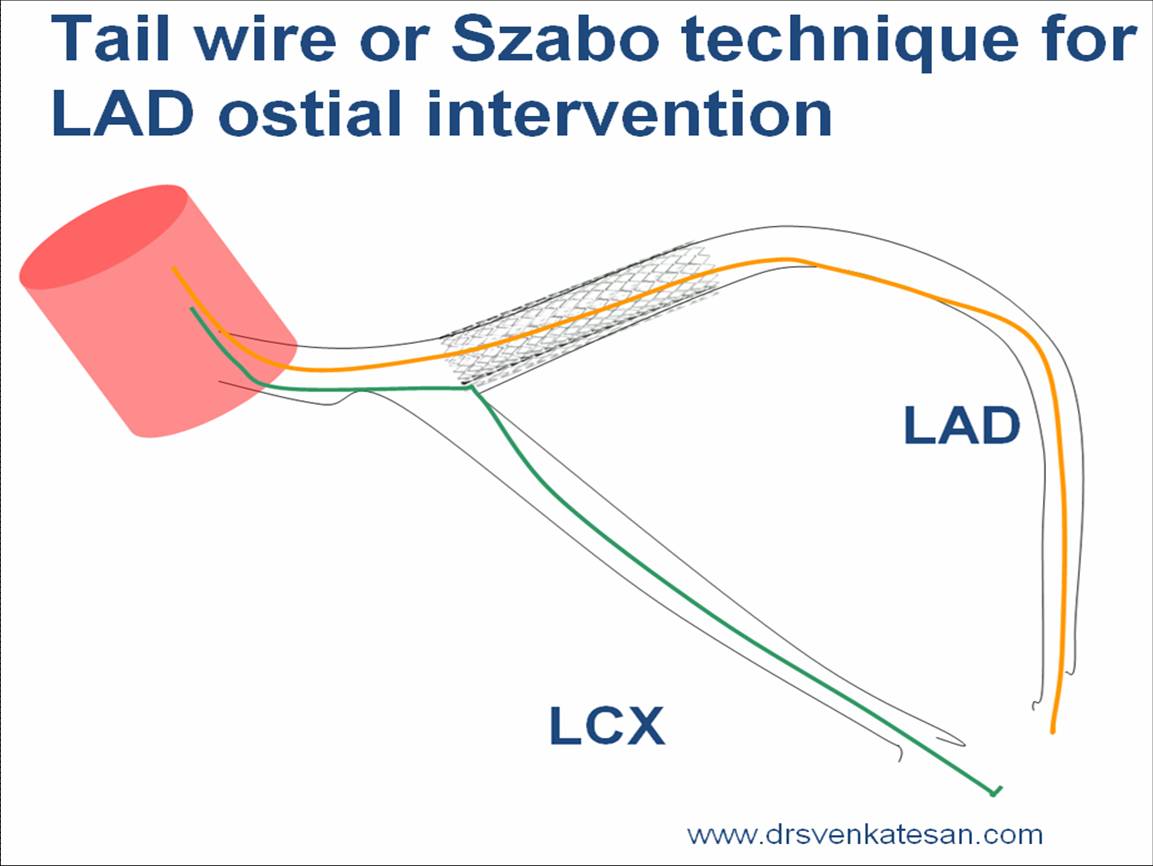
Here is a innovative  technique   described  first by  Szab0 in 2005 TCT conference .

Highlights of the technique

  • It is a twin guide  wire technique.
  • The Circumflex guide  wire  is threaded over the most proximal strut  of  balloon mounted  LAD stent .
  • The guidewire makes sure the LAD stent move beyond the LAD ostium .
  • Of course some technical limitation is  there, this seems to be a good option at least in some deserving  LAD ostial or LCX ostial lesions

Technical hitch

The balloon and stent is to be manhandled prior to deployment.  We are little awry to do it

The review article in the journal  Eurointervention

Read Full Post »

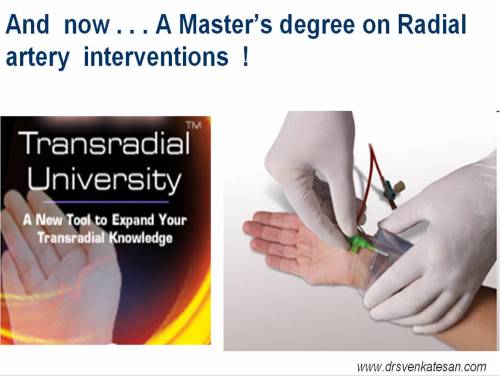
Learning (and of course unlearning! )  is a continuing process in the field of medicine. . We have exclusive  medical universities for various specialties . The popularity of  radial access for doing coronary interventions is progressing very fast and  the  femoral puncture technique  is expected soon to become   extinct !

Here comes a virtual on-line university for mastering radial artery interventions.

I wonder  , they issue a  Master’s degree  on the subject !

Thanks to Terumo for  initiating the concept .

Read Full Post »

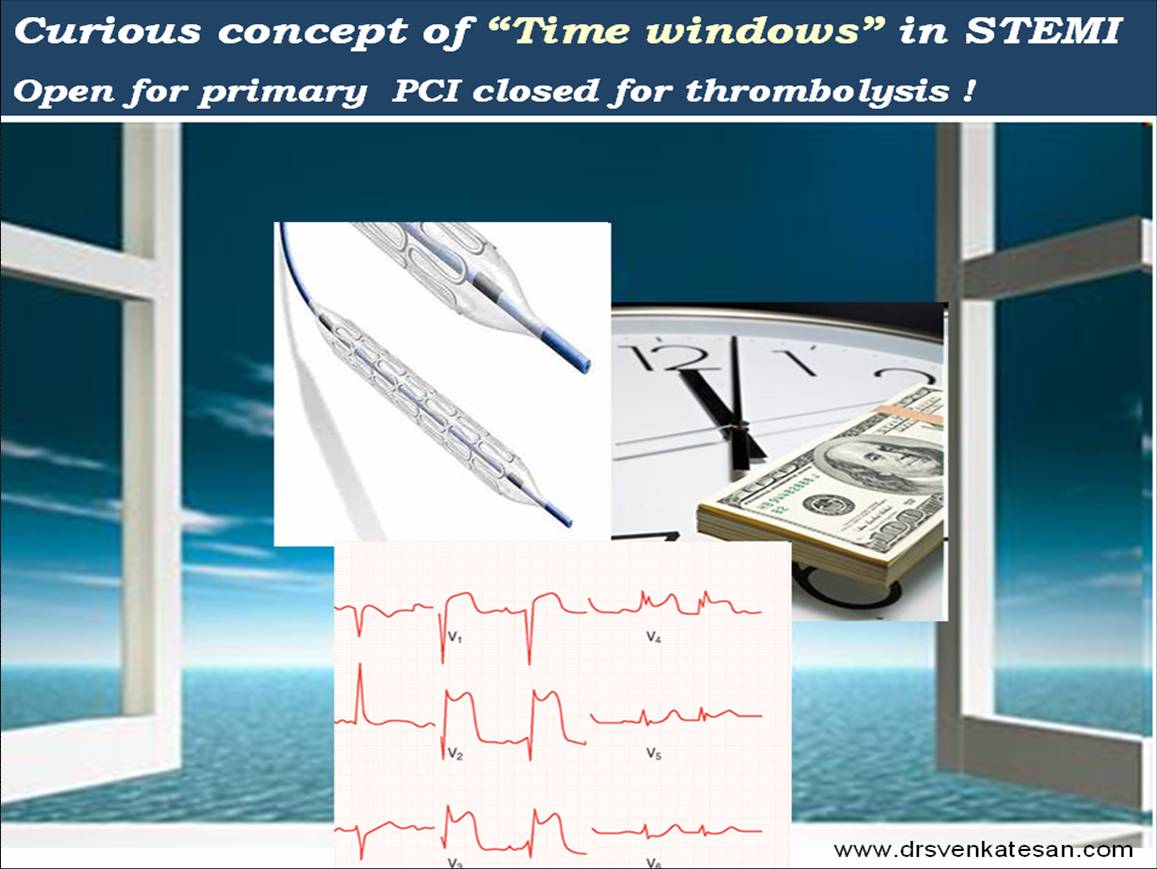
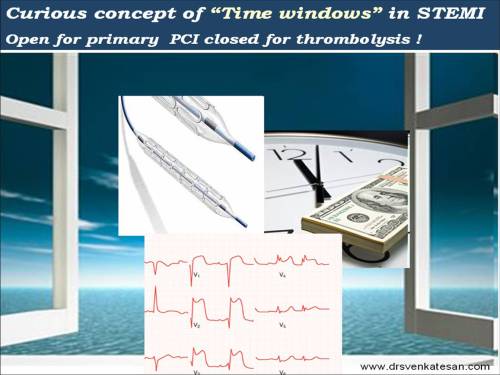
This article is in response to the prevalent belief  about  primary PCI for STEMI   endorsed by world cardiology forums. (Caution: A highly personalized version)

Time window in STEMI

  • Is the window half-opened  or half closed ?
  • Is it open at all ?
  • Or ,does it open only for primary PCI  ,and tend to close down  bluntly for thrombolysis

Modern medicine   grew faster than our thoughts .We have witnessed the audacity of advising  arm-chair treatment  for MI  till later half of   last century . Now we are talking about  air dropping of patients   over the  cath lab  roofs  for primary PCI.

Still ,we have not conquered the STEMI. While ,  we have learnt to “defy  deathin many patients  with cardiogenic shock , we continue to lose patients(“Invite death “)  in  some innocuous forms  of ACS due to procedural  complications  and inappropriate ( rather ignorant !) case selection.

Note : The ignorance  is not in   individual physician mind ,   it is prevalent in the whole cardiology knowledge pool.

The  crux of the issue for modern medicine is ,  how to reduce risk  in patients who are at  high risk and how not to convert a low risk patient into a high risk patient by the frightening medical gadgets.

In other  words ,  arm chair treatment for STEMI was  not (Still it is not !) a dustbin management . It has a potential to save  70 lives  out of 100. What many would  consider it as  ,  nothing but  the natural history of MI .

Medical management of STEMI is ridiculous !

That’s what a section of  cardiologists try to project by distorting the already flawed evidence base in cardiology. Some think it is equal  to no treatment. Here we fail to realise, even doing none has potential to save 70 lifes out of 100 in STEMI who reach the hospital.

Out of the  remaining , 10 lives   are saved by aspirin heparin (ISIS 2) and the concept of coronary  care . Another  7  lives are saved by thrombolysis (GUSTO,GISSI) . PCI  is shown to save saves one more life (PAMI).The remaining 6-7 % will die in CCU  irrespective of what we do .

Of course , now medical management has vastly improved since those days  .  A  thrombolysed ,  heparinsed ,  aspirinised ,  stanised  with adequately antagonized   adrenergic ,  angiotensin system   and   a proper coronary care ( That takes care electrical  short-circuiting  of heart)   will score  over interventional approach in vast majority of STEMI patients.

Now comes the real challenge . . .

When those 70 patients who are likely to survive  , “even a arm-chair treatment“, and the 20 other patients  who will  do a wonderful recovery with CCU care ,  enter  the cath lab  some times in wee hours of morning  . . .what happens  ?

What are the chances  of   a patient  who would otherwise be saved by an arm-chair treatment be  killed by vagaries of  cath lab  violence  ?(With due apologies ,statistics reveal  for every competent cath-lab   there are at least  10  incompetent  ones  world over !)

In the parlance of criminology , a hard core criminal may escape from  legal or illegal shoot out  but an innocent should  not die in cross fire , similarly ,  a cardiogenic shock patient with recurrent  VF  is  afford to lose his  life , but it is  a major medical crime to  lose a simple branch vessel  STEMI (PDA,OM,RCA )  to die in the cath lab,  whom in all probability  would have survived  the arm chair treatment.

Why this pessimistic view against primary PCI  ?

Yes, because  it  has potential to save  many lives  !

Time and again ,  we have  witnessed  lose of   many lifes  in many  popular hospitals in  India ,  where a   low risk MI  was  immediately  converted  to a high risk MI  after an primary  PCI with number of complications .

I strongly believe I have saved 100s of patients  with  low risk MIs by not  doing  for primary  PCI in the last  two decades.

*The argument that PCI confers better LV function and longterm  beneficial effect is also not very convincing for low risk MIs .This will be addressed separately
The demise of comparative efficacy research.

Primary PCI is superior to thrombolysis  : It is agreed , it may be  fact in academic sense .

Experience has taught us , academics rarely succeeds in the bed side.

“superiority studies can never be equated  with comparable efficacy”

Only the  questions remain . . .

  • Where  is comparative efficacy  studies in STEMI ?(Read NEJM article )
  • Why we have not developed a risk based model  when formulating guidelines for   primary PCI ?
  • Is primary PCI for a PDA /D1/OM infarct worth same as PCI for left main ?
  • Is high volume center guarantee  best outcomes ?

Who is preventing comparative efficacy studies ?

Primary PCI : Still  struggling !

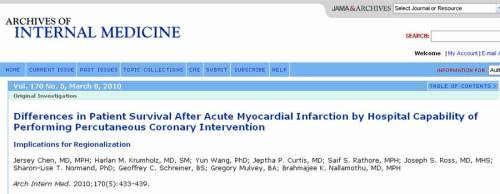
This study from the archives  of internal medicine tells   us , we are still scratching  the tips  of  iceberg (Iceberg  ? or Is it something else ?)  of  primary  PCI
Even a  pessimistic approach can be  more scientific  than a optimistic  !

When WHO can be influenzed and make a pseudo emergency pandemic  and pharma companies  make a quick 10 billion bucks  ,  Realise how easy  it is  for the   smaller ,  mainstream cardiology literature  to be  hijacked and contaminated .

Final message

Why we reverently follow the time window for thrombolysis,  while  we rarely apply it for PCI ?   This is  triumph of glamor over truth . The open artery hypothesis remains   in a  hypothetical state with no solid proof  for over 2o years since it was proposed.

Apply your mind in every  patient , do a conscious decision  to either thrombolyse  ,  PCI or none . All the three are  equally powerful approaches in tackling a STEMI , depending upon the time they present .Remember , the third modality of therapy comes free of cost !

Never think ,   just because  some one  has  an access to a sophisticated cath lab 24/7   , has a iberty to overlook the  concept of time window  !

Remember  you can’t  resuscitate   dead myocytes , however advanced your enthusiasm and   interventions are !

Realise , common sense is the most uncommon sense in this hyped up human infested planet.

Read Full Post »

“Time is muscle” is  the often quoted “sermon”  in emergency cardiology , implying ,  every patient with STEMI should be taken up for   thrombolysis or primary PCI at the earliest  after the onset of symptoms.

While thrombolysis is the proven method of reperfusion for over 25 years , Primary PCI , a costly , risky but better  alternative is struggling to prove it’s impact in the world of acute coronary syndrome ! (Some may  see non- sense in this statement !  But it still can make sense  !)  In India hardly 3 -5 % of STEMI is taken for primary PCI .This includes the much hyped corporate cardiology centres.

If primary PCI is a revolutionary reperfusion strategy  , why it has not invaded the cardiology field  by strom  ?(A pathetic 5% growth over 15 years will tell the true story !).

We know 6 hours is the acceptable time window before which some form of repefusion must be attempted. A time limit of 90minutes   for the   “door to  balloon”   is  fixed  as optimal for primary PCI .

In other words ,  if primary PCI can be arranged within 60-90 minutes   one  can afford to lose the golden hour !  How does this logic works ?

In fact it does not work ! in many .

The 90 minute criteria is not strictly followed . Common  sense would have it ,  this 90 minute time frame for primary PCI  would  logically be the   “symptom to  balloon time”,

But in reality  the time window of STEMI   is a collection of  following

  1. Symptom recognition  and 911/108 alert
  2. Ambulance arrival time
  3. Ambulance  to ER time (Traffic delays)
  4. ER to Fellow
  5. Fellow to consultant
  6. Consultant decision-making time
  7. Insurance clearance time
  8. ER to Cath lab door time
  9. Cath lab to needle time(Femoral /Radial )
  10. Needle to Balloon time

Where does the   90 minute  rule  for performing primary PCI stand ? It  can  mean many things

After all those hectic  activity  any one of the following is achieved !

Coronary flow – TIMI  3 ?  TIMI  2 ? TIMI 1 ,  Slow flow, Low flow ? No flow , No re-flow ?

* Prehospital thrombolysis avoids atleast   8  (No 3-10)  components  of time delay in our goal to salvage myocardium.

This is the simple reason, why primary PCI is not reaching it”s logical conclusion all over the world.

Summary

In simple terms ,  one  do not require a double blinded multicentred trial  to  show  primary PCI  performed at 2 hour time ( 2 hour  + 90 minute door to balloon time )  window   would be  far inferior to   pharmacological thrombolysis done at   15 -30  minute time window  (An ambulance driver can do it !).

Finally the most important fact , the often ridiculed thromolytic agent does not show  discrimination in it’s  effetiveness whoever  administers  it ! A  lay person or an ambulance driver with 10th grade education can open up the coronary artery 70% times  while  a cardiologist with a 20 year training  does the  slightly  improved version of the same job  costing   nearly 100   times( Rs  25oo for streptokinase vs  2 lakh for a PCI )  more  . In  the process  often  the   golden hour is lost ! Apart from this,  primary PCI is fraught with a risk of  procedure related  hazard  and  it is a hugely expertise driven procedure .

One more message  is ,  poor countries need not  feel dejected for not having those sophisticated country-wide cathlabs  and emergency air dropping of patients.What we  need is good transport systems and quick access to a near by   coronary care units with support staff.

Always remember  at any given time frame  , a well equipped  CCU can save  thousand lives more than a cath lab

Note of caution :

This article is written in the  overall interest of cardiac patient in the developing and non developing and Primary PCI can make merry in all those rich countries for the simple reason they can afford to  do that (Not necessarily  cost-effective !) . Still , primary PCI/surgery  is the only option for patients coming with a electrical or mechanical complication.

Reference

All that glitters is not Gold !

Know , how even high volume centers  struggle to prove he worthiness of primary PCI !

This is not a small study ,  it  is a huge study involving 5 lakh patients with STEMI spread all over the United states.

The conclusion from  his article indirectly supports the view , an early non PCI approach in STEMI can be superior  even if  infra structure and technical expertise are available  for PCI.

Read Full Post »

Chronic total occlusion is the cardiologist’s  daymare .Here is an article that adds on to 1ooth technique to cross the chronic total occlusion within the coronary artery !

If only we succeed in  this  Arabin magic , in the cath lab we can open the doors of  all CTOs .

This technique is based on the principle  to push the hard plaque  into the adjacent side branch like a sliding door,   if the pateint has one !

The only isssue  with this  technique  could be the    “cave door”  may close again immediately  as it did for Alibaba    !

Reference

 http://www.ncbi.nlm.nih.gov/pubmed/20088015

http://www3.interscience.wiley.com/journal/122619470/abstract

Read Full Post »

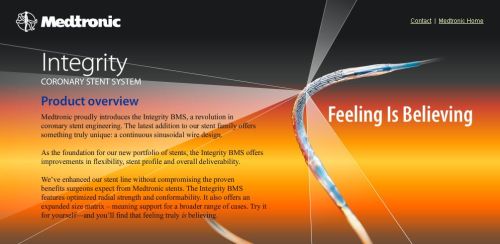
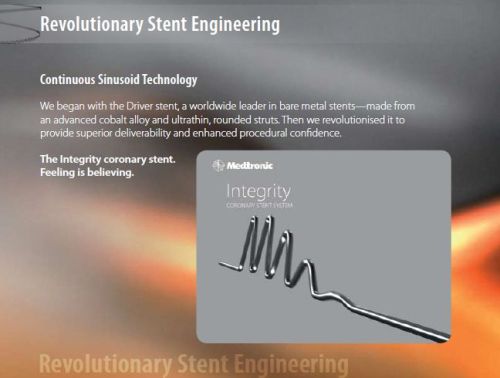
When every one is thinking bare metal stents are dead ,here comes  an ace  from Medtronic !

A breakthrough technology that make stent navigation into complex lesion as smooth as “knife in butter”

“If only you feel it ”  says the Medtronic ad

The smooth flowing metal inside the coronary artery

Read Full Post »

Thrombolytic therapy  is the specific  therapy  for Ischemic stroke ,  when administered in less than 3 hours ( Now 6 h ?)  and has proven to  save lives and brain .The only issue is , we need a 100% exclusion of hemorrhagic  stroke by a CT/MRI. The mechanism of action of thrombolytic agent is simple .It lyses cerebral thrombosis and makes way for sustained reperfusion and arrest or even  reverse  the  ischemic damage to  neurones .

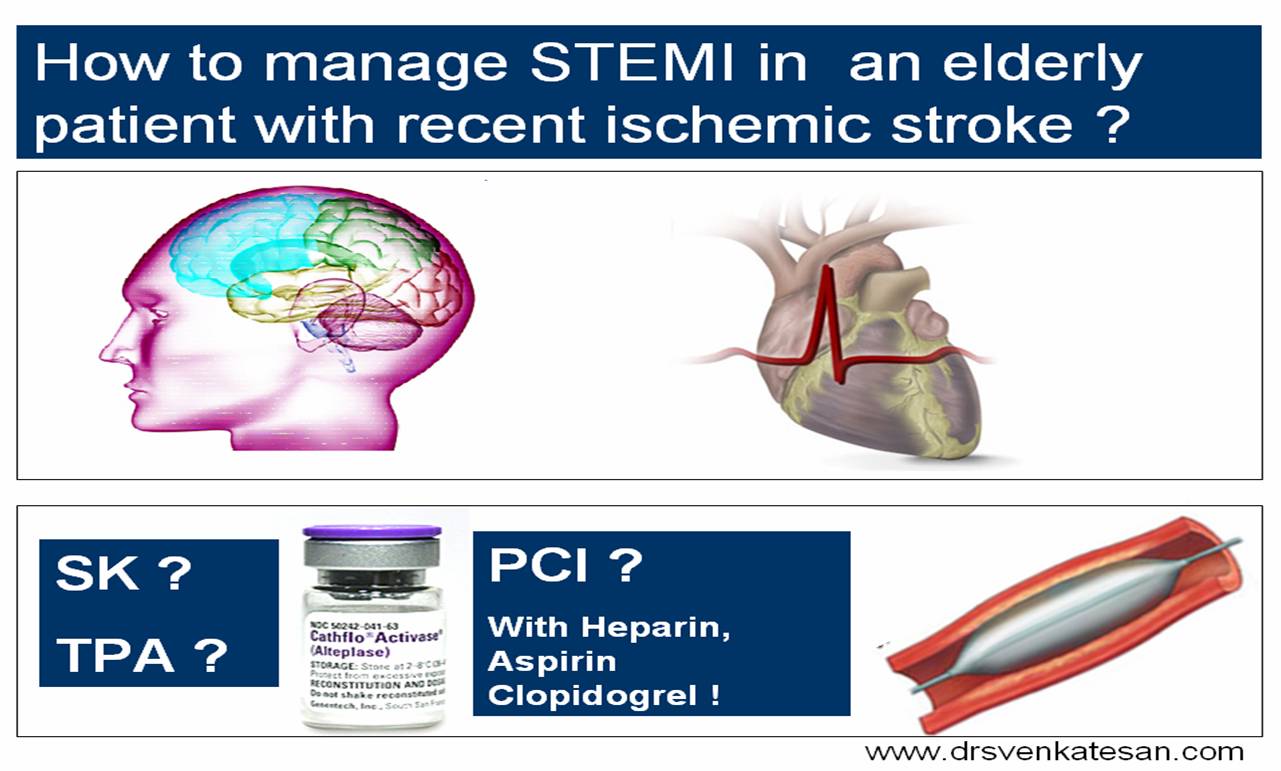
And now ,   let us see ,  how we perceive the same therapy in a patient  with a  history of  recent ischemic stroke  with an  acute STEMI .

The issue is two fold.

  • He needs urgent myocardial salvage in the form of thrombolysis or PCI .
  • The thrombolysis or PCI should not worsen the  cerebral infarct.

According to  most standard literature thrombolytic therapy is an absolute contraindication in a patient with STEMI and recent history of ischemic stroke (<3 months )

The  term absolute means ‘it is medical  crime” to give TPA or Streptokinase.

How  is it possible when the same drug  is  projected a savior in acute ischemic   neurological  emergencies  and  be dangerous when administered  few months later in an evolved ischemic stroke ?

The major  reasoning  against thrombolysis in recent stroke is  the  potential concern for  converting an  indolent ischemic  infarct into hemorrhagic  infarct in  a  patient who may start  bleeding  into brain.

This is  highly conjectural  , as  a previous history of  ischemic   stroke in no way increases the bleeding risk .Conversion of ischemic to hemorrhagic   infarct tend to  occur  in the very early  hours  of acute stroke (not weeks later) .This could be part of calcium induced  reperfusion injury .

Unanswered questions

The issue become further  complicated with our  skewed  thinking pattern.

If thrombolysis  is contraindicated  in STEMI , does  it any way imply a automatic indication for  primary PCI ?

It seems so , for most of us !

How safe is PCI in a patient  with a previous  history of ischemic stroke ?

  • An emergency PCI in a patient  who is expected to have   widespread  cerebral  carotid , and peripheral vascular  disease  is fraught with added hazard.
  • Aortic arch manipulation  and aortic  valve  atherosclerotic  changes  might  increase a risk  of another stroke.
  • The drug we administer  during PCI  are  not innocuous ones  . Aspirin ,  Heparin, clopidogrel (sometimes  even 2b 3a!) will  keep the  risk  of converting the ischemic infarct into  hemorrhagic infarct remain  at  dangerous  levels . This ridicules  the  very  logic  of   PCI being preferred over thrombolysis in such situations .
  • So it is not an  easy decision to do  primary  PCI in an elderly  patient  with STEMI and a recent CVA. It is only a mirage of  medical  intellectualism  and  the blind following  of unscrutinized  scientific  literature   that   determine  many of the decision  making  in cardiology .

The argument here is ,  in a patient  with evolved ,  uncomplicated ischemic  stroke thrombolysis can safely be administered  irrespective of the age of stroke.  .This is contrary to the published literature.Let us not make unethical practice against scientific literature  but let us also understand   it is unethical  not to realise  many of the so-called scientific  evidence  are  merely speculative.I  request  the  neurologists  and cardiologists give their   input on  the issue

As far as  I have searched  the superiority or inferiority  of thrombolysis   vs PCI in  recent  ischemic CVA has never been compared one to one. The fact may be ,  such a study is never possible in the future .But  it seems PCI has won the   trial  without  a trial .

Unanswered  questions

How  many deaths have happened due to worsening of stroke after thrombolysis ?

How safe is a  combination of aspirin, heparin and clopidogrel in a patient with recent stroke ?

How shall we decide about thrombolysis  in these situations  of STEMI and recent CVA) depending upon the

  • Age of  CVA
  • Location of cerebral infarct
  • Size of the infarct
  • Residual neurological deficit

It may be prudent to redefine  the indication for thrombolysis and PCI in a patient  with history of recent or remote stroke.

  • It is logical to assess the potential   risk of   converting the ischemic cerebral infarct   into hemorrhagic infarct.
  • It is expected only large infarct in vital locations need to be feared upon for this complication
  • All small healed cerebral infarct need not be worried about reactivation.

How to asses the healing of cerebral  infarct?

The healing  and gliosis  is highly dependent  on individual response to inflammation. Some heal  within weeks. Neo vascularisation within the necrtoic area may get hyperpermiable .These are very speculative concerns. In all probability   the risk of converting an ischemic necrosis into hemorrhagic  necrosis  is less than a  percentage .The 3 months time for  fixed for infarct healing  is an arbitrary one

How good is MRI to predict a healed infarct from nonhealed infarct ?

As of now,  we have no good tools to identify the  safe infarcts that can withstand intensive  anticoagulation or even thrombolysis .If the imaging techniques improve we may able to predict complete gliosis and the vascularisation  of cerebral scars.

Post blog query

How to manage an elderly man with STEMI in a patient with recent ischemic stroke ?

A.Take him to cath lab and do primary PCI
B.Thrombolyse with TPA or Streptokinase
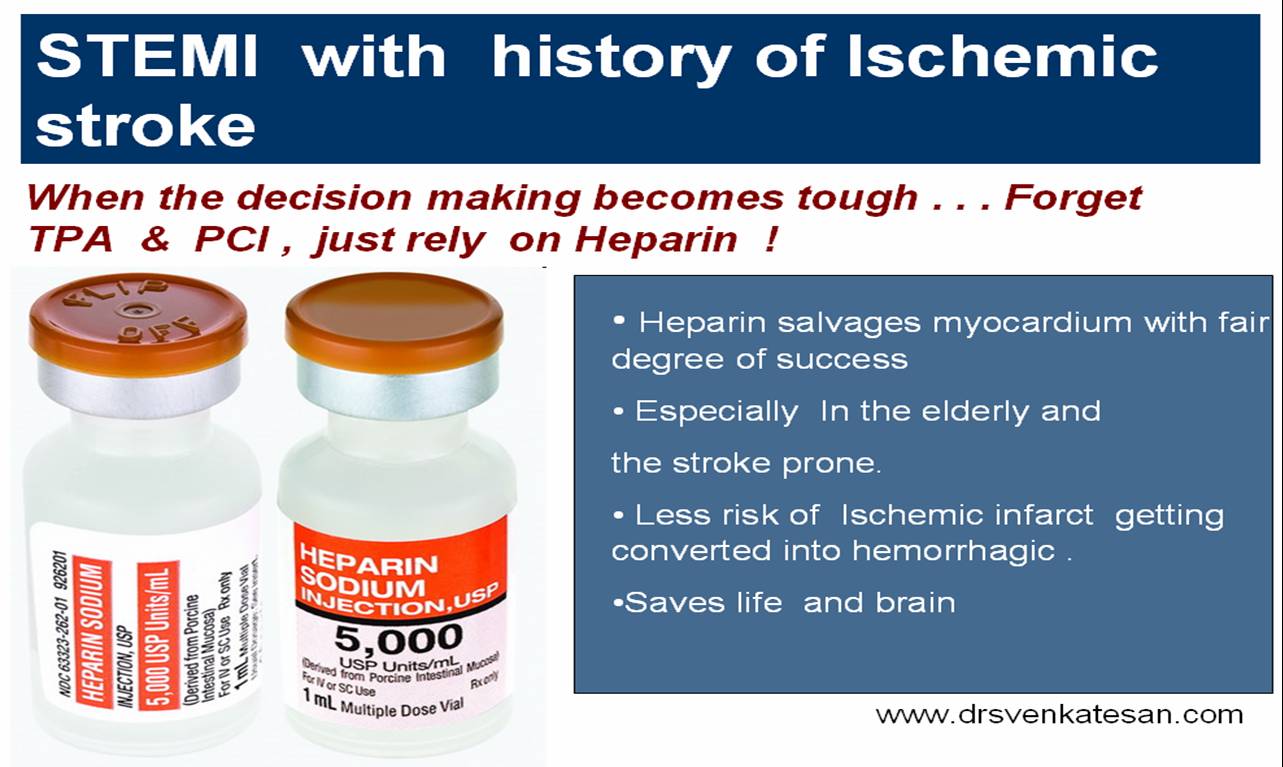
C.Just observe and  manage  with Heparin*

Answer : Any of the above can be correct answer .

If  we  still think  the answer is only   “A”  great reforms need to be done in  medical science  . . .

*Another important option for STEMI and recent stroke (Perceived  as inferior form of management of STEMI !)


An important option is ,  neither thrombolysis nor PCI just simple heparin for STEMI in these high risk individuals .This simple treatment has saved many lives .

See A Related video  from you tube : Forgotten hero  in cardiology

Final message

In this world of gross approximation  and perceived fears ,  it may be reasonable to  shift  the  indication of   thrombolysis for STEMI( with h/o recent stroke ) from absolute to relative contraindication.

Many of the  junior  physicians  in the learning curve may take it as granted  in the management of STEMI  “If thrombolysis is contraindicated  , then primary PCI must be indicated ” This again  is absolutely not true  !

//

Read Full Post »

« Newer Posts - Older Posts »