Feeds:
Posts
Comments

Archive for the ‘Uncategorized’ Category

Usually co -morbid conditions are  relative contraindication  for renal transplantation . LV Myocardial   dysfunction is a  fairly common  association  in CKD.

The uniqueness of   this  LV  dsyfunction is  , there is no primary   myocardial failure . Further  features observed are   . . .

  1. Structural damage is less
  2. LV is not much dilated
  3. Wall thinning is less common , In fact more often than not LVH is associated . (Laplace law at work to reduce LV wall stress !)
  4. The systemic Blood pressure is  well maintained (Chronic HT related ?)

Mechanism of reversible LV dysfunction in CKD

Chronic pressure overload result in After load mismatch . 

(Normally pre-load , after load , and contractility should be  sequentially matching parameters . After load mismatch is an important concept where myocardial contractility is temporarily is depressed due to  lack of adequate pre-load for a given level of after load )

Evidence for reversibility

Very often one can observe improvement of LV function significantly  24 hours after dialysis .The  concept of    uremic biochemical dysfunction is still valid .Though it can not be exactly quantified .

If significant coronary artery disease is excluded , these patients   do well ( after transplantation )  from a  cardiac point of  view !

(64 slice MDCT may be a simple screening test to rule our significant  CAD .)

Final message

How wise it is to do renal transplantation in DCM patients ? .

  • Most patients with LV dysfunction of CKD do well after transplantation .
  • Presence of severe LV dysfunction especially   with  normal  or increased wall thickness should not be a contraindication to  renal  transplantation .

Read Full Post »

AVRT is  a second commonest cause of  narrow qrs tachycardia.  While , all narrow qrs tachycardia in AVRT must be  ortho-dromic. wide qrs tachycardia in WPW  can either be ortho-dromic or anti-dromic ,

The classical one is the much popular and fancied Antidromic  AVRT . Please be reminded  AVRT can conduct  orthodromically  through AV nodal tissue  but still  become  aberrant , as it travel downwards thorough the bundles   and result in a wide qrs tachycardia .

Among the two which  is more common ?

My observation is  ortho-dromic  wide qrs  AVRT  is  more  prevalent . Do you agree ?

Final message

Not all wide qrs tachycardia  in WPW  is anti-dromic !

Read Full Post »

The fundamental difference between  accessory pathways (APs) and AV nodal tissue is the former lacks decremental properties . That is  , APs continue  to conduct whatever the  impulse   it receives. (Unlike  the AV node which has a filtering  mechanism , A heart rate sinker / Dampener) . This is what we were taught and we believe in that .

If it is true  , every episode of   atrial fibrillation should conduct with 400-600 ventricular responses . In reality it does not happen .  The usual ventricular rate in AF with WPW is  250-300 /mt .

What happens to the rest of atrial impulses ?

I am sure it must  get   blocked in APs . Of course it is possible the block need not be in a fixed ratio  .It  changes in a  dynamic   manner with  reference to the   refractory period . (Please note , blocks and increased refractory  periods  can be  used inter changeably in most  physiological situations .

Final message

All APs are not dangerous .They do have a   restrictive mechanism in place .This is evident in every patient with AF and WPW syndrome with a fairly controlled ventricular  response  . Hence  one can conclude   APs in WPW syndrome do have a physiological block in most episodes of  Antidromic AF . The cut off  for safe  refractory period is defined empirically as > 250 ms.

Coming to the title  question , Is  there a physiological  2 : 1  block  in accessory pathway  during AF and WPW syndrome  ?

Yes . It seems so !  A WPW  patient who has  just recovered from a  well tolerated AF ,  is  sort of a natural screening test which effectively rules out a future SCD .(Unless of course he has multiple APs with varying RPs  , one for AF other for VF !)

Is that a correct way of reasoning ?  Experts may provide further  input .

Read Full Post »

A 32 year old unmarried female with rheumatic heart disease   presented with class  3 dyspnea . She had severe mitral  stenosis with significant calcification , subvalvular fusion , and  a LA appendage clot . She had an aortic valve  which showed mild to moderate AR*  was  and  mild  Aortic stenosis ( Peak  Aoric gradient 30mmhg ).LV diastolic dimension was 40mm and systolic 26 mm .LA was huge 48 X 56 mm  EF was 66 % .

* The patient was having three echo reports done in various parts of the state ranging from mild  to severe  AR . I did the echo myself and I  was convinced  ,  it can at best termed as Mild AR . Let us take it as moderate AR for discussion  

To my surprise  , this patient  was   being planned for double valve replacement . (MVR  and AVR ) .

I agreed with MVR since the valve was completely  damaged and neither PTMC or mitral valve repair  is possible.

However  , I was taken aback   , how can  one  plan for a  AVR for mild aortic valve disease ? I  asked the surgeon  ?

The answer was even more a shocker to me .

Since we are  opening the chest for MVR it is better to replace Aortic valve as well . Since  repeat surgery can be avoided .

The surgeon seemed to be very much convinced about this argument .

I asked him ,   is the mortality /morbidity due to DVR is too high  to take a risk .

The LV dimension is absolutely  normal (In fact it is less than normal !)  so  the AR is definitely not significant .

The surgeon was in no mood to leave me . He argued ,  Since the mitral stenosis is severe , the AR is  probably underestimated .   ” We have quiet a few experience of AR worsening after MVR” ? he asserted !

I still fail to  understand  the reasoning of the surgeon .

How is that ,  indication for AVR could vary if it is  accompanied by  mitral valve disease . If the same patient has  isolated moderate AR  AVR is  forbidden  . Poor patient !

By the way , we have problems with our patients as well .I recall an event ,   a  disappointed  patient’s  spouse  arguing  with his the doctor for not fulfilling his Initial  promise of  replacing two valves . We are living in difficult times , I agreed with the surgeon !

Do we have  alternate solutions ?

  1. Assess on table after MVR by TEE if the AR seems worsen proceed with  AVR .
  2. Modern technology might answer .Let us dream  TAVR for rheumatic valve . . . not too far ?

*Transcutananeous Aortic vale replacement .

Final message

Cardiologists and cardiac surgeons should take extra care before finalizing a decision on DVR in any combined valve disease. It may seem  easier to replace two valves . Please spend few moments silently and think about these young men and women  . Valve replacements are  not like replacing  worn tires of your car.  Do not  burden the heart with multiple artificial valves without a real need for it !

The rate of progression of Aortic valve disease following MVR  can be slower than we think . With surgical techniques and  expertise   improving every year ,   repeat aortic surgery may be done safely in selected few ,  in case it becomes necessary !

Read Full Post »

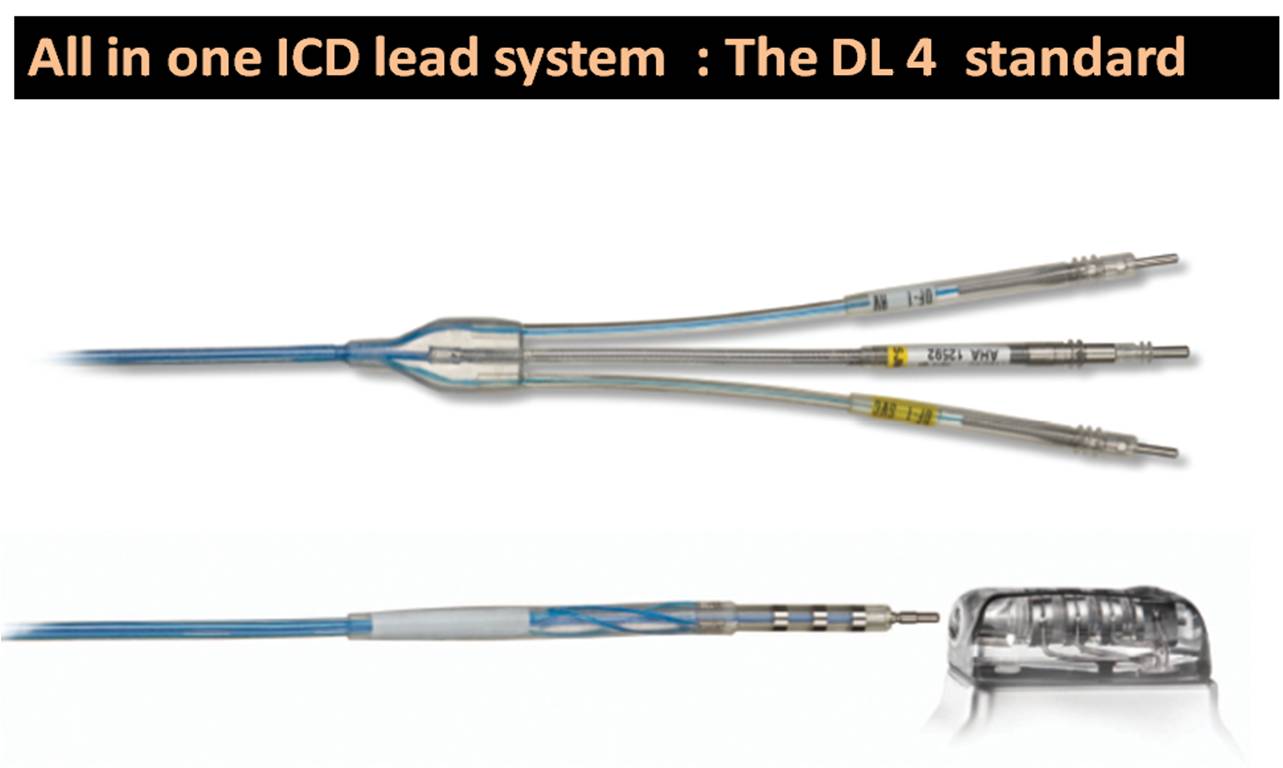
ICDs have revolutionizes the management of refractory VT   and in the  prevention of  sudden cardiac deaths in vulnerable population.Every year  100s of  thousand    ICDs are    implanted . Three  industry leaders are providing  state of  art  machines. The technology is evolving . Till recently , the  shocking leads of ICD has  a separate connectors  called DF1 .

Now,  we have all 4 leads incorporated into one lead  connector called  DF 4 . It has gained tremendous interest  among cardiologist and stand alone electro-physiologists  . The reason is simple  – Ease  of   implantation !

Does the  ease of implanting  do compromise   the  efficiency of ICD  system ?

I am surprised by this article . Here is an  excellent analysis by a truth seeking   electro-physiologist  about the   genuine issues of ICD implantation  especially to potential problems with  DF 4 interface .

http://www.cardioexchange.org/voices/new-icd-lead-technology-creates-new-set-of-problems-a-perspective-from-one-electrophysiologist/

A related article .

https://drsvenkatesan.wordpress.com/wp-admin/post.php?post=19708&action=edit

Read Full Post »

A patient with  extensive anterior STEMI  presented 18 hours  after onset of  chest pain . He  was  other wise stable and free from angina but had persistent ST elevation (5mm in V 1 to V 5 ). He had a  total occlusion of LAD  with TIMI zero  flow . He had a  tight PDA lesion  as well . A bed side echo revealed LV EF  of 50% . The septum was hypo-kinetic but did not appear severely dysfunctional .

So , it was decided to open up the LAD. The moment  LAD was opened he developed severe acute LVF  /   flash pulmonary edema   .  Even after a 30 minutes of  heart (Fire )  fighting  he could not be resuscitated .

What is the mechanism of death here ? Expert  STEMI interventionist  from core  labs  may answer this !

An acute ischemic MR with myocardial disruption was suggested . Why it  was triggered after opening the IRA ?

Three mechanisms were discussed

  1. Re-perfusion injury
  2. Collateral  damage
  3. Physiological  de-stabilisation of  Contra -Lateral lesion (Remote lesions )

Re-perfusion Injury ?  How relevant it is in cath lab ?

Is re-perfusion injury  electrical  ,  mechanical or  both ?

In this particular patient even though there was a total LAD occlusion , the segments supplied   by  the LAD  was partially functional and  it was contributing to LV  pump function.  The moment  a trickle of   flow was established  , some thing happened and the whatever  little mechanical function  his LV  had  was also interrupted  . The LV came to standstill and the patient died .

If re-perfusion Injury is  simply an   electrical  event   like VF ,  it can be resuscitated . If it is mechanical  outcome is bad ! This is not a new concept  . It is  part of the  once famous  concept called myocardial stunning . There are  lots of reasons   for stunning  to be a  clinically relevant phenomenon .Unfortunately   if any cardiologist talks about it in 2012 ,  he is at risk of  labeled  as old fashioned !

Collateral damage.

One more mechanism which we feel that  might have contributed to death here  is   the  “collateral damage” .(This is not cross fire !)

We know collaterals can be recruited within 12 hours in many STEMI patients . In some  it can even salvage  significant mass of  myocardium . The acute collaterals to LAD may be interrupted  during primary PCI . Once you poke the lesion the coronary  vascular  bed which had dilated  (as a response to total occlusion ) may react with inappropriate vasoconstriction . This raises the local hydrostatic pressure (Myocardial edema)  and further impede  the   incoming  micro collateral flow . This a very  critical time  for the myocardium  where antegrade and retrograde flow are kept in a fine balance .

Interference with remote lesion Hemodynamics .

Another possibility  is  the  opening the  LAD lesion some how  impact on remote lesional  flow as well (PDA  in this patient  )

Please remember ,

Even a transient hypo- tension can have  devastating effect in  the  hemo -dynamics   of  non IRA  territory  especially if it harbors a critical lesion !

Final message

Coming to the title question  , Is no – flow better than  slow- flow in late presenters of STEMI ?

Common sense dictates whenever  an artery is obstructed  just get rid of it.  When  it  comes to the heart it must be done in an urgent basis That is the essence of primary angioplasty  . . .  agreed . But in this  patient  I believe ,  the  common sense  was proved wrong !

Truths are always hidden.  The  science of  myocardial re-perfusion is a perfect example . We need to learn a lot still !

This I  call as  Para cardiology : Heart  facts without  evidence !

Counter point

One may argue this   is an  exceptional case  in STEMI  intervention. Don’t  hype   exceptions  and undermine the importance of a great concept ! Exceptions  and rules  are directly related to our  experience  we have accrued.  Exceptions are the great  knowledge substrates  and help  crack  medical  mysteries !

Read Full Post »

Angina is the classical clinical counterpart   of  myocardial Ischemia.

True  Ischemia , by electro- physiological rules  must elicit some sort of  ST segment shift .(Usually  ST depression rarely Elevation  )

But  . . .  we know Ischemia and ST depression do not always go together !  Dissociation can occur in both ways.

ST depression without angina is more prevalent  (often referred to as silent ischemia)  , while angina without ST depression is  less common but by no means rare .

We observe both these  phenomenon  during EST.  The  critical issue  here is ,  any pain without ST depression during a EST , the physician is likely to reject it as  non cardiac.

How wise  it is ,  to ignore such chest pain  ?

If a patient  complaints  true  compressive , squeezing  pain  it should be taken as angina  and EST should be  stopped and labelled as positive   even without  ECG changes .

According to the much   famed (De ) theory on ischemic cascade chest pain is supposed to come last. Time and again the rule of ischemic cascade  goes awry in the bed side. Clandestine angina without any ECG evidence be more important clinical entity than we realize.

                                      The argument against this ,  “If you start believing  patient’s  word  more than  ST depression  then the very purpose of EST documentation is lost  !

According to the now  de-famed theory on ischemic cascade ,  chest pain is supposed to come last. Time and again the rule of ischemic cascade  is found to go awry in the bed side .Clandestine angina without any ECG evidence be more important clinical entity than we realize.

Another clinical situation where we  encounter  ST segment  : Angina dissociation is ,  during balloon inflation of PTCA.

Two  explanations can be offered  for Angina in the absence of ECG changes .

1 .Cancellation of ST vectors  due to ischemia of two diagonally opposite areas of ischemia.

2. Electrical  blind spots  in 12 lead ECG. This  is especially common with LCX ischemia  where most of the electrical events are directed to back of the chest.Conventional leads can easily miss .

Read Full Post »

The other day a patient developed acute left main occlusion within 20 minutes of a  what looked like a successful PCI. When the angiogram was analysed  there was a distinct possibility of left main dissection.

The common causes  for left main injury during PCI include

  1. The guide catheter can it self  injure the tender left main ostium  by  size mis-match
  2. The frequent adjustment of  guiding catheter to get a co -axial alignment caries a definite risk
  3. The guide catheter slipping and subsequent repositioning  with the guide wire precariously snaring the left main ostia is the single important cause for left main injury.

How to prevent left main injury ?

  • Optimal guide catheter size and shape is vital.
  • Smaller the size it is better .(6 F is ideal for most )
  • As for as possible minimal handling of guide catheter is adviced . (Hands always  on guiding catheter  approach  is to be discouraged )
  • Deeper  engagement of guide catheter  as far as  possible  without hemo-dynamic compromise.This will ensure  not only better support for guide wire and balloon ,  low chances for guide wire to injure the left main ostia
  • Tapering guiding catheters with  soft ends are ideal. ( Which are available I think !)
  • Finally  and most importantly keep  the PCI procedure as short as possible ,  come out quickly  . After all ,  we  play  the   dangerous    coronary  game  right  in the mouth of the mysterious   coronary  cave  ( of Alibaba ! ) called Left main !

Read Full Post »

Identifying the P wave is the key to decode  any  narrow QRS  tachycardia . Though the  the relationship to  p and  qrs is vita ,  many times it is  not  easy to  relate them.More easily one  may  get  a  clue to the mechanism by analysing   P wave timing .This is the basis of calling narrow qrs tachycardia as short RP and long RP.

Wonder   . . .  why  the  relation “P to R” became  “R to P” here !

Since  in the   common narrow qrs tachycardias  AVNRT/AVRT  ,  atria  activates  the atria  in a  retrograde manner , we look  for the relationship of qrs complex on subsequent P wave . Hence the interval between R to P become the focus.

In other words RP interval indicates retrograde  conduction property of AV tissue .

If it is slow the P wave will be well separated from QRS .

If it is fast it will be close to QRS complex .

If it is ultra fast as in some AVNRT ,it can fall within the qrs complex and completely invisible .

(The so called  r’ prime in classical AVNRT is nothing but a distorted p wave on the terminal qrs complex.)

Based on  RP interval  the following classification is used (List is incomplete)

Short RP Tachycardia

  • AVNRT (Slow-Fast )
  • AVRT

Long  RP tachycardia

  • Atypical AVNRT(Fast -slow)
  • Atrial tachycardia*
  • Sinus tachycardia*
  • SA nodal re-entry*
  • Some forms of AVRT

* Please note ,  here the P wave is not determined by the preceding qrs unlike other tachycardia in the list.

What is the  cut off point to call it is Short RP /Long RP ?

It is arbitrary . Following may help

If RP interval > PR interval it is long RP.

If the absolute RP interval is >  100  ms  with the heart rate of > 160 it would  generally  Indicate a long RP tachycardia .

The timing  of  retrograde P can be very complex than we believe  as the following factors heavily influence it.

  • The autonomic tone
  • Site of retrograde atrial  breakthrough point .
  • Atrial size ,
  • Atrial  refractionaries
  • Effect of drugs
  • Intact-ness of inter atrial conduction
  • Chances of the retrograde atrial activation capturing Internodal pathway

Final message

The P wave location in narrow qrs tachycardia is primarily determined by the retrograde VA  conduction and less  on the antegrade AV conduction  . Looking at the interval between R and P is a  quick way of getting the VA conduction in the bed side.

Once we get an  idea how the VA  circuit  conducts , we can narrow down the possibilities  in  Narrow qrs tachycardias !

Comming  soon

What determines the morphology of retrograde P waves in AVNRT/AVRT ?

Read Full Post »

                                           Essential qualification for becoming a great medical  researcher  is  the    “Fine art of  mis-interpretating  data “                                                     Venkatesan sangareddi MD .Chennai .India

Read Full Post »

« Newer Posts - Older Posts »