Feeds:
Posts
Comments

It has become fashionable for many current generation cardiologists to stent the LAD   with proximal end  liberally extending into left main shaft  in Medina 0, 1, 0 or (1,1,1 )lesions involving distal left main often  jailing the LCX . This concept came into vogue as it helped bail  out few  hemo-dynamically  unstable patients with true left main bifurcation lesions during primary PCI .Of course , it’s potentially useful strategy in  emergency , if  extended into routine situations (like all stable proximal LAD/Bifurcation ) we are bound to create few problems.

the-only-thing-more-dangerous-than-ignorance-is-arrogance-quote-1

Rapidly protecting the left main with a long single stent down into LAD is an easy way out for tackling distal left main /LAD combined lesions.  Conceptually it asks you to forget the LCX outright.(Coronary outrage for some to call LCX as  a side branch of left main ! ).Of course, one can reconstruct the LCX  ostium by other means or a second stent if required.

Final message

Conquering  left main disease  with a long stent right from its origin or mid shaft to  LAD (Some times  from Aortic ostium ! ) may be an  interventional pride for the cardiologist. But , in no way it  imply we have crossed the  final frontier in LM disease.In fact,  putting a left main coil is the  easiest task among all  PCI since there is little expertise required to cross the lesion .Maintaining its patency   medium  long run and thus beating the CABG  is  true achievement  ! Achieving  an acute patency  of left main and wheeling out the patient live from cath lab can not  be reason for permanent rejoice ! One should realise his life is at the mercy of DAPT and its pharmakinetics which we know can be unpredictable !

“Protecting the patient is more important than a protecting left main” 

Just because a technique is easy to accomplish it doesn’t confer the right to misuse it .The argument “my patient” is doing fine with this type of stenting  is not an appropriate way of justification.

PCI and coronary stents are revolutionary concepts , still , they may not be great life saving devices . . . though the collective cardiology wisdom may seem to suggest so !

stents-india
The ideal way to describe a stent could be “Its a metal coil , if inserted properly in certain population of severely obstructive forms coronary artery disease may save some lives in acute situations or give relief to pain in non acute situations”
*While the true benefits for the patient population is unsure . . . it’s absolutely certain stents confer highest quality of life to the manufacturers and their chain of associates including the Noble professionals !

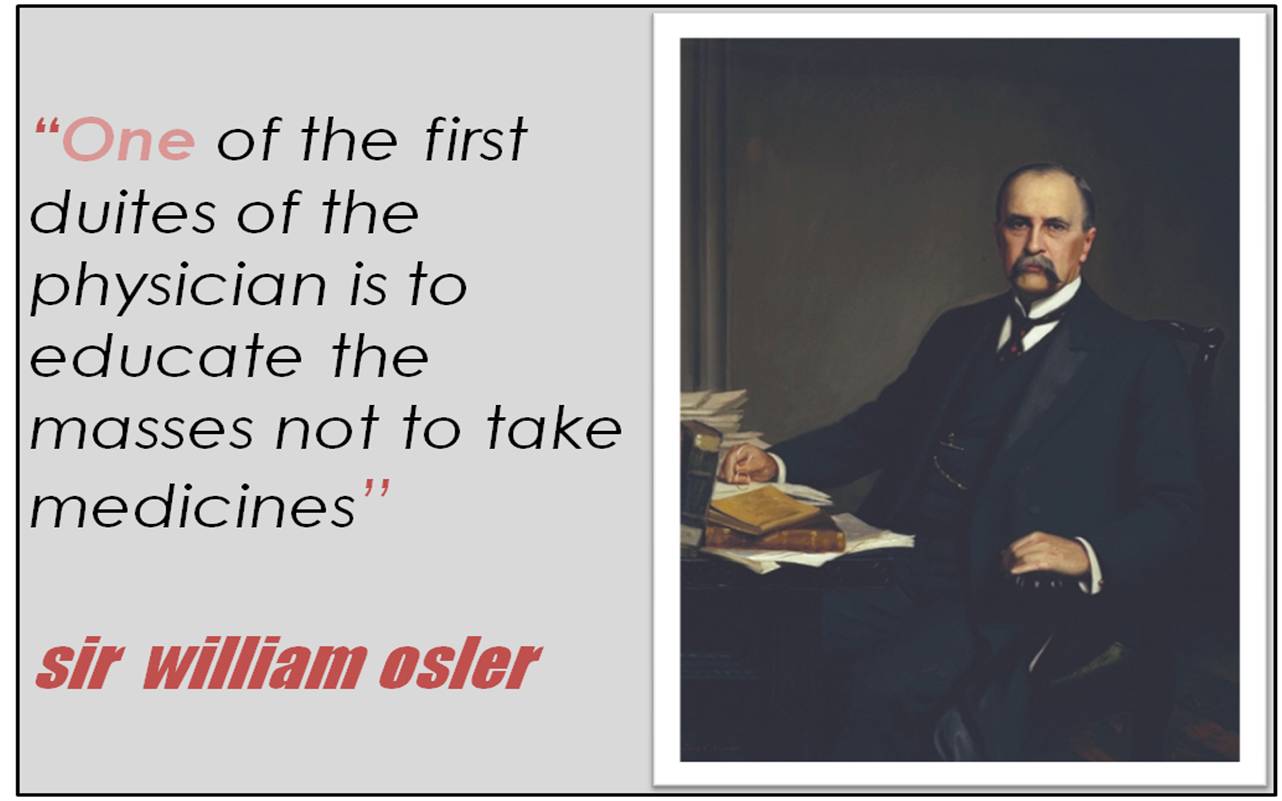
sir-william-osler

I wonder , what would be his comment about ubiquitous stents that rule the current era !

Learnt cardiologist’s will know the true life saving potential of these stents (In the way its been currently used ) Their conscience will also tell how Inappropriate and Indiscriminate usage of stents has possibly injured or consumed more human lives , that may even beat the number of lives saved .(Oh, Its a wild, rude statement friend!)

I sincerely believe the move by Government of India to control the stent price ( to enable all our countrymen to get it) . . . as if “stents are the only staple diet” for heart patients is ill-founded and dangerous .

What the Government may not be aware of is . . .This 45000 crore omnipresent stent industry is playing havoc in the life of patients not only financially but also biologically to harm their blood vessels.

It is near foolish to tackle the scourge of human beings -Atherosclerosis, a diffuse medical disease with a lesion specific intervention .This is especially true when we want to tackle it in population based approach . Yes, some super rich and elite get sophisticated stents thinking that they are privileged .Please understand rich tend to suffer more with technology. Often times non affordability is also a bliss for the poor .(You can’t write any rubbish man !)

Who will tell this to our policy makers ?

Never ape the private sector health care , states must have different priorities.There are Infinite number of studies that very clearly reveal medical management and life style modification is the sure and successful way to tackle CAD.(I think I need not dwell into this as evidence is explicit .)

Meanwhile, let me give one example of the futility of innovation and perils of premature release of half baked science .While one section of Industry is coming out with stents made up of exotic new metals , simultaneously other group is innovating and experimenting the exactly opposite , how to get rid of the metal ie bioreabsorable stents. Mind you, one of the latest generation stents was severely reprimanded in a Landmark trial ABSORB 2 and 3. Its a comical irony some of the hospitals and cardiologists feel bad to miss this red flagged stent that are taken out of their cath lab because of price cap. ( A pat for the Govt for this !)

Its a multi billion dollar Industry (Note : there is no pardon for Indian companies to exploit either !) trying to disseminate a commercially motivated concept intelligently including the stake holder Government in their loop. The move to liberalise stent usage is most unfortunate thing as the Govt has inadvertently increased the risk of abuse .Let the new age Indian not be proud about “Stent for all ” movement since the Govt will ultimately have to shell out for this imperfect therapeutics through public insurance .

Final message

Though capping the price of the stent by Government do carry some sense . . . ultimately I feel its a trap . It’s akin to let loose a dubious modality in public domain within easy reach . Already the companies want to increase per capita metal consumption. That process will only get accelerated now.In a country where bulk of the ACS patients not even get prehospital Aspirin, we talk about primary PCI for all.It is a shocking medical economic hijack played in day light by a new generation thrombolytic called TNK -TPA is able to jack up the cost of coronary care with marginal benefits based on dubious off shore studies. I guess , very shortly the thrombolytic warrior Streptokinase is likely to be declared as endangered species and perilious for STEMI patients.If Govt really wants to tackle population based emergency cardiac care they should first upgrade country wide taluk or municipal level hospital with 24 h coronary care facility with trained doctors who can save more lives than the combined efforts of socially concerned corporate care takers.

Some one should tell the Govt, cath labs would never come into the scheme of things for mangaing ACS in bulk of our country men.The Law makers and the corridors of power should be “forced to realise” there is an urgent & broader issue to be addressed.Its not only in cardiology but in all walks of health delivery system. How to prevent “contamination of medical science by pseudo cost effective scientific interventions fueled by corporate greed ? They should start sensitizing the young medical professionals in medical schools that will help the Noble profession remain Noble !

Postamble

Its heartening to note Govt of India is Indeed taking some harsh steps to make drugs and devices affordable in a fair manner .The new authority National pharmaceutical pricing authority (http://nppaindia.nic.in/ ) has clear targets and are in hot pursuit towards righteousness in health care. Still, they have to be very watchful and work in tandem with medical council of India since commerce masquerades as science , price control alone is not a solution and there needs to be body regulating the true Indications as well .

Visit the site for more Info

http://nppaindia.nic.in/

Now , some one wanted to know,  Can we diagnose unstable angina without Chest pain ?

Crazy question isn’t , Angina by definition  should have chest pain .There is nothing called silent angina , only silent Ischemia  .

  • We know Ischemia can occur silently .
  • We also know STEMI can occur silently (About 10 % of MI do occur without any symptoms )
  • If STEMI occurs  silently  why not UA/ NSTEMI combo ? (Collectively called as  NSTE-ACS)

The debate goes like this .If stable angina can present with equivalents ? what prevents  “Unstable angina”  to present with  Anginal  equivalents without chest pain ?

If  a diabetic patient who had a silent MI in the past  . . .  subsequently  experience  severe episodes of resting ischemia  , will he feel the pain , that is supposed to occur  with his  “unstable angina”  or not ?

Hmm , difficult to guess right,   So it seems highly plausible  UA/NSTEMI  do  occur silently ! Literature hasn’t looked into this specifically. Chest pain is built integral  into definition of UA , infact it is a symptom  complex rather than an disease entity by itself, while NSTEMI is ECG and enzyme combo ! Making the term  NSTE-ACS  look  perfect.

Any other technical explanation ?

The concept of Ischemic cascade says angina occurs last, well after biochemistry , wall motion defect and ECG , hence its distinctly possible for UA/NSTEMI present to be painless !

Final message

Anginal pain perception is related to intactness of neurogenic circuits and also probably the severity of Ischemia.If full thickness myocardial necrosis can be painless in few, nothing prevents from an episode of UA/NSTEMI  be truely painless .

Clinical implication of this conundrum

Can we admit a patient as UA/NSTEMI with out chest pain ?

Yes, it would seem so .

No, we can’t .

Indeed we can , if ECG changes are there .

No, we can admit even with normal ECG if its real unstable angina.

This is the crux of the problem in ERs all over the globe. Our knowledge base is simply not good enough. Every one of us has seen Troponin positive silent NSTEMIs ! but . . . to me still something is missing in the link .

Modern day approach 

Pain or no pain,any  fresh ECG changes ( Both T and ST shifts*) should be rushed to cath lab.Whenever you are not sure .Always better to err on the side of over investigation.That’s the mantra ! So ,you do an Angiogram , find an Incidental intermediatroy lesion which may not be responsible for the ECG changes but you are compelled to go after it FFR//iFR , OCT, IVUS and so on !

*There is huge list of non Ischemic ST/T shifts in ECG that can be read elsewhere .

Counterpoint

Can’t agree with this article. Foolish to diagnose UA without chest pain. Never  treat ECG  in isolation unless its a convincing  ST elevation or depression with clinical input and thorough scrutiny of  past record . Realise , how important is  the basics principles of medicine taught  by Oslers and Cushings a  century ago.


Medical practitioners often need to refer a patient from small clinics and hospital to a higher center  for providing state of the art care provided by specialty hospitals armed with ultra  modern Imaging , gadgets and devices.

Recently, I happened to see an elderly women with ca breast, radiculopathy, dilated cardiomyopathy, triple vessel disease , stented  /by passed  with 3  CABG grafts later, followed by an  ICD and CRT, .Her CRT became non responsive after a failed attempted AF ablation.

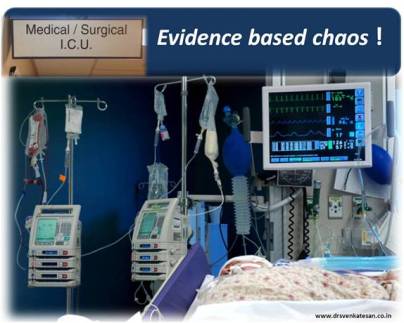
.evidence-based-medicine

After a prolonged stay in the posh AC suit of a renowned corporate hospital the patient was feeling exhausted and weak with multiple tests and procedure.The patient found things annoying as every consultant and support staff behaved like a programmed robots with artificial smiles and compassion.

She and her family  was tolerating things, but desperately required a break from 24/7 attention (which was without much progress either ) . After a mini family confabulation, they decided to request the treating consultant to refer her to a lower center for a more humane care.

From here on its  fiction . . .

The doctor agreed (after Initial amusement ) and asked his secretory  to write  a letter which sounded something  like this,

Please get permission from the hospital desk for referring this 70 year old gentlewoman to a “lower health care center” as she feels exhausted with our treatment and decided to opt for a more simplistic, supportive , compassionate  and humane care that’s is devoid of claustrophobic gadgets and  machines .

We also acknowledge we are neither equipped , nor has personnel  and expertise to provide that sort of human care,  you demand ,! We have to respect science more than individual patient needs . We are taught, paid and live for science first ! so please forgive us.

But, we respect your concern and will transfer you to a primary health center.Thank you for being with us this long , and helping us the master some cutting edge skills and helped science to grow.

picture2

By and large, the concept of tertiary health care can very well be a myth.(With few exceptions)  It means  mechanised  care that primarily involving aggressive organ specialists who want  attack the  disease without mercy for the patient.

The uttering  here  might sound provocative , especially  for the families who have benefited from cutting edge medical technology , . . .

Still ,  the rate of growth of irrational organ or system based  tertiary care is growing in dangerous proportions , and very soon we will realise the disastrous consequences of this pathological mindset of modern medical intellect.

What we need , ?  Emergency bulk supply of  “right and straight” thinking “whole body specialists‘ . Who are they ? they include the  Internal medicine graduates ,humble general practitioners ,family physicians and geriatricians .These genre are currently in the sidelines suffering from artificial low self-esteem (atleast In India !) Soon I expect they should emerge stronger and take control of the sagging medical profession from the clutches of pseudo scientific specialty hospitals who keep the cost of medical care Insaningly high that  drains the  global GDP in a meaningless manner.

Will WHO act ? Should they be conferred the veto power and tightly control when to refer a patient  from a lower to higher center and vice versa !

For those of you who don’t know who is who  ?

WHO stands for World Health Organisation , a united Nation organisation which is the apex medical body & guardian of human health .One of their Job functions is ,they are expected to act when there is Inappropriate health delivery and expenditure .( Unfortunately even most of the medical professionals think WHO exists for only one reason  to eradicate mosquitoes and vaccinate children ).

WHO need not think they exist only to guard health of poor under privileged , they have a critical responsibility to prevent wrong therapies committed to rich and affluent as well ! and more so  these unnecessary modalities  spill over from rich to poor in the name of  equality !

Artificial pacemaker is one of the major discoveries in cardiology that has given new lease of life to patients suffering from serious bradycardia and heart blocks . Now, the technology has grown beyond pacing , for delivering shock ,defibrillate , resynchronise failing heart etc. For accomplishing  all these tasks we need electrical power . . . non stop on board !

Though , the energy required for sustaining an electric pacemaker is miniscule (About 40 micro watts) still, the lithium ion battery can last only around  10 years with the available technology.Various alternate sources for power* are being  explored. One great innovation is on the horizon .A new “scientific spark”  came from a totally unexpected  quarter.

 If Automatic Swiss watch can run without a battery  life long ?  Why not a cardiac  pacemaker  ?

 How about harvesting mechanical energy from the heart itself  ? (The ultimate biological bundle of energy ! ) .

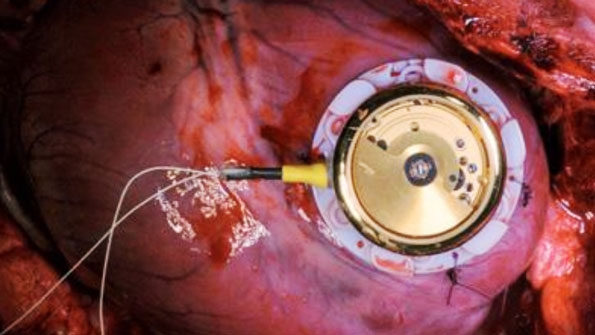
The concept was  originally suggested by University of Berne Switzerland , researchers from Stanford has successfully used the cardiac  muscle activity as a dynamo to generate and store minute amount of electricity that can sustain heartbeats in an electro  mechanical coil loop model.
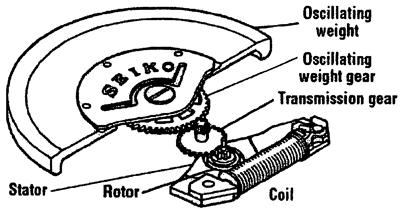
heart-powered-pacemaker

A person’s heartbeat  moves a magnet and generate electricity for a pacemaker
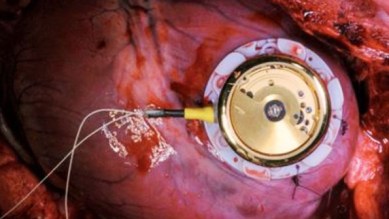
enerharvpromo-1

Trials done on pig’s heart are promising .(Reference 1)

Final message 

The idea may look dramatic , but it works.Hope  it becomes reality in our patients in near future.

Further reading

* Creating gene modified  biological pacemaker cell is .

Sharing this  article from  Via: New Scientist

By Lisa Zyga
Science Blogger
InventorSpot.com

  At first glance, this idea seems somewhat impossible, like using the movement of an engine’s pistons to power a car. However, researchers David Tran and his colleagues from Stanford University explain in a recent patent that the idea is very plausible. For one thing, a heart-powered pacemaker can generate and store more electricity than required to operate, and use the stored energy when needed. Also, a battery could be included in the pacemaker, and power from the heart would extend the life of the battery.

Overall, the researchers hope that the invention could at least double the lifetime of today’s pacemakers. Currently, the batteries in pacemakers can last up to ten years, although they typically last only four to five years. (Originally, batteries lasted for as little as a year.)

The invention also has the potential to reduce the size of the pacemaker by one-half or more. For example, a typical commercial pacemaker with a volume of 16 milliliters may be reduced in overall size to as small as 1-8 milliliters.

An embedded generator could continuously produce power in several ways, such as through electromagnetic induction or the piezoelectric effect (electric energy generated via mechanical stress).

In the Stanford team’s design, the generator is implanted near the heart wall, such as attached to the myocardium or pericardium, which would subject the generator to regular pulsating movements produced by the beating heart.

The generator itself consists of a magnet, a conductor (both micro- or even nano-sized), and electrical leads hooked up to the medical device. Contraction of the heart muscle causes relative motion between the magnet and the conductor (such as a coil of wire). This relative motion between the magnetic and coil induces an electric current in the wire, which is transmitted through the leads to the implanted pacemaker.

Movements produced by the beating heart would have a frequency of between about 0.5 Hz and 2 Hz, which could generate between 40 microwatts and 200 microwatts of power. The pacemaker would only require about 40 microwatts, so the excess power could be stored and used for later use, such as when the heart stops beating.

Besides using the movement generated by the muscular contractions of the heart, other versions of the pacemaker could generate power from heat differentials, physiological pressures, and flows and movements, such as blood flow. And in addition to pacemakers, the researchers suggest that similar systems could be used to power defibrillators, ventricular assist devices, muscle , neurological stimulators, cochlear implants, monitoring devices, and drug pumps.

Reference

http://powerelectronics.com/energy-harvesting/energy-harvesting-poised-eliminate-pacemaker-battery

Knowledge can be a dangerous asset sometimes . A modern day cardiologist reassured a patient  who had an unusual dyspnea after a muti-vessel stenting for a not so complex lesions following an anterior MI.The doctor  was not mystified when the patient uttered this complaint. In fact he was so cool , reassured the patient since he was taking  Ticagrelor ,and it’s well recognised to cause dyspnea in some patients.

Few days later patient  called  again and informed that the  dyspnea is getting more intense  and ultimately he was rushed to hospital only to diagnose  subacute stent occlusion and a fresh ACS.

What do you learn from this story ?

Caution , extreme caution is required when dealing with symptoms following PCI and especially dyspnea.

A brief review about  Ticagrelor dyspnea conundrum

  • Ticagrelor  ,a reversible P2Y12 blocker  has a peculiar side effect of dyspnea (Which happens to be a cardinal symptom of heart disease as well )
  • Its reported by up to 30 % of patients who receive it.
  • It can be either exertional  or even at rest.
  • It seems to be dose dependent
  • Onset within 24 hrs , upto 1 week.
  • Pulmonary function not affected.
  • Cardiac function thought to be unaffected.(No correlation with LVEDP though)

Mechanism of dyspnea with Ticagrelor (Presumed)

  • Its direct cortical effect due  sensory neurone  P2Y12 blockadae.
  • Due to Adenosine

Remedy 

  • Reassurance(Possible in few , but risky unless absolutely confident)
  • Encourage Tea intake (Theophylline might nullify if its Adenoisine induced .
  • Discontinuation is  the specific option (up to 10%)

Final message.

Dyspnea is a  unique side effect of Ticagrelor. Unexplained dyspnea is a delicately dangerous symptom in a post MI patient as it may directly imply a silent ischemia induced LV contractile dysfunction and acute raise in LVEDP.

Don’t ever take it easy and attribute all episodes of  dyspnea to Tiacagrelor .If you are really not convinced consider switching the patient to a different anti-platelet drug. Its simply not worth for both patient and physician to spend anxious moments.

Reference 

Cardiac arrhythmias  are tackled by drugs, devices, electricity etc. How about using the light energy ?

It would be sort of revolution if we could tame dangerous cardiac arrhythmias  by optical energy.Exciting new developments are happening at Jhon Hopkins.The emerging field is optogenetics.Preliminary mouse  and human MRI models suggest  red light has a unique property to interrupt electrical  signals in cardiac tissues.(Tissue level induction of light sensitive protein?).It has been shown to revert ventricular arrhytmias.

Reference

https://www.eurekalert.org/pub_releases/2016-09/uob-tol090816.php

A preview

Curious thoughts and a corollary in Hindu mythology

optical-defibrillation

There are anecdotal reports in vedic Indian literature  where super powered sky Gods  equipped with the power of light (Lightening/IR rays ? ) can bring life to dead man on earth  . . . Is it the same  optical defibrillation we are talking about now ?

This paper was presented as a poster (Not good enough for  oral ! ) in the just concluded CSI 2016  (Cardiological society of India ) Annual conference at Kochi, India.


What constitutes successful  Primary PCI ?   A proposal to include “ LV dysfunction”  as an  essential  criteria !

A  series of breakthrough technologies  in drugs , devices, techniques has revolutionised the management of STEMI in modern times.This  includes various formats of heparin , antiplatelet agents thrombolytics  and coronary interventions.Of all these, primary PCI is considered to be the greatest thing to happen in STEMI care.

The success of primary PCI is currently defined as diameter stenosis less than 30% and TIMI 3 flow on final angiography without procedural complication. True success of reperfusion essentially lies  in the salvage of myocardium and in the prevention of LV dysfunction. In real world scenario we often find a paradox , ie Inspite of  successful pPCI by current definition a subset of patients suffer from significant  LV dysfunction. Surprisingly, LV dysfunction has  never been included in the definition of successful primary PCI .

success-of-primary-pci

In this context we did a reversed cohort  study  of patients with significant LV dysfunction (<40%) following primary PCI to find out possible factors contributing to LV dysfunction.10 patients who had LV dysfunction inspite of successful primary PCI were the subjects of the study. Patients with late PCI  beyond 12  hours were excluded .Echocardioraphy had been done at discharge and 2 weeks after the procedure to assess LV function.

TIMI  3  flow  has been  documented in all  patients at the time of primary PCI.6 patients had undergone pPCI within 6 hours.4 had it by 12 hours. 7 patients had a smooth , fast  pPCI as described by standard protocol.Of these,  2 patients had LV dysfunction inspite of TIMI 3 flow established early.7 patients 3 had complex angioplasty with no reflow managed subsequently.One had deferred stenting after 4 days for IRA.Non IRA lesion were also  tackled in two.

We also confirmed  there is no linear no correlation  between TIMI flow and  subsequent LV function .This becomes vital as time and again we are seeing PCI reports with successful TIMI 3 flow only to find  weeks later  thinned scarred ventricle. Time to reperfuse with anticipated and unanticipated procedural delay  was also  a critical  factor.

However, its clear the  incidence of significant LV dysfunction inspite of  timely, and apparently smooth  PCI is real .Why this happens is beyond the current reasoning. A scientific basis for  individual myocardial sensitivity to ischemic time is yet to be found. (Dynamic host dependent time window ?)

Meanwhile , It seems prudent , we should awake to a harsh reality of practicing coronary care  with a seemingly incomplete criteria for success of pPCI . Its proposed,  an  acceptable levels of  “LV dysfunction at discharge ” (It could be > 50 %) as an essential criteria  to define the success of pPCI  .Custodians of STEMI care should  immediately rectify this glaring omission. This will dramatically impact the current  outcome analysis of STEMI and help Improve the quality of care.

Conference bulletins

dr-venkatesan-e-poster

E-PosterPresentationSat10thDec csi cohin 2016

Session – Preview 

Medina classification  is the most popular angiographic classification  of bifurcation lesions based on the presence or absence lesions at the three levels  of branching  (0,0,0 ) to (1,1,1). The popularity of this scheme is essentially due to its simplicity.

It can further be subdivided according to angle and size .Though there are three angles possible it is the angle of LM with LCX that matters most.

T shaped  left main. Angle of LM-LCX is around 90 Degrees

Y shaped left main. Angle of LM- LCX is > 120 Degrees

Three types of Y according to size of branch vessel size.

Y1 Large left main divided two equal LAD, LCX.

Y2 Left main and one of its branches are equal

Y3 All three are equal diameter.

Here is a series of  lectures on left main (Probably the best I guess  !)  from Dr.Boris Varshisky ,Hadassah University hospital  Jeruselam.He critically discusses about the   nuances of left main disease from pathology, technical and therapeutic considerations.

Spend some time on these videos , you should be able to learn about

  • Distribution of left main disease
  • The complexities in defining the true shapes of of left main ostia .(Ostial sharing between LCX and LAD ?)
  • Lesion based strategy
  • Carinal shift vs plaque shift
  • Stent sizing in Y 3 left main

and much , much  more !

We know,  classical Atrial flutter (Also referred to as typical /Common AF) records  saw toothed F waves  due to continuous atrial electrical activity across a macro- reentrant circuit within right atrium.

Though this  saw tooth pattern is easily recognised , it’s often difficult to say  whether the saw is facing upwards or downwards ?

ie  Is the flutter waves are inverted or upright ?

The general rule is the shallow stroke (one with a lesser slope) is to be termed  as antegrade  / initial deflection that will determine the direction of flutter waves.

mechanism-of-inverted-flutter-waves-in-atrial-flutter-saw-tooth

This is because , the forward limb traverses the slow path  of the circuit namely the cavo-tricuspid Isthmus, it then ascends up in the inter atrial septum (There by inscribing inverted F  waves  in leads  2,3,aVF .The return circuit  is relatively fast,  crossing the antero -lateral   free wall  right atrium and hence the later half saw tooth has a  sharp deflection )

In Reverse typical flutter  the flutter waves are upright (with a shallow slope ) in inferior leads but still uses the cavo- tricuspid Isthmus

* Note: In lead the polarity of F waves in V1 it will be opposite of that of inferior leads.

mechanism-of-flutter-wave-upright-or-inverted

Why should we bother about direction of flutter waves  ?

It may not be important for those hifi EP guys who can ablate complex arrhythmia with intra cardiac GPS catheters and accurate electro anatomic mapping system. Still , the  surface ECG always help us understand the basic circuits of flutter.

Reference

atrail-flutter-review-best

Reverse typical flutter should not be confused with atypical flutter where typical saw tooth waves are uncommon.The later group is termed as atypical atrial flutter that arises from various other focus including left atrium.