Feeds:
Posts
Comments

Archive for May 31st, 2012

Hypoxia is most important feature of acute pulmonary embolism.

It occurs due to variety of mechanisms

  1. Ventilation perfusion mismatch is the major  mechanism  ( Normal ventilation /Reduced perfusion)
  2. Atelectasis of lung  ( Left to right shunt)
  3. Loss of lung volume due to pulmonary infarct  contribute later
  4. Low mixed venous Oxygen saturation  (Tissue hypoxia -more extraction )
  5. One more important cause is right to left shunting  across PFO  due to sudden elevation of right atrial mean pressure reflected from RVEDP .

Can  acute pulmonary embolism be diagnosed  with out Hypoxia ?

Surprisingly many standard text books mention hypoxia is a soft sign . In fact , Braunwald’s  text book of cardiology  do mention about it .

Significant acute pulmonary embolism can not occur without affecting o2 saturation .

However , it is possible sub acute  pulmonary embolism could occur with normal oxygen saturation.

Final message

Hypoxia is indeed a hard sign  for most events  of major pulmonary embolism . It can even be termed as an essential criteria .A hypoxic , tachypenic patient in  sinus tachycardia with echo evidence of  new onset RA or RV dilatation is almost 100 % specific for acute pulmonary embolism . ( This becomes 200 % if he or she has DVT as well !)
Read Full Post »

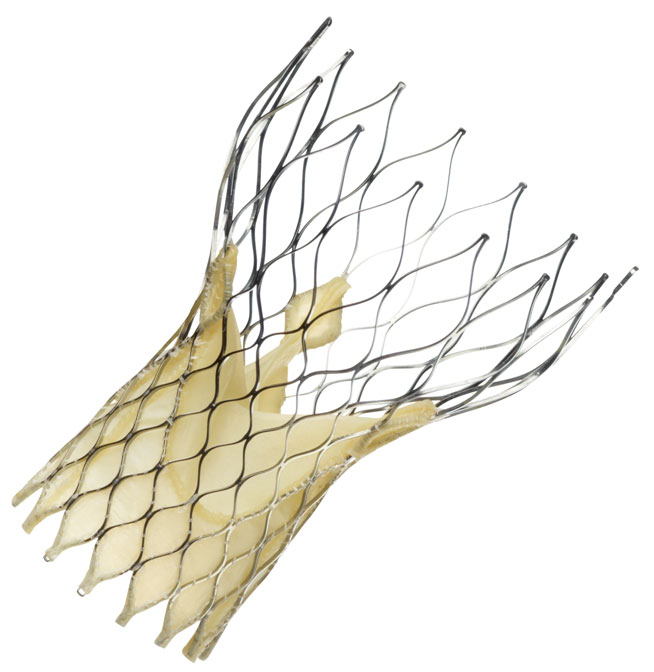
Cardiologists are  closing in ,  trying to capture the final frontiers. The  trans-cutaneous Aortic valve Implantation now has  a two year follow up. (NEJM March 2012  Issue) . The results are encouraging .

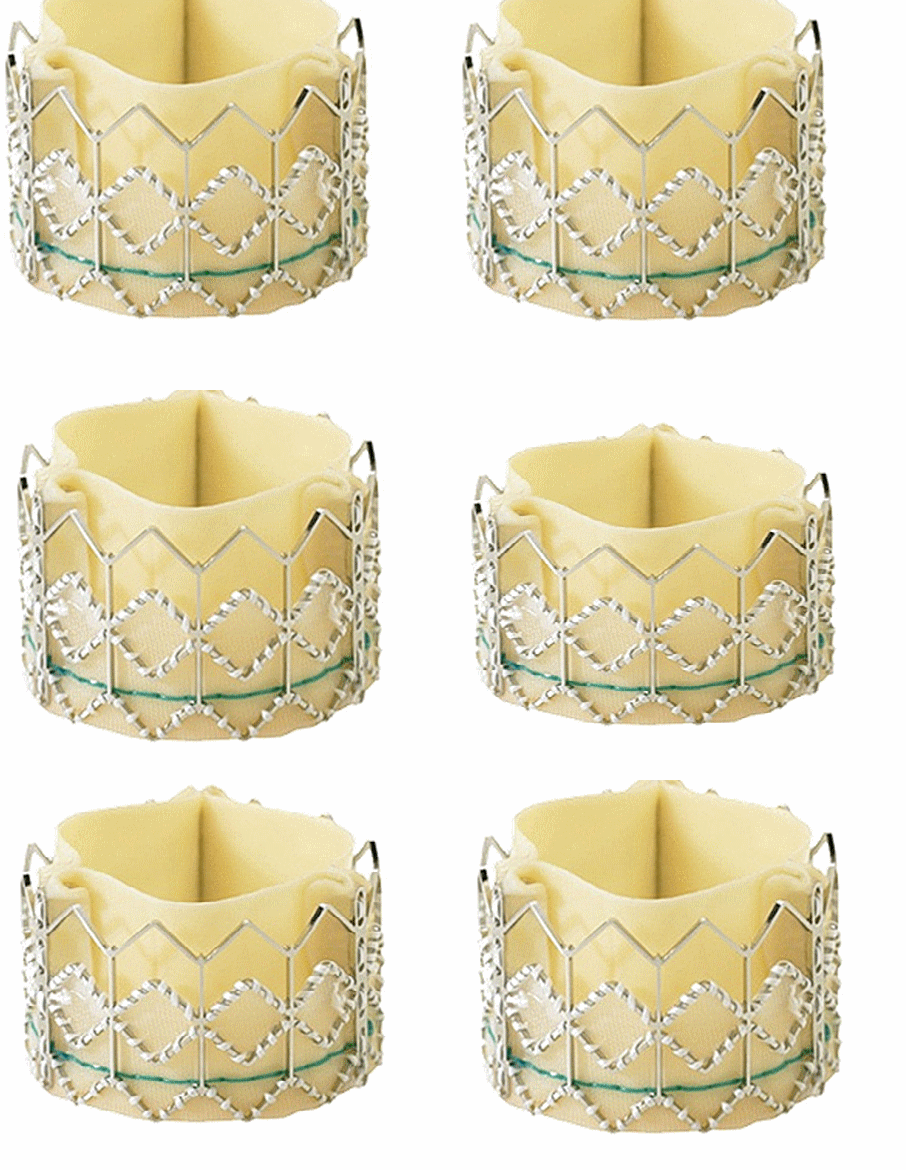
While two companies are fighting for the supremacy in TAVI ,   the real  threat is for the cardiac surgeons. Currently Edward  Sapiens  has an edge over Medtronic core valve as it  has a provision to redeploy or fine-tune the  final geo- position.

Reference

PARTNER 1

PARTNER 2

Medtronic core valve

Open access  article  by Martin Leon

http://www.rmmj.org.il/userimages/22/1/PublishFiles/25Article.pdf

Read Full Post »

We owe a lot to our past genius minds for our current understanding of  cardiology.Youngsters   should  know how the filed of cardiology  evolved .Few  great  brains  taught us how to think   hemodynamically  in the setting of  STEMI.

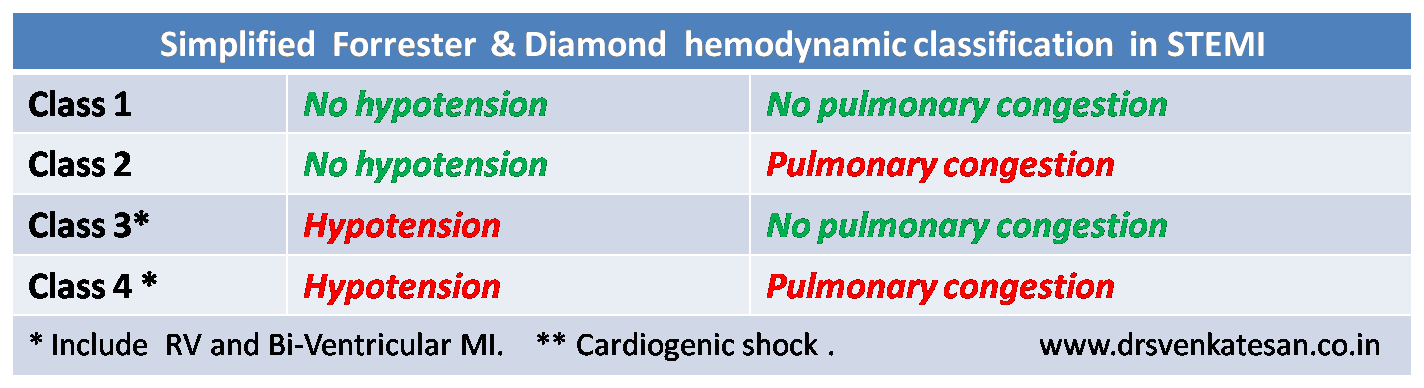
The Diamond and Forrester classification is  an  undisputed achievement of  modern cardiac  hemodynamics.They gently converted the  clinical classification of  Killip into more scientific  hemodynamic  one .Both these classification continue to fascinate  us even in the era of instant PCI for STEMI .

And youngsters  should read this again and again and critically evaluate their patients  within this system.The two key parameters he used was PCWP of  18mmhg /And cardiac Index 2.2liters . He also suggested a simplified version where  intra- arterial monitoring is not feasible.  The   cardiac Index could be replaced by systemic blood pressure  lung congestion   represents PCWP >18mmhg .

The DF classification would become

An important inference from DF classification !

The class 3  of   DF   grading  has no pulmonary congestion  but persistent hypotension . What does it mean ?

It is a stunning proof of a great concept.  As the patient moves (Worsens)  from  DF  two  to   DF three  , the lung congestion tends  to regress . This sub-set  actually  means   development of  bi-ventricular failure or isolated RV failure  . This is an ominous sign and indicate a bad prognosis . ( One may call it a paradox  , according to conventional thinking   “The more the lung crackles  , dismal  is the outcome”   DF  grading clearly proves this is  not  always true ,  as long as  the systemic pressure is maintained  crackles can be managed effectively  . In  DF 3  the right ventricle  as a pump is  becoming so weak it is not able to congest the lungs  at the same  process leads to  systemic hypotension.

James Forrester

http://www.cedars-sinai.edu/Bios—Physician/A-G/James-Forrester-MD.aspx

Forrester is also a pioneer in how we evaluate chest pain in the emergency rooms and cardiology OPDs .  His thoughts on utilization of Besean theorem revolutionized   the interpretation of exercise stress testing.

* Killip is a genius of different caliber would be discussed later .

Reference

Forrester, J, Diamond, G, Chatterjie, K, et al Medical therapy of acute myocardial infarction by application of hemodynamic subsets (first of two parts). N Engl J Med 1976;295,1356-1362


Read Full Post »