Feeds:
Posts
Comments

Archive for the ‘acute coronary syndrome’ Category

How can we use AI as a tool of knowledge distillation ?

Here is a deep discussion with Grok 3, on the merits, limitations & validity of DANAMI 2 and PRAGUE 2 , the two old studies on pPCI. Curiously , we don’t have any other studies to quote. As on 2025 , superiority of pPCI hangs precariously on these two decade old studies, which has some serious omissions in the primary end point and its Interpretation. To get into the facts , please go through the following link.

https://grok.com/Is primary PCI really superior to lysis in a global perspective /

It is a long chat, I am sure most of you can’t spare your vital time. But, the truth comes out only at the fag end of the conversation.

Read Full Post »

Question

A cath lab is an “optional accessory” in the management of Acute coronary syndrome (ACS).

True or False ?

Answer

Without a CCU…you can never, treat any Acute coronary syndrome … while we can treat most ACSs successfully without a cath lab “ (If you still got the answer wrong …sorry, no comments)

Best comment

Accessory is ok , but it is “20% foolish” to state cath-lab is optional, it should be mandatory.

Read Full Post »

Cardiogenic shock (CS)is the most feared event following STEMI. The incidence is up to 5 to 10% with a mortality rate of around 50-60%. Still, we are finding it hard to bring this down below 50 % .There is one less addressed issue in ACS literature. We tend to perceive CS as an exclusive complication of STEMI. The fact is that NSTEMI can also result in CS is less recognized. The incidence is half of that of STEMI, i.e., 2.5-5%.

Mechanism of CS in NSTEMI

One may ask, how can CS occur in NSTEMI with partial occlusion with a non trans-mural MI. ACS pathophysiology is not that simple. Ischemic LV dysfunction (Global stunning) without necrosis is equally sinister. This is what happens in some high risk sub sets of NSTEMI.

How is CS in NSTEMI different ?

1.Global ST depression (AVR.V1 might show little elevation with considerable overlap of left main STEMI vs NSTEMI )

2.Onset of NSTEMI-CS occurs late (48-72 hrs)

3.Severe multivessel disease is more common (It is likely ,presence fold STEMI , is an important factor that is likely to precipitate CS when a new NSTEMI occurs.

4.Echo is likely to show more of a Global hypokinesia rather than specific coronary territory

5.Mechanical complication, though less common in NSTEMI , Ischemic MR especially with LCX- NSTEMI can be problematic and much commoner than we think.

6. A subset of NSTEMI precipitated by acute severe HT and flash pulmonary edema has excellent prognosis if BP is reduced promptly. (This can be simply a equivalent of HT, with no true supply side ischemia with LVF with global ST depression )

Management

*More or less similar to STEMI with aggressive opening of culprit lesions with few differences. (unlike STEMI, CULPRIT SHOCK trial doesn’t apply here )

*May require CABG more often

*Mechanical circulatory support will be needed in many

*Finally, and importantly, there is more likelihood of systemic factors like sepsis, Anemia, or renal or kidney failure contributing to the CS in NSTEMI than STEMI. In fact, we have observed pre-existing HFpEF can be a contributory factor.

Outcome

There are differing data about prognosis of CS in STEMI vs NSTEMI. Early mortality is higher with STEMI; but, late mortality converges. Ironically, in many patients of CS in NSTEMI, the outcome can be worse than STEMI, as there is no single culprit and myocardial salvage does not appear to be a primary issue. (Ref 2)

What does SCAI guideline say about CS in NSTEMI?

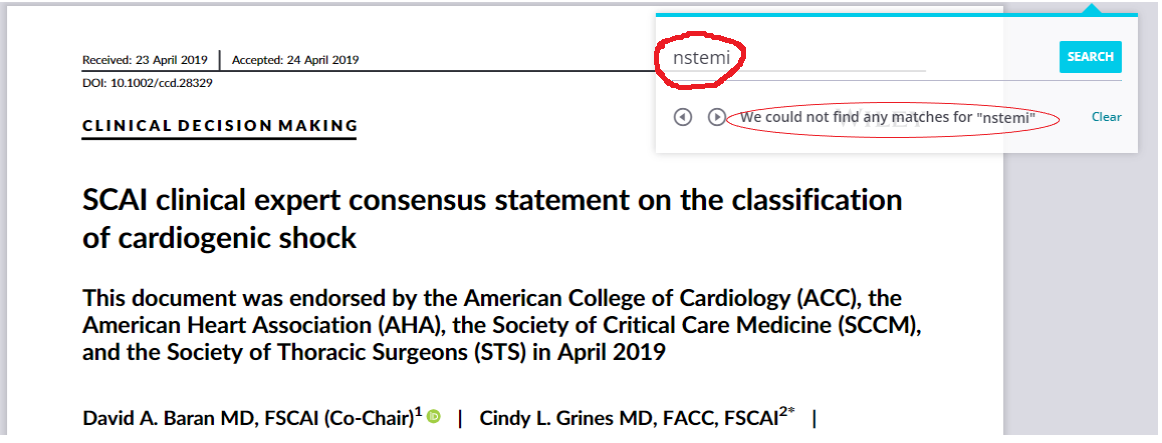
Nothing, yes it is true. Are you surprised ? A search for the word NSTEMI in both these document drew a blank. May I kindly request SCAI team to look in this, CS in NSTEMI deserve better recognition in their guidelines at least in their next edition (Ref 3,4)

I am not sure why SCAI classification didn’t address CS in NSTEMI as a separate entity.

Final message

Surprisingly , CS in NSTEMI is not a well researched entity in cardiology literature. Fellows are requested to analyse the GRACE registry once again or create their own institutional experience.

Reference

1.Martínez MJ, Rueda F, Labata C, Oliveras . Non-STEMI vs. STEMI Cardiogenic Shock: Clinical Profile and Long-Term Outcomes. J Clin Med. 2022 Jun 20;11(12):3558. doi: 10.3390/jcm11123558. PMID: 35743628; PMCID: PMC9224589.

2.Anderson ML, Peterson ED, Peng SA, . Differences in the profile, treatment, and prognosis of patients with cardiogenic shock by myocardial infarction classification: A report from NCDR. Circ Cardiovasc Qual Outcomes. 2013 Nov;6(6):708-15. doi: 10.1161/CIRCOUTCOMES.113.000262. Epub 2013 Nov 12. PMID: 24221834.

3.SCAI 2019 Catheter Cardiovasc Interv.2019;94:29–37

4.SCAI 2022 consensus update.

Read Full Post »

“We have a 24/7 cath lab with an open door policy. Our cardiologist arrives at 15 minutes’ notice. Door to balloon time is less than 60-90 minutes”, 

“Great, so, you can always offer a successful treatment for STEMI”

“No, that we can never guarantee.” 

 “Oh, It Is not the answer, I  expected”

“I agree, it sounds disappointing, but. truths are less pleasing. What I am trying to say is, there are a number of factors other than the availability of a grand cath lab and agile and effortless hands, that try to reperfuse the myocardium in distress.  I agree, we do save lives occasionally in a dramatic fashion. Recently we resuscitated an almost dead man with CPR and ECMO-guided PCI. But, most times it turns out to be just a customary ritual that takes us to the legal and therapeutic  endpoint* of STEMI management”

*Both salvage & non-salvage

“I didn’t get you, Can you explain further?

See this curve and try to understand it yourself. (I would say, this is the ultimate curve to understand in the entire field of coronary care)

Can you guess what will be the outcome for C to B, or B to A ?  In the real world, a substantial number of interventions take place at an Invisible point E beyond A  Source: Gersh BJ, Stone GW, White HD, Holmes DR Jr. Pharmacological facilitation of primary percutaneous coronary intervention for acute myocardial infarction: is the slope of the curve the shape of the future? JAMA. 2005;293:979–86

Read Full Post »

A young Indian superstar actor Punnet Rajkumar, suffered a sudden cardiac death last week during a workout at his gym. We don’t really know what happened, was it really a conventional heart attack ? or simply an exercise Induced arrhythmia or an isometric dissecting injury to the coronary arterial (or Aortic) wall. Only a postmortem would have thrown some light. (I am not sure what the ER room ECG showed though) He had excellent physical fitness and was following a good healthy lifestyle. One possibility is extreme physical exertion.

It is ironic, while a sedentary lifestyle is a chronic coronary risk factor, excessive physical activity in the background of emotional stress can be turn out to be an acute risk factor. (This is not to frighten all those young and energetic, it only conveys a simple message. Moderation is a must in any indulgences in life)

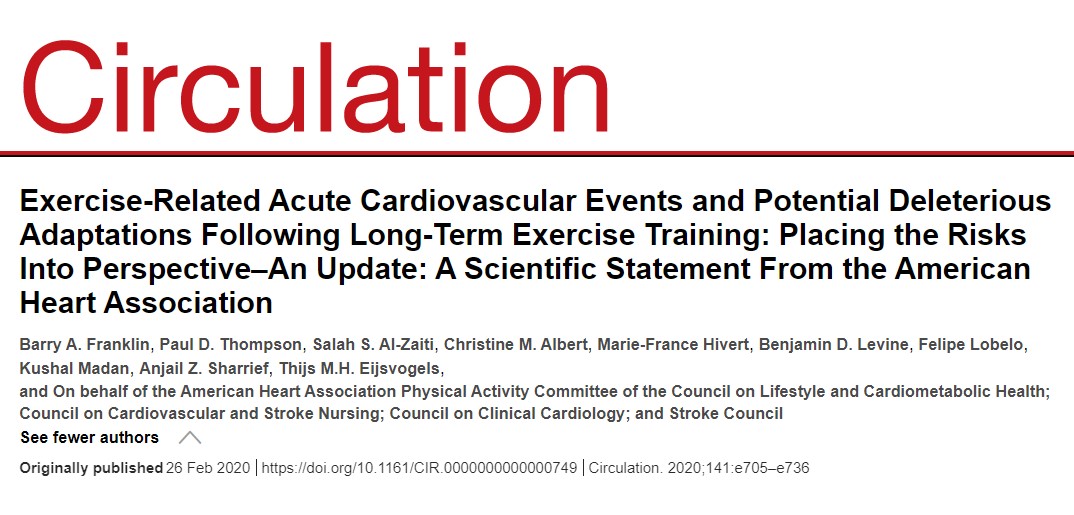
AHA has made an elaborate scientific statement on this Issue.

Meanwhile, the entire nation went into cardio-panic mode and TV media houses have become free cardiology consultation rooms. How many will realize sudden cardiac arrest and heart attacks can be totally two different entities. Further, who can teach the public, that endpoint of any life has to be cardiac arrest or a standstill. How unscientific does it sound when someone suggests a CT angiogram for all aged over 40 years ? Guess, who will enjoy whipping and sustaining such a frenzy.

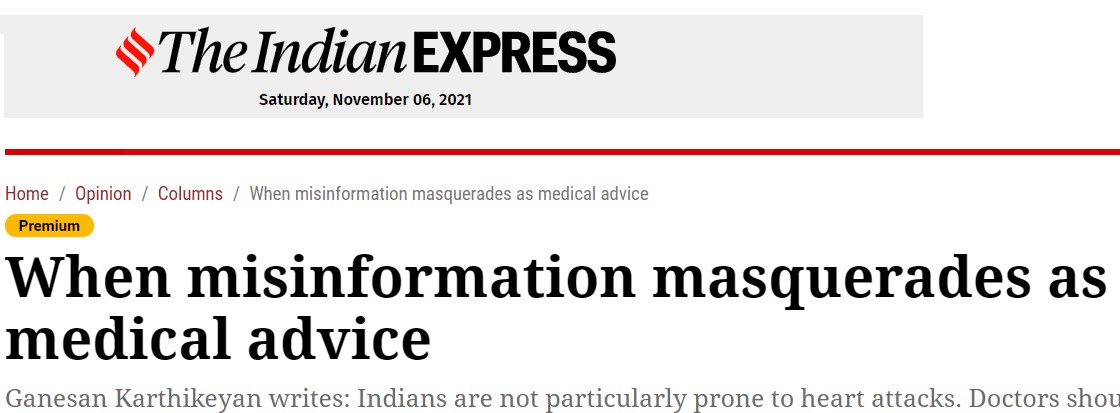
Here is a precise article in Indian express that puts this episode into perspective.

https://indianexpress.com/article/opinion/columns/puneeth-rajkumar-death-doctors-hearth-attack-health-7606581/

The author is Dr. Ganesan Karthikeyan, professor of cardiology at AIIMS with a Global reputation.


Read Full Post »

It appears,antiplatelet agents are waging a turf war on the CAD battlefield. It is no secret either, the fight often goes beyond academic reasons. Though NSTEMI connotes a true cardiac emergency, it consists of a highly heterogeneous population. A patient with UA can be treated even at home (Low-grade angina with little ECG changes, when it’s due to Increase demand situation). While, in the other extreme of NSTEMI, a patient with a GRACE score >200, in Ischemic  LVF, might need an emergency multivessel angioplasty along with Mitra clip ±  ECMO support. 

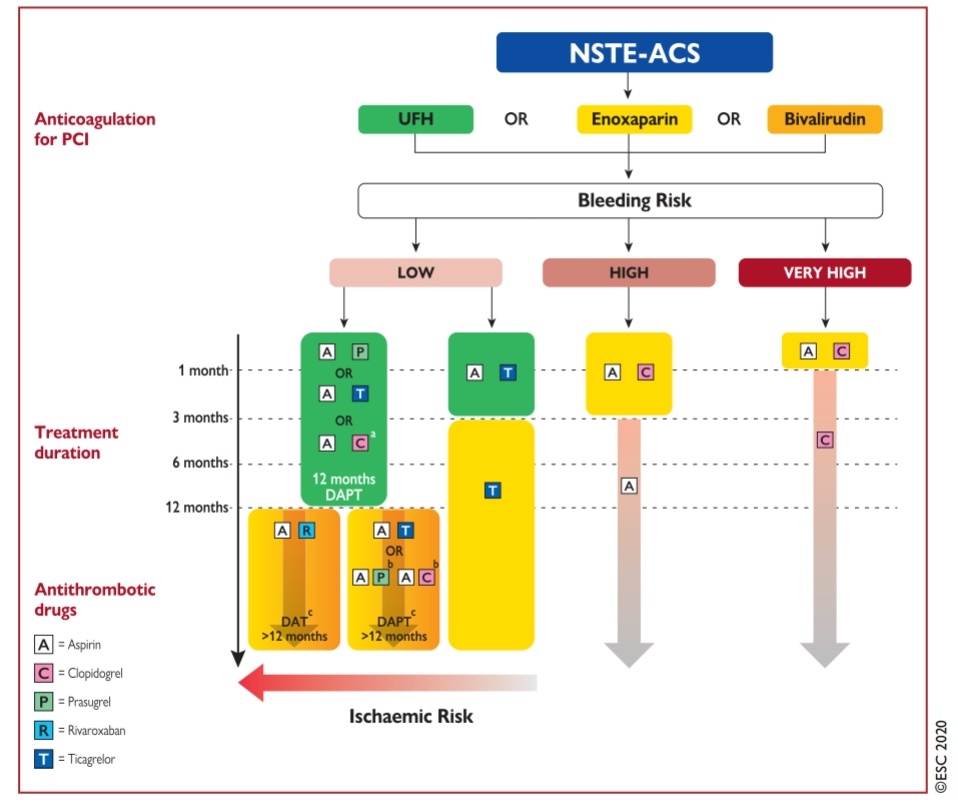
Antiplatelet agents along with heparin will remain the cornerstone* in the management of NSTEMI/NSTEACS, irrespective of our fine catheter skills within index lesion. They are administered right from the pre-hospital phase/ In ER, CCU/ or on way to the cath lab(upstream)/or within the cath lab/or after CAG /PCI.  It is the right balance between the prevention of stent-related coronary thrombus vs systemic bleed we are worried about. Definitely, DAPT is warranted. (See the chart below) Prasugrel has been reinvented as the most powerful P2/Y12 blocking antiplatelet agent. It squarely beats its other colleague drugs like Aspirin, Clopidogrel, and Ticagrelor in terms of potency as well as its risk of a bleed. This is the current antiplatelet protocol in NSTEMI in a patient planned for PCI after visualizing the coronary anatomy. Note, Aspirin plus Prasugrel combination occupies the top slot among various options. The principle of DAPT strategy is all about Initial escalation to match the heightened risk of thrombosis/ cardiac events and later de-escalate once the risk period is over (Which can vary between 1 month to 12 months or even 2 years)* The popular concept of attributing NSTEMI to platelet clot and STEMI to fibrin clot is no longer valid. The contribution of the individual component(white vs red)  in a given load of coronary thrombus was never quantified accurately. That’s why antiplatelet agents alone are grossly inadequate in NSTEMI. This will be vouched by this NSTEMI algorithm, which begins with red clot busters heparin. 

So, how to handle sharp-edged drug-like Prasugrel?

A powerful drug-like Prasugrel is at high risk of being misused. It has taught us some harsh lessons in stroke. So, we have to be wiser to extract the maximum out of this drug in the presence of a high thrombotic milieu (or at risk of developing it after a PCI.)

Since ECG and clinical features are not sufficient to predict the coronary thrombus. It is suggested to have a look at coronary anatomy and decide only if a PCI is contemplated.Some of the situations where Prasugrel is likely to be Indicated  

  • Any PCI with a stent in the culprit artery.
  • High  thrombus load
  • Prolonged procedure time


    When to Avoid Prasugrel?

    Just looking at coronary anatomy is not sufficient.  Estimating the risk of bleeding is required. Attempting to use various scoring systems during a cardiac emergency is a self-inflicted mathematical burden. In my opinion, none of these scoring systems(CRUSADE , ACUITY,  ARC-HBR) truly discriminate patients in a useful way. Mindfulness with an eye on co-morbid conditions is required.This has to be matched with coronary lesion /PCI complexity. Realistically, the confidence in our technical adequacy of stent deployment shall decide the need for aggressive post PCI  DAPT or anticoagulation

Final message

Just because we know the coronary anatomy, don’t expect prasugrel to be kind enough to lower the risk of stroke. The risk is the same whether we know anatomy or not. It is the funny evidence base we have created that makes us believe it so. Routine DAPT for all patients with ACS is not warranted without assessing the bleeding risk. Meanwhile, there can be an important subset of patients who can really benefit from prasugrel even within coronary care units who are unplanned for PCI. (Which the current guidelines seem to forbid without any valid reason)

Postamble

We know, stents love to befriend thrombus instantly, that demands aggressive antiplatelet/anticoagulants) which beget bleeding. So, should we stent all lesions in a given patient with NSTEMI ? is a very valid question (rarely asked though) needs to be answered by the custodians of patients’ heart. When dealing with a complex PCI case scenario, simple mindfulness with an eye on comorbid conditions and downgrading ourselves to a good general physician mindset is welcome.

Reference

1.The DUBIUS trial downstream vs upstream use of antiplatelet agents in NSTEACS- No difference

https://www.acc.org/latest-in-cardiology/clinical-trials/2020/08/31/21/44/dubius


 2.

Read Full Post »

It was April 15th 1912, Titanic, the Invincible, had just sunk into the dark waters of the Atlantic coast off Newfoundland. Exactly same time around, Dr. James Herrick, In Chicago, Illinois was busy documenting the first diagnosed case of acute coronary thrombosis. A new disease was born ie Myocardial Infarction. This was also the era of the Noble Prize-winning  Invention of the ECG machine by Waller, Einthoven, and Thomas Lewis & co that sow the seeds for the specialty of electro-cardiology.

Though much was studied about MI with pathological specimens in the subsequent decades, there was a lull in the efforts to define the entity of myocardial Infarction till WHO  defined in the early 1970s. It was dogmatic, still fair enough. (Clinical, Enzymes, ECG criteria, with  any two feature, must be present to diagnose )

Since then, the field of cardiology has seen unprecedented development in both the diagnosis and treatment of ACS. We now have a universal definition( EHJ 2019 Thygesen K ) that asks us to triage based on high sensitive troponin followed by clinical and other parameters. STEMI usually doesn’t have much diagnostic confusion.

Nomenclature Issues in NSTEMI/UA

The definition of NSTEMI  refuses to settle, though we have come a long way since the times  UA/NSTEMI were clubbed together as siblings. The term unstable angina was coined by one of the most revered cardiologists of our times  Dr. Noble O Fowler in 1978. They are the same one hitherto referred to as Intermediate coronary syndrome/Pre Infarction angina. Later, if enzymes were raised it was labeled as non-transmural/Non-Q  MI. This became the classical NSTEMI later changed to NSTEACS (Still it is valid)

The semantics surrounding the NSTEMI  is unlikely to end as long as we depend largely on ECG to diagnose and treat complex coronary obstructive syndromes. This, by no means, undermine the importance of ECG in this setting. It will remain the gold standard as far as, I can look into the future.

Some observation about the new ESC 2020 NSTEMI guidelines

Anyway, ESC 2020 has addressed this issue. It suggests a new term “ACS without persistent ST elevation” for NSTEMI (Ideally they should have used this abbreviation  NP-STEACS)

(*I guess, the current ESC 2020 guidelines really wanted to get rid of both NSTEMI/NSTEACS for a very valid reason but still it was worried about the confusion it might create so retained the old term NSTEMI/NSTEACS  )

The categories included in the current NSTEMI scheme are

1.Transient ST elevation (How transient ? Prinzmetal/ Non Prinzmetal ?)

2.Persistent ST depression

3.T inversion

4.Flat (Absent ) T wave

5.Pseudo normalization of T

It may include the following as well (Not in official ESC 20220 guidelines)

6*.Hyperacute T (Very early STEMI ? or NSTEMI?

7*.Wellen/Dewinter or its variants

I think ESC is to be appreciated for recognizing an off ignored observation that UA may have a transient ST elevation and end up later as NSTEMI/NSTACS. This group of ACS still poses a challenge for us to understand the overlap between total and subtotal coronary occlusion (Non-Prinzmetal ST elevation)

Final message 

Does this nomenclature issue create problems in management? 

  • Yes, it does. The major implication is in the diagnosis ACS with dynamic ST segments ( ST-elevation / /depression or any combination)
  • If a probable STEMI after spontaneous lysis presents as NSTEMI, Is it the baby STEMI or neo NSTEMI ? One may not rush such NSTEMI patients to cath labs.
  • Of course, many of us are conditioned to follow a “single point agenda “ that dictates all ACS shall reach the cath lab and managed thereafter based on coronary anatomy. If that is the case, I am sure the bulk of this 79-page new NSTEMI guideline appears redundant.(Ref 1)

Reference

1.Jean-Philippe Collet,  ESC Scientific Document Group, 2020 ESC Guidelines for the management of acute coronary syndromes in patients presenting without persistent ST-segment elevation: The Task Force for the management of acute coronary syndromes in patients presenting without persistent ST-segment elevation of the European Society of Cardiology (ESC), European Heart Journal, , ehaa575https://doi.org/10.1093/eurheartj/ehaa575

2 Fourth Universal Definition of Myocardial Infarction (2018). Eur Heart J 2019;40:237-269. 

Read Full Post »

Coronary collateral circulation is one of the major determinants of symptoms and outcomes in chronic CAD. But, we generally shrug off the value of coronary collateral circulation in acute coronary syndrome. The fact is, it has a myocardial mitigating effect following sudden total occlusion.

When does it appear? We did a small analysis (PDF version)

We found it is noted in 25% of patients. With reference time of appearance,  6% had it within 12hrs and in few, it was noted as early as 6 hrs. One caveat is,  we may not know whether its preexisting collateral due to chronic multivessel CAD. I am sorry to note this study did not address the outcome analysis. We however documented patients with good collaterals had negligible wall motion defect and near-normal function post PCI. Some of you can pursue research in this area. 

Potential role of collaterals in ACS

  1. It limits the infarct size
  2. Keep the myocardium alive and give us time to intervene
  3. Can converts a potential Q-MI to non-Q MI
  4. Possibly prevent primary VT/VF and hence dreaded sudden death in early STEMI
  5. Prevent early adverse remodeling of the left ventricle.

When these points appeared just my assumptions, Dr. Ali Aldujeli, (Lithuanian University of Health Sciences, Kaunas) in his presentation, at TCT 2020 confirms many of them are  Indeed true

Final message

I agree, in the era of instant gratification with primary PCI,  relying on coronary collaterals may appear a lesser professional virtue. Still, we may need to respect nature. Many times it bails us out.

Current update 2020

Alsanjari, O., Chouari, T., Williams, T.,  Angiographically visible coronary artery collateral circulation improves prognosis in patients presenting with acute ST segment‐elevation myocardial infarction. Catheterization and Cardiovascular Interventions.  Volume96, IssueSeptember 1, 2020 Pages 528-533


Read Full Post »

Anti-platelet drugs find a place virtually in every prescription written by a cardiologist for CAD.No doubt, it sits right on top among the highest prescribed medication in the world. They are used in all forms of CAD/ ACS. It becomes  mandatory in  post PCI as a stent maintenance protocol. 

Cardiologists (at least me) are exhausted with so many studies with these drugs. When we thought we are relaxing for a while, the current issue of circulation release a big meta-analysis with 50,000 patient data.It tries to draw fresh battle lines between the three friendly  P2Y12 inhibitors.


  • The findings, from the meta-analysis, directly confront the famed study ISAR React 5 (NEJM 2019)which apparently crowned Ticagrelor the superiority cap over prasugrel  
  • It says Ticagrelor is as good as Prasugrel in any ACS patients. 
  • I guess this meta-analysis is meant to remove the huge faith cardiologists show towards Prasugrel (Still as on date, Prasu is probably  best for stent thrombosis prevention in complex PCIs)
  • While the humbled and knocked out clopidogrel still manages to woo, with its low bleeding risk and cost .(Comorbid patients) 
  • As expected Aspirin, is not even in the fighting ring, just chucked out by the referee for being too smart and threatening the famed heavyweights.(THEMIS brings Ticagrelor even for primary prevention 2020 FDA approved)

What should you believe in? 

This meta-analysis or the ISAR React 5? Don’t believe either,  Then what shall I do? Maybe, go with your Intuition. (Considering the fact, P2Y12 receptors are more attracted to unidentified wall street ligands, than Adenosine diphosphates)

Final message 

Let us hope true breakthroughs happen in antiplatelet drugs so that we no longer need to see these boring  fights between the same old drugs.


Read Full Post »

The Country of mine with 140 crore population, is under complete lockdown mode. We are anxiously tense in one aspect, but enjoying the free time due to the peculiar “Corona effect” on cardiac emergencies.

Unable to understand you . . . please go away

What happened to our 24/7 busy CCU ? Does it happen only in my hospital? Can’t be. Let me check it right now. I called my fellow, who has since become a leading cardiologist in the nearby town.

guidelines

I have since called many of my close contacts. In both Government and private hospitals. The pooled data were analyzed in a virtual cloud memory. I am fairly convinced, our observation was indeed true.

The following can be considered as near facts.

  • There have been at least 50% minimum dip of Overall ACS cases. It even went down to 80%reduction in a few places
  • Even UA/NSTEMI showed a significant drop.
  • There was general hesitancy to do primary PCI even if it’s technically Indicated.
  • All most all STEMI were lysed. Heparin was liberally used.
  • Many patients preferred telephonic consultations.ECGs were reported over mobile platforms
  • None of the back pains & gastric pains were admitted as atypical chest pain.
  • Most cardiologists closed down their regular OPD
  • For the first time, Govt institutions were considered worthy to refer.

Why ACS Incidence nose dived?

  1. Under recognition?
  2. Under-reported ?
  3. Low Incidence?
  4. Low rate of referral?

STEMI that goes under-recognized and unreported? The consensus was, it’s less important factor as currently, very few are unaware of the Importance of chest pain and widespread availability of emergency services 108/911

Does that mean real incidence has Indeed come down?

The global atherosclerotic burden,(the substrate for STEMI) in the society is nearly constant. Still, the incidence of ACS has declined dramatically in the lockdown period. This conveys an important message and compels a search (research)

The plaques that are waiting to rupture in the population somehow getting a reprieve. Mind you, the presence of a risky plaque in LAD alone won’t cause a STEMI. It needs a trigger. The day to day physical stress, spikes of catecholamine, emotional swings, traffic pollution etc. The only plausible explanation appears to be the vulnerable patients along with their plaques are also locked up inside its Intimo-medial home. (Armchairs and bed rests can not only treat STEMI , they can prevent it too !)

Why the incidence of NSTEMI /UA has also come down?

Again, the same factors might operate. But, more likely self-stabilizing pseudo / Low-risk ACS is a distinct possibility.

A significant chunk of UA /?CSA/suspected NSTEMI patients come from referrals by GPs.The biggest pool of cases for cath labs comes from this group of noncardiac/Atypical chest pain syndromes*. Which shows some Incidental (In)significant lesions that subsequently becomes a cardiac emergency.

Since they have reduced their consultations the numbers have quite significantly reduced.

*Chronic CAD masquerading as ACS is not a forbidden concept

Final message

We are taught some important lifetime lessons in cardiac practice by this 20 nm, lifeless RNA particles.

1. The bulk of the ACS in the society is triggered by the day to day stress of the fast and furious “Just do it” world. The mitigating effect of social lockdown on physical and emotional stress on plaque dynamics on the incidence of ACS will be a big research subject in the coming months.

2. More importantly, It has exposed the existence of one more hidden epidemic in the community “manufactured coronary emergencies” propagated by a resistant cardio tropic virus that has disseminated deep into evidence-based cardiology. Let us cleanse this virus too after finishing off the Corona.

Postamble

It’s just a crazy opinion from a scribbling, blogger. However, I am sure, It’s only a matter of time, great journals like NEJM, JAMA, and Lancet will be screaming the same truths in a more palatable evidence-based manner.

Meanwhile, I can see early signs of restlessness(withdrawal) among us waiting for early release from the lock-up and resume the customary mode of evidence-based cardiology practice.

As I complete this write up . . . .surprised to find this report from TCT MD. Similarities if found, could only be coincidental.

Read Full Post »
Older Posts »