Feeds:
Posts
Comments

Archive for the ‘Cardiology -unresolved questions’ Category

Q waves are  neither  sacred  nor sinister waves . It represents   either of the  following .

  1. Electrical activity that goes away from the recording electrode.
  2. Or whenever there is a  electrical insulation or hurdle that interrupts the flow  of current  towards the electrode ( and if it is sustained )  it  can result in q waves (Minor interruption produces  a notch or  slurs . Please note a major slur becomes a q wave equivalent  )

Here is young women of 42 years with  a diagnosis of  old  anterior MI for   over 5 years ( Getting a dedicated care from a cardiologist!  The prescription included Imdur/Betaloc/ Statin/Clopidogrel and Aspirin )

This was the ECG . It was very convincing for  old ASMI.
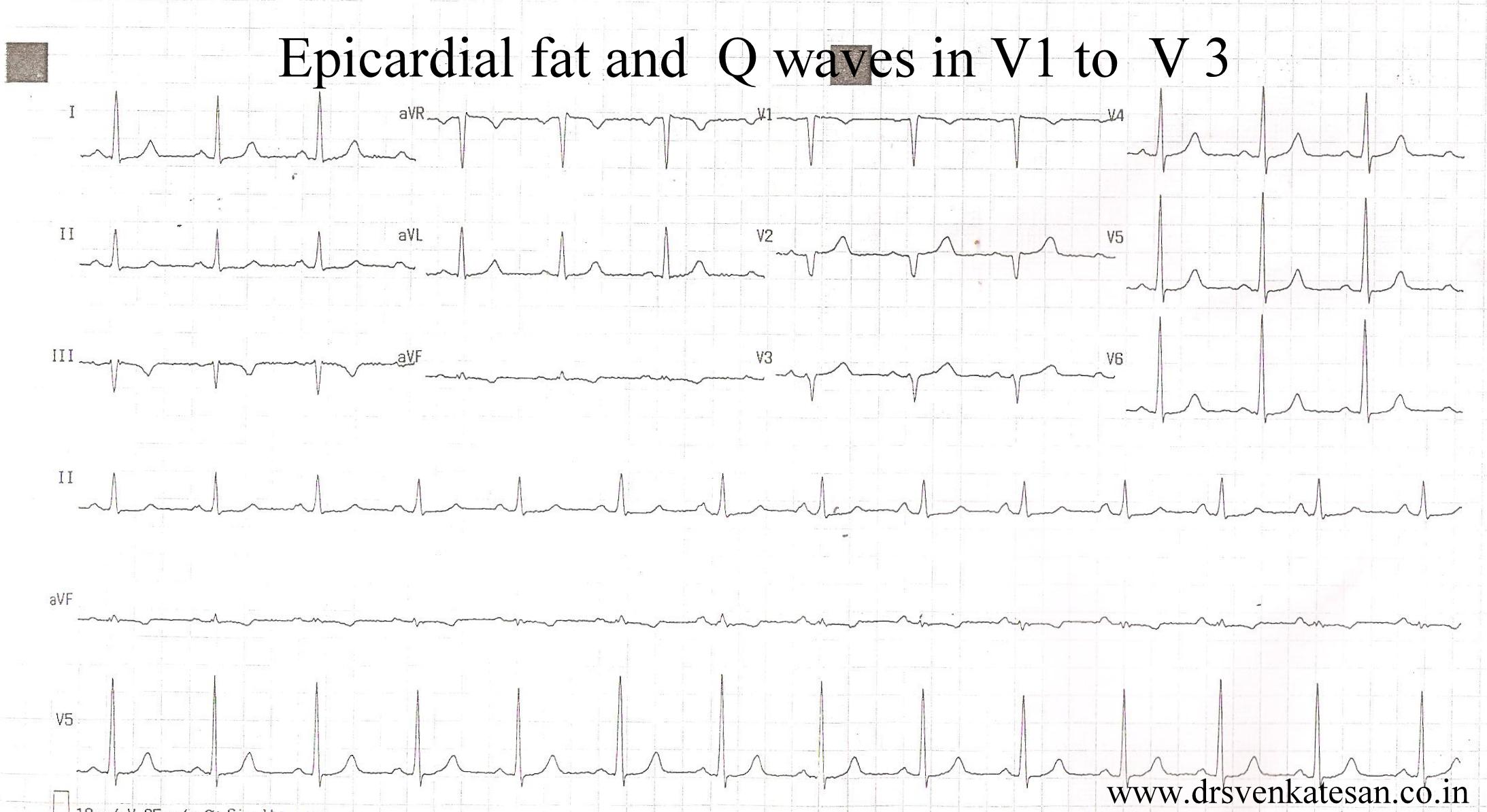
epicardial fat and poor r wave in v 1 v 2 v3 q  waves

It  happened ,  I did an echo for her .
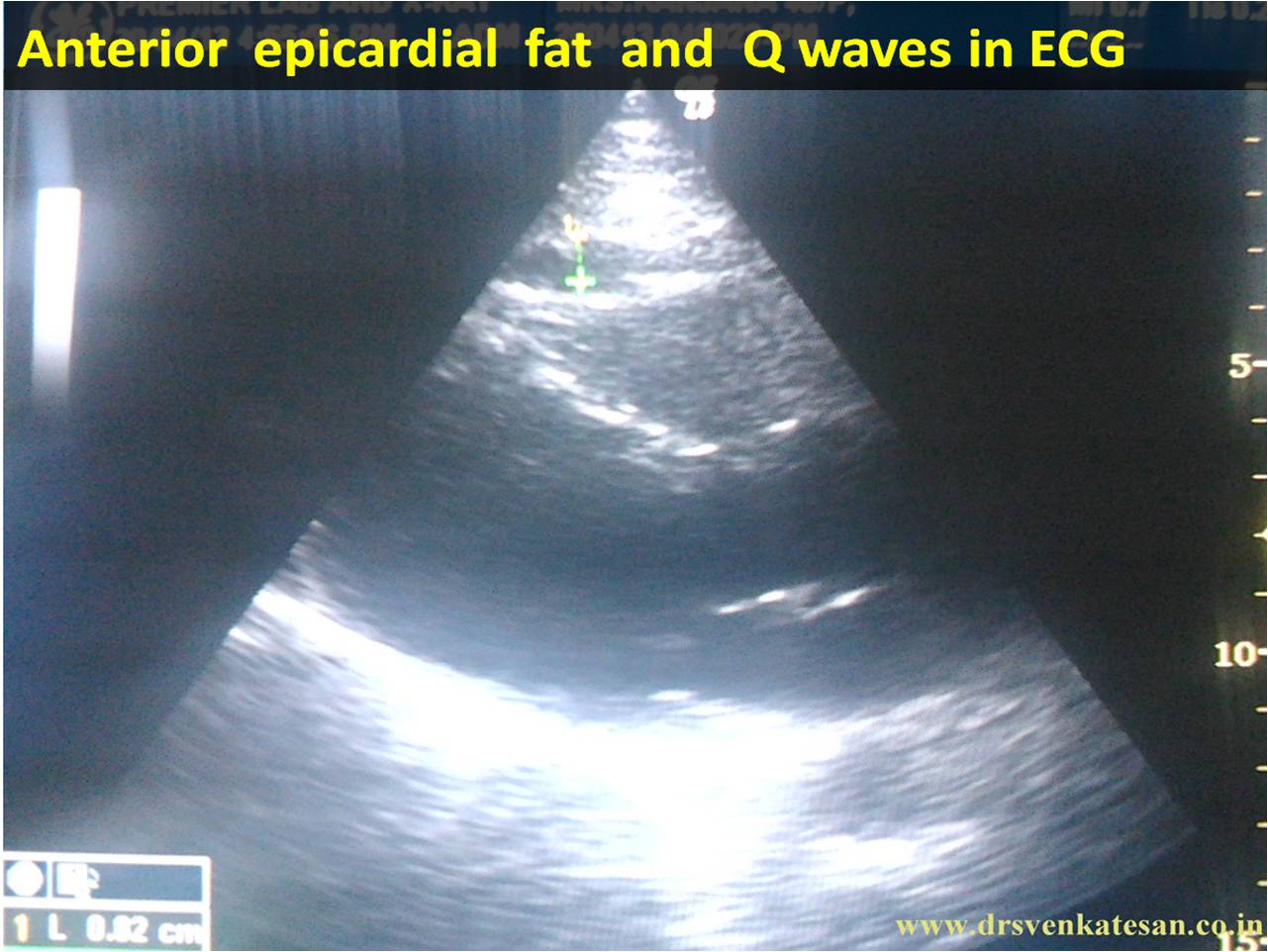
epicardial fat and q waves in ecg pesudo infarct non infarct 2  q

She lacked wall motion defects even after a meticulous search .  Instead   she had a   good layer of epicardial fat measuring 9 mm .That was more localised in  anterior wall extending little to LV apex.Her EF 65 % .

*She was a  fairly obese (not gross )  individual with a BMI of 34 .The fat pad thickness was not that huge  , I thought , still it was producing the q waves . I  have seen much thicker fat pads with good R waves in ECG . I  wonder ,  is it the type of fat that adds up to electrical insulation ?

This patient was sent back to me  again  for ruling out ASMI .  Echo was  done  two weeks  later . No evidence for  ASMI  could be detected.
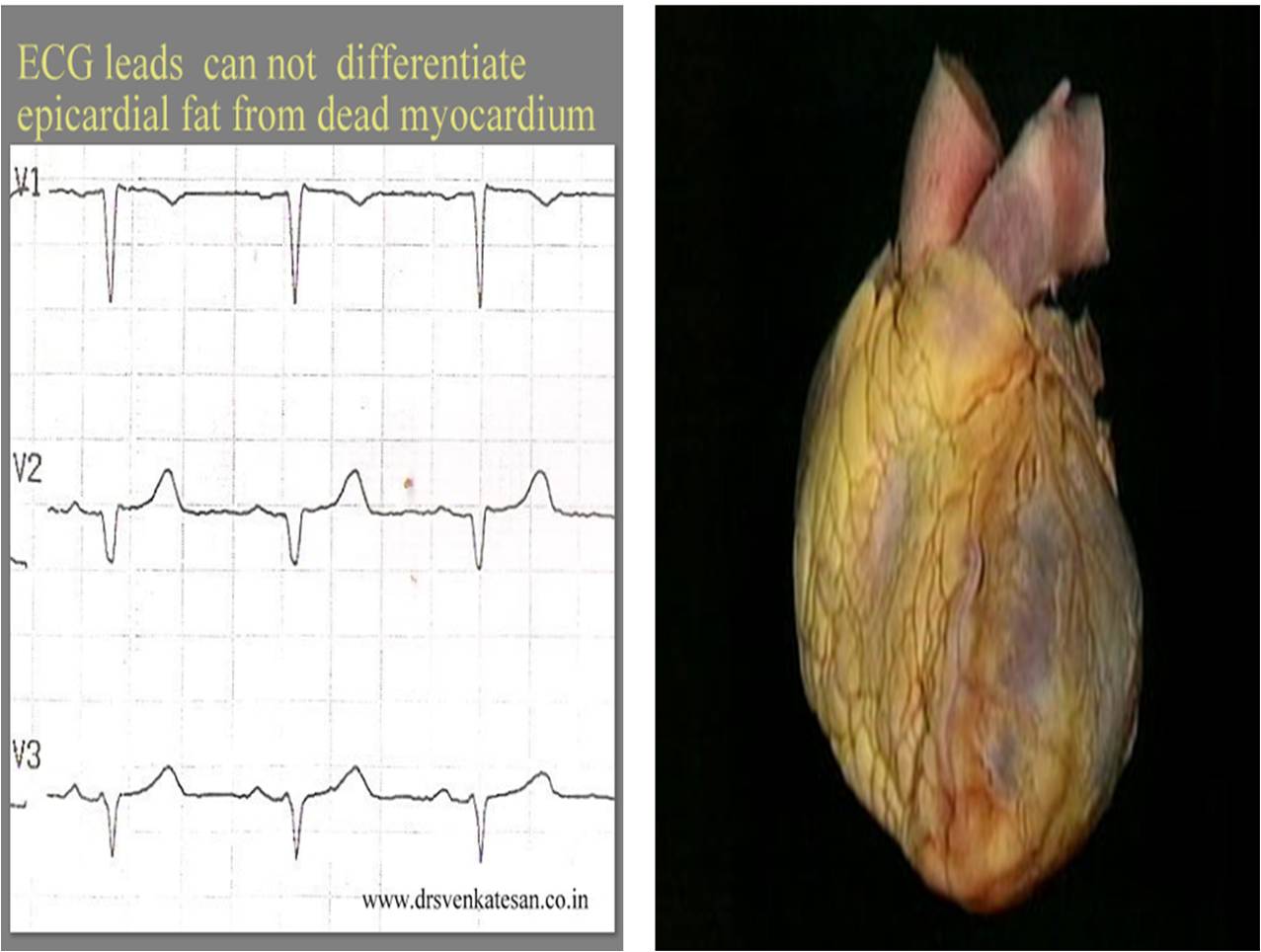
epicardial fat and q waves in ecg pesudo infarct non infarct fat 2  q

What is the normal thickness of epicardial fat pad ?

It is less than few mm . Exact normality is not known .(Empirically < 5mm ) it is very rare for fat deposition  in infero posterior aspect , except in morbid obesity.

What is the function of epicardial fat ?

  • Long considered inert . Now , found to be a metabolically  active lipid pool.
  • We also know  heart  consumes more fatty acid than an other organs for moment to moment energy consumption .
  • Inflammatory mediator in atherosclerosis ?
  • It may also act as a mechanical cushion effect along with pericardium
  • Rarely fat infiltration can compress the heart and may result in restrictive  AV filling defects in doppler  .(May explain the unexpanded dyspnea  in many obese patients )
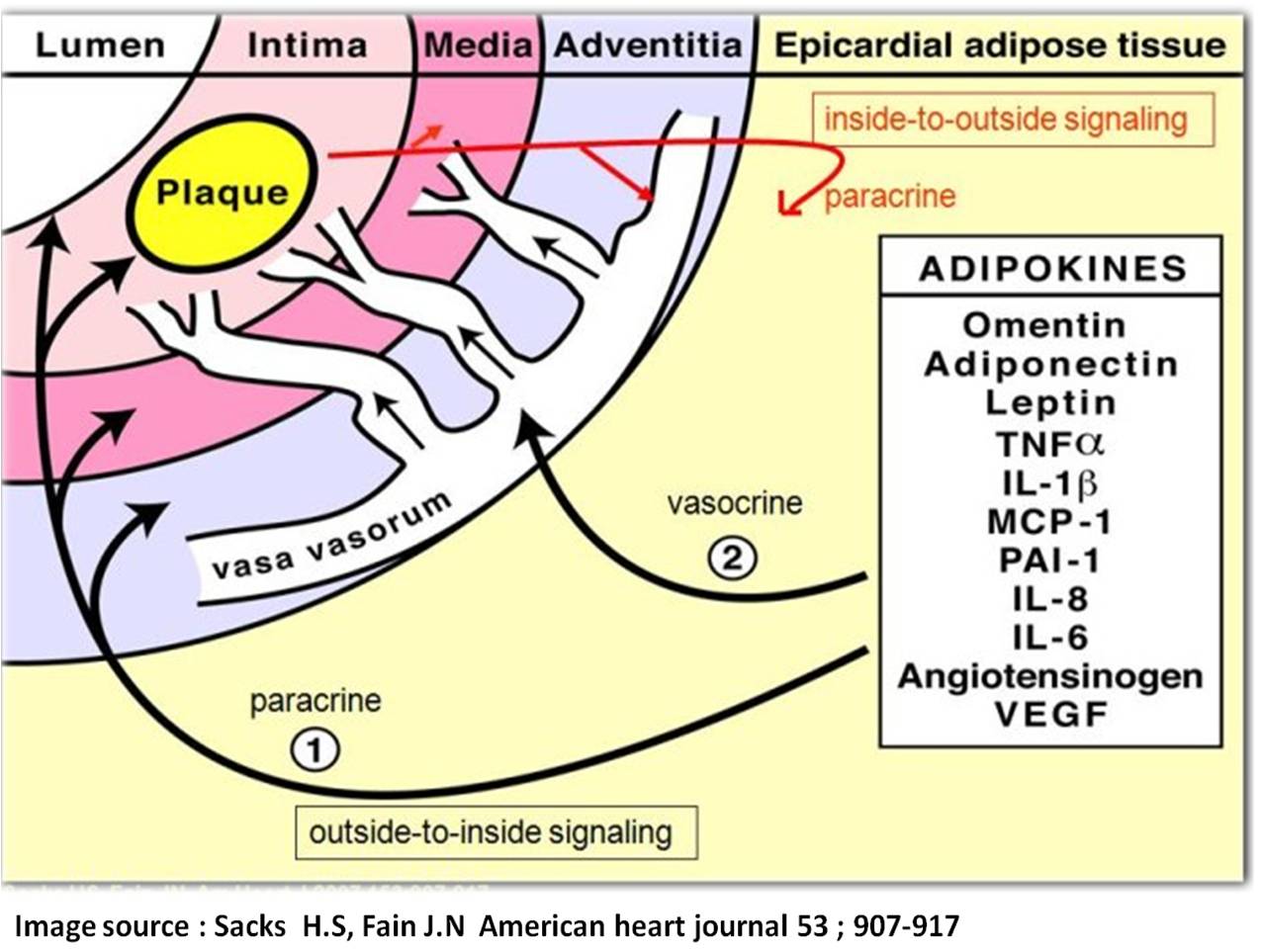
epicardial fat a dynamic depot athreosclerosis

Role of epicardial fat depot in the genesis of atherosclerosis

Subcutaneous vs  Epicardial fat.

We know thick chest wall can also interfere with ECG. Epicardial fat is more likely to record  q waves than  sub cutaneous fat ,  as the insulation is more closer to heart in epicardial fat . In thick chest wall current leaks from heart and  well scattered  hence  poor R wave is more common in such situations rather than q waves !

Following things can generate  q waves (Other than Infarct  )

  1. Fibrosis-Myocardial /Interstitial
  2. LVH
  3. Thickened pericardium
  4. Thick chest wall/ Epicardial fat
  5. Air/Fluid in pericardial space

Final message

In obese men and women  anterior Q wave can be  misleading .Such  medical errors can be so convincing .

After thought

If epicardial fat can  extinguish   R waves  and  replace it with  q waves  , these  innocuous  looking fat pads has every reason to  influence the ST segment shifts during  an episode  of ACS  as well !  .  Isn’t ?  . If so  . . . how reliable is  our ECG criterias  to diagnose  acute coronary syndromes  in grossly obese men and women ?
Read Full Post »

Why should mitral  annulus gets calcified ? .  Degenerative  calcification can be benign in  elderly .  If it occurs prematurely (say < 55 years )   there is enough reasons to worry .  This may represent a systemic vascular inflammation and  is considered a surrogate marker for athero- vascular -sclerosis .  A study from Cidar Sinai  , Los angels  has well documented the link way back in 2003  !

mitral annular calcification mac cad link

This is a  large study involving  17 735 patients (who were investigated for symptoms of CAD )   were screened.

The incidence  of MAC was high (As expected !)

  • 35% > 65 years
  • 5 %  < 65 years
Angiography  revealed more surprises .
  • The incidence of angiographic  CAD among those who had MAC and no MAC   was  88% v68% respectively ,( p = 0.0004),
  • Left main coronary artery disease  was (14% 4%, p = 0.009)
  • Triple vessel disease  was (54% v33%, p = 0.002).
mitral annular calcification  www_drsvenkatesan_co_in

Image source  S.Atar ,  Heart 2003 : 89, 161-164

Conclusion
This study concluded ,  CAD is more aggressive in patients with MAC. It can  also be  an independent  predictor of  high risk CAD .
Further Implications  of MAC
  1. MAC is more common in women, especially diabetics .
  2. Degenerative Mitral regurgitation  is common ,rarely  mitral stenosis
  3. Recurrent VPDs and even  trouble some mitral annular VT is possible
  4. Extensive calcific lesions in coronary  artery is also reported with MAC.
Link between Stroke and MAC .
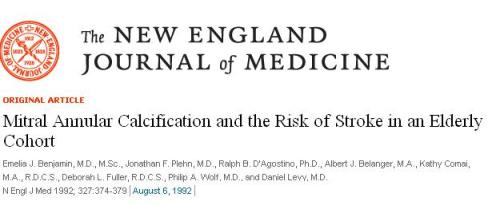
This was well proven by this paper  published in  NEJM in 1992.
MITRAL ANNULAR CALCIFICATION AND STROKE NEJM  EMELIA BENJAMIN 1992

Read Full Post »


Those who answered  “Yes” ,  can leave this article . Those who answered  “No” read further .

* Logic would tell us myocardial revascularisation should correct  stress induced ischemia and it  should disappear promptly  . This does not happen in all cases  real world  ! That is  why medicine is  different  from mathematical science .

Some of the  reasons for  persistence of stress positivity even after an apparently successful PCI are  . . .

  1. Incomplete  correction of ischemia. (Ideally  to be referred as failed PCI )
  2. Error in Identifying culprit 9Angina related artery ) .Common feature of poorly worked up  multivessel CAD.
  3. Re-stenosis /Re-occlusion
  4. Doing very early stress test without giving time for revascularisation to work *
  5. Rapid progression of non culprit lesions .(Sub -optimal medical management )
  6. Chronic N0-Reflow phenomenon  surrounding  area of infarct .(Especially in  PCI of CTOs)
  7. Dyskinetic  or grossly remodeled ventricular segments  can result in non ischemic positive EST response (ST drag **)
  8. Associated systemic conditions especially  Anemia/ SHT & LVH -(False positive )
  9. Many diabetic patients may  continue to show stress ischemia due to  small vessel disease.
  10. A  patient with  syndrome X  characters  can have incidental  epicardial lesion as well . In such a patient EST will always be positive .

* Optimal time to do  EST  for assessing the  efficacy of  PCI/CABG is not established .Six months may be the reasonable point .If done within 2- 3 months it may  end  up  in embarrassment for the Interventionist . (So only it is kept at 6 months , this also help us  greatly  as  we can always blame it on poor life style control and progression of  the disease !)

** No reference  for this  , a  personal observation .We know  Q leads following MI ,  will show ST elevation during stress test especially if the segments are dyskinetic  . In leads diagonally opposite to q leads ,  ST depression is observed . This may not be  a evidence for true  ischemia . It probably represents   ST drag due to mechanical stretch .

Read Full Post »

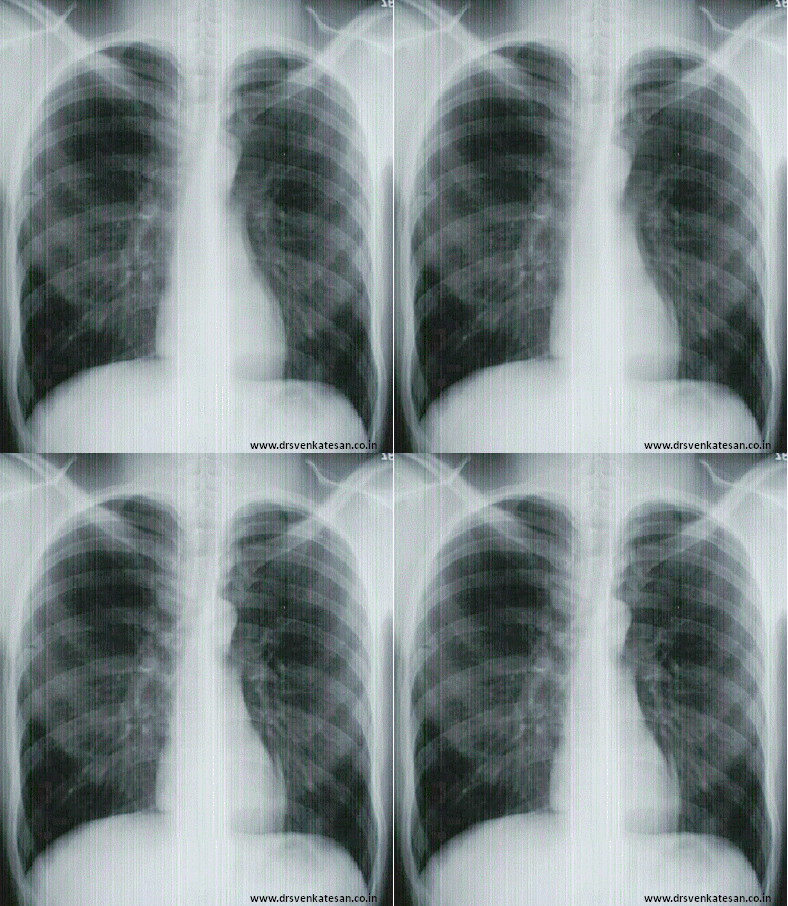
Have you ever wondered a given chest x-ray is taken in systole or diastole ?  We should . . .  isn’t ?  Statistically chances of a  X ray to  fall in  diastole is 10-20 % more than systole as the later phase is longer . The peculiarity of cardiac anatomy is that ,  the  profile of the heart alters so little between systole and diastole  .Still the blood is pumped  efficiently into both pulmonary and systemic circulation . The left ventricle shortens by 35%  and ejects 65 % of blood . Similarly RV shortens but with  lesser quantum.

ct ratio in systole and diastole influnce of cardiac cycle on ct ratio

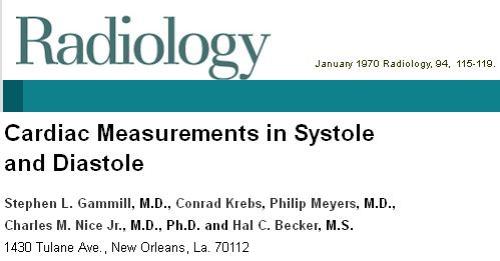
In a simple and elegant study  by Stephen Gammill  in 1970  published in Radiology journal,

he concluded the following about the CT ratio between systole and diastole.

  • 52 %   showed changes of 0.3 cm
  • 41 per cent showed alterations of 0.4 to 0.9 cm,
  • Only  7 per cent  showed a significant  variation of 1.0 to 1.7 cm in transverse cardiac diameter.

(I wonder why any follow up studies on this vital issue is scarce !)

xray chest 002

In spite both ventricles contracting during systole the radiological transverse cardiac diameter is relatively undisturbed ! 

Importance of  Rotary , Twist ,Torsional  and Longitudinal motion

The fact that CT ratio does not alter significantly in most ,  imply the heart has some other  kinetic motion which does not compromise the transverse diameter during systole. They are the rotary , and twist  motion .The relative constancy  of  CT ratio  is a good evidence  for existence for such alternate motions .We have since  confirmed  this  by sophisticated echocardiographic techniques .

Another evidence for rotary motion  recognised in the bed side when the apical impulse hits you in the fingers even as the ventricle is supposed to go away from chest wall during systole . This is  the torsional  movement of  LV  apex  and adjacent inter ventricular septum .

Reference

http://radiology.rsna.org/content/94/1/115.abstract

Coming soon

Inspiratory and expiratory  x ray chest and  the effect on cardiac contours .

Read Full Post »

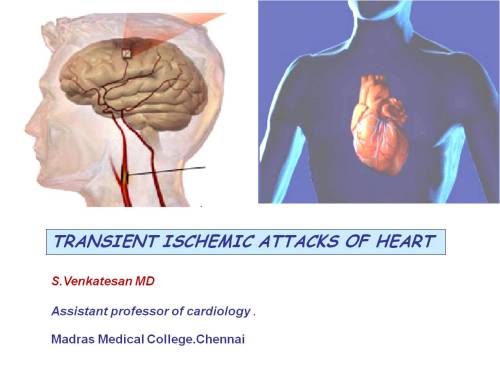
Is Transient Ischemic attacks (TIAs)  belong to the  exclusive domain of cerebral circulation ?  Can it occur in the coroanry arteries ?  If so what situations ?

This is a presentation in one of the cardiological society of India annual scientific sessions . A pdf download is  provided

transient ischemic attacks attack of heart coronary tia

Download  a PDF presentation

Read Full Post »

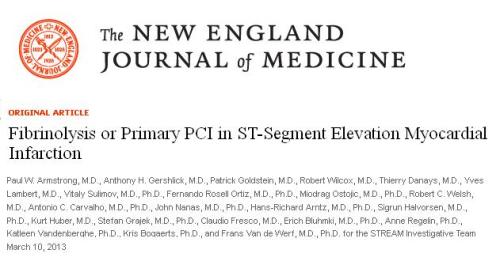
Primary PCI is presumed to be the ultimate  , undisputed reperfusion  strategy  in STEMI .  Still , time and again one study or  other strips down  this   “Numero Uno”  status of pPCI  .  If it is really supreme ,  such awkward  situation shouldn’t arise  too often . More importantly , the  major reason for  dubious real world record of  pPCI  goes beyond  the time and logistic factors (which is considered the only issue  for pPCI by most interventionist ! ) There is something more to it that is invisible ! (Is it the no reflow ?)

The nearly flawless study from Belgium ( STREAM Just released in ACC 2013/Sanfransisco ) , pre-hopsital or early fibrinolysis has proven to be superior in the prevention major end points at 30 days .

  1. Death
  2. Re-infarction
  3. CHF

STREAM STUDY NEJM PRIMARY PCI VS FIBRINOLYSIS

The major surprise was pre-hospital  fibrinolysis  showed less  incidence of cardiogenic shock . ( pPCI

group had more of this ( 4.4 VS 5.9 %  in STREAM )

Now . . .  shall I make a provocative statement ?

while pPCI may be treatment of choice for cardiogenic shock . . . but it may  also confer a risk of cardiogenic shock in otherwise low risk MI !

Caution  and  conclusion

STREAM population applies strictly to 1 to 3 hour time window . It does not apply to either before or after that ! Simply put,we do not have  guts to compare fibrinolysis and pPCI  in patients who arrive  within one hour into a facility where 24 hour cath lab facility is available .  We call it unethical to do a study like that !  I personally feel it is really unethical  if we do not do a study in this time frame . The reasoning is  simple and very personal .In a  large  Government  hospital   where  we do not have primary PCI program  our net mortality for STEMI never exceeded 7-8 %  over a period of 10 years  , Which  is almost at par with global data on pPCI. (Our door to needle time is an unbelivebale  8-12 minutes ! that  too only streptokinase !)

Adding Further controversy

pPCI  is indeed a superior reperfusion strategy . No one can dispute that .But its superiority  is not  realised  in  every patient  who gets it.  The benefits are accrued if and only if it is  used most judiciously . In Low risk , small regional  , branch vessel STEMI ,  pPCI has never been  shown superior . It is well recognised ,  upto 15 % of STEMI is likely to spontaneously abort or experience very good spontaneous recannalisation . By rushing these  patients very early into cath lab pPCI   meddles with the natural anti fibrinolytic mechanisms . It is this population who  invite all the procedural hazards. .

Is this the reason STREAM had  more  cardiogenic shocks in pPCI limb ?

I think STREAM has  strengthened the case in favor of fibrinolysis in this  ever ending debate .

I would  seriously believe  pPCI is hanging it’s superiority over fibrinolysis with a wafer thin mortality advantage . pPCI may  not be recommended in a routine fashion to all STEMI  population even if they arrive within 6 hours and able to perform the plasty fast .  Science is   . . .  after all . . .  continuing  confrontations with our  assumptions !

Counter point

STREAM is not an exclusive study comparing fibrinolysis and PCI . It is a  study comparing   Pharmaco Invasive approach vs  pure invasive approach . 80 %  of patients in the  fibrinolytic limb ultimately received PCI and  stenting . It simply doesnot make sense to conclude fibrinolysis is superior to PCI . Most of the beneficial  effects on 30 day outcome may reflect the timely PCI  in the lytic group.

//

Read Full Post »

Answer :

In cardiogenic shock it is A . In all others it is probably  C.

While D may be  considered as  an  essential target criteria  for completing the  rescue PCI

Read also

Why-we-often-follow-a-reckless-time-window-for-rescue-angioplasty ?

Read Full Post »

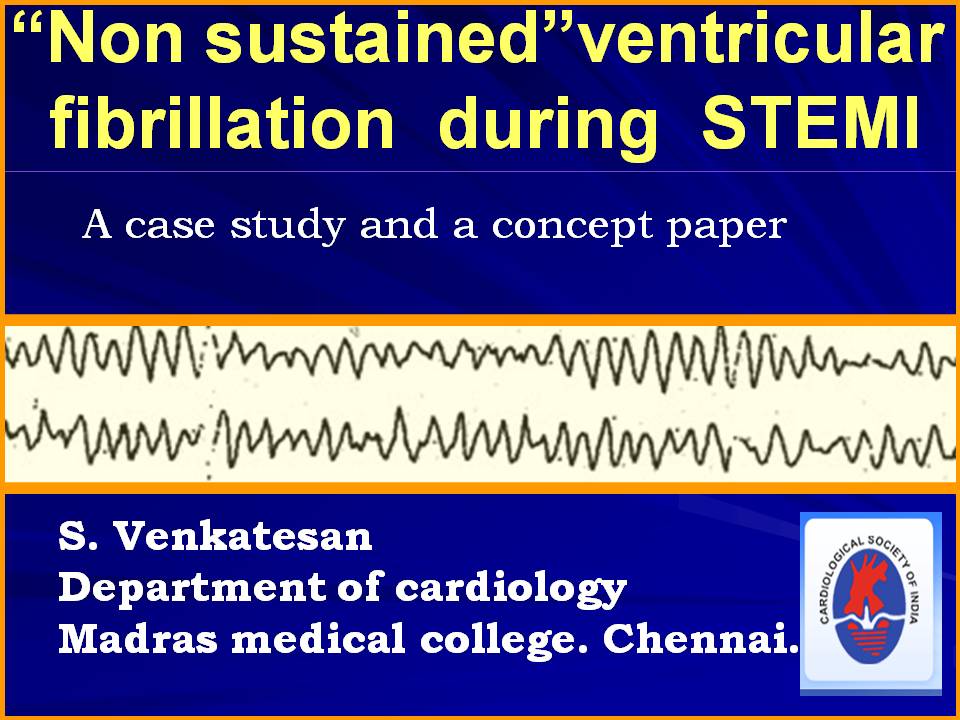
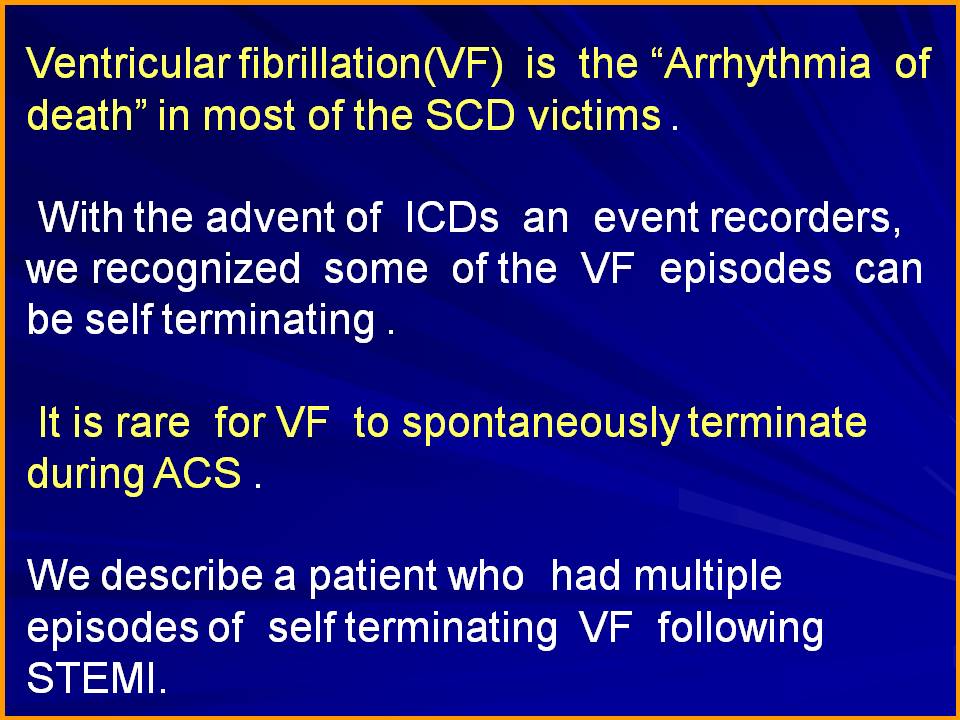
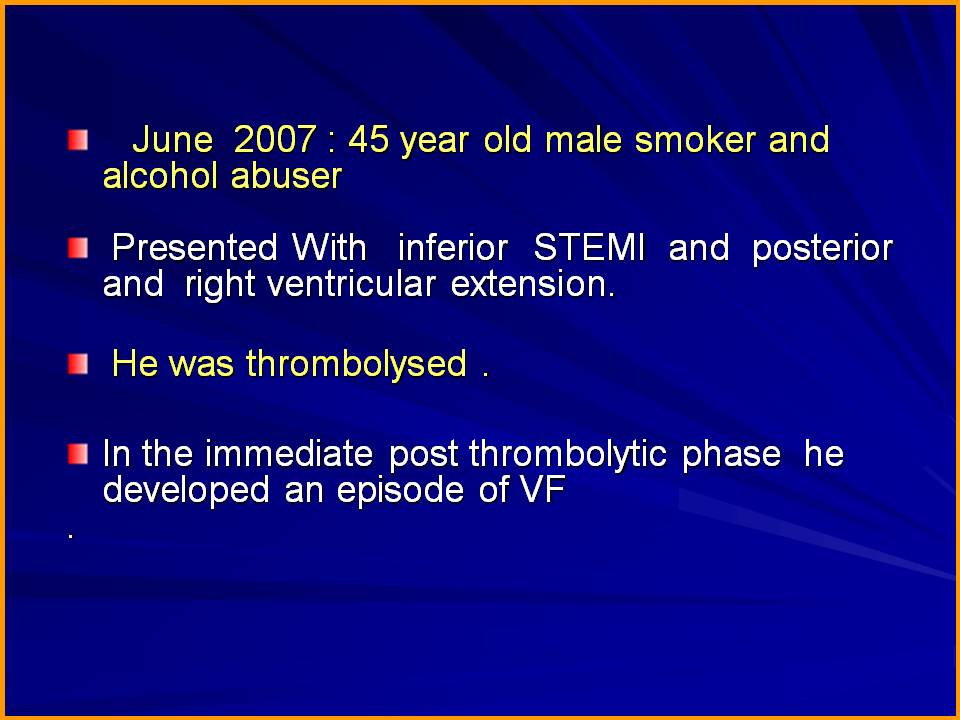
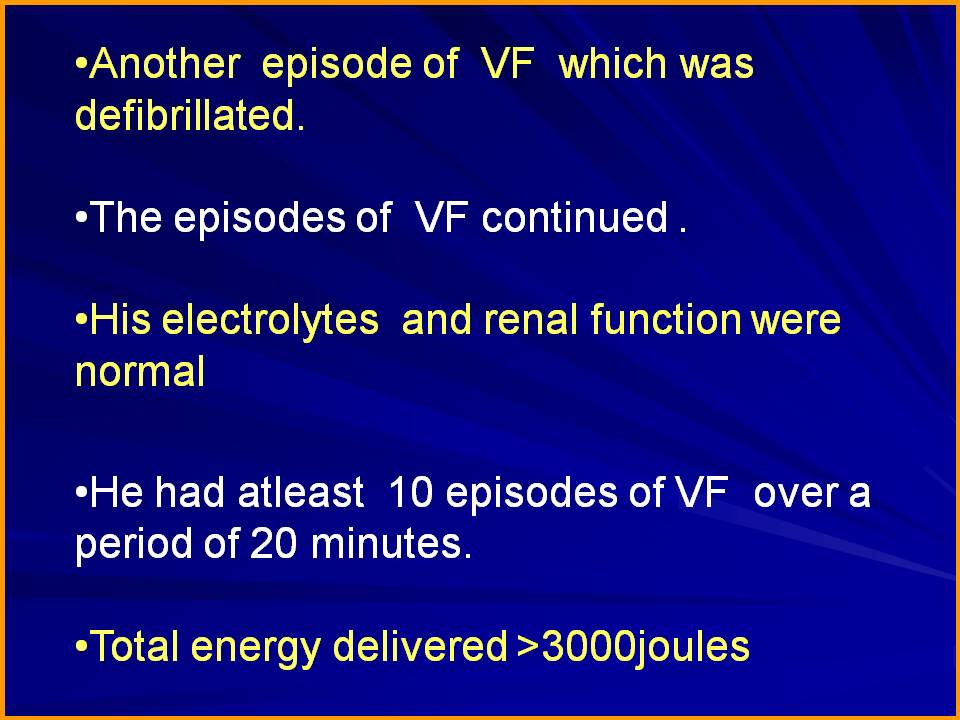
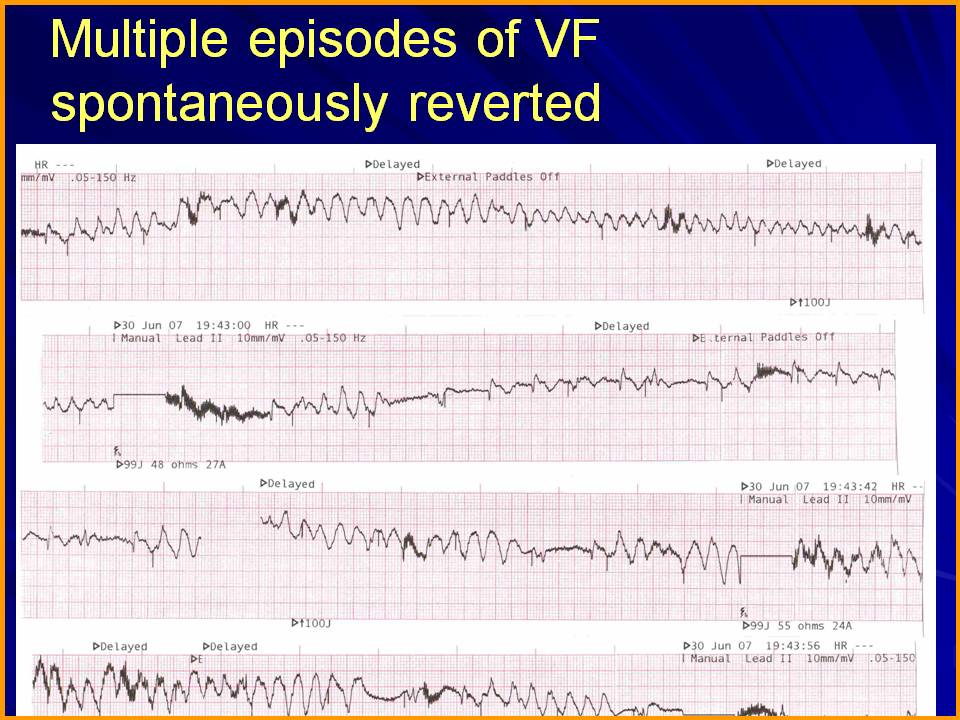
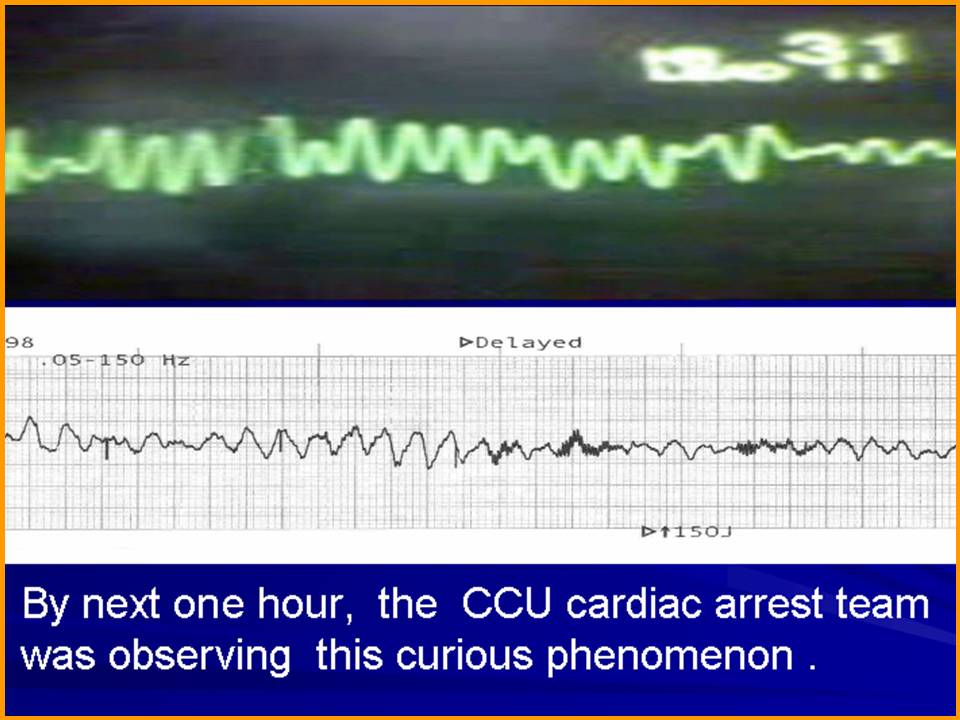
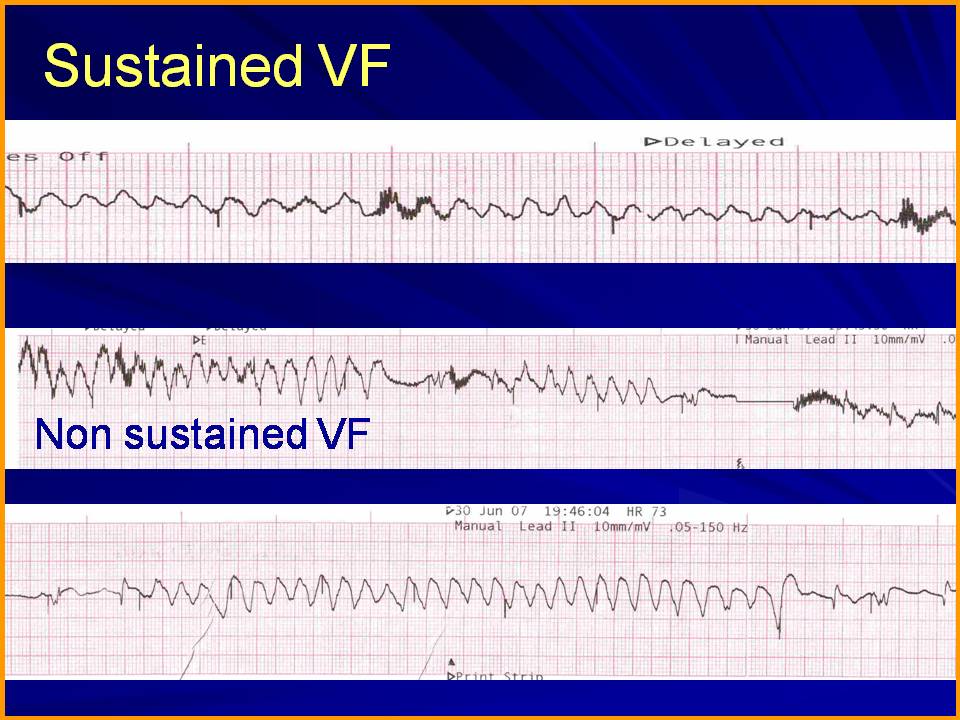
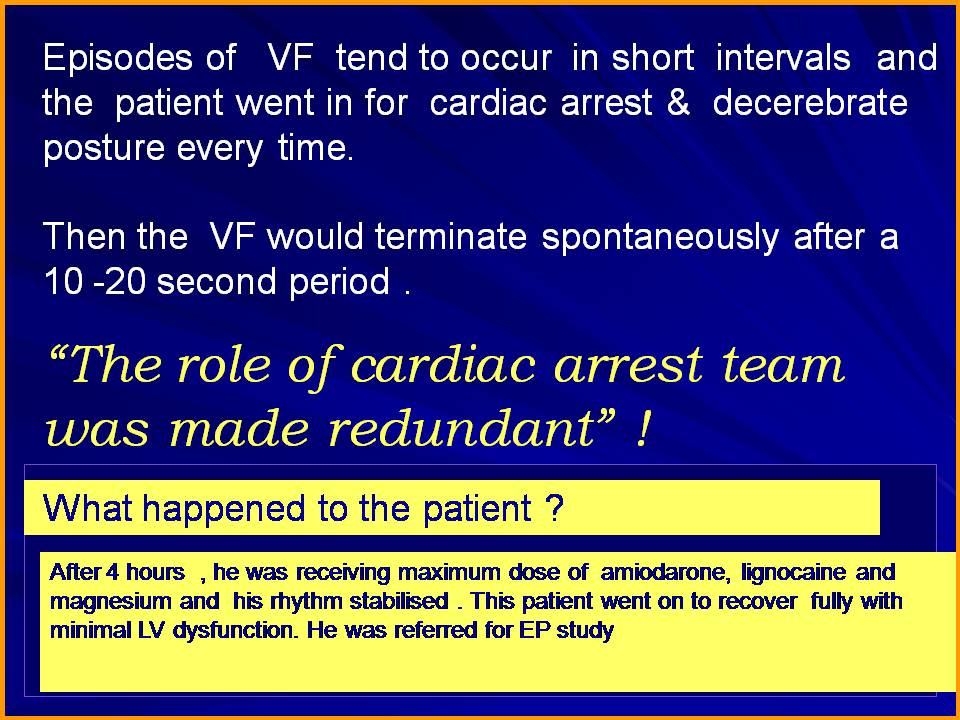
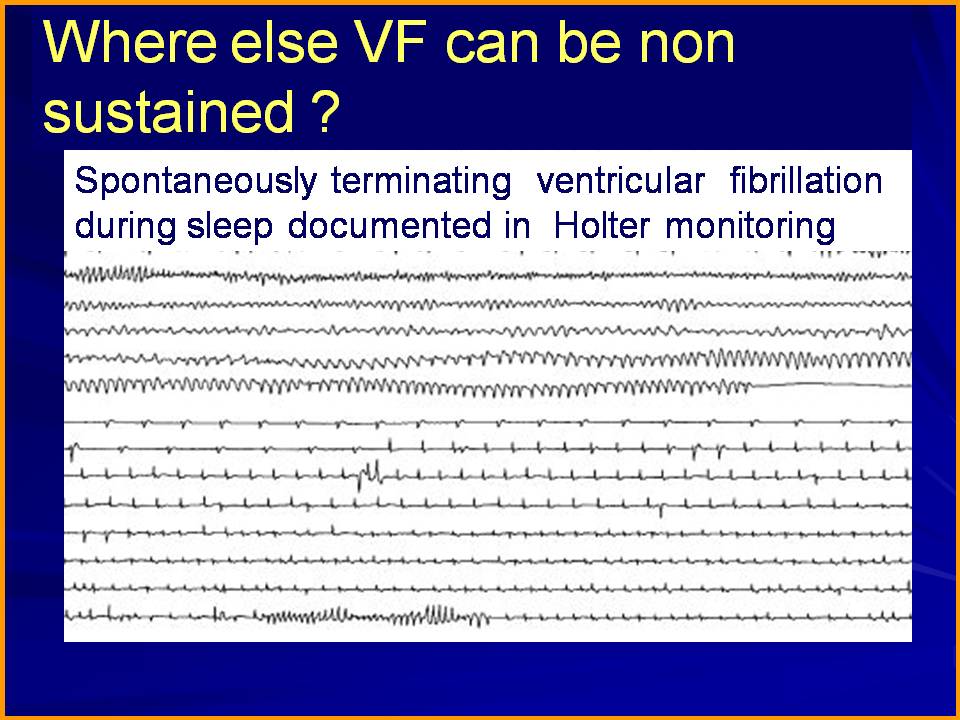
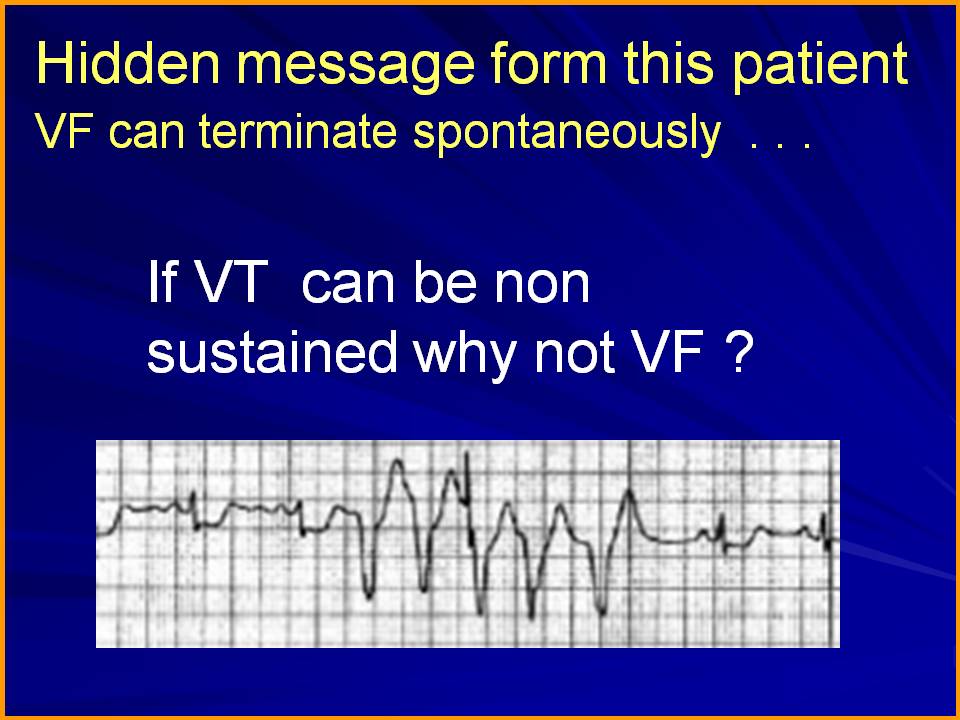
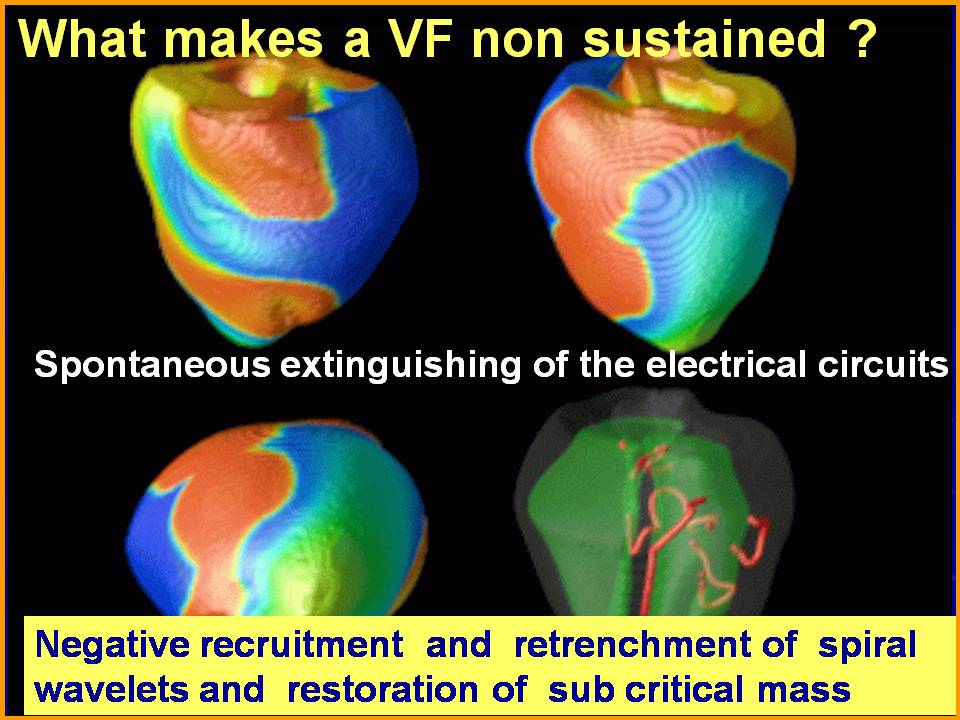
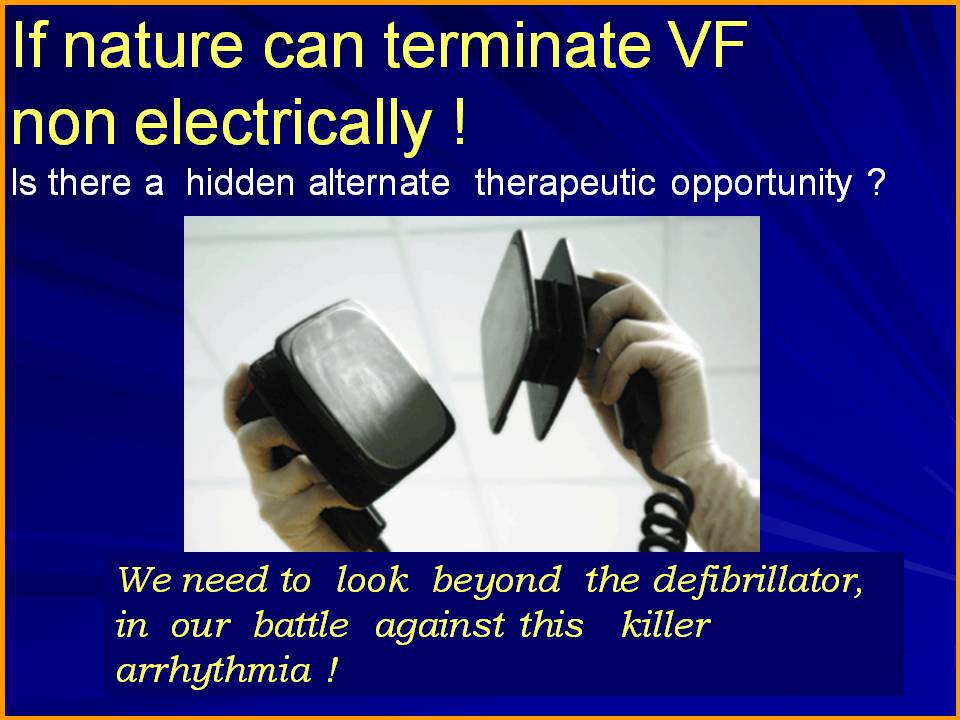
Can VF be a non sustained  arrhythmia ?   This question was raised and a single case report was presented

in the annual scientific sessions of  Cardiological society of India Meet in  year 2008 in  Chennai.

I am just reposting it from my archives .

Slide1 Slide2 Slide3 Slide4 Slide5 Slide6 Slide7 Slide8 Slide9 Slide10 Slide11 Slide12 Slide13

Slide14

Read Full Post »

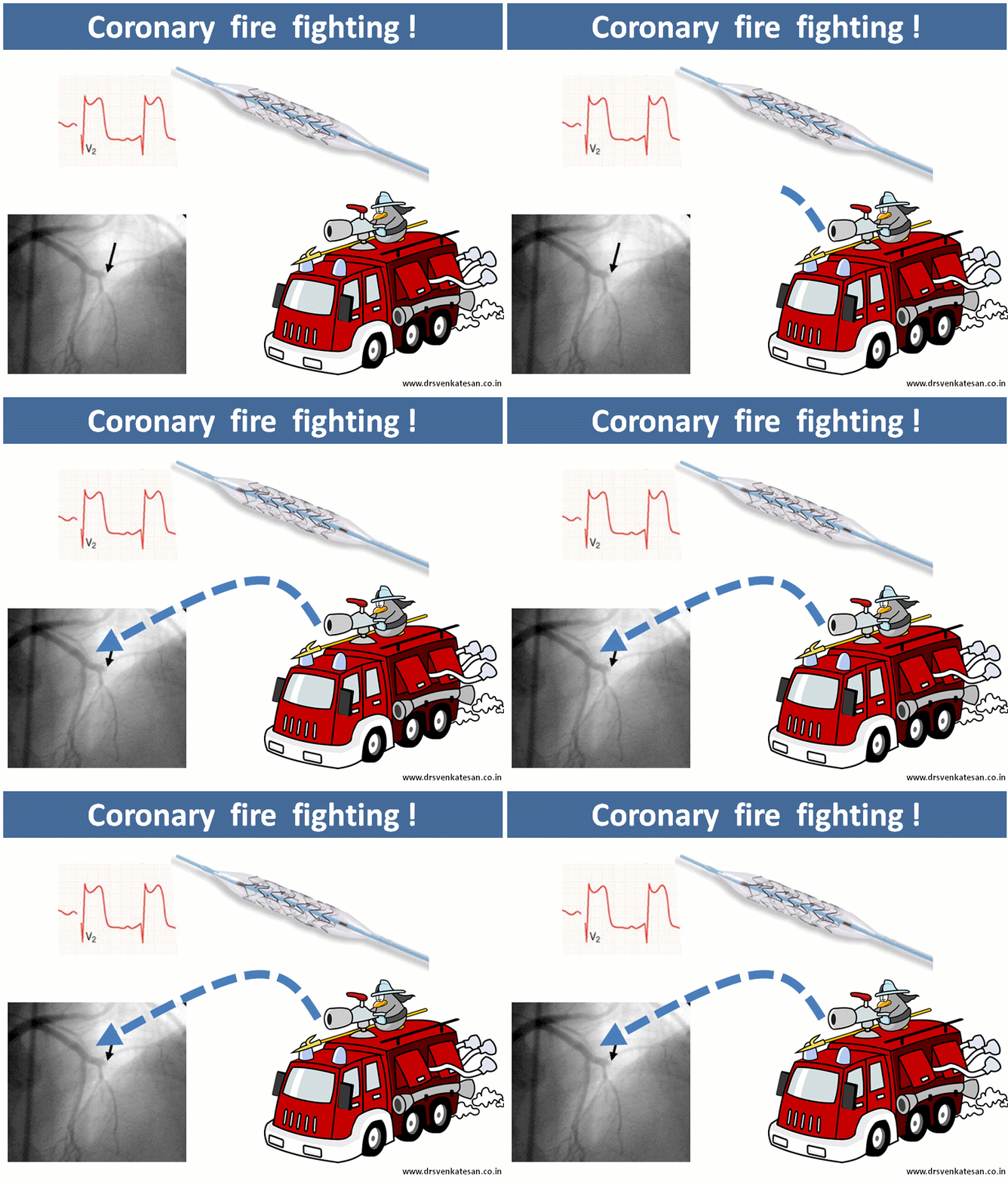
Myocardial salvage is like  coronary fire fighting.When fire is fought  very early after the accident  , benefits are accrued  more . Text book primary angioplasty is . . .  fire engine arriving at the scene when the house is on fire .

Rescue angioplasty is asking for more force ,  when the initial fire fighting  was inefficient to control the fire. So , it is obvious the rescue efforts should be fast and brisk.In fact the pace should me more than the primary (The the second engine should  reach the ground zero  faster than the first !  – Read as  door -balloon time ! )

But what happens in real world ? We would tell  time window for primary angioplasty even in sleep ! but will struggle to come   with clear cut  answer for the  same in  rescue angioplasty  even in a  fully awake state !

CaptureWiz

It is  an overwhelming fact , we have  not taken enough efforts to define strict time limit  for rescue .( Even though guidelines say it should not be beyond  24  hours , common sense will tell us rescue PCI should not go beyond 12-15 hour window ! .One more definition for rescue PCI could be within 3 hours after diagnosing failed thrombolysis. In real world  it is a race against time in a different perspective .In many centers  rescue angioplasty “enjoys time less windows “

I was funny witness in a big private  hospital  when a  colleague  of mine  has posted  a case for  “elective rescue angioplasty” and was  waiting in the side cabin  for his turn !

Coming back to the title question

Why we often follow  a reckless time window for rescue Angioplasty ?

The reason is simple

Time is not only  muscle . . . time  is  money too !

Read Full Post »

An elderly man  with past H/o CAD  was admitted with ischemic LVF and hypotension .Blood pressure was  90/60 mmhg  and pulse rate was 140 . Urine urine output  in the immediate past hour was 50 ml . Saturation was 95 % .He had fairly extensive  crackles in both lung fields.

A bed side echo showed  moderate LV dysfunction , with wall motion defect in LCX territory and  mild  MR .A dignosis of post  MI -ischemic LVF was made .

He  was  put on intensive anti failure protocol. I asked my  fellow to administer IV NTG  and left the ward .

On my next visit after few hours  . . . the patient was in much bad shape  , and when I enquired , I learnt  NTG was never administered . I was curious to know why the fellow  dis- obeyed my instruction .

He felt sorry  .  .  . But he earnestly told me  , he  could not comprehend the principle of administering NTG in a  patient  with shock ! . I was happy  to  note his  genuine concern  for   the patient  !  But  . . . I had to take a brief  lecture to convince the importance of NTG in some forms of shock !

What is the cause for hypotension in ischemic LVF ?

Lungs are flooded due to  very high LVEDP . Blood  not only struggles to  enter the LV  but also finds difficult to   leave the LV ,  former due to defective relaxation later due to poor pumping.

The extremely high pre-load actually stuns the left ventricle in diastole . (Primarily diastolic stunning  )  . Here is a hemodynamic paradox . Excess pre-load  occurs in  terms of pressure , but  in terms of volume there is miniscule amount  blood  that  traverses LV  .

This is pre-load mismatch  at play .Empty ventricles with high wall stress  and that is reflected in aortic afterword as well .

We have to some how reduce the  very high levels of LVEDP . IV NTG can  dramatically  reduce the pre load  ( and reduce the LVEDP .) The other major  benefit is ,  NTG   can reduce the MVO2 by improving sub endocardium coronary perfusion and de-stress the heart.

Once  LVEDP  is  lowered  , the ventricle will tend to recover and gain at least some  original elasticity ( Frank starling forces) . Of course it will be defective due to ongoing ischemia . Even slight fall of LVEDP (say from 25 to 18 mmhg  can have  significant benefits as the LV function curve labors on the steep shoulder region !) .

This is one situation where NTG can increase the blood pressure once the hemodynamics is favorably altered.

*Yes  . . . heavy doses  of  Frusemide injection can do the same job but it largely depends the kindey’s cooperation to flush out fluids  .In a shock like situation one can trust the kidney perfusion  !

Additional benefits of NTG

Mitral  regurgitation  is a serious destabilizer of LV function .NTG can reduce the regurgitant fraction in acute MR effectively .

Caution

NTG may worsen the hypotension of RV infarction . Make it very sure , you are not dealing with this unique  pre-load dependent circulation.

What happened to this patient ?

He  did show  improvement with IV NTG . Of course it was not dramatic as I have projected in this article .Still it was really helped him .He required simultaneous dobutamine infusion as well .The BP did not fall  further and lung congestion was relieved  .He went on to recover fully by 48 hours and was posted for elective cath study .

Final message

                                             We tend to  worry  more about falling blood pressure  when administering  NTG. . .It is a wonderfully effective drug especially in the setting of ischemia and cardiac failure  even if  the blood pressure is low !

Acute cardiac hemodynamics  is  complex phenomenon .No one has mastered it .Paradoxes are common . Hypotension in the back ground of  acute pulmonary edema  especially due to ischemic LVF  can be corrected by NTG . Of course physicians  need  some  courage to administer NTG in patients  with a systolic pressure of  80-90mmhg.

This should ideally be done with intra arterial line in place and a simultaneous inotropic line (Doubtamine /Nor-epinephrine ) back up in case of worsening perfusion pressure .

Read Full Post »

« Newer Posts - Older Posts »