Feeds:
Posts
Comments

Archive for the ‘Uncategorized’ Category

            No one will disagree, this is the most celebrated medical quote of modern times 

It is so unfortunate, the quote has almost become a silly cliche for every one of us including the physicians, and patients. Preventive medicine always struggles to prevail over its starry-eyed colleague, curative medicine in spite of the fact that cure is an assumption in many illnesses. Classic examples are diabetes, hypertension, and atherosclerotic disease. Many of the chronic diseases that afflict human beings have no complete cure. At best we can control them. All that we do is symptomatic and supportive treatment.

Overlaps between preventive and curative medicine

Meanwhile, we must also understand preventive medicine is not only about sanitation, nutrition, and a good lifestyle. Most facets of curative medicine are actually preventing complications of the disease. So in reality curative medicine works by preventing events. There is a big overlap.

The cure is often a mirage except in treatable medical emergencies. Still, we strongly believe every disease listed in the ICD code has a cure. It would be unbecoming of a medical professional if we don’t try for a cure. We are repeatedly sensitized that cost (& effectiveness too )should never be an issue. The Insane world of medical merchandise does this propaganda perfectly. How many of us realize PTCA and CABG are essentially poor palliative procedures in our attempt to conquer atherosclerosis and CAD? No surprise, 90% of the global cost of medical care is spent on prolonging the last one month of human lives.

Preventive medicine is less popular, primarily because it demands more effort, perseverance, and also wisdom. On the other hand, curative medicine gives a sense of accomplishment and also the glamor of modern medical modalities. Of course, one of the new chapters to be added in the current preventive medicine books is the public health dysfunction due to incongruous tertiary care.

We are caught in a vicious cycle of poorly administered preventive medicine and indiscriminate usage of curative medicine, with the former under siege, by the latter with its bigger design. It is almost certain, that the malignant growth of curative medicine is indirectly preventing the“preventive medicine” to reach its desired goals. 

Preventive medicine has its own issues. One ingenious way to increase the glamor quotient in preventive medicine is to increase the cost and mode of administration of (Apple watch!) No, It didn’t work. What about five-star preventive master checks? Maybe, it works on an individual patient level, but still, a suspect value on a global scale. The problem with master health checks is their skewed priorities. It aims to catch the disease very early in the asymptomatic or subclinical stage and try to administer the cure on a large scale, with an illusion of an intervention. (Recall the PSA times on the prostate, now the breasts armed with BRACAs may end up in the same story.)


Final message

 

No doubt “Prevention is better than cure” will be an immortal medical quote. Two things are essential. 1. The term preventive medicine is to be understood in proper context. 2. We may need to clip the redundant wings of “curative medicine” and divert the wasted resources to resurrect the much-maligned specialty of preventive medicine, for human goodness.

Counterpoint

There are fundamental gaps between the two limbs of treatment. It sounds like a crazy regressive statement to criticize curative medicine. Both shall grow and prosper on their path.

 But … why is it not happening?
 

Read Full Post »

When does the high blood pressure befriends blood sugar and instigates the LDL to initiate the vascular damage? Does it sound like medical astrology? Yes, welcome to a new world of network medicine, polygenic risk score & computational genomics. Experts believe this is going to be the future of medicine.

Dr. Jospeh Loscalzo, Physician-in-Chief  Brigham and Women’s Hospital, a leader in the field gives a brief introduction.

How to understand these complex subjects? 

We need not bother much in one sense. It’s all made to look complex by big data machines and modern scientific wordplay. It is true, that the power of computing and machine thinking will help us reach hidden secrets in our bodies. However, the bottom line is, If we live a simple. peaceful, worthy, active life we can afford to forget about this sophisticated risk predicting science, which comes loaded with unlimited anxiety. Let the science grow at its own pace.

Imagine the consequence of a powerful artificial intelligence algorithm telling us in advance all the possible future biological adversaries with 100% accuracy.

Final message 

Do you believe in astrology, an ancient Indian science?   No. Never!

Do you believe in network medicine: Yes for sure!

Reference

Two good review articles on Network medicine

1.Barabási, A.-L., Gulbahce, N., & Loscalzo, J. (2011). Network medicine: a network-based approach to human disease. Nature Reviews Genetics, 12(1), 56–68. doi:10.1038/nrg2918 


Read Full Post »

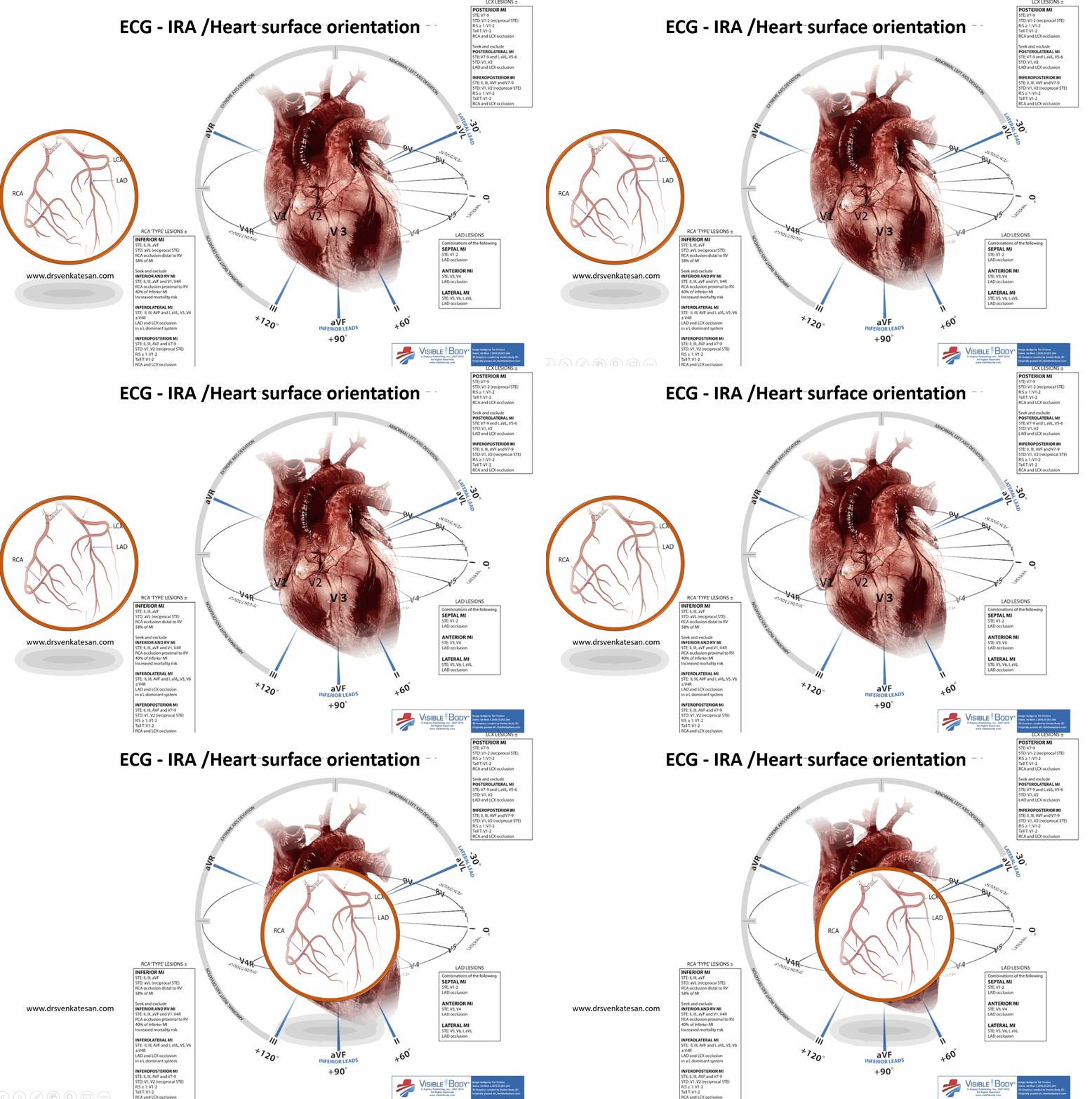
The 12-lead ECG is the single most important investigation that has withstood the test of time for over 100 years. I think it will never lose its relevance in cardiology. However, the traditional sequence of the 12 lead printout could have been a little more user-friendly, especially in its ability to convey the anatomical orientation. Expecting some Innovation in the ECG reporting format. 

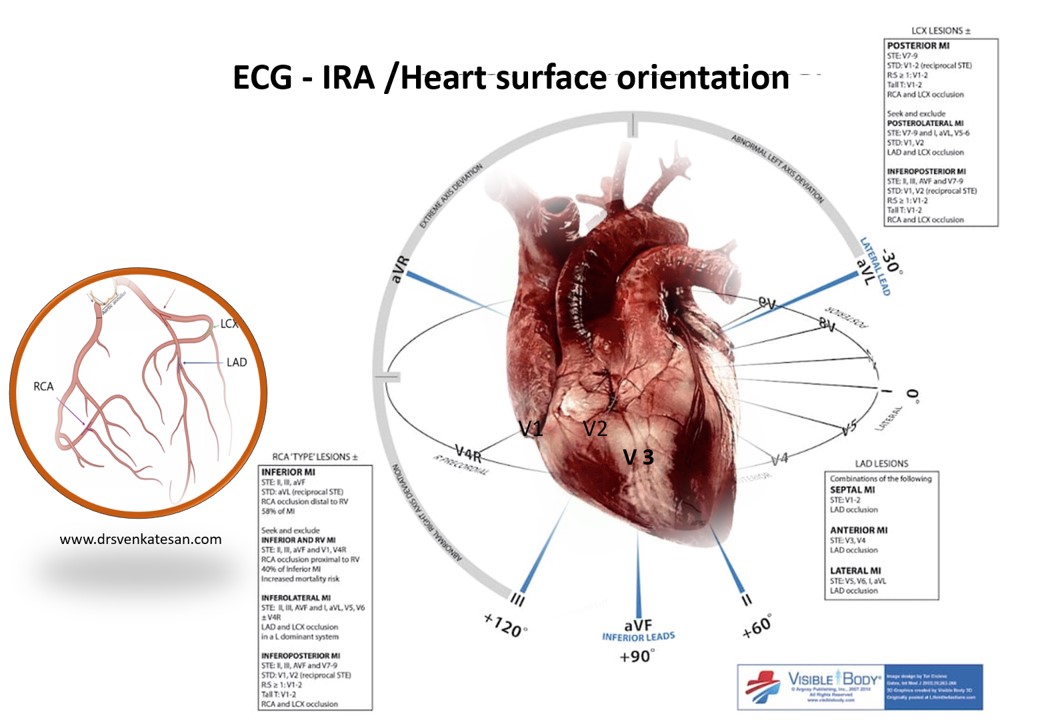
This illustration helps us to understand, ECG lead orientation, and coronary arterial territory, IRA localization with reference to the various surfaces of the heart. (Courtesy of visible body-modified ) Always remember the heart is an organ, made up by a complex fusion and rolling of bundles of muscles over a fibrous skeleton. It has multiple surfaces. Please avoid calling various surfaces of the heart as walls (Request the young medical students to un-tune their brain, from the inherent tendency to Imagine the heart as a well-demarcated four-chambered concrete structure built with bricks !) 


Animated version


Currently, IRA localization with ECG may seem to be a redundant exercise, as we are straightaway seeing the coronaries if taken for primary PCI or at least within 24-48 hrs mostly.

  • But, IRA localization gives us a rough idea(still useful) of what we are going to deal with during the PCI.
  • More importantly, multivessel CAD during STEMI can be very significant in the elderly, diabetic, and in women, which can sometimes confuse us about the real culprit artery. (Recanalised IRA vs other chronic lesions). Similarly, CTOs can masquerade as ATO and vice versa. Here, ECG will come in handy to identify the true culprit.

One useful tip in IRA localization of LAD 

Lesions proximal to D1 will depress the ST segment in inferior leads. In other words, if reciprocal ST depression is seen in inferior leads it is most likely a proximal LAD lesion. Paradoxically, in distal LAD lesions, ST elevation occurs in 2,3,AVF. (What may look like a global MI, is in-fact less sinister since it is a distal LAD Infarct)

* The wrap-around LAD* can also mimic distal LAD lesion with simultaneous Inferior and anterior ST elevation. *The wrapping needs to be complete and reach almost the crux (Super dominant LAD ) to cause ST elevation in 2,3, AVF.

Final message

The limitation of surface ECG in localization is real

  • Multiple IRAs or diffuse lesions, and collaterals all can confound the ECG -IRA correlation.
  • There can be overlap between large diagonal, Ramus (or even a large OM) when they all try to converge on the curvey and imaginary slope between the anterior lateral wall
  • Localization of IRA (Rather Angina-related artery (ARA) is a different exercise altogether.
  • Experienced operators will agree  there have been many occasions, where multiple diffuse lessons with delicate collaterals interwoven make IRA identification so difficult, and ultimately primary PCI is abandoned, and the patient returned back into CCU for lysis (Fortunately, Tenekteplace, and streptokinase never need to bother about IRA localisation you know !)

Reference 

A useful review on this topic

Rafl an S, Kamal A.  Localization of the occluded vessel in acute  myocardial infarction. J Cardiol Cardiovasc Med.
2020; 5: 029-033

Read Full Post »

It is likely, that the biggest Impact & influence in current medical research may not come from the IQ of our scientists, their concepts, or the sophistication of the laboratory. Then what? Can you guess? It is the man-made mathematic sub-specality called statistics. We are going to either ratify or reject any research work ( on which we toil) based on the quality of numbers we generate. Such is the critical value of this specialty. Just pause a moment, and think over. How much importance do we give to the credibility and “quality of the interpretation” of any study? We have conveniently left it to our esteemed mathematical colleagues and some other invisible forces for a proxy inference.

I don’t think we will ever find an answer for this. Whether facts are made by statistics or statistics are made by facts ?

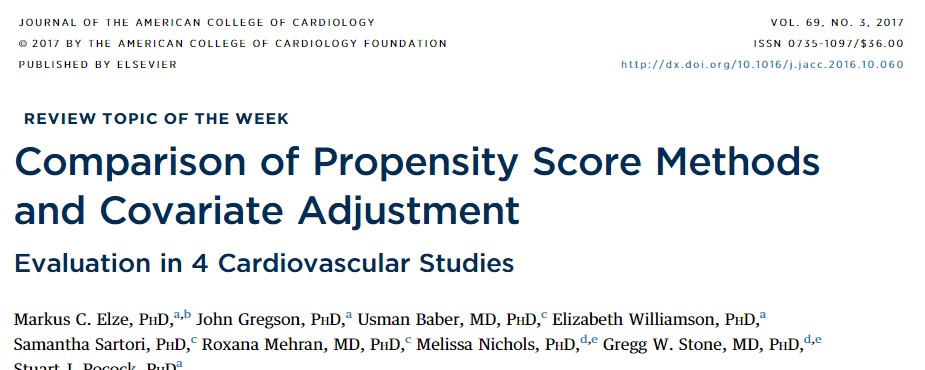
In recent times, one technique called propensity matching and scoring is used to conduct medical research where multiple covariables and confounders play.

What does the word propensity mean?

Oxford defines this word /prəˈpɛnsət̮i(pl. propensities) (formala tendency toward a particular kind of behavior

What is propensity matching in medical research?

In simple terms, it is doing a study without a true control group. It is a statistical gimmick where in we create an Imaginary or virtual patient arm What a way to conduct a scientific study? Those days, if someone suggests a study without a true control arm, it will go straight to the dustbin. (Of course, the concept came into vogue because we can’t have controls for ethical reasons or the rarity of the condition ) We do have  many other conventional covariable analytical methods available A well-written reference  (Ellicott C. Matthay, SSM – Population Health, 2020,)

Who created this propensity score?

I thought It was a new concept.No, it was proposed by Rosenbaum et al in 1983. (Ref 1) The extreme popularity it enjoys today is unexplainable. I think it is the simplicity, joy of doing a study without a troublesome control population, and the subsequent herd behavior of medical researchers.

Read here the pros and cons

Final message

Only two questions need to be answered before crowning the “propensity score” to glory in the statistical world. 1. Who has the final authority to define, what amounts to a confounding effect?  2, What are the statistical chances of missing an important confounder in toto due to baseline ignorance? 

Most statistical methodologies are like Holywood movies, some strike gold for no reason in spite of a lot of flaws. A few examples are meta-analysis and non-inferiorly trials. Propensity matching with a synthetic control arm could be a useful methodology in very selected situations.  It is unfortunate it has become a fancy tool and doesn’t deserve the wholesome approval for doing away with the true control arm.

Statistics may be great science, but it seems to work fine, only in the absence of continuous, unpredictable biological interference with mathematics.

Lastly, can propensity score take into account of confounding effects of the non-academic mindset of many researchers in senior positions? What shall we do with many important therapeutic guidelines created apparently based on solid evidence created with poorly created virtual (propensity) matches?

Postamble

Experience-based medicine, wild logical guesses, empiricism, and trial of error methods,  all these are unavoidable in medical care and research. We have to move ahead with all the uncertainties in-situ and take our patients to a positive destination. 

Reference

1.Rosenbaum, Paul R.; Rubin, Donald B. (1983). “The Central Role of the Propensity Score in Observational Studies for Causal Effects”. Biometrika70 (1): 41–55. doi:10.1093/biomet/70.1.41.

2.Wang J. To use or not to use propensity score matching? Pharm Stat. 2021 Jan;20(1):15-24. doi: 10.1002/pst.2051. Epub 2020 Aug 10. PMID: 32776719.

Propensity score in cardiology research 


Read Full Post »

Who is the guiding the guidelines, which have become omnipresent & omnipotent ?

I don’t know really. Some good people I guess. But, the doubt creeps in when they try to coerce it on us.

Read Full Post »

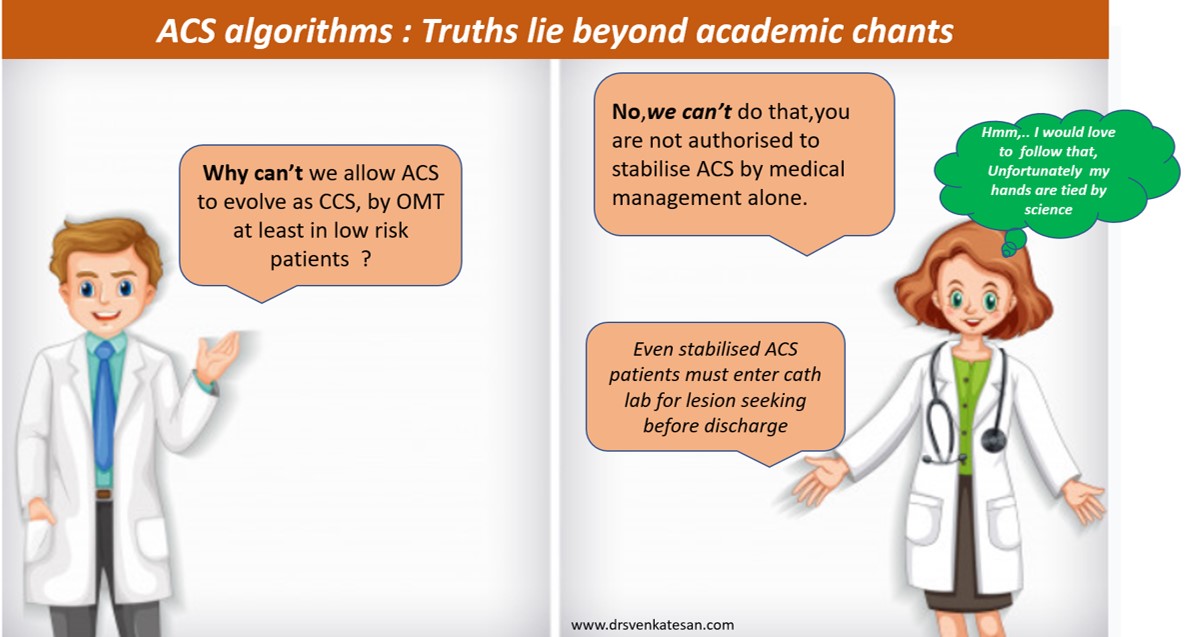
A brief conversation between an elite consultant and his fellow. (Caution: Grade 2 harsh language) 

Hey Doc, why is this guy’s name not found in today’s angiogram list? Any Insurance issues?

No sir, he has every requirement. Thrombolysis was very successful, ST has regressed well and it is nearly isoelectric and only T is inverted. His LV function is normal. In fact, I am not able to pick up any WMA.

Aren’t you aware, that being fine is never a contraindication for a PCI ? Which book teach you like that?

No sir, It’s already beyond 48 hrs sir. What is the purpose of knowing IRA status now? If it is open, well and good.If it is partially closed, again little to gain, right? 

Don’t expose your Ignorance. … haven’t you heard of the pharmaco-invasive strategy & open artery hypothesis. Always learn to respect science.

But sir, then why does late PCI of IRA in otherwise stable patients come under class 3 recommendation, if I understand the guidelines correctly, it is a contraindication, am I, right sir? But, this patient got stabilized by us still, why he is compelled to undergo another procedure exposing and adding further risk?  

That shows your immaturity. Doing an angiogram is never forbidden. It is the inappropriate late revascularisation of IRA that is the issue.

 Agreed sir, how confident are we, that we will stop just with an angiogram after visualizing a tempting lesion in either IRA or non-IRA? (My brief experience as a fellow doesn’t tell a fair story) 

 Now, you are trespassing into prohibited non-academic zones of cardiology practice. Instead, talk about FFR, OCT, multivessel angioplasty, and ( deferred or instant ) complete revascularization. Think like a true scientist don’t get spoiled at a young age in your career with all this ethical stuff. 

Final message 

Never allow an ACS to stabilize by medical management, if he is otherwise eligible and affordable for a procedure. You are not authorized to do that. 

Read Full Post »

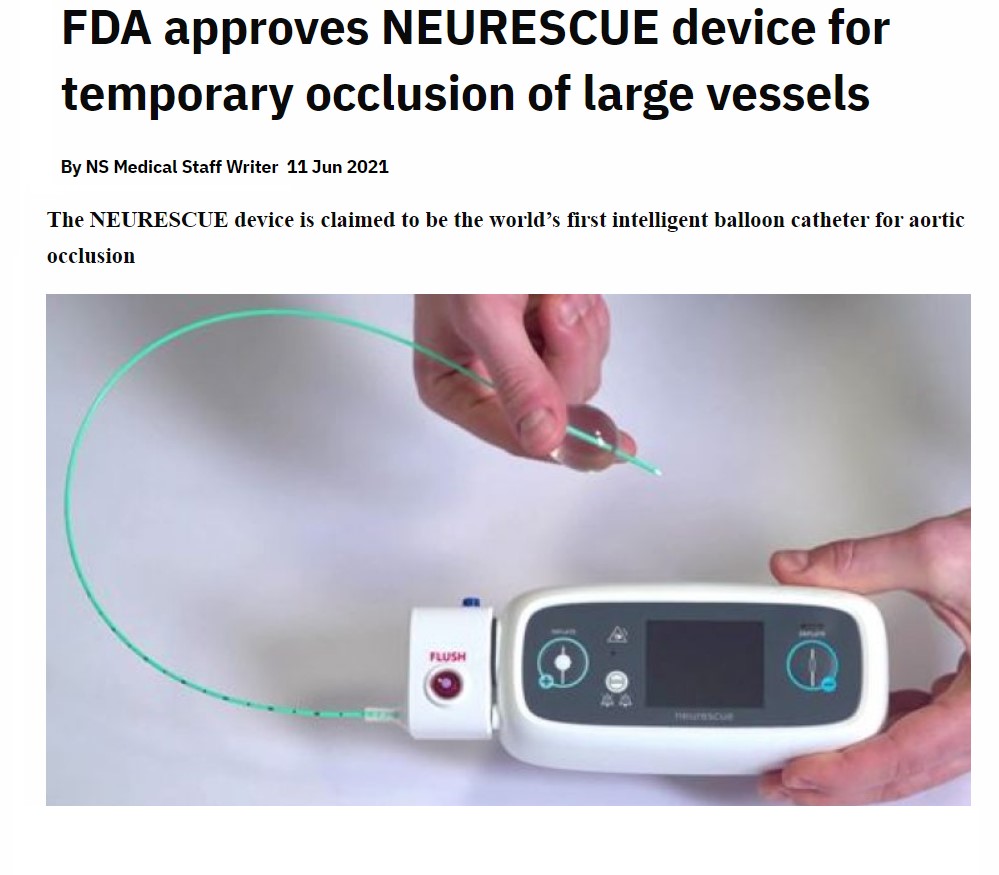
CPR with BLS and ACLS is time tested method of cardiopulmonary resuscitation. The automatic external defibrillator(AED) was a real breakthrough. Still, complete recovery eveN in “in-hospital cardiac arrest”  is at best 10-15 % . (Brindley PG, CMAJ. 2002. )Here is a technology in-progress story, now I understand FDA has approved this device for emergency resuscitation in cardiac arrest.

The principle is simple. In the early minutes following cardiac arrest, it is the survival of the myocardium and brain that matters. So, occluding Aorta transiently and continuing CPR infuses more life into the brain and heart, and the possibility of revival they say is significantly increased.

Mind you, this is not for the layperson or public but can become a game-changer for the ER crew and in ambulances or even in the cath lab. Emergency insertion of ECMO is never easy and a Neurescue balloon may come in handy in the meantime.


The attraction is the simplicity of the device, just inserted through the femoral artery. Don’t know how successful we would be, in centering the collapsed femoral artery though. The balloon actually doesn’t really impede the lower limb flow.It senses and relaxes as and when necessary. 

Final message

The concept behind neurescue looks like a bedside emergency partial IABP-like (IABO-Intra aortic balloon occluder rather) but appears promising. What I understood grossly is, that potential extremity Ischemia is acceptable if it’s going to save a life! Also realize, it is not a magic device that brings back life in every cardiac arrest. It gives us more time to act so that we can do other measures to bring back circulation. 

Reference

Read Full Post »

Bifurcation PCI is a modern-day Cardiologist’s fascinating professional adventure within coronary arteries. Of course, one of their Intentions is to do good for the patient. Bifurcation lesions (BFL) are a special subset of lesions, that looks challenging, more because of the potential biological aftermath following the delicate construction of a grade separator at a critical site. Mind you, it’s done within a live flowing artery and subsequently needs lifelong maintenance.

Strategies for BFL

  1. Strictly committed* single stent strategy (Irrespective of what may come, LCX or LAD  pinching let me take care . Don’t worry strategy *May sound dangerous, but still, it doesn’t make other strategies less ominous) 
  2. Provisional single stent strategy with elective cross-over for truly poor result /cosmetic/peer satisfaction  purpose
  3. Provisional single stent with bail-out cross-over. Often happen as an emergency  (Not all techniques are amenable for this)
  4. Elective planned two stents (Still, flexible  to revert to single stent if the situation allows)
  5. Elective, strictly committed, prefixed  two-stent strategy  (No going back strategy/ Not really a professional PCI )
  6. Always remember, SYNTAX or no SYNTAX CABG is the safe & best bet for many severely symptomatic patients, with complex as well as non-complex BFL lesions esp in diabetic patients.

Wait, there are two more.

7. Please note, there is one benign strategy, that is always available, but hiding deep in the interventional cardiologist’s sub(non)conscious minds. It is a zero radiation, zero contrast, and almost zero cost strategy. Yes, It is “No stent strategy’ also called exclusive medical management, currently referred to as OMT/GDMT. In our analysis of symptom- lesions significance at least 30% of BFL are eligible for exclusive medical management.(FFR & IFRs ? Less we say about it, is better!) 

8. One more option for those patients (&cardiologists) who wants to travel the middle path is POBA or a Glorified POBA ie DEB  (Ref  Corballis NH,. PLoS One. 2021)

Whatever the treatment, bifurcation PCI  cannot be taken lightly. One exclusive club is debating this topic in Europe every year (EBC) for the past 10 years. Currently, Double kiss and crush (DK crush) is considered superior to others. Mini crush and Culotte are good alternatives in specific circumstances (Definition 2, NORDIC, BBC 2)

Something about DK crush (Shao-Liang Chen Nanjing, China first modified mini crush to DK crush)

Best video resource for DK crush 


In DK crush every step appears to be double. Apart from the double stent, it is a double wire cross, double crush, double kiss, and double POT (or even more). All must happen in a specific sequence. One may add double Imaging (Pre and Post PCI IVUS or OCT) to the list.  Finally and funnily not to miss the realistic possibility of double complications over the provisional strategy.

I am not sure which of the 10 steps in DK crush is most important. When we go through the physics of  BFL intervention it appears, that proper crushing and kissing may be the key to success. Though kissing is an integral part of any two stent strategies, in DK crush it happens in a unique interface between balloons /balloons with a stent and finally between two stents. In fact 

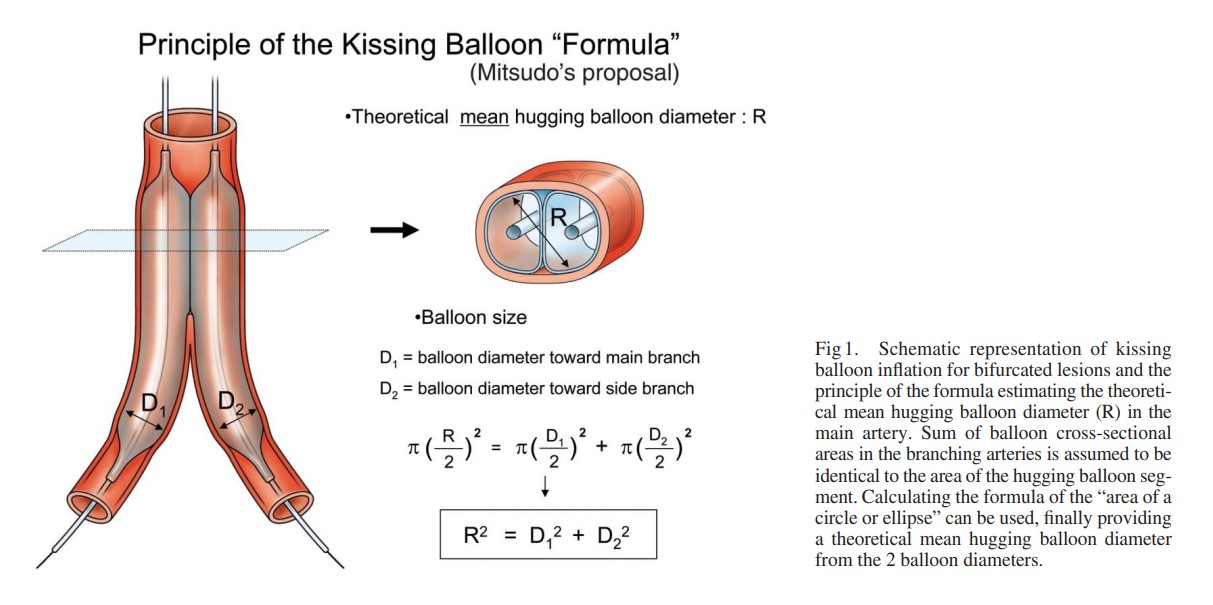
The physics of bifurcation kissing includes balloon hugging diameter, area, and pressure. Added to that is the intervening metal layer.

Can’t take the kissing in a casual manner. The Morino & Mitsuda model tells us more about the physics of kissing. In BFL interventions, kissing can happen with various layers that include one layer of the balloon with a crushed and non-crushed stent, carina. While we are mastering the techniques, we must realize, Kissing is aimed at stabilizing the carinal basement, still, there is a distinct possibility, that what may appear as innocuous kissing may undo all the good work we have done in previous steps. I guess, no harm in missing the final kissing if everything is ok in OCT.

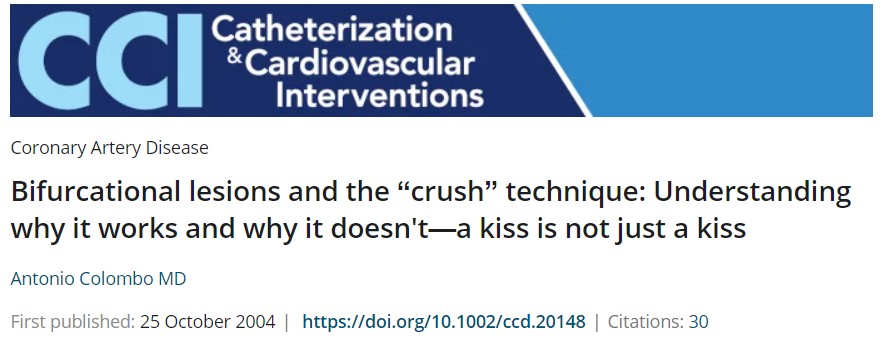
Dr. Anonio Colombo’s take on kissing 


Final message

So, we have both simple and complex modalities for BFL. Evidence and experience reveal that 90 -95 % of patients with BFL would be eligible for the easy path. In one sense, we are indeed wasting our energy and resources in tackling this negligible CAD burden located at the summit of the global CAD pyramid with a gigantic base. However, we can feel scientifically happy, that we have gained considerable expertise in tackling complex lesions with multiple stent strategies in recent times. Still, we are far away from a true vision, of what really might follow such a niche & expertise-intensive procedure.

Let us hope, that modern metallurgy in combination with physics & hydrology would ultimately beat Biology.

Reference 

1.Dr Colomo article (For personal use only)

2..Morino Y, Yamamoto H, Mitsudo K, . Functional formula to determine adequate balloon diameter of simultaneous kissing balloon technique for treatment of bifurcated coronary lesions: clinical validation by volumetric intravascular ultrasound analysis. Circ J. 2008 Jun;72(6):886-92. doi: 10.1253/circj.72.886. PMID: 18503211.

Postamble

Does evidence create expertise?

Looking at the whole issue of complex PCI philosophically, no technique may really be superior based on accrued evidence. In fact, when expertise becomes the key determinant, the evidence goes to the background. It is really surprising we are too much dependent on hasty and often biased evidence to ratify our expertise, technique, or hardware. I know, one of my colleagues can cross any lesion with one or 2 wires.

To insist, that a particular technique must be followed may not be academically correct always. It is similar to telling a coach driver in advance when to apply a brake or accelerator when he is negotiating multiple hairpin bends in hilly terrain on a rainy day, based on clinical trials done with different drivers on different routes. Ultimately, the outcome is decided by the expertise of the driver, the condition of the vehicle, the road, and not least, the destiny of the passenger.

Read Full Post »

Murmurs are audible noises from within the Heart or vascular tree when blood flow loses its laminar flow and becomes turbulent. There are many factors responsible for it (Recall Reynold’s number ).It is obvious, that when there is hyperdynamic circulation, even in physiology one may hear a murmur. Pregnancy is a classical example and Innocent (still murmur) in children is another one.

Duroziez murmur: A brief history 

In this post let us dwell on something about a classical murmur that occurs in the peripheral circulation away from the action-packed organ heart. It was originally described by French physician  Dr Duroziez  two centuries ago. (In his own words it was called a double crural murmur ). This happened shortly after Lennec’s new era of auscultation began. When everyone was concentrating on the heart Dr. Duroziez was curiously auscultating the legs and found this crural murmur. For this out-of-the-box thinking, he is still being remembered.

In significant aortic regurgitation, we know a substantial amount of blood regurgitates back into LV. This backflow though happens in the chest and into the LV,  it is reflected all over the vascular tree. It so happens, the entire aortic forward flow for a moment slows in end-systole or even reverses at the end-systole and early diastole when the Aortic valve leaks. Almost all peripheral signs of AR are due to this. It is critical to remember, that these signs are heavily modified by arterial distensibility, associates obstruction, LV  contractility, and peripheral vascular resistance.

Is there real reflux of blood back towards the heart* ? 

Duroziez’s murmur remained controversial both for its mechanism and intriguing questions about, whether the blood really travels back in early diastole in the limbs or is just an acoustic illusion from a  pressure wave. The debate was so intense it demanded a curious animal study. The femoral artery of Dogs with induced AR was injected with contrast and retrograde blood reflux was documented up to the iliac artery and Aorta.(NEJM 1965 Ref 1) 

* While retrograde reflux of blood in the femoral artery is real, which manifests as EDM, we must understand antegrade diastolic flow murmurs or even continuous murmurs are common in hyperdynamic circulation over narrowed peripheral arteries and veins (venous hum)

**For Advanced readers: Some of the issues are not clear. Whether Duroziez murmur is truly decrescendo (Like its EDM counterpart in the Aortic area) or Is it mixed with antegrade diastolic flow murmur over the femoral artery due to hyperdynamic circulation.

Echocardiographic correlates of Duroziex murmur 

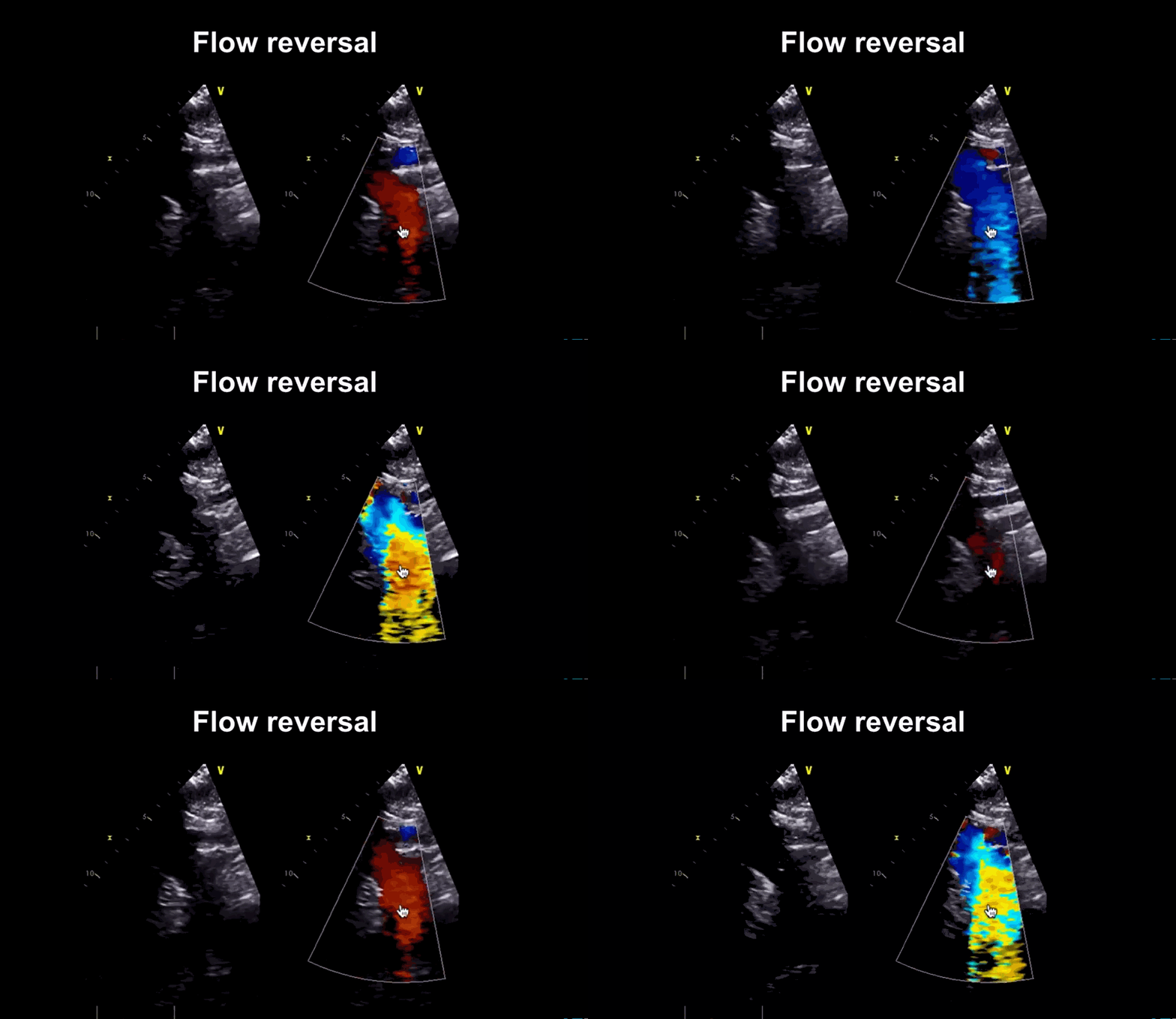
Now, we are able to document bizarre hemodynamics that happens the entire length of the vascular tree that is responsible for this murmur.(A related post 😦 In AR the run-off is central or periphery ?_)

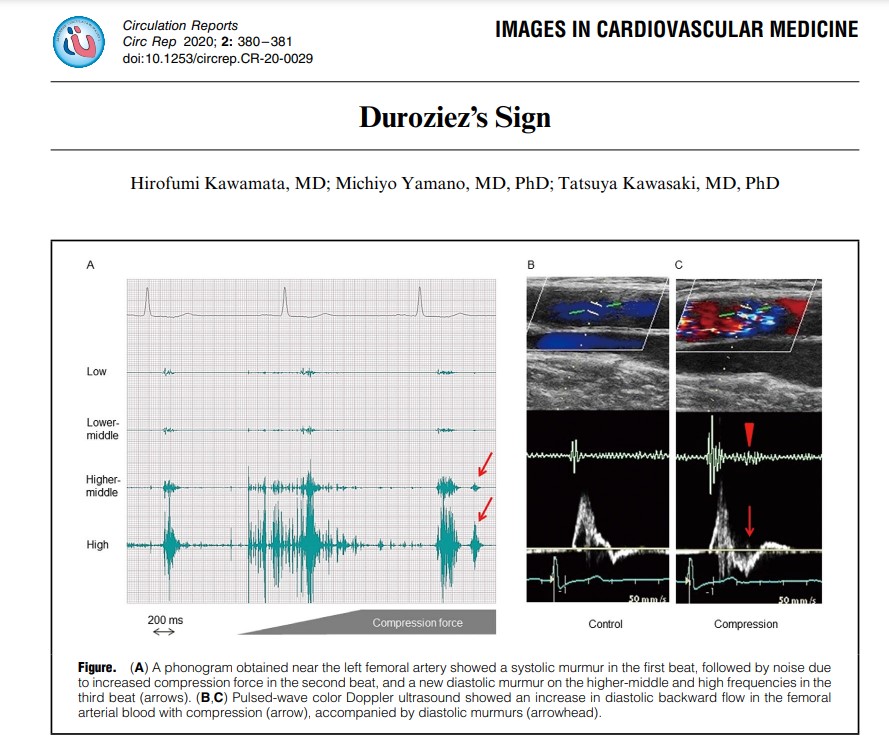
Image courtesy: medmastery https://www.youtube.com/watch?v=eVhEXCO13ys 


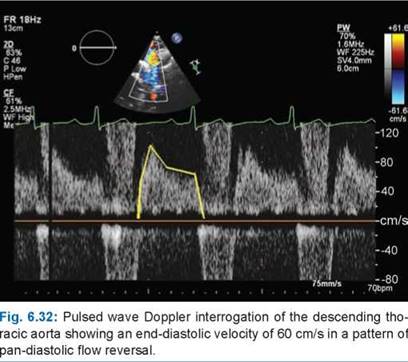
Phoncardiography with ECG correlation, help us to  time the murmur exactly and also demonstrates reversal of flow in femoral artery  by color flow doppler.

Importance of Duroziez’s murmur & A research proposal 

Though it’s of historical interest, it is still discussed in exams. It may be amusing for the busy clinical cardiologist to auscultate over the legs, when they may be contemplating a  TAVI for leaky Aortic valve  (Arias EA,  Interv Cardiol. 2019). But, for students, it is a different story. If anyone wants to beat the acumen and curiosity of Duroziez, they may assess the length of this murmur and correlate it with descending aortic flow reversal, aortic ERO, and regurgitant fraction. The fate of Duroziez’s murmur after Aortic valve replacement may also be studied.

Final message 

Duroziex murmur is not just a vintage cardiac auscultatory sign meant for exam halls. Looking deep into it, we may get more insights into the behavior of the peripheral circulatory system in normal physiology as well as in patients with AR.  

Reference

1.Duroziez PL. Du double souffle intermittent crural, comme signe de l’insuffisance aortique. Arch Gen Méd 1861; 17: 417–443,588–605.

2. N Engl J Med 1965; 272:1207-1210

3.Jama.1933.Blumgart and Ernstene


Read Full Post »

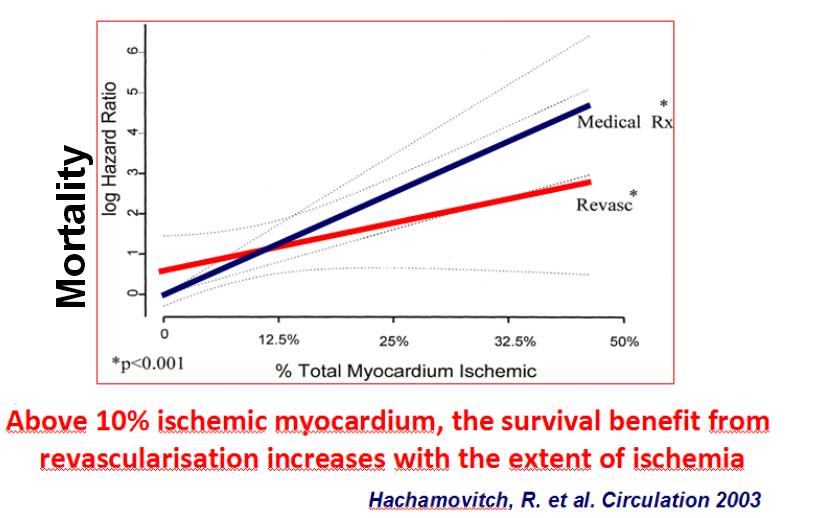
This graph is a rare treasure in CAD therapeutics (fished out from a huge, often conflicting chronic CAD literature) that elegantly shows us the complexities involved in the revascularization of ischemic hearts with risks and benefits criss-cross each other. Our job is to identify, that critical point in a given patient’s CAD timeline for optimal management. To make things difficult, this point is a moving target and makes this delicate clinical exercise truly complicated.

It conveys a simple message in strong terms. It says the inflection point is around 10-15%. When the total ischemic areas are beyond this the benefits increase and when it is less there is sure shot harm.

Now comes the tough part. How best we can identify and quantify the true area of ischemia?

There is no such thing called coronary mathematics. Even if we try to make out one, vascular biology will giggle at us. Still, we have no other option but to go for sophisticated imaging modalities. Stress Echo, Nuclear Imaging, Scar imaging, MRI, PET, quantify total ischemic burden, plot it with corresponding coronary anatomical zones for a potential correction.

What this curve does not convey is the complex interplay between Ischemia vs symptoms. Ischemic myocytes have so many invisible tricks to adopt themselves. Should I go after the burden of Ischemia (Often Imaginary) or the burden of symptoms? Despite the lack of benefit in most trials on CTO in hard endpoints, it is yet to rectify the thinking patterns of many elite evidence-based cardiologists.

Final message

However, It will be an unpardonable act of omission if we miss or fail to offer the benefit of opening a critical LAD disease that has troublesome symptoms.

Read Full Post »

« Newer Posts - Older Posts »