Feeds:
Posts
Comments

Archive for the ‘Uncategorized’ Category

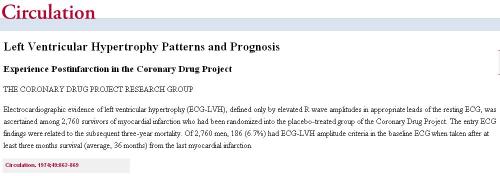
LVH is traditionally believed to be adverse marker for both coronary events and cardiac failure. . (Framingham ) While  this may be  true most of  time  we  also  have evidence to  suggest  patients with LVH  tolerate ischemic injury better.The area of MI is less.  In fact , the coronary drug project was not able to identify LVH as a major risk factor  for MI.  But many other studies continued to portray  LVH  dangerous parameter in ACS.

This paper from Sheba medical center Israel   tries  to answer this  question succinctly !

Summary

LVH  indeed  is an  adverse  predictor  for cardiac outcome  in the  long term.Meanwhile , since the   7 day mortality of STEMI  is well below  3% if  associated with LVH    keeps the controversy alive  ( 5-7% in non LVH group ) .This piece of statistics     gives credibility to the belief   LVH  may  really prevent  early deaths  in STEMI.

This phenomenon about LVH is  consistent with our observation  in  one of the Asia’s oldest coronary  care units (Started in 1972)   .None of the  STEMI patients with LVH  had a cardiogenic shock  in the recent past   !

* It is important to realise not all LVH are same. Inherited LVH, Diabetic LVH and  uremic(  or sub uremic ) LVH  behave differently. Since  the concept  of LVH is  carried  by physicians   in  a single basket ,  we tend to miss the  true benefits of LVH that occur purely due to good exercise training or a mild HT !

In other words , LVH that do not involve interstitial proliferation  is  probably  good for the heart !

Final message

With due regards to Framingam study  , presence of LVH in ECG in any form of acute coronary  syndrome  should  bring a sense of comfort  in the coronary care units .I agree  , it may increase risk of sudden death in some of the population but still it has some unique and definite  advantages at times of  ACS.

Reference

1 Levy D, Garrison RJ, Savage DD, Kannel WB, Castelli WP. Prognostic
implications of echocardiographically determined left ventricular mass in the
Framingham Heart Study. N Engl J Med 1990;322:1561–1566

2.The Coronary Drug Project Research Group. Left ventricular hypertrophy patterns and prognosis. Experienced post infarction in the Coronary Drug Project.Circulation 1974;49:862–869.

3.Behar S, Reicher-Reiss H, Abinadar E, Agmon J, Barzilai J, Friedman Y, Kaplinsky E, Kauli N, Kishon Y, Palant A. Long-term prognosis after acute myocardial infarction in patients with left ventricular hypertrophy on the
electrocardiogrm. Am J Cardiol 1992;69:985–990.

*Coronary drug project (A old study done in early 1970s has more credibility when LVH was not considered as pharma target !)

Read Full Post »

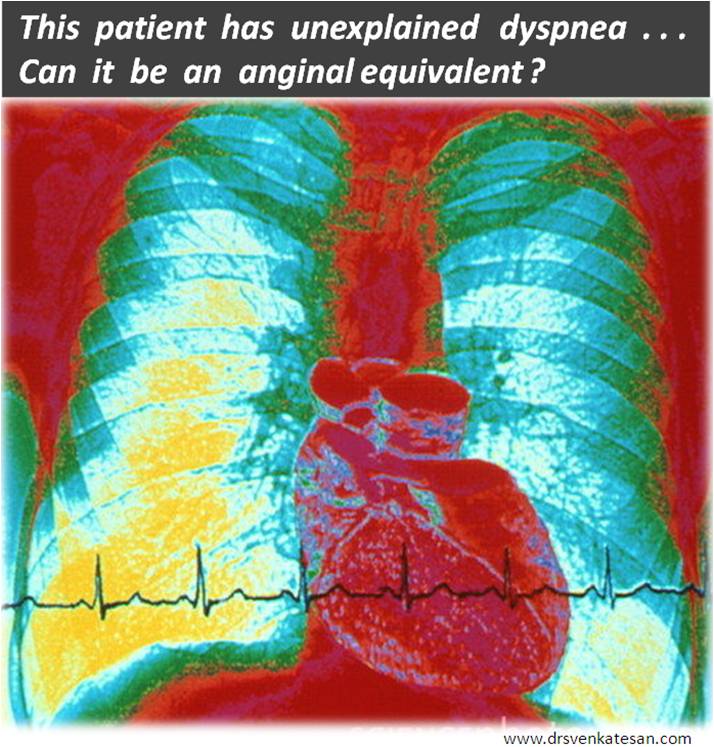
Angina and dyspnea are the  two cardinal ( classic ) symptoms of cardiac disease . While dyspnea is a manifestation of raised LV filling pressure ,  angina  implies reduction in blood supply to heart .

In other words dyspnea is related to excess blood in the  lungs and angina is due to less  blood in  the coronaries  !

So , it is obvious  even though these  two  symptoms are closely knit entities , patho- physiologically  they are  distinctly different  in real time , when an actual  cardiac event unfolds in the bed side .

This also partially explains  , why simultaneous  presentation   of  angina and dyspnea is  relatively  uncommon in CCUs  , than one would expect .(In a given patient , one of them will be dominant)

Why and how our patients (and also  physicians !)  get confused  with dyspnea and angina ?

When William Heberden described  angina over a century ago ,  he was  so meticulous in his description and observation. In fact , it was,  as if  he felt the angina  himself  and wrote it .One can rarely  expect such a  description from any of our patients .  So , it is not at all a surprise  for mistaking  any mid sternal discomfort as dyspnea instead of  angina . (This error in describing angina  is the commonest cause  for dyspnea  playing this  dubious dual role !)

When to suspect  dyspnea  as an Anginal equivalent ?

Here  are some real situations ( and clues )  where  dyspnea  may be  considered as  anginal equivalent.

  • Diabetics
  • In elderly with autonomic dysfunction
  • Patients with chronic beta blocker and other anti anginal drugs.
  • Post PCI/CABG patients (Normal LV function but dyspnea : Denerved heart blocks pain  ?)
  • Exertional dyspnea that stops immediately could be anginal equivalent.
  • Dyspnea with palpitation is  rarely be anginal  equivalent as palpitation indicate good LV /mitral valve function.
  • Dyspnea on  isometric  exercise rather than isotonic exercise .

Mechanism of anginal equivalence

While the trigger for dyspnea is elevated LVEDP  which   stimulates the  stretch receptors in lung .For angina ,  it is the free nerve ending in myocytes that gets irritated and generate pain signals.

When ischemia  presents as dyspnea  two mechanisms are considered. One is myocardial , other is purely neurogenic.

  1. It is  believed critical   ischemia  of myocardium  ( Defective Ca ++ uptake  into sarcoplasmic reticulum) induce  “a wide area  diastolic dysfunction” of LV  that   raises  PCWP  to generate  dyspnea. Further , ischemia induced regional LV dysfunction  that  subtends the pap muscle could  result  in ischemic  MR and severe dyspnea. (Exertional Mitral regurgitation is getting major attention now  )
  2.  In many patients with diabetes or autonomic dysfunction the velocity of  pain signals  become sluggish  or  blocked  en-route  to brain stem . Often they change track to travel in the nerves  meant  for  carrying somatic siganls  ,  J receptors  , intercostal spindle etc . This spill over and cross talk  creates a  false sense of dyspnea , whenever ischemia  occurs. This is attributed to the  wide and complex  neural network of thoracic sympathetic ganglions.

Some of the known  associations with Angina equivalent .

  • Diastolic dysfunction
  • Ischemic MR
  • Small rigid  left atrium
  • Atrial fibrillation

How to  investigate a patient who is  suspected to have  angina equivalent dyspnea ?

  • ECG
  • X ray chest
  • Echocardiogram will settle the issue most times.

Nuclear scan and angiogram in deserving patients

When can  angina and   dyspnea occur together  ?

Angina and dyspnea  if   truely  occur together causes  grave concern for the physician.

This indicates two things .

  1. The myocardium is ischemic  and generates  pain (And possibly ongoing necrosis) .
  2. Simultaneously its  pumping or receiving function is also compromised resulting in  entry block from the lung resulting in acute dyspnea.

Both are ominous signals . This situation occurs  most often in  STEMI with LV failure .

If  dyspnea occur in NSTEMI/UA ,  it is a worst possible complication . GRACE  registry quotes  maximum  mortality for unstable angina with cardiac failure .The reason being the cardiac failure in UA is due to non necrotic global ischemic stunning of LV myocardium with or with out acute  mitral valve failure.(Flash pulmonary edema)

Why angina is rare  in  chronic congestive  cardiac failure ?

The main reason being  , a severely dysfunctional heart  contracts  poorly .In reality , it is never thirsty for blood  . Even if it  is  perfused  well  , there is no good muscle  mass  to burn the ATPs from it .A failed myocardium is  more or less a  sleeping  myocardium .It does not even have the  energy   to cry with pain at times of ischemia ! .However significant the ischemia  is ,   it can often  evoke only  a gasping sensation .

The other explanation  is more imaginative . In cardiac failure heart  dilates .The end diastolic and end systolic  volume is high. The cardiac chamber is always filled with  excess residual blood .This , some how tend to perfuse the myocardium directly and provide a good reserve .This may be  more important in  RV perfusion  .( Trans myocardial laser revascularization is based on this concept – direct myocardial perfusion from the chambers)

While angina is  rare in chronic cardiac failure,   it should also be realised ,dyspnea  is  rare in  uncomplicated acute coronary  syndromes. We know ACS  primarily present with angina.  Exceptions are always there.

In elderly, diabetic , with co morbid   patients ,    ACS  may  present without  angina . Instead  they present with vague dyspnea and shortness of breath . It is here ,  physicians  face a tough task to identify  dyspnea  behaving like   angina  equivalent.  Of course , the  good old  ECG bails us out most of the time.

Therapeutic importance of recognising anginal  equivalents ?

The revascularisation  procedures (CABG/PCI)  are too good  in  relieving  angina , but least effective in providing relief from dyspnea.So  real anginal equivalents if recognised properly can be subjected to early revascularisation .

Can we consider  exertional dyspnea as evidence for ongoing ischemia  in a post MI patient ?

This is tricky question . We do not have answers to it. Readers can try to  answer . The commonest cause of dyspnea following MI is due to physical deconditioning and associated LV dysfunction.

Final message

Coming back to the basic question  , Is  this dyspnea  . . .  an angina equivalent  doctor ?   No simple answer is available .

The first and foremost investigation to do  is ECG .This will settle the issue many times.  Next is the reassessment of  history  clinical  presentation and past history.  Every patient with unexplained dyspnea must undergo a minimum of three investigations (ECG,  X ray chest and Echocardiogram )  If any of these  suggest a cardiac compromise   further evaluation is   indicated.

So, the message here is ,  clinical findings  are insufficient  to rule out ischemic etiology for dyspnea.

References

Nil . Every thing is my random thoughts !

Read Full Post »

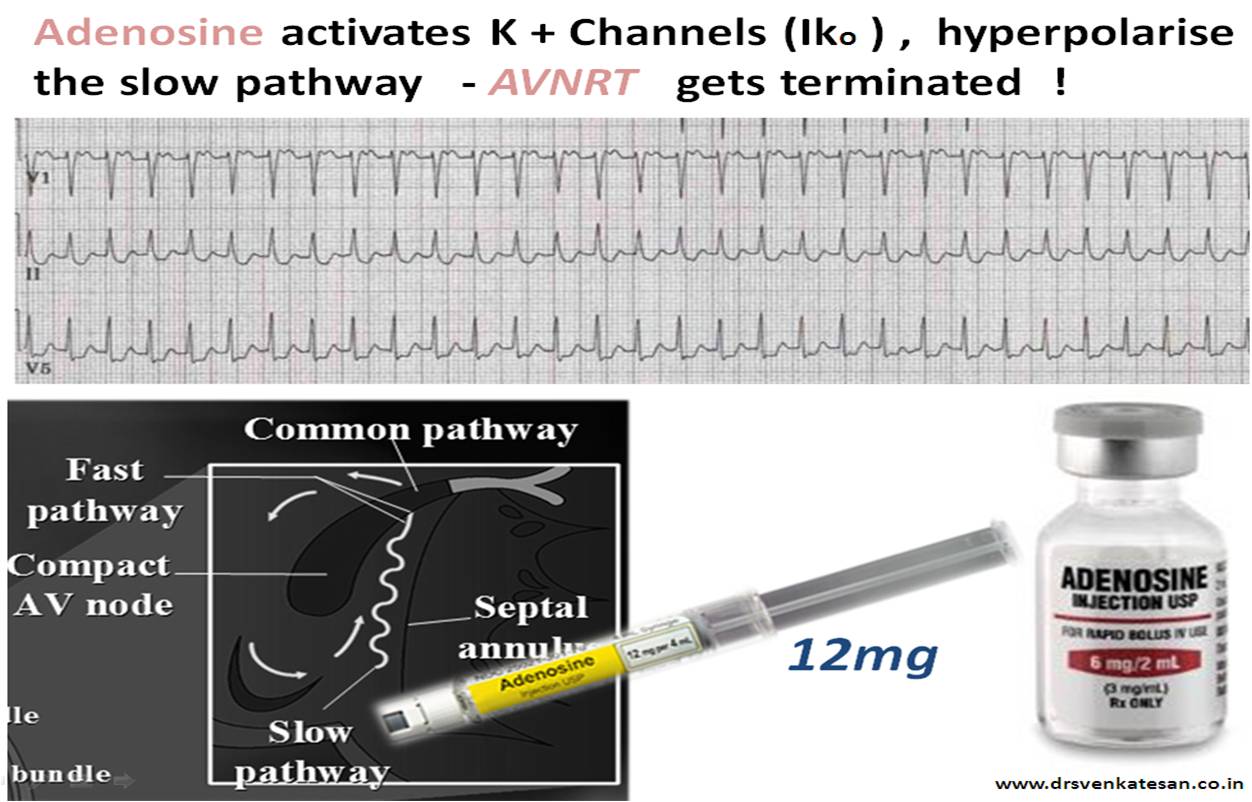
Adenosine is a  purine analogue. Acts by stimulating outward K+ channel  of AV nodal tissue, more specifically  in the posteriorly   located  slow pathway in the vicinity of  coronary sinus.

Another action of adenosine is inhibition of cAMP , which is similar to beta blocking action may also help in terminating the tachycardia.

Adenosine : A 10 second cardiac miracle

  • 12mg bolus is administered , preferably in a central vein (Not mandatory  though)
  • Termination is usually abrupt . Transient VPDs are observed during termination.
  • Transient flushing may occur.
  • If the patient is taking Aminophylline group of drugs (Which are adenosine antagonists) the AV nodal blocking action may be neutralised .

(It may be apt to recall  at this juncture ,  Aminophylline is used in sinus node dysfunction or AV block to increase heart rate )

Reference

A good one from Medscape http://www.medscape.com/viewarticle/585287_2

Read Full Post »

Coronary artery is the life line  of the  heart.The size ,  branches  and the course are  predetermined . Generally  it follows a  pattern ,  but still  it is   believed  every  human has a unique coronary finger print. (When retinal blood  vessels can do this . . .  why not the coronary  ? )

When the left main bifurcates it has to share its resources equally between the two  daughter vessel (Not exactly . . . LAD is  widow maker can’t be a daughter  !)

The logic would say LAD demands more as it has more  territorial commitment.But if LCX fights for  equality  share there is a  potential conflict here.But when LCX  is very aggressive and  demands  much more than it deserves the  issue becomes further complex

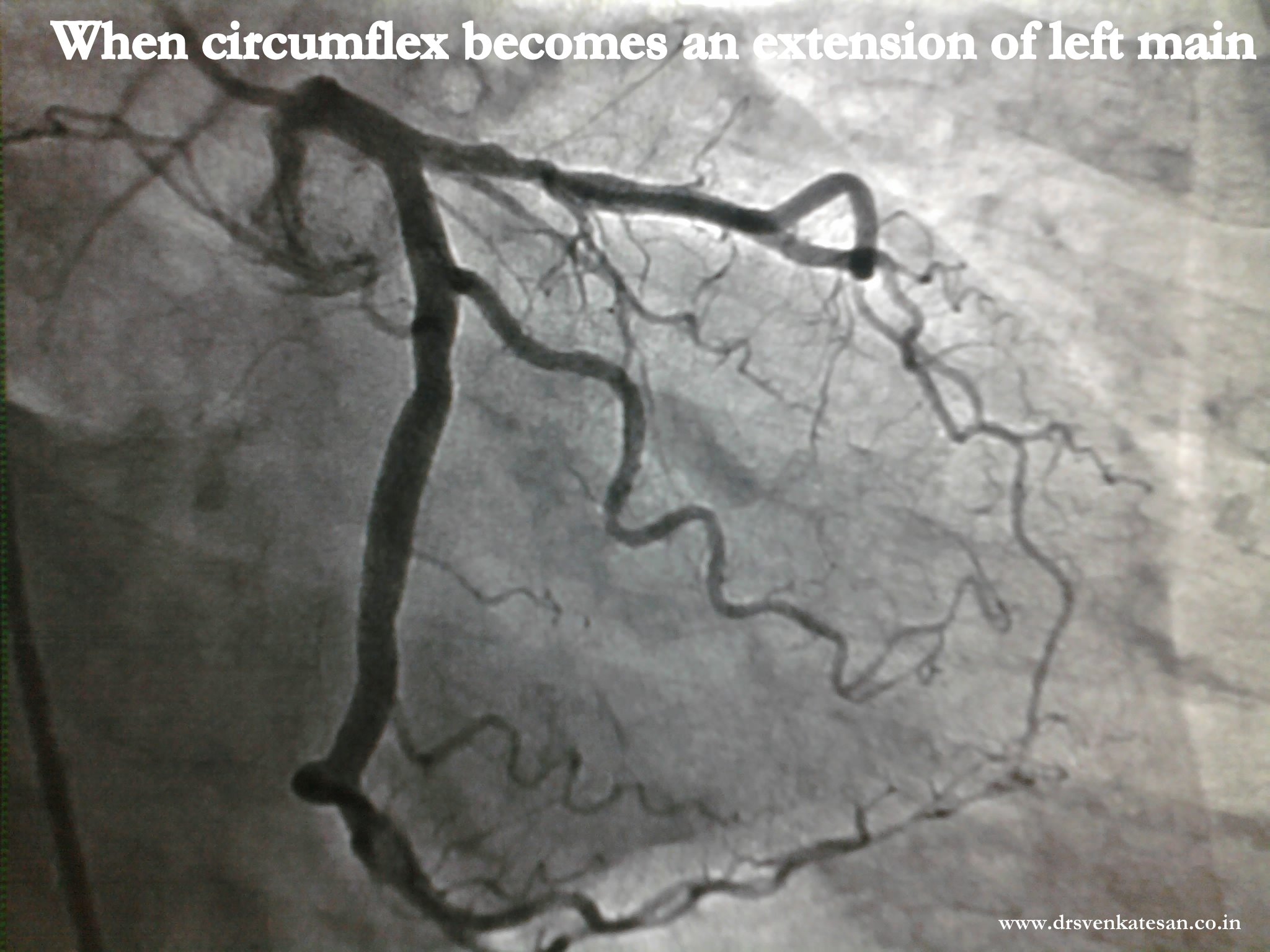
See how this LCX  gets bulk of the blood flow from Left main and no doubt this man came with  NSTEMI and  LAD region ischemia while his posterior circulation is comfortably  placed with  excess blood.

Note: The diameter of LCX even exceeds left main in certain segments.

One suggested formula (not validated ) is  diameter of   LCX +  LAD will be   at-least 150% of left main diameter .

1.5 x Left main diameter  =  (LAD + LCX diameter)

This amounts  to  50%  gain in  diameter   as it bifurcates .

Trifurcation  further increases the width conferring a hemodynamic advantage

What is the implication of unequal bifurcation  Left main ?

Hemodynamically there could be diversion  of flow into a larger orifice .But ultimately since  the blood flow is  determined  by the resistance arterioles at myocardial bed there  may not be any  practical significance . In pathological situations there could be a some impact  due to  stealing . Large LCX is more common with  left  dominant circulation  .

Read Full Post »

WPW syndrome remains as  a   fascinating ECG entity ,  ever since it was described by Wolf , Parkinson and White in the year 1930.It is  primarily a  disorder of cardiac embryology . Heart is an organ made up of  tissues from mesoderm and neuro ectoderm.The muscle which comes from mesenchyme has to be incorporated with specialized conducting system. This is a complex  process .It is determined by the bio-genetic forces. When errors happen in the embryonal  tissue  flow  congenital anomalies occur.

In  WPW this  error   happens  exclusively in the conduction  tissue movement  . Normally the specialized conducting system    pierces  the  entire  AV ring and connect atrium  and ventricle  .Later ,   it regresses in  all areas  except in the AV nodal zone  . When  It  fails  to regress ,  these  remnants of  conductive  tissue act as AV accessory tissue  and create electrical  short circuiting .This is the reason , all these pathways are located in the close vicinity of AV ring.

Accessory pathway shows   varying conduction velocity , but generally devoid of  decremental conduction properties .  The presence of such pathways make these individuals prone for variety of cardiac arrhythmias .It can range from  simple AVRT  to  malignant antidromic  AVRTs  that can end up in  VT /VF.

Resecting  these  pathways surgically was once popular.  Effective blocking  of  the pathways with  drugs  is a good option. Currently ,  it is possible to  locate and  ablate  most of these  pathways   successfully.

Even though there are many protocols to locate accessory pathway the one that is very popular is  simple   Type A and type B  WPW , which locates the pathway either in the  left  or  right  ventricle  respectively.

Huge data base  has been accumulated over the past 80 years  regarding WPW syndrome,  still   many questions are unanswered.  One of the important clinical issue is  multiple  accessory pathways , scattered  at  random  across the  tissue planes of atrium and ventricle  .

The other issue is intermittent pre-excitation and shuffling  of path ways during tachycardia  .

It is very rare to see a patient who manifests both Type A and type B pattern during sinus rhythm .Here is an  article from  unexpected  quarters  , Colombo Sri-Lanka in the year 1972  candidly  describes a patient with classical  combination  of  Type A and  B  WPW . It is great to see such an interesting  observation in the pre  EP/Echo era from a remote island nation.

Now , let us ponder over  these questions

    1. Can a pre-excitation  happen simultaneously in both right and left free wall pathway ?
    2. How will the ECG look like  when impulse travels over multiple pathway ?
    3. When dual pre-excitation combines   with  normal AV  conduction  ,     will  it not make  a  triple AV pathway ?
    4. How does a supra-ventricular impulse decide ,  which pathway it is going to travel  when confronted with a choice of  three or  four pathways ?
    5. How do you plan ablation for such a patient  ?

Read Full Post »

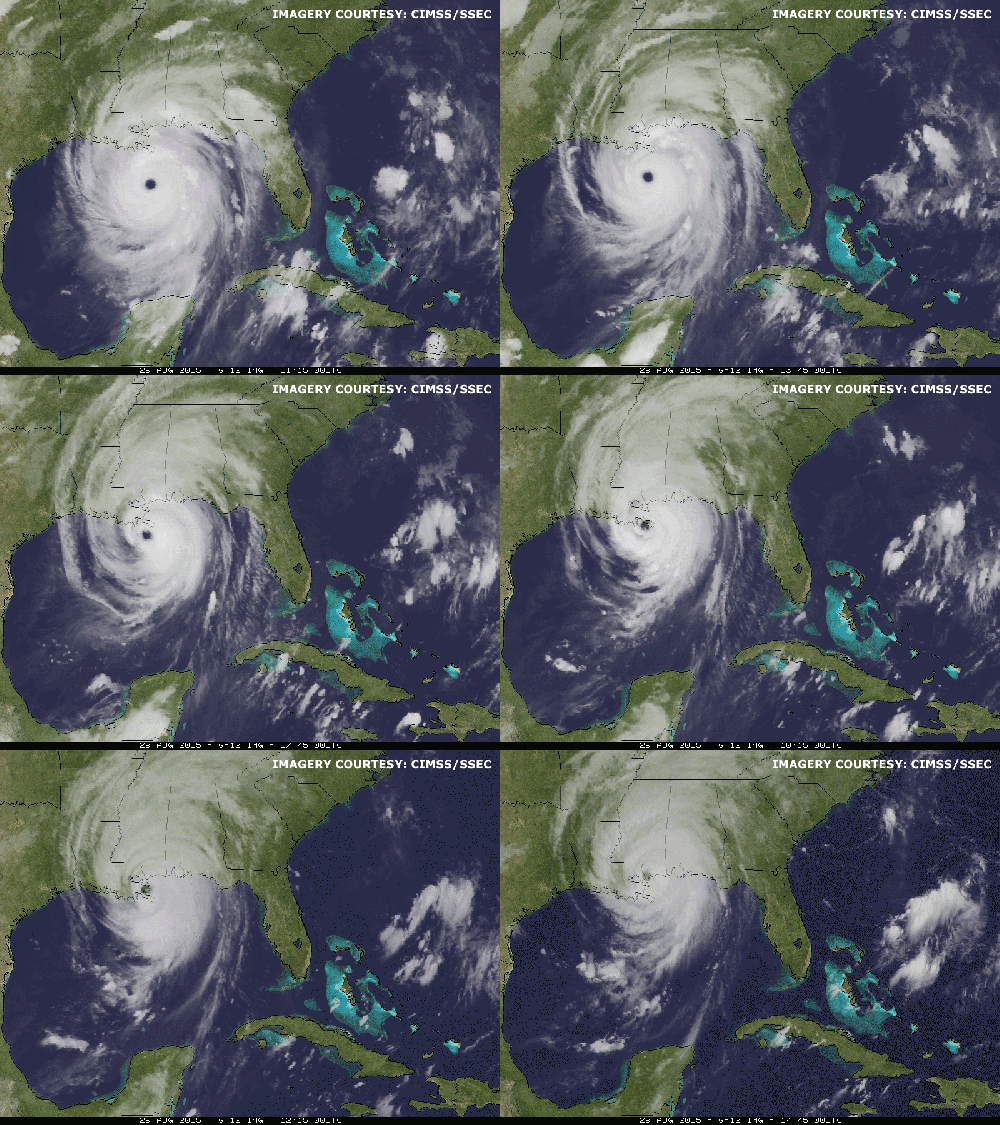
Hurricanes  are ocean’s  reaction to the climate change  especially  in subtropics.  When low pressure  zones  form over the ocean surface  the nidus for hurricane is sown .It   gradually intensifies to form deadly cyclones.The maximum damage is done when it  encounters the land . The following image  depicts how the hurricane Katrina caused havoc in the southern US coastline .

Hurricane katrina .Click to view animation


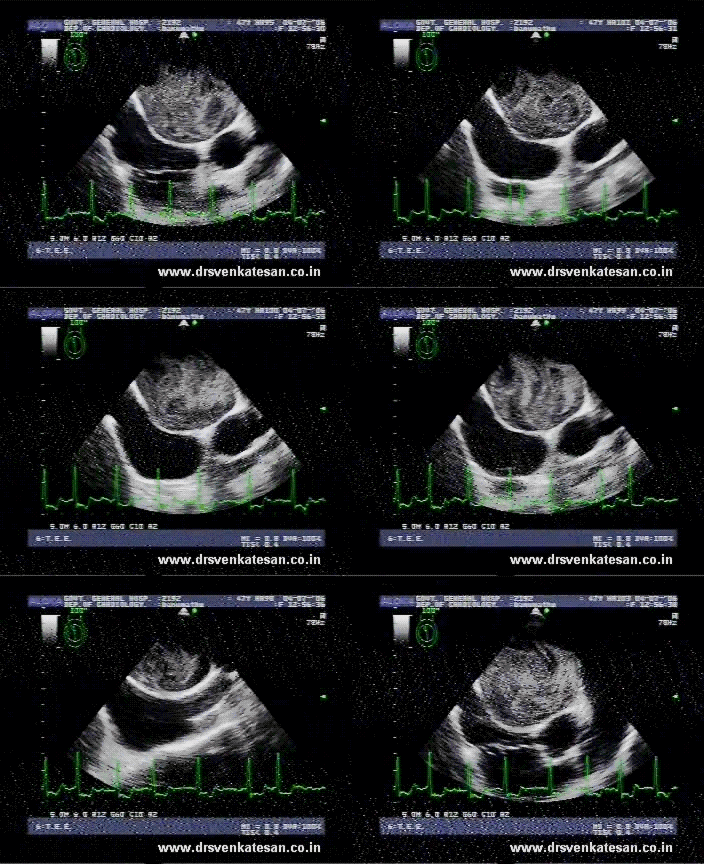
When the human blood stream is interrupted  by any pathological hurdle  it  gets  agitated . It encounters both turbulence as well as  a  slow flow phenomenon . Virchow taught us centuries ago  , slow flow , a vessel wall defect and  an abnormal blood combine to create a  clot. This is what happens in mitral stenosis . What appears as a mild turbulence  gathers momentum  and becomes a storm .The eye of the storm has the  least velocity and it  forms  the core of the future clot.

Left atrial strom visualised by TEE


What is left atrial jelly ?

A  pre- clot stage with impending clot formation may be referred to as a jelly . The exact  duration for  a contrast to get converted to clot is not known.It depends host of factors from hemodynamic and rheological factors. It  is  believed every clot   must be preceded by at least a brief period of auto contrast.

Is there a intrinsic  defect in blood in those patients who have spontaneous contrast ?

Yes , there has been  excess  fibrinogen  in these  patients. http://www.ncbi.nlm.nih.gov/pubmed/11744141

Can we dissolve  spontaneous  contrast ?

It  may be  possible with intensive anti coagulation. Ultrasonic dessication may be a modality that could be developed in future.

Is  the presence of  spontaneous echo contrast a contraindication to do PTMC/CMC ?

Some centers do believe so. Currently intensive anticogulation ,   meticulous preparation   with  special  precautions  during procedure will reduce embolic  manifestation.

Reference


Read Full Post »

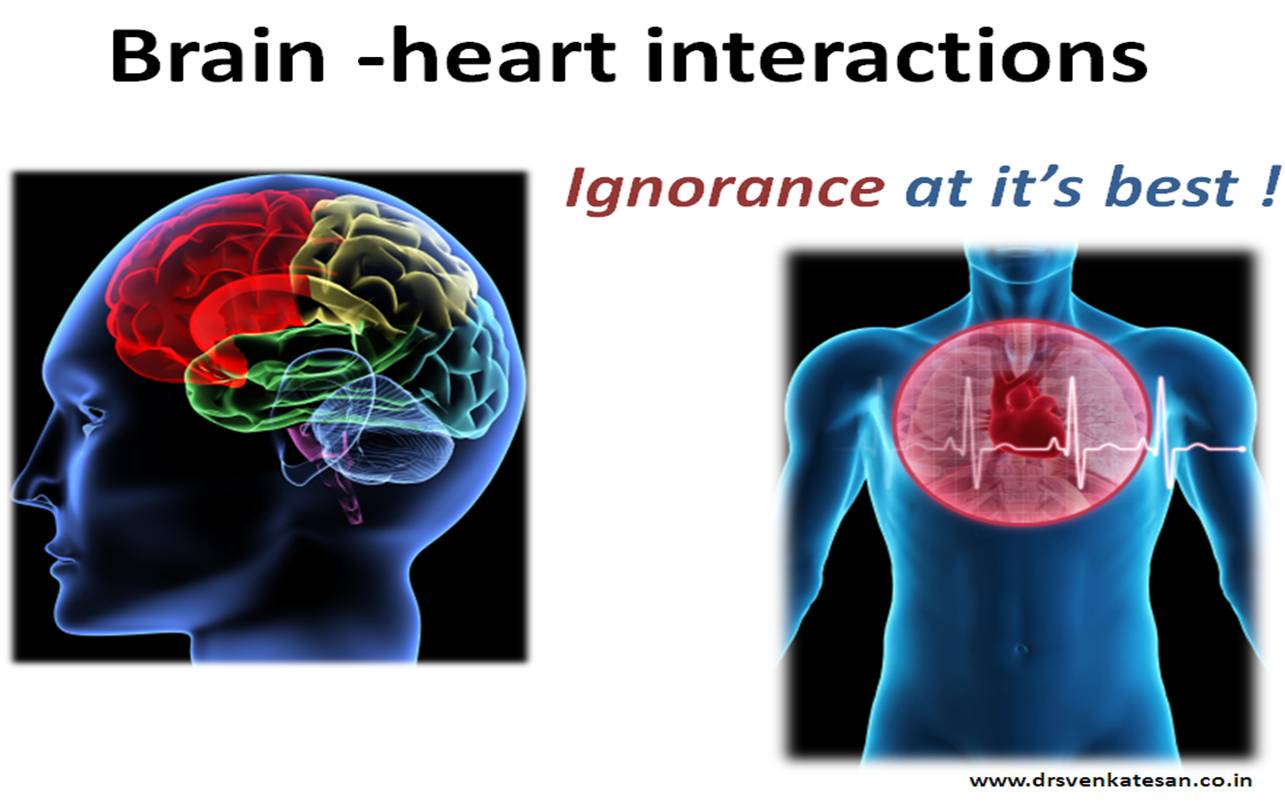
Sudden cardiac death is the  most common cause of instant death.  We know , heart is  also  under massive neurological control . Still , heart can run for days even after brain dies ,   if respiration is supported.This implies ,  heart is independent  neurologically  !  what a paradox !  But this  independence of   brain  function after death makes the  human heart transplantation  possible.

Even  as we “wow” about this cardiac independence , we   witness  widespread deaths due to sudden neuro- cardiogenic  deaths .This makes medicine . . .  a wonderful puzzle  and  compels  us  to pursuit  the eternal    journey  of  knowledge !

When an area of brain fibrillates what will the heart do ?

When  the brain suddenly discharges  huge amount of electricity (Load shedding )  as in epilepsy or some other neurological  injury  , it  may  travel down  and make sure the heart also  shares  the electrical insult .Sudden deaths have been reported in many epileptic individuals and in  some forms of stroke .To distinguish   sudden brain deaths  from sudden cardiac death in such patients  is a very difficult task.

The message is ,  hypo-functioning  brain does not generally harm the heart (Men in coma live for years !) but , over -active brain can inflict major electrical damage to heart. This may  indirectly explain ,  how an  episode of  severe mental stress  could act  as a  trigger  for acute coronary  syndromes.

* We do not know , whether brain stem which has the cardiac high command  can fibrillate independent of cerebral  cortex .

Reference

Ictal asystole

Asystole during epilepsy could occur in significant numbers. As this  review   from France  reveals


Read Full Post »

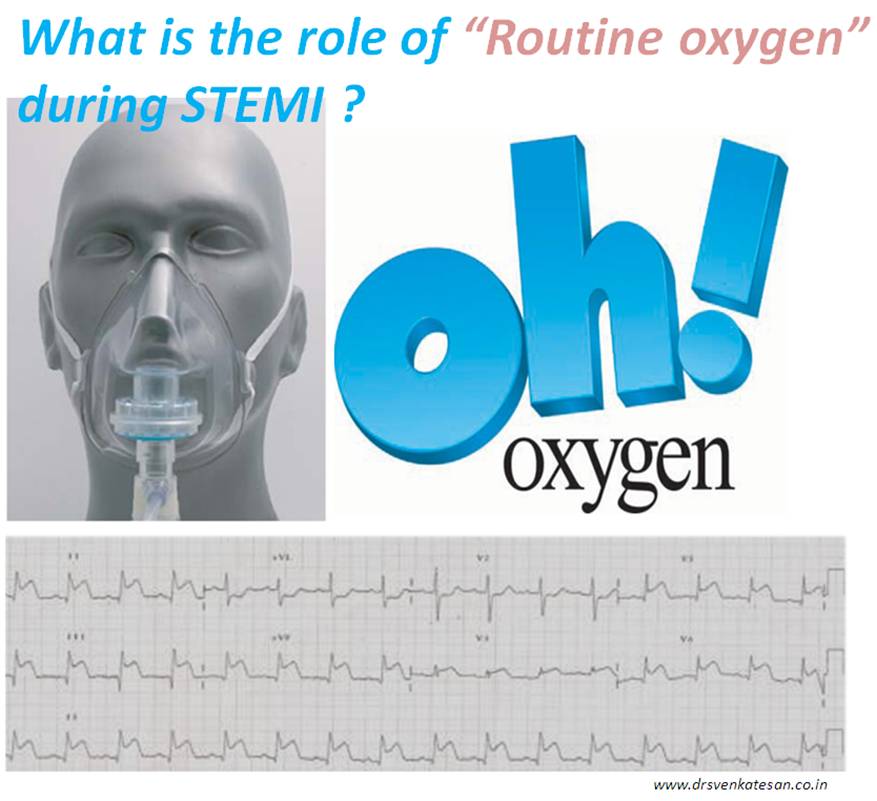
Oxygen has an ubiquitous place in any  critical care unit. If some body is labeled as  critically ill , it becomes mandatory  for a tube to  be inserted per nasal. It is more of a conditioned  reflex and  sort of a socio- medical necessity .The futility of oxygen administration in critically ill is most evident in the management of STEMI.

Inconvenient  questions

  1. Does the oxygen  we  supply ,  ever reach the disputed  site   myocardium             (From  the port of entry . . . namely the nose  )
  2. Does it improve  the myocardial salvage ?

There is generally no hypoxia associated with STEMI . Even if it is there , the  ischemic myocyte can not be oxygenated by increasing the systemic saturation as the problem is with the   delivery of oxygen due to defective supply.

What does the guidelines say regarding o2  ?

Read  yourself    http://circ.ahajournals.org/cgi/content/full/110/5/588

Final message

Routine oxygen administration  is  required  to create  the intensive care ambiance .

Oxygen administration  by default has no scientific role.

However,   it is generally not harmful . As long  a drug is  not harming the patients , inappropriate  therapy is   forgiven by modern medicine.

When  is oxygen really indicated in STEMI ?

  • Significant persistent  Hypoxia
  • Associated LVF
  • Any arrhythmia
  • COPD

Forbidden discussions  in academic forums

Oxygen  administration has  become  mandatory to generate revenue  for the cash starved  corporates .It  is a standard practice to charge these patients on hourly  basis  of o2 usage  in many hospitals.

Read Full Post »

An  unwanted , unexpected , unpleasant sound  is  often referred to as  noise

Human ears , are  not meant to  hear  only the  pleasant  sound . We live in a noisy world. It is believed every cell in the body has ( Auditory ?) sense  receptors. But , the noise is perceived  only at brain .It is  incidental our ears  are located  right beside the brain , adjacent to  parieto  -temporal cortex . The auditory nerve  has   its  nucleus  located dangerously close to vasomotor centers of  brain stem .

.

When  excess noise enters our ears it vibrates  the brain stem as well . Noise travels in the nervous system as electrical  impulse , so it is natural  for  to expect a  spill over to the  nearby  adrenergic  centers  .

A sudden explosion or a thunder will skip a few heart beats is it not ?  Similarly , when   we experience  pleasant  sound /  melody**   it  soothes   the nerves ,  this forms the basis of musical  therapy.

So  it is logical to conclude   , when the  nice  music  has a capacity to heal ,  unwanted  noise  is expected   to injure  our biological system.

** A rock fan under the influence of  drug  may feel a every nonsense  as melody . . . is a different  story !

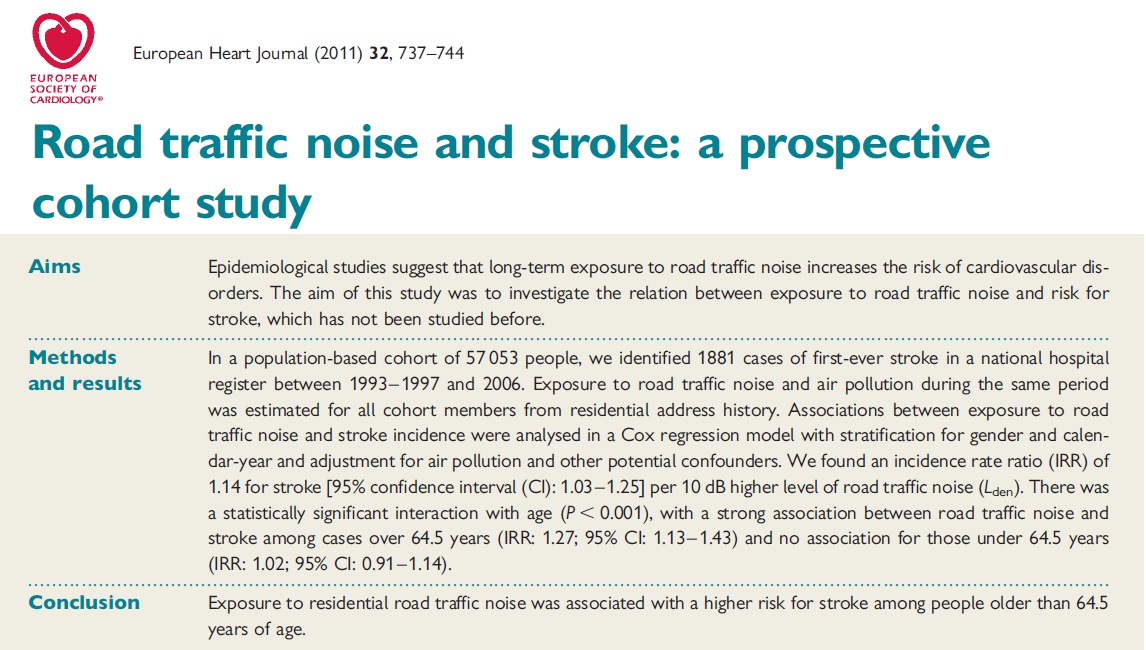
It is observed strokes and MI are more common in urban areas congested  with traffic chaos. Here is an article from European  Heart  journal   with  solid evidence on this topic.

Excess noise   could  result in  cerebral  or coronary arterial  spasm ,  thrombotic  occlusion or even a hemorrhage ?*

  • Noise  induced adrenergic trigger and spasm of blood vessel
  • Adrenergic  surge  and resultant hypertension

Associated  Phenomenon along with noise

  • Anger
  • Anxiety
  • Fear (A noise associated with a  missile attack  in the  war zone )
  • Relative  hypoxia , Air pollution in noisy  environment .

*A distinction must be made between   chronic noise  pollution  vs  Acute noise intoxication.

For  those who want  more depth in this  topic , I  was surprised to find  this  exclusive journal  that documents noise and human health .

Final message

Excessive noise  can have a detrimental effect in the nervous system . Since  cardiovascular system  is also under    neurological command  it  is  expected to  share the ill effects.

A comforting news for healthy men and women  . Noise per se  can not be termed  as a  coronary  risk factor . It can  (at worst ) be a  trigger  for an event  in individuals who have other major risk factors.


Read Full Post »

SA node is  the ultimate   power  center  of heart located in the junction of SVC and right atrium .In normal physiology  it fires  at a rate of  60 -90 /minute   that  dictates  the  ventricular rate  .

SA node is a linear  spindle shaped structure with a length of  1.5cm . The P cells with unique mitochodria  are  responsible for pace making activity  . The ion responsible for pacemaker current is mainly  calcium  with the initial 25 % push given  by  sodium current as well .  These cells are predominately under vagal control.Even though  pace making activity  is normally restricted to the SA node  , the vagal innervation is such that  the pacemaker  has a  potential to shifts it’s activity  both functionally  geographically.

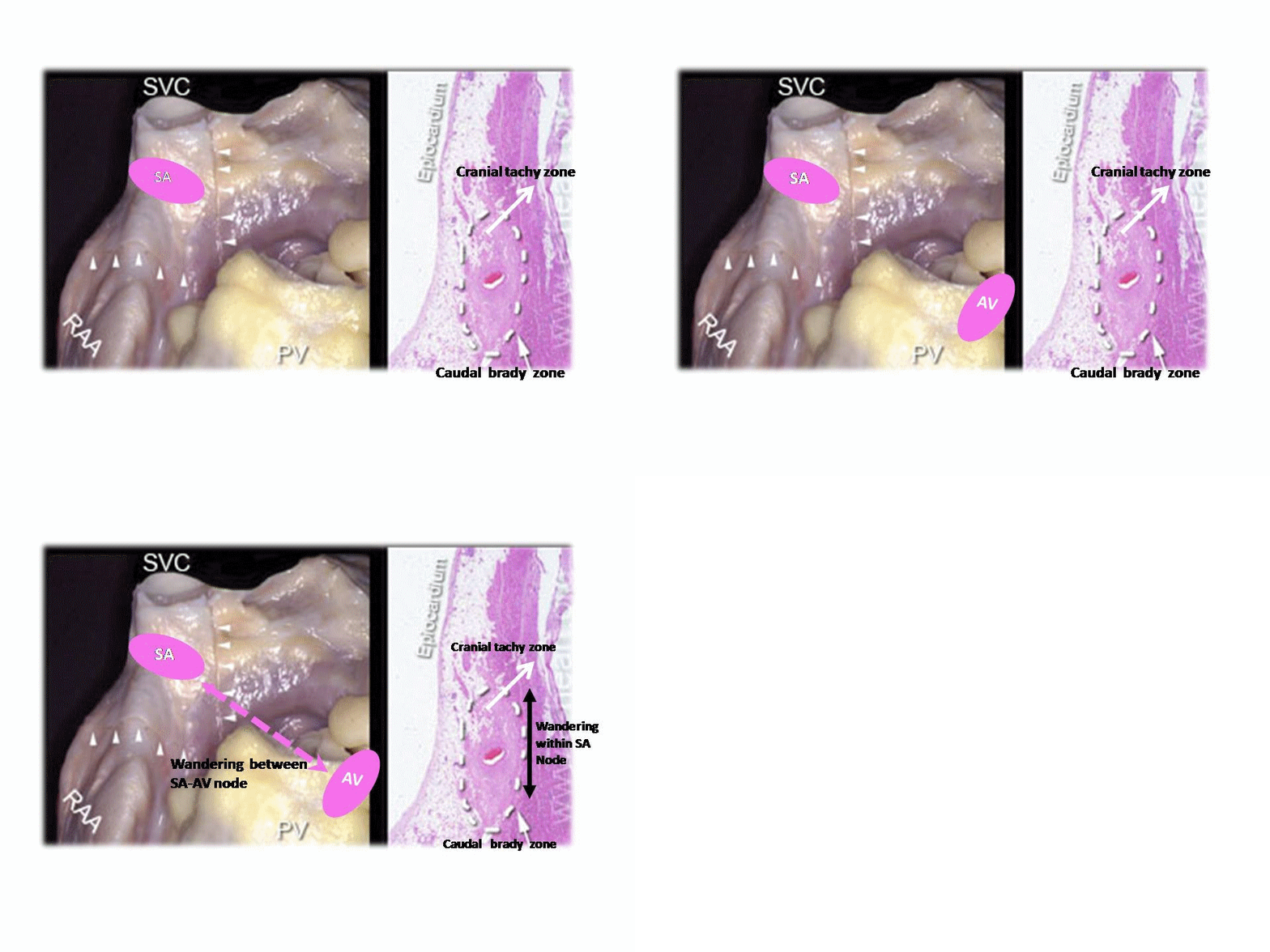
In fact , there is constant flux of pacemaker activity  with  the entire length of SA node.The  cranial   aspect  SA node has more fire  power than its caudal tip . It is possible Sinus tachycardia  and sinus  bradycardia could represent  minor changes in the firing focus in its cranio-caudal axis.Further the P cells of  sinus node can spill all over the atria and even up to AV node.

What is wandering  atrial pacemaker ?

This entity is poorly defined  in literature.  With pace making cells scattered all around  there is no surprise to note dynamic pacemaker  shifts  even in healthy people. This is  especially common in young athletes.

Wandering can occur

  • Within SA node ( Shift of focus of p cell firing .No visible changes in ECG )
  • Within SA node and atria
  • Between SA node and AV node. (Sino-Junctional rhythm )

Effect on ECG

  • Baseline bradycardia.
  • Changing P wave morphology
  • Change in PR intervals
  • Intermittent absent (Rather concealed  )  P wave if  is also possible
  • RR interval can also show minor variation.

Image Modifed from http://www.eheart.org

Clinical significance of  Wandering pacemaker(WAP )

  • A Benign condition generally has no clinical significance.
  • It is often an expression of  high vagal tone.
  • Usually transient.
  • Can be unmasked by beta or calcium blockers.
  • Severe forms of wandering  pace maker can be a marker of sinus node dysfunction  and  would need  further evaluation
  • In  the coronary care units it is  associated  with infero-posterior MI when the vagal fibers are  insulted.

Differential diagnosis .

  • Some times it  need to  be differentiated form ectopic atrial rhythm /Low atrial/Coronary sinus rhythm etc .
  • Sinus  slowing  followed by a  functional escape and  reemergence of sinus beat   can be a termed as a form of wandering  pacemaker

Final message

WAP : This attractive and  descriptive ECG entity  is   largely insignificant in clinical cardiology .

It should not be confused with more dangerous cardiac arrhythmia  like sinus pauses and arrest .

Read Full Post »

« Newer Posts - Older Posts »