Feeds:
Posts
Comments

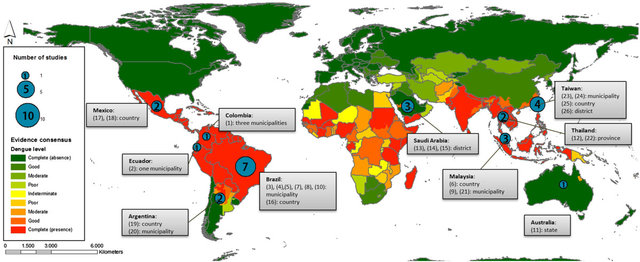
Dr. Duckett Jones, the famed American physician, from Good Samaritan hospital, Boston would be a proud man in heaven, to find his criteria still being celebrated all over the globe. He will also be pleased to know his home country USA  is painted green on the world RHD map due to his untiring efforts that began in 1944. Of course, what the rest of the world has done in the last century has left us wanting (including the WHO).


Global RHD map. Note the red and brown shading in south Asia and Africa. It is obvious, RHD is more about economics, equality, and poverty, rather than aggression from an otherwise innocuous microbe called streptococci which is omnipresent all over the world with equal concentration.

How to diagnose  Acute rheumatic fever (ARF)?

Simple. Apply jones’ criteria. Funnily, I found it can be a most difficult exercise to do, especially If we realize ARF can defy all the three components it carries. ARF  need not be acute, need not have rheumatic symptoms & curiously they need not have fever as well. Did you note this? The entire disease process can be subclinical in 50 % of children. Intelligent patients must realize, how scientifically quixotic conditions we, the doctors are expected to practice medicine.

There is one more ongoing confusion in many of us. Is Jone’s criteria meant for diagnosing the first episode of ARF, or second, or any subsequent episodes?  In the strict sense, it can be applied only for the first episode. But it may still help diagnose recurrent episodes. Dr. Jones was so precise in his observation when he suggested the in the later episodes .we may able to diagnose ARF only with minor criteria. But the lacuna here is,  recurrent episodes can be so atypical and carditis or chorea may be the only manifestation of that episode making the classical Jones triad redundant. 

Someone asked in my class Is there an entity chronic rheumatic fever? 

If you describe ARF  as a separate entity there must be Chronic RF? logical Isn’t it? . Do you think Jones wouldn’t have thought about this.  We don’t know,  echocardiography was not even thought of at that time. Better, we stop discussing Chronic RF. (Simply put,  all chronic indolent carditis with raised ESR  might fit into this imaginary entity)

How important is supportive evidence to Jones’s criteria? 

When we have trouble in fixing even the major criteria, where is the question for evidence for preceding streptococcal sore throat come in? By the time we see these children, a throat culture is no longer positive, though ASO titer/Anit DNAse might help. (It must be recalled that culture doesn’t differentiate carrier state from acute infection, a single value of ASO titer ahs little value) 

I asked a few of my senior pediatric professors how often they depend (or demand)  supportive criteria to diagnose ARF.  They agreed in unison, that they never felt the need for it except for academic or epidemiological reasons. When Jones wrote this criterion in 1944, he also never intended to include evidence for previous streptococcal sore throat. 

Final message 

Is the time nearing to revise Jones’s criteria again and restore with an original suggestion and get rid of supportive criteria?  Maybe Dr. Jones wouldn’t object to this as his aim was to tackle a global Pando-endemic rather than worry about few errors of overdiagnosis.

Counterpoint

* For the pure academics, there is exactly the opposite write-up demanding RTpcr to be included as evidence for streptococci sore throat in this site.  https://drsvenkatesan.com/2020/10/01/role-rt-pcr-in-the-diagnosis-of-rheumatic-fever-rhd/

Reference

1.https://www.acc.org/latest-in-cardiology/ten-points-to-remember/2015/05/08/15/22/revision-of-the-jones-criteria-for-the-diagnosis-of-acute-rheumatic-fever


2.

Rheumatic fever: Session 2 Preventive strategies 

Rheumatic fever and RHD can be prevented at multiple levels.

Primordial: Preventing all sore throats (that will include Streptococcal ) by promoting social and domestic distancing as we do now for the Novel C pandemic.

Primary prevention: It is about preventing the first episode of RF after getting a sore throat. A course of penicillin after sore throat and trying to interrupt the RF in its incubation period is the aim. I don’t understand why preventing sore throat after exposure to streptococcal droplets doesn’t come under primary prevention too.

Secondary: Preventing recurrent episodes of RF after an established diagnosis of the first episode. ( which of course can be subclinical) This is the classical prevention of monthly injection of benzathine penicillin.

* All levels of prevention activities at the level of the throat. None works in the heart directly.

*Tertiary prevention (Treatment ): It is treating the valve disease and trying to reset the rheumatic clock. Tackling the mitral valve disease with PTMC/MVR is the least economical and most expertise-consuming modality. (Of course more gratifying to both patients and cardiologist) It is all too common even in big tertiary centers do regularly PTMC but shrug off patients from monthly penicillin injections. There should be an in-house responsibility for the cardiologist, that  they should ensure at least 100 RHD patients get proper penicllin prophylaxis ( for every PTMC they do)

 Which is the best mode of prevention?

Primordial prevention is great. But the best yield will come from primary prevention.If you want to really avoid serious bites on the heart try to protect the heart from the first episode of ARF as the first bite is more intense. To make matters worse, the injury from the first bite is likely to continue irrespective of monthly penicillin.(Karthikeyan G, Mayosi BM. Is primary prevention of rheumatic fever the missing link in the control of rheumatic heart disease in Africa?Circulation2009120:709–

Can WHO enforce a world microbial order?

One real option that exists, which many feel is artificially stonewalled, is asking vaccine giants like Pfizer, Astra, or  BioNtech to fix a deadline and accelerate the process for a global Rhematic vaccine (Wating in the pipeline for 60 years you know)  with their newly accrued corona Intelligence. (We have few name suggestions Rhemavax or Rhemshield waiting  !)


Have we ever wondered how six liters of blood in our body flows like a live stream, maintaining the fluidity life long, in spite of an active coagulation system in situ, ready to freeze at the slightest provocation (Invisible vascular wear & tear!) This housekeeping job, within the vast network of the human vascular tree, is silently accomplished by a less apparent system called fibrinolytic system. D-dimer is a physiological breakdown product of this system . D-dimer comes from fibrin monomer. The D in D-dimer stands for the domain. (See below) The ability to detect the D-dimer in the bedside has given us a good opportunity to monitor intravascular thrombus formation and subsequent dissolution in health and disease.


Formation of D-dimer from fully formed fibrin clot with the help of factor X111a and plasmin

Learning from a false alarm of pulmonary embolism

Recently I came across a pregnant woman in the third trimester with sudden onset dyspnea. Ongoing panic and a  hyper response  ER protocol ended up in D-dimer estimation. It was 2600μg/ml, which created a false alarm among obstetricians. She was started on heparin by then. Though her saturation was 95%, ECG was normal.An emergency bedside echo revealed normal right atrium and ventricle, no pulmonary HT. The diagnosis of PE was now rejected confidently. The much-dreaded dyspnea turned out to be some patient anxiety. Unnecessary exposure of a fragile pregnant lady to heparin was reverted with much difficulty as no one was willing to discount jacked-up D-dimer still. (Such is the power of sophisticated biomarkers and numbers! I asked them to report the elevated D-dimer as false-positive in bold letters in the case sheet and applied the break to bring the high voltage obstetrical -cardiac consult to a halt ) 

What is the normal D-dimer levels in blood?

In the strict sense, D- dimer can’t  have normality. It is flushed-out molecular debris from clots, levles of which fluctuates depending upon the fibrinolytic load on a given day. It is further limited by lab standardization issues and methodology. (ELISA vs latex ) Currently, a level of <500μg/ml is considered diagnostically useful to rule out DVT/PVE (Good sensitivity /low specificity)

What happens to D-dimer levels in pregnancy?

D-dimer levels are nornally high in pregnancy, and  can reach very high levels as well. 

What is this source of D-Dimer In pregnancy? 

  • Pregnancy is a procoagulant condition. (Estrogen Induced effect on fibrinogen and other clotting factors especially factor 2  & 7 ) We presume it is due to more  microthrombus activity in materno placental capillary circulation. When there is a pro-coagulant activity, fibrinolytic activity is also high hence elevating FDP and D dimers. 
  • Pregnancy-associated with diabetes /PIH/preeclampsia elevate it further due to subclinical  endothelial dysfunction 
  • Placental source for D-dimer is documented. (Might be a marker for partial abruption as well)
  • The role of the fetus in generating or triggering maternal procoagulant activity is possible with a reverse breach in the placental maternal barrier. (Many of stillbirth, Intrauterine deaths / DIC in mother could reflect  pathological faces of hypercoagulation states) 

Normality redefined in pregnancy 

This paper has something important. Didn’t  knew this till now. In the third trimester, D-Dimer can reach up to 4400 in diabetic mothers. It is also worthwhile to note the other common causes for high D- dimers sepsis,  autoimmune disorders* and occult malignancy,

*In fact, every normal pregnancy can be termed as a relative autoimmune disorder, as it is impossible for the mother to go through the pregnancy without  immunological modification of the host (by fetus or host itself)  


Final message 

Never rely on elevated D-dimer in isolation to diagnose DVT/Pulmonary embolism. This is especially true in pregnancy where even very high levels are physiological. The commonest cause for dyspnea in pregnancy will continue to be anxiety, anemia, PIH & physical deconditioning, and weight gain  (not the mitral valve stenosis /PE/or peripartum cardiomyopathy). Yes, It may appear rewarding to think  like a specialist, but please realize if we diagnose rare entities, we are “rarely likely” to be correct and the consequences of that are not always pleasant.   

Reference 

1.Siennicka A, Kłysz M, Chełstowski K, et al. Reference Values of D-Dimers and Fibrinogen in the Course of Physiological Pregnancy: the Potential Impact of Selected Risk Factors-A Pilot Study. Biomed Res Int. 2020;2020:3192350.

2.Gutiérrez García I, Pérez Cañadas P, Martínez Uriarte J, García Izquierdo O, Angeles Jódar Pérez M, García de Guadiana Romualdo L. D-dimer during pregnancy: establishing trimester-specific reference intervals. Scand J Clin Lab Invest. 2018 Oct;78(6):439-442. 


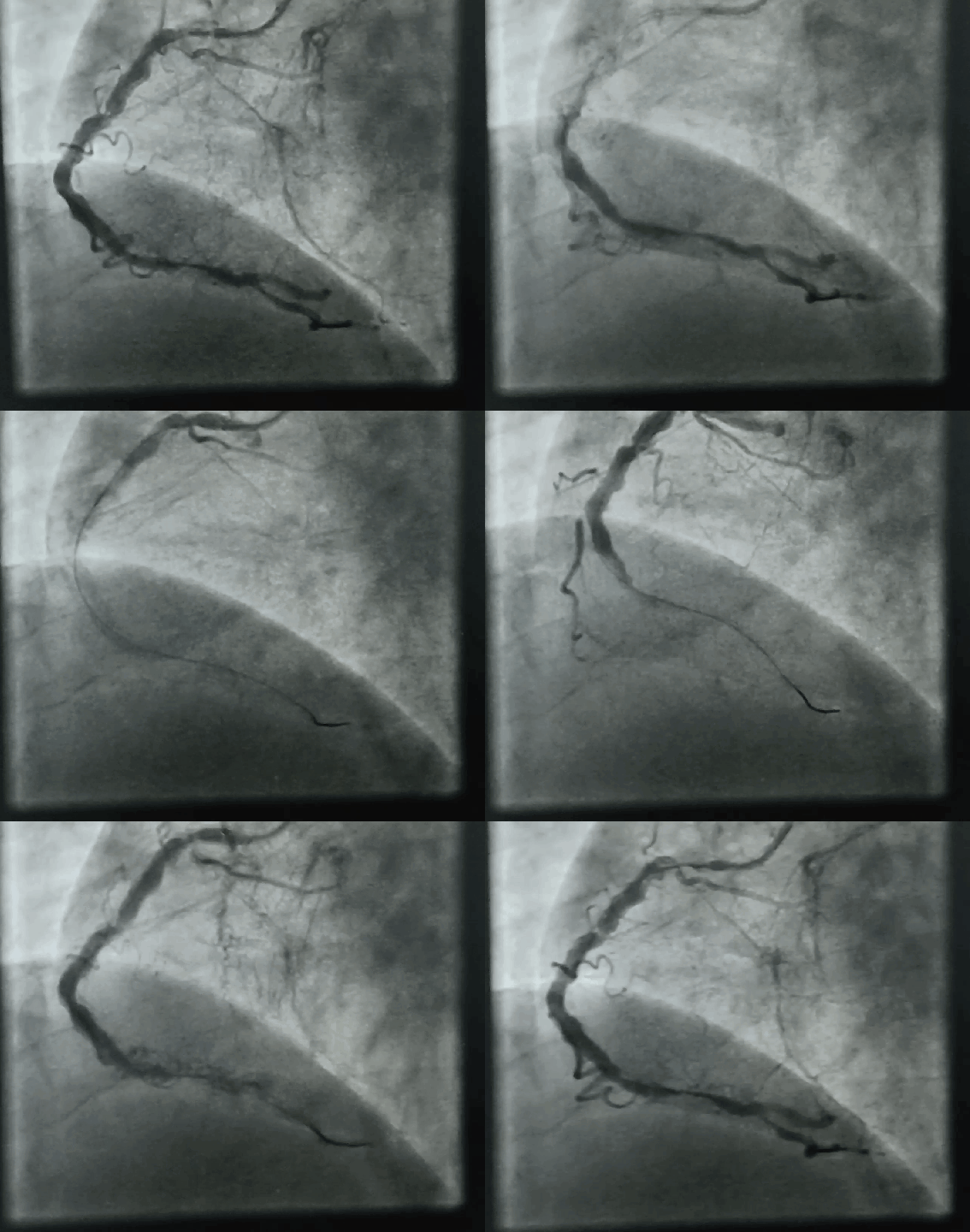
A consult with a 62-year-old patient in my office 

Hi, welcome?  What is your problem?

Nothing doctor. I am good. 

What brings you here then?

I used to have angina before. Now, I am fine doctor but confused after undergoing this angiogram. I need an opinion.

How is your exercise capacity?

I do walk, work, and able to do almost all regular activities.

Why did you do this angiogram then? 

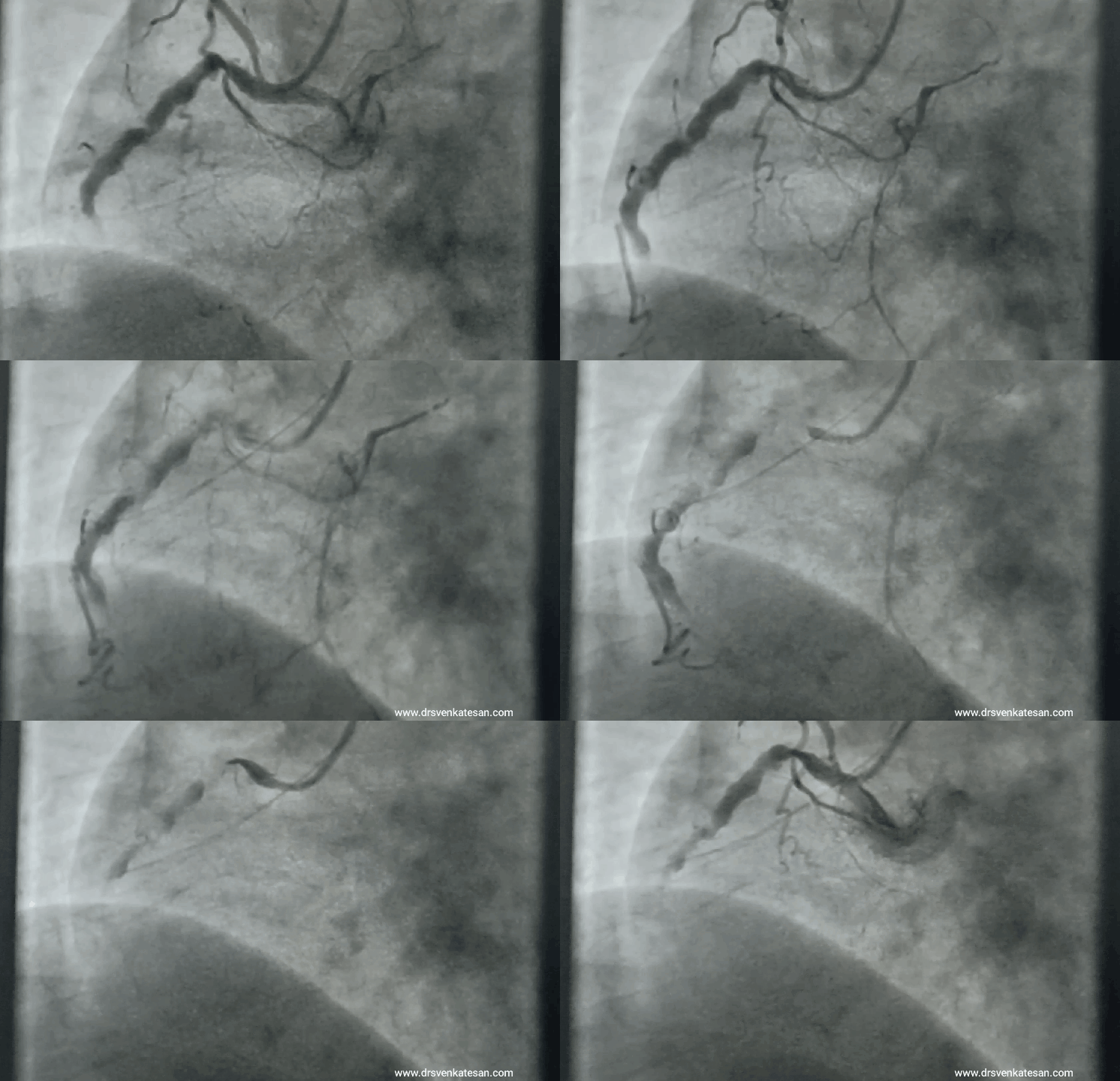
Had to undergo this after a doubtful stress test, Now, I am told by at least 2 eminent cardiologists, that I am having just one functional coronary artery, and it is dangerous for the all-important LAD to live at the mercy of RCA. They said they will try to fix it with wires first or CABG if it failed.

After explaining the excellent backup from RCA to LAD, I told him, “Yes, most scientific cardiologists are not trained to respect collateral circulations, in spite of the fact, many CTOs fall under class 3 (contra)Indication for revascularisation. I must admit I am not that scientific but it ensures my patients don’t really suffer unnecessarily”

“Make a pardon doctor, I didn’t get you, what I am  supposed to do ?” 

I meant, your collateral circulation is good enough and you may not need any intervention.

Are you sure doctor?

I don’t know why I was so blunt in my response  “If you believe me forget the lesion. If you don’t, get it stented or go for CABG as per the majority advice of the eminent “. I am sorry. I think I cleared your confusion.

-end-


What shall we do when encountering a mobile right heart thrombi waiting to get dislodged at any time?

A series of question comes as the answer to this query 

Feeling helpless?  What will be the consequence?

Massive pulmonary embolism?  Can we thrombolyse and dissolve it ?

Logistics of emergency open-heart surgery are too many. What about capturing the thrombus?   A dream thought, now seemingly possible.Inari Flowtriever though made originally for pulmonary embolism can come in handy in any foreign body removal. I think It is approved by FDA. Here is a case report from Dr Gautam reddy.

Other potential use for this device

One more possible indication for Inari device is for capturing large infective vegetation even on the left side .(Currently, the vegetation of more than  15mm is  considered an indication for surgery irrespective of the valve and clinical condition) Inari device might be tried here if there is no need for valve replacement surgery. May be we need to have an aortic filter as well in case of dislodgment while retrieving. There are many capture ,filter devices in the development stage. (Embrella, Claret, & Trigaurd)


Further reading


Because . . . its current course is not always in the right direction &  not everyone is ready for course correction as well!

Reference

1.Hasnain-Wynia R. Is evidence-based medicine patient-centered and is patient-centered care evidence-based? Health Serv Res. 2006;41(1):1- 

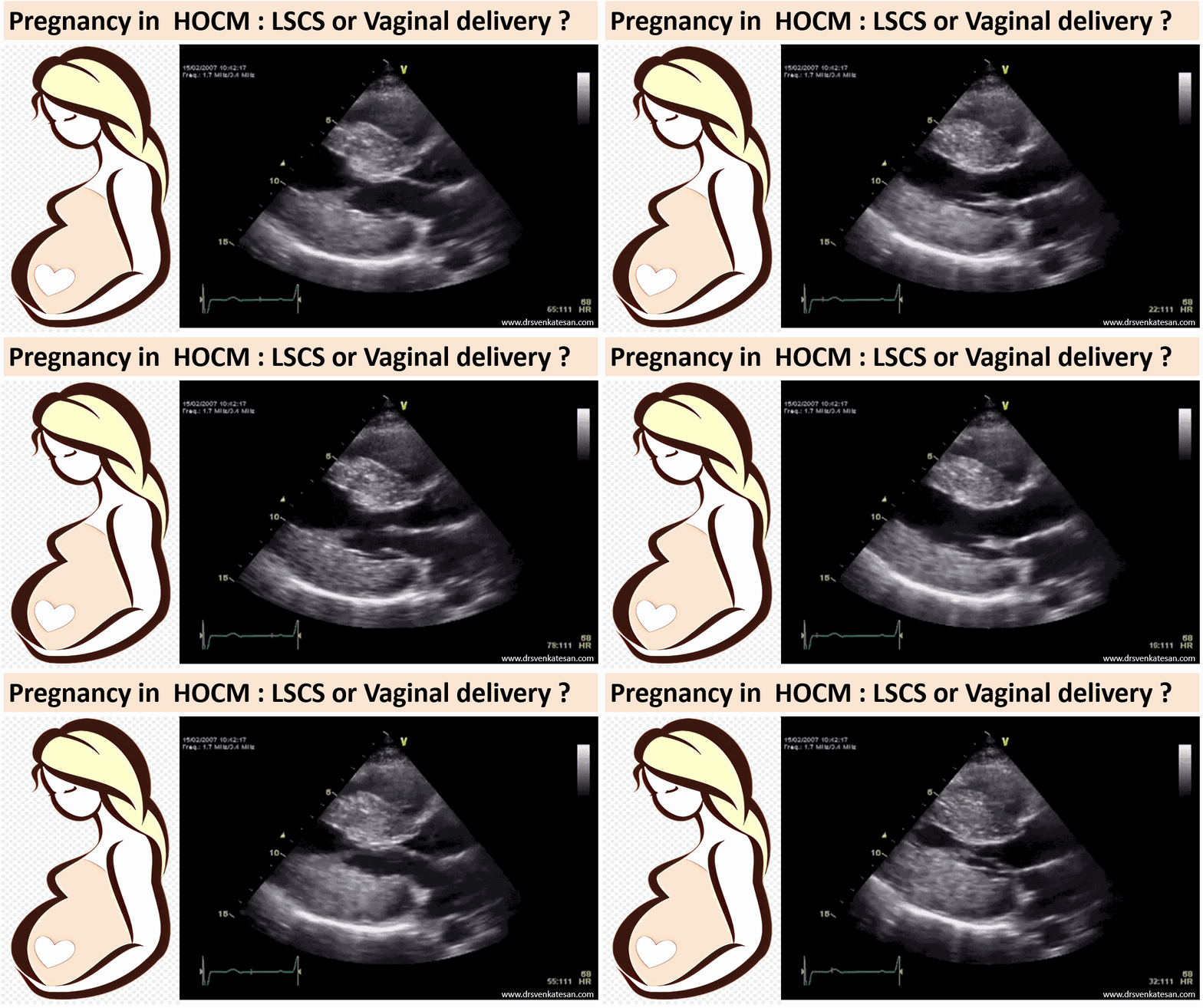
Hypertrophic cardiomyopathy (HCM)  is the most common primary disorder of cardiac muscle. The incidence is about 1 in 500, which would mean 1.5 crore HCM patients will be living on our planet at any moment. The root cause of pathology is located in 20 odd genes that define cardiac muscle protein integrity. (Myosin, Troponin, Titin, etc) This leads to the bizarre architecture of cardiac muscle, prone to progressive fibrosis.(Paradoxically, 90% of HCM have normal or supernormal contractility till very late stages, proving that the much-dreaded term myocardial disarray has little effect on contractility. It is all the more funny, as we strive hard to suppress this excess contractility caused by disarray with beta-blockers.

SCD is the scary face of this disease. If the incidence of SCD is less than 1 %  per year, do a little maths to know how many will succumb every year to this disease. However, It is the symptoms like exertional dyspnea (most common,) followed by syncope and rarely angina that bring HCM  patients to the physician. Though the pathology is diffuse and global, I don’t understand why we got stuck with the outflow tract gradients and dynamic obstruction. HCM is an equally a disorder of LV inflow obstruction (rather a restriction). It can be presumed myocardial disarray makes more impact on diastole than systole. The relationship between inflow and outflow gradient is a poorly explored area in HCM. Detailed analysis of E and A velocity profiles along with tissue Dopper will throw more light in symptomatic patients. 


The importance of LVOT gradient in HCM was questioned by Criley more than 30 years ago.

There may not be many takers for this concept in spite of our realization, that the major symptom of HOCM is not due to outflow tract obstruction. Further, sudden cardiac death risk is not fully negated by drugs and surgical myectomy. Christopher J. McLeod EHJ 2007) No surprises we require the help of ICD to tackle the SCD risk even after the relief of obstruction.

How to measure the gradient in HCM?

Image source: .Jeffrey B.Geske  Assessment of Left Ventricular Outflow Gradient: Hypertrophic Cardiomyopathy Versus Aortic Valvular Stenosis  JACC: Cardiovascular Interventions  Volume 5, Issue 6, June 2012, Pages 675-681

  • Continuous-wave Doppler is to be used for net LVOT gradient.
  • Pulse doppler to analyze regional, local gradient profile within LV chambers
  • HCM we need to follow up with peak gradient unlike valvular AS  because unlike valvular AS gradient  is not uniform to be differentiated for MR jet (Ref Jeffrey B.Geske Mayo clinic )
  • The lobster claw pattern (M V Sherrid  JASE 1997) is academically exciting, as it documents the sign of obstruction. (Please note,  pulses bisferiens is clinical lobster claw bite, felt in the neck )
  • This is the only entity “standing echo” to be done. compared to sitting and semi-supine position.(Stand echo is the simplest provocation )
  • Chronic BB therapy does reduce the gradient.(There is some evidence, disopyramide beats BBs for this purpose ) 
  • Associated systemic hypertension can influence the gradient in a complex manner(meaning either under overestimate )

How to provoke gradient if the resting gradient is low.

  • Valsalva maneuver 
  • Post VPC
  • Excercise

Dountaimine stress test should not be used as it can generate pseudo gradients. Should we provoke otherwise asymptomatic zero gradients healthy HCM? It is debatable and can be an unsolicited invitation to imaginary troubles.

Importance of MRI: Morphology can be more important than gradient 

It has now become a dictum every patient of HCM must undergo MRI. This not only helps to define the morphology of LV, different subsets of HCM, and risk of SCD , it also guides the surgeon where exactly to resect,  and how much mass of myocardium to be removed. MRI defines mitral valve anatomy more clearly and helps whether AMl plication is required or not in addition to myectomy.(Elongated bulky Mel is competing for space in the narrow corridor of LVOT, you know ) MRI clearly helps to avoid over-enthusiastic alcohol septal ablation as well. 

Principles of management  

  1. Symptom reduction, risk estimation, SCD risk reduction, and correcting associated arrhythmias like AF /VPDs, etc.
  2. Beta-blocker help relieves symptoms and control most  VPDs or AF. No drug effectively eliminates the risk of SCD. (But, I doubt it’s wrong, BBs must have a positive impact on this we are failing to prove it ).
  3. ICDs are promoted as a mainstay to prevent SCD.It should be emphasized ICDs can’t reduce the troublesome exertional dyspnea of HCM.It simply prevents(expected to prevent ) SCD after allowing the VT/VF to occur. (ICD do come with its own morbidity  and anxiety, Sub-cutaneous ICD is just beginning to be popular, doesn’t have VT control though no ATP algorithm ) 
  4. Surgery regresses LVOT gradient and regress symptoms still may be the best option (Dual-chamber pacing, alcohol ablation, (now RF) are mostly interventional excesses with unproven worthiness. Additional mitral valve repair strategy during myectomy has some proven value.
  5. Mavacamten (the proposed new magic drug ) is shown to steer and stabilize the two-headed myosin interaction with actin , thus reducing the force of contraction at the same time not inhibiting it truly. The mechanism is great on paper, let us see the follow up of EXPLORER study patients)
  6. Counseling  & reassurance( The real risk of SCD is far less than the fear of SCD.I have seen the relatives of HCM patients are more worried than HCM patients with a 30mm IVS. This is amplified by a crazy battery of genetic tests with dubious predictive value. In my opinion, one need not do this even as the current guidelines trying hard to make it appear as a pleasant  affair)

Final message

We are taught right from our early days in medical schools, HCM is synonymous with dynamic LVOT obstruction. However, to hang our thoughts exclusively on this hemodynamic concept lands us in management errors. Let us learn to look beyond  LVOT gradients in HCM. We need to look at the overall morphology of LV, mitral valves, LA dynamics, etc. Please realize, there is a huge mass of myocardium sitting silently not eliciting any gradients, still good enough to cause symptoms and dictate the natural history. 

Reference 

1.Jeffrey B.Geske Michael W.Cullen PaulSorajja  Assessment of Left Ventricular Outflow Gradient: Hypertrophic Cardiomyopathy Versus Aortic Valvular Stenosis  JACC: Cardiovascular Interventions  Volume 5, Issue 6, June 2012, Pages 675-681

Postamble

For the pure academics, please read this.The ultimate advisory from the authoritative source. 


It is just past midnight: This is a gloomy conversation between a patient’s son and a cardiologist in the silent waiting room, just outside the dim-lit ICU of a popular 4-star hospital in Chennai.

“I am sorry to say, Mr. B., your father didn’t make it. Has succumbed to the heart attack. We have been trying to resuscitate him for the past one hour. We have done everything. We have managed to open up IRA, and 2 more critical blocks still it couldn’t help. It was a massive one. Sorry again.

“Doctor, I feel very bad. What went wrong, I want to know. Doc, did you try ECMO ?,” the elder son queried

“No, we didn’t”

Do you have it in your hospital doctor?

“No,we don’t have it”

The son in distress couldn’t take it lightly. “How can you say that doctor? such a big hospital doesn’t have ECMO, “What a mistake we have done, we should have gone elsewhere” he quipped 

The visibly exhausted cardiologist was taken aback and struggled to retain his composure. He took some time and tried to explain the bereaved family with a semi-scientific explanation.

Please understand the reality. Do you know, how likely an emergency ECMO will resuscitate a patient with cardiogenic shock and arrest” 

  • ECMO is not a magic machine  that will bring back your heart to life
  • It is a temporary circulatory support device ideally used prophylactically in high-risk situations
  • It takes a minimum of 20 to 30 mts (If it’s in ready mode) to insert the AV ECMO , Further, there must be some cardiac activity till the ECMO takes over.
  • It is almost impossible to resuscitate with ECMO after cardiac arrest and circulatory standstill.
  • In fact, prolonged CPR with an absent pulse is a contraindication for ECMO.
  •  

“Let me go little deeper into the hemodynamics of ECMO, even if it is inserted on time, ECMO doesn’t support coronary circulation much, (the one that matters most in the failing heart) ECMO circuit that brings oxygenated blood from below upwards in descending aorta. This stream may not reach the aortic root as it has to competes with ventricular contractions however feeble it may be” (Ref 1)

“Don’t mistake me, In my opinion, all these macines like ECMO Is more like a fancy customary add on machine in a high profile patients”.  

“So, you are saying, my dad is destined to die, that’s not at all fair doctor”.

“I can’t say that openly, it could be the fact. A series of miracles could have saved your dad’s life. A tandem heart as a bridge to an emergency heart transplant is a dream thought. Of course, for a heart transplant to happen someone else should have lost their lives in time, just to save your father’s life. That’s in God’s domain”.

The son gradually got back to his quieter sense. “Sorry doctor, I misunderstood  ECMO I was told it was like a lifeboat that will bring back life from a dying heart. Thanks for all your efforts doctor. “No worries, even, many of us haven’t come to real terms with this ECMO stuff. Thanks to misplaced mainstream media coverage concerning celebrity lives”

The much-relieved cardiologist left for home in peace of mind.

Reference

1.Junji Kato, Takahiko Seo ,Hisami Ando et al  Coronary arterial perfusion during venoarterial extracorporeal membrane oxygenation,  The Journal of Thoracic  and Cardiovascular Surgery, Volume 111, Issue 3, 1996, Pages 630-636,


Postamble

Final message

We must realize ECMO is not a new breakthrough technology. It’s  a 50-year old concept, that was used primarily in infants with respiratory failure. (VV ECMO) In the complex high-risk interventional cardiology field, it has a different purpose. It gives the aggressive players a little more time to try their luck of reperusing a failing heart. 

All these circulatory assist devices Like ECMO, Impella, IABP help to support the heart before a cardiac standstill. Ideally, we may use them prophylactically ( in situ and ready to fire)  It has helped save  lives especially in pre and post-transplant hearts However, it’s too complex a procedure to be relied upon after unanticipated Ischemic cardiac arrest. We can expect, It might get miniaturized and user friendly soon.


Few individual’s works mattered more than others in the field of cardiology. Here was a man born 1914 in Utah, studied at Rush university trained in Mayo, settled in Seattle as a pediatrician. But his passion drove him to become a specialist cardiac physiologist with an urge to find the answers to all those lingering queries that arise as a practicing clinical cardiologist.  He built an exclusive animal lab to study the mechanics and physics of circulation and cardiac pumps in the 1950s 


                          1914-2001

He can be called the new age, Harvey of the 20th century. He seemed to always bother, how is it that the 6 liters of blood traverse from heart to the periphery and comes back going through vast lengthy circulation with variable pressure and little energy loss.? He also made the very pertinent discovery in neural control, the effect of gravity on circulation. His interest in how venous return would have to match cardiac output was phenomenal. 

His grasp of cardiovascular physiologic concepts was so powerful and his book on cardiovascular dynamics was so popular. probably the first scientific textbook on circulation. I am sure he had shaped the thought process of so many physicians (I will vouch for myself) and helped create hundreds of cardiologists all over the globe. Dr.Rushmer also did pioneering work on diagnostic ultrasound and doppler. I can recall a video on cardiac embryology edited by him in the 1960s in pre-computer era that probably can not be beaten even today in terms of clarity of content and production value.

Through his thoughts like an engineer and mathematician still, he was able to blend the knowledge together and pass it on to the generation next clinician. No wonder, he was the founder and headed the department of biomedical engineering in the UW. The University of Washington holds an annual Rushmer lecture. 

If one person deserves an award for excellence in cardiovascular science for the 20th century, Dr.Rushmer’s name should definitely, come on top. Though he won several accolades, I feel scientific societies have missed an opportunity to felicitate him with the more worthy award. If the Noble prize in medicine is given for a lifetime contribution to cardiovascular physiology wonder why he can’t be considered for it posthumously.  

It is heartening to note, at the fag end of his career he moved from core science to philosophical and ethical truths of science and technology. He once said, “We’re confronted with the ethical, political, and technological consequences of our medical triumphs. We have to learn quickly how to deal with these profound problems by looking ahead to recognize and avoid complications of our technical breakthroughs’ How true his observation has turned out to be!


Reference

https://www.washington.edu/news/2001/07/16/dr-robert-rushmer-diagnostic-ultrasound-pioneer-dies-at-age-86/

Heart is a dynamic organ, so any auscultation by default becomes dynamic. Still, what we mean by dynamic auscultation is, to look(hear) carefully at what happens to the sounds and murmurs during different phases of respiration*, posture and induced hemodynamic stress by altering preload, and afterload, etc. (* Some of us may not consider respiratory changes as part of dynamic auscultation, But, it is to be noted even spontaneous respiration is subtle dynamism and is reflected in JVP as well as second sound mobility. While forceful breath-holding or exhalation can dramatically shut down & release venous return from entering the thorax.This is the basis of the most popular maneuver of Valsalva.

I know, dynamic auscultation is a lost art. For fellows, the only issue that seems to bother is to understand the dynamic auscultation in various types of LVOT obstruction, MVPS , and to differentiate  aortic from pulmonary regurgitation murmurs, with or without VSD, RVOT/LVOT vascular /Valvular clicks etc

Here is an old presentation (2010) of mine from the archive.

One of the great resources on this topic is from Dr Delman. Hope this book is available. There is one more exclusive atlas by Delman & Stein dynamic auscultation with phonocardiographic and pulse correlation 

.