Archive for May, 2013
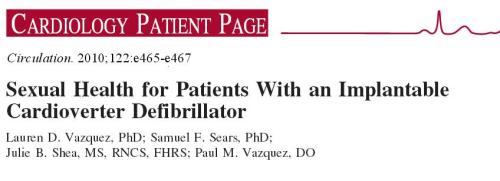
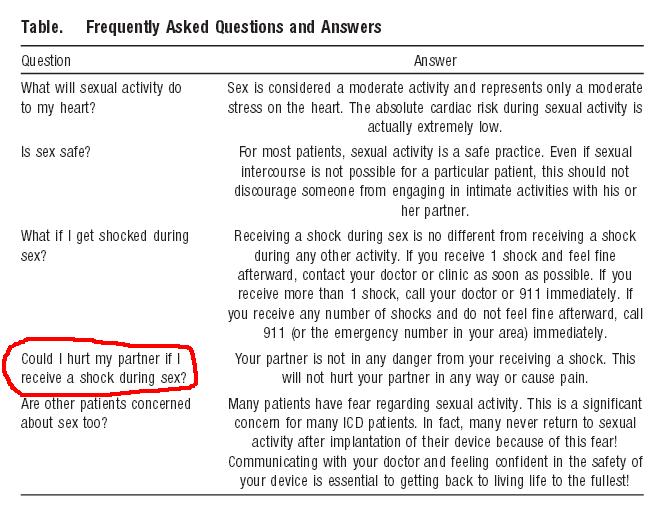
ICD shocks during sexual acts . . . Is the partner at risk for electrical Injury ?
Posted in Cardiology - Electrophysiology -Pacemaker, cardiology -Sexual health, tagged does the icd shocks the partner during sex ?, ICD shocks during sex sexual acts, inappropriate icd shocks on May 29, 2013| Leave a Comment »
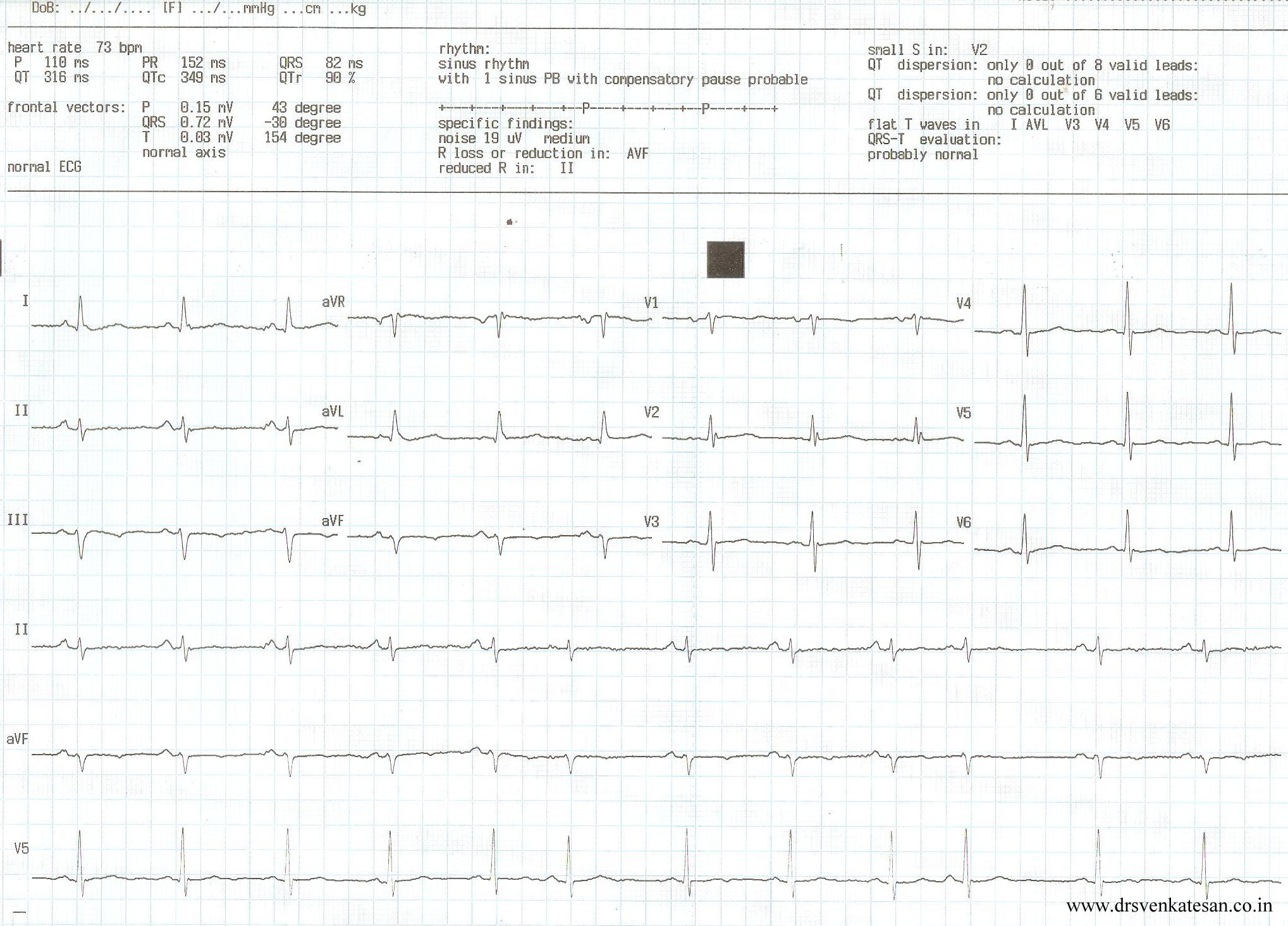
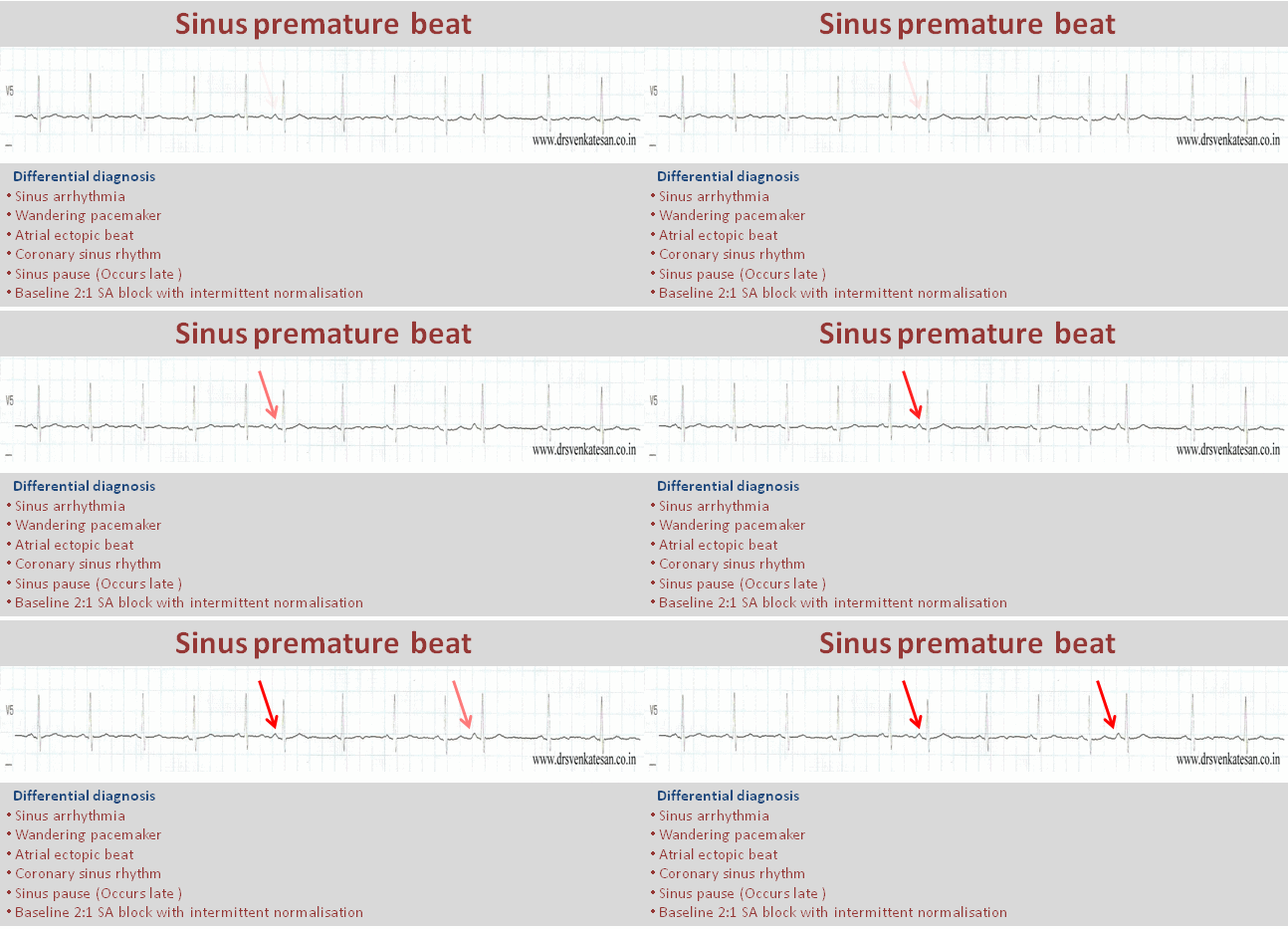
An unusual cardiac arrhythmia : This ectopic beat * arises right from sinus node itself !
Posted in Cardiology - Electrophysiology -Pacemaker, cardiology -ECG, Cardiology -unresolved questions, Cardiology-Arrhythmias, tagged SA node, sinus node anatomy, sinus premature systole on May 24, 2013| 1 Comment »
This is an ECG which I reported yesterday in my clinic . I thought it was a near perfect example for sinus node premature beat .
(Of course I need to explain why the P morphology slightly differs )
A sudden unexpected QRS complex is often called as ectopic beat . If it occurs prematurely (ie earlier than anticipated ) it is called as premature beat. If it occurs late it is refereed to as escape beat .Please note the difference is not absolute .
Sinus node is a dramatic bundle of energy with divine powers that drives rhythm of life !
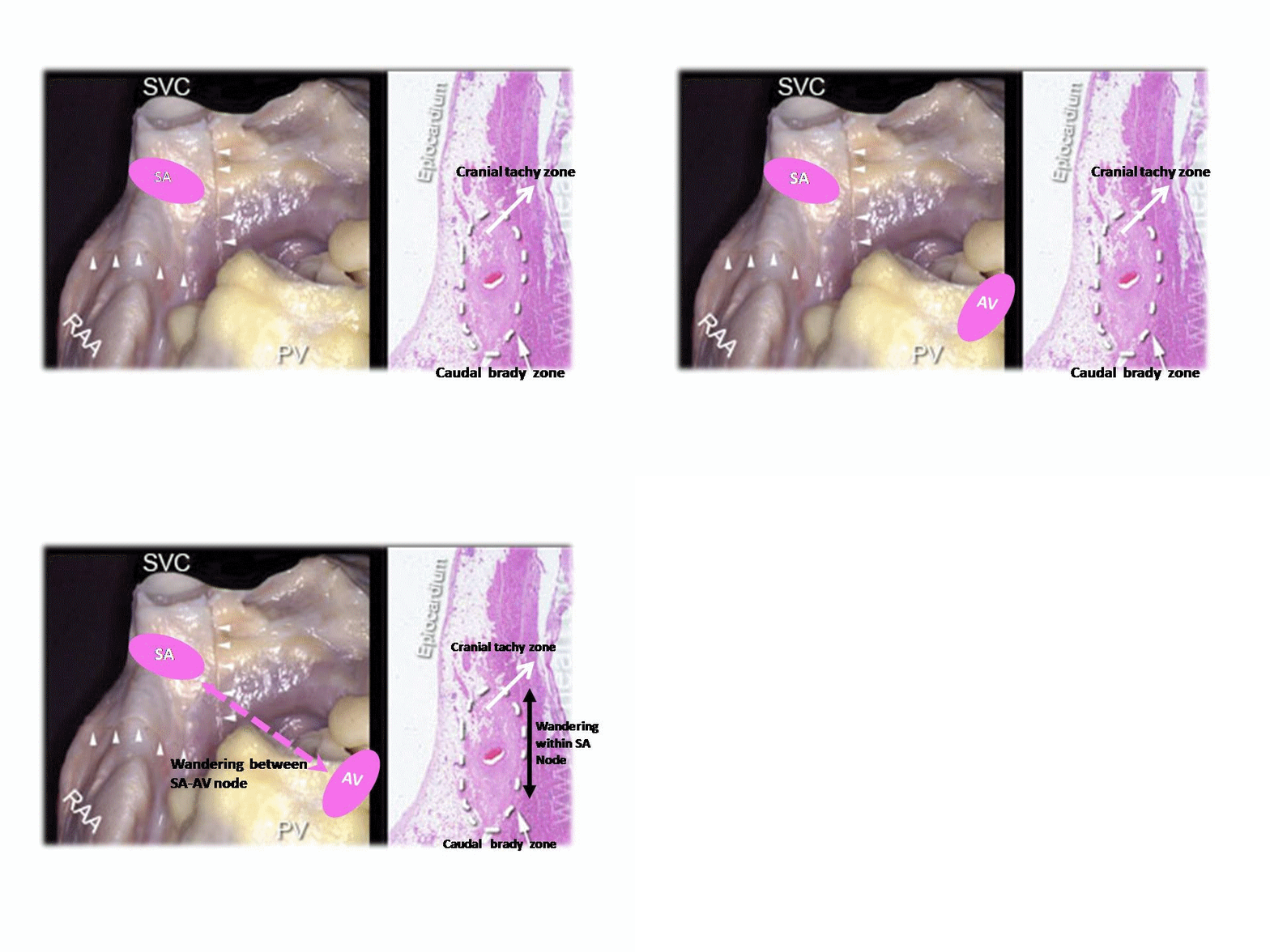
The pacemaker cells are arranged in a compact fashion with differential properties from cranial cells firing fast and caudal cells little slower. The neural control is under constant Neuro/electro/humoral servo control mechanism.It is well known the pacemaker shifts it’s firing location within the SA node in fairly regular fashion .The entire SA node has rich adrenergic and cholinergic innervation , with a dominant control by the later . (This is why the intrinsic heart rate is in the tachycardia range (around 116 ) when SA node is denerved pharmacologically )
SA node , being a complex structure , it is not surprising to note few beats to fire slightly late or prematurely.If it occurs late it is called sinus pause , if it occurs early it is sinus premature beat , if both occurs interchangeably we refer it as sinus arhhytmia. (Read about sinus pause here)
What is the clinical significance of SPD ? (Sinus premature depolarisation )
It is a very benign entity that it is merely an academic fascination . By stretching my imagination I can correlate it with few possible clinical issues.
- May be it has potenital to trigger a SA nodal reentry tachycardia or In appropriate sinus tachycardia/bradycardia.
- It may be imporatnt in sinus node modification process.
- However ,the main issue is thee cardiac physicians in their enthusiasm should not mistake it for some serious cardiac arrhythmia !
Related article
https://drsvenkatesan.wordpress.com/2009/04/14/can-premature-ectopic-beats-occur-in-sa-node/
IPL 2013 : A cricket carnival derailed by manic media !
Posted in cardiology-ethics, tagged ethics in life, ethics in medicine, hippocrates oath, india cricket on May 21, 2013| 2 Comments »
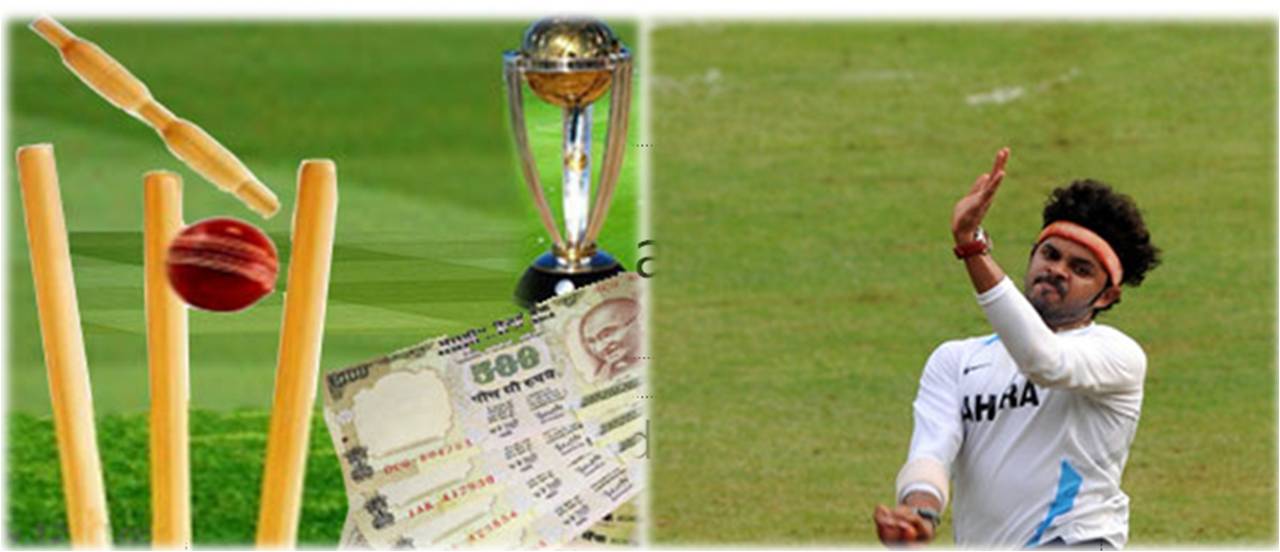
April-May is carnival time in India . . . cricket carnival. In IPL . . . Indian premier league , eight teams will fight for the cup . IPL 2013 became a smashing hit , until last week when three players were arrested for spot fixing in an over . And for the past 10 days the entire Indian media has gone into manic reaction over it !
Still , the sport was wonderful , the skills shown were extraordinary , and what happened was an aberration just like in any other aspect of life . IPL is perfect mix of sports , business , commerce and some sleaze . Actually in a successful business model , one should actually be surprised if corrupt practices does not occur !
The game of cricket can never be killed by money ! The way the issue was handled by the media and the reactions and public debates for me looks irrelevant . Is it justified ?
We the people and media has much much important things to do in India !
Fixing a Fix . . .
- Whatever happened has been good.
- Whatever happens is good
- Whatever will happen is also good.
Basic instincts in cath lab : It is too tempting to poke the non IRA . . . What shall I do ?
Posted in Cardiology -Interventional -PCI, cath lab tips and tricks, tagged cath lab tips and tricks, ira vs nonira angioplasty, multivessel angioplasty in stemi, primary pci on May 19, 2013| Leave a Comment »
Multivessel PCI during acute STEMI is forbidden except in cardiogenic shock . (or in some very unstable patients without cardiogenic shock)
The reason
- During acute MI hemodynamics are precariously balanced.We do not know yet how emergency multivessel plasty alters this .
- Our initial aim should be confined to myocardial salvage in the IRA . Total myocardial revascularization is niether the priority nor its desirable.
- The more time you spend within the inflamed coronary artery , more its hazardous.
- Multiple stenting is prone for thrombus and migration into side branch .
- Stent opposition is sub optimal in many thrombus infested lesions.
Still . . . in real world it is extremely difficult to curtail the urge to stent all eligible lesion during primary PCI !
How to avoid it ?
If the patient is poor or the insurance limit is low , the issue of multi vessel stenting does not arise at all !
Always ignore complex non IRA lesions during primary PCI. Be happy if a non IRA has a bifurcation lesion !
Still , some lovely looking lesions in non IRA would be tempting and inviting . Indulge at your own risk !
* Please remember if the proximal LAD has a non IRA lesion , it may be sensible to attempt simultaneous revascularisation even if the patient is stable !
Other unrealistic advice
- Keep the professional fee and other benefits fixed whether we do a single or multiple vessel stenting (Realise . . . surgeons do not charge more for a 4 vessel by-pass graft than a single ! )
- Keep the current AHA/ACC/ESC guidelines pasted right next to the fluroscopy monitor .
- Ask your subordinates to repeatedly caution you about the possible excesses and ask them to wave a red flag !
- You may empower the senior staff nurse with a veto power to shut off the cath lab once IRA plasty is completed and the patient is stable.
- In extreme situations , keep a cath marshal ready to manually evacuate the primary operator from cath lab !
Reference
Does radial coronary Interventions increase stroke risk ?
Posted in Cardiology -Interventional -PCI, Cardiology -unresolved questions, Hardware techniques tips, Infrequently asked questions in cardiology (iFAQs), radial coronary angiogram PCI, tagged aortic scraping and cholesterl embolism, brachio cephalic artery right, innominate artery and radial coronary angiogram, palques in innominate artery, plaques in right brachio cephlaic trunk, radial coronary angiogram, radial vs femoral catheterisation, right mca stroke in right radial angiogram, right vs left mca stroke, right vs left radial angiogram on May 5, 2013| Leave a Comment »
The link between brain and the hand starts right from fetus . It is a well known fact vertebral artery competes with hand blood flow . In the right side , there is one more vascular issue ! .Bracho cephalic artery arises directly from aorta and supplies the right hand and right half of brain.
It remains a mystery why left brain is blessed with a separate origin , while right has to share it with blood meant for hand .It is beyond science . . . isn’t
It is possible the left hemisphere of brain has more purpose to be alive , with bulk of the cognition work to do . Hence God created a separate supply to it ! Of course , he would have never thought , the possibility of his ” mean” creations adventuring within the arterial tree !
Click over the Image for animation
Please remember whenever we play with catheters and wires through radial route , we are hugging and scraping the artery meant for cerebral circulation !
Final message
Femoral Interventions enjoys a proven track record. Currently , radial route has virtually taken over with few advantages . However , the overall stroke risk in the two approaches remain low but genuine (.4 %) .It may be true , arch manipulation is more with femoral but the threat to vertebral and brachiocephalic circulation is more with radial . When the available evidence are not conclusive and new ones are not forth coming . . . it is wiser to rely on common sense !
Reference
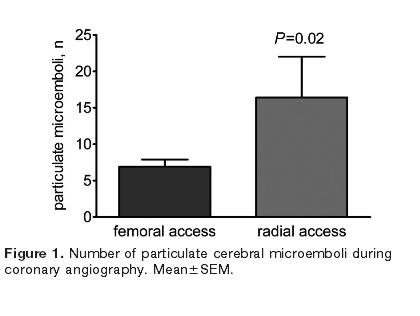
I think this 2011 study from the prestigious stroke journal has convincingly answered the issue
It concludes , the right radial approach is indeed risky to develop cerebral micro embolism when compared to right femoral
A Review article in Circulation
Other references
1.http://stroke.ahajournals.org/content/38/7/2176.full.pdf+html
2.Transient Cortical Blindness after Coronary Angiography Journal of International Medical Research. 2009;37:1246–1251,
3. Stroke and Cardiac Catheterization Circulation. 2008;118:678–683,