Feeds:
Posts
Comments

Archive for the ‘cardiac surgery’ Category

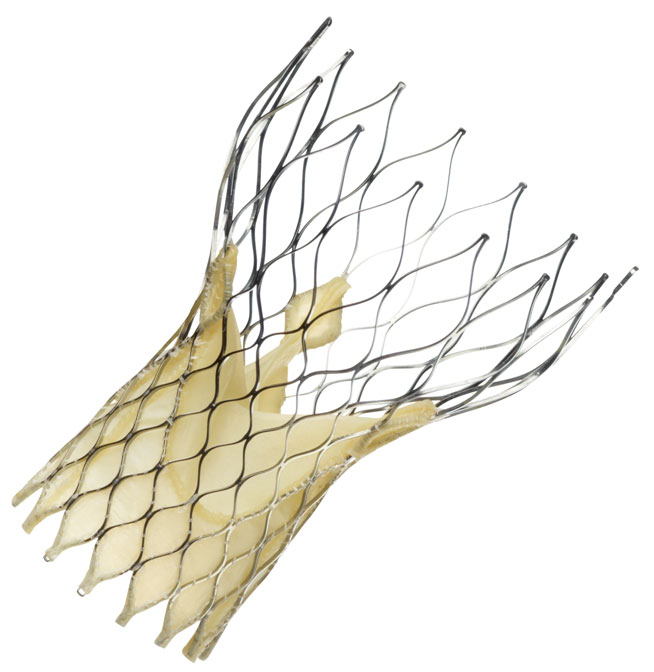
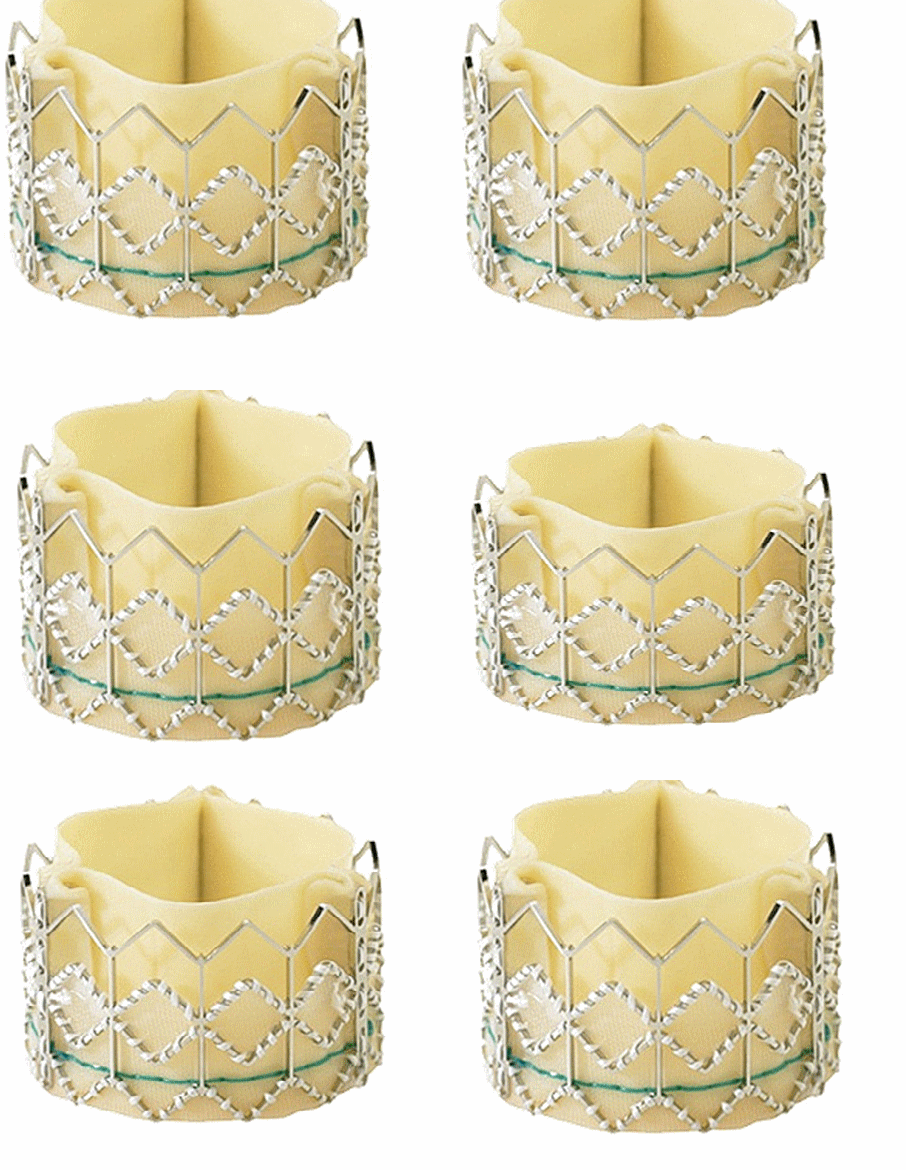
Cardiologists are  closing in ,  trying to capture the final frontiers. The  trans-cutaneous Aortic valve Implantation now has  a two year follow up. (NEJM March 2012  Issue) . The results are encouraging .

While two companies are fighting for the supremacy in TAVI ,   the real  threat is for the cardiac surgeons. Currently Edward  Sapiens  has an edge over Medtronic core valve as it  has a provision to redeploy or fine-tune the  final geo- position.

Reference

PARTNER 1

PARTNER 2

Medtronic core valve

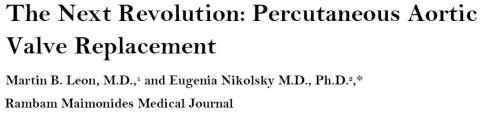
Open access  article  by Martin Leon

http://www.rmmj.org.il/userimages/22/1/PublishFiles/25Article.pdf

Read Full Post »

I recently came across an unusual LIMA  arterial  branching pattern .

Random thoughts

  • A naturally dividing LIMA faciliates multiple sequential grafting of LAD or diagonal branches.
  • As branches steal the LIMA flow it is not good for the patient
  • Surgeons struggle to clip the branches.
  • A branching LIMA has tendency to have  small diameter (As in the above patient )

I need a surgeons Input here.

Read Full Post »

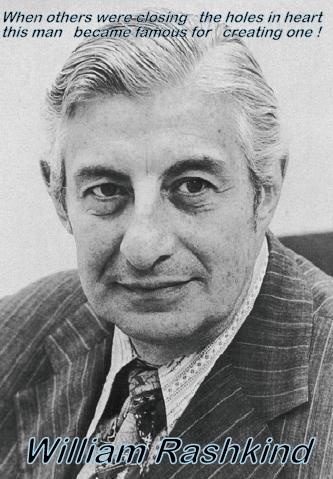
Who is the father of interventional cardiology ?

William Rashkind a cardiologist from Children’s hospital, Philadelphia in 1966  probably is the first person who thought it was indeed possible to use a wire and balloon as cardiac therapeutic intervention .When surgeons were groping in dark with  sick cyanotic new borns with dTGV , He along with Miller executed their idea.

It was published in JAMA

How the Rashkind  has revolutionized  our approach to congenital  heart disease  is evident from the current guidelines in 2011.

The procedure has since evolved with improving hardware and we are able to ferry a blade into the IAS for cutting .

Current  recommendations for Atrial  septostomy

It is primarily useful

1. Atrial septostomy  to enhance atrial  mixing (eg, transposition of the great vessels with restrictive/intact atrial communication) or to decompress the left atrium
2.During Extra corporeal membrane oxygenation (ECMO)   to decompression   of left atrial hypertension

3.If there is poor cardiac return from ECMO  circuit  low venous saturations  (Class 1 Evidence  C)
It may also be tried in  (Class 2 )
1.  Hypoplastic left heart syndrome  with  restrictive atrial communication.

2.  Static balloon dilation of  l synthetic / bioprosthetic  IAS  (eg, Gore-Tex)

3. Tricuspid atresia with restrictive atrial  communication

4 .Pulmonary atresia with intact IVS

5. TAPVC with  restrictive atrial communication.

6. Primary pulmonary hypertension / Eisenmneger VSD/PDA .(Occasionally useful )

Reference

http://circ.ahajournals.org/content/123/22/2607.full.pdf+html

Read Full Post »

Mitral regurgitation is  one of  the most common lesion of rheumatic heart disease .Mechanism of MR in acute rheumatic fever is different from chronic rheumatic heart disease.

Acute Rheumatic fever

The following mechanisms contribute to MR of acute rheumatic fever

  1. Edema of leaflets (Carey Coombs murmur )
  2. Valvulitis
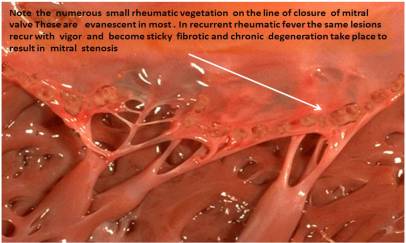
  3. Small verrucous  vegetations (See Image )
  4. Acute LV dilatation in fulminant cardiac failure.

* Note  : Acute rheumatic fever in its first episode can never  cause stenosis  however fulminant the fever may be  .There is no acute mitral stenosis .But ,  during recurrence and reactivation some amount of stenotic process may occur.  Still ,  recurrence and reactivation are more often related to significant MR rather than MS. ( Isolated mitral stenotic lesions  rarely  give h/o recurrent rheumatic fever )
Chronic rheumatic  heart disease

As the mitral valve gets progressively damaged  any combination of MS or MR occur .The following mechanism are involved in  the genesis of MR. (Pathology of Mitral stenosis is not discussed here)

  1. Chordal shortening, tethering , pulling , prevent proper co-optation
  2. Chordal lengthening
  3. Chordal disruption (Minor > Major )
  4. Prolapse of either AML or PML (Not both ,unlike myxamatous MVPS)
  5. Infective endocardits  of  leaflet
  6. Perforations of  leaflet
  7. Annular  dilatation
  8. Fibrosis of posteromedial/Antero-lateral   pap muscle(Rare )
  9. Left atrial pathology

* The direction and the  width of MR jet is  related to the mechanism of MR.

If there is chordal shortening due to fibrosis  of mitral valve  co -optation plane is altered . The degree of chordal shortening , pap muscle fibrosis (rare)  symmetry of chordal involvement determine the MR.

Rheumatic mitral valve prolapse

  • This could be  more common than we realise.
  • It can be true or pseudo.
  • True prolapse occur due to chordal weakening or lengthening .
  • In chordal disruption the leaflet tips usually become flail

Since rheumatic process fixes the PML first , the AML   appear to overshoot the plane of PML and   appear as prolapse.(Pseudo )

The sail like AML commonly  directs the jet posteriorly and laterally .(Murmur conducted to axilla and back )

It is rare for PML to prolapse in RHD , if  it does occur ,  it directs the jet anteriorly (murmur conducted to aortic area mimic AS !)

It is rare to see a  perfect  central jet in RHD  . presence of  Central jet is a good sign to consider mitral valve repair.

Myocardial involvement in RHD.

Even though rheumatic fever is a classical  example for  pan-carditis , it is surprising   to note (Of course fortunately !)   how  myocardium escapes in the  chronic process of RHD.

Is it really true  ,  myocardium do not get involved in chronic RHD ?

Clinical cardiologists rarely discuss this issue. Pathogists indeed have documented significant lesions within myocardium  . Involvement of left atrial myocardium and  rarely  ventricular myocardium in the sub mitral  zone  can influence the  degree of  MR

* Even in acute rheumatic fever with fulminant carditis , myocardial involvement is  disputed by many  ! . My belief is ,  there will   definitely a subset  in   both acute and  chronic  forms of   RHD   , in which myocardium  gets  involved . In our institute LV dysfunction associated with RHD occur in  up to  5 % of  RHD population .

Importance of knowing the mechanism of MR

Two aspects  appear important

1. Is there a potentially  reversible component in pathology so that we can  wait  before intervention  ?

I have seen children referred for mitral valve replacement due to severe MR  . In due course   MR regress by the time they reach the tertiary center (waiting period included ) At least one child i remember,  the MV surgery was canceled  due to spontaneous regression MR.

It was later found the MR was  more of valve inflammation than degeneration .

* Always think about the possibility of reversible rheumatic MR  in every severe isolated  MR in children (Do not apply this rule in adults or in combined MS or MR  )  Do a ESR, ASO and start an  intensive anti inflammatory therapy  , aspirin with strict penicillin prophylaxis .With this  one can definitely postpone the surgery  in few cases  and  may avoid it altogether !

2. Surgical implication

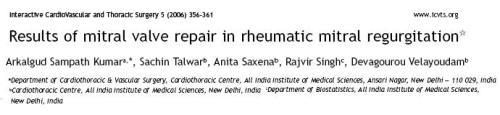
If we could delineate  the  exact pathology of MR   it will facilitate  the   repair . Annular  reduction and  neo  chordae  etc . Of course ,the surgery could be  very  difficult in scarred mitral valves ,  Dr Sampath kumar *of AIIMS  New delhi , India  would  feel other wise !

*A pioneer in mitral valve repair in chronic  RHD (See reference 2 )

Questions  that need  answers

How is balloon/Surgery  related injury different from rheumatic process ?

Why is  rheumatic  mitral vale  prone for bacterial infection ?

What is the relationship  between  extent of  aortic valve involvement and  degree of mitral valve involvement in RHD ?

Reference

1.http://circ.ahajournals.org/content/94/1/73.full?sid=10599470-3563-4c38-b688-c5fc8c032f96
2. http://icvts.ctsnetjournals.org/cgi/reprint/5/4/356
Books

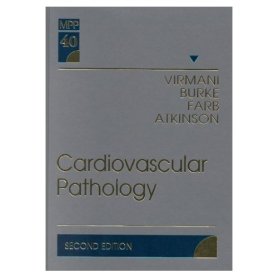
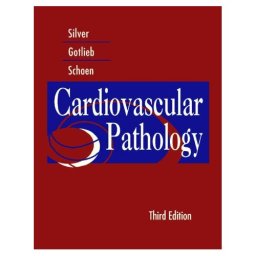
There two popular books exclusively  for cardiac pathology

1.Silver

2. Renu Virmani
Read Full Post »
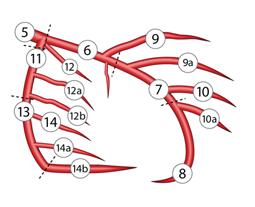
Proximal LAD lesions require  specific and early Intervention.Hence we need to know what exactly  we mean by proximal LAD disease.Unfortunately , it means different things to different cardiologists .There is no dispute regarding the  origin of  LAD since it begins with bifurcation point  .The problem comes with  this question !

Up to what distance LAD can be termed as proximal ?

  1. Bifurcation  to   “First   diagonal” of  any size
  2. Bifurcation  to   “First Major diagonal”
  3. Bifurcation to     “First septal”  of any size
  4. Bifurcation to    “First  major septal”
  5. Bifurcation  to   “Any major  first branch ” (Either septal or diagonal )

Answer : I think  4 is the correct answer . But many believe  5 can be correct as well !

Why  there is  confusion in the  definition of proximal LAD ?

This is because the first branch of LAD itself is not a  constant one  . It can either be a septal  or  uncommonly  a diagonal.

It should be noted , the septal and  the diagonal  branches  neither respect   seniority  nor follow a  hierarchy .The first diagonal may be diminutive while the   second or third diagonal may be major one  and vice versa .Further  ,  there can be a trade of  in length and caliber of   septal and diagonal branches  .This  phenomenon is also  common between  diagonals  and   OMs  . All these confound the picture .

Cardiologists even though they are  primarily physicians they are  pro-anatomy  like surgeons when it comes to coronary interventions .

                                  In the strict sense ,  we  need to differentiate a  lesion  from being   physiologically proximal  or anatomically proximal  !

Is there a proximal LAD equivalent ?

There are three  situations  this can occur .

  • Some times a lesion  by  definition may not fit in  as proximal  LAD  but physiologically  few major diagonals  will arise after the lesion.
  • Other situation is , LAD lesion may be  mid or distal but  a major first  diagonal may be diseased  , making it  equivalent  to proximal LAD in terms of physiology.
  • A mid LAD  with a large OM lesion which is running in the D1  territory

Final message

It is ironical  millions of cardiology interventions happen  for proximal  LAD lesions  every year without  even  proper understanding of what we mean by  it ! Youngsters are argued to ponder  over this issue whenever  they indulge in  such cases for revascularisation!

Reference

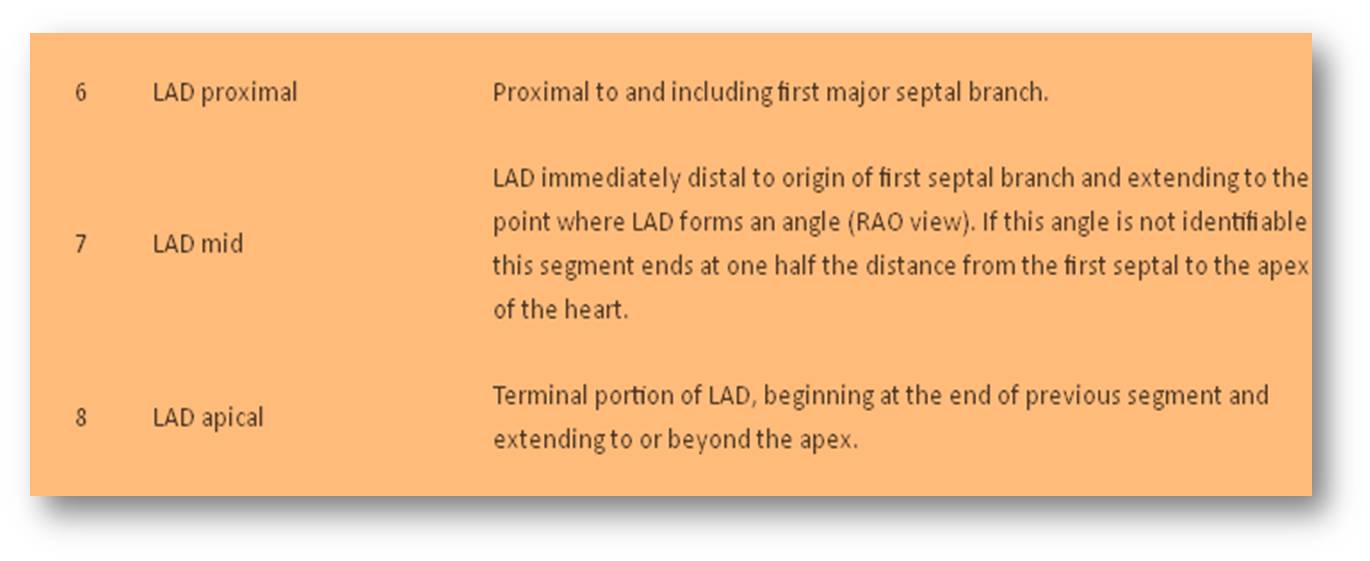
Text books differ in their definition about proximal LAD. Currently , the  SYNTAX  scoring system  has defined the coronary segments in a practical way.

http://www.syntaxscore.com/index.php?option=com_content&view=category&layout=blog&id=1&Itemid=32

Definition from SYNTAX

Read Full Post »

The prosthetic cardiac valve which saved so many lives  in the later half of 20th century is no more. A valve which is not only  known for its excellent durability  but also  devoid  of sudden  mechanical  occlusion , unfairly  lost its place  by the rival  mechanical  bileaft valves. (Supposedly superior hemodynamics !)

Here is a nice video  from Indian surgeon  which  describes the hardware of  Starr Edwards valve .

Please read a related article from my site

Who killed Starr Edwards valve ?

Read Full Post »

Bicuspid aortic valve (BCAV) is  one of the common  congenital abnormality of heart . Incidence can be 1-2% of population . It can result in premature aortic degeneration with Aortic stenosis/Aortic regurgitation or both .

The normal development and arrangement of three cusps is altered ( rather interrupted )  during fetal life.

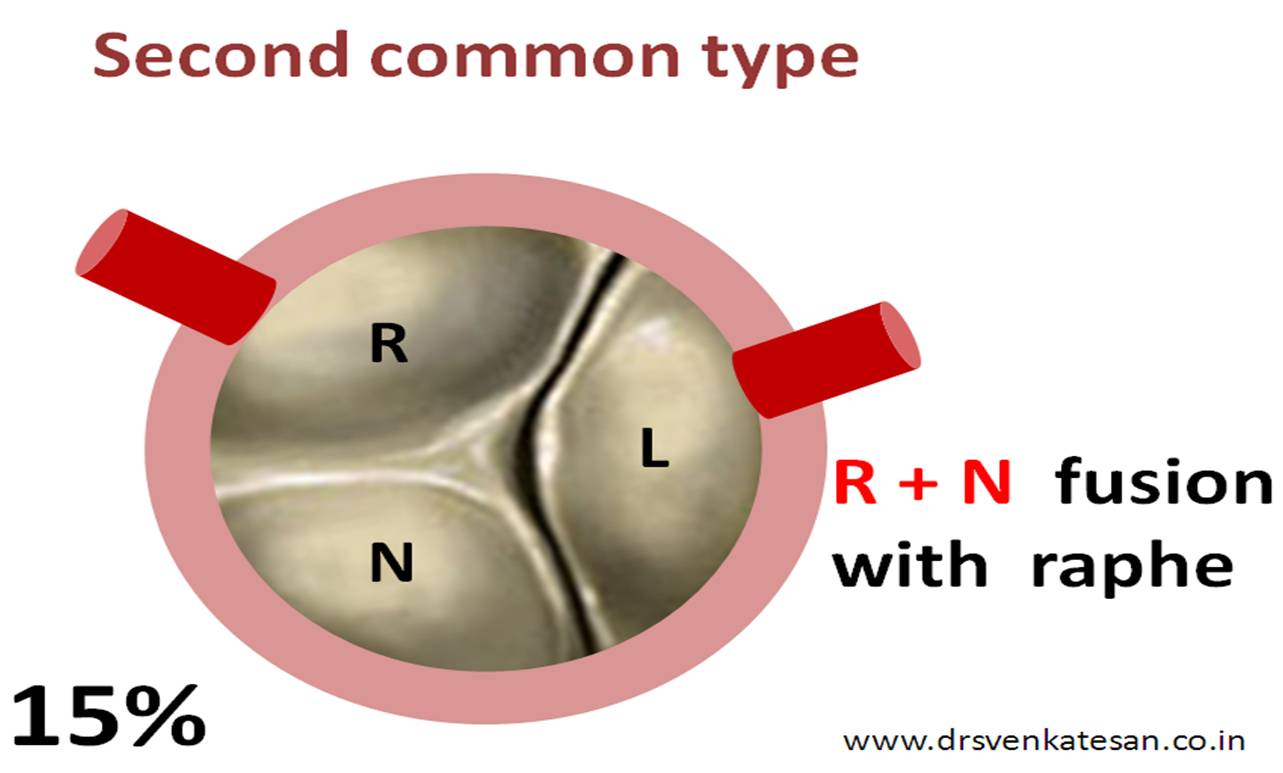
There can be two ways BCAV can occur. One is due to the   fusion* of two leaflets to covert a  tricuspid  valve into  bicuspid  ,  and the other is    two cusps develop de novo .The former has a raphe , while the later has no raphe.

The  fusion* occurs between  either

  • Right and left (R +L)
  • Right and  non coronary cusp  (R +N )
  • or Left and Non coronary cusp (L +N)

(* The fusion is embryological , not acquired )

Most often the  fusion is due to lack of division in the valve  analgen .Hence a raphe (A conjoint remnant) is noticed .

90% of BCAV has raphe  ,only 10 % lack raphe . Aortic root is also structurally abnormal in many .(Little clinical sequale though !)

Coronary artery origin anomalies  are more common with  BCAV. We also know co-arctation of aorta has a embryological link with BCAV.

The commonest type of BCAV is

The most hemodyanmic stressed BCAV is R +N type fortunately it is rare

R + N fusion is a high risk BCAV as degeneration occur fast

The least common type is

The coronary artery origin anomalies are common

BCAV in the absence of raphe is classified separately (This constitutes 10 % of all BCAV)

The nomenclature  is

  • Antero posterior (Common type ) AP
  • Lateral (L )

What is  the pathological significance of raphe ?

Many  believe presence of raphe accelerates degeneration as leaflets have  rough surfaces . Still , BCAV with raphe has less coronary anomalies and aortic root pathology .

Presence of raphe  indicate relatively  a minor embryological defect  , as the fault is in the failure to divide after the formation of analgen , while BCAV without raphe  imply  lack of development of analgen itself . This is expressed in the coronary sinus anatomy and aortic root dimension and orientation .

So currently it is  welcome  to spot  a raphe in the patient point of view  .Echo cardiogram is notoriously  unreliable to diagnose raphe. Once degeneration process sets  in ,  it is almost impossible to recognize  the  presence or absence of raphe .

* Please note ,tricsupid aortic valve with eccentric leaflet closure  shares  a close pathological relationship with BCAV. Premature degeneration ,  (AR more common than AS here ) .This entity will be discussed separately later.


Image courtesey

Part of the Image (The valve) is adopted from Yale university Image Bank .

Read Full Post »

 Inter atrial septum(IAS)  is a delicate structure , formed by a  “curious IAS  embryological process”  , when  two septums ,  two ostiums  cross each  other .They  fold  and unfold  like  curtains  in different times ,  ultimately result in a  single membrane separating LA and RA  with a  central physiological   hollowness called foramen  ovale .

All along this process ,  blood has to shunt  from  RA to LA  untill the baby comes out ,  when the direction reverses that  result in the flap  of foramen ovale locking  against the septum secundum with raising LA pressure . So , basically the genesis of  IAS is all  about growing,   resorbing  and  sticking of two septums . This starts in utero and continues well after birth. One can imagine  complexity of  the factors that determine the thickness of IAS.

The IAS thickness varies between 2mm to 4  mm . With increasing use of trans esophageal echocardiography and also the need for cardiologists to puncture the IAS , it is becoming important to study the anatomy of IAS in detail.

A new  cause of  thickened IAS  is reported recently .

 This is refered to as Double Inter atrial septum,  fused like a sandwich  with a  potential space  in between  .

The embryological basis is not clear. (A septum primum and secundum fusion ?)

The PFO   is an  oblique orifice in many .It is some times refered to as tubular PFO . A large tubular PFO can mimic a double IAS.

An  aneurysm of IAS  may get  fused to appear like a double septum

or Is it  IAS dissection which  give an appearance like double IAS ?

Personal perspective

  • It is very difficult to embryologically  explain the concept of double IAS .  I would think  , it is  double layer  of single embryological  septum   with a  potential  space  in between .
  • It is possible an intra mural hematoma (Spontaneous or acquired ) may cleave the septal plane and mimic a double IAS   when the   thrombus gets dissolved later.

Other causes of thick IAS

Septal thickness an issue during transeptal puncture . During PTMC and left heart catheterization a thick septum may be a hurdle.

Infiltrative  myopathies especially amyloidosis is known for a very thick non -puncturable IAS  

Reference

1.http://ejechocard.oxfordjournals.org/content/9/5/707.full

2. http://www.ncbi.nlm.nih.gov/pubmed/16950474?dopt=Abstract

Read Full Post »

Moderator band is a ubiquitous structure  found inside right ventricular   cavity , often overl0oked by cardiologists. God has created no structure  without any purpose ! Moderator band has important role to play  both in physiology and pathology .

Image credit and courtesey : Whoever has created

The table attempts to summarise  the features  of moderator band. The  structural and functional behavior of moderator band  in , RV cardiomyopathy , RV non compaction and arrhythmogenic  RV dysplasia is not fully studied yet  . Reference :Content is taken from various sources and with a personal input in few places.  The anatomical data is largely taken from the pioneering  work of cardiac  pathologist and morphologist  RH Anderson of  United kingdom.

Here is an article  from my institute Madras medical college  published in Indian journal of Thoracic and Cardiovascualr surgery in 1982.

An autopsy study  on moderator band   by Paul Ravindran and   Solomon victor

http://www.springerlink.com/content/g35616v662976g1r/

http://circ.ahajournals.org/content/67/6/1268.full.pdf+html http://www.ncbi.nlm.nih.gov/pubmed/20235167

//

Read Full Post »

Surprisingly it is common !

A .Abandon the procedure call the surgeon for an emergency CABG

B. Open the most critical lesion.*

C.Attempt to open and stent all possible lesions.

D.Send the patient back to CCU for a conventional  thrombolysis or attempt a intracoronary thrombolysis.

Answer : All  can be a right response depending upon the available expertise ,  time window, associated complication and hemodynamic stability etc .

* Please note ,the most tight lesion may not be the culprit artery. Though there is high chance for that  being the culprit , it  can be very deceiving   especially when  there is multi-vessel  CAD with  chaotic collaterals.

The site of lesion and site of infarct can unimaginably remote.  (A traffic snarl at remote flyover  can have its impact  right on the busy commercial street due to diversions ! ).

What will happen if you open  a non culprit artery first mistaking it for a culprit ?

This could lead to  dangerous turn of events as whatever little perfusion the patient was getting through the ill-fated  IRA will be challenged by the fresh diversion  facilitated by non IRA angioplasty. Extreme caution is required.

Emergency CABG  within 3 hours  of MI even though advocated  by few ,  is still considered a risky  way to reperfuse  the heart.(In India  there  is  nothing called primary CABG!)

An energetic interventional  cardiologist would vouch for opening all lesions . Only thing  , he has  to  make sure is  , the patient also has enough energy to withstand  his  onslaught. Never   non culprit lesion if a patient is stable . 0ur aim is not that.If the patient  is in shock or impending LVF one can justify opening  few more lesions  that improve total muscle function which can be vital.

What about fall back on thrombolysis?

This may be seen a defeatist attitudebut  when the aim is  in the  well being of patient ,  there is no defeat or success. If severe  CAD is encountered and both  CABG / PCI  or not an option,  the cardiologist need not feel guilty or  humiliated to refer him back for thrombolysis. (Of course , Intracoronary thrombolysis  is  an option !)

Final message

Primary  PCI  is often made  to  appear ” As  a  kids play”  by many modern  day cardiologists . It is not so.  It requires a team effort. It is  race against time.   Feasibility depends largely on the coronary anatomy. The failure rate of  primary  PCI is often camouflaged .(Currently Success of pPCI is boasted at 95%)   Logically it should include pPCI ineligible anatomy as well . Many still do not understand the real purpose of pPCI.   The aim is to salvage the myocardium  at risk , sure and fast. Never attempt for total revascularisation in an emergency situation however tempting it is !

In young persons with discrete single vessel disease  the procedure is simple and outcome is straight forward. In elderly , diabetic , STEMI on  preexisting CAD,  diffuse  multivessel disease  ,   complex main left,  bifurcation lesions , one requires  lot of brain sense  to provide optimal outcome . Many times that sense includes abandoning the procedure !

Please read a related article in this site  Primary CABG

Read Full Post »

« Newer Posts - Older Posts »