Feeds:
Posts
Comments

Archive for the ‘Cardiology – Clinical’ Category

It is tempting to fix the  “Force of cardiac  contractility” ,  to be the  prime determinant  of  systolic  blood pressure* .  Rather ,  it is  influenzed heavily  by   multitude of anatomical  and  physiological factors.

                                        ”  In most  life instances  the primary determinant  blood pressure  is not the state of cardiac contractility  “

                 For many ,  this  would  appear as  shocker of  a statement !

Fellows  should not be  confused with above inference  . What it means is ,  the  heart initiates  the blood pressure by a brief  period of  systole .The pulse wave attains a peak during ejection phase  . This is the peak systolic blood pressure  . There is nothing called  sustained  systolic  blood pressure .  The quantum and  duration of peak systolic pressure  contributed by the LV contraction  is  far less than we imagine .

If blood pressure is to be controlled   primarily  by  cardiac contractility , how is that ,  a  blood  pressure of   about 80mmhg is maintained throughout diastole when the heart is taking rest and the  aortic  valves  are closed  ?
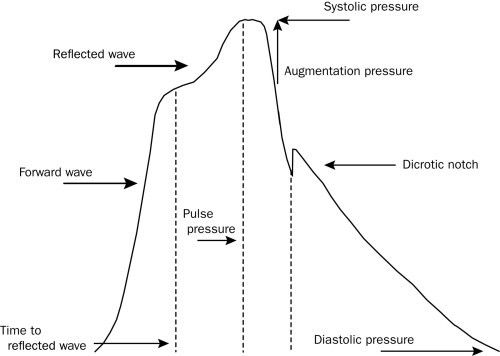
The  major elastic blood vessels  aorta and the major branches use the potential  energy gained during systole  (Like a rubber band )  into   kinetic energy as vessels recoil during diastole . This recoil  imparts an   important component  to the  diastolic blood pressure  augmentation  and maintenance.

It is  prudent to note  since  diastole is  much  longer than systole  , integrity of the vascular tree  become  much more important  to maintain the blood  pressure  till the next systole arrives.

Note

*The cardiac contractility  , might  still be  important  in determining systolic BP  in  patients  with  severely compromised  LV function** For example ,  in  dilated cardiomyopathy  with  LV failure ,  systolic blood pressure will  be directly related to LV  function.  When LV function is critically  low , the elastic  blood vessels  fail  to  amplify the blood pressure  beyond  a limit.

**Still it is not  uncommon to find high systolic blood pressure  recorded in the back ground of with severe LV dysfunction especially hypertensive individuals.

What happens during aging ?

The  aorta and it’s major branches  gets thickened , the  vascular collagen  goes  cracking  with wear and tear of  life.  In effect , these vessels become less compliant . So , when blood is rapidly ejected  from the  left ventricle  into aorta  and their branches  it’s  distensibility   is  reduced  .This  fails to dampen the  pressure  wave  and  hence systolic  pressure spiking occurs. This we refer to systolic hypertension of elderly.

It is  important to  emphasise   major elastic arteries  has a big  say in fixing the systolic pressure. For the same cardiac output systolic pressure can surge in elderly this  is why we have kept the normal  in adults as 16o mmhg.

Another key point to be understood  is  ,  Aortic compliance  has an impact on diastole blood  pressure too ! . The  stiff vessels during diastole bring  less diastolic recoil. Diastolic recoil of large elastic arteries  determines the diastolic pressure . Hence there  could be  a mild fall in diastolic pressure with physiological aging when recoil is attenuated .  Since the  reduced diastolic  recoil ensures diastolic pressure from being elevated  the entity is aptly named as isolated systolic hypertension.(ISH)
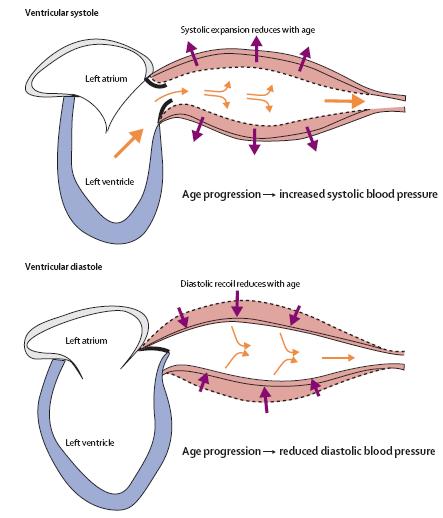
Image courtesey :Norman M Kaplan, Lionel H Opie Lancet 2006; 367: 168–76

Final message

While the traditional  teaching  ramains  as  systolic blood  pressure  would be determined by cardiac contractility  / cardiac out put , while the   diastolic pressure is determined by peripheral  vascular  resistance .This is not an absolute reality ,  rather it is  too simplistic way of teaching circulatory physiology !

The  peak systolic blood  pressure is more often determined by the integrity of  Aortic  and major arteries   rather than cardiac contractility  and stroke volume. Similarly , aortic properties do have a  say in the diastolic pressure as well !

Further reading and debate

 The net effect of aging  on blood pressure :  Is it  physiological or pathological  ?

  Should we  treat  this  raised  pressure due to aging  related systolic hypertension  ?

There is a huge controversy going around ,  regarding the need  of  treating this mild elevation of systolic  blood pressure due to arterial stiffening .This will be addressed separately in this forum .

Reference

http://www.mayoclinicproceedings.com/content/85/5/460.full.pdf+html
Read Full Post »

“It seems  certain . . . both  zero alcohol  intake and excessive alcohol  confers cardiac risk   “

I stumbled upon  the above   conclusion    from a respectable source*

*This  is from the  famous  INTERHEART  study published in Lancet.

Can it be true ?   What is the proof ?

Consuming  moderate   quantity of  alcohol  reduces  cardiac risk

  Does it make sense  to  skew   this   statement  like this

   . . . Not taking  alcohol   would   be a cardiac  risk  in other wise healthy individual .

Can we  profess  such a reasoning ?  My colleagues call it stupidity ?

If  it is true ,  are we justified  to use  alcohol as  a primary prevention drug ?

Which type  of alcohol we are  talking about ?

I am struggling to get specific answers .

After reading the INTERHEART study , my conviction is  the  “dangerous suggestion”   may indeed  have a significant  quantum of truth !  Readers may share their thinking .

In a country like India where alcohol is considered as a  killer chemical with a huge social stigma ,  it is  blasphemous to suggest  not taking it can be  cardiac  risk factor !

Reference

http://www.thelancet.com/journals/lancet/article/PIIS0140-6736%2804%2917018-9/abstract#

A. DiCastelnuovo, S. Castanzo, V. Bagnardi, M.B. Donati, L. Iacoviello, G. de Gaetano. Alcohol dosing and total mortality in men and women. Arch Intern Med 166;2006: 2437-2445

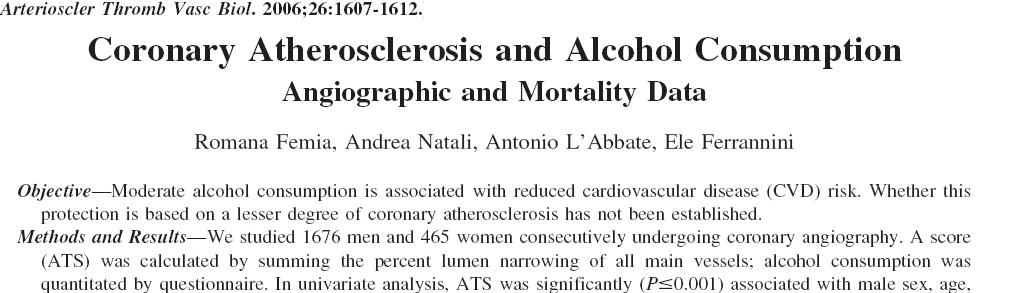
R. Femia, A. Natali, A. L’Abbate, E. Ferrannini. Coronary atherosclerosis and alcohol consumption: angiographic and mortality data. Arterioscler Thromb Vasc Biol 26;2006: 1607-1612

D.L. Lucas, R.A. Brown, M. Wassef, T.D. Giles. Alcohol and the cardiovascular system. J Am Coll Cardiol 45;2005: 1916-1924

Read Full Post »

How to rapidly  diagnose  significant LV dysfunction  at the bed side ?

Look for

  1. Tachycardia*
  2. Exertional LV  S3
  3. Muffled S1
  4. Weak carotids
  5. Often inconspicuous apical  impulse

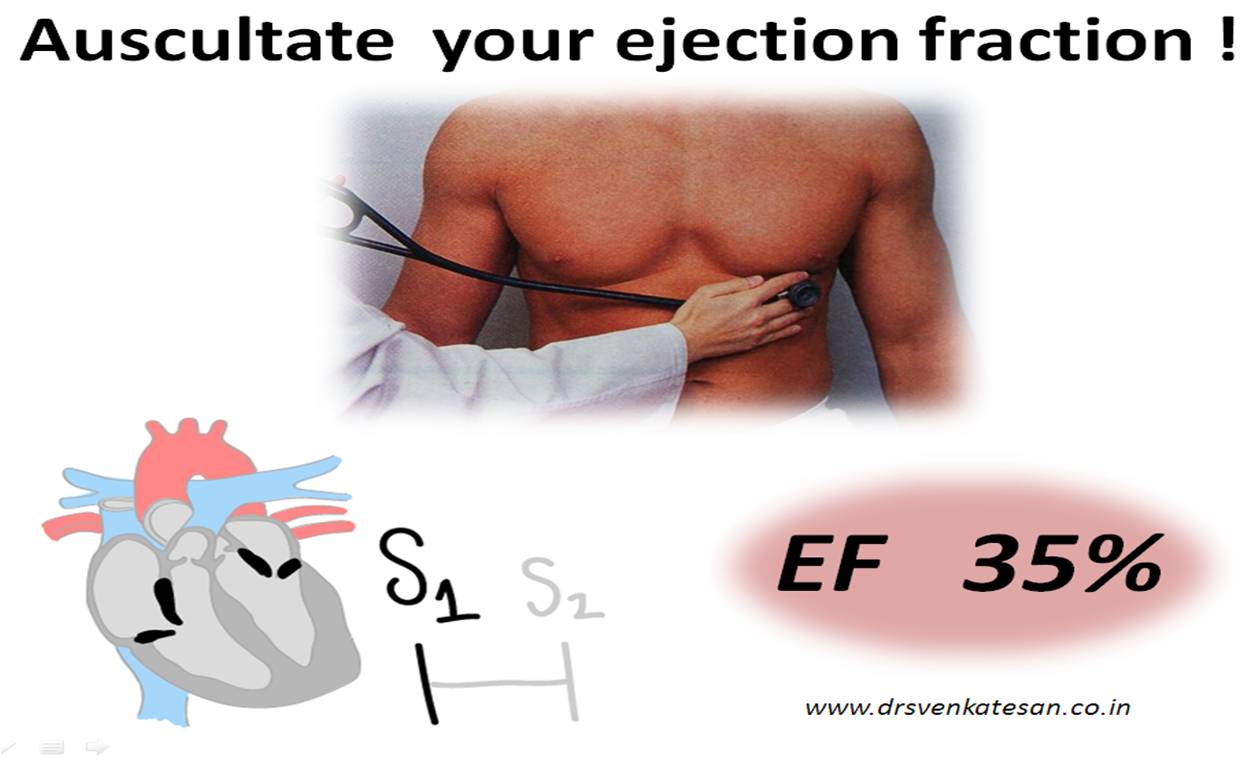
If all these signs are present EF is likely to be less than 35 % with 90 % specificity . If this is accompanied by  true cardio-megaly in X-ray chest,  LV dysfunction can be diagnosed with a  precision  reaching almost  100% .

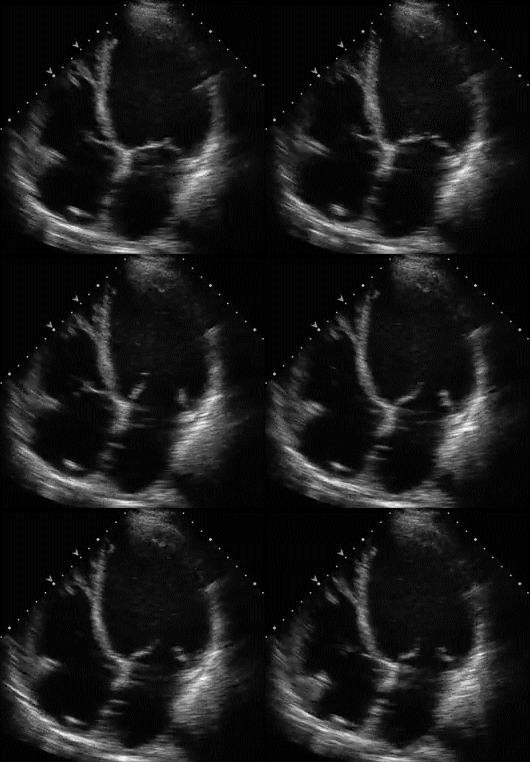
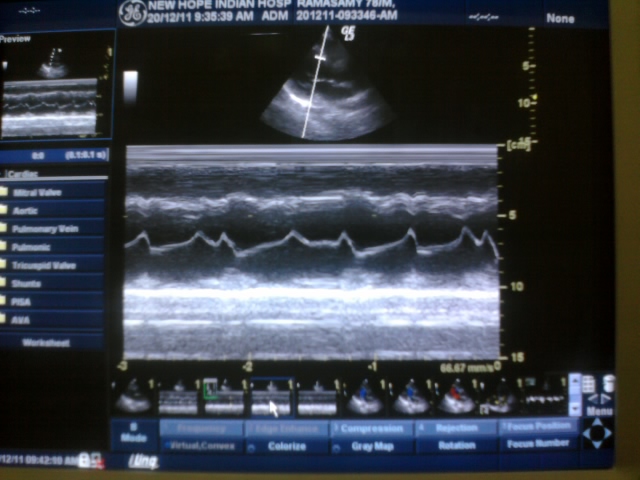
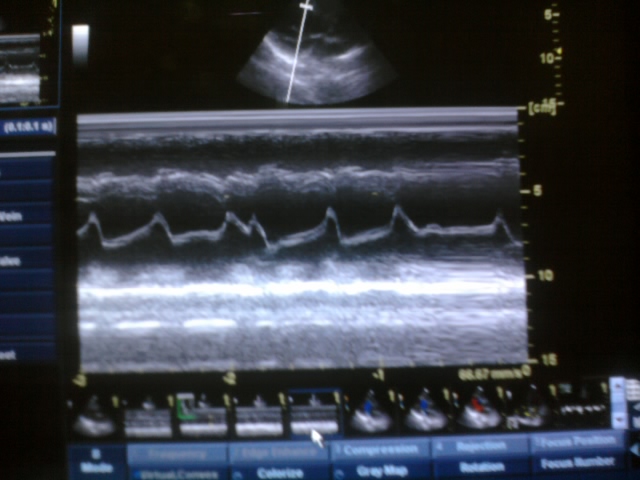
Note the sluggish motion of mitral leaflets and how closely the LV contractility is related to AML movement.This man had a soft S1 and his EF was 30 %

* Tachycardia may be  a non specific finding . Further ,base line tachycardia may  not be present  in all cases of LV dysfunction . When there is a  sudden surge in HR  even with minimal exertion , it  suggests   severe  LV dysfunction.

** The above clues  may not apply  in  valvular heart disease  , and isolated right heart disease  as multiple factors may impact S1 intensity .

*** LV failure must be distinguished from LV dysfunction (Vide infra)

Similarly , a  patient can not have significant  LV  dysfunction if  one  detects any of the following.

  • If the first heart sound is loud
  • If he feels chest thumping as palpitation.(A fluttering and audible   mitral  AML has 100 %  predictive value for normal LV function )
  • If you here an aortic ejection sound (Vascular clicks ) . Ejection clicks need significant force for it’s generation.

Final message

The most mobile structure of the heart is  anterior mitral leaflet . Fortunately it’s closure is  well heard as   S1 . Mind you, the most important determinant of  S1 intensity is  LV  contractility.  If your ear is sharp , and if you are able to  rule out other  reasons for soft S1  (Like obesity, pericardial effusion )  we are fairly  justified in suspecting significant Left ventricular dysfunction.

Further reading :

***What is the difference between LV dysfunction and  LV failure ?

Both these terms are  often  perceived  to convey the same meaning . But it  can  never be used synonymously .Cardiac failure is a clinical entity while LV dysfunction  is  a  derived  technical parameter  by and large an echocardiographic entity. Cardiac failure   is defined classically as a clinical syndrome .(elevated jvp, edema * S 3 rales etc)  Neuro hormonal activation  can occur with both.

A patient with   LV dysfunction    when destabilsed  develops   LV  failure and after stabilisation of   LV failure he is brought  back to  the baseline  LV dysfunction.

Read Full Post »

A strong willed  person rarely develop syncope.  We know  weak hearted (Or is it weak brained ?)   men and women may  faint  when  the emotions swing unexpectedly  .The  commonest cause of syncope is  neuro-cardiogenic  syncope (NCS) . (Formerly  called as  vaso-vagal syncope  VVS ). Few facts need to be  emphasized  here . There are  many  critical  circuits  and components to  common syncope.

  1. Trigger
  2. Afferent
  3. Center
  4. Efferent
  5. Fall /Near fall
  6. Prompt recovery after the fall.

Trigger can be emotional or mechanical (Prolonged standing ,  dehydration , etc )  . It occurs generally  in an emotionally  charged  environment with a high  basal sympathetic tone .

Afferent for  NCS   is  mostly sympathetic but it can be  para- sympathetic also (Sensitive GI tract ,  Micturition etc )

* Many times a  trigger and afferent pathway can overlap with each other.It is still unclear what exactly constitutes the afferent , since  triggers can be either sympathetic or para- sympathetic .  ( Pain, GI stimuli, vascular puncture etc) .  Further , afferent  can be be same as the trigger and reach the brain  stem directly  or touch  the heart en route .  ( Cardiac axis  in classical NCS)

The  center is  in the medulla  . Both vagal and sympathetic centers  are involved with potential  spill over on either side.

Final efferent  pathway is the strong  vagal surge resulting in bradycardia and peripheral vasodilatation , cerebral hypo-perfusion  and the person usually falls .( Near fall or aborted NCS  is also a common theme )

                                        If stress increases the blood pressure , absence  of stress  will have to  lower the blood pressure . If anxiety cause hypertension  ,  depression is expected to   cause hypo-tension.

These  inferences  may  appear  correct by logic . As  is always in medicine ,  such   logic works only partially ! ( We are told  the  Sadhus of Himalayas rarely record  blood pressure  beyond 100mmhg systolic  !)

There are strong reasons to believe common syncope (NCS)  is primarily related to the state  of mind and  the neural regulation. Dizziness ,  giddiness  near syncope  are closely related  to  psycho-somatic disorders. Strong willed men and women rarely develop   syncope.Their vascular   tone is well in control even in critical times .This fact has been  well observed  in  the setting of   traumatic  and hemorrhagic   shock  in critical care units  ,  where  some  hold their blood pressure well  even in   adverse circumstances  and few sink without any fight .

Is psychogenic , situational , pain syncope  same as NCS ?

Technically it may not be same. But all of  them  share at least 50 % 0f the  circuits of  NCS.  .However  there is no consensus  to call  psychogenic and   pain syncope  as  types of  NCS.

One critical aspect of  the debate is ,  we do not know whether the  cardiac axis is involved in these  syncope or not. It is preferable to call these types of syncope  as neural syncope (NS)

While in the classical NCS  heart has a  central role in generating hyper active sympathetic afferent from  myocardial stretch receptors. In psychogenic and pain syncope cardiac stretch receptors  are not much stimulated instead ,  the  spillover occur  directly from sympathetic to parasympathetic  nucleus in medulla.

In pain induced syncope parasympathetic limb  gets vigorously stimulated in isolation  to cause a severe  vaso-dilatation  . But once the syncope sets in we often observe bradycardia  and cardiac  limb may get activated as well.

* Presence or absence of cardiac limb in NCS and NS is critical with reference to efficacy of  beta blockers in NCS. The current guideline of NCS  management(  ESC 2010) is strongly biased against beta blocker (Class 3 -level A)  which we feel is  incorrect . Bulk of the patients with NCS respond well to long term beta blockers  .

Please realise , beta blocker  is the only drug which  can break the  NCS  circuit at multiple levels .(Sympathetic trigger, sympathetic afferent, cardiac stretch !

So what is the message ?

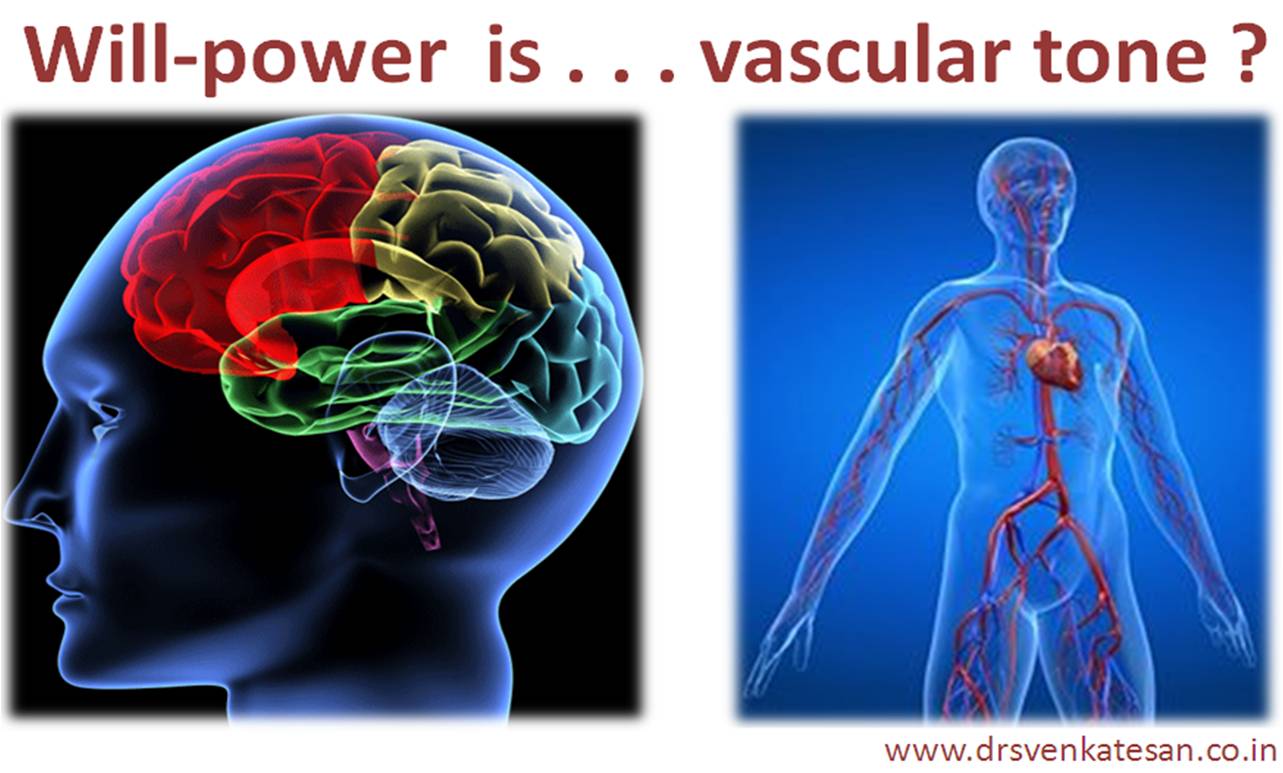
It doesn’t require great brains  to realise  vascular  and neural system are  intimately linked  . We know today,  NCS  is primarily a neural phenomenon  hence the  mental status has a  dominant  control over the vascular system especially at times of stress .

The confusion between classical  NCS and psychogenic  / situational  syncope can be largely avoided  , if  only  we call these entities  as simply neurogenic / neural syncope (NS ) ( Omitting the word cardiac is helpful ,   as cardiac axis is not vital  here  ? Non existent  )

Clarity is still  elusive  in defining the  trigger  and afferent limb for the NCS  , fortunately  the final common  efferent pathway that makes the patient fall is indisputably   vagal  !   .  Medullary  vagal nucleus  though fires independently  , also gets  powerful central  parasympathetic flow  from  cortical areas  . Paradoxically ,   controlling sympathetic outflow (Anxiety ) is often an easier  way to reduce parasympathetic flow. This is referred  to as competitive , accentuated  antagonism.

One can prevent recurrent  syncope  by vigorous  mind  control at times of  extreme stress. This is  confirmed  indirectly , by the fact  reassurance is the key to successful  management  in vast majority of  patients with NCS .We learnt this  simple fact  after trying exotic methods like DDDR pacing  and so on .

Final message

Power of  the mind can never be under estimated even in cardio- vascular hemodynamics .  When  pathologically high,   it can spike the blood pressure and break  few vessels in brain , while  if it  is inappropriately  low ,  may induce a syncope or result in persistent  hypo-tension .

Let us learn to use  our  mind over  body  properly .Yogis do it style  and live for 100 years !

Reference

http://europace.oxfordjournals.org/content/12/4/567.full.pdf+html

http://europace.oxfordjournals.org/content/12/4/466.full.pdf+html


Iam surprised why this post has been looked so negative by the readees. Almost all  rated it  as very poor.

Iam still pondering over it. Realised to lable patients as weak minded could be one of the reasons.

I think what I wanted to convey was there is link between mind and vascular system.

Please let me what is seen as offensive, let me learn and correct in future.


Read Full Post »

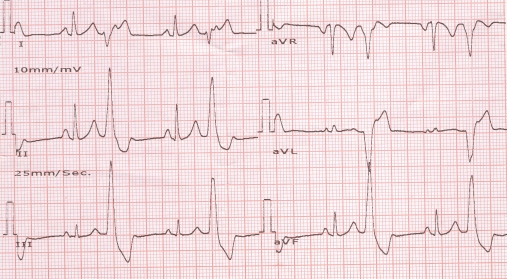
VPDs are the most common arrhythmia  that  confront  us  in  cardiology clinics .While  it can be a totally  benign   manifestation in some  ,  it may signify a sinister condition in others. ECG  is the easiest  and surest way to identify VPD.However  a shrewd echocardiographer can detect the VPDs while imaging the heart.It is often missed if one do not concentrate on the mitral valve motion.

Note :The VPD convert the typical M pattern into a inverted U pattern in mitral valve.

One of the important hemodynamic side-effect of VPD is intermittent mitral regurgitation.

Effect of VPD on mitral valve opening .

By  conventional thinking   VPDs  are expected   to impact  more on the  mitral  valve closure than it’s  opening .In reality it has indirect influence on mitral valve  opening as well. The retrograde  conduction(VA conduction) of the VPD determine the timing of atrial contraction and hence the   mitral valve opening. If the VPD gets blocked retrogradely  within AV node , the normal sinus impulse will activate the atria in an antegrade fashion .Note ,  he atrial activity  occur randomly when multiple VPDs occur.This makes the cardiac cycle too complex to assess especially the diastole. (In fact true  physiological diastole  may  not occur here !)

If  the mitral valve opening  is interfered by a   VPD  (Early diastole is  the  favorite time  for VPDs to  appear  !  )   .When it occurs the AML is    suddenly pushed  upon superiorly  by the premature ventricular activity and hence resets the  mechanical diastole. Please note electrical resetting of atrium is different from mechanical resetting.

It is also possible atria and ventricle contract simultaneously .This is the time , a cannon wave  may occur inside LA .VPDs can result in pulmonary venous canons and may even elevate pulmonary venous pressure   if  this  occurs repetitively .

Another possibility  is ,  VPDs  may not initiate a ventricular  contraction at all .It may be  simply  be an electrical event. That’s why  we changed the name of extra systole  and premature contraction into just   premature depolarisations.

Why is it important to know about M Mode motion of VPDs

Cardiologists  continue to  engage wide qrs  tachycardias   in the  wrong side  of their   brain for many  decades .The ECG debate about wide qrs tachycardia  is expected to  continue  for generations . !  Few smart cardiologists would  rapidly put  the echo probe  over the mitral valve and able to  differentiate  instantly a VT form SVT   with fair  degree of accuracy.

Detection  of regular M shaped mitral AML  will exclude a VT with a high degree of precision .(AV dissociation by echo )*

Even  presence of trivial  MR*  (More often diastolic )   which occur  irregularly  will  definitely indicate it is VT . SVT  hemodynamically   can not result in this  MR is gives us evidence for AV dissociation

* No reference for these observed indices in our lab. (Class 1 Level C expert opinion(  No one calls me as expert though ! )

What is the mechanism  of VPD induced  mitral regurgitation ?

It is well-known VPDs can cause   mitral regurgitation .Not every VPD cause MR.

  • The timing is important .
  • It can be  either systolic or diastolic MR .
  • If VPD occur in early diastole (After the T wave , the MR jet  will collide with  diastolic mitral flow. )
  • Paradoxical septal motion induced by VPDs can alter the pap muscle alignment transiently and result in MR
  • We dot not know how a LV apical VPD  differ from RVOT  VPD in the genesis of MR.
  • Logic would suggest RVOT  VPDs are unlikely to result in MR as there is  a time lag for the impulse to reach the LV base

What is  the effect of  VPD and Aortic valve opening ?

While  every VPD promptly  hits the mitral valve ,  aortic valve may or may not open with VPDs .Again timing and focus of VPD could be  important.This is the reason during  multiple  VPDs  only few open the aortic valve , that  explains  pulse deficit. (The so called missed beat )

Final message

Anterior mitral leaflet (AML) is the most mobile structure  of  the heart . Hence ,  it is not surprising to note  sudden unexpected ventricular contraction will  have maximum impact on this valve .

When VPDs occur in clusters or at random it has a complex effect on the mitral valve motion. This is responsible for  palpitation , minimal mitral regurgitation and rarely trouble some pulmonary venous cannons and raise in pulmonary venous pressure .

Careful analysis of  AML motion can give us useful clues to differentiate VT from SVT during wide  qrs tachycardia

Read Full Post »

Murmur of Tetrology of  Fallot is generated at the level of

  1. VSD
  2. RVOT
  3. Aortic root
  4. Any of the above

Answer :   RVOT.

RVOT is the classical site of TOF  murmur , but  there is  a  rider . The murmur of TOF is  inversely proportional to the degree of RVOT obstruction. (Contrary to VPS with intact IVS) .In severe TOF especially during spells the murmur attenuate dramatically and may disappear altogether. Hence a silent and quiet heart do not necessarily  indicate  a mild form of TOF .

Other possibilities also  exist.

  • The VSD in TOF is  large and do not restrict  blood flow on either direction . Rarely  restrictive VSD can generate a murmur across VSD.
  • Aortic flow is increased in all severe cases of TOF ( Highest in pulmonary atresia and VSD)   Hence there is always a possibility of a soft systolic flow murmur across Aortic valve .
  • Other rare  cause for systolic murmur is due to  prolapse of   tricuspid  valve  that occludes the VSD  potentially causing  TR  and in the  process may  convert the  VSD  into restrictive type.
  • One more cause for  systolic murmur is sub Infundibular anomalous  muscle bundles criss crossing the RV body .
  • Peripheral pulmoanry arterial stenosis is recognised cause for distant faint systolic murmur.
  • Diastolic murmurs can also occur in TOF . Absent pulmonary valve and aortic regurgitation can result  in diastolic murmurs .

Question for analysis

What happens to TOF murmur during squatting  ?

Read Full Post »

Mechanism of chest pain in mitral valve prolapse  include

  1. Mitral valve  has pain fibers , the myxomatous degeneration  of the valve tissue generates pain .* (Not much evidence )
  2. Mitral valve stress, strain ,  stretch and bending.
  3. Mechanical stretch  of papillary muscle or LV free wall (dimple ?  ) as the mitral valve prolapse into LA.
  4. It is a central pain perception disorder .Panicky and anxiety reactions included
  5. It is not chest pain  at all it is simply a feeling of palpitation .
  6. Associated ischemic  heart disease

The commonest mechanisms  are   response  4 and 5 .

The evidence  lies in the fact ,  many of  these people  begin to complain of chest pain only after being aware this problem. MVPS is  often a  fancy entity created by cardiologists  which  unfortunately has  labeled  many of the normal  general population as cardiac patients. Barlow who described this entity  decades ago  would have never imagined  it  would be  so popular and subjected to mis-use . We have proposed a solution for this . The diagnosis of MVPS shall not be mentioned unless it is obvious  and fulfill a strict criteria . The commonest error we make is  an elongated , redundant , hyper mobile mitral leaflet   at   as  MVPS.

It is expected  ,  true MVPS must have all of the following  three criteria

  • Thickened leaflets
  • Clear prolapse of  at least one leaflet in long axis view beyond the plane  of  mitral annulus
  • At least some degree of mitral  regurgitation must be present

Read Full Post »

A middle-aged obese man was referred  to me  for  an emergency  echocardiography

The patient was unable to lie  either supine or left lateral  . He could lie down only  right lateral posture  that too for a minute .An ultra fast echo gram was completed . It  was  entirely  normal . His ECG was also normal.

When I  asked for x ray there was a surprise

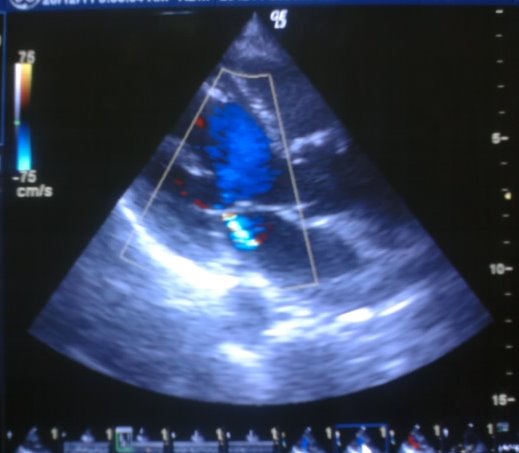
Note the shrunken thoracic space  on both sides .The  fundus of stomach is  almost fighting for place with left ventricle in the thoracic cavity .

No wonder he is severely orthopnic  (But fairly comfortable on erect posture )

He has a distended abdomen .He is  now waiting for a GE consult. His other complaint is belching   . Is that some form of gastric obstruction ?

I’m posting this image to re-emphasise the  classical  teachings in medicine .

Human body is  a highly integrated  biological  system .We in the name of modern science  has  disintegrated in to  multi organ entity.

This patient was labeled as acute pulmonary edema and the treatment was about to be started.

Here is a patient  with dyspnea and orthopnea  entirely  due to a non-pulmonary and non- cardiac cause !

                                                        All youngsters  . . .  always be alert  . Clinical medicine  is  notorious  for  throwing   surprises , especially when you least expect it !

Read Full Post »

What is a coronary risk factor ?

Right from the days of  Framingham study we have conferred a privileged   place   to  few  cardiac  risk factors.

they are

  • Diabetes mellites
  • Hypertension
  • Hyperlipidemia
  • Smoking
  • Obesity

They are referred to as conventional risk factors .  What is the convention ?  Do they deserve  the  cult  status they enjoy ?

Today we also have a  cluster  of non conventional risk factors like , Lip (a) , low HDL, Homocystenemia , CRP , Apo B etc . Currently ,  in any large cohort of CAD  up to 30 %  do not exhibit even a single conventional risk factor  . This is a huge number .Hence   we tend to give more importance to genetic make up and mental stress etc  .The search is still  on for newer risk factors .

Why some research  findings are difficult to comprehend ?

It is because we are yet to  decode the  intricacies  of  human biology  fully . Our knowledge is so superficial  , as we chase  a pseudo scientific  proofs   for  a  presumed  hypothesis.  The classical example is the concept called good cholesterol (HDL) and reverse cholesterol transport which  is never based on solid scientific foundations.

Take the sorry story of  Torcetrapib

Many consider  low HDL  as an independent CAD risk factor to be a  myth  or else why should we miserably fail  to have any positive effect of  increasing the HDL  levels by pharmacological means . (One argument is physiological  and natural elevation of  HDL  would still be beneficial  . But the issue is still wrapped in a statistical mystery

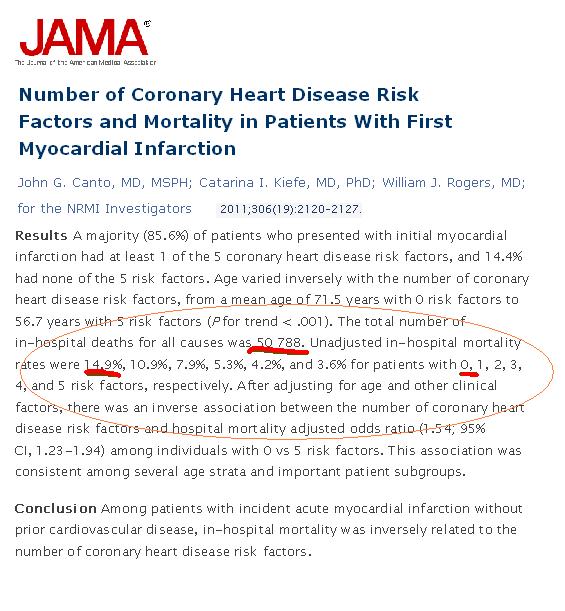
This  paper from  JAMA   adds further insight into our ignorance about  the  genesis of CAD .

The data is from  NRMI registry.

The statistics  reveal  a stunning fact .In  the overall CAD cohort ,  patients  with no major risk factors  experience  highest mortality and the ones with maximum   risk factors have least mortality ! What a shocker of a study ?

http://jama.ama-assn.org/content/306/19/2120

This  paper  would bring  jitters to the population ,  but in the real sense it sends an important message .

A significant population develop CAD without any  known risk factors.(14.5% in NRMI registry )

If a person develops  a CAD without any major risk factor  ,  it seems  . . . it is not at all a  good news   !  rather we need to introspect , why  without any risk factor he or she has suffered CAD ,

One inference is  their vascular system is more vulnerable ! Some hidden factors are operating . How to manage such  patients  without any target to intervene ?   A diabetic dyslipidemic smoker has a   definite  therapeutic target  .

What about these   lesser  humans  who   develop   CAD without any known risk factors  ? They  tend to suffer more !

Is  CAD  due to DM/SHT  is better than  others  ? This study seems to say so ” Known devils are better than unknown ones ”

Final message

Unlearning is an   “essential and fundamental”  component of   scientific learning .  In this progressive scientific world , this applies  most to   medical profession  than any other field !

Read Full Post »

Exertion and  acute coronary syndrome (ACS) has a tricky relationship. On the one  hand, it  would  appear they are not related at all  as only a miniscule of patients   give history of recent severe exertion prior to ACS   , while  few others  tell us  a clear- tale of   unaccustomed  exertion ,  just prior to the onset of chest pain.

Here is case history  of a  man  who was rushed to our  ER from  Madras central station ( Our hospital is located just opposite to it !  )

A  48 year bank officer  was  about to board  a train to Patna   . It was a rainy  November  evening ,  his car got struck in traffic .He along with  his family members were rushing to catch the rain  .He had  to run fast with his heavy luggage  .Even as they boarded  the train successfully and occupied their  seats  ,   within minutes  he  developed intense chest pain and sweating . The distressed family de-boarded the train and was rushed to our hospital  . Yes  you guessed it right   . . . he  was showing an extensive ST elevation  in anterior leads on arrival.

So what  has  happened ?  What is the coronary hemo-dynamics during heavy unusual physical exertion ?

The above patient did  not have any obvious risk factor . He vaguely recalled ,   one if his family doctors telling him ,  he had borderline high BP and was never prescribed a  drug . His wife told us  he has been a emotionally  liable individual .

It is well  known  , sudden exertion in an  emotional  milieu   would  result  in  intense  adrenergic drive  . (Here the emotion was anxiety/ fear of missing the train )  Adrenergic drive was  amplified with the  isometric exercise (heavy suitcases ) ,   shoots the intra  coronary blood pressure (normal 45-60mmhg)  into  dangerous spikes . (By the way , what happened to  coronary auto regulation  ?) . We also  realise simple raise  of  intra coronary pressure alone is not sufficient  .These patient  will  harbor at least some degree of  atherosclerosis  which face a  shearing stress and give way /tear  or fissure resulting in  a sudden substrate for intra coronary  thrombosis.  Some of them may manifest  only  as coronary vasospasm  .When sustained  it can also result in a full-blown acute coronary syndrome.

The concept of trigger vs risk factor

One should remember  both physical and mental exertion   act  mainly as a  trigger (They are not  major risk factors  like DM/HT/Smoking /Dyslipedemia) . All that is required ,  for  this   vulnerable population  to fire  is a trigger.  Physical exertion ( especially  isometric)  when  associated with  emotionally charged  brain  sends a  perfect  invitation  for an impending  ACS !

Another example  for untoward  effects of  exertion

A middle aged man who had  impaired glucose intolerance and dyslipdemia  was referred for an  EST.He did complete  12 minutes of  Bruce  protocol  comfortably . But  on the same day evening  ,  he felt  uneasy  and came to our ER ,   only to record a full blown STEMI .

These events may be rare but if properly understood   these  patients can teach  us  few   lessons in the genesis of ACS and coronary hemodynamics .

Special  issues  about   exertion in post PCI patients

One of the purpose of doing  PCI  for CAD  is to improve the  functional  capacity  (and possibly to prevent future ACS) . Paradoxically ,  we  continue  to have  some apprehension about subjecting post PCI  patients  into early stress testing . (I remember reading some guidelines that advice us to  avoid stress testing strictly for 6 months post PCI  ! Is it true ?)

If a  cardioloigst  is  not too comfortable  putting their  patients  into a  treadmill  post PCI ,  it only implies they doubt their efficacy ! It   would  also imply  these  patients   should  not be allowed to exert to their full capacity in day to day  life events as well .(Attention  cardiologists   . . . Yeh  . . . we have a  fundematal problem on our hand !)

Read Full Post »

« Newer Posts - Older Posts »