Feeds:
Posts
Comments

Archive for the ‘Cardiology -Interventional -PCI’ Category

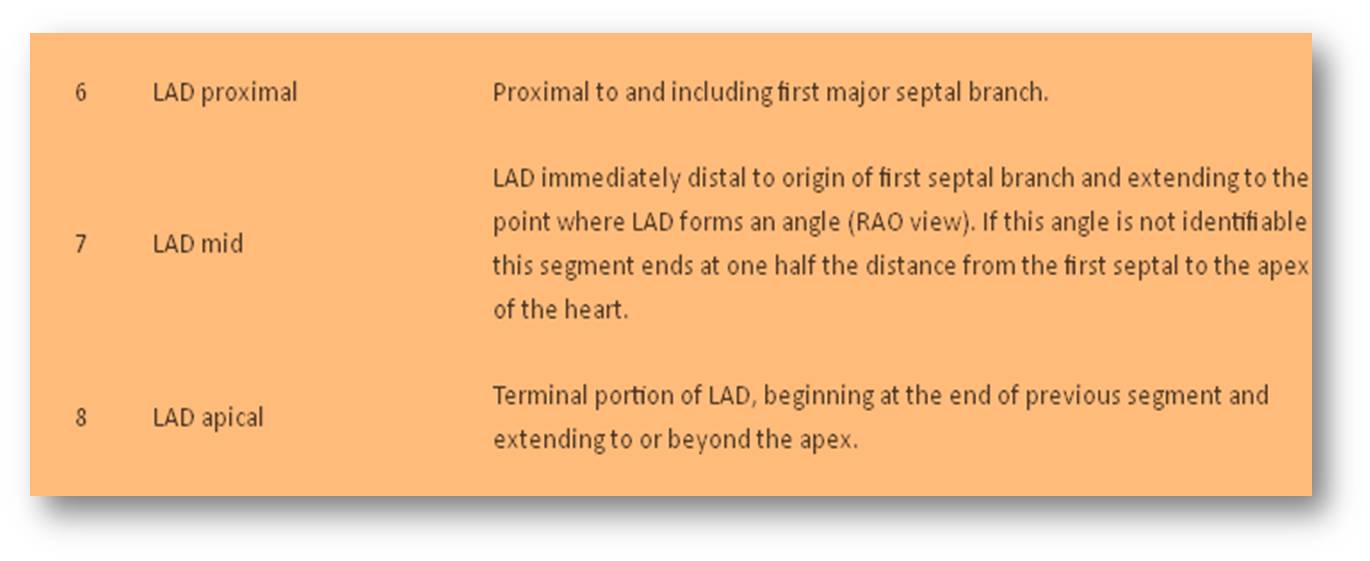
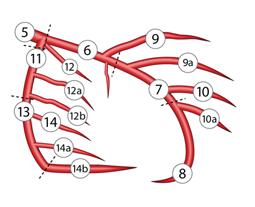
Proximal LAD lesions require  specific and early Intervention.Hence we need to know what exactly  we mean by proximal LAD disease.Unfortunately , it means different things to different cardiologists .There is no dispute regarding the  origin of  LAD since it begins with bifurcation point  .The problem comes with  this question !

Up to what distance LAD can be termed as proximal ?

  1. Bifurcation  to   “First   diagonal” of  any size
  2. Bifurcation  to   “First Major diagonal”
  3. Bifurcation to     “First septal”  of any size
  4. Bifurcation to    “First  major septal”
  5. Bifurcation  to   “Any major  first branch ” (Either septal or diagonal )

Answer : I think  4 is the correct answer . But many believe  5 can be correct as well !

Why  there is  confusion in the  definition of proximal LAD ?

This is because the first branch of LAD itself is not a  constant one  . It can either be a septal  or  uncommonly  a diagonal.

It should be noted , the septal and  the diagonal  branches  neither respect   seniority  nor follow a  hierarchy .The first diagonal may be diminutive while the   second or third diagonal may be major one  and vice versa .Further  ,  there can be a trade of  in length and caliber of   septal and diagonal branches  .This  phenomenon is also  common between  diagonals  and   OMs  . All these confound the picture .

Cardiologists even though they are  primarily physicians they are  pro-anatomy  like surgeons when it comes to coronary interventions .

                                  In the strict sense ,  we  need to differentiate a  lesion  from being   physiologically proximal  or anatomically proximal  !

Is there a proximal LAD equivalent ?

There are three  situations  this can occur .

  • Some times a lesion  by  definition may not fit in  as proximal  LAD  but physiologically  few major diagonals  will arise after the lesion.
  • Other situation is , LAD lesion may be  mid or distal but  a major first  diagonal may be diseased  , making it  equivalent  to proximal LAD in terms of physiology.
  • A mid LAD  with a large OM lesion which is running in the D1  territory

Final message

It is ironical  millions of cardiology interventions happen  for proximal  LAD lesions  every year without  even  proper understanding of what we mean by  it ! Youngsters are argued to ponder  over this issue whenever  they indulge in  such cases for revascularisation!

Reference

Text books differ in their definition about proximal LAD. Currently , the  SYNTAX  scoring system  has defined the coronary segments in a practical way.

http://www.syntaxscore.com/index.php?option=com_content&view=category&layout=blog&id=1&Itemid=32

Definition from SYNTAX

Read Full Post »

If  we   think we have  unraveled  all the  mysteries  of   human coronary  blood flow   we are  sadly  mistaken . Most cardiac physicians spend  their  prime life  in opening the  obstructed coronary arteries  playing  a role of coronary plumber.

Like any plumber ,  it is not going to be  one time job and   our patients  would  have to hire their  services  periodically  . Many times  it turns  out to  be a 108/  911 call  as well !

Unfortunately , hem0dynamics  of  coronary blood flow  do not follow  the principle of  water flowing across  a domestic  pipeline.The most dramatic   difference  between  the  coronary blood flow and   water pipe  is ,   in the later  ,   as  the water is being ferried   across the house  ,   neither the building   nor the   pipe    contracts    (Unfortunately all our understanding , derivations and research were  based on simple physical  modules  of  hydrodynamics in a static  delivery  system )

Pressure flow relations especially in biological system is  not  simple. Since  our  foundations on principles of   blood flow  is based on this simplistic model  ,  every assumption  could be proven  wrong. This  is what  is happening now . Nothing seems to work  in a  learnt  manner.

A patient  with  100% occlusion  walks comfortably  without damaging his muscle.While an other patient  would  develop cardiomyopathy even if the occlusion is  gradual   and  incomplete  ! Hemodynamic  logic tells us blood flows from high pressure to lower pressure  zones  like a water fall !

But coronary waterfall is not a simple and smooth affair. It is not a free fall  ,  even as the water falls there are  pumpy  interruptions .When these  pumpy ride  occur  even in physiology one can imagine  the pathological states  , when  the coronary  artery is blocked ,  the myocardium is  scarred and the systemic blood pressure fluctuates .

While every  organ welcomes   the systole  ,  as they are fed  with  blood  during this time of cardiac cycle  . Heart  is only organ which sacrifices  its own blood flow during this phase  as the systolic contraction  interrupts the blood flow .

Determinants of coronary blood flow

What we learnt over the years has been too simplistic. It is not the  patency of vascular  system that matters. The coronary micro vasculature, the metabolic demand, the neuro  humoral regulation etc.  For  most cardiologists  the epicardial  patency   or stenosis remains the only relevant  issue

The reality is  much complex  to comprehend

  1. The coronary perfusion pressure
  2. Coronary flow reserve
  3. Coronary wave forms
  4. Sub endocardial vs subepicardial flow ratio
  5. Effect LVH on myocardial flow
  6. Coronary venous tone and arterial ischemia.

Now,  we have an entirely new concept which proposes (Rather proven concept !)   the  integrity of  myocardial contraction and relaxation on the coronary blood flow. This land mark paper in circulation has identified  six wave forms of coronary blood flow This include 4 positive  waves and two negative waves

Questions need to be answered 

During diastole  myocardium relaxes . Only if  the myocardium  relax   optimally  the compressive effect of systole  on coronary  coronary   micro vasculature is reversed  ,  intra coronary resistance  falls so that coronary blood flow can occur smoothly. We do not know  whether diastolic dysfunction would  affect the diastolic coronary filling waves  jeopardizing the coronary flow.

Myocardial viability is important for one more reason  , in the distribution  of   coronary blood flow .A dysfunctional muscle can not receive  and  inject  the blood  deep into  sub  endocardium (Note this becomes  important  when  revascularising   severely  dysfunctional segment )

Does myocardium has a  calf muscle analogy   and  behave like  a  powerful  intramuscular perfusing pump .

A breakthrough concept  from Davies et all in circulation .  These are not new ( Buck -Berg  ?)thought  about this decades ago .  The interest is rekindled in recent years  ,  as  complex angioplasties  following myocardial infarctions  failed  to improve outcome and relive symptoms in many .

During primary PCI ,  no- reflow  often  denotes a meaning  of  failed  PCI .The issue involved  is  hydrodynamics of intra myocardial  blood flow .The following  article partly  answers the  issue  underlying no re flow .http://circ.ahajournals.org/content/113/14/1721.full.pdf+html

Final message

Young  physicians  need to  spend  more time  in  basic  cardiac sciences . Lest, what  we  do  in cath lab blindly  will become a laughing stock  ! We have to go back to the golden years of  research in cardiac physiology  (1960 -1970s)  . Mastering coronary  angioplasty  may increase the blood  flow  up to the  myocardium ,  but pushing the blood beyond the muscle requires more sense  and effort .

A simple  hemodynamic  model based  on  physical  principles alone is a  greatest error we make in cardiac science . * Further, human heart muscle is not only influenced by the quantum of blood  it receives  but to the great extent the content of blood.The blood caries all the ill effects of  systemic diseases and  damage   the vessels and muscle .The interaction  between the  blood and  the muscle  is never  an issue in  the pure  physical labs .( Even animals misbehave !)

Read Full Post »

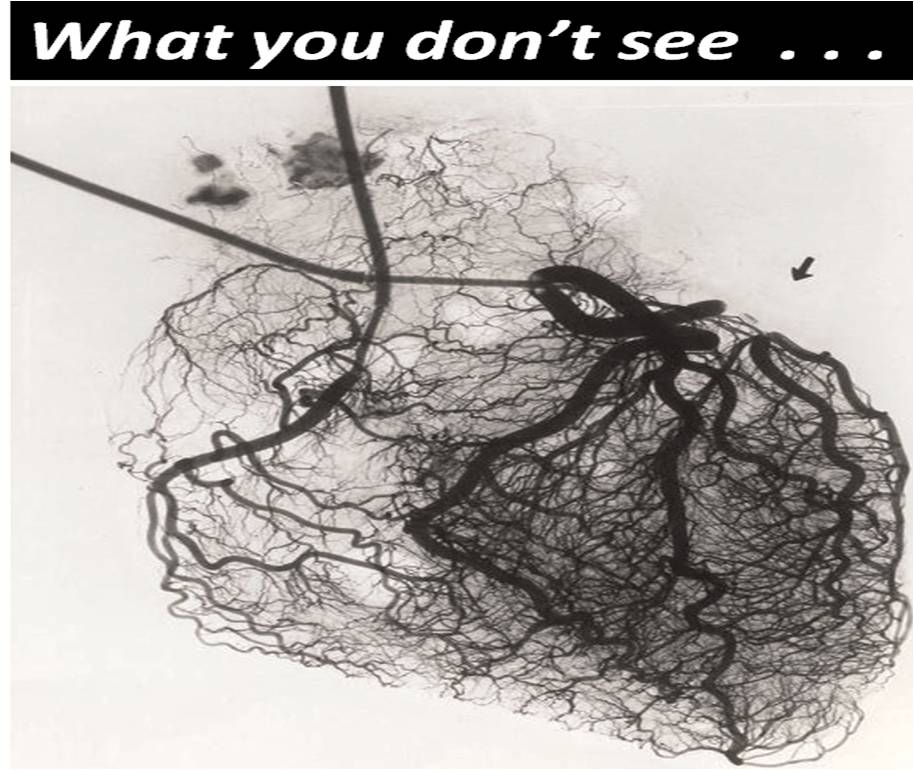
Human coronary circulation stands  unique among  others as it is a   life-sustaining circulation.It is  considered   a great  medical achievement   to visualise   the right and left coronary artery  system by coronary angiogram.  Actually  what we see is   only  a  fraction   of  the surface area  of  coronary circulation . The surface area of  epicardial coronary arteries   constitutes  less than 5 % of entire coronary vascular tree .

This  is the reason  normal coronary angiogram can never mean normal  coronary circulation !

This huge gap in our perception is the single important factor  that  explains the vagaries  of modern coronary care .

This also  make any coronary  scenario  a  reality .

“A patient with normal coronary angiogram getting a myocardial infarction the next day and a severe triple vessel disease living comfortably with medical management”

So ,  it is essentially a   false  sense of  scientific accomplishment   by the  cardiac scientists  at  least in the  of coronary circulatory physiology.

There are innumerable channels of micro vessels traversing across the heart, sharing , bridging , branching, penetrating  and  perfusing the muscle mass.They can be anatomicaly patent , physiologically non patent .They can be recruited by hemodynamic stress . It is also influenzed by  favirable growth milleu and hormonal and neural stimuli.

What determines the extent of these invisible circulation ?

and

An in vitro heart with special catheters showing the true extent of coronary circulation: Courtesy http://eurheartj.oxfordjournals.org/content/28/3/278.full.pdf+html

Why many cardiologists   do not give due credit  the   coronary collateral  circulation  ?

Right from the days  of  Levine in 1970s( Who made a seminal contribution  about coronary collateral)  the  utility value of  coronary  collateral  circulation   was  never able to convince the cardiology professionals .

It has been our traditional  teaching ( without much evidence of course  !) coronary collateral circulation  is not effective to support blood flow during exercise . This fact has been  disproved  many times . Coronary collateral circulation was indeed useful in limiting damage in ACS and  relieve symptoms in stable angina.It helps  in reverse remodeling and provided electrical stabilty as well in post MI population.

Still  the concept  was  alienated  and   made   totally irrelevant  in the interventional  era  . Many   cardiologists  found well-developed collateral’s as an interference to their expertise and ego since it has a potential to alter the indication of PCI.They  continue to have  strong  scientific conviction (Pseudo ?)   that man made collaterals must always been superior to God made collaterals !

Whenever  some credible  reports emerge about  collateral circulation   being   equivalent to  revascularisation procedure , these concepts were  prematurely buried for some reason.

In the last decade there was a concern  about  performing  PCI in patients with well-developed collaterals  .The argument was , they tend to develop early stent occlusion and restenosis . It  was a genuine  query  raised by few thought leaders in the field as  collateralised vessels  suffer from  low flow states  after PCI ,   if the pre -existing collateral continue to function.

But then , few  studies countered this  , and   said PCI  is safe and  in fact may  fares well   in  patients  with  extensive collaterals .

In these  studies  interventionist’s  argument looked  amusing !  as they  seem to  define a  successful  PCI  as  not only to open the occluded vessel  but also  make sure to close  all functioning  collaterals  .(What a  a pity for our natural biological  angiogenic forces which had  worked  and  grown meticulously for months!)

Cardiac science in the current format,  makes   the future look  bleak for coronary a collateral circulation .With  early PCI  becoming a norm we will never ever allow the natural collaterals to  grow  ,  and even the  established collaterals  will have to face a stiff   fight  for survival  with  sophisticated coronary interventions .

Competing interest in the filed of  coronary collateral   research

While the basic scientists want  to  grow collaterals with angiogenesis ,  stem cells etc  interventionists   continue to  indulge in rampant angioplasties which  will suppress  collateral growth.

This implies we will struggle to  establish  the true  importance of  coronary collateral circulation .

Final message

Can it be an  effective form of revascularisation  ? 

My personal  inference  is   coronary collateral  circulation  “would and should”  have  a definite role  in at- least  some of the subsets  with chronic coronary  syndromes. If we think otherwise . . .    it’s against the principle of  natural biological science .

A good  collateral   system with optimal medical management  can save not only our  patient’s  lives but also  their hard earned currencies !

Reference

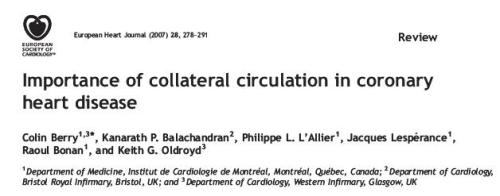
Here is a rare article in European heart   journal that discuses coronary collateral circulation  . Let us welcome such wonderful  reviews which keep the interest alive on the filed.

http://eurheartj.oxfordjournals.org/content/28/3/278.full.pdf+html

Read Full Post »

Instent restenosis is a  common problem.

Diffuse long segment instent restenosis is somewhat rare.

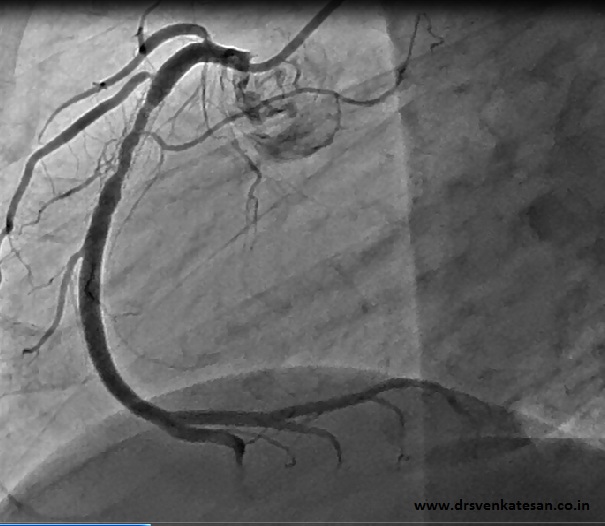
We  encountered one such patient who had diffuse instent restenosis of RCA.

ISR is ssupposed to be rare in DES, but here ISR occured with a Cypher stent  one year following implantation

He presented with angina which  was relieved  by plain baloon angioplasty.

 link to a  related article in  this  site  regarding the mangementof ISR.

Read Full Post »

We know primary PCI is a race against time  both for the  patient  and his  physician.

What is the upper limit for this unique race where the stakes  are high   and it involves  human lives  and  big  corporate  warfares  ?

  1. 6 hours
  2. 12 hours
  3. 24 hours
  4. 36 hours
  5. 54 hours
  6. Time does not matter . You can do a PCI as late as possible as long as  patient has sufficient insurance coverage and we have the expertise

Answer :

Please note there is  only one exception  . Cardiogenic  shock has been given a extended  lease of time window (Which can be technically up to  54 hours ) . PCI can be performed   if the onset of shock  is   within 36 hours  of STEMI  and to be performed within  18 hours after the onset ! )

* Even though we  have a  well set criteria for re-perfusion which bans primary PCI to be performed after 12 hours , cardiologists have enough technicalities to overcome this hurdle and keep doing the futile pPCI well after 12hours.

How they are   able to indulge in these futilities   without  any ethical issue ?

The answer  is very simple. Instead of calling it as primary PCI they refer to it as delayed PCI or rescue PCI !  Strict time specific guidelines are only for primary PCI . By changing the terminologies they   make a mockery of the concept of time window which  is vital for any intervention for STEMI !

Read Full Post »

Success of primary PCI is defined by  different yardsticks  by  different  cardiologists  , in different  institutions !  But , for the patient and his family,  getting  discharged   alive with out symptoms is a huge  success !

They  do not bother  even if they are charged  Rs 3-4 lakh for their stay ,  as they  believe  surviving  a heart attack  is a God’s grace   rendered thorough the hands of  the doctor.

But we know  the real success lies elsewhere. Cardiologist’s   perception of   success of  pPCI   should be based on scientific concepts. Unfortunately many  physicians  continue to  think like  their patients  . This  tendency to get self gratification  with a patient’s  frame of  mind is  common  and  needs  introspection .

This is esepcailly  true for primary PCI . It came with big fanfare  a decade ago . Soon ,many cardiologists developed  a habit  of criticizing   the  practice thrombolysis for STEMI .If primary PCI is such a superior modality  every patient   should be prevented from significant  myocardial damage following  STEMI .

Primary PCI  may be the the most logical method  still , for reverting the STEMI process  . But “A properly performed  primary PCI  as a  concept ” lies  mainly  on paper ,  not  been  replicated in real world for various reasons.

Please remember , a successful primary PCI

  • Is  not restoring TIMI 3 flow  in IRA
  • Is not relieving  the  angina
  • Is not discharging a  patient in stable condition

Even if  . . .  we accomplish each one of the above  . . .   if   the patient  carries  home  anything  equal  to ,  or more than moderate LV dysfunction ,  primary PCI  has  deemed to have failed.

Final message

What is the reality  check ?  In one  of  the  preliminary analysis   out of 20 randomly selected  patients  who have undergone STEMI*   within 12 hours  , significant LV dysfunction  was present in  12  patients making it pPCI only 40 % successful   in real world  .( Which  would struggle to beat the outcome of  promptly administered fibrinolysis )

* Primary PCI done in state of the art institutes .

Read Full Post »

“STEMI is Acute MI” , and   “Acute MI is STEMI”  !   This is  how we  have been taught over the years.

But   STEMI can present in any one of  the following  odd ways

1. Posterior MI with ST depression in V1 to V3 ( Manytimes mistaken for unstable angina , and reperfusion not considered !)

2.Only with tall T waves (TEMI)

3. Left bundle branch block

4. Present as ventricular tachycardia. Untill VT  it is reverted ST elevation  will not  manifest.

5. When a  STEMI presents with  complete heart block   ST elevation may not manifest.

6.Atypical ECGs and subtle ECG changes are especially common in elderly, diabetic and in patients with LVH.

7. Finally,  it is often quoted in text books  acute MI occurs with normal ECG in up to 10 % . This is  a  high estimate .We belive acute MI with normal ECG is very rare presentation < 1% . That too in the very early stages of evolving MI.

As of now  only condition No  1 and 3 are approved  for  thrombolysis or PCI.  The unfortunate few who fall in other categories will continue to lose their muscle in the golden hour without any intervention  as the guidelines has not addressed these issues.

Read Full Post »

A patient with  chest pain   is being rushed   into the ER  of  a medium sized cardiac facility in an urban county of India .The fellow briefs the senior consultant cardiologist about the arrival of  this  extensive anterior  STEMI  over phone.  The  consultant  enquires  about the “symptom to door time” and  was little concerned  when the fellow said ” it is only  2 hours sir”  .The fellow was amused with the consultant’s  reaction.

The consultant arrived in 15 minutes  and  began  the all important  discussion with the  patient  and his spouse  .(Meanwhile tablet clopidogrel and Aspirin was  loaded  per orally . Note : Heparin is not given yet )

Cardiologist : It is a  massive heart attack . One of your coronary artery  got  blocked suddenly , I have to remove the block at the earliest . There are  two ways of doing it .  One is fibrinolysis which lyses the clot .It can open up  your vessel  , though incompletely but would prevent myocardial damage  at the earliest .

The other one is PCI ,  which if performed rapidly  will completely  open up the vessel in question , what  we call TIMI 3 flow ,  But it has to be done within one hour.

Patient : Which is better doctor for me ?

Cardiologist : My cath lab  logistics  does not allow me to do a  PCI within the stipulated  time ,   still  I wish  to perform   a primary angioplasty  as i am not a believer  in thrombolysis !

So , even though you are  eligible for both modes of re- perfusion, in the strict sense doing a  PCI  which will  ultimately be  delayed  beyond the recommended time window  is technically contraindicated “

(Please  be notified : Currently , if the delay is during the procedure due to some technical issues after starting the procedure  or if the delay is at  the patient   level in arranging the required finance or insurance clearance it can be condoned without any ethical issues )

Patients spouse : Doctor please save my  husband . You  start  the fibrinolysis  every minute is risky isn’t doctor , and do the PCI once its ready doctor .

No . . . Fibrinolysis  does not combine well with PCI  in fact it will worsen the situation .   Thats what FINNESSE  study says . We can do only one of them . . . not both .

The patient and spouse (Terribly confused  by now )

Cardiologist:  By the way , what is  your insurance limit  sir ?

Patients spouse : Its 4 lakhs

Cardiologist : OK , that should be suffice  90 out of 100 times . Any way keep another lakh ready in case I need IABP.
Patient : My pain is worsening doctor at least relieve  my pain till this debate  is over !

(A patient’s relative  browses his  i phone  and argues  the  cardiologist   to administer streptokinase at the earliest . Suddenly  the patient family lobbies for fibrinolytic mode  empowered by the i phone guy )

One of them shouts “Please doctor you do something either take him inside cath lab or  start a fibrinolyitc therapy ”

How did the cardiologist  fight his way through ? ( He gulps a cup of coffee and  starts a fresh discussion)


Cardiologist : 
I am sorry , you have come too early  for PCI .  Guidelines do not allow me to choose PCI in the first hour  as our  anticipated delay for PCI is more than 3 hours . I wish you arrived after  the 3 hour window .

“Of course you are on time for thrombolysis”  which  unfortunately I am against !

Now, I am going to wait ( You may think it is a waste of time i call it as patient preparation time )  .This waiting period incidentally  allows us to cross  three  hour  time  window ,  then the issue of not lysing  does n’t creep in at all . A PCI done after 3 hours is not a race against time , while a PCI done early is like  a power play in cricket .

I do not know whether this delay which is happening  right now –  Intentional /Unintentional,  Scientific / unscientific reasons  would  damage your heart or not !

Since you have an extensive MI , I earnestly believe  with all my wisdom and knowledge, you will do well with primary PCI  even if  i do it  little late .  Please allow me to violate the standard criteria in the interest of your heart .

Cardiologist : I wonder , if you had arrived little late we wouldn’t be discussing this terrible conversation at all .Your myocardium  will also feel thrilled for getting a better mode of re-perfusion. You put me in an awkward situation by coming early !

Patient : But  . . . doctor every one  tells me ,  one should reach the hospital  after a heart attack  at the earliest  is it not ?   Please believe me doctor ,  I  made  extraordinary  efforts to  arrive early to your hospital , but you have put me on hold doctor !

Cardiologist :I agree  . . . but you won’t understand the modern jargons  in  interventional  cardiology ,  some times (Or is  it many times !) we will be doing the diagonally opposite to what  is   preached  in text books  .  Both intentional and unintentional delays are common  in the emergency cardiac  care . Do not bother about it   . . . science will take care of it !

Patient : You mean  . . . you are going to waste the golden hour in STEMI by simply arranging for cath lab staffs and machinery .

Cardiologist : You got the point right ! Just sit back enjoy the  flight !

Patient : Your wish is my wish doctor . Please handle with care doc !

* Please note this is an imaginary conversation ( Most often happens in silent mode !) in many of the cath labs which do not have 24 hour service. In a country  with  100 crore population like India ,  less than a dozen cathlabs  work round the clock . Guess  how often such a  situation would come in day to  day cardiology practice.


Read Full Post »
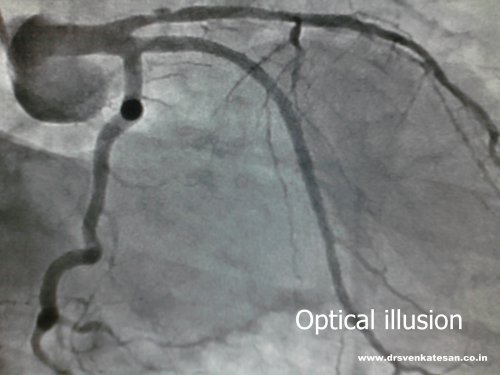
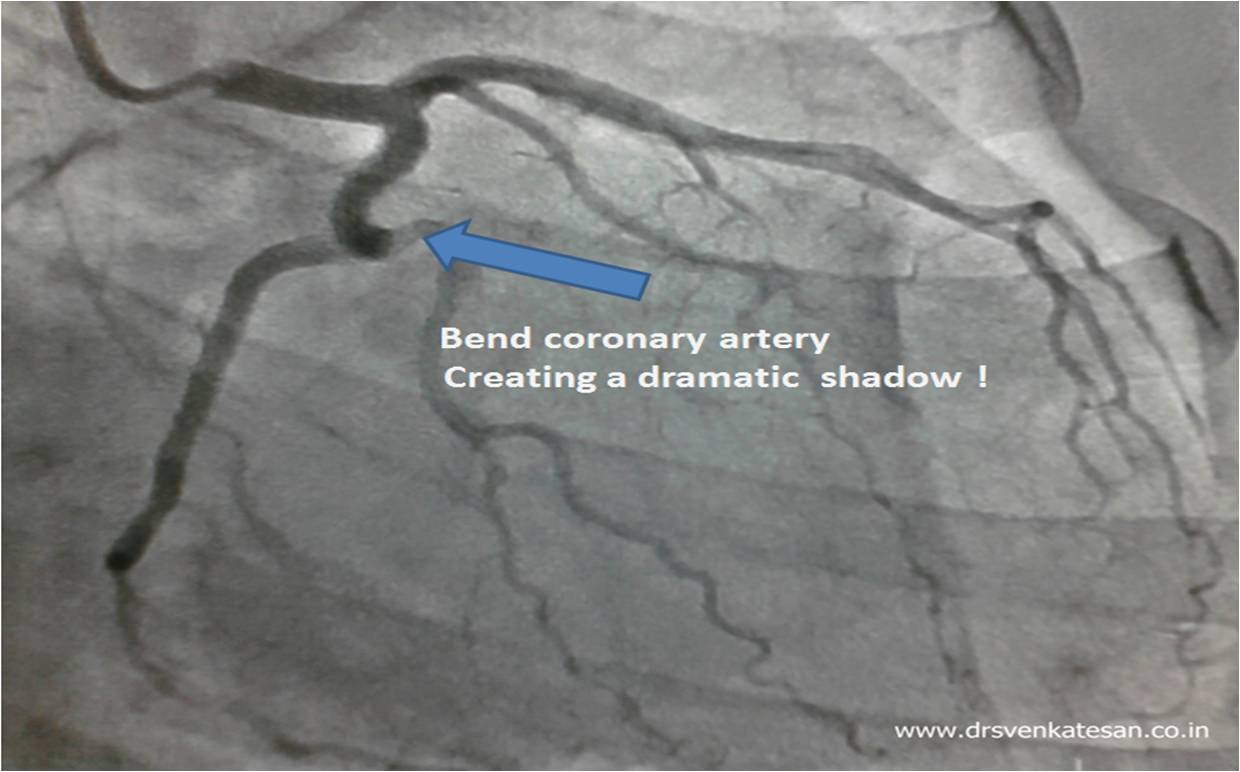
Coronary angiogram is  a videographic snap shot of  moving targets. Coronary arteries are dynamic  , tortuous  vessels of varying dimensions .Normal vessels  sometimes appear as an  illusion of lesions and tight lesions may appear innocuous at times. So the  rule is never rely on a single view before reporting.

This is an  angiogram of a patient , which  one of my fellows referred to as  “a black pearl  inside the LCX !

The same patient,s angiogram showing  origin of OM1

Final message

Beware of radiological artifacts in various angiograms. It can lead to erroneous interpretation and interventions !

Read Full Post »

It is a well known anatomical fact  the grooves in the heart

  • Right and left  Atrio ventricular grooves.
  • Anterior  and posterior  inter-ventricular   grooves.

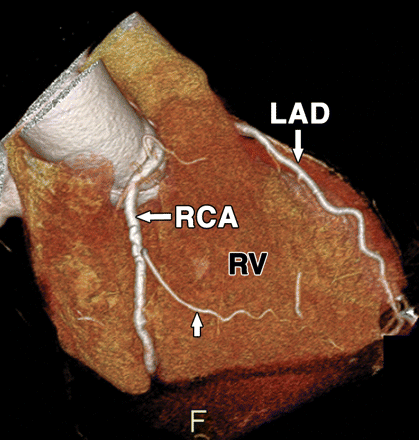
sincerely carry the  main stem of right and left coronary artery . It can be compared to a train running   with dedication   on its track .

Image source : AJR June 2007 vol. 188 no. 6 1665-1674

But God has not  enforced  strict rules   especially in human biology . The coronary arteries in few individuals   wander away  from the grooves.

This is very common  for Left circumflex  , followed by  RCA.  It is  relatively  for LAD to jump out of  its groove.(Except in rare Dual LAD system)

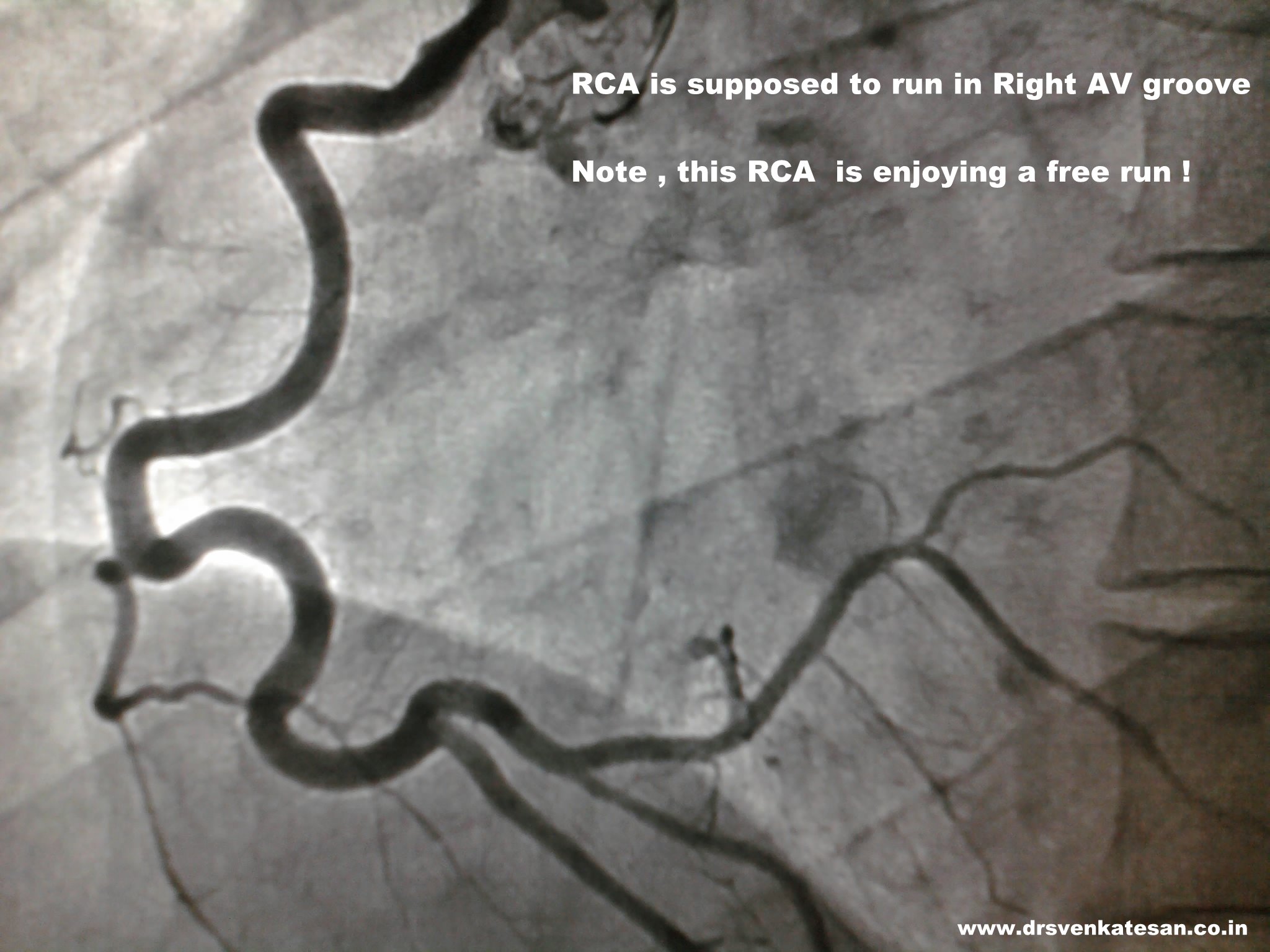
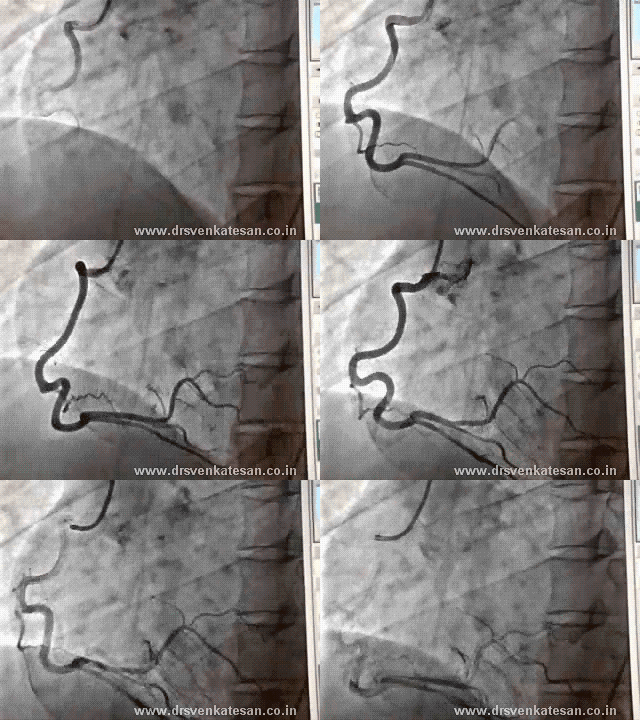
Here is a right coronary artery which enjoys its journey outside the right AV groove for   a good distance , only  rejoin the  groove at the crux.

Importance of  “Non- Grooval” coronary artery

It is true large diagonals and OMs ,ramus do   run without any  special tracks  .  But ,  it becomes ab  entirely different issue  when  the main stem of RCA,LCX or LAD itself   derail from its groove. There is no  fixing agents or vascular sheaths  that keep the coronary arteries within the groove. Surgeons  tell us circumflex is  often absent in its groove.

Note the stress and strain on the mid RCA : What will happen if that segemnt requires a stent ?

Hemodynamic implication of such free flowing non grooval coronary arteries is not been studied much .It is also observed  these   coronary  arteries   show  a  tortuous  course.This is  important   for  the  interventionist  as stenting  these segments is fraught with excess mobility and  tortuosity induced crimping .

Final message

The prevalence  of such drifting coronary arteries from its  groove  can be much more prevalent than we would  believe . The anatomical and physiological , surgical  issues need to be explored.

Read Full Post »

« Newer Posts - Older Posts »