Feeds:
Posts
Comments

Archive for the ‘Cardiology -unresolved questions’ Category

                                    Competence of mitral valve is vital  for proper hemodynamics of  heart .A trivial mitral regurgitation ,is observed in nearly 10-20% of normal population detected by doppler echocardiograpgy .This is other wise clinically insignificant. In fact , it is expected  , the sonographers do not report this,  as it might increase the patient anxiety.

Can a mildly incompetent mitral valve be a hemodynamic advantage ?

Left ventricle , physiologically can have only one exit, namely LVOT and aortic valve.If there is normal  impedance , at this level (LV after load )  it  is refered to as  physiological .In disease states , as in cardiac failure there is raised after load or LV wall stress.this makes the LV struggle to pump blood into aorta.The more the dilatation the more the wall stress (Laplace law). more the wall stress more the after load.

 The  main principle of management of cardiac failure  for decades  has been promoting  LV inotropism .Now we have realised this is fundamentally a wrong concept, (Except in acute heart failure). Hence the main option available now is to reduce the after load , ACEI do that most effectively and proven to improve survival.

What is the effect of  trivial or mild MR on LV after load  ?

It is a hemodynamic fact for MR  to increase LV contractility  and Dp/Dt  due to a relative reduction of after load.

In patients with cardiac failure , even a mild improvement in LV contractility can give a  symptomatic improvement .


09tmr1

Can mitral valve act as controlled safety valve allowing only a trivial or mild MR ?

This may be difficult . But it happens naturally in many of our patents in cardiac failure .

Probably , these are same  patients who come under the 20% incidence of physiological  doppler  MR .Other group could  form the  functional MR*

We have found, patients with  DCM  with mild mitral regurgitation tolerate excercise better than patients who have very competent and rigid mitral valve.It is presumed a mitral valve which gives in a little bit , decompresses the LV with a symptomatic benefit.But if the MR , is occurs in an eccentric path or it results in significant volume burden the potential advantage becomes a liability.

Related issues

*Functional mitral regurgitation. Functional MR is said to occur , when patients with cardiac failure, and resultant dilatation of mitral annular ring, and lack of opposition of leaflets

While milder forms of MR are well tolerarted  , when it occurs  acutely ( even if it is mild) ,  it can be dangerous and result in sudden pulmonary edema  .This usually happens in acute MI or infective endocarditis etc.

 Final message

  • Minimal or mild  mitral regurgitation without any significant volume overloding  in some of the patients with dilated cardiomyopathy  could bring  a hemodynamic advantage .
  • So one may not unduly worry about , a mild MR (central jet) in patients with DCM.It could be after all a safety exit for overstrained LV

We will report the results of the ongoing study about the impact of presence /absence    of  mild MR on the 6 minute walk test in patients with dilated cardiomyopathy.
Read Full Post »

  • Gastric pain is a great mimicker of cardiac pain.
  • It may have , almost all the typical characters of angina . . . in some cases ECG changes too.
  • The confusion is complete ,  as esophageal pain can also  be relieved by sublingual nitrates !
  • The issue is further complicated, when  esophagus and coronary artery share  the same neural codecs, and each may induce spasm among themselves !
  • It is thought , of course with  some  evidence !  many of the syndrome X  patients ( positive stress test with normal coronary arteries )  have esophageal motility disorders.
  • The ST segment depression during EST  in these patients  is apparently attributed to  stress induced esophageal spasm !
  • And many of the patients with variant angina  ,  have associated esophageal sapsm .

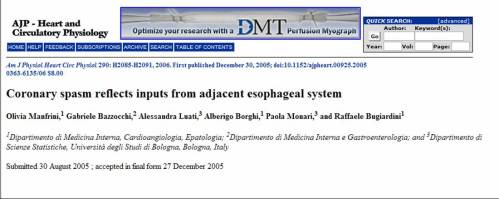
Read this land mark concept paper  documenting the neural link between esophagus and the coronary artery

Click on the article

esophagus


Final message

  1. Don’t ever forget the esophagus in your scheme of things when evaluating  CAD.
  2. Realise  that esophageal disorders  not only cause non cardiac pain but also cause    ischemic chest pain (Also called linked angina)
  3. EsophagEal  smooth muscle cell  can  exert electrical influence on the ST segment of  cardiac ECG !(After all every cell

has an action potential )

Read Full Post »

                                         Coronary arteries are the major site for human atherosclerosis .CAD is considered the ultimate determinant of  cardio vascualr health of our global population.Coronary atherosclerosis has a predilection for proximal sites and branching points.Typically it occurs in leftmain, LAD ostium, LCX ostium, proximal LAD, diagonal origins, OMs RCA  and its branches .

4010940_766_gr1

Septal branches , even though divide very early  from the LAD , it  is  uncommon  to get affected by coronary atherosclerosis.  Even for an experienced   interventional cardiologist  , it  would be very rare to have  performed a  PCI for septal disease.

Why septal branches of LAD is rare to suffer from atherosclerosis ?

We don’t know the answer yet.

But , it is thought,septal branches are near perpendicular branches .The branching angle and incidence of atherosclerosis has a peculiar relationship.IAt any bifurcation  point , the atherosclerosis tend to occur ,  if the angle is more acute , and is  less common in abtuse angles .It is  almost rare  ,  if branching happens at   exact  90 degree angle or so !

The other reason for septal branches being immune to atherosclerosis is  , it runs within the muscle in its major course. The constant squeezing action(. . . and possibly bridging also)  makes it difficult for the  process of atherosclerosis to sustain and grow .

Can you still get a  septal CAD ?

Yes,  usually as  a component of bifurcation or trifurcation lesion. Some times a diagonal and septal are very close together and  atherosclerosis involves  both ostia.

What is  the implication for the  cardiologist to perform  a PCI with stenting in a septal branch of LAD  ?

PCI and stenting in the septal branches are more prone for crushing and fracture   as it is constantly exposed to the mechanical effects of muscle contraction.

Any other significance for septal branches of LAD ?

  • Isolated septal myocardial infarction can occur.This could be even a embolic manifestation.
  • Septal branches of LAD are potential target for therapeutic embolisation (By injecting alcohol)  in patients  with hypertrophic obstructive cardiomyopathy(HOCM) .This manover aims to produce a controlled septal myocardial infarction and thus paralysing the left ventricular outflow tract and reduce the dynamic LVOT gradient. This form of treatment, was glorified till recently now considered experimental !

Read Full Post »

Anginal pain is a type of visceral pain.It is carried by type  C  unmylinated  nerve fibres.The perception of angina is a complex process.It is a combination of visceral and cutaneous referral pain.

How often is angina silent in diabetes mellitus ?

Presence of  diabetes per se does not make an angina silent. In fact,  if  one takes 100 patients with diabetes  , if angina occur in them , it is more often  , manifest than silent. So , only few of  the  diabetic patients who develop diabetic autonomic neuropathy fail to have angina.The exact incidence is not known.It could be around 20%.

If angina can be silent in diabteics , can they have anginal equivalents ?

This again is not answered in literature. Among the anginal equivalents , the most common is  dyspnea , which  can occur in diabetics.But now , we know dyspnea also needs thoracic nerve signals  from the intercostal muscle spindle and colgi organs.This can also be impaired in diabetics.

Can silent and mainfest episodes occur in a same  patient  ?

Yes.

Once silent does not mean always silent, and similarly once angina is felt it  does not mean he is going to feel the next episode as well !

This  strongly reminds us medical science  is  much a complex  subject and what we know is very little in pain perception.

How is silent ischmia different from silent angina ?

There is considerable  overlap  between  silent ischemia and silent angina

The questions to be answered are 

Which is silent  ?  Is it the angina or is it the ischemia or both ?

Silent ischemia can occur in any individual ,  this is also called as silent CAD . When  ischemia occurs  but  fails  to generate pain it is silent ischemia .Undiagnosed  CAD in asymptomatic individuals is also called silent ischemia or CAD.In this population  Exercise stress testing detects  CAD which was otherwise silent and masked.These patients may develop angina during EST.

During exercise stress testing many times patient has significant ST depression  more than 2mm but still chest pain may not occur.These episodes may either be silent ischemia or  ngina. Many times the EST is terminated before angina is manifest .( Chest pain is the last to occur in the chain of events following ischemia- Concept of ischemic cascade )

What are the other situations where angina can be silent ?

  • Pain perception  and threshold  level is  high ,  so patient indeed has anginal  signals but fails to feel it .
  • Patients on  antianginal medication , fail to feel the angina.
  • Chronic betablocker therapy can exactly mimic  autonomic neuropathy

Is it a blessing for the patient  to have painless episodes of angina ? 

When their  ischemic colleagues , suffer a lot with chest pain it is tempting to think these diabetic patients  are blessed!

Scientifically , this could be true in at least in  some  especially in a patients  who’s coronary anatomy is known  and devoid of any critical proximal lesions. For example a small PDA  lesion can produce  severe angina  , but may be silent  in diabetic and be comfortable .This lesion is  insignificant other wise * !

It should  also be recalled , pain relief has been an important goal for treatment  of CAD .In olden days,  thoracic sympathectomy was done for angina . In fact ,  even in  CABG  , one of the the  mechanisms  for  angina  relief  is attributed  to cardiac denervation.

Caution: Even a small  episode of ischemia can trigger an electrical event .But it is rare.

 How common is silent infarct (STEMI) in diabetic patients ?

In a simple questionnaire we asked the diabetic patients in our CCU how they felt their pain during MI.Most felt it normally as do other non diabetic .  Diabetes  does not make  all anginal episodes  silent. Severe episodes of ischemia may be painful while less severe episodes may be painless. Diabetic autonomic neuropathy  is a  least recognized and  poorly understood complication of diabetes.Diabetes , involves  the vasanervorum of the autonomic nerves.

 The other mechanisms postulated in diabetic neuropathy are

  • Reduction in neurotrophic growth factors.
  • deficiency of essential fatty acids .
  • Reduced endoneurial blood flow and
  • Nerve hypoxia .

Is diabetic autonomic neuropathy treatable ?

Very difficult problem indeed.Controlling diabetes may partially correct  the neural dysfunction.Many add on neuro vitamins and aminoacids are having a good market !

If you successfully treat diabetic autonomic neuropathy will my patient  start feeling the  hitherto silent episodes of angina ?

We don’t know.Logic would answer ” YES”

What is the ultimate effect of cardiac autonomic neuropathy.

Cardiac denervation.  The manifestations  are

  • Tachycardia, exercise intolerance
  • Orthostatic hypotension


Silent Myocardial Infarction : A complete list


Read Full Post »

coronary-artery1

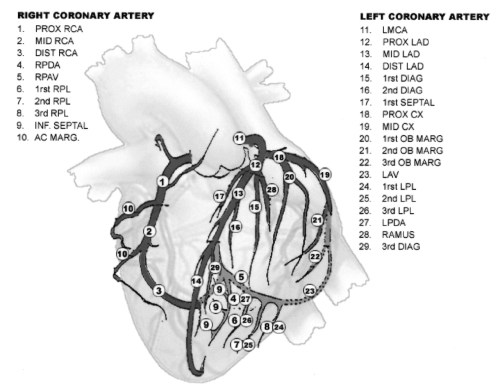
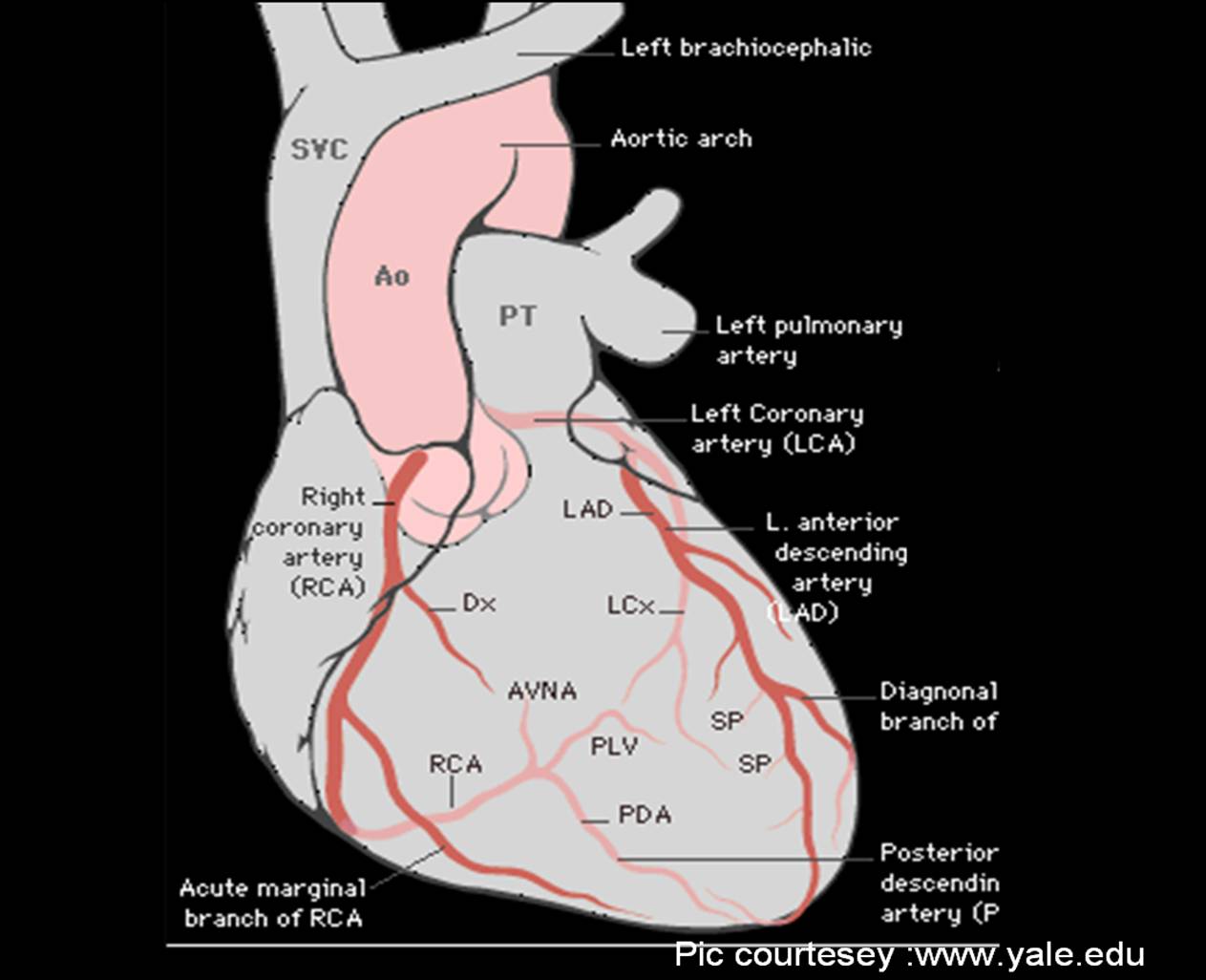
                                                      Coronary arterial circulation is the life line for  the human heart  and it’s survival.Typically it is supplied by two coronary arteries,  left and right coronary artery.Both, together carry about  250ml of blood every minute.( Approxinately  equal to a  cup of  coke !  ).These coronary arteries  generally divide in a predetermined  fashion , and have multiple branches . It is a  mystery , what  decides this  branching pattern

Is it like a our palmar crease  ? or the cerebral gyri ?

However , it does follow a certain rule,  one major coronary artery  will follow the  four  important grooves of heart. In the left side ,  left main coronary artery (LM) originates in the left coronary sinus (Size varying between 1mm -20mm)  and usually bifurcates into LAD and LCX. The left anterior descending artery (LAD) runs in anterior interventricular  groove while ,  the right atrio ventriculo groove carries the right coronary artery(RCA) .Left  circumflex artery (LCX) traverses the  left atrio ventricular groove.The most inconstant branch is the posterior descending artery (PDA) which runs in the posterior interventricular  groove.PDA  can arise from either RCA, LCX or both or even from LAD.

The major branches of LAD are called diagonal and septal  while the branches of LCX are called obtuse marginal(OM).There can be two to three diagonal and OMs. 

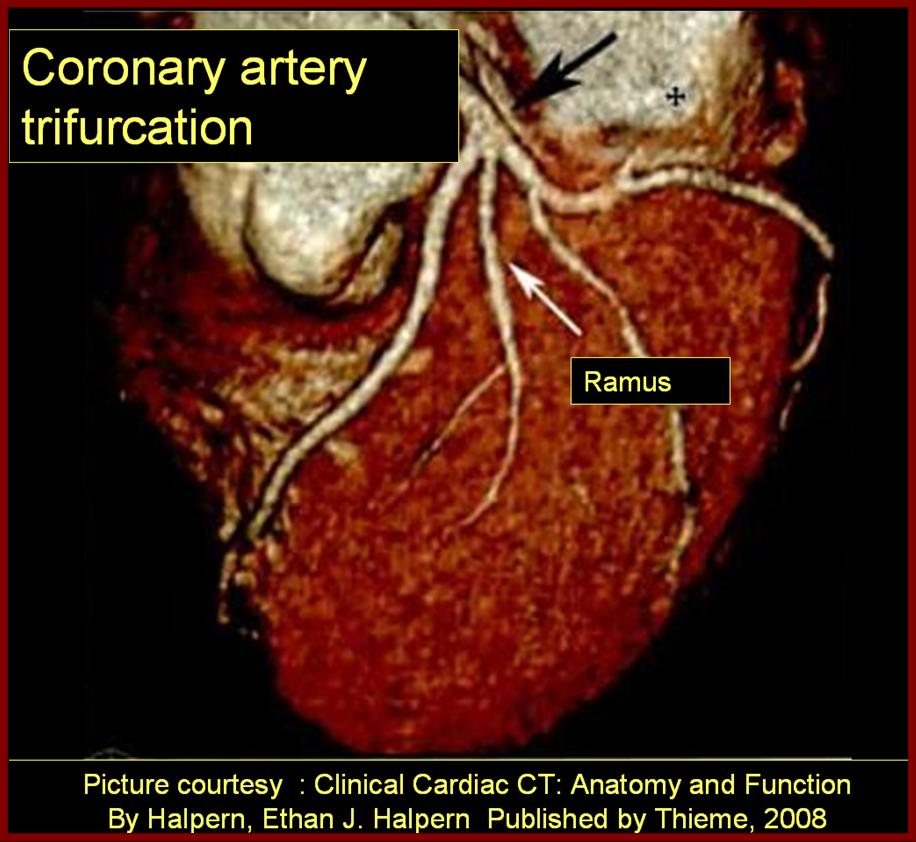
What is ramus intermedius coronary artery ? What is the incidence of Ramus ?

The left main coronary artery  instead of bifurcating into two ,  it trifurcates into three vessels.(LAD, LCX, Ramus)

The real incidence could vary betweenn (10% to 30%) depending upon the series.

ramus

What course it takes ?

It generally goes in the angle between the LAD and the LCX.It may either behave like a large OM or a diagonal branch.It supplies the lateral free wall of the LV many times.The peculiarity of this vessel is it does not run in a anatomical groove .It simply slides over the free surface of LV.Rarely, a  very abnormal course of ramus,  criss cross the aorta and pulmonary artery .

How common is atherosclerosis within  Ramus ?

We don’t know yet. But it is very likely since it is an early branch from left main, it  might  have a  predilection for atherosclerosis  as like LAD or LCX ostium.In fact now we recognise more of  trifurcation lesions involving  three branches of left main .

What would be the ECG finding if a large ramus is the culpirit vessel during STEMI ?

This scenario could be rare.

ACS in ramus could  present as ST elevation in 1/Avl /V5,V6

  • Lateral MI
  • Apical MI
  • High lateral MI

But it is realised , whenever the ECG changes are not fitting with typical ASMI or a lateral MI one should suspect a ramus lesion

 What is the significance of ramus for an interventional cardiologist ?

ramus-2

                                                   PCI in ramus is a rare opportunity for a cardiologist .The issue here  is,  if ramus is involved  adjacent LAD and LCX is also likely to be involved .So it would logically be a multivessel , complex angioplasty.Isolated ramus lesion could be tackled easily.Another issue here could  be ,since this vessel is not within  any anatomical groove  stent deployment would have a poor  support and prone for mobilisation and migration .

Read Full Post »

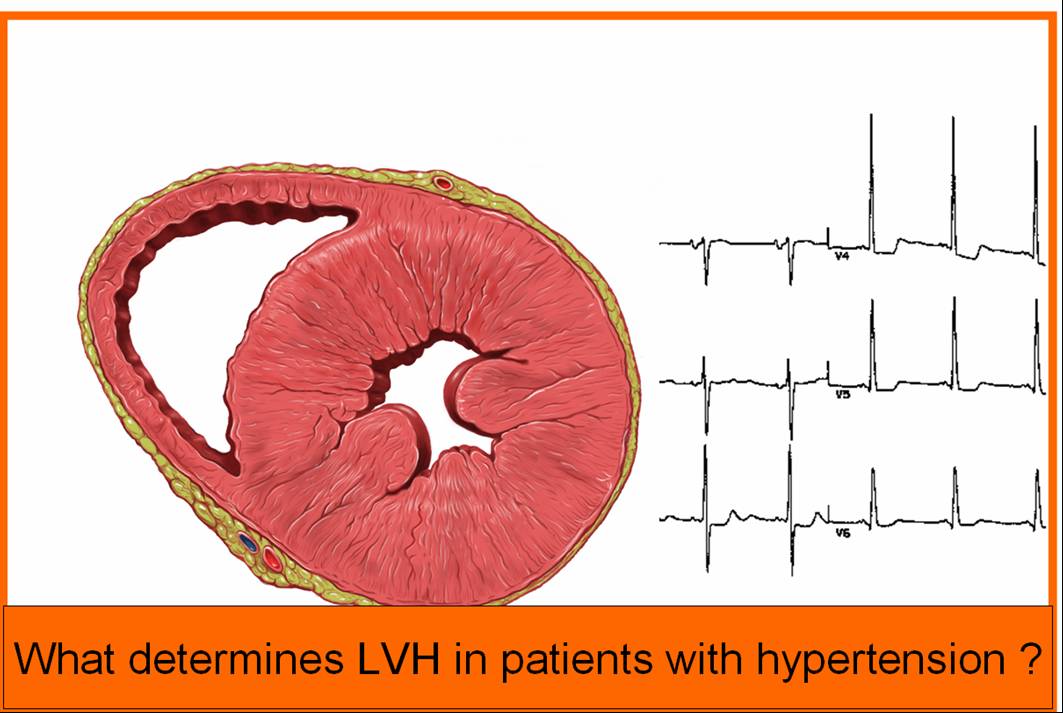
                                Hypertension is the most common clinical  cardiovascular entity.Left ventricular hypertrophy (LVH) is  an important consequence of  HT.In fact, it is considered as a end organ effect or damage. Others being brain, kidney, and peripheral vascular disease.Knowing about LVH is important because it has been linked to increased cardiovascular events.

lvh-4

                              Though LVH is considered  as a close companion of  HT  it is  surprising  only a minority (15-30%)  show evidence of LVH .Some  experienced clinicians (Level C evidence)  quote even lower < 10 %  .Traditionally LVH was detected by ECG and now it is replaced by echocardiography.

What determines the LVH ?

It will be suprising to note , answer to this question  is  still not  clear .

  • Is it the duration of elevated blood pressure ?
  •  Is it the absolute level of blood pressure ?
  • If so , is it  the systolic BP  , diastolic BP or the mean BP ?
  • Or is it related to the etiology of HT ?
  • There has been no significant correlation between the above parameters

When we don’t know  the answer to a question in medicine , the answer will  generally will be inside the genes !

So in HT also the major determinant of LVH is in the genes that determine the myosin heavy chain  response .

and also ACE gene polymorphism.ACE genes are involved in the expression of growth factors within the myocardium.

An excellent study  on the issue http://www.nature.com/jhh/journal/v17/n3/full/1001523a.html#tbl1

It implicates , gender, age, race etc in the genesis of LVH

Final message

So , the  myocardium does not respond with LVH   in all patients with HT.It happens only in a minority* .Duration of HT can be an important determinant , but  the major factor is  the alteration of genetic switches  within the myocytes How this switches are going to  behave ,  is largely inherited .Regression of LVH is also not uniform again implying lesser role for hemodynamics. (Some studies revealed ACEI have maximum regression  of LVH , later disputed )

*LVH is more consistently seen  in hypertension due to reno vascular  or parenchymal disorders .It is also an observed fact , a  combination of diabetes and HT is more likely to result in  LVH.

The other major issue  that needs explanation in HT/LVH  is   , how much of LVH is due to  myocyte hypertrophy perse  and how much is contributed by interstitial cell hypertrophy(Non myocytic hypertrophy)

This issue will be discussed soon

Read Full Post »

The long standing controversy about diastolic heart failure is settled !

The perception that diastolic heart failure ( Now renamed as heart failure with preserved EF ) is less dangerous than systolic HF has been exposed by this land mark study by Owan TE, in 2006 (nejm) But unfortunately this information is not yet fully disseminated among the physician community. Hence this post, with due acknowledgment to NEJM & Owan et all.

Experts from the article

“The nosology of heart failure has been the
subject of much current debate, and some extreme
positions have been taken. The observation
that 22 to 29 percent of patients with diastolic
heart failure die within one year of hospital
discharge, and 65 percent die within five years,
is a reminder that we are facing a lethal condition,
regardless of its name. Owan et al. also
show that, in recent years, there has been little
improvement in survival rate among patients with
diastolic heart failure, in contrast to the improvement
in survival rate over time among patients
with systolic heart failure”

Have a look at the survival curve below, almost similar , surprise surprise ! DHF survival is not only worse ( in many ), than systolic CHF and further they respond poorly to treatment, compared to conventional systolic CHF .

Click below for the link to full text article

Short abstract :

Trends in prevalence and outcome of heart failure with preserved ejection fraction.

Cardiorenal Research Laboratory, Mayo Clinic College of Medicine, Rochester, Minn 55905, USA.

BACKGROUND: The prevalence of heart failure with preserved ejection fraction may be changing as a result of changes in population demographics and in the prevalence and treatment of risk factors for heart failure. Changes in the prevalence of heart failure with preserved ejection fraction may contribute to changes in the natural history of heart failure. We performed a study to define secular trends in the prevalence of heart failure with preserved ejection fraction among patients at a single institution over a 15-year period. METHODS: We studied all consecutive patients hospitalized with decompensated heart failure at Mayo Clinic Hospitals in Olmsted County, Minnesota, from 1987 through 2001. We classified patients as having either preserved or reduced ejection fraction. The patients were also classified as community patients (Olmsted County residents) or referral patients. Secular trends in the type of heart failure, associated cardiovascular disease, and survival were defined. RESULTS: A total of 6076 patients with heart failure were discharged over the 15-year period; data on ejection fraction were available for 4596 of these patients (76 percent). Of these, 53 percent had a reduced ejection fraction and 47 percent had a preserved ejection fraction. The proportion of patients with the diagnosis of heart failure with preserved ejection fraction increased over time and was significantly higher among community patients than among referral patients (55 percent vs. 45 percent). The prevalence rates of hypertension, atrial fibrillation, and diabetes among patients with heart failure increased significantly over time. Survival was slightly better among patients with preserved ejection fraction (adjusted hazard ratio for death, 0.96; P=0.01). Survival improved over time for those with reduced ejection fraction but not for those with preserved ejection fraction. CONCLUSIONS: The prevalence of heart failure with preserved ejection fraction increased over a 15-year period, while the rate of death from this disorder remained unchanged. These trends underscore the importance of this growing public health problem. Copyright 2006 Massachusetts Medical Society.

Other interesting article

Heart failure with preserved ejection fraction: dangerous, elusive, and difficult.

Eur Heart J. 2008 Feb;29(3):339-47. Nielsen OW, Køber L, Torp-Pedersen C.

BMJ editorail 2009

http://www.bmj.com/cgi/content/full/338/jan27_1/b52?ijkey=c7a29d35dc9d9dddf7d0e75c5b8d05014315c564

Read Full Post »

« Newer Posts