Feeds:
Posts
Comments

Archive for the ‘echocardiography’ Category

Imaging  coroanry artery is  generally  in the   domain of interventional cardiologists. MDCT has helped us to change that.

The  humble echocardiography can   identify the origin* of   coronary arteries   in  most   persons. The resolution power of modern day echocardiography is  2mm and the left main  ostium is >3.5mm in 99%  of population . If some body says one can’t  visualise the coronary artery by echo ,   it can only reflect their ignorance or lack of patience to get an optimal image. Of course technological limitations are there.

*  To be emphasised again , only the origin can be identified.

Can we identify ostial leftmain or proximal  left main disease  by echocardiography ?

It should be possible in  few .
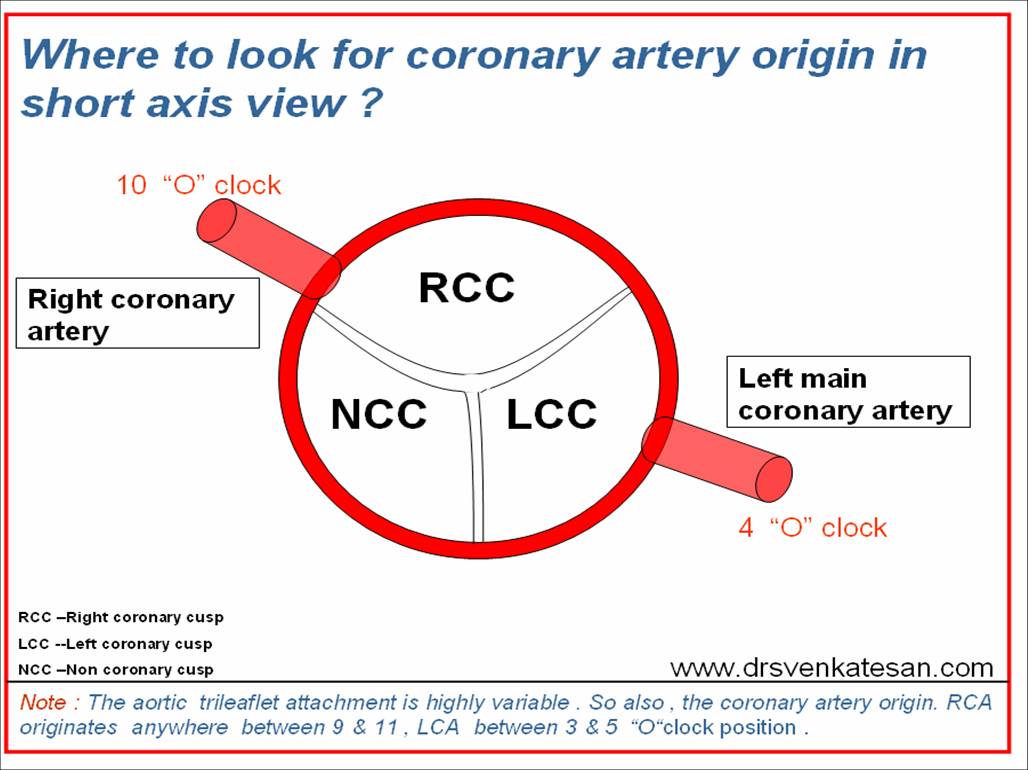
Can we place  a doppler sample volume  within  the left main and measure coronary flow velocity ?

When obsterticians are able to  assess the  uterine artery flow  in a bulky uterus ,  it should be possible to do the same in  a coronary artery . Motion artifacts is the issue in the heart.  Micro sample voulme (<1mm) are expected in the future  that will make a non invasive coronary flow assesment a distinct possibility.

Read Full Post »

  • Here is a site which has dedicated  resources for learning echocardiography .
  • The site has collection of various work shop and conference highlights
  • The basic echocardiography with classical line diagrams  would be very much useful for the beginners,

Cheers to duke university for sharing ! www.echoincontext.com

Read Full Post »

A  humble  tribute to  Mr. Doppler : Let us  remember this  man ,  every time you hear that hissing  Doppler  signals   , as  we  put the Doppler probe inside the heart.

Doppler ‘s brief encounter with life

Gave us one of the greatest diagnostic tool .

Born in  1803 in Salzburg, Austria,  died  in Venice, Italy 1853

Click over the portrait to learn Doppler’s life

Read and enjoy yourself !

Doppler and his principle  : By Richard J. Bing, MD Professor of Medicine – USC (Em) – Director of Experimental Cardiology – Huntington Medical Research Institute Visiting Professor in Chemistry – California Institute of Technology – Calif – USA

http://www.dialogues-cvm.org/pdf/51/DCVM51_04.pdf Courtesy  Servier

Read Full Post »

Looks very much a infarct of  infero posterior territory is it not ?

Have a look at her 2D echo still picture . . .

Are you convinced ?

This women had normal LV systolic and diastolic function with no evidence of constriction.

The explanation for the asymptomatic pericardial thickening is due to a healed  chronic pericarditis .This sort of localised thickening in the posterior aspect is all the more likely following a loculated pericardial effusion.Tuberculosis is a very likely etiology.But this women do not have any markers for tuberculosis.Since she is symptomatic no treatment was offered.She is being followed up.

Discussion .

Q waves are not ” sacred waves” to diagnose myocardial infarction.It simply indicates the  direction of current flow is away from the  recording lead of the ECG .Any thing  electrically inert , that come in the interface between the heart and the recording electrode   can record a q waveWhat are the pathological entities that can produce q waves other than infarct ?

  • Fibrotic myocardium(DCM-Cardiomyopathy)
  • Myocardial Scars
  • Myocyte dis array(LVH, HCM)
  • Air,fluid in pericardium /pleural space
  • Pericardial thickening (As in this patient)
  • Electrical shortcircuits (WPW syndrome)
  • Rarely pure ischemia without necrosis can produce q waves (Electrically stuned myocardium)

Final message

Localised pericardial thickening is  a rare  (?unrecognised) cause for pathological q waves , that may mimic a MI.

Read Full Post »

Estimation of right atrial pressure (Often referred to as  central venous pressure (CVP) is a common hemodynamic excercise both at the bed side and in echocardiographic lab. A venous catheter inside the right atrium is probably  the best way to measure it accurately .But, there are  practical issues  for  putting and maintaining a CVP catheter. ( & We also know , what happened to the concept of routine  swan  catheter in critically ill patients !).

A  rapid bed side echocardiography  can give us a fairly accurate estimation of RA pressure . We  don’t even need look into the heart , what you need is imaging the inferior vena cava , it’s size and it’s  behavior  with respiration  . You don’t require  a doppler probe either ! With these two parameters one can decode the mean RA pressure. This  modality is rarely used in the ICUs , it can be a simple aid to fluid management .

RA pressure echocardiography ivc collapse hepatic veins

ivc collapse ra pressure right atrial mean pressure

Shrewd clinicians would argue , we have a natural catheter inside the right atrium, ie the   internal jugular vein   This gives us a unique opportunity to study the moment to moment RV, RA pressure . And .  .  . yes ,  we know it but we rarely respect the neck veins !

Read Full Post »

« Newer Posts