Feeds:
Posts
Comments

Corona has triggered the scare of the century, even among the scientifically savvy brave men & women. The scale of the panic was unprecedented. However, one positive outcome of this pandemic was, this 20 nm RNA particle forced many of us, to ponder over the true purpose of life. It demanded a course correction in those who found one. Now, after 9 months Corona, in its second wave seems to be somewhat kind to humanity. The case fatality rate is dropping to nearly one-tenth of its peak in the first wave. 


Where is the evidence coming from?

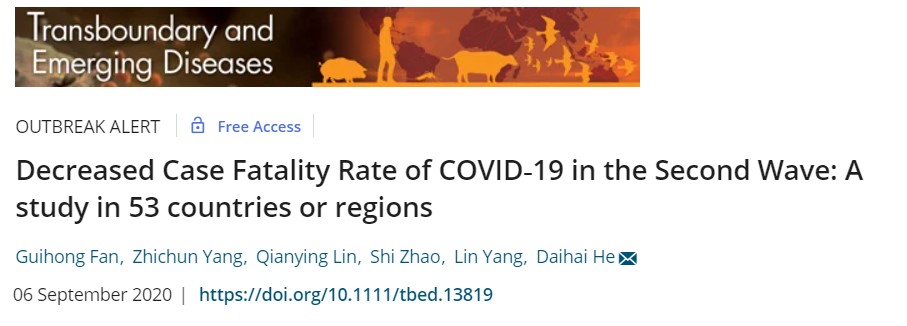
Apart from our own personal experience from 1500 bedded corona hospital, this paper reports data from 53 countries.
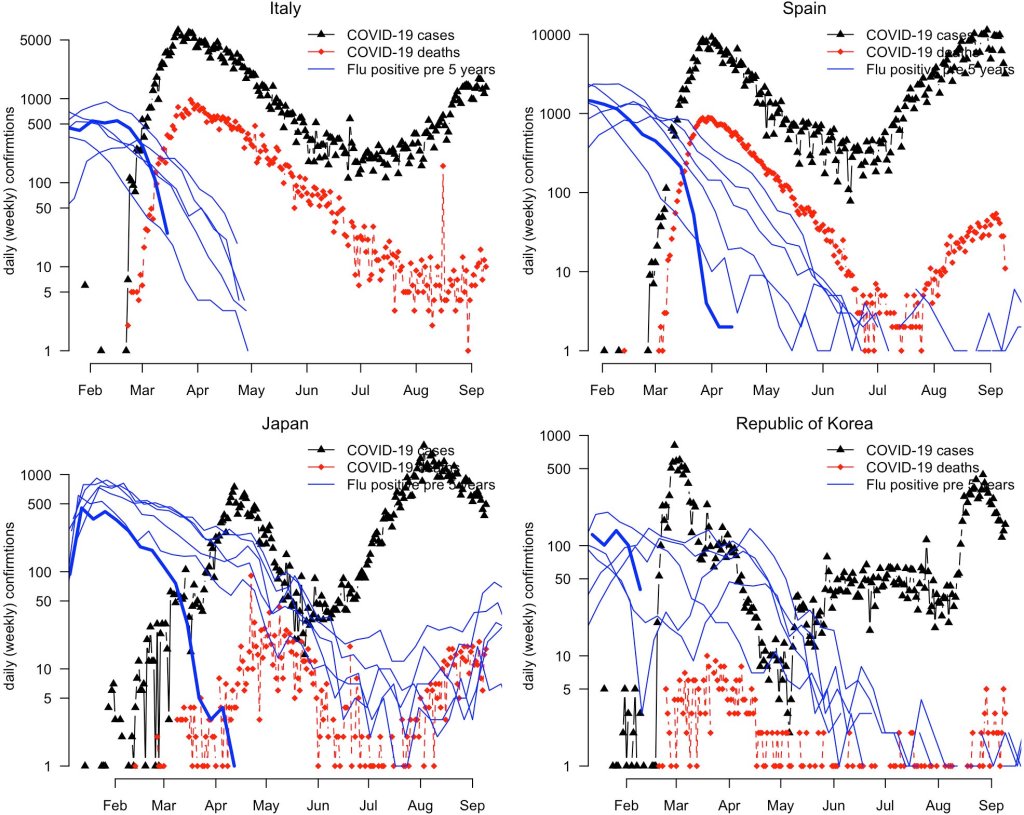
 

Note, the red covid mortality curves are not matching the black positive waves (Both Europe and Asia)

Link to the original article https://doi.org/10.1111/tbed.13819

The possible reasons for the low case fatality rate.(Personal observation)

  1. Viral apologetic  behavior*
  2. Second wave affecting more healthy younger who fight it better.
  3. Less panic in the health care delivery system
  4. Though there is no specific therapy, at least some basic treatment strategies are in place.(Timely steroids & mindful oxygen did the trick)
  5. Initial aggression out of Ignorance (ie ventilator deaths) has largely ceased.
  6.  RT-PCR(which helped In diagnosing /isolating ), CT scans,(helped in grading) the Remdesvirs(gave peace of mind ) the Tocilizumab(did nothing great ) has at best played a minuscule role at a huge cost.

Among all these factors, which do you think is the most important contributor to a declining fatality?

The single important factor could be, “The virus has decided unilaterally to forgive the frightened human beings, and become less virile“.(At least in those people who sincerely respected the viral might by wearing masks and other paraphernalia) Sorry, for uttering this forbidden stuff in science, still it could well be the truth. 

If corona is losing its sting & steam what would be the realistic role of the vaccine? What is the likelihood of vaccine getting false credit*?If we are allowed to be optimistic, Corona in all likelihood is waiting to say goodbye after a feeble third or fourth wave. All these are speculative, still, one thing looks positive. Unlike the much-quoted fact about the Spanish flu of 1920, which resulted in more damage in the second wave, which is unlikely to happen with corona.

Disclaimer

* This article never intends to undermine the importance of preventive measures and vaccines for this worst pandemic in recent human history.

Counterpoint 

The decline in case fatality is may not be uniform as fresh data from Europe suggest. It’s hyperbole to expect corona’s second wave to bring good news. It is largely left to the people’s behavior to contain the pandemic than to get a pardon from the virus. 


How many times you have treated cardiac arrhythmia in both emergency & non-emergency situations?

Infinite times.

How many times did you really bother to know the mechanism of a given arrhythmia before ordering medication or shocking?

Hmm,.. let me think. (Except for AVNRT/ AVRT, and few VTs, very rarely I have worried about the mechanism  !)

Why is it so? because treatment takes priority and we are able to tame the arrhythmia even without knowing the real mechanism.

The following slide is a gross summary of the cardiac arrhythmia mechanism

Understanding cardiac arrhythmia is vitally important for a few reasons in a few settings.

  • In acute settings, we need to know automatic tachycardias will not respond to shocks. Reentry tachycardias will respond more promptly. (Of course, we may not know it till we shock ) Calcium blockers like verapamil might block triggered activity in MAT. Overdrive pacing is the answer for many automatic tachycardias and some refractory reentrant tachycardias (ATP protocols in ICD has taught us this ) 
  • In the chronic setting when you contemplate mapping, locating, and ablating arrhythmias, mechanisms are important. The task here is locating slow conduction paths and decoding the diastolic circuit around the scar  (If you plan ICD, knowledge about mechanism  becomes redundant again)

  • Finally, knowing the mechanism of arrhythmia is a fascination by itself to help understand the great subject called cardiac electrophysiology, where 100s of ion channels work nonstop drawing the action potential on a moment to moment basis sustaining our life.

A challenge

Can you localize a VT and find the mechanism in a patient who is Ischemic /hypoxic and acidotic? You can never do it. Please note, most polymorphic VTs can’t be localized. The mechanism is either automaticity, trigger activity, or even micro-reentry. You need to shock and look for the causes.(Link to How does the treatment of monomorphic VT differ from Polymorphic VT? )

Final message

Should we need to know about the mechanism of arrhythmia we treat?  Definitely yes, if you have that passion to know the truth, or else just order Amiodarone or shock and check out of CCU. (Of course, we have a very good option of calling EP consult the next day.)

 A review article on mechannism of cardiac arrhymias

Rev Esp Cardiol. 2012;65(2):174–185

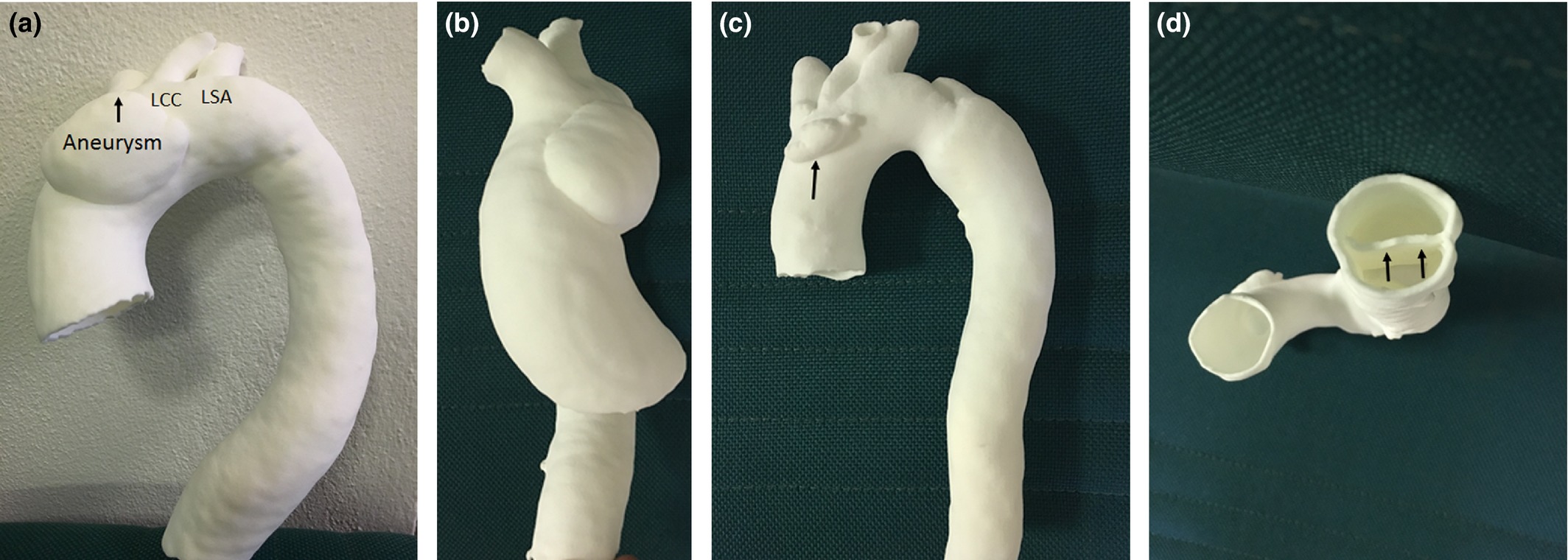
 Aorta probably is the most critical structure in the entire circulatory system. (apart from the heart of course !) It is a 1.5 to 2.5 mm thick tube, with a diameter of 2.5 cm/length of 30 -35 cm from the aortic valve to the iliac bifurcation.(Eric Borsero 2011) It handles about 7500 liters of blood every day. Understanding the Aortic pathology has vastly improved at the molecular level with deep gene sequencing that defines fibrillin phenotypes.  Meanwhile, CT ,  4D MRI and 3D prototyping have landed us in a new era where we can feel the exact models of a patient’s virtual aAorta for monitoring and treatment purposes.


While acute Aortic syndromes is the one that bothers us most, even chronic aortic enlargements are equally risky as at any time it can become acute. Though the risk of aneurysm and rupture is related to the histology and molecular disruption at the level of aortic media, we can only rely easily on is its dimension. Traditionally we bother about the diameter since it is the aortic radius that Influences the stress through to Laplace law.(Wall stress equals twice the radius /Thickness of wall)

Click over the Image for ESC Aortic disease guidelines

The annulus is the narrowest part, it gains about 50% width (10mm) at the level of the sinus of Valsalva to reach about a maximum of 35 mm and again narrows at ST to a junction (almost to the same diameter of the annulus) It continues further as ascending, arch and descending aortas with gradual tapering. 

Risk of rupture

Are you aware aorta keeps growing with age?

Unlike many other organs, growth of which gets arrested by adulthood, aorta appears to grow well into middle and elderly age.The aorta grows by 6cm in total length between age 20 to 80 (Ref 1)   The average growth of the ascending aorta is .18mm /year

This fact was reported 70 years ago Dotters famous study Circulation 1950  https://www.ahajournals.org/doi/pdf/10.1161/01.CIR.2.6.915

I used to wonder in many elderly why chest x-ray shows wide superior mediastinum still echocardiogram didn’t show any dilatation.This we call it as aortic unfolding. The term unfolding of aorta may represent the elongation of both ascending and descending aorta. The mechanism is due to multiple factors, like lax ligamentous of aortic attachment, dilatation, and longitudinal elongation.

Unfolding of the aorta . (How to measure unfolding Lee JW, (2014) Aortic Unfolding Determined Using Non-Contrast Cardiac Computed Tomography: Correlations with Age and Coronary Artery Calcium Score. PLoS ONE 9(4): e95887. )

How Important is the length of the aorta?

Risk of Aortic aneurysm is usually attributable to the diameter (Accepted normal 2.1cm/m2) . However, in IRAD registry, 50 % of aortic dissection happened in aortas less than 5 cm. So there is something more than the diameter that confers the risk of an aortic event. Is it the length and elongation?  After years of observation, we now realize it is indeed true. It is a surprise we didn’t realize  elongation of aorta also confers the same aortic wall weakness like that of Increased diameter (Longitudinal deformation/Stretch )

How to measure the length of Aorta?

It is best measured by CT scan or MRI. There is a new parameter called  Wu Index, which is based on both length and width of the aorta , which predicts the risk of aortic event. 


Jinlin Wu, Mohammad  Zafar, Yupeng Li,  J Am Coll Cardiol. 2019 Oct, 74 (15) 1883-1894.

Final message 

Aneurysm of the aorta is traditionally defined based on the degree of dilatation. It’s time, Aortic length should also be included in defining aortic aneurysm. We need to monitor it periodically as well in the population at risk. 

Reference 

1.Adriaans BP, Heuts S, Gerretsen S, et al. Aortic elongation part I: the normal aortic aging process. Heart 2018;104:1772–7.

 
The comprehensive reference 

Today is one of the most auspicious days in Indian traditional festive time. Saraswathi pooja, a celebration of the Goddess of knowledge and education. I would like to share one of the all-time great quotes on learning from Thiruvalluvar a sage poet who lived in the southern Indian state of (mine), Tamil Nadu in 4th -5th century BC  2500 years ago.

 This Thirukural number 391 in the chapter of education goes on like this. (In the Tamil Language)

In English

Karka, Kasadara, Karpavai , Katrapin,

Nirka , Atharkku Thaga !

It says

Karka : Learn

Kasadara: Here comes the punch. Kasadara means pure.  He says simple learning is not at all-sufficient. One has to learn from good sources, learn deep that should be devoid of errors, contaminations, and falsehoods.

Karpavai  : Thus you learn all lessons in life meticulously.

Katrapin:  So, after this hard and enlightened learning, what we should do?  He answers next.

Nirka Atharkku Thaga: This means , don’t just stop with learning, follow it with action in a righteous way. Unless we do that he warns to conclude ( in another poem in the same chapter) there is no purpose of learning itself and we are again at risk of becoming illiterates.

So, what does this Thirukural teach the Nobel professionals who follow cutting edge medical research?

I think I need not elaborate . . . Acquiring knowledge and true learning has become two different processes.

It’s just a sample of one kural (Quote) among 1330 poetic quotes written in 133 chapters by this great philosopher of Tamil Nadu who shared the same timeline with Aristotle and Socrates of ancient Greece 5000 miles west of India. For those ,If you are interested in his monumental work on literature which can be referred to as the manual for effective living  (I wish to call it as “Standard operating protocol”  for human life)  please follow the link.

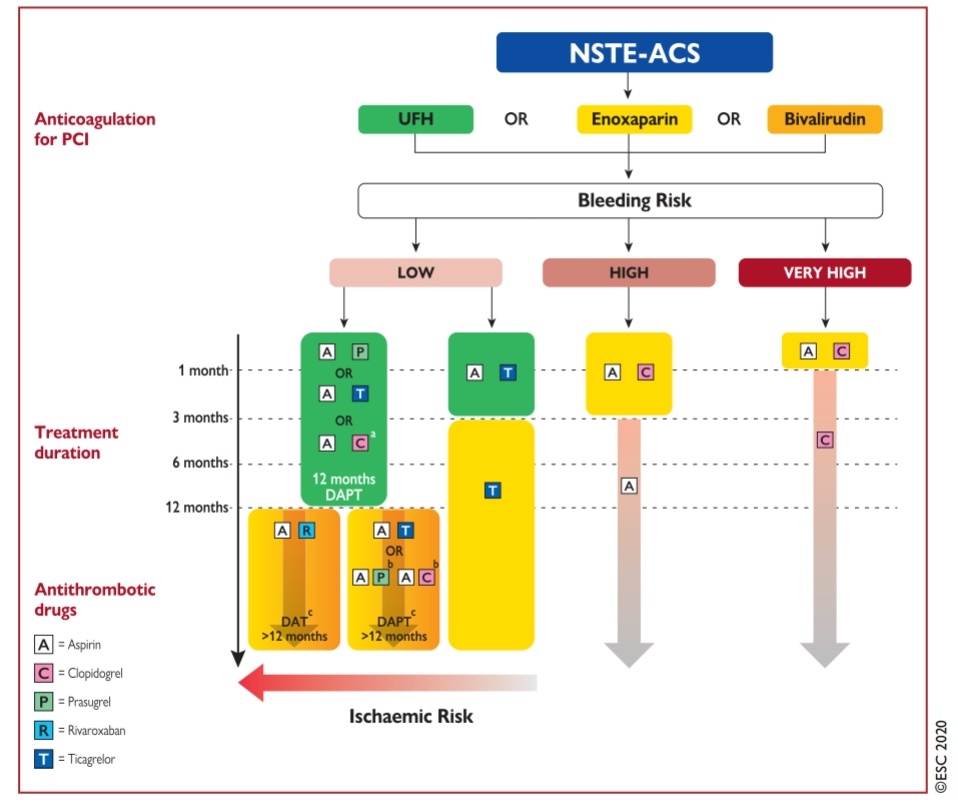
It appears,antiplatelet agents are waging a turf war on the CAD battlefield. It is no secret either, the fight often goes beyond academic reasons. Though NSTEMI connotes a true cardiac emergency, it consists of a highly heterogeneous population. A patient with UA can be treated even at home (Low-grade angina with little ECG changes, when it’s due to Increase demand situation). While, in the other extreme of NSTEMI, a patient with a GRACE score >200, in Ischemic  LVF, might need an emergency multivessel angioplasty along with Mitra clip ±  ECMO support. 

Antiplatelet agents along with heparin will remain the cornerstone* in the management of NSTEMI/NSTEACS, irrespective of our fine catheter skills within index lesion. They are administered right from the pre-hospital phase/ In ER, CCU/ or on way to the cath lab(upstream)/or within the cath lab/or after CAG /PCI.  It is the right balance between the prevention of stent-related coronary thrombus vs systemic bleed we are worried about. Definitely, DAPT is warranted. (See the chart below) Prasugrel has been reinvented as the most powerful P2/Y12 blocking antiplatelet agent. It squarely beats its other colleague drugs like Aspirin, Clopidogrel, and Ticagrelor in terms of potency as well as its risk of a bleed. This is the current antiplatelet protocol in NSTEMI in a patient planned for PCI after visualizing the coronary anatomy. Note, Aspirin plus Prasugrel combination occupies the top slot among various options. The principle of DAPT strategy is all about Initial escalation to match the heightened risk of thrombosis/ cardiac events and later de-escalate once the risk period is over (Which can vary between 1 month to 12 months or even 2 years)* The popular concept of attributing NSTEMI to platelet clot and STEMI to fibrin clot is no longer valid. The contribution of the individual component(white vs red)  in a given load of coronary thrombus was never quantified accurately. That’s why antiplatelet agents alone are grossly inadequate in NSTEMI. This will be vouched by this NSTEMI algorithm, which begins with red clot busters heparin. 

So, how to handle sharp-edged drug-like Prasugrel?

A powerful drug-like Prasugrel is at high risk of being misused. It has taught us some harsh lessons in stroke. So, we have to be wiser to extract the maximum out of this drug in the presence of a high thrombotic milieu (or at risk of developing it after a PCI.)

Since ECG and clinical features are not sufficient to predict the coronary thrombus. It is suggested to have a look at coronary anatomy and decide only if a PCI is contemplated.Some of the situations where Prasugrel is likely to be Indicated  

  • Any PCI with a stent in the culprit artery.
  • High  thrombus load
  • Prolonged procedure time


    When to Avoid Prasugrel?

    Just looking at coronary anatomy is not sufficient.  Estimating the risk of bleeding is required. Attempting to use various scoring systems during a cardiac emergency is a self-inflicted mathematical burden. In my opinion, none of these scoring systems(CRUSADE , ACUITY,  ARC-HBR) truly discriminate patients in a useful way. Mindfulness with an eye on co-morbid conditions is required.This has to be matched with coronary lesion /PCI complexity. Realistically, the confidence in our technical adequacy of stent deployment shall decide the need for aggressive post PCI  DAPT or anticoagulation

Final message

Just because we know the coronary anatomy, don’t expect prasugrel to be kind enough to lower the risk of stroke. The risk is the same whether we know anatomy or not. It is the funny evidence base we have created that makes us believe it so. Routine DAPT for all patients with ACS is not warranted without assessing the bleeding risk. Meanwhile, there can be an important subset of patients who can really benefit from prasugrel even within coronary care units who are unplanned for PCI. (Which the current guidelines seem to forbid without any valid reason)

Postamble

We know, stents love to befriend thrombus instantly, that demands aggressive antiplatelet/anticoagulants) which beget bleeding. So, should we stent all lesions in a given patient with NSTEMI ? is a very valid question (rarely asked though) needs to be answered by the custodians of patients’ heart. When dealing with a complex PCI case scenario, simple mindfulness with an eye on comorbid conditions and downgrading ourselves to a good general physician mindset is welcome.

Reference

1.The DUBIUS trial downstream vs upstream use of antiplatelet agents in NSTEACS- No difference

https://www.acc.org/latest-in-cardiology/clinical-trials/2020/08/31/21/44/dubius


 2.

In CKD, LVH is a near-constant feature with echo showing thick, bright echoes from IVS. The LV mass increases, partly due to physiological hypertrophy ,also contributed by deposits of uremic middle molecules and fluid collection in the interstitium as myocardial edema.This, is recognised as T 2 weighted MRI signals. Chronic fluid stasis may progress to myocardial fibrosis. (Kidney Blood Press Res 2018;43:134–142 )  

Effect of Frusemide on myocardial edema 

We know, loop diuretics cause aggressive depletion of ECF volume and to a lesser extent Interstitial fluid. The effect of diuretic on myocardial water content is a poorly studied parameter.(Still more visible to a shrewd echocardiographer)

Effect of dialysis

While the effect of diuretics on myocardial edema is not consistent, however, we have observed definite regression of myocardial thickness, mass, and rigidity following dialysis. This transforms into a better LV systolic and diastolic function. At least in one patient, we have observed  the E velocity shrunk more than 50% the next day following dialysis pushing them to lower grades of HFpEF( A potential study topic.)

Final message 

The Improvement of the functional class of CKD patients immediately after dialysis is not only attributable to the removal of excess fluid and toxic uremic molecules, regression of myocardial edema plays an important role.

Further reading

Trinh E, Chan C, T: Intensive Home Hemodialysis Results in Regression of Left Ventricular Hypertrophy and Better Clinical Outcomes. Am J Nephrol 2016;44:300-307.

Curiously, the management of VT is simple if the patient is unstable. Just, we need to shock. Cardiologists are troubled only with a hemodynamically stable patient with VT. Some of us still think Amiodarone is a universal antidote for any VT. Though It is effective in both ischemic and non -Ischemic VT, the success rate is not uniform.

The mechanism of action of the Initial IV bolus is not a class 3 K + blocking action, instead, it is thought to be its beta-blocking action. If amiodarone fails, we may try Lignocaine,  magnesium, Flecainide. .Many times it is the cumulative dose of amiodarone that reverts the VT. In some patients, it may reduce the ventricular rate instead of reverting to sinus rhythm. This is due to the prolongation of re-entrant circuit time. The question of amiodarone worsening polymorphic VT with a deleterious effect on the QT interval is still not clear yet.

Why Amiodarone fails to revert VT in some ?(Up to 40 % ?)

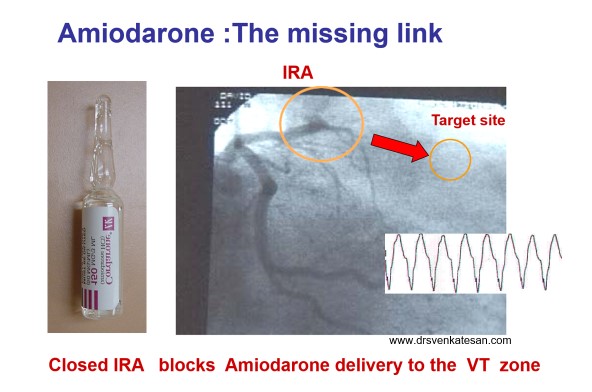
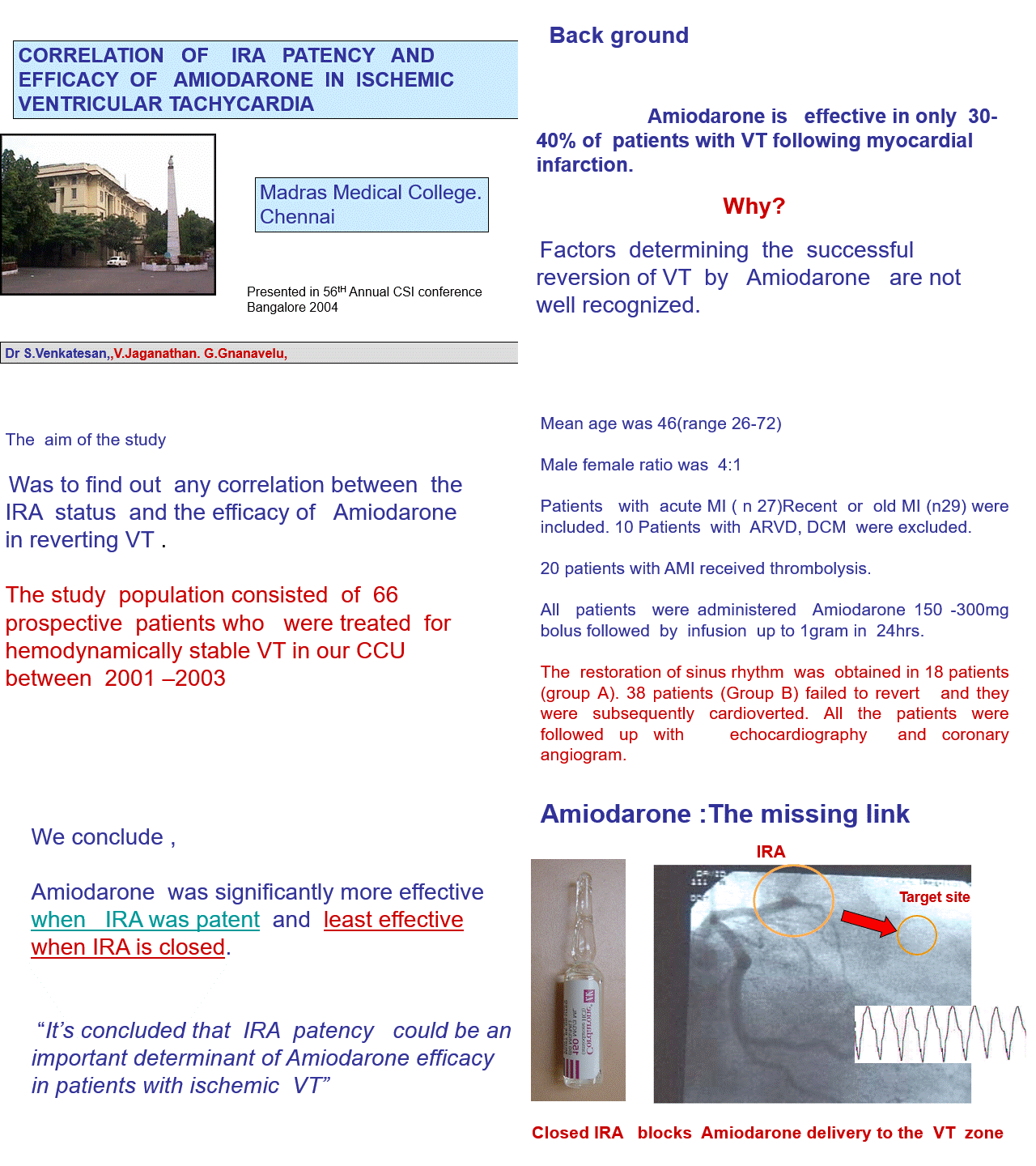
One of the factors we looked at some 15 years back was the relationship between IRA patency and amiodarone efficacy. Presented in CSI meet 2004.

It was a simple conclusion. For Amiodarone to be effective IRA must be at least partially patent to enable the drug to reach the target tissue. I am not aware of any study on this issue. Request anyone to expand this study and publish it as a full paper. (Royalty-free research topic!) Please acknowledge the concept if you think it’s original.

The field of cardiology is always at the forefront of any technological breakthrough. Cardiac pacing stands tall among all Innovations. While remote monitoring and pacemaker telemetry are well-known concepts. One would have wondered why Intracardiac leads couldn’t communicate with each other wirelessly. Yes, It was just a matter of time, for that to happen. 

The leadless pacemaker Micra/Nanostim was Introduced recently but lacked the much needed physiological pacing as they were single chamber based pacing. Though mechanical sensing of atrial activity was possible with Micra TPS software patch  (A  VDD like mode) it wasn’t providing perfect AV synchrony.  (https://drsvenkatesan.com/2020/04/03/av-synchrony-in-lead-less-micra-av-pacemaker-how-does-it-sense-atria/)


Now, technology has made it possible for dual-chamber leadless pacer. Here atrial and ventricular channels communicate in a wireless fashion, making it a truly wireless dual-chamber pacing. Interestingly the communication between them is not Bluetooth or NFC based but a concept called low-frequency Galvanic coupled intrabody communication. (Currently Implanted  pig models.)

Final message 

We have crossed new frontiers in the management of electrical cardiac disorders. While inadvertent cross-talk between atrial and ventricular lead was an issue in the past, now we are mastering the art of appropriate talk between these leads in a wireless fashion and use it for synchronized pacing. 

If science is considered as a journey towards truth,.. knowledge, data, and statistics are the key companions in this infinite voyage to an unknown destination. While hundreds & thousands of scientists do travel in this turbulent road daily, pursuing their mundane work, there are very few researchers worried about the true purpose of their journey, the quality of the road they travel, the dangerous fault lines they create.

It has become a taboo topic to criticize medical science even after realizing the fact that we are compelled to follow and glorify some of the best nonsense.

Dr. Jhon Loannidhis Professor of statistics and public health from Stanford University is of a different genre. He became so popular after his landmark paper

Loannidis JPA (2005) Why Most Published Research Findings Are False. PLoS Med 2(8): e124.

His lectures are so important to us. Physicians need to listen to his talks, infested with absolute truths, unpalatable though.

Final message 

It is my wish there is a need for a new specialty called quality assessment of published medical literature and knowledge distillery. 


RT-PCR: Real-time polymerase chain reaction, a sophisticated gene sequence-based biochemical test. Thanks to corona, this complex medical investigation has become a household name.

Jones proposed his criteria to diagnose acute rheumatic fever  in 1944, we still use it to diagnose with many modifications . Currently, AHA position statement – 2015 by Gewitz et all is  being followed. (Circulation 2015)

From Braunwald textbook of cardiology. Apart from this, there is one catch . Even if the child fulfills Jone criteria, there needs to be evidence for preceding streptococcal sore throat, either by culture or antibody. Now, can we include an RT-PCR as a new parameter to diagnose streptococcal infection is the question?

Why we Insist on evidence for preceding GAS?

It is for a the simple reason, many entities other than rheumatic fever may fulfill Jones’s criteria. (Still disease, HS purpura OR even simple viral arthritis etc) Some may even call it an essential criterion in the past. Practically it is not done is a  different story.

Tests for preceding streptococcal sore throat are ASO titer and anti-DNAase B. How about the now  glamorous RT-pCR for streptococcus ?  Though it was suggested as a useful test in the past ,the cost and logistics were  prohibitive so it was never considered to be included in the Jones scheme of things.

There could be three roles for RT-PCR testing in Rheumatic fever /RHD

1.RT-PCR as evidence for recent streptococcal sore throat.(GAS organism) Which still not practically used often but has big scope.(Ref 1)

2.To rule out co-viral (influenza-like) infections as a cause for fever and Joint pain (Used in population-based screening in a high endemic area (Ref 2)

3.There could be one more indication (experimental though) Micro-RNA detection by RT-PCR to identify children who are prone for progression to RHD. (Ref 3)

Final message

Now, we must introspect. While billions of dollars are going down the drain on  RT-PCR for diagnosing  a common cold pandemic which has no specific treatment. Will WHO and other cardiovascular preventive authorities  consider to include RT-PCR as screening  test for GAS in children. This will enable  early start of primary prophylaxis and prevent  RF/RHD  a century-long scourge of the third world.

Reference

1.

2 .Emmy Okello et all J Am Heart Assoc. 2020;9:e016053. DOI: 10.1161/JAHA.120.016053

3.Lu, Q., Sun, Y., Duan, Y. et al. Comprehensive microRNA profiling reveals potential augmentation of the IL1 pathway in rheumatic heart valve disease. BMC Cardiovasc Disord 18, 53 (2018).