Feeds:
Posts
Comments

Archive for the ‘echocardiography’ Category

Measuring TR peak velocity is the most popular  method to assess pulmonary arterial  pressure.It is  universally  believed  TR jet predicts the systolic PA pressure fairly accurately. By all means it is  a wrong perception.

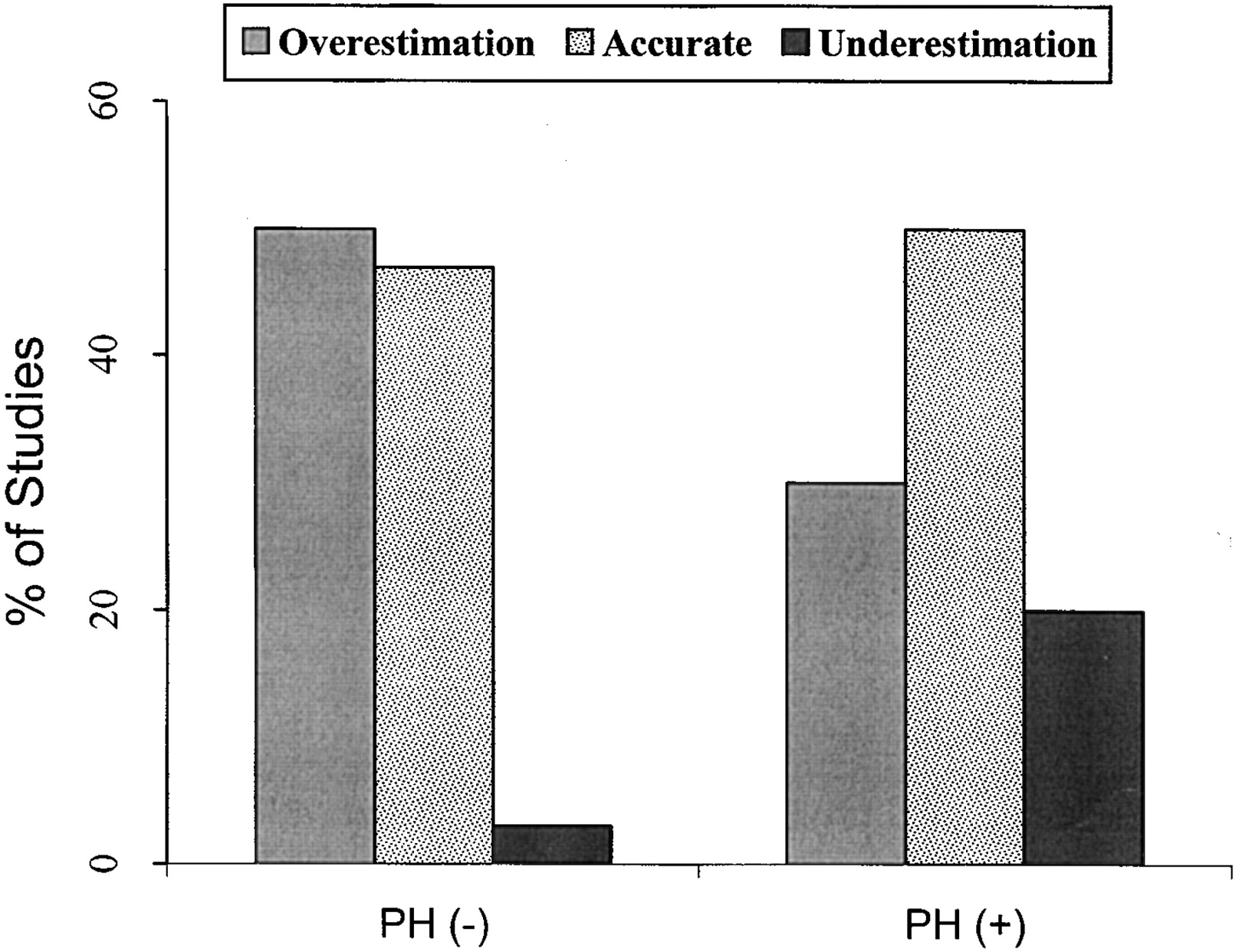
At best ,  it has only 40% correlation with cath  derived PAP  . In other words cardiologist are fooled by TR jet more often than not ! Here is an  elegantly done study  from American  Journal of  Respiratoty and critical care medicine  in  patients  who had undergone lung transplantation . It compared  systolic PAP derived from  Doppler vs cardiac  cath.

Source : http://ajrccm.atsjournals.org/content/167/5/735.full.pdf+html

Important observations about TR jet derived PAP

  • Over estimation is the key error.
  • Error of  under -estimation  less common .
  • Over estimation often occur in normal persons
  • Under estimation more frequent in patients with PAH.

(The above study documents  over estimation of 10mmhg  in systolic PAP in 50 out of  100 patients )

Final message

Nothing is perfect in science ,  especially in medical science.  In spite of the limitations  of  TR  jet  , it   will remain the corner stone in the hemodynamic evaluation of right heart pressures . (Forget for the moment . . . the umpteen variables  in  the modified Bernolui equation  , flow acceleration , viscous friction etc )

It is prudent ,  cardiologists  are expected to be aware of this harsh  fact  and  should be meticulous in tracing TR jet and  reduce the error.

One controversial  but logical  suggestion  would be  to drop the ritual of adding  empirical  RA pressure   5- 10mmhg  over the TR  jet  while  calculating PAP , as there is   60 %  error  of  over-estimation  that naturally occur with TR jet. 

Reference

http://www.registroep.org/documenti/IPERTENSIONE%20P.%20CRONICA%20TE/06_Sciomer%20ECO.pdf

 http://ajrccm.atsjournals.org/content/167/5/735.full.pdf+html

Read Full Post »

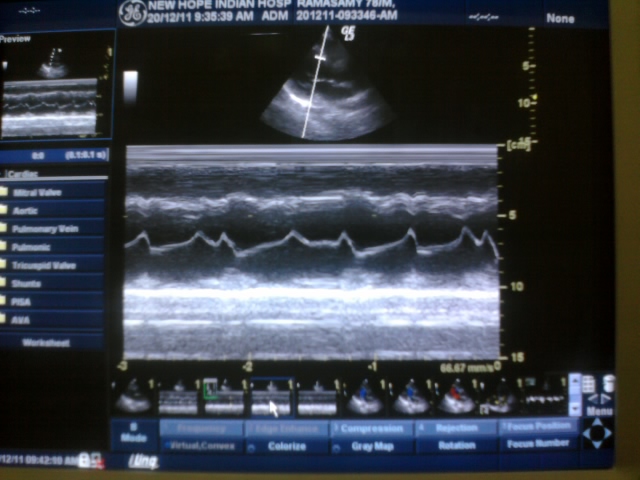
VPDs are the most common arrhythmia  that  confront  us  in  cardiology clinics .While  it can be a totally  benign   manifestation in some  ,  it may signify a sinister condition in others. ECG  is the easiest  and surest way to identify VPD.However  a shrewd echocardiographer can detect the VPDs while imaging the heart.It is often missed if one do not concentrate on the mitral valve motion.

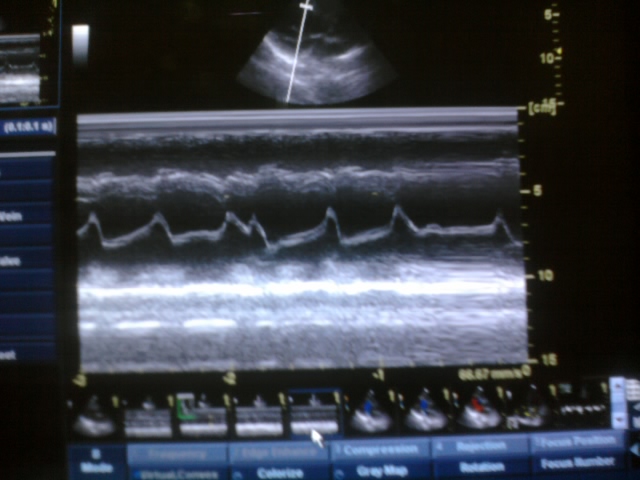
Note :The VPD convert the typical M pattern into a inverted U pattern in mitral valve.

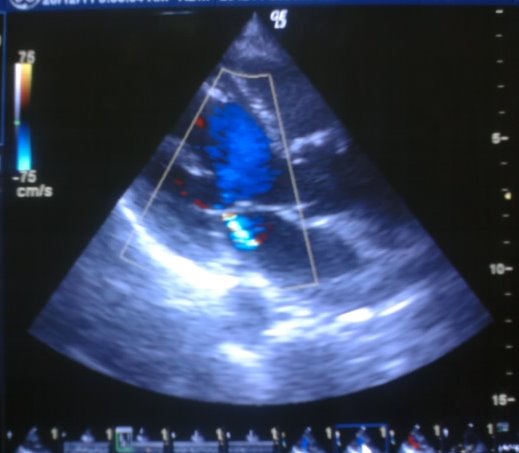
One of the important hemodynamic side-effect of VPD is intermittent mitral regurgitation.

Effect of VPD on mitral valve opening .

By  conventional thinking   VPDs  are expected   to impact  more on the  mitral  valve closure than it’s  opening .In reality it has indirect influence on mitral valve  opening as well. The retrograde  conduction(VA conduction) of the VPD determine the timing of atrial contraction and hence the   mitral valve opening. If the VPD gets blocked retrogradely  within AV node , the normal sinus impulse will activate the atria in an antegrade fashion .Note ,  he atrial activity  occur randomly when multiple VPDs occur.This makes the cardiac cycle too complex to assess especially the diastole. (In fact true  physiological diastole  may  not occur here !)

If  the mitral valve opening  is interfered by a   VPD  (Early diastole is  the  favorite time  for VPDs to  appear  !  )   .When it occurs the AML is    suddenly pushed  upon superiorly  by the premature ventricular activity and hence resets the  mechanical diastole. Please note electrical resetting of atrium is different from mechanical resetting.

It is also possible atria and ventricle contract simultaneously .This is the time , a cannon wave  may occur inside LA .VPDs can result in pulmonary venous canons and may even elevate pulmonary venous pressure   if  this  occurs repetitively .

Another possibility  is ,  VPDs  may not initiate a ventricular  contraction at all .It may be  simply  be an electrical event. That’s why  we changed the name of extra systole  and premature contraction into just   premature depolarisations.

Why is it important to know about M Mode motion of VPDs

Cardiologists  continue to  engage wide qrs  tachycardias   in the  wrong side  of their   brain for many  decades .The ECG debate about wide qrs tachycardia  is expected to  continue  for generations . !  Few smart cardiologists would  rapidly put  the echo probe  over the mitral valve and able to  differentiate  instantly a VT form SVT   with fair  degree of accuracy.

Detection  of regular M shaped mitral AML  will exclude a VT with a high degree of precision .(AV dissociation by echo )*

Even  presence of trivial  MR*  (More often diastolic )   which occur  irregularly  will  definitely indicate it is VT . SVT  hemodynamically   can not result in this  MR is gives us evidence for AV dissociation

* No reference for these observed indices in our lab. (Class 1 Level C expert opinion(  No one calls me as expert though ! )

What is the mechanism  of VPD induced  mitral regurgitation ?

It is well-known VPDs can cause   mitral regurgitation .Not every VPD cause MR.

  • The timing is important .
  • It can be  either systolic or diastolic MR .
  • If VPD occur in early diastole (After the T wave , the MR jet  will collide with  diastolic mitral flow. )
  • Paradoxical septal motion induced by VPDs can alter the pap muscle alignment transiently and result in MR
  • We dot not know how a LV apical VPD  differ from RVOT  VPD in the genesis of MR.
  • Logic would suggest RVOT  VPDs are unlikely to result in MR as there is  a time lag for the impulse to reach the LV base

What is  the effect of  VPD and Aortic valve opening ?

While  every VPD promptly  hits the mitral valve ,  aortic valve may or may not open with VPDs .Again timing and focus of VPD could be  important.This is the reason during  multiple  VPDs  only few open the aortic valve , that  explains  pulse deficit. (The so called missed beat )

Final message

Anterior mitral leaflet (AML) is the most mobile structure  of  the heart . Hence ,  it is not surprising to note  sudden unexpected ventricular contraction will  have maximum impact on this valve .

When VPDs occur in clusters or at random it has a complex effect on the mitral valve motion. This is responsible for  palpitation , minimal mitral regurgitation and rarely trouble some pulmonary venous cannons and raise in pulmonary venous pressure .

Careful analysis of  AML motion can give us useful clues to differentiate VT from SVT during wide  qrs tachycardia

Read Full Post »

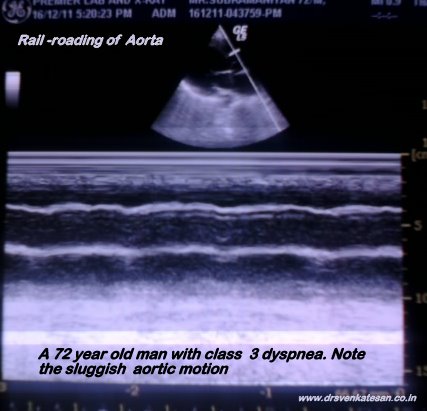
Aorta  is connected to the left ventricle  like a hose pipe.The energy  generated within the LV myocardium is efficiently delivered to  the root of the aorta. Mechano -coupling of LV with  aorta  is important means by which  blood is  is ejected into systemic circulation .

Even though aorta  has  mainly passive  contraction and ( The  wind- kessel effect) ,  the most  powerful contractile force  of aorta comes from   the  transfer of kinetic energy from  left ventricle .

This helps  us to  measure the LV function  simply by  looking at the aortic wall motion.Since aorta is the final common exit for LV  it effectively represents the global LV  function . The  ubiquitous errors during  LV border tracing  and it’s subsequent mathematical  amplification  can be avoided. Here is a  patient with severe LV dysfunction  whose  aortic  motion is depicted . We refer to this as   ” rail roading” sign of Aorta  which  implies  a critically dysfunctional LV . His EF was 23 %  The aortic motion is esepcailly useful in categorizing severe LV dysfunction  from moderate LV dysfunction (The sensitivity we feel is as high as sophisticated tissue motion Doppler protocols .Of course  it may lack specificity !* as hardened  aorta due to aging can confound the aortic motion )

Read Full Post »

Heart is a dynamic organ . It can alter  its force of contraction with every beat  according to the needs.Generally it responds to  length  of  previous  diastole.This is famously called frank starling law , ie the force of contraction is directly proportional to the end diastolic fiber length. So changing diastolic  duration as in atria fibrillation classically result in varying amplitude of LV contraction and pulse volume.

However , the commonest cause for  pulsus alternans  is  due to  severe left ventricular systolic dysfunction .There has  always been a suspicion about the existance of  beat to beat variation in  diastolic function as  well.  We have recently observed a  new* explanation for pulsus alternans .We know AV inflow is subjected to respiratory swings . Non  respiratory swings in mitral and tricuspid valves are rarely described. This pattern is now increasingly recognised.

These  non respiratory swings in the mitral inflow doppler pattern  is seen in  some of the  patients with hypertension and LVH.This  probably confirms the existence of  beat to beat variability of diastolic function . This phenomenon is relatively a new observation . Such pattern are common in patients who have had a recent hypertensive failure .


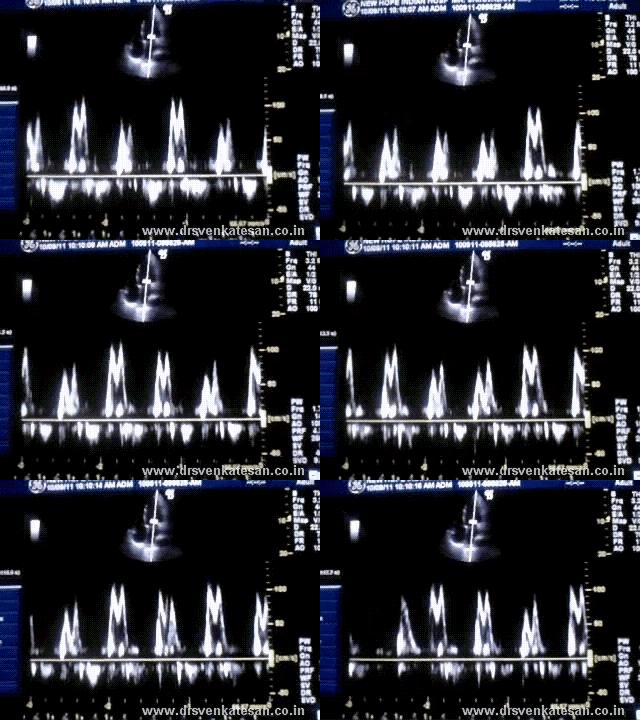
Here is a doppler of mitral inflow recorded from a patient with hypertension with LVH .

This is the doppler mitral inflow profile of a patient with Hypertension, LVH and class 2 dyspnea .Note the non respiratory swings in both "e" and "a" velocity

It is proposed  to  define  a new class of diastolic dysfunction that can be referred to as diastolic  mitral inflow  alternans .This phenomenon probably indicates a more severe grade of diastolic dysfunction.At the molecular level this is related to  undulating flux  in the calcium uptake from cytoplasm into SERCA .There is one more possible explanation for diastolic alternans  -Left atrial  dysfunction .

Occasionally one can visualise  a chaotic pattern of  diastolic filling waves  (e=a e>a a> e )  Such patterns are thought  to be markers of impending acute diastolic shutdown .

Further  analysis of  this  mitral doppler inflow pattern will be reported  later.

Reference

* Though we observed this for the first time , this is not a new phenomenon .There are few reports available in the literature.

http://www.sciencedirect.com/science/article/pii/S0735109785800358


http://www.sciencedirect.com/science/article/pii/S0894731706012818

Read Full Post »

There are innumerable  stresses  to human beings in daily life .

Heart  experiences a few  either directly or indirectly.

  1. Physical stress
  2. Pharmacological  stress
  3. Mechanical stress
  4. Hemodynamic stress
  5. Mental stress

Squatting is rarely realised as a form of physical   stress to heart .  Rather , squatting can also  be termed as a  good exercise  ( Western toilets sans it !)

Squatting  raises the afterload at the level of aorta due to  increments  in SVR (exact mechanism not clear ,neural reflex ?)  and temporary reduction in venous return.

After load raise is synonymous with increased  ventricular wall stress  . So,  it is logical to expect wall motion defect in  vulnerable hearts* when confronted with sudden increase in afterload .(*Ischemic hearts with delicate coronary blood flow ) .Hence ,  sudden squatting , a seemingly simple  maneuver   ,  can  unmask  silent CAD .It can be aptly be named as poor man’s stress echo.

Of course , it  doesn’t   mean in any way ,  it should not be used in rich ! The  purpose of science  is  to make things simpler and cheaper . If squatting can replace  dobutamine with fair degree of accuracy  atleast in a few ,  it can help  control the escalating  costs of  cardiology triaging   due to   many futile diagnostics !

http://content.onlinejacc.org/cgi/reprint/46/5/931.pdf

When squatting  is a stress in normal persons , paradoxically it gives relief to patients with cyanotic heart disease

Read the related articles in this  site .

How squatting relieves hypoxia in TOF ?

Squat Echocardiography in TOF

Read Full Post »

Can the LV  ejection fraction change with every  heart beat  ?

EF % is one of  the  glamorous  cardiac functional indices that has  caught  the  imagination of both patients and physicians. How accurate it is ? How reproducible it is ? How many methods are available  to arrive at EF % ?

Picture courtesey http://rachel.worldpossible.org/ocw.tufts.edu Munther Homoud, M.D

 How many of us  realise  it can  potentially   change  with  every  heart beat ? *

Apart from the heart rate dependency ,  the echocardiographic error can be amplified  by

  • Difficulty in identifying  the  leading and trialling edges  of endocardium
  • Patient posture errors
  • Edge detection errors in 2D
  • Pap muscle shadowing .
  • Angle errors
  • Sub optimal echo windows  when EF is measured  in the  bed side  in critical care units
  • Mental status of performing sonographer/cardiologist  (One who chops  2D shells hurriedly and obliquely !  )

All these make this index a highly  variable parameter(  next only   to your  city temperature ! ) This happens whether you measure EF  with M Mode, 2D Simpson , 3D volumetric etc .

* The term  “beat to beat” changes may be  a little exaggerated  statement .It is used   to convey the point of   ” huge  variability” of this parameter.  It  means there can be variations of EF %  with varying heat rate.
The heart is not an Independent organ rather, it is a slave to preload and afterload !

How to overcome the limitation  of EF ?

To overcome this  error a new  parameter called myocardial performance index (MPI) which accounts for heart rate came into vogue . (Did it come really ? Ihaven’t seen a single cardiologist  do this in his clinic ) . 3D volumetrics,  velocity vector imaging , and many other innovations has been added.  Nothing  was  able to replace the EF % . Because of complexities in the newer  modalities  most cardiologists (including  the author  )  continue to romance  the  much flawed EF %  .

Simplicity  shall   reign supreme   .  .  . in spite of  inaccuracies ,  in any walk of life  !

 How does  EF  change  beat to beat ?

The answer is simple . The contractility of heart is dependent   upon the previous  diastole ,  during which heart fills. Heart is primarily an elastic organ. Whenever the  filling is  is more   ventricle is stretched  more ( diastolic filling is the stretch ) and the subsequent force of contraction is more . This is the basis of famous frank starling law.

LV filling is dependent on RV filling which in turn depend on venous return ..Venous return is a function of  vascular tone and the persons physical activity .

Apart from this  adrenergic drive make the heart contract vigorously . This is the reason ,  many patients  with  severely compromised  LV function  in ICU  , supported  with  inotropic agents  show vigorous contraction of heart .(Basis of doubutamine  stress test )

** Every one of us is aware about the huge influence  the preload  has ,  on LV contractility .  Surprisingly,  it   can also  swing  with changing  after load . This fact is often  under recognised .This is called Anrep effect .

So , imagine the scenerio . . .the heart is simply  a “squeezing- slave”  of   pre load and  after load  !  . . . And still we are happy with assessing the cardiac function ,  in isolation without giving any respect to the loading conditions.

Final message

EF ,  would rank  first among all  medical  investigations ,  that is  significantly  flawed , still  continue  to  enjoy huge popularity  ! It has little value as a  screening   test for assessing  LV function in  general  population . But ,  it  has an  important role to assess  the damage following   MI and in  the  follow up of patients with   significantly  compromised LV function.

Cardiologist are aware of this fact ,  but most non cardiologists , especially  Anesthetists  and Surgeons  revere  the  EF% with    sanctity  . This is definitely un-called for . It is the duty of the cardiologists to pass on  this  message to their colleagues in other fields.

Read Full Post »
Heart is mainly perceived  as  a pumping organ but it need to be realised it  also has a   reservoir function  (Temporarily though , for  about .5 seconds every beat ) . Contrary  to the popular belief heart is not  continuously and tirelessly working  .For every contractile  beat it takes  a brief period of rest .This is called diastole. But , even here it is not a complete rest , as  it has to receive the blood from the atria and get filled and be ready for the next beat.

Many think diastole is an active energy-consuming process . . . but it can be debated still ,  as passive elastic properties may contribute substantially to cardiac relaxation blunting the energy requirement

God is so scientific (Greatest scientist !)  he  made it sure   the resting phase(Diastole)   is slightly more  than the contractile phase (Systole ).

This makes the organ relax a bit more than it stresses  in its entire life time . At  any  given heart rate diastole will be slightly  more than systole  , peculiarly  for the same reason  during tachycardia  diastole suffers more than systole.

What happens in diastolic dysfunction ?

Pathologically the ventricles become stiff  and rigid and the filling of the  ventricle is impaired . The commonest cause for diastolic dysfunction are  hypertension, diabetes, and  ischemic  CAD some forms of myopathies  .In systole ,the calcium  is pumped into actin myosin complex  while in diastole the  same calcium molecules  (Or different !)   are ejected back into the cytosol and sarcoplasmic reticulum. The later process is impaired in many situations of diastolic dysfunction.

It should  also be realised not every one with diastolic dysfunction  has a  calcium release /unloading defect .Many  have structural diastolic dysfunction  like interstitial fibrosis  .Here the mechanism goes beyond  calcium kinetics.These are the patients who get maximum  benefit out of heart rate reduction.

It is all Time  . . . Time as a  lusiotropic  drug !

If the ventricle finds difficult to relax  (or slow /sluggish to relax )  we have  two  options to tackle this .

  • To make relaxation  faster( ie positive lusiotropism )*
  • To  prolong the diastole  itself  .

Prolonging diastole makes it certain , the LV relaxation process is completed   as the excess time compensates for  the slowness of calcium reuptake into the sarcoplasmic reticulum . In fact , we have observed at slow heart rates (<60)  it is very difficult to document diastolic dysfunction  by doppler .

In many of  dilated  cardiomyopathies  the beneficial effect of  beta blockers , could be linked to simple reduction in heart rate and prolongation of diastole .(Note In DCM about 30-40 % have restrictive filling )

Final message

As we have no specific drugs to  augment the  process  of   cardiac diastole,  currently heart rate reduction  could be the simple and best method*  to improve diastolic function  .In many cases  diastolic dysfunction  simply vanishes  at low heart rate.Bradycardia  and  diastolic dysfunction   will remain as foes  forever !  Please give the benefit of this simple concept to all your patients with diastolic dysfunction .Your patients  can breath lot more easier !

*Apart from controlling the underlying cause like DM, SHT and CAD  , anti fibrotic drugs,  interstitial relaxants ,selective cardiac   collagen uncouplers  are the  future areas of research .

Read Full Post »

New concepts are created to clear confusion and bring clarity. We know all along low gradient AS is a hall mark of severe LV dysfunction. Now we suddenly invented normally contracting  LV can also cause  low gradient due to low flow when the aortic valve orifice becomes very critically narrow .

How can it occur ?  . . . few  suspect  it  to be  semantics  !

The terminology  that is  often used in recent times when describing severe aortic stenosis.This is called Low gradient severe AS with preserved LV function .

But logic would say blood flow is required to produce gradient .If it falls extremely low the gradient is likely to fall.

If that is the case every severe  AS patient will experience low flow at least in  few beats . Is this the reason why we find it very difficult to reproduce the exact gradient  ?

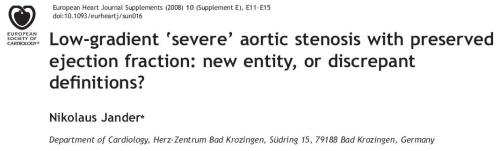
Low flow ,Low gradient aortic stenosis is not a  new entity .It is the way we look at the data. It  remains a fact  ,  severe  AS can be diagnosed with 2D features alone ,  without the help of Doppler.We also know  Doppler is less reliable than 2D in many situations for various  reasons .The most important being it’s dependence on angle of  doppler  intercept  and LV contractile force.

Read  the  argument by   Nikolaus Jander from Germany

http://eurheartjsupp.oxfordjournals.org/content/10/suppl_E/E11.full.pdf+html

Read Full Post »

We have thousands of  medical videos.When I stumbled upon this  one  ,from you tube which  I thought  will be immensely useful and   is crisply made.

It  proposes a 5  simple rules  to diagnose diastolic dysfunction .There is  also a new concept* discussed in this  video .

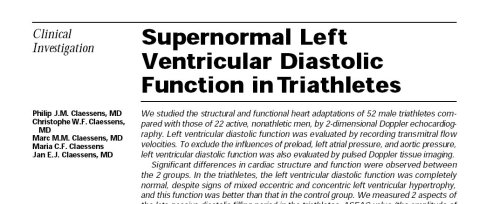
* What is super normal diastolic function ?  How can it be mis- interpreted as a pathological ?

Over to the video clip from  (123sonography 0

http://www.youtube.com/watch?v=qdLkbcFe_DI&feature=related

Read Full Post »


Bicuspid aortic valve is  probably the commonest congenital heart disease.

  • It can be a totally benign entity and can be incidental finding in many .
  • Only a fraction progress to pathological entities like aortic stenosis , aortic root dilatation  etc .
  • Those afflicted need periodic echocardiography
  • These valves are prone for premature degeneration
  • Intervention is rarely required

Here is a complete review on the topic from the  top rated cardiology journal circulation.


Link to the article

Read Full Post »

« Newer Posts - Older Posts »