Ventricular tachycardia is a major cardiac electrical disorder. Even though it connotes a deadly meaning the prognosis and outcome vastly vary.It can be a benign arrhythmia in structurally normal heart that present as occasional fasicular VT or Exercise induced RVOT , to dangerous ischemic polymorphic VT which rapidly degenerate to VF and SCD if not reverted . It is ironical we are trained to put all VTs in a single basket and propagate fear psychosis among physicians and patients .
Management of VT has certain broad principles.
Identify the cause
Whether specific structural heart diseases present or not
Identify the mechanism if possible
Rule out transient metabolic cause as a trigger
Therapeutic targets
Stabilising the cell of origin
Passifying the scars
Interrupting bundle branches in BBR mediated tachycardia
Ischemia related Focus – Re-perfusion
Reversing LV dysfunction
Management
General
Correct Cell hypoxia /Acidois
Pharmacological ( Class 1A/1B /1C , class 3 and Beta blockers , Magnesium )
Role of beta blockers for VT management is largely under recognised.It has an important role to play in both acute and chronic VTs)
Electrical (DC shock ,Ablation and ICD)
DC shock is treatment of choice all emergency VTs
Ablation aims at preventing episodes of VT .Ablation needs EP study and expertise of an electro physiologist.
ICDs revert it only after the VT emanates from the focus . ICD can be implanted without knowing the focus .May not require a EP consult.
Surgical
CABG + Surgical scar excision , Aneurysectomy might help in certain refractory VT.
ASD device closure is rapidly gaining popularity . Amplatzer device occluder has become a de-facto standard. Contraindications are declining . More and more young cardiologists want to indulge in this play . Fortunately cost of device is acts as a major deterrent .
The pre procedural evaluation seems to be many fold important than the procedure itself.
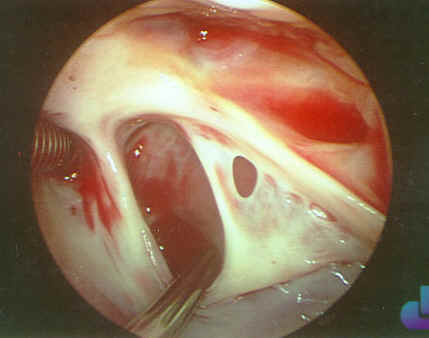
* You ask any cardiac surgeon , How variable the shape and size of ASD can be ? To complicate the issue the LA side may show an entirely different shape and diameter compared to RA aspect. The orifice by itself may travel obliquely.
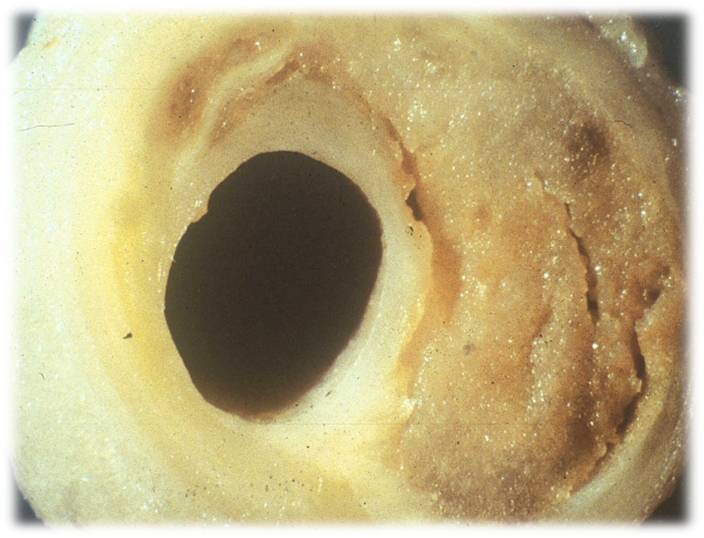
Currently the thickness of IAS* is not taken into account in device selection . It may be unwise to do so , because the thickness of the rim and its interaction with device determines which direction the device will drag (Homing in ) in the long run .
The potential dead space between the device and the septum can be a late focus for thrombosis. CVAs have been reported following ASD device closure.
Classification with reference to size
ASDs can be small (3 to <6 mm), medium (6 to <12 mm), or large (>12 mm),
What is the shape of Ostium secundum ASD ?
Round (perfect round very rare)
Oval
Irregularity oval
Irregularly round
Combinations
How is the orifice orientation with reference to plane of IAS ?
Horizontal
Oblique
Combination of the two
Which is the best method to measure the ASD size ?
Trans-thoracic Echo
2DTrans-Esophageal Echo
Balloon estimated ASD size in fluoroscopy
Real Time 3D TEE
Intra-cardiac Echocardiogram
Currently there is some degree of confusion about utility value of balloon sizing . Opinion differs. A meticulously done TEE may be the winner
How do you tackle an elongated and Oval ASD ?
A large ASD with an adjacent daughter ASD . It is very difficult identify this daughter defect by conventional imaging . Intra cardiac Echo may help . Failure to recognize fenestrated defects especially in the edge can lead to poor device approximation
Con-founders in ASD size measurement.
Stretched ASD diameter. (How much stretch ? )
Systolic vs diastolic ASD size
Practical tips for ASD sizing
Add 2mm to balloon/TEE estimated waist.
TEE may be more accurate than the balloon .
Balloon has a inherent issue of over stretching the ASD and false high diameter.
Waists are often circular in the device We do not have oval Amplatzer device.
Accurate sizing is very difficult to achieve , so which side is better to err ? lesser or over size ?
Dangers of under-sizing
Mushrooming of the device
Dislodgment & Embolisation
Residual shunts
Thrombosis over metal gutter created by intending device
Dangers of over sizing
Aortic erosion
AV blocks
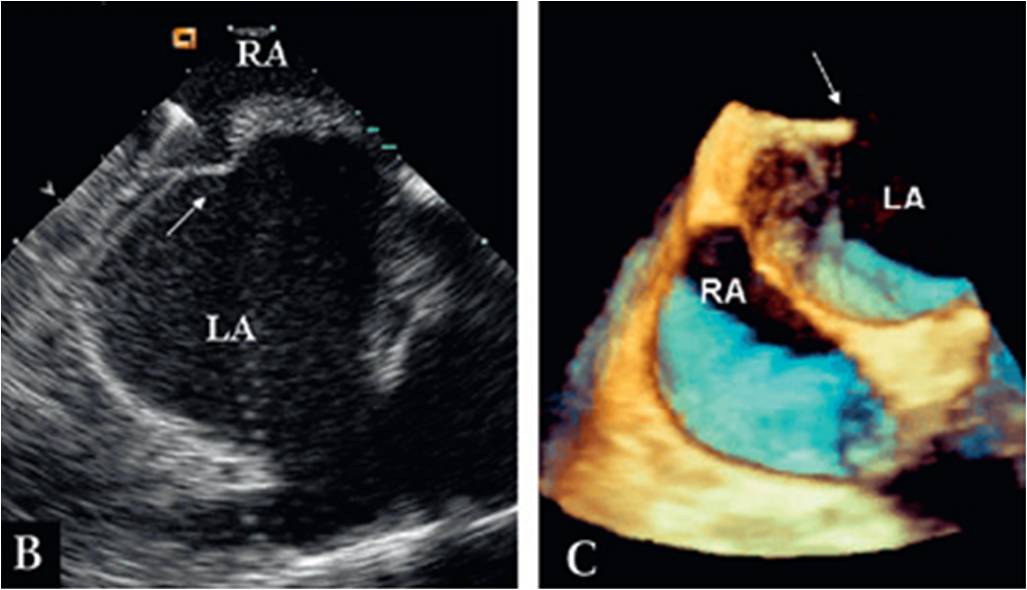
Newer modalities for ASD imaging
Intra cardiac echo and real time 3D TEE will facilitate the ASD device procedures Image source : Heart 2010;96:1409e1417
Final message
ASD device closure is rapidly gaining popularity . Contraindications are declining . More and more young cardiologists want to indulge in this play . Though more children are getting benefited in this non surgical modality , complications are also increasing .
Small centers should not be allowed to carry out these procedures. Fortunately cost of device acts as a major deterrent . A few centers (one or two per state ) is to be developed for high degree of expertise .
Without mastering the art of TEE never touch the ASD device .
The most critical step in ASD device closure lies before the procedure and . . . it is often outside the cath lab !
Always refer large defects and complex ASDs which are adjacent to Aorta and AV to a good surgeon .Get an operative photograph of the defect and re analyse whether device would have been possible in retrospect .
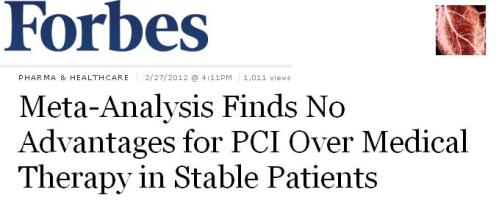
These are the studies which nailed the routine PCI in chronic stable angina . Please note these articles came in prestigious journals more than 5 years ago.
Nobody* seemed to listen or learn . Now the Archives of Internal Medicine has come out with another punch to PCI .
Hope we refuse to learn again . . . and keep the interventionist spirit high !
And for a change read this landmark paper from Forbes
Beta blockers are vital drugs to limit infarct size and facilitate myocardial salvage. Myocyte death is prevented by reducing MVO2.These concepts originated in early 1980s when thrombolysis was not in vogue .Studies like MIAMI and BHAT were considered landmarks.
Later on , when IV thrombolysis came in a big way the importance of beta blockade in STEMI suffered a little , still it held on to their benefits.
The real problem arose when few enthusiastic cardiologists introduced early multiple blouses of IV beta blockade in the setting of Acute STEMI without realising the potential danger. (In all probability man kind must have lost many thousands of lives with this aggressive beta blocking protocol world over for nearly a decade !)
Fortunately we woke up and in early 2000 , a massive study called COMMIT was initiated to answer convincingly the utility value of routine early IV bet blockade. Rest is history . It clearly showed us the what we were fearing was indeed true. An unacceptably excess cardiogenic shocks were reported in the early IV beta blocker arm .In the same period of time the concept of primary PCI exploded and the BBs were pushed to sidelines
It is a different story altogether . . .
While the funny world of cardiology showed the door for routine early beta blockers in STEMI , it made a stunning U turn in the management of CHF , after being dumped as an absolute contraindication for so many years !
Still COMMIT fails to answer many queries
Beta blockers in LBBB /RBBB – Probably need to be avoided.
Beta blockers in bifasicular block – Should be an absolute contradiction
How do you know tachycardia in STEMI is due to high sympathetic activity or cardiac reserve ?
Young men with persistent tachycardia will do well with beta blocker started within 24 hours .
Unless there is s3 or basal rales all tachycardia are to be considered as purely inappropriate and adrenergic
Tachycardia in elderly, women, and diabetic especially the blood pressure hover around 100mmhg is more often a compensatory phenomenon.Meddling the heart rate with BB is vested with a risk.
Finally , if you have a doubt do a rapid echo , if the EF is > 45% one can safely administer BBs
Should we discontinue BBs in those who are already taking it ?
Continuing the beta blocker is thorough the STEMI phase is adviced .(Unless specific contraindication exists )
Beta blocker following primary PCI
The beneficial effect of early Beta blocker even in post thrombolytic era is blunted, it goes without saying primary PCI almost nullifies these effects.
still , beta blockers is to be introduced after a successful primary PCI in all patent for long-term protection.
Final message
Do not rush into start beta blocker routinely following STEMI . The risk is not worth taking !
1. IV beta blockers should not be administered to STEMI patients who have any of the following: 1) signs of heart failure, 2) evidence of a low output state, 3) increased risk* for cardiogenic shock, or 4) other relative contraindications to beta blockade (PR interval greater than 0.24 seconds, second- or third-degree heart block, active asthma, or reactive airway disease). (Level of Evidence: A)
*Risk factors for cardiogenic shock (the greater the number of risk factors present, the higher the risk of developing cardiogenic shock) are age greater than 70 years, systolic blood pressure less than 120 mm Hg, sinus tachycardia greater than 110 bpm or heart rate less than 60 bpm, and increased time since onset of symptoms of STEMI.
Cardiac arrhythmias by nature connote a serious implication ,especially so with ventricular ones. Here is an arrhythmia which arise from the ventricle by excessive automaticity , fires independently , still very benign compared to others ventricular arrhythmias.
Why AIVR is a stable arrhytmia ?
Primarily due to its low rate.
Since it is a reperfusion arrhythmia the outcome is good.
Mechanism
It is not due to reentry , it is thought to be due to enhanced automaticity without pathological intra-myocytic calcium spikes (Like true VT )
Absence in surface ECG does not mean it is not existent. In-fact there is some evidence to call this arrhythmia as a form of ventricular parasystole.
Focus of arrhythmia
Since it is a reperfusion arrhythmia it has to arise somewhere from re-perfused myocardium.
The fact that it can occur in both RCA and LCA reperfusion indicate the focus can be in any of the ventricle .
Usually it follows the reciprocal rule of bundle branch block pattern (RBBB in LV focus LBBB in RV focus.)
Septal AIVR can have either RBBB or LBB morphology. Usually left axis is noted .
How to differentiate it from non sustained VT ?
Ventricular rate in AIVR should be between 60 -110 .(Note -The inherent ventricular rate is 35/mt .There is three fold acceleration )
Basic idoventricular rhythm is about 35. Three times accelerated
Characteristically AIVR starts with an escape beat rather than an ectopic beat .
AIVR is common in RCA or LCA reperfusion ?
It is supposed to be more common in infero-posterior MI as sinus slowing is an important predisposing factor for releasing the idio ventricular rhythm.
AIVR after primary PCI
Is not reported much as current interventional cardiologists do not bother much to watch about this arrhytmias
Other causes for AIVR
Myocarditis.
Digoxin toxicity
Management
(The commonest issue with AIVR could be . . . Nurses /Fresh interns may mistake it as VT and pressing the false alarm ! )
What will be the pulmonary capillary wedge pressure ( PCWP ) in grade 1 LV diastolic dysfunction ?
Significantly elevated
Marginally elevated
Usually Normal
It depends upon age, LA size and LV function.
Answer is 3 . (Of course it depends on 4 ) Normal PCWP is 4-12mmhg
Are these patients with grade 1 LV diastolic dysfunction are at risk for acute pulmonary congestion at times of stress ?
Probably not ( in most )*
The grade 1 LV diastolic dysfunction or defect is the most used (abused ! ) echo terminology .The diagnostic simplicity of this condition namely a simple documentation of “a”velocity more than “e” , has made it as an epidemic in echo labs world wide. After all , it reflects a simple fact that left ventricle has summoned the atria for assistance (Which is all the more physiological at times of stress !)
When does this physiology becomes pathology ?
As long as the atria is doing its job of assisting the LV without any fuss , the mean pressure of LA(PCWP) is maintained within normal level . Only if the atrial function is stretched beyond the limits , PCWP begins to raise. It can happen in a variety of ways . Most commonly it happens elderly hypertensive /Diabetics especially with LVH .
It can also occur in healthy individuals when they become physically deconditioned. (Left ventricle goes for disuse and find it difficult to relax)
Final message
Isolated grade 1 LV diastolic dysfunction in people > 40 years generally do not indicate a serious abnormality.
Only if they have DM/HT and myocardial disease they need to be evaluated further.
One practical clue is , if LA size is normal one can rule out significant diastolic dysfunction.
Caution
* In elderly population , when they undergo any major surgery , presence of even grade 1 LV diastolic dysfunction can be a marker for peri -operative LVF and lung congestion .
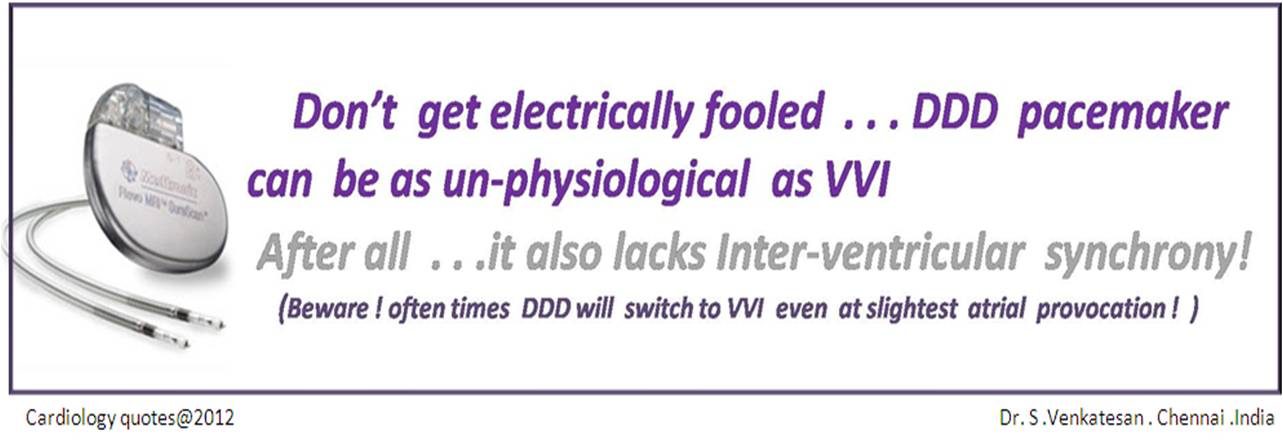
Choosing a pacemaker is not a child’s play . It is a complex game played by cardiologists , electro-physiologists and their ill-informed
patients. The superiority of dual chamber pacing over single chamber pacing was never convincingly proven.
Still . . . usage of dual chamber pacing is steadily increasing over the years for various reasons.
“Every thing hangs around a key word called quality of life . DDD pacemaker is supposed to enrich life due to their AV synchrony “
World health organization says quality of life of homo-sapiens are determined by at least few dozen factors .They are mostly non medical.
How an extra lead at a cost of 2000 dollars more , is going to provide that elusive “quality of life” to all those poor patients with bradycardia in this world , which . . . they any-way lacked even in their best of times !
Scientifically also there is a major flaw in calling DDDR as physiological pacemaker
Can you safely rule out heart disease before non cardiac surgery without echocardiography ?
Yes , in most situations . Experience suggest If the clinical examination is normal , ECG and X ray do not show any abnormality , significant heart disease is ruled out 95/ 100 times.
Please note : ECG and X-ray can not R/O Coronary artery disease by any degree of specificity .Echo cardiogram also miserably fails to predict future CAD. But EST / TMT does this very efficiently!
So where does the echo comes in the routine protocol in the screening of heart disease* ?
“No where” to be precise. It is only a gimmick . But many physicians and anesthetists are obsessed with echo estimated LV EF % They invariably ask for pre operative echo for cardiac risk stratification.
* On the other hand EST has a strong case for inclusion as a routine screening test before surgery.
What about diastolic dysfunction ?
ECG and X ray will not miss a manifest myocardial disease . However concealed diastolic dysfunction can not be detected without echo. It is very common to detect early forms of diastolic relaxation abnormalities in echo . Significance of this is not clear especially if it is grade 1 . In this situation patient’s functional capacity comes to our rescue. In a non functional patient any degree of diastolic dysfunction may increase the pulmonary capillary wedge pressure. These patients must be monitored and fluid administration should be be judiciously used.
Final message
Echocardiography rarely comes* in the routine scheme of things in the pre -operative cardiac risk assessment.
Summary
First question to ask before non cardiac surgery is about the symptoms and functional capacity . ( Do you climb 3 floors ? Walk 6 km /hr . lift 20kg over a flight of stairs , objectively walk 9 mts on treadmill with std Bruce) If he is asymptomatic and his functional capacity is good , for all practical purposes he will be fit for surgery in cardiac point of view .
Next , we need to look the ECG and X ray chest . If one of them shows some evidence for chamber enlargement / q waves etc ,an echocardiography is ordered .
If you really suspect CAD one should go for EST or doubtamine stress ECHO.
* Cardiologist lack professional freedom in new age medicine :
In this funny medical world , a cardiologist can not do what he wants to do . I have encountered surgeons and anesthetics refusing to take a patient for surgery without knowing the ejection fraction ! Once when I gave a surgical fitness without taking an echo there was a furore from the corporate desk of a big hospital . How can you make decision without these modern gadgets they seemed to ask ! Future looks lovely for cardiology !
The contents of the this blog is being published as Kindle E book , as per the request of many of the readers. Every article will continue to be open source in this site. Again I shall reiterate the book format is not aimed at any commercial intent. It is only to facilitate learning in a single book format Here is the link to book https://amzn.in/d/euhL5vu
Click below to see who is watching this website live !
This site will never aim for profit. Still ,this donation link is added at the request of few visitors who wanted to contribute and of-course that will help make it sustainable .
Please Note
The author acknowledges all the queries posted by the readers and wishes to answer them .Due to logistic reasons only few could be responded. Inconvenience caused is regretted.





 Dr.S.Venkatesan MD