Feeds:
Posts
Comments

We know the right ventricle is a weak pump compared to LV. This is evident from the triangular pressure-volume loop of RV. RV not only generates less pressure, its thin wall and its direct connectivity to the extrathoracic compartment make it vulnerable to hemodynamic fluctuations whenever Intrathoracic pressure swings.

Note the lowly lying pressure-volume loop of the right ventricle. RV is a too gentle chamber and needs to be handled with extreme care especially when it is failing acutely.

Patients on ventilators are typically exposed to iatrogenic rise and fall in right heart pressure. If continuous airway pressure is kept high it’s directly add on to RV afterload. The second adverse event is through interrupting venous return (preload). 

 Effect of mechanical ventilation on RV

  • RV preload is reduced (If they drop too low – they are equivalent to be in “Status Valsalva maneuver” ) 
  • RV afterload increases when Inspiratory airway pressure is increased. (
  • If RV is grossly dilated it may encroach LV and interfere with its function (Reversed Bernheim effect )
  • Many of the unexplained hypotension and reduced cardiac index are due to suboptimal ventilator setting
  • Ventilator increases the mean RA pressure, and if there is PFO, it can shunt right to left and aggravate the preexisting systemic hypoxia. 

In some of the situations where RV is already in the fighting mode for survival, imagine its plight when it had to take on the adverse setting of the ventilator as well. This happens in RV infractions. Pulmonary embolism,  dilated cardiomyopathies, Post heart transplant, and in general in many  ARDS patients. Discussing the ventilatory settings and a sound understanding of the prevailing hemodynamics of patients is so important.

Settings need to be optimized (Good to acquire a basic knowledge of from an Intensivist/Anesthetist)

  • .Optimal PEEP (Often dynamic but <18cm H2o) 
  • Tidal volume 
  • Avoid Hypoxic pulmonary vasoconstriction and hypercarbia (<60mmhg)
  • RV dysfunction can be an independent indication Proning the patient (Apart from PaO2/Fio2 ratio) 

Final message

It is a paradox, for patients with LV, failure ventilators instantly help as it unloads the left ventricle and relieves pulmonary congestion on the go. The same can’t be said about RV dysfunction. Ventilators interfere with RV  in multiple complex ways. However, simple settings change can improve blood pressure dramatically. Always aim for an RV protective ventilation strategy. Many times It’s in our hands to let the tired RV free, from fighting its friend (or foe).

Reference

A comprehensive resource

1.Disselkamp M, Adkins D, Pandey S, Coz Yataco AO. Physiologic Approach to Mechanical Ventilation in Right Ventricular Failure. Ann Am Thorac Soc. 2018 Mar;15(3):383-389.

2.krishnan 2015 Download


3.A. Paternot, X. Repessé, and A. Vieillard-Baron, “Rationale and description of right ventricle-protective ventilation in ARDS,” Respiratory Care, vol. 61, no. 10, pp. 1391–1396, 2016.


Sharing a presentation on lipid control done in 2020. This talks about newer strategies beyond statins.


A 75-year-old male post CABG with severe LV dysfunction and ICD and dual-chamber pacer in situ presented with NSTEMI.

An angiogram revealed something, and he got this form of treatment. ? What is it?

Image and case courtesy Patel R, Ghadiam H, Patel P, et al. (April 05, 2020) Angina Leading to Metal in the Heart: An Interesting Case of Saphenous Vein Graft Coiling. Cureus 12(4): e7546. doi:10.7759/cureus.7546

Features of SVG venous graft aneurysm

Graft aneurysm what are the risks?

  • Thrombosis
  • Recurrent ACS
  • Rupture 

Management 

  • Vascular plug
  • Multiple coils  (Does coil occlusion offer a permanent cure?  I can’t think so )
  • Covered stent
  • None. No Intervention Just OAC & observe, follow up can be a good option and can beat all above three in many patients.

Reference

1.Ramirez FD, Hibbert B, Simard T, Pourdjabbar A, Wilson KR, Hibbert R, Kazmi M, Hawken S, Ruel M, Labinaz M, et al. Natural history and management of aortocoronary saphenous vein graft aneurysms: a systematic review of published cases. Circulation 2012;126:2248–2256.CrossrefMedlineGoogle Schola

2.Dieter RS, Patel AK, Yandow D, Pacanowski JP Jr, Bhattacharya A, Gimelli G, Kosolcharoen P, Russell D. Conservative vs. invasive treatment of aortocoronary saphenous vein graft aneurysms: treatment algorithm based upon a large series. Cardiovasc Surg 2003;11:507–513.CrossrefMedlineGoogle Scholar

3.Nolke L, McGovern E, Wood AE: Saphenous vein graft aneurysms; the true, false and ugly!. Interact Cardiovasc Thorac Surg. 2004, 3:631-633. 10.1016/j.icvts.2004.07.011

TAVR is a game-changing structural interventional procedure that delivers an Aortic valve percutaneously. With hardware and expertise constantly Improving, excellent outcomes are common. However, this video clip reminds us, nothing can be taken for granted in any Intervention. (Sharing a Twitter feed Courtesy Raffaele Piccolo)

Why did this complication happen? Hardware, technique, or a fragile Aorta?  or just bad time  The fatal perforation seems to have occurred near the distal arch, with no visible signs of porcelain Aorta or gothic aortic arch. What could have been done? Could an ultra-fast deployment of a covered stent with ECMO support possible? Extremely difficult task.

Further reading 

Evidence-based medicine (EBM) is being projected as a scientific God’s secret specialty. Physicians who don’t follow EBM are considered unfit non-professionals. Presumably, in pursuit of truth, all those glamorous official bodies in cardiology bring out umpteen number of protocols, guidelines, advisories, and recommendations.

The blueprint for EBM

We have the famous 3 levels of recommendation backed up by different levels of evidence. Many of us trust these as the jury’s final verdict for most illnesses in cardiology. I would like to bring one particular issue about this hugely popular model of EBM. It is about one specific class of Indication referred to as 2b. The other day, there was an intense argument for an ICD in a young HCM patient and CRT in DCM based on this 2b stuff. Kindly request all of you to pause for a moment and introspect. We can realize, class 2b plays a mischievous game in EBM with the English language “may and may not”. It tries to push subconsciously an interventional bias from equipoise, in spite of lack of good evidence and clear divergence of opinion and a possible trend towards harm.

Further, there is widespread reluctance in many cardiac workgroups to refer class 3 recommendations as an absolute (or at least relative contraindication) It was strange to note one of my colleagues argued that,  class 3 is also a fair recommendation, to accept or reject is in our domain. I was initially shocked to hear that but had to agree with him ultimately as we realized a significant chunk of interventions we do, like delayed PCI > 24 hrs, CTOs, and chronic stable belongs to the proud class 3 recommendation. The debate came to a funny end when a senior cardiologist confessed somehow class 3 seemed to be a lesser evil than even class 2B.

Final message

For the sake of our patients, we need to bring an urgent reform in the EBM. Let us merge class 2b with class 3 and put it in a single basket and keep it out of reach to all tempting stakeholders. We shall display only class 1 in our therapeutic showcase.

Counterpoint

(*Dynamic recommendations is the norm in science, as we accumulate evidence with time.. Agreed, let us do this silently in research labs. Don’t bring it to practical guidelines. No, can’t agree. Freedom to indulge with an experimental modality in a no-option patient must always be there as we are able to give the benefit of doubt to these helpless patients. This is a valid argument but we must not forget even in dire situations  good option need not be a compulsive action, it can be in action as well)


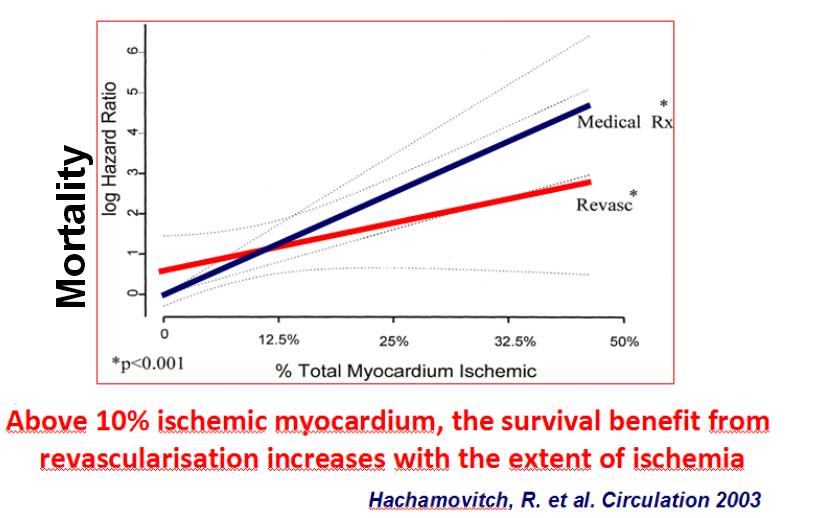
Why ISCHEMIA trial conclusions often make us nervous?

Because, we know we can’t follow the lessons from it with true intent, as many of us are near slaves to Invisible Interventional forces in some form or other.

I would think, ISCHEMIA trial in one sense was a wasted effort. We always knew OMT is superior to any sort of PCI in stable CAD  (Backed up with COURAGE /BARI 2D/and of course the deadly exposure by ORBITA )

Anyway, we did ISCHEMIA for the sake of deniers, with huge public funding to prove the truth as truth.

Still, I am sure ISCHEMIA will be looked down, by most elite Intervenionlists. For the rest, it becomes a tough fight with their conscience. 

A recent review on European cardiology review 

Final message 

I don’t know, how many more trials would be required to tell us the same story all over again. Hope we grow enough COURAGE to follow the ISCHEMIA lessons. Let us (try to ) make a full stop on this issue.


“Third wave? what is that”

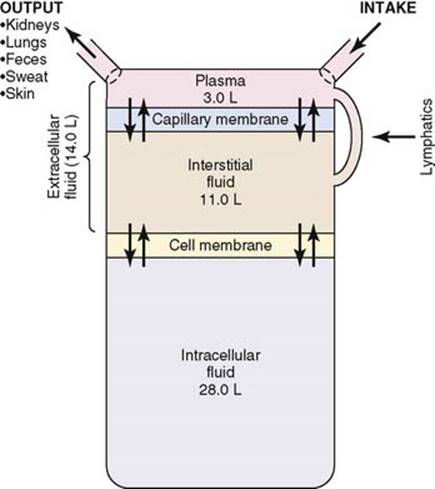
Basic science lessons are promptly forgotten by the time we reach the final year of medical school. How about recalling them decades into clinical practice ? The mechanism of systemic edema revolves around the interplay between hydrostatic pressure, colloid pressure, interstitial pressure. However, In the pulmonary circuit, it gets a little more complex. Acute pulmonary edema begins to occur at around 18mmhg  PCWP. What is special about this number 18? Nothing great. The lung begins to ooze when the LVEDP/LA mean pressure exceeds the colloid osmotic pressure, (that keeps fluid in situ) within the pulmonary capillaries, which is about 18mmhg. Interstitial fluid begins to collect as the basal rales go onto develop frank alveolar edema at 25mmhg. Of course, chronic situations like mitral stenosis both lymphatic reserve and thickened interstitial fibrotic process keep threshold still higher) 

To simplify, whatever be the mechanism on the left heart, during acute pulmonary edema for the lungs to get flooded, we need a well-functioning right ventricle. If only the RV has enough wisdom*, it should take the cue and slow down and help the LV out by reducing its preload. (RV’s afterload is LV’s preload right )

We know, the lungs are protected from congestion in a number of chronic right ventricular diseases, pericardial disorders, severe PH. This happens in RV infarction. This lung-protective effect might explain the heterogeneous nature of outcome in RVMI (bad to excellent) 

Final message

We know, the commonest cause of pulmonary edema is due to acute LVF. Now add one more mechanism in the genesis/and or maintenance of pulmonary edema. Vigorously contracting, RV is equally culpable. 

Here is an Important paper that discusses the key role of RV in the precipitation of acute pulmonary edema.

Some more questions relevant to this topic

1.What is the effect of RV dysfunction on paroxysmal nocturnal dyspnea & orthopnea? 

2.Explain class 3 Forrester’s hemodynamic grading of acute MI. (Why PCWP goes down in grade 3 compared to grade 2?)


Syncope is one of the common, yet difficult symptoms to evaluate especially in the elderly. Post-prandial syncope is one condition likely to be missed out.As the name suggests It has a distinct relationship with food intake. Mild fall in postprandial BP is an expected response but if it exceeds a  limit* syncope is triggered. (*Highly variable)

Hemodynamics of Postprandial state

  1. Normally splanchnic circulation demands up to a 25%  increase in blood volume after a moderately large meal. 
  2. When this happens there must be compensatory vasoconstriction elsewhere especially in muscles. Lack of this response results in inappropriate falls in SVR. (The second mechanism is more constant and can be disproportionate to fall of BP)
  3. The mediators for this are either neurogenic or hormonal or both.
  4. Gastrointestinal mediator (Vasoactive Intestinal polypeptide dysregulation) is thought to play a major role. 

From Jansen et al  Archives of Internal medicine 1995

When does it occur?

It can manifest as early as 15 minutes, up to 2 hrs. The fall in systolic  BP is around 20mmhg. More common with large, hot meals. The fact that it can occur up to 2 hrs post meals, there is a likelyhood we might overlook it in history.

Other differential diagnoses 

Management 

There is no specific therapy. Some of the following might be effective.

  • Caffeine,
  • Somatostatin,
  • Acarbose,( α-Glucosidase Inhibitor ) 
  • Avoiding acute high carbohydrate intake.
  • A psychogenic component can be noted in a few that is attenuated by cognitive-behavioral therapy.
  • Midoridine, an Alpha¹ receptor stimulant  can be surprisingly more effective in some who have overlap with orthostatic hypo  (Cleve Clin J Med. 2010 May; 77(5): 298–306.)

Final message

Postprandial hypotension/syncope is a less recognized entity. As always, history is the most important diagnostic tool in the evaluation of syncope, which comes free of cost as well. The diagnostic yield is much greater than sophisticated Holter and event monitors.

Please note, there is a much more prevalent, lesser version of this condition, ie postprandial dizziness or giddiness. However, as already stated there is a significant overlap between orthostatic hypotension and postprandial syncope. It’s worth ruling out diabetes and autonomic dysfunction, (even subclinical Parkinsons) in elders with such symptoms. 

Reference

Here is a  comprehensive and elegant study (I think, It is only one of that kind on this topic )

1.Jansen RWMM, Connelly CM, Kelley-Gagnon MM, Parker JA, Lipsitz LA. Postprandial Hypotension in Elderly Patients With Unexplained Syncope. Arch Intern Med. 1995;155(9):945–952.

Postprandial hypotension Jansen1995