Feeds:
Posts
Comments

Preamble  

The resting coronary blood flow (CBF) is about 5 % of cardiac output. It amounts to 250 ml /min (0.8 ml /mt/gram of myocardium ) It is estimated, blood flow across LAD is 50% . LCX and RCA share 25% each, depending upon the dominance. No need to say , the net return to coronary sinus  should match the CBF at rest or exertion.(Minus a small fraction contributed by  thebesain and vene cardia minimi flow, into the right heart chambers)

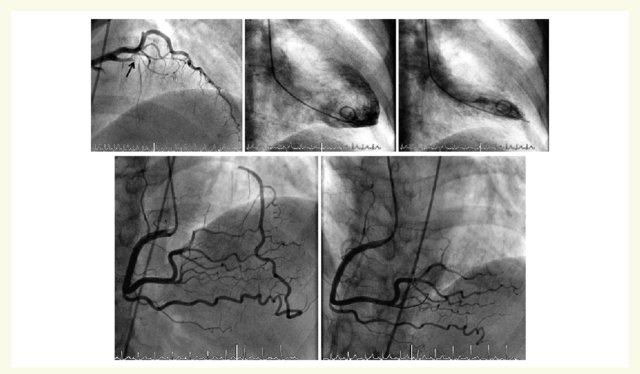
Great cardiac vein (GCV) is the venous cousin of LAD. It must receive and empty 125ml of deoxygenated blood every minute into the coronary sinus, if LAD flow is normal. When LAD microcirculation is obstructed as in severe obstruction , GCV will fill and empty  sluggishly. 

Let us move on from physiology to bedside.

Primary PCI & No -reflow in LAD 

We have painfully realized, no-reflow is almost a hemodynamic death sentence to the concerned coronary artery during  primary PCI. For practical purposes, no-reflow is common in left coronary circulation, that too in LAD.  Decades of research and experience haven’t really helped us to either overcome or treat this complication effectively. 

So, it’s worth considering experimental mechanical options.

  1.  The first option is, to forcibly open the closed microvasculature by pushing the debris across arterioles, venous capillaries and subsequently to the coronary sinus. This appears tricky as the high-pressure injection can be hazardous. This can be done either hand or even controlled pressure Injection. (It is believed few centers do this unofficially and found some success. I am not sure)


  2. The second option is again mechanical but uses negative pressure to suck from the far end of microcirculation. We can pull the debris into the coronary venous circuit by using vacuum suction deep inside the main stem of the coronary sinus or even the great cardiac vein, the venous counterpart of LAD. This appears to be more comforting to the coronaries at least theoretically. (Never under-estimate the power of vacuum as a biological Intervention.I recall tender newborns pulled out with massive vacuum pressure without any issues during my O&G days)


We have proposed this idea to scientific committee. It was rejected promptly as expected even prior to applying for ethical clearance. In fact, we were eager to try our hands on this, as a life saving modality in desperate situations. Now, It is an appeal to all those scientificaly  liberal centers to try this concept that can be made legal as a part of an official trial.

Antegrade vs retrograde aspiration

It is wiser to introspect, why most antegrade thrombus aspiration strategies in epicardial coronaries failed in STEMI .Still, what is the possiblity  it might work retrogradely? Let us hope this concept becomes a success and doesn’t add on to the long list of failed attempts to this ubiquitous hemodynamic entity.

Potential risk

Since the mechanism of MVO and no=reflo  is multifactorial, mechanical suction might help only in the clearance of thrombotic debris. Further risk of microvascular endothelial injury is real.

Final message

Many fellows write to me,  asking for some research ideas. Please acknowledge if anyone proceeds with this one (If you really believe no one has thought about this Intervention before)

Reference  for Interventions within Coronary sinus 

  1. EP guys do it , in a regular fashion with CRT.They also specifically enter the Anterior cardiac and great vein during ablation in VTs originating from LV summit .
  2. Coronary sinus aspiration done for contrast removal after angiogram to prevent AKI in renal compromised patients.(Ref Osama Ali Diab Circulation: Cardiovascular Interventions. 2017)
  3. Stem cell delivery has been done through coronary sinus (Wouter A. Gathier J Cardiovasc Transl Res. 2018)
  4. Coronary  sinus retrograde perfusion  has been tried for refractory angina (David P. Faxon Circ Cardiovasc Interv. 2015)


The Medtronic leadless Micra TPS pacemaker

In 2016, EP world saw a major breakthrough when Medtronic introduced leadless Micra TPS pacemaker. This device that looked like a small bullet, was implanted in the RV apex without the need for lead insertion and surgical pocket. It was real innovation but was not able to take off even after 4 years of marketing. The reason was simple. Though it was a smart device, it was a journey backward in time, as Micra TPS provided only non-physiological VVI pacing. (In the current era of multi-site and His bundle pacing)

Physiological pacing requires two are more leads.(Except single lead VDD, now obsolete AAI ) . Atria must be sensed for AV synchrony to happen. Atrial sensing is accomplished by

  1. A dedicated atrial lead as in AAI or DDD
  2. A floating atrial lead as in VDD mode

How does the leadless pacemaker attached to RV apex bring in AV synchrony without any add on leads ?

Medtronic, has come out with new add on to TPS ie “Micra AV” .The same gadget has been upgraded with a software to do atrial sensing. The accelerometer in the pacemaker senses the motion of the blood in early diastole followed by atrial contraction mediated S4 . This is sensed, and ventricular lead is set to fire after a programmed Interval.

Medtronic micr AV pacing 2

The initial experience appears promising. The results of the MARVEL study is published (Ref 1) However, there are important limitations. The atrial sensing function is not fully tested in real-life exertion. Further, It’s actually a form of mechanical sensing. The atrial electromechanical association has been taken for granted. The absence of electrical atrial sensing can mislead the ventricle. Currently, I guess it is a software patch that converts Micra TPS to AV . One more issue is, the soft ware consumes more energy and cut shorts the life of the pacemaker.

Reference

The Country of mine with 140 crore population, is under complete lockdown mode. We are anxiously tense in one aspect, but enjoying the free time due to the peculiar “Corona effect” on cardiac emergencies.

Unable to understand you . . . please go away

What happened to our 24/7 busy CCU ? Does it happen only in my hospital? Can’t be. Let me check it right now. I called my fellow, who has since become a leading cardiologist in the nearby town.

guidelines

I have since called many of my close contacts. In both Government and private hospitals. The pooled data were analyzed in a virtual cloud memory. I am fairly convinced, our observation was indeed true.

The following can be considered as near facts.

  • There have been at least 50% minimum dip of Overall ACS cases. It even went down to 80%reduction in a few places
  • Even UA/NSTEMI showed a significant drop.
  • There was general hesitancy to do primary PCI even if it’s technically Indicated.
  • All most all STEMI were lysed. Heparin was liberally used.
  • Many patients preferred telephonic consultations.ECGs were reported over mobile platforms
  • None of the back pains & gastric pains were admitted as atypical chest pain.
  • Most cardiologists closed down their regular OPD
  • For the first time, Govt institutions were considered worthy to refer.

Why ACS Incidence nose dived?

  1. Under recognition?
  2. Under-reported ?
  3. Low Incidence?
  4. Low rate of referral?

STEMI that goes under-recognized and unreported? The consensus was, it’s less important factor as currently, very few are unaware of the Importance of chest pain and widespread availability of emergency services 108/911

Does that mean real incidence has Indeed come down?

The global atherosclerotic burden,(the substrate for STEMI) in the society is nearly constant. Still, the incidence of ACS has declined dramatically in the lockdown period. This conveys an important message and compels a search (research)

The plaques that are waiting to rupture in the population somehow getting a reprieve. Mind you, the presence of a risky plaque in LAD alone won’t cause a STEMI. It needs a trigger. The day to day physical stress, spikes of catecholamine, emotional swings, traffic pollution etc. The only plausible explanation appears to be the vulnerable patients along with their plaques are also locked up inside its Intimo-medial home. (Armchairs and bed rests can not only treat STEMI , they can prevent it too !)

Why the incidence of NSTEMI /UA has also come down?

Again, the same factors might operate. But, more likely self-stabilizing pseudo / Low-risk ACS is a distinct possibility.

A significant chunk of UA /?CSA/suspected NSTEMI patients come from referrals by GPs.The biggest pool of cases for cath labs comes from this group of noncardiac/Atypical chest pain syndromes*. Which shows some Incidental (In)significant lesions that subsequently becomes a cardiac emergency.

Since they have reduced their consultations the numbers have quite significantly reduced.

*Chronic CAD masquerading as ACS is not a forbidden concept

Final message

We are taught some important lifetime lessons in cardiac practice by this 20 nm, lifeless RNA particles.

1. The bulk of the ACS in the society is triggered by the day to day stress of the fast and furious “Just do it” world. The mitigating effect of social lockdown on physical and emotional stress on plaque dynamics on the incidence of ACS will be a big research subject in the coming months.

2. More importantly, It has exposed the existence of one more hidden epidemic in the community “manufactured coronary emergencies” propagated by a resistant cardio tropic virus that has disseminated deep into evidence-based cardiology. Let us cleanse this virus too after finishing off the Corona.

Postamble

It’s just a crazy opinion from a scribbling, blogger. However, I am sure, It’s only a matter of time, great journals like NEJM, JAMA, and Lancet will be screaming the same truths in a more palatable evidence-based manner.

Meanwhile, I can see early signs of restlessness(withdrawal) among us waiting for early release from the lock-up and resume the customary mode of evidence-based cardiology practice.

As I complete this write up . . . .surprised to find this report from TCT MD. Similarities if found, could only be coincidental.

One of my well-educated patients asked me, how ready is our state health services. How many ventilators do we have, he asked? I told him, we have enough but short of it only technically. I had great difficulty in explaining to him that ventilators are not the antidote for coronavirus.

I continued, even if we have an unlimited number of ventilator and other gadgets, the major determinant of the outcome is going to be the overall viral load, severity of lung Injury and other system involvement. Finally, it is the patient’s ultimate fighting power along with the forbidden word in medicine, ie fate.

In fact, need for ventilator is the strongest predictor of adverse outcome.However, judiously timed, non invasive assisted breathing (CPAP etc) might have a major role , since it could avoid pushing mild cases in to ventilators.

This pyramid tries to explain there are many other ways, by which, we can successfully tackle this pandemic other than critical care.

Corona management strategies prevention

(Please, take this in proper perspective. It is not intended to undermine the importance of critical care.)

Emerging trend In India

Things look positive .The virulence of covid here seems to be less pronounced.(About 2000 cases with 50 deaths). As of now , it appears, the take off slope from phase 2 to 3 struggles to sustain.It could still be an assumption but would love to see it as a fact.

Indian Government is on the right tract and we should all be glad about the steps taken, inspite of the collateral social suffering of the lock down.

Looking forward to celebrate the summer folks !


Now, look at this article that comes 3 weeks after I posted the above.


Even in the best of non-Corona times 90 -95% of STEMI population in our country (the rich and famous included) are discriminated by denying life-saving primary PCI. Instead, they are subjected to an inferior and near-forbidden therapeutic modality called coronary thrombolysis or its slightly less inferior cousin pharmaco-invasive strategy. Now, thanks to corona, for some time it’s going to be near 100% discrimination. 

Fortunately, “Corona” or “No -Corona” this discrimination has never harmed in true sense in the real world.

 My feeling is, there is going to be little overall impact on ACS /CCS  outcomes with current “Acute cath lab distancing” protocols. If at all,  it might accrue some invisible benefits. Of course, few random lives could be saved in heroic cath lab maneuver in complex STEMI and NSTEMIs (which are not possible due to prevailing situations)

Final message 

Things will settle down. Cardiologists need to introspect with the large pool of outcome data,  emanating from the underused cath labs. It is a natural cross control study available free of cost and effort.

I wish, I can say loudly, many of the IRAs and the myocardium in distress will definitely welcome this sudden turn of events. Let us continue to keep a watch on our ‘distance with the cath lab’ even after Corona settles down.  

Presentation

A 38-year-old women,with episodic chest discomfort, mild dyspnea, and occasional non-productive cough. She was investigated in a non-emergent fashion. After an abnormal X-ray chest, A CT scan was requested. (*X-ray chest is Intentionally not posted here to add some curiosity factor)

This is probably one of the most curious Images in cardiology I have stumbled upon. At the first look, it seemed a baseball has replaced a heart. Is it not?

Most curious Image in cardiology

Posted with Creative Commons Attribution License CC-BY 3.0. Afzal et al. Dept of Internal Medicine, Florida Hospital, Orlando, USA.Cureus 10(11): e3566.

When you see such a large round shadow occupying an area exclusive meant for the heart what will you think? The following thoughts came in.

  • A Hydatid cyst of heart ?
  • An Aneurysm from a chamber of the heart?
  • Pericardial mass
  • A granulomatous cardiac mass
  • Aortic aneurysm?
  • A mediastinal mass (Teratoma, Lymphoma)
  • A foreign body?

Answer: It turned out to be none of the above. The best part is this woman was diagnosed, undergone surgery and cured of the condition.

Find out from the link and read yourself about this curious case report from online journal Cureus, . Hats off to this journal, doing a great job of dissemination of knowledge without much restriction as other peer-reviewed ones do.

Acknowledgment

Original source of Image : Afzal A, Mobin S, Sharbatji M, et al. (November 09, 2018) Rare Case of Giant Asymptomatic Left Coronary Artery Aneurysm of 10 cm Associated with Coronary Cameral Fistula. Cureus 10(11): e3566.

Reference

A review of giant coronary artery aneurysm

1.Crawley PD, Mahlow WJ, Huntsinger DR, Afiniwala S, Wortham DC: Giant coronary artery aneurysms: review and update. Tex Heart Inst J. 2014, 41:603-608. 10.14503/THIJ-13-3896

As human life enters an extraordinary new phase ,”Digital distancing” is also critical for Corona(fear)control.Let us make all mobiles into “non-smart mode” for the next 30 days at least . Use TV time judiciously. Just listen to radio for official Govt.Communication.No panic buying. Help the needy. Let the economy shrink considerably and get rid of all the wasted expenditure.

Meanwhile, let us use this lockdown period to find a  “fresh purpose” for a meaningful life. “God will definitely bless us”

The anger of Corona is sure to settle down very soon and will start living with us in complete harmony, like billions of other organisms do.

How far we are from a vaccine? 

It is estimated it may take at least a year. Might happen earlier too. There are at least 12 companies working on creating a vaccine. Let us hope breakthrough happens at the earliest 

vaccine tracker


Viruses are essentially lifeless molecules (A nucleic acid RNA/DNA) .In the case of CoRoNA, it is the inbuilt RNA that acts as a commander in mischief. Ironically, it gets to life only when it attaches to the host cell. How a small bit of nucleic acid with a lipid cap infects a cell and becomes a deadly factory of new viruses and spread through the body remains a deep biological mystery.

Someone asked me , “Can we kill the Corona en masse”? The answer is frighteningly simple, we can’t kill them really, because they don’t have life in the first place. At best, we can deactivate or make it dormant and reduce its spread.

I just got contaminated with coronavirus . . .Is it a death sentence?

Even if you forcibly feed COvid 19 at random to 100 persons 80 % will be near normal or with a mild respiratory infection. You may wonder how can so many people are positive for Covid 19, and comfortable. We are still far away from understanding the complexity of how this virus will behave in a given human body.

This is because we are not clear what is the exact port of entry and how the first cell reacts to it.The way the body deals with it is entirely different if it attacks the respiratory tract through aerosol or it enters gastric tract (Imminent death with acidic PH ? we don’t know )

The mysterious interaction of genetic susceptibility, response to initial entry, epigenetic memory and subsequent immunological activation, will determine whether one is going to get simply infected and completely decimated.

Healthy humans enriched with good protein diet are expected to have good immunity. However, it can never be foolproof. It is obvious, there is something more than a host stress response readiness.(The fighting power and the fitness of your Immune cells T,B ,K,NK cells, infinite number of Interstitial scavenger cells and molecules)

When you are stressed the Immune system is activated or deactivated?

As expected the answer can be both. Then, how does the body will fight it over? Cells start synthesizing defense molecules. Unfortunately and paradoxically, cortisol is a major hormone released at times of emotional stress, that can severely compromise the immunity. Steroids are firefighters but cause collateral damage.

So its easy to conclude, positive emotions have positive immunity and negative emotions like fear, anger, distress can pull our immunity down.

Fear is a thought virus

Technically and biochemically, every human thought is a neurotransmitter. A neurotransmitter is nothing but a chain of amino acids synthesized in response to DNA/RNA codecs. So, straight away there is an obvious link between thoughts we harbor and the fighting power of the body. Why depression and anxiety affect the infection rate ?
The effect of various emotions on the Immune system is a big emerging topic. Fear-mongering about Corona and the manic digital dissemination of the virus of fear could turn out to be a great Immune system dampener.

One of my wonderfully healthy friends wanted to estimate the fighting power of his body’s immune system in case he is affected by Corona. He asked, whether his blood can be mapped and give a reassuring report?

I said no, it is not possible. Just take all the precautions. Reassure yourself that you have all the Immunity to fight. That’s it.

This following article elegantly explores the link between emotions and Immune response.

Final message

Can viruses befriend “fear” that reduces host Immunity and help self propagate? No one can be sure. But, I wish “unrestricted courage” acts as a vaccine to Corona, which can ooze from the brain free of cost.

Postample: What will happen to this pandemic?

It will (and should) settle down taking its toll. Preventive measures are gratifying. We need to learn from China, how they blunted the steep ascending curve of propagation.(Of course it started from there)

Who is responsible for such global pandemics?

I am sure, this is the toughest question, probably with no answer. Is it man-made or God made ? If you strongly believe, God will never punish human beings without a reason, then the answer is simple. Now, the world is under freeze. Its one way of arresting the mad growth of artificial,materialistic, biased economy. Corona could be a whipping force on mankind and let us use it to heal and unite fellow human beings.

Now, some positive news from CoVid 19 positive population

The false positive results are too high with currently done active screening tests.

This study from China says positive predictive value of a positive test is just 19% .It would mean 80% error rate. So, don’t really get unnerved with a positive test.

https://www.ncbi.nlm.nih.gov/m/pubmed/32133832/

Aortic dissection is a unique cardiac emergency that tests our collective understanding of vascular anatomy and pathology .It poses the ultimate challenge to the expertise and wisdom of both cardiologists, and surgeons.

It’s all about freezing the Time 

The philosophy of management swings between near-total Inaction* in some (As in most Type B & few Type A as well ) to “No holds barred” approach in others. (In most Type A and few Type B).

*Read it (also) as medical management that includes powerful Aortic pulse attenuation therapy with beta-blockers ( Unfortunately medical management is considered as Inaction by many current generation cardiologists)

Advanced Aortic Imaging is the key

A rapidly focussed TTE usually confirms the diagnosis.TEE might be used but carries a small risk of directly aggravating dissection when performed in an unstable patient. Conventional CT provides good (but limited) information, spiral MDCT delineates the vascular anatomy in a more clear way. MRI probably scores over and adds flow dynamics.

(4D Phase-contrast MRI showing slow helical flow in the false lumen and high-velocity flow in the true lumen. Computational flow dynamics will help assess entry point, plane of dissection, calculate false lumen Index, pressure and wall stress in true lumen and Aortic branch compromise etc . Image courtesy. The Lancet Volume 385, Issue 9970, 28 February–6 March 2015, Pages 800-811)

What is Non-A Non-B dissection?

This is a newly recognized subgroup. It’s not a surprise as the imaging modality improved we found the existence of this subset. In Non-A -Non-B Dissection initial tear involves the Arch and threaten to go retrograde A or antegrade B. We also realized there could be an apparently illogical transformation of type B becoming Type A, later on, due to late retrograde dissection.

The incidence of Non A , Non B dissection is about 10% (Ref 1). Here the outcome between surgery and medical is confusingly sitting at equipoise.

The traditional Debaky and Stanford classification didn’t address this subset.Though some other classification Like (DISSECT (Ref 2) /PENN (Ref 3) tried to clarify .

A new classification based on Type ,entry and malperfusion appear perfect.

TEM classification of Aortic dissection

This is a practical classification that uses Stanford as a base model but adds entry point and branch vessel compromise. This is analogous to TNM classification of tumours.(Hans Hinrich Sievers et al)

Where does EVAR stand ?

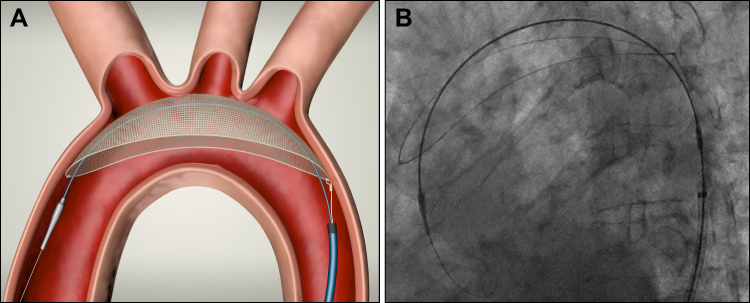
The management strategy of dissection of Aorta got an important makeover in the last decade (for good mostly ) as interventional cardiologists and radiologists landed in the hitherto to surgical domain with endovascular reconstruction (EVAR) .It is handy mainly in the complicated type B and complicated Non A and Non B . One more viable possibility is the hybrid approach of combining EVAR and surgery in delayed presentation of Type-A.

Single point Principle in Aortic dissection management

Rapid sealing of the entry point and arresting the false lumen progression wherever it is and by whatever means (especially in Type A dissection ) reduces mortality significantly.

Though exit points are important for comprehensive management, one need not waste time to locate and search for exit points. In a specific group of patients, it may not be visible or even absent altogether.

Another critical determinant

Detection and tackling the retrograde dissection and involvement of coronary ostium distortion and damage to Aortic valve , and pericardial invasion is the key to reducing early mortality in Type A dissection

The final outcome in God’s domain

The IRAD and other global registries in Aortic dissection has taught us important lessons. We are continuously learning and the patient outcome is improving.

Still, one unresolved statistical ( metaphysical ) mystery is how to identify? that small subset of patients who are lost because of inappropriately early aggressive Intervention who would have otherwise been pushed into natural survivors of Inaction or less action.

Reference

1.Sievers H-H, Rylski B, Czerny M, Baier ALM, Kreibich M, Siepe M et al. Aortic dissection reconsidered: type, entry site, malperfusion classification adding clarity and enabling outcome prediction. Interact CardioVasc Thorac Surg 2020;30:451–7.

2.Dake MD, Thompson M, van Sambeek M, Vermassen F, Morales JP;DEFINE Investigators. DISSECT: a new mnemonic-based approach to the
categorization of aortic dissection. Eur J Vasc Endovasc Surg 2013;46:175–90

3.Augoustides JG, Szeto WY, Desai ND, Pochettino A, Cheung AT, Savino JS et al. Classification of acute type A dissection: focus on clinical presentation and extent. Eur J Cardiothorac Surg 2011;39:519–22

Metanalysisfor Non A Non B dissection

Professional medical practice demands to put always the patient’s interest first. Unfortunately, current practicing methods threaten doctors to yield to patient’s whims & wishes which are influenced by significant non-academic forces. The principle of Informed consent is gradually losing its true meaning. Who is informing what ? and to whom?  is becoming a hazy conundrum in complex two-way confabulation based on severely battered evidence-based medicine.

pateint empowerment

Some of the conversations not heard in silent corridors of big hospitals

Why did you stent his LAD ? , He had triple vessel disease Is’int CABG Ideal?

“Yes , I agree. What  can I do , the patient  chose to get stented”

Why did you replace his keen joint, it was not that bad isn’t ?

“Yes, I agree but the patient chose it.”

Why did you do the cesarian madam? the pelvis was fine, she was contracting well  Isn’t?

“Yes, I agree, what to do. The patient decided it”

Why did you do the endoscopy, you are sure it was simple dyspepsia right? 

“I agree. What to do? The patient wanted it”

Final message 

We all agree patient empowerment is a critical component of health care delivery and management. I am afraid it can very easily go wrong and take a bizarre direction. Many times I felt it has seriously Interfered with professional decision making.

Still, I am not able to come to terms with this awkward situation. “How can  patients  (or their health care provider) enforce me to do a procedure on them , which I feel is Inappropriate or Injurious to them !

Missing you Dr.Hippocrates